
 My Inquiry
 My Account


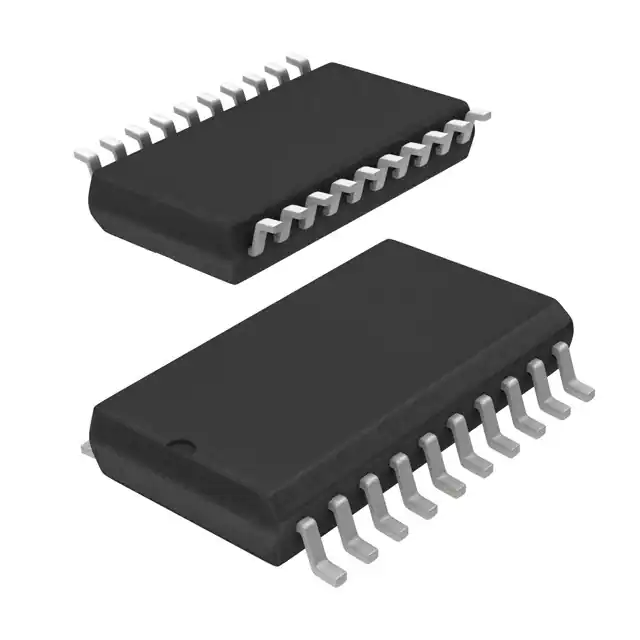
Analog Devices Inc. ADUM4150BRIZ-RL
- Part No.:
- ADUM4150BRIZ-RL
- Manufacturer:
- Analog Devices Inc.
- Category:
- Digital Isolators
- Package:
- 20-SOIC (0.295", 7.50mm Width)
- Datasheet:
-
 ADUM4150BRIZ-RL.pdf
- Description:
- DGT ISOL 5000VRMS 6CH SPI 20SOIC
- Quantity:
- Payment:

- Shipping:

Inventory:694
Please send an inquiry. Send us your inquiry, and we will respond immediately.
Product details
Overview
ADUM4150BRIZ-RL from Analog Devices is a 6-channel, 5 kV reinforced digital isolator optimized for isolated SPI interfaces, featuring four high-speed SPI signal channels (MCLK, MSS, MO/SI, MI/SO), two unidirectional 250 kbps data channels (VIA/VIB), and a dedicated delay clock (DCLK) supporting up to 40 MHz operation in delay-clock mode. It operates across −40°C to +125°C with 25 kV/µs common-mode transient immunity and 20-lead SOIC_IC package with 8.3 mm creepage.
For engineers reviewing the ADUM4150BRIZ-RL datasheet, ADUM4150BRIZ-RL pinout, ADUM4150BRIZ-RL application, or ADUM4150BRIZ-RL equivalent, key selection criteria include SPI clock rate support (up to 17 MHz native / 40 MHz with DCLK), channel count and directionality (4 fast bidirectional + 2 slow unidirectional), isolation rating (5 kV rms), regulatory compliance (UL1577, VDE 0884-17, IEC 62368-1), and thermal performance at 125°C ambient.
Technical Context
The ADUM4150BRIZ-RL implements iCoupler® chip-scale transformer isolation across six independent channels: four high-speed SPI signals (MCLK, MSS, MO/SI, MI/SO) with ≤24 ns propagation delay and ≤1 ns jitter, plus two low-speed unidirectional data channels (VIA, VIB) operating at 250 kbps with 2.5 µs jitter. Its delay clock (DCLK) output enables primary-side timing compensation to achieve 40 MHz SPI clocking by offsetting round-trip propagation delays.
It supports mixed-voltage operation (3.3 V/5 V or 5 V/3.3 V across sides), features glitch-filtered MSS input, and delivers reinforced insulation rated at VIORM = 645 V peak per DIN EN IEC 60747-17 (VDE 0884-17), with safety certification for industrial, medical (60601-1), and measurement (61010-1) applications.
Key Specifications
| Parameter | Value and Actual Design Meaning |
|---|---|
| SPI Clock Rate (Native) | Up to 17 MHz - Enables full-speed SPI communication without external timing compensation |
| SPI Clock Rate (Delay Clock Mode) | Up to 40 MHz - Achieved via DCLK output compensating for round-trip propagation delay |
| High-Speed Channel Count | 4 channels (MCLK, MSS, MO/SI, MI/SO) - Covers complete SPI bus isolation with precise timing alignment |
| Low-Speed Data Channels | 2 unidirectional channels (VIA, VIB) at 250 kbps - Provides auxiliary isolated status or control signaling |
| Isolation Rating | 5000 V rms (1 min), VIORM = 645 V peak - Reinforced insulation certified to UL1577, VDE 0884-17, IEC 62368-1 |
| Common-Mode Transient Immunity | >25 kV/µs - Ensures reliable operation in noisy industrial environments with fast transients |
| Operating Temperature | −40°C to +125°C - Supports deployment in extended-temperature industrial and automotive under-hood applications |
| Package | 20-lead SOIC_IC, 8.3 mm creepage - Surface-mount package compliant with IPC-7351B, suitable for high-isolation PCB layouts |
Pinout & Package
ADUM4150BRIZ-RL uses a 20-lead wide-body SOIC_IC package (SOIC_W) with gull-wing leads, 1.27 mm pitch, and 8.3 mm minimum creepage distance between input and output sides. Pin 1 is marked with a dot; Side 1 (VDD1) contains pins 1–10, Side 2 (VDD2) contains pins 11–20.
| Pin/Terminal | Circuit Role | Design Meaning |
|---|---|---|
| Pin 1 (VDD1) | Primary-side supply | Provides 3.0–5.5 V power to input-side logic and isolation drivers |
| Pin 2 (MCLK) | SPI master clock input | Accepts high-speed clock up to 17 MHz (or 40 MHz with DCLK compensation) |
| Pin 3 (MSS) | SPI slave select input | Glitch-filtered active-low signal controlling device enable on secondary side |
| Pin 4 (MO/SI) | Master-out/slave-in data input | Transmits data from master MCU to isolated peripheral; high-speed channel |
| Pin 5 (MI/SO) | Master-in/slave-out data output | Receives data from peripheral to master MCU; high-speed channel with 13 ns typical delay |
| Pin 6 (DCLK) | Delayed clock output | Primary-side clock derived from MCLK and SO propagation delay; enables 40 MHz timing |
| Pin 7 (VIA) | Slow input A | Unidirectional 250 kbps data input to secondary side; sampled and serialized internally |
| Pin 8 (VIB) | Slow input B | Second unidirectional 250 kbps input to secondary side; independent of VIA timing |
| Pins 9–10 (GND1, VDD1) | Primary ground and supply return | Completes primary-side power loop; requires local decoupling |
| Pins 11–12 (SCLK, SSS) | SPI clock and slave select outputs | Isolated outputs driving peripheral; synchronized to MCLK/MSS with matched delay |
| Pins 13–14 (SI, SO) | Slave-in and slave-out data | Secondary-side SPI data lines; SO delay matched to MCLK for timing closure |
| Pins 15–16 (VOA, VOB) | Slow output A/B | Unidirectional 250 kbps outputs from secondary to primary; asynchronous sampling |
| Pins 17–20 (GND2, VDD2) | Secondary ground and supply | Independent 3.0–5.5 V supply domain; galvanically isolated from VDD1/GND1 |
Key Features
| Feature | Design Value |
|---|---|
| Delay clock (DCLK) generation | Compensates for round-trip propagation delay to enable 40 MHz SPI clocking without external PLL or FPGA logic |
| Glitch-filtered MSS input | Prevents spurious slave-select activation from noise, ensuring robust SPI transaction initiation |
| Codirectional channel matching | ≤2 ns max delay skew between same-side channels (e.g., MCLK/MSS), critical for setup/hold timing closure |
| Reinforced insulation certification | Meets VDE 0884-17 (VIORM = 645 V peak), UL1577 (5 kV rms), and IEC 60601-1 (2 MOPP) for medical safety |
| Mixed-voltage operation | Supports 3.3 V/5 V or 5 V/3.3 V cross-isolation - allows interfacing legacy 5 V MCUs with modern 3.3 V peripherals |
| High CMTI | >25 kV/µs common-mode transient immunity ensures signal integrity in motor drive and PLC backplane noise |
Applications
| Industrial PLC Backplanes | Sensor Signal Conditioning |
|---|---|
Use Scenario: Isolating SPI buses between CPU modules and I/O expansion cards in modular PLC chassis subject to high EMI and ground potential differences. IC Role / Device Role / Timing Role: SPIsolator™ providing galvanic separation for MCLK, MSS, MO/SI, MI/SO while preserving timing integrity via DCLK compensation. Use Value: Enables 17 MHz native or 40 MHz compensated SPI throughput across isolation barrier, eliminating need for slower optocoupler-based solutions. |
Use Scenario: Isolating MEMS or analog sensor ADCs (e.g., temperature, pressure) from host microcontrollers in harsh factory-floor environments. IC Role / Device Role / Timing Role: Six-channel isolator handling SPI data (MO/SI, MI/SO), clock (MCLK), chip select (MSS), and auxiliary status (VIA/VIB). Use Value: Maintains sub-20 ns timing alignment across all SPI signals while delivering 250 kbps auxiliary channel bandwidth for diagnostics or configuration. |
| Medical Instrumentation Interfaces | Energy Metering Communication |
Use Scenario: Isolating SPI-connected ADCs and DACs in patient-connected diagnostic equipment requiring 2 MOPP safety per IEC 60601-1. IC Role / Device Role / Timing Role: Reinforced-isolation SPI isolator certified to IEC 60601-1 with VIORM = 645 V peak and 5000 V rms withstand voltage. Use Value: Eliminates external safety capacitors and creepage extenders while meeting stringent medical isolation and leakage current limits. |
Use Scenario: Isolating metrology SoCs (e.g., ADE series) from microcontroller units in smart electricity meters exposed to high-voltage surges. IC Role / Device Role / Timing Role: High-CMTI (25 kV/µs) isolator protecting SPI interface from lightning-induced transients on mains-connected metering circuits. Use Value: Prevents data corruption during 6 kV surge events per IEC 61000-4-5, maintaining accurate energy accumulation during grid disturbances. |
Equivalent & Alternatives
The following parts are listed as comparable options for similar SPI isolator applications.
| Alternative Part | Technical Difference | Application Difference | Selection Advice |
|---|---|---|---|
| ADUM4151BRIZ-RL | Same 5 kV rating and 6-channel architecture but lacks DCLK output; supports only native 17 MHz SPI clocking | Not suitable for 40 MHz delay-clock mode systems; lower timing flexibility in high-speed master-slave loops | Select when DCLK functionality is unnecessary and cost optimization is prioritized over maximum clock rate |
| ADUM3150ARIZ-RL | 3.75 kV isolation rating, same pinout and feature set except reduced VIORM (435 V peak) and no IEC 60601-1 certification | Approved for general industrial use (IEC 62368-1) but not medical (60601-1) or measurement (61010-1) safety standards | Choose for cost-sensitive non-medical applications where 3.75 kV isolation suffices and regulatory scope is limited |
Compared with ADUM4150BRIZ-RL, ADUM4151BRIZ-RL omits delay-clock capability-reducing maximum SPI clock to 17 MHz-while ADUM3150ARIZ-RL trades 5 kV isolation and medical certification for lower cost and footprint compatibility; all three share identical SOIC_IC packaging and core SPI channel functionality.
Availability
ADUM4150BRIZ-RL is available at Aetrix Electronics and suitable for industrial programmable logic controllers (PLC), isolated sensor interfaces, medical instrumentation, and smart energy metering requiring stable component supply, long-term lifecycle assurance, and certified reinforced isolation.
Supply support for ADUM4150BRIZ-RL includes scheduled delivery planning, volume procurement assistance, BOM continuity management, traceable sourcing, and lifecycle availability coordination for OEM customers, industrial embedded developers, connected-device designers, and electronics production programs.
Manufacturer
Analog Devices, Inc. is a global semiconductor leader specializing in high-performance analog, mixed-signal, and digital signal processing technologies for precision, power, and connectivity applications.
The ADuM4150 product line delivers SPI-specific digital isolators using iCoupler® transformer technology, designed for high-speed, low-jitter, safety-certified isolation in industrial automation, medical devices, and energy infrastructure.
FAQ
What is the maximum SPI clock frequency supported by ADUM4150BRIZ-RL?
ADUM4150BRIZ-RL supports up to 17 MHz SPI clock frequency in standard 4-wire mode. When using the integrated delay clock (DCLK) output with appropriate primary-side timing compensation, it achieves up to 40 MHz SPI clock operation - confirmed in the datasheet's switching specifications tables for both 5 V and mixed-voltage configurations.
Does ADUM4150BRIZ-RL support mixed-voltage operation between its two sides?
Yes, ADUM4150BRIZ-RL supports mixed-voltage operation: VDD1 can be 3.3 V while VDD2 is 5 V, or vice versa. Electrical characteristics for these configurations are explicitly specified in Tables 6 and 8 of the datasheet, including SPI clock rates, propagation delays, and supply currents across A and B speed grades.
How does the DCLK pin function in ADUM4150BRIZ-RL?
The DCLK pin on ADUM4150BRIZ-RL outputs a delayed version of the MCLK signal, timed to compensate for round-trip propagation delay (tPMCLK + tPSO). This enables synchronous 40 MHz SPI clocking on the primary side without external timing circuitry - a key differentiator versus standard SPI isolators like ADUM4151BRIZ-RL.
What safety certifications apply to ADUM4150BRIZ-RL?
ADUM4150BRIZ-RL holds UL 1577 (5000 V rms, 1 min), DIN EN IEC 60747-17 (VDE 0884-17) for reinforced insulation (VIORM = 645 V peak), IEC/EN/CSA 62368-1, IEC/CSA 60601-1 (2 MOPP), and IEC/CSA 61010-1. These are documented in Table 11 and Insulation Characteristics sections of the Rev. E datasheet.
Can ADUM4150BRIZ-RL replace optocoupler-based SPI isolation solutions?
Yes, ADUM4150BRIZ-RL replaces discrete optocoupler-based SPI isolation with superior performance: it delivers 13 ns typical propagation delay (vs. >100 ns for optos), 1 ns jitter (vs. >10 ns), guaranteed channel matching, and integrated DCLK for 40 MHz operation - all in a single 20-pin SOIC package with certified 5 kV isolation.
ADUM4150BRIZ-RL Specifications
- Product attributes
- Attribute value
- Manufacturer:
- Analog Devices Inc.
- Series:
- iCoupler®, SPIsolator™
- Package/Case:
- 20-SOIC (0.295", 7.50mm Width)
- Packaging:
- Tape & Reel (TR)
- Product Status:
- Active
- Technology:
- Magnetic Coupling
- Type:
- SPI
- Isolated Power:
- No
- Number of Channels:
- 6
- Inputs - Side 1/Side 2:
- 4/2
- Channel Type:
- Unidirectional
- Voltage - Isolation:
- 5000Vrms
- Common Mode Transient Immunity (Min):
- 25kV/µs
- Data Rate:
- 40Mbps
- Propagation Delay tpLH / tpHL (Max):
- 13ns, 13ns
- Pulse Width Distortion (Max):
- 2ns
- Rise / Fall Time (Typ):
- 2.5ns, 2.5ns
- Voltage - Supply:
- 3V ~ 5.5V
- Grade:
- -
- Qualification:
- -
- Operating Temperature:
- -40°C ~ 125°C
- Mounting Type:
- Surface Mount
- Supplier Device Package:
- 20-SOIC-IC
ADUM4150BRIZ-RL FAQ
1.How can I place an order for ADUM4150BRIZ-RL through Aetrix?
Please submit a Request for Quotation (RFQ) for ADUM4150BRIZ-RL on Aetrix. Our sales agent will provide a competitive quotation and guide you through the order confirmation once you accept the terms.
2.Are the price and stock information for ADUM4150BRIZ-RL reliable?
The price and inventory of ADUM4150BRIZ-RL are updated periodically and may fluctuate due to market conditions. Stock and pricing data are typically refreshed every 24 hours. Quotation validity for ADUM4150BRIZ-RL is usually 5 days.
3.What payment methods are accepted for ADUM4150BRIZ-RL?
We accept Wire Transfer, PayPal, Credit Card, Western Union, MoneyGram, and Escrow for ADUM4150BRIZ-RL transactions.
Note: Certain payment methods may incur a processing fee.
4.How is shipping managed for ADUM4150BRIZ-RL?
ADUM4150BRIZ-RL orders can be shipped via leading logistics carriers, including DHL, UPS, FedEx, TNT, or Registered Mail.
Once your ADUM4150BRIZ-RL order is processed, you will receive an email with the shipment details and tracking number.
Note: Tracking information may take up to 24 hours to appear. Express delivery typically takes 3–5 business days.
5.How can I obtain technical support or documentation for ADUM4150BRIZ-RL?
For technical support, including ADUM4150BRIZ-RL datasheets, pinout diagrams, or application guidance, please contact our engineering support team. They can provide detailed documentation and assistance for your ADUM4150BRIZ-RL requirements.
6.How does Aetrix verify that ADUM4150BRIZ-RL is sourced from the original manufacturer or authorized distributors?
All ADUM4150BRIZ-RL products on Aetrix are procured from qualified distributors and authorized channels. Our dedicated quality assurance team conducts strict verification, including traceability checks and, if necessary, third-party testing. This ensures that ADUM4150BRIZ-RL meets industry standards.
7.What is the process for return or replacement of ADUM4150BRIZ-RL?
All ADUM4150BRIZ-RL units undergo pre-shipment inspection (PSI). If there is an issue with ADUM4150BRIZ-RL, returns or replacements are accepted under the following conditions:
1.Quantity discrepancies, incorrect items, or visible external defects (such as breakage or corrosion), acknowledged by Aetrix.
2.The issue is reported within 90 days of delivery.
3.The ADUM4150BRIZ-RL part is unused and in its original packaging.
Return procedure for ADUM4150BRIZ-RL:
1.Submit a request within 90 days.
2.Obtain a Return Material Authorization (RMA) from Aetrix.
ADUM4150BRIZ-RL Tags

-
ISO1212DBQR
Texas Instruments
-
ISO6721BDR
Texas Instruments
-
SI8710AC-B-ISR
Skyworks Solutions Inc.
-
ISO7720FDR
Texas Instruments
-
ISO7721DR
Texas Instruments
-
ISO7721FDR
Texas Instruments
-
SI8710CC-B-ISR
Skyworks Solutions Inc.
-
ISO6741FQDWRQ1
Texas Instruments

-
ISO7721DWVR
Texas Instruments
-
ISO7762FDBQR
Texas Instruments

-
ISO7741DWR
Texas Instruments
-
ISO7741FDWR
Texas Instruments
Tech Hub

A practical engineering guide to 3.3V and 5V logic compatibility, input thresholds, resistor dividers, translator ICs, MOSFET level shifting, I2C pull-ups, timing limits and power-sequencing risks.

The 74HC595 uses push-pull logic outputs, while the TPIC6B595 uses 50 V open-drain DMOS sinks for higher-power loads. This guide compares timing, current limits, 3.3 V interfacing, load wiring, thermal…

The 74HC595 converts serial data into eight stable parallel outputs. This guide covers pin functions, shift and storage timing, OE and MR behavior, drive-current limits, cascading, voltage compatibilit…

A technical comparison of level-sensitive latches and edge-triggered flip-flops, covering timing windows, setup and hold limits, master–slave operation, time borrowing, race-through, HDL inference and…

A D latch stores one bit while Enable controls when data can pass. This reference covers gate-level operation, truth tables, transparency, setup and hold timing, LE versus OE, common ICs and practical …

An SR latch stores one bit through cross-coupled feedback. This engineering reference covers NOR and NAND implementations, truth tables, forbidden-state recovery, gated operation, switch debouncing, fa…

Latch circuits retain one bit through feedback. This technical reference covers SR and D latches, truth tables, transparency, timing limits, latch-versus-flip-flop behavior, applications and common log…

An engineering guide to LED driver operation, constant-current and constant-voltage outputs, linear and switching topologies, dimming, IC selection, calculations, replacement compatibility, and fault c…

Operational amplifier guide covering op amp basics, feedback, ideal vs real op amps, common configurations, buffer circuits, offset, bias current, gain-bandwidth, slew rate, rail-to-rail limits and sel…

Jumper cables guide covering safe connection order, red and black clamp placement, final ground connection, cable gauge, length, clamp quality, copper vs CCA cables, jump starter comparison and battery…


