
 My Inquiry
 My Account


Analog Devices Inc. ADV601LCJSTRL
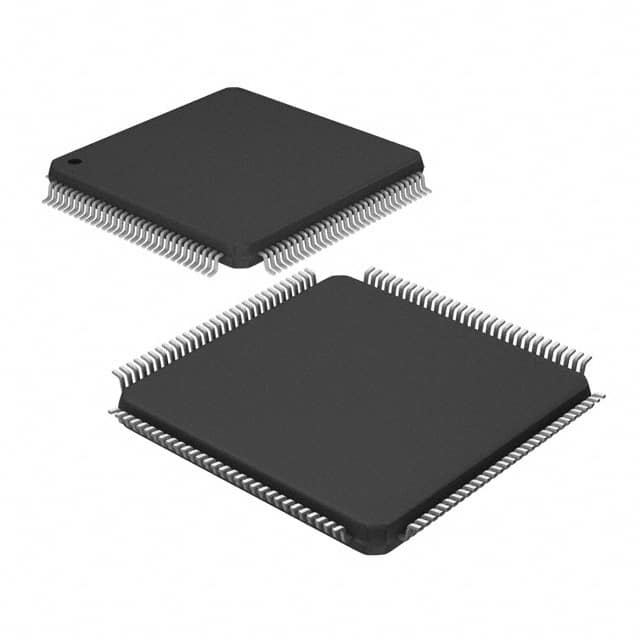
- Part No.:
- ADV601LCJSTRL
- Manufacturer:
- Analog Devices Inc.
- Category:
- CODECS
- Package:
- 120-LQFP
- Datasheet:
-
 ADV601LCJSTRL.pdf
- Description:
- IC CODEC VIDEO DSP/SRL 120LQFP
- Quantity:
- Payment:

- Shipping:

Inventory:14,000
Please send an inquiry. Send us your inquiry, and we will respond immediately.
Product details
Overview
ADV601LCJSTRL from Analog Devices is an ultralow-cost, single-chip, all-digital CMOS VLSI video codec optimized for real-time interlaced video compression and decompression. It supports CCIR-601 digital video at 720×243@60 Hz (NTSC) and 720×288@50 Hz (PAL), delivers visually loss-less compression at 4:1 on natural images, and achieves compression ratios up to 350:1. It is used in PC video editing and remote CCTV surveillance systems requiring field-independent sub-band coding.
For engineers reviewing the ADV601LCJSTRL datasheet, ADV601LCJSTRL pinout, ADV601LCJSTRL application, or ADV601LCJSTRL equivalent, key selection considerations include its bi-orthogonal (7,9) wavelet transform architecture, 512-deep 32-bit host FIFO, 8-bit CCIR-656/Philips video interface, field-rate adaptive quantization, and DRAM-managed external memory interface for field store.
Technical Context
The ADV601LCJSTRL implements field-independent sub-band coding using a five-stage bi-orthogonal (7,9) wavelet filter tree that processes full-field luminance and chrominance components separately without block partitioning. Its on-chip transform buffer enables separable 2D wavelet transforms while eliminating need for ultra-fast external memory.
Compression is driven by an externally programmable quantizer using bin-width controls calculated by host/DSP, with run-length and fixed-table Huffman coding applied to quantized coefficients. The device operates in two distinct modes: encode (video in → compressed bitstream out) and decode (compressed bitstream in → video out), with all register access and status reporting handled via a 16-/32-bit host interface.
Key Specifications
| Parameter | Value and Actual Design Meaning |
|---|---|
| Video Standard Support | CCIR-601/525 (720×[email protected] Hz) and CCIR-601/625 (720×288@50 Hz); no progressive-scan support. |
| Max Pixel Rate | 13.5 MHz - defines maximum input video bandwidth compatible with internal timing and DRAM manager. |
| Compression Ratio Range | Visually loss-less to 350:1 - selectable per application; 4:1 typical for natural images with perceptual fidelity. |
| Host Interface FIFO | 512 × 32-bit deep FIFO - buffers compressed data stream between Huffman coder and host processor. |
| Video Interface Width | 8-bit parallel - supports CCIR-656 and multiplexed Philips digital video formats directly. |
| External Memory | 256K × 16-bit DRAM - used as field store; managed entirely by on-chip DRAM manager with refresh control. |
| Wavelet Kernel | Bi-orthogonal (7,9) filters with 5-level decomposition - eliminates DCT-style blocking artifacts and enables scalable reconstruction. |
Pinout & Package
ADV601LCJSTRL is housed in a 100-lead LQFP (Low-Profile Quad Flat Package) with 0.5 mm pitch, measuring 14 mm × 14 mm. Pin functions are defined per the official Analog Devices ADV601LC datasheet Rev. 0, pages 16–21 and 42–43.
| Pin/Terminal | Circuit Role | Design Meaning |
|---|---|---|
| HCLK | Host Clock Input | Synchronizes host interface operations; supports up to 33 MHz for 16-/32-bit bus transfers. |
| VCLK | Video Clock Input | Times CCIR-656 video data sampling; derived from source pixel clock (max 13.5 MHz). |
| HIRQ | Host Interrupt Output | Active-low open-drain signal indicating STATSR, LCODE, FIFOSRQ, or error conditions per mask settings. |
| STATS_R | Statistics Ready Output | Indicates completion of field statistics calculation for external bin-width computation. |
| FIFO_SRQ | FIFO Service Request Output | Signals host when FIFO is near-full (encode) or near-empty (decode) to trigger data transfer. |
| LCODE | Last Code Indicator Output | Asserted before final compressed word of a field is read from FIFO during encode mode. |
| CCIRER | CCIR-656 Error Flag Output | Indicates unrecoverable sync code loss in incoming video stream - triggers interrupt if enabled. |
| RESET | Asynchronous Reset Input | Active-low signal initializing internal registers and state machines; requires ≥100 ns pulse width. |
Key Features
| Feature | Design Value |
|---|---|
| 100% Bitstream Compatibility | Ensures drop-in replacement for ADV601 in existing designs without firmware or system-level changes. |
| Field-Independent Compression | Processes top/bottom fields separately - preserves motion integrity in interlaced video without temporal coupling. |
| Precise Bit Rate Control | Enables constant-bit-rate operation via external DSP-hosted bin-width calculator using real-time field statistics. |
| Glueless Video Interface | Direct connection to CCIR-656 decoders/encoders eliminates level-shifting or timing logic in baseband video paths. |
| On-Chip Transform Buffer | Internal SRAM eliminates need for high-speed external memory for wavelet coefficient storage during transform. |
Applications
| PC Video Editing | Remote CCTV Surveillance |
|---|---|
|
Use Scenario: Real-time capture and playback of uncompressed DV streams from FireWire-connected camcorders into Windows-based NLE software. IC Role / Device Role / Timing Role: Video codec performing loss-less-to-moderate compression during ingest and inverse decompression during preview rendering. Use Value: Reduces host memory bandwidth demand by >90% versus raw 720×480@30 fps, enabling smooth scrubbing on mid-tier CPUs without dedicated GPU acceleration. |
Use Scenario: Multi-camera analog-to-digital video encoding at central monitoring station with limited upstream bandwidth (e.g., DSL or T1). IC Role / Device Role / Timing Role: Field-synchronized encoder converting CCIR-656 output from video decoders into adaptive-bit-rate compressed streams for network transmission. Use Value: Maintains forensic image quality at 8–12:1 CR while meeting strict 2 Mbps aggregate upload limit across 4 camera channels. |
| Digital Camcorders | TV Instant Replay |
|
Use Scenario: Embedded recording path in consumer-grade camcorders using flash memory as storage medium. IC Role / Device Role / Timing Role: Real-time encoder compressing interlaced NTSC/PAL output from CCD sensor pipeline before NAND write. Use Value: Enables 60+ minutes of HD-equivalent recording on 1 GB NAND by sustaining 4:1 visually loss-less compression with <50 mW active power. |
Use Scenario: Broadcast studio replay server capturing live feed for instant slow-motion playback during sports events. IC Role / Device Role / Timing Role: Low-latency decoder reconstructing stored compressed clips into CCIR-656 format for SDI output to vision mixer. Use Value: Achieves <1.5 field delay (≈30 ms) from compressed buffer to SDI output - critical for frame-accurate broadcast switching. |
Equivalent & Alternatives
The following parts are listed as comparable options for similar video codec applications.
| Alternative Part | Technical Difference | Application Difference | Selection Advice |
|---|---|---|---|
| ADV601JSTRL | Same die, higher temperature grade (−40°C to +85°C vs. 0°C to +70°C for ADV601LCJSTRL); identical pinout, timing, and register map. | Required for industrial or extended-temperature deployments where ambient exceeds 70°C. | Select ADV601JSTRL only when operating temperature range exceeds ADV601LCJSTRL specification. |
| Brooktree Bt819A | Integrated video decoder + YUV-to-RGB scaler; no compression engine; analog CVBS/S-video input only; no wavelet processing. | Used in low-cost analog video digitizers, not digital video compression pipelines. | Choose only for analog-source acquisition without compression; not a functional substitute for ADV601LCJSTRL's encode/decode capability. |
Compared with ADV601JSTRL, ADV601LCJSTRL trades industrial temperature tolerance for lower cost and same core functionality; compared with Bt819A, it provides full digital video compression/decompression but requires external video sources compliant with CCIR-656 - making it unsuitable for direct analog input systems.
Availability
ADV601LCJSTRL is available at Aetrix Electronics and suitable for PC video editing, remote CCTV surveillance, and digital camcorder designs requiring stable component supply, long-lifecycle support, and verified second-source alternatives.
Supply support for ADV601LCJSTRL includes scheduled delivery planning, volume procurement assistance, BOM continuity management, traceable sourcing, and lifecycle availability coordination for OEM customers, industrial embedded developers, connected-device designers, and electronics production programs.
Manufacturer
Analog Devices, Inc. is a global semiconductor company specializing in high-performance analog, mixed-signal, and digital signal processing technologies for precision instrumentation, communications, and industrial applications.
The ADV601LC product line was designed to deliver breakthrough system-level cost reduction for real-time interlaced video compression in consumer and professional digital video equipment - prioritizing field independence, wavelet-based artifact-free coding, and minimal external component count.
FAQ
What video standards does the ADV601LCJSTRL support?
The ADV601LCJSTRL supports CCIR-601/525 (720×[email protected] Hz, NTSC) and CCIR-601/625 (720×288@50 Hz, PAL) interlaced digital video formats exclusively. It does not support progressive scan, HDMI, or SDI. Input must be 8-bit parallel CCIR-656 or multiplexed Philips format, synchronized to VCLK and HSYNC/VSYNC signals. The ADV601LCJSTRL cannot process analog video directly and requires external digitization.
Is the ADV601LCJSTRL pin-compatible with the ADV601?
Yes, the ADV601LCJSTRL is 100% pin-compatible and bitstream-compatible with the ADV601. All signal names, pin locations, electrical characteristics, timing parameters, and register maps match identically. Firmware, PCB layout, and external circuitry designed for ADV601 require zero modifications to support ADV601LCJSTRL - enabling seamless cost-reduction migration in volume production.
What external memory is required for the ADV601LCJSTRL?
The ADV601LCJSTRL requires a 256K × 16-bit DRAM (e.g., 4 Mbit × 16 configuration) for field storage during wavelet transform and quantization. This DRAM is managed autonomously by the on-chip DRAM manager, which handles address generation, refresh cycles, and burst access timing. No external DRAM controller logic is needed - only standard address/data/control lines connected per datasheet Figure 12.
How does the ADV601LCJSTRL achieve constant bit rate compression?
The ADV601LCJSTRL achieves near-constant bit rate through external adaptive bin-width calculation: the STATS_R output signals field completion, prompting the host/DSP to compute new quantizer bin widths using field statistics (sum-of-squares, min/max luma/chroma). These bin-width values are written back to ADV601LCJSTRL indirect registers before next field processing - dynamically adjusting quantization to maintain target bit rate despite scene complexity changes.
Does the ADV601LCJSTRL support both encode and decode modes?
Yes, the ADV601LCJSTRL supports full bidirectional operation: in encode mode, it accepts CCIR-656 video and outputs compressed bitstream via the host interface; in decode mode, it accepts compressed bitstream and outputs CCIR-656 video. Mode selection is controlled by the MODE CONTROL register (address 0x1), and all internal paths - including wavelet kernel, quantizer, and entropy coders - reverse direction automatically without hardware reconfiguration.
ADV601LCJSTRL Specifications
- Product attributes
- Attribute value
- Manufacturer:
- Analog Devices Inc.
- Series:
- -
- Package/Case:
- 120-LQFP
- Packaging:
- Bulk
- Product Status:
- Obsolete
- Type:
- Video Codec
- Data Interface:
- DSP, Serial
- Resolution (Bits):
- 8 b
- Number of ADCs / DACs:
- -
- Sigma Delta:
- No
- S/N Ratio, ADCs / DACs (db) Typ:
- -
- Dynamic Range, ADCs / DACs (db) Typ:
- -
- Voltage - Supply, Analog:
- 4.5V ~ 5.5V
- Voltage - Supply, Digital:
- 4.5V ~ 5.5V
- Operating Temperature:
- 0°C ~ 70°C
- Grade:
- -
- Qualification:
- -
- Mounting Type:
- Surface Mount
- Supplier Device Package:
- 120-LQFP (14x14)
ADV601LCJSTRL FAQ
1.How can I place an order for ADV601LCJSTRL through Aetrix?
Please submit a Request for Quotation (RFQ) for ADV601LCJSTRL on Aetrix. Our sales agent will provide a competitive quotation and guide you through the order confirmation once you accept the terms.
2.Are the price and stock information for ADV601LCJSTRL reliable?
The price and inventory of ADV601LCJSTRL are updated periodically and may fluctuate due to market conditions. Stock and pricing data are typically refreshed every 24 hours. Quotation validity for ADV601LCJSTRL is usually 5 days.
3.What payment methods are accepted for ADV601LCJSTRL?
We accept Wire Transfer, PayPal, Credit Card, Western Union, MoneyGram, and Escrow for ADV601LCJSTRL transactions.
Note: Certain payment methods may incur a processing fee.
4.How is shipping managed for ADV601LCJSTRL?
ADV601LCJSTRL orders can be shipped via leading logistics carriers, including DHL, UPS, FedEx, TNT, or Registered Mail.
Once your ADV601LCJSTRL order is processed, you will receive an email with the shipment details and tracking number.
Note: Tracking information may take up to 24 hours to appear. Express delivery typically takes 3–5 business days.
5.How can I obtain technical support or documentation for ADV601LCJSTRL?
For technical support, including ADV601LCJSTRL datasheets, pinout diagrams, or application guidance, please contact our engineering support team. They can provide detailed documentation and assistance for your ADV601LCJSTRL requirements.
6.How does Aetrix verify that ADV601LCJSTRL is sourced from the original manufacturer or authorized distributors?
All ADV601LCJSTRL products on Aetrix are procured from qualified distributors and authorized channels. Our dedicated quality assurance team conducts strict verification, including traceability checks and, if necessary, third-party testing. This ensures that ADV601LCJSTRL meets industry standards.
7.What is the process for return or replacement of ADV601LCJSTRL?
All ADV601LCJSTRL units undergo pre-shipment inspection (PSI). If there is an issue with ADV601LCJSTRL, returns or replacements are accepted under the following conditions:
1.Quantity discrepancies, incorrect items, or visible external defects (such as breakage or corrosion), acknowledged by Aetrix.
2.The issue is reported within 90 days of delivery.
3.The ADV601LCJSTRL part is unused and in its original packaging.
Return procedure for ADV601LCJSTRL:
1.Submit a request within 90 days.
2.Obtain a Return Material Authorization (RMA) from Aetrix.
ADV601LCJSTRL Tags
-
NAU88C22YG
Nuvoton Technology Corporation
-
TLV320AIC3100IRHBR
Texas Instruments
-
DA7212-01UM2
Renesas
-
NAU8810YG
Nuvoton Technology Corporation
-
DA7218-00U32
Renesas
-
CMX655DQ6-TR1K
CML Micro
-
SGTL5000XNLA3
NXP Semiconductors
-
TLV320AIC3104IRHBR
Texas Instruments
-
MAX9867EWV+T
Analog Devices Inc./Maxim Integrated
-
MAX9860ETG+T
Analog Devices Inc./Maxim Integrated
-
TLV320AIC3106IRGZR
Texas Instruments
-
SGTL5000XNLA3R2
NXP Semiconductors
Tech Hub

A practical engineering guide to 3.3V and 5V logic compatibility, input thresholds, resistor dividers, translator ICs, MOSFET level shifting, I2C pull-ups, timing limits and power-sequencing risks.

The 74HC595 uses push-pull logic outputs, while the TPIC6B595 uses 50 V open-drain DMOS sinks for higher-power loads. This guide compares timing, current limits, 3.3 V interfacing, load wiring, thermal…

The 74HC595 converts serial data into eight stable parallel outputs. This guide covers pin functions, shift and storage timing, OE and MR behavior, drive-current limits, cascading, voltage compatibilit…

A technical comparison of level-sensitive latches and edge-triggered flip-flops, covering timing windows, setup and hold limits, master–slave operation, time borrowing, race-through, HDL inference and…

A D latch stores one bit while Enable controls when data can pass. This reference covers gate-level operation, truth tables, transparency, setup and hold timing, LE versus OE, common ICs and practical …

An SR latch stores one bit through cross-coupled feedback. This engineering reference covers NOR and NAND implementations, truth tables, forbidden-state recovery, gated operation, switch debouncing, fa…

Latch circuits retain one bit through feedback. This technical reference covers SR and D latches, truth tables, transparency, timing limits, latch-versus-flip-flop behavior, applications and common log…

An engineering guide to LED driver operation, constant-current and constant-voltage outputs, linear and switching topologies, dimming, IC selection, calculations, replacement compatibility, and fault c…

Operational amplifier guide covering op amp basics, feedback, ideal vs real op amps, common configurations, buffer circuits, offset, bias current, gain-bandwidth, slew rate, rail-to-rail limits and sel…

Jumper cables guide covering safe connection order, red and black clamp placement, final ground connection, cable gauge, length, clamp quality, copper vs CCA cables, jump starter comparison and battery…


