
 My Inquiry
 My Account


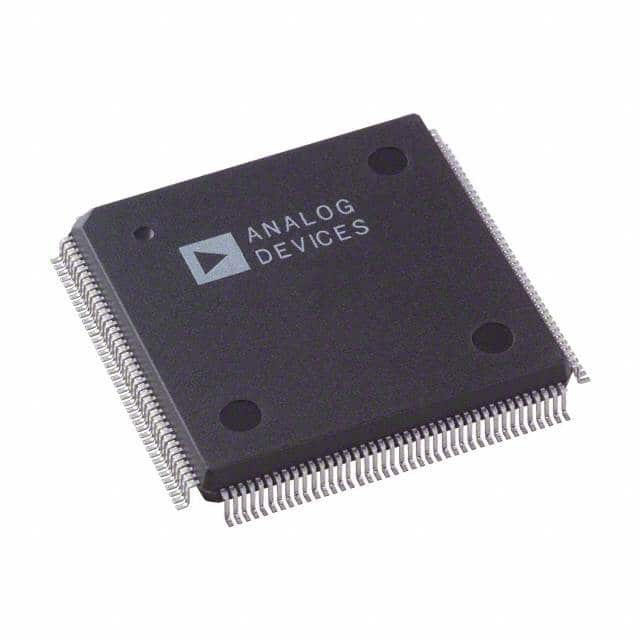
Analog Devices Inc. ADV7162KS220
- Part No.:
- ADV7162KS220
- Manufacturer:
- Analog Devices Inc.
- Category:
- Video Processing
- Package:
- 160-BQFP
- Datasheet:
-
 ADV7162KS220.pdf
- Description:
- IC DAC VIDEO COLOR 96BIT 160MQFP
- Quantity:
- Payment:

- Shipping:

Inventory:6,707
Please send an inquiry. Send us your inquiry, and we will respond immediately.
Product details
Overview
ADV7162KS220 from Analog Devices is a 96-bit, 220 MHz true-color video RAM-DAC with triple 10-bit gamma-correcting DACs, integrated 64×64 hardware cursor, and on-board PLL. It serves as the final-stage pixel-to-analog conversion engine in high-resolution graphics subsystems, supporting 1600×1200×24-bit @ 85 Hz refresh and RS-343A/RS-170 RGB analog outputs for professional imaging and digital TV.
For engineers reviewing the ADV7162KS220 datasheet, ADV7162KS220 pinout, ADV7162KS220 application, or ADV7162KS220 equivalent, key selection considerations include its 220 MHz pixel clock capability, 10-bit DAC matching (≤3% max), programmable multiplexed pixel port (2:1/4:1/8:1), tri-level sync support, and TTL/CMOS-compatible MPU interface for palette and register control.
Technical Context
The ADV7162KS220 implements a dual-path video data architecture: one path routes pixel data through 256×30 palette RAM before DAC conversion; the other bypasses RAM for direct pixel-to-DAC streaming-enabling real-time overlay of active video windows on graphics backgrounds. Its pixel port accepts 96 TTL-compatible inputs (R/G/B × 8 bits × 4 multiplex lanes) and supports 24-/16-/15-/8-bit formats with configurable LOADIN timing.
Internally, it integrates a fully programmable PLL referenced to a 900 kHz–40 MHz TTL input (PLLREF), generating precise pixel clocks and programmable outputs (PRGCKOUT at /4, /8, /16, /32). The device uses a 1.235 V external voltage reference (VREF) and RSET-based full-scale current calibration (280 Ω nominal) to achieve ±5% gray scale accuracy and ≤1 LSB INL/DNL across all three DACs.
Key Specifications
| Parameter | Value and Actual Design Meaning |
|---|---|
| Max Pixel Clock | 220 MHz - enables 1600×1200×24-bit @ 85 Hz screen refresh without undersampling |
| DAC Resolution | 10-bit per channel - delivers 1024 intensity levels per primary color for true-color fidelity |
| DAC Matching | ≤3% max DAC-to-DAC color matching - ensures consistent white point and chromaticity across RGB channels |
| Palette RAM | 3 × 256 × 10-bit - stores full 10-bit red/green/blue values per palette entry for gamma-corrected lookup |
| Pixel Port Width | 96-bit (R/G/B × 8 × 4) - supports 2:1, 4:1, or 8:1 multiplexing to match varying GPU bus widths and timing budgets |
| Analog Output Compliance | 0 to +1.4 V into 30 kΩ - directly drives doubly terminated 75 Ω RS-343A/RS-170 loads without external amplification |
| Supply Voltage | +5 V ±5% (VAA) - single-supply operation with dedicated analog/digital ground separation |
Pinout & Package
ADV7162KS220 is housed in a standard 160-lead plastic quad flatpack (QFP), RoHS-compliant, with exposed pad not specified for thermal enhancement (distinct from ADV7160's thermally enhanced PQUAD variant).
| Pin/Terminal | Circuit Role | Design Meaning |
|---|---|---|
| R0A–R7D (32 pins) | Red pixel data inputs (multiplexed A–D) | Accept 8-bit red component across four 2:1/4:1/8:1 multiplex lanes; latched on LOADIN rising edge |
| G0A–G7D (32 pins) | Green pixel data inputs (multiplexed A–D) | Accept 8-bit green component across same multiplex structure; synchronized with red/blue for pixel alignment |
| B0A–B7D (32 pins) | Blue pixel data inputs (multiplexed A–D) | Accept 8-bit blue component; combined with R/G forms 24-bit pixel word for palette addressing or direct DAC routing |
| LOADIN | Pixel data latch strobe | TTL input controlling data capture frequency: fLOADIN = fCLOCK/2 (2:1), /4 (4:1), or /8 (8:1) |
| CLOCK, CLOCK | Differential pixel clock inputs | ECL-compatible (VAA−1.0 V to VAA−1.6 V); accept 220 MHz fundamental clock with <2 ns rise/fall |
| IOR, IOG, IOB | RGB analog current outputs | High-impedance current sources delivering 15–22 mA full-scale; require 37.5 Ω termination for RS-343A compliance |
| VREF, RSET | Analog reference and gain calibration | VREF = 1.235 V ±1% sets DAC reference; RSET = 280 Ω calibrates black-to-white current to 17.62 mA (RS-343A) |
Key Features
| Feature | Design Value |
|---|---|
| Triple 10-bit gamma-correcting DACs | Delivers 30-bit corrected-color output via internal gamma matrix, enabling perceptually linear luminance response |
| 64×64×2 hardware cursor generator | Offloads CPU by generating X-Windows-compatible cursor in real time with independent palette and overlay blending |
| Programmable tri-level sync functionality | Supports composite sync, tri-sync (HDTV), and pedestal-free sync modes via CR22/CR41/CR42 register control |
| 256×30 color palette RAM | Three independent 256×10-bit RAM blocks (R/G/B) allow dynamic palette updates without frame tearing |
| JTAG test access port | IEEE 1149.1-compliant TAP (TCK/TMS/TDI/TDO) enables boundary-scan testing and in-system debug of video pipeline |
| MPU-controlled pixel port configuration | Software-selectable 24/16/15/8-bit data format, multiplex ratio, and RAM-bypass mode via Command Registers CR1–CR5 |
Applications
| Windows Accelerators | Professional Color Prepress Imaging |
|---|---|
Use Scenario: High-speed rendering of layered GUI elements, bitmaps, and text overlays in Windows NT/95 graphics subsystems. IC Role / Device Role / Timing Role: Final-stage RAM-DAC converting GPU-generated pixel pointers into analog RGB signals with sub-pixel cursor overlay. Use Value: 220 MHz throughput sustains 1600×1200×24-bit @ 85 Hz; 64×64 cursor generator eliminates CPU cycles otherwise spent on software cursor compositing. |
Use Scenario: Accurate reproduction of Pantone-matched CMYK separations on calibrated CRT proofing monitors. IC Role / Device Role / Timing Role: Precision gamma-corrected DAC delivering stable, low-drift RGB analog outputs traceable to ISO 12646 standards. Use Value: ≤3% DAC-to-DAC matching and ±5% gray scale error ensure consistent chromaticity across full luminance range; RSET/VREF calibration supports metrology-grade setup. |
| Digital Television (HDTV) | High-Resolution True-Color Graphics Workstations |
Use Scenario: Generation of tri-sync compatible RGB baseband video for HDTV studio monitors and broadcast test equipment. IC Role / Device Role / Timing Role: Video timing controller and DAC providing TRISYNC output, programmable blank/sync alignment, and jitter-clean analog outputs. Use Value: Tri-sync mode (CR17-enabled) and 250 ps RMS PLL jitter meet SMPTE 293M timing stability requirements for 1080i/720p signal generation. |
Use Scenario: Real-time visualization of CAD/CAM datasets, medical imaging, and scientific simulation on dual-head 2048×1536 displays. IC Role / Device Role / Timing Role: Core video interface IC handling pixel data serialization, palette mapping, and analog output drive for dual-channel display pipelines. Use Value: Dual-path architecture (RAM + bypass) enables simultaneous background rendering and foreground video playback; 96-bit port accommodates dual-GPU pixel streams. |
Equivalent & Alternatives
The following parts are listed as comparable options for similar video RAM-DAC applications.
| Alternative Part | Technical Difference | Application Difference | Selection Advice |
|---|---|---|---|
| ADV7160KS220 | Identical core functionality but packaged in thermally enhanced 160-pin PQUAD with heatsink; 35 mA higher IAA at 220 MHz (475 mA vs. 450 mA) | Preferred for sustained 220 MHz operation in convection-cooled enclosures where thermal margin is critical | Select ADV7160KS220 when board-level thermal resistance exceeds 15°C/W; otherwise ADV7162KS220 suffices for standard QFP layouts |
| THS8135IPHP | TI 10-bit triple DAC with 170 MHz max clock; no integrated palette RAM, cursor, or PLL; requires external clock synthesis | Suitable for simpler RGB signal generation where palette lookups and overlay are handled upstream | Choose THS8135IPHP only if system already provides full 24-bit pixel data and external timing control; lacks ADV7162KS220's integration benefits |
Compared with ADV7160KS220, the ADV7162KS220 trades thermal headroom for lower cost and standard QFP compatibility; compared with THS8135IPHP, it delivers full graphics subsystem integration-including palette, cursor, and PLL-at the expense of higher design complexity for non-RAM-DAC use cases.
Availability
ADV7162KS220 is available at Aetrix Electronics and suitable for Windows accelerators, professional color prepress imaging systems, digital television (HDTV) test equipment, and high-resolution true-color graphics workstations requiring stable component supply across extended production lifecycles.
Supply support for ADV7162KS220 includes scheduled delivery planning, volume procurement assistance, BOM continuity management, traceable sourcing, and lifecycle availability coordination for OEM customers, industrial embedded developers, connected-device designers, and electronics production programs.
Manufacturer
Analog Devices, Inc. is a global leader in high-performance analog, mixed-signal, and digital signal processing semiconductors, headquartered in Norwood, MA, with design centers worldwide and a legacy of innovation in precision data conversion since 1965.
The ADV7162KS220 belongs to Analog Devices' video interface product line, engineered specifically for high-bandwidth, low-latency graphics subsystems in professional imaging, broadcast, and workstation markets where color fidelity, timing accuracy, and integration density are critical.
FAQ
What is the maximum supported resolution and refresh rate for ADV7162KS220?
The ADV7162KS220 supports up to 1600×1200×24-bit resolution at 85 Hz screen refresh rate when operated at its rated 220 MHz pixel clock. This capability is confirmed in the device's "Modes of Operation" specification table and enabled by its 96-bit multiplexed pixel port and triple 10-bit DAC architecture. Lower resolutions such as 1600×1200×16-bit or 8-bit pseudo-color are also supported at the same refresh rate.
Does ADV7162KS220 include an integrated PLL, and what reference input does it require?
Yes, the ADV7162KS220 includes a fully programmable on-board PLL. It requires a TTL-compatible PLLREF input clock ranging from 900 kHz to 40 MHz, as specified in the "PLL Performance" section. The PLL generates the precise pixel clock and programmable outputs (e.g., PRGCKOUT at /4, /8, /16, /32 divisions), eliminating need for external clock synthesizers in most graphics subsystem designs.
How does the pixel port multiplexing work on ADV7162KS220, and what data formats does it support?
The ADV7162KS220's 96-bit pixel port uses 4-lane multiplexing (A–D) per color channel, supporting 2:1, 4:1, or 8:1 configurations. It accepts 24-bit true-color, 16-bit, 15-bit, or 8-bit pseudo-color data formats. LOADIN frequency scales inversely with multiplex ratio (e.g., fLOADIN = fCLOCK/8 in 8:1 mode), allowing flexible interface timing to match GPU output capabilities.
What is the function of the RSET and VREF pins on ADV7162KS220?
VREF is an analog input requiring a precise 1.235 V ±1% external reference (e.g., AD589) to set DAC accuracy; RSET is an analog input connected to ground via a 280 Ω resistor to calibrate full-scale output current. Together, they ensure RS-343A compliance (17.62 mA black-to-white current) and maintain ≤5% gray scale error across the luminance range.
Is ADV7162KS220 pin-compatible with ADV7160KS220, and what is the key mechanical difference?
ADV7162KS220 and ADV7160KS220 share identical pinouts and electrical specifications but differ in package construction: ADV7162KS220 uses a standard 160-lead plastic QFP, while ADV7160KS220 uses a thermally enhanced PQUAD with embedded heatsink. No PCB layout changes are required for substitution, though thermal design must account for the 25 mA higher IAA in the ADV7160 variant at 220 MHz.
ADV7162KS220 Specifications
- Product attributes
- Attribute value
- Manufacturer:
- Analog Devices Inc.
- Series:
- -
- Package/Case:
- 160-BQFP
- Packaging:
- Bag
- Product Status:
- Obsolete
- Function:
- RAM-DAC
- Applications:
- Professional Video
- Standards:
- -
- Control Interface:
- Serial
- Voltage - Supply:
- 4.75V ~ 5.25V
- Mounting Type:
- Surface Mount
- Grade:
- -
- Qualification:
- -
- Supplier Device Package:
- 160-PQFP (28x28)
ADV7162KS220 FAQ
1.How can I place an order for ADV7162KS220 through Aetrix?
Please submit a Request for Quotation (RFQ) for ADV7162KS220 on Aetrix. Our sales agent will provide a competitive quotation and guide you through the order confirmation once you accept the terms.
2.Are the price and stock information for ADV7162KS220 reliable?
The price and inventory of ADV7162KS220 are updated periodically and may fluctuate due to market conditions. Stock and pricing data are typically refreshed every 24 hours. Quotation validity for ADV7162KS220 is usually 5 days.
3.What payment methods are accepted for ADV7162KS220?
We accept Wire Transfer, PayPal, Credit Card, Western Union, MoneyGram, and Escrow for ADV7162KS220 transactions.
Note: Certain payment methods may incur a processing fee.
4.How is shipping managed for ADV7162KS220?
ADV7162KS220 orders can be shipped via leading logistics carriers, including DHL, UPS, FedEx, TNT, or Registered Mail.
Once your ADV7162KS220 order is processed, you will receive an email with the shipment details and tracking number.
Note: Tracking information may take up to 24 hours to appear. Express delivery typically takes 3–5 business days.
5.How can I obtain technical support or documentation for ADV7162KS220?
For technical support, including ADV7162KS220 datasheets, pinout diagrams, or application guidance, please contact our engineering support team. They can provide detailed documentation and assistance for your ADV7162KS220 requirements.
6.How does Aetrix verify that ADV7162KS220 is sourced from the original manufacturer or authorized distributors?
All ADV7162KS220 products on Aetrix are procured from qualified distributors and authorized channels. Our dedicated quality assurance team conducts strict verification, including traceability checks and, if necessary, third-party testing. This ensures that ADV7162KS220 meets industry standards.
7.What is the process for return or replacement of ADV7162KS220?
All ADV7162KS220 units undergo pre-shipment inspection (PSI). If there is an issue with ADV7162KS220, returns or replacements are accepted under the following conditions:
1.Quantity discrepancies, incorrect items, or visible external defects (such as breakage or corrosion), acknowledged by Aetrix.
2.The issue is reported within 90 days of delivery.
3.The ADV7162KS220 part is unused and in its original packaging.
Return procedure for ADV7162KS220:
1.Submit a request within 90 days.
2.Obtain a Return Material Authorization (RMA) from Aetrix.
ADV7162KS220 Tags
-
HDMI2C1-6C1
STMicroelectronics
-
ADA4430-1YKSZ-R7
Analog Devices Inc.

-
LM1881MX/NOPB
Texas Instruments
-
SN75DP130SSRGZR
Texas Instruments
-
EQCO30T5.2
Microchip Technology
-
LMH1980MM/NOPB
Texas Instruments
-
EQCO30R5.D
Microchip Technology

-
SII9022ACNU
Lattice Semiconductor Corporation
-
SN65DP159RGZR
Texas Instruments
-
SN65DP159RSBR
Texas Instruments
-
SN65DP141RLJR
Texas Instruments
-
LMH0303SQ/NOPB
Texas Instruments
Tech Hub

A practical engineering guide to 3.3V and 5V logic compatibility, input thresholds, resistor dividers, translator ICs, MOSFET level shifting, I2C pull-ups, timing limits and power-sequencing risks.

The 74HC595 uses push-pull logic outputs, while the TPIC6B595 uses 50 V open-drain DMOS sinks for higher-power loads. This guide compares timing, current limits, 3.3 V interfacing, load wiring, thermal…

The 74HC595 converts serial data into eight stable parallel outputs. This guide covers pin functions, shift and storage timing, OE and MR behavior, drive-current limits, cascading, voltage compatibilit…

A technical comparison of level-sensitive latches and edge-triggered flip-flops, covering timing windows, setup and hold limits, master–slave operation, time borrowing, race-through, HDL inference and…

A D latch stores one bit while Enable controls when data can pass. This reference covers gate-level operation, truth tables, transparency, setup and hold timing, LE versus OE, common ICs and practical …

An SR latch stores one bit through cross-coupled feedback. This engineering reference covers NOR and NAND implementations, truth tables, forbidden-state recovery, gated operation, switch debouncing, fa…

Latch circuits retain one bit through feedback. This technical reference covers SR and D latches, truth tables, transparency, timing limits, latch-versus-flip-flop behavior, applications and common log…

An engineering guide to LED driver operation, constant-current and constant-voltage outputs, linear and switching topologies, dimming, IC selection, calculations, replacement compatibility, and fault c…

Operational amplifier guide covering op amp basics, feedback, ideal vs real op amps, common configurations, buffer circuits, offset, bias current, gain-bandwidth, slew rate, rail-to-rail limits and sel…

Jumper cables guide covering safe connection order, red and black clamp placement, final ground connection, cable gauge, length, clamp quality, copper vs CCA cables, jump starter comparison and battery…


