
 My Inquiry
 My Account


Analog Devices Inc. ADV7401KSTZ-140
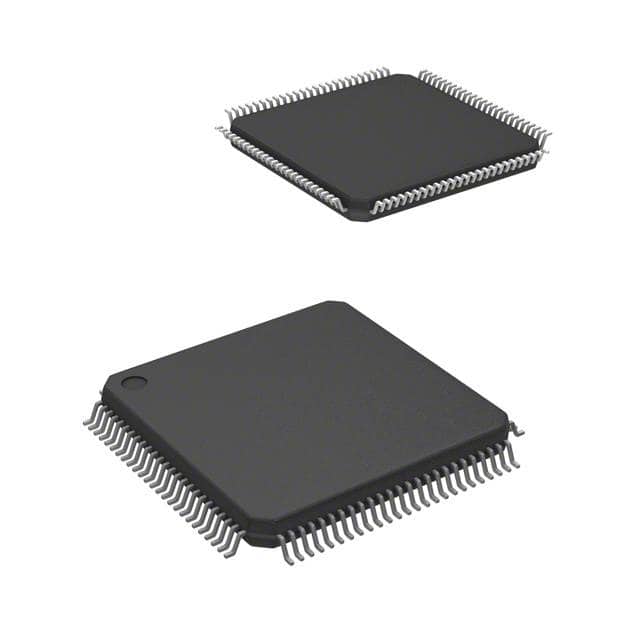
- Part No.:
- ADV7401KSTZ-140
- Manufacturer:
- Analog Devices Inc.
- Category:
- Video Processing
- Package:
- 100-LQFP
- Datasheet:
-
 ADV7401KSTZ-140.pdf
- Description:
- IC VIDEO DECODER 100LQFP
- Quantity:
- Payment:

- Shipping:

Inventory:2,847
Please send an inquiry. Send us your inquiry, and we will respond immediately.
Product details
Overview
ADV7401KSTZ-140 from Analog Devices is a 10-bit integrated multiformat SDTV/HDTV video decoder and RGB graphics digitizer, supporting analog input sampling up to 140 MHz, NTSC/PAL/SECAM decoding, 720p/1080i HDTV component processing, and digitization of RGB graphics up to 1280 × 1024 @ 75 Hz. It serves as the front-end video acquisition IC in high-definition television receivers and set-top boxes.
For engineers reviewing the ADV7401KSTZ-140 datasheet, ADV7401KSTZ-140 pinout, ADV7401KSTZ-140 application, or ADV7401KSTZ-140 equivalent, key selection considerations include its 140 MHz speed grade, dual-standard definition/component processor architecture, 12-channel analog mux, 24-bit digital input port for DVI/HDMI Rx interfacing, and industrial-grade thermal performance with 0°C to +70°C operating range.
Technical Context
The ADV7401KSTZ-140 integrates two independent processing engines: a Standard Definition Processor (SDP) handling CVBS/S-video with adaptive 2D comb filtering and automatic PAL/NTSC/SECAM detection, and a Component Processor (CP) supporting 525p/625p/720p/1080i formats and RGB graphics digitization. Both sections share four 10-bit ADCs clocked by a line-locked LLC1 output ranging from 12.825 MHz to 140 MHz.
It features a 24-bit digital input port for receiving pixel data from HDMI/DVI receiver ICs, programmable interrupt generation via the INT pin, VBI data slicing for teletext and closed captioning, and SCART fast-blank overlay control between CVBS and RGB signals using the FB pin.
Key Specifications
| Parameter | Value and Actual Design Meaning |
|---|---|
| Max Input Sampling Rate | 140 MHz - enables digitization of SXGA RGB graphics at 75 Hz and 1080i HDTV signals. |
| ADC Resolution | 10-bit - provides 1024-level luminance/chroma quantization for broadcast-quality video fidelity. |
| Analog Input Channels | 12-channel mux - supports simultaneous connection of multiple video sources without external switching. |
| Output Interface | 12-bit 4:4:4 / 8-bit 4:2:2 DDR pixel interface - delivers high-bandwidth YCrCb or RGB streams to downstream display controllers. |
| Operating Temperature | 0°C to +70°C - validated commercial-grade range for consumer HDTV and STB applications. |
| Crystal Frequency | 28.63636 MHz - single-crystal reference enabling precise subcarrier lock and timing stability across all standards. |
| Video Standards | PAL/NTSC/SECAM, 525i/625i/525p/625p/720p/1080i - full multiformat support including progressive scan and HDTV component modes. |
Pinout & Package
LQFP-100 package with 0.5 mm pitch, thermally enhanced for sustained video processing loads; JEDEC MS-026AC compliant.
| Pin/Terminal | Circuit Role | Design Meaning |
|---|---|---|
| AIN1–AIN12 | Analog Video Inputs | Accept composite, S-video, RGB, YPrPb, or SCART signals; internally multiplexed to four 10-bit ADCs. |
| LLC1 | Line-Locked Clock Output | Pixel clock output (12.825–140 MHz) synchronized to incoming video timing; drives pixel data ports. |
| P0–P40 | Digital Pixel I/O | Configurable 24-bit parallel bus: inputs for DVI/HDMI Rx data, outputs for decoded YCrCb/RGB pixel streams. |
| FB | Fast Blank Control Input | Switches overlay path between CVBS and RGB analog inputs during SCART operation. |
| INT | Programmable Interrupt Output | Active-high/low signal triggered by status changes in SDP/CP registers or VBI events. |
| XTAL / XTAL1 | Clock Reference Interface | Supports 28.63636 MHz crystal (XTAL1 grounded) or external oscillator (XTAL driven, XTAL1 NC). |
| RESET | Asynchronous Reset Input | Active-low signal requiring ≥5 ms pulse width to initialize internal state machines and PLLs. |
| SCLK1/SDA1 | I²C Control Port | 400 kHz master interface for configuration of registers, color controls, and processor mode selection. |
Key Features
| Feature | Design Value |
|---|---|
| Four 10-bit ADCs | Enables simultaneous digitization of up to four analog video channels with ≤±2.5 LSB INL at 140 MHz. |
| SDP + CP Dual-Core Architecture | Allows concurrent processing of legacy CVBS and modern HDTV component signals without resource contention. |
| 24-bit Digital Input Port | Accepts pixel data directly from HDMI/DVI receiver ICs, eliminating need for external FIFO buffering. |
| VBI Data Slicer | Extracts teletext, closed captioning, WSS, CGMS, and VPS data from vertical blanking intervals in real time. |
| SCART Fast Blank Support | Enables seamless RGB-over-CVBS overlay switching in European TV systems using dedicated FB pin control. |
Applications
| LCD/DLP Rear Projection HDTV | HDTV Set-Top Box with PVR |
|---|---|
Use Scenario: High-resolution video acquisition from antenna, cable, or satellite tuners feeding native 720p/1080i display panels. IC Role / Device Role / Timing Role: Primary video decoder and graphics digitizer converting analog CVBS/YPrPb and digital HDMI Rx streams into pixel-aligned YCrCb for panel timing controller. Use Value: Single-chip integration reduces BOM count and PCB area while maintaining broadcast-grade SNR (>58 dB luma flat field) and differential phase accuracy (≤0.5°). | Use Scenario: Multiformat input handling in DVR-capable STBs supporting analog broadcast, HDMI passthrough, and time-shifted playback. IC Role / Device Role / Timing Role: Front-end video acquisition IC providing decoded ITU-R BT.656 and DDR pixel outputs to video encoder and storage subsystems. Use Value: 140 MHz sampling enables lossless capture of SXGA graphics for on-screen menus and 1080i content for recording without interpolation artifacts. |
| PDP HDTV | AVR Receiver |
Use Scenario: Plasma display processing requiring robust noise immunity, macrovision detection, and letterbox/widescreen signaling extraction. IC Role / Device Role / Timing Role: Video decoder with integrated VBI slicer and Macrovision detection engine feeding display timing generator and audio/video sync logic. Use Value: Certified Macrovision detection on composite/S-video inputs ensures compliance with copy-protection requirements for premium content playback. | Use Scenario: Multi-source A/V switching hub accepting analog video from DVD players, game consoles, and broadcast tuners. IC Role / Device Role / Timing Role: Universal video front-end supporting NTSC/PAL/SECAM auto-detection and RGB graphics digitization for OSD rendering. Use Value: 12-channel analog mux eliminates need for external video switches, simplifying routing and reducing insertion loss in multi-input designs. |
Equivalent & Alternatives
The following parts are listed as comparable options for similar video decoder applications.
| Alternative Part | Technical Difference | Application Difference | Selection Advice |
|---|---|---|---|
| ADV7403KSTZ | Same 10-bit architecture but rated for 110 MHz max sampling; lacks 140 MHz SXGA support and reduced VBI feature set. | Targeted at cost-sensitive 720p-only designs without requirement for 1280×1024 graphics digitization. | Select ADV7403KSTZ only if 140 MHz capability and full VBI slicing are not required. |
| MAX9526ETM+ | 8-bit decoder with 40 MHz max sampling; no component processor, no DDR output, no VBI slicing. | Intended for basic SDTV applications like portable media players or low-cost monitors. | Not suitable as functional replacement; use only in new SD-only designs where HDTV and graphics digitization are excluded. |
Compared with ADV7403KSTZ and MAX9526ETM+, the ADV7401KSTZ-140 uniquely delivers 140 MHz sampling for SXGA graphics, dual SDP/CP processing, and full VBI data recovery-making it irreplaceable in high-end HDTV and STB platforms requiring multiformat flexibility and broadcast compliance.
Availability
ADV7401KSTZ-140 is available at Aetrix Electronics and suitable for LCD/DLP rear projection HDTVs, HDTV set-top boxes with PVR, and AVR receivers requiring stable component supply, long-lifecycle support, and guaranteed traceability.
Supply support for ADV7401KSTZ-140 includes scheduled delivery planning, volume procurement assistance, BOM continuity management, traceable sourcing, and lifecycle availability coordination for OEM customers, industrial embedded developers, connected-device designers, and electronics production programs.
Manufacturer
Analog Devices is a global leader in high-performance analog, mixed-signal, and DSP technologies, headquartered in Norwood, MA, with deep expertise in precision signal processing for video, communications, and industrial systems.
The ADV7401 product line was designed specifically for multiformat video acquisition in consumer HDTV platforms, integrating SDTV decoding, HDTV component processing, and RGB graphics digitization into a single die to reduce system complexity and improve timing integrity.
FAQ
What video standards does the ADV7401KSTZ-140 support?
The ADV7401KSTZ-140 supports NTSC (J/M/4.43), PAL (B/D/G/H/I/M/N/60), and SECAM (B/D/G/K/L) via composite and S-video inputs, plus component formats including 525i/625i/525p/625p/720p/1080i. It also digitizes RGB graphics up to 1280 × 1024 @ 75 Hz. All standard detection and decoding functions are implemented in hardware within the ADV7401KSTZ-140's SDP and CP cores.
Does the ADV7401KSTZ-140 include Macrovision copy protection detection?
Yes, the ADV7401KSTZ-140 includes certified Macrovision copy protection detection on both composite and S-video inputs across all supported PAL/NTSC/SECAM formats. This functionality is implemented in the SDP section and requires no external components-detection status is reported via register bits accessible through the ADV7401KSTZ-140's I²C control port.
What is the maximum pixel clock frequency supported by the ADV7401KSTZ-140?
The ADV7401KSTZ-140 supports a maximum LLC1 pixel clock output frequency of 140 MHz, which is explicitly specified for this speed grade in the ordering guide and electrical characteristics tables. This enables digitization of SXGA (1280 × 1024 @ 75 Hz) RGB graphics and 1080i HDTV component video without undersampling or interpolation artifacts.
Can the ADV7401KSTZ-140 accept digital video input from an HDMI receiver IC?
Yes, the ADV7401KSTZ-140 includes a dedicated 24-bit digital input port (pins P0–P23, DE_IN, HS_IN/CS_IN, VS_IN, DCLK_IN) that accepts pixel data from HDMI or DVI receiver ICs. This port operates in 24-bit RGB mode and supports embedded sync timing, allowing direct connection without external FIFOs or glue logic in the ADV7401KSTZ-140-based design.
What is the operating temperature range for the ADV7401KSTZ-140?
The ADV7401KSTZ-140 is specified for operation from 0°C to +70°C, as confirmed in Table 1 footnote 2 and Table 2 footnote 2 of the Rev. B datasheet. This commercial temperature grade distinguishes it from the industrial-grade ADV7401 variants rated for −40°C to +85°C, and aligns with typical thermal envelopes of consumer HDTV and STB chassis.
ADV7401KSTZ-140 Specifications
- Product attributes
- Attribute value
- Manufacturer:
- Analog Devices Inc.
- Series:
- -
- Package/Case:
- 100-LQFP
- Packaging:
- Tray
- Product Status:
- Active
- Function:
- Decoder, Digitizer
- Applications:
- Consumer Video
- Standards:
- ITU-R BT.656, NTSC, PAL, SECAM
- Control Interface:
- Serial
- Voltage - Supply:
- 1.65V ~ 3.6V
- Mounting Type:
- Surface Mount
- Grade:
- -
- Qualification:
- -
- Supplier Device Package:
- 100-LQFP (14x14)
ADV7401KSTZ-140 FAQ
1.How can I place an order for ADV7401KSTZ-140 through Aetrix?
Please submit a Request for Quotation (RFQ) for ADV7401KSTZ-140 on Aetrix. Our sales agent will provide a competitive quotation and guide you through the order confirmation once you accept the terms.
2.Are the price and stock information for ADV7401KSTZ-140 reliable?
The price and inventory of ADV7401KSTZ-140 are updated periodically and may fluctuate due to market conditions. Stock and pricing data are typically refreshed every 24 hours. Quotation validity for ADV7401KSTZ-140 is usually 5 days.
3.What payment methods are accepted for ADV7401KSTZ-140?
We accept Wire Transfer, PayPal, Credit Card, Western Union, MoneyGram, and Escrow for ADV7401KSTZ-140 transactions.
Note: Certain payment methods may incur a processing fee.
4.How is shipping managed for ADV7401KSTZ-140?
ADV7401KSTZ-140 orders can be shipped via leading logistics carriers, including DHL, UPS, FedEx, TNT, or Registered Mail.
Once your ADV7401KSTZ-140 order is processed, you will receive an email with the shipment details and tracking number.
Note: Tracking information may take up to 24 hours to appear. Express delivery typically takes 3–5 business days.
5.How can I obtain technical support or documentation for ADV7401KSTZ-140?
For technical support, including ADV7401KSTZ-140 datasheets, pinout diagrams, or application guidance, please contact our engineering support team. They can provide detailed documentation and assistance for your ADV7401KSTZ-140 requirements.
6.How does Aetrix verify that ADV7401KSTZ-140 is sourced from the original manufacturer or authorized distributors?
All ADV7401KSTZ-140 products on Aetrix are procured from qualified distributors and authorized channels. Our dedicated quality assurance team conducts strict verification, including traceability checks and, if necessary, third-party testing. This ensures that ADV7401KSTZ-140 meets industry standards.
7.What is the process for return or replacement of ADV7401KSTZ-140?
All ADV7401KSTZ-140 units undergo pre-shipment inspection (PSI). If there is an issue with ADV7401KSTZ-140, returns or replacements are accepted under the following conditions:
1.Quantity discrepancies, incorrect items, or visible external defects (such as breakage or corrosion), acknowledged by Aetrix.
2.The issue is reported within 90 days of delivery.
3.The ADV7401KSTZ-140 part is unused and in its original packaging.
Return procedure for ADV7401KSTZ-140:
1.Submit a request within 90 days.
2.Obtain a Return Material Authorization (RMA) from Aetrix.
ADV7401KSTZ-140 Tags
-
HDMI2C1-6C1
STMicroelectronics
-
ADA4430-1YKSZ-R7
Analog Devices Inc.

-
LM1881MX/NOPB
Texas Instruments
-
SN75DP130SSRGZR
Texas Instruments
-
EQCO30T5.2
Microchip Technology
-
LMH1980MM/NOPB
Texas Instruments
-
EQCO30R5.D
Microchip Technology

-
SII9022ACNU
Lattice Semiconductor Corporation
-
SN65DP159RGZR
Texas Instruments
-
SN65DP159RSBR
Texas Instruments
-
SN65DP141RLJR
Texas Instruments
-
LMH0303SQ/NOPB
Texas Instruments
Tech Hub

A practical engineering guide to 3.3V and 5V logic compatibility, input thresholds, resistor dividers, translator ICs, MOSFET level shifting, I2C pull-ups, timing limits and power-sequencing risks.

The 74HC595 uses push-pull logic outputs, while the TPIC6B595 uses 50 V open-drain DMOS sinks for higher-power loads. This guide compares timing, current limits, 3.3 V interfacing, load wiring, thermal…

The 74HC595 converts serial data into eight stable parallel outputs. This guide covers pin functions, shift and storage timing, OE and MR behavior, drive-current limits, cascading, voltage compatibilit…

A technical comparison of level-sensitive latches and edge-triggered flip-flops, covering timing windows, setup and hold limits, master–slave operation, time borrowing, race-through, HDL inference and…

A D latch stores one bit while Enable controls when data can pass. This reference covers gate-level operation, truth tables, transparency, setup and hold timing, LE versus OE, common ICs and practical …

An SR latch stores one bit through cross-coupled feedback. This engineering reference covers NOR and NAND implementations, truth tables, forbidden-state recovery, gated operation, switch debouncing, fa…

Latch circuits retain one bit through feedback. This technical reference covers SR and D latches, truth tables, transparency, timing limits, latch-versus-flip-flop behavior, applications and common log…

An engineering guide to LED driver operation, constant-current and constant-voltage outputs, linear and switching topologies, dimming, IC selection, calculations, replacement compatibility, and fault c…

Operational amplifier guide covering op amp basics, feedback, ideal vs real op amps, common configurations, buffer circuits, offset, bias current, gain-bandwidth, slew rate, rail-to-rail limits and sel…

Jumper cables guide covering safe connection order, red and black clamp placement, final ground connection, cable gauge, length, clamp quality, copper vs CCA cables, jump starter comparison and battery…


