
 My Inquiry
 My Account


Diodes Incorporated AH1898-CA4-7
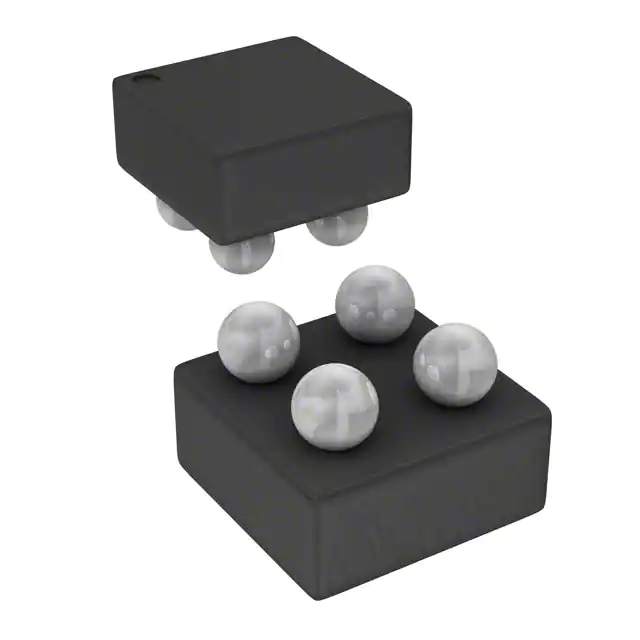
- Part No.:
- AH1898-CA4-7
- Manufacturer:
- Diodes Incorporated
- Category:
- Switches (Solid State)
- Package:
- 4-UFBGA, WLBGA
- Datasheet:
-
 AH1898-CA4-7.pdf
- Description:
- MAGNETIC SWITCH OMNI UWLB0808-4
- Quantity:
- Payment:

- Shipping:

Inventory:38,185
Please send an inquiry. Send us your inquiry, and we will respond immediately.
Product details
Overview
AH1898-CA4-7 from Diodes Incorporated is a programmable micropower omnipolar Hall-effect switch IC with dual magnetic sensitivity bands (Bop/Brp), internal pull-up/pull-down, and hibernating clocking architecture. It operates from 1.6V to 3.6V, draws only 4.3µA typical average supply current at 1.8V, features 8kV HBM ESD rating on VDD/GND/OUTPUT pins, and is housed in a 0.81mm × 0.81mm U-WLB0808-4 (Type A1) CSP package. It enables proximity detection in battery-powered portable electronics such as smartphone flip covers and tablet holsters.
For engineers reviewing the AH1898-CA4-7 datasheet, AH1898-CA4-7 pinout, AH1898-CA4-7 application, or AH1898-CA4-7 equivalent, key selection considerations include its programmable BSEL-driven band switching (low/high sensitivity), chopper-stabilized temperature stability (±0.5G/°C typical drift), ultra-low sleep current (2.5µA), and guaranteed output validity after second awake phase following BSEL transition.
Technical Context
The AH1898 implements a chopper-stabilized Hall plate with offset cancellation and a sleep/awake logic controller that cycles between 100ms periods (50–100ms awake time, >99.9% duty cycle in sleep). Its band-select architecture uses the BSEL pin to configure two discrete magnetic operating windows: low-band Bop = ±18–55G and high-band Bop = ±43–80G, with hysteresis ≥10G in both modes.
Output is open-drain, actively pulled low when |B| exceeds Bop and held until |B| falls below Brp; no external pull-up is required due to integrated pull-down capability. The device maintains stable switching points across –40°C to +85°C and exhibits enhanced immunity to mechanical stress and RF noise via its chopper stabilization and internal filtering.
Key Specifications
| Parameter | Value and Actual Design Meaning |
|---|---|
| Supply Voltage Range | 1.6V to 3.6V - supports direct interface with 1.8V/2.5V/3.3V microcontrollers and Li-ion/Li-poly battery systems without level-shifting. |
| Avg. Supply Current | 4.3µA @ 1.8V - enables multi-year operation on coin-cell batteries in always-on proximity sensing applications. |
| Magnetic Sensitivity Bands | Low band: ±18–55G Bop; High band: ±43–80G Bop - selectable via BSEL pin voltage (≤0.5V or ≥1.4V), enabling firmware-tunable detection range. |
| ESD Rating | 8kV HBM on VDD/GND/OUTPUT - eliminates need for external TVS diodes in handheld consumer designs subject to user handling. |
| Operating Temperature | –40°C to +85°C - validated for use in smartphones, tablets, and portable PCs exposed to ambient thermal cycling. |
| Package Dimensions | 0.81mm × 0.81mm × 0.326mm (typ.) - reduces PCB footprint by >70% vs. SOT-23, critical for ultra-thin mobile form factors. |
| Output Type | Open-drain with internal pull-down - simplifies interface to MCU GPIOs and avoids external resistors in most configurations. |
Pinout & Package
Package: U-WLB0808-4 (Type A1), 0.81mm × 0.81mm CSP with bottom-side solder balls; moisture sensitivity level 1 per J-STD-020; RoHS-compliant, halogen- and antimony-free "Green" construction.
| Pin/Terminal | Circuit Role | Design Meaning |
|---|---|---|
| A1 | BSEL | Band select input: ≤0.5V → low-band mode (higher sensitivity); ≥1.4V or floating → high-band mode (lower sensitivity); transitions require ≥100ms stabilization before valid output. |
| A2 | GND | Ground reference for Hall sensor, amplifier, and output driver; must be connected directly to system ground plane for ESD and noise immunity. |
| B1 | VDD | Power supply input: accepts 1.6–3.6V; requires 100nF ceramic decoupling capacitor near package for noise suppression and power rail stability. |
| B2 | OUTPUT | Open-drain output: sinks up to 2.5mA; pulls low when magnetic field exceeds Bop, remains high-impedance otherwise; compatible with 1.8V/3.3V logic inputs. |
Key Features
| Feature | Design Value |
|---|---|
| Omnipolar magnetic response | Detects either north or south pole orientation - eliminates mechanical polarity constraints during assembly and enables single-sensor solutions for clamshell hinge detection. |
| Programmable sensitivity bands | Two factory-trimmed Bop/Brp ranges selected via BSEL pin - allows one BOM item to serve multiple mechanical gap tolerances or magnet strengths without hardware change. |
| Chopper-stabilized architecture | Reduces thermal drift of switch points to <±0.5G/°C and minimizes offset voltage shift under mechanical stress - ensures consistent actuation over device lifetime and environmental stress. |
| Hibernating clocking system | 99.9% duty-cycled sleep mode with 2.5µA IDD(sleep) - extends battery life in always-monitoring applications while maintaining fast wake-up (<100µs) for event capture. |
| Integrated pull-down capability | Eliminates need for external pull-down resistor on OUTPUT pin - reduces component count and PCB area in space-constrained portable designs. |
Applications
| Smartphone Flip Cover Detection | Tablet Holster Presence Sensing |
|---|---|
|
Use Scenario: Detects opening/closing of magnet-equipped flip cover on smartphones to enable auto-wake/sleep functionality. IC Role / Device Role / Timing Role: Omnipolar Hall switch providing edge-triggered ON/OFF signal synchronized to magnet proximity; BSEL set to low band for reliable actuation with small neodymium magnets at 2–3mm air gaps. Use Value: Enables zero-power cover detection with <4.3µA average current draw, extending standby battery life beyond 30 days on 100mAh coin cell. |
Use Scenario: Monitors insertion/removal of tablet into protective holster to suspend/resume display and radio functions. IC Role / Device Role / Timing Role: Proximity sensor interfacing directly to tablet SoC GPIO; BSEL dynamically switched by firmware to adapt to varying holster magnet strength across production batches. Use Value: Eliminates manual calibration steps during manufacturing and supports field-upgradable sensitivity via software control. |
| Portable PC Display Lid Switch | Handheld Gaming Console Position Sensing |
|
Use Scenario: Detects laptop lid open/close state to control display backlight and system suspend/resume behavior. IC Role / Device Role / Timing Role: Low-voltage Hall switch operating from 1.8V system rail; integrated pull-down ensures clean logic-level output without external components. Use Value: Reduces bill-of-materials cost and PCB area by 0.4mm² compared to SOT-23 alternatives, critical for thin-and-light notebook designs. |
Use Scenario: Senses slider position in handheld gaming console to enable/disable touch controls or adjust UI layout based on physical configuration. IC Role / Device Role / Timing Role: Band-selectable Hall switch mounted adjacent to sliding mechanism; high-band mode used for coarse detection, low-band for fine-position resolution. Use Value: Single device replaces dual-Hall or reed-switch solutions, improving reliability against shock/vibration and eliminating contact wear failure modes. |
Equivalent & Alternatives
The following parts are listed as comparable options for similar omnipolar Hall-effect switch applications.
| Alternative Part | Technical Difference | Application Difference | Selection Advice |
|---|---|---|---|
| AL33201EUA-7 | Fixed sensitivity (no BSEL), 2.5µA avg current, same U-WLB0808-4 package, but lacks programmable band selection and has narrower Bop range (±25–45G). | Suitable only for fixed-gap applications where magnet strength and placement are tightly controlled; cannot adapt to variable mechanical tolerances. | Select when BOM simplification outweighs need for field-adjustable sensitivity and design margin is sufficient for single-band operation. |
| TMAG5170AHQDBVR | 3-axis linear Hall sensor with SPI interface, 1.71–3.6V supply, 1.5mA active current, 16-bit output resolution - not a switch, requires host processing. | Used for precise angular/position measurement rather than binary proximity detection; adds MCU firmware overhead and power budget impact. | Select only when absolute position data or multi-axis sensing is required; not a drop-in replacement for simple ON/OFF switching. |
Compared with AL33201EUA-7 and TMAG5170AHQDBVR, the AH1898-CA4-7 uniquely delivers firmware-controllable magnetic thresholds in an ultra-low-power switch form factor, enabling one hardware design to support multiple mechanical variants while maintaining µA-level system standby consumption.
Availability
AH1898-CA4-7 is available at Aetrix Electronics and suitable for smartphone cover detection, tablet holster sensing, and portable PC lid switch applications requiring stable component supply, long-term lifecycle support, and RoHS-compliant miniature packaging.
Supply support for AH1898-CA4-7 includes scheduled delivery planning, volume procurement assistance, BOM continuity management, traceable sourcing, and lifecycle availability coordination for OEM customers, industrial embedded developers, connected-device designers, and electronics production programs.
Manufacturer
Diodes Incorporated is a global manufacturer of discrete semiconductors and analog ICs, specializing in high-reliability, low-power, and miniaturized solutions for consumer, industrial, and computing markets.
The AH1898 belongs to Diodes' programmable Hall-effect switch product line, engineered specifically for battery-constrained portable electronics where magnetic detection must coexist with multi-year battery life and sub-millimeter PCB real estate constraints.
FAQ
What is the minimum magnetic field strength required to activate the AH1898-CA4-7 in low-band mode?
In low-band mode (BSEL ≤ 0.5V), the typical operate point (Bop) is ±35 Gauss for both north and south poles, with a minimum guaranteed value of ±18 Gauss at 25°C and VDD = 1.8V. At –40°C, Bop shifts by ≤±3G; at +85°C, shift is ≤±5G. Designers should allow ≥20% margin above minimum Bop to ensure robust operation across temperature and mechanical tolerance variations.
Can the BSEL pin be toggled dynamically during normal operation?
Yes - the BSEL pin can be driven by a microcontroller GPIO to switch between low- and high-band sensitivity on-the-fly. However, after each BSEL transition, the output remains invalid for up to 200.1ms (typical 100ms) until the second complete awake phase completes. During this transition window, the output reflects the prior band's state and must not be sampled for system decisions.
Does the AH1898-CA4-7 require an external decoupling capacitor?
Yes - a 100nF ceramic capacitor is recommended between VDD and GND, placed as close as possible to the device's VDD and GND pins. This stabilizes the internal regulator during wake-up events and improves immunity to RF noise and supply transients, especially critical in noisy portable environments with shared power rails.
How does the AH1898-CA4-7 achieve ultra-low average current consumption?
The device uses a hibernating clocking system that places the Hall sensor, amplifier, and logic into deep sleep between sampling intervals. It wakes every 50–100ms for ~100µs to sample magnetic field and update output, resulting in 99.9% sleep duty cycle. Combined with optimized analog front-end biasing, this achieves 4.3µA average current at 1.8V - verified across full temperature and voltage range.
AH1898-CA4-7 Specifications
- Product attributes
- Attribute value
- Manufacturer:
- Diodes Incorporated
- Series:
- -
- Package/Case:
- 4-UFBGA, WLBGA
- Packaging:
- Tape & Reel (TR)
- Product Status:
- Active
- Function:
- Omnipolar Switch
- Technology:
- Hall Effect
- Polarization:
- North Pole, South Pole
- Sensing Range:
- Programmable
- Test Condition:
- -
- Voltage - Supply:
- 1.6V ~ 3.6V
- Current - Supply (Max):
- 8µA
- Current - Output (Max):
- 2.5mA
- Output Type:
- Push-Pull
- Features:
- -
- Operating Temperature:
- -40°C ~ 85°C (TA)
- Grade:
- -
- Qualification:
- -
- Mounting Type:
- Surface Mount
- Supplier Device Package:
- U-WLB0808-4
AH1898-CA4-7 FAQ
1.How can I place an order for AH1898-CA4-7 through Aetrix?
Please submit a Request for Quotation (RFQ) for AH1898-CA4-7 on Aetrix. Our sales agent will provide a competitive quotation and guide you through the order confirmation once you accept the terms.
2.Are the price and stock information for AH1898-CA4-7 reliable?
The price and inventory of AH1898-CA4-7 are updated periodically and may fluctuate due to market conditions. Stock and pricing data are typically refreshed every 24 hours. Quotation validity for AH1898-CA4-7 is usually 5 days.
3.What payment methods are accepted for AH1898-CA4-7?
We accept Wire Transfer, PayPal, Credit Card, Western Union, MoneyGram, and Escrow for AH1898-CA4-7 transactions.
Note: Certain payment methods may incur a processing fee.
4.How is shipping managed for AH1898-CA4-7?
AH1898-CA4-7 orders can be shipped via leading logistics carriers, including DHL, UPS, FedEx, TNT, or Registered Mail.
Once your AH1898-CA4-7 order is processed, you will receive an email with the shipment details and tracking number.
Note: Tracking information may take up to 24 hours to appear. Express delivery typically takes 3–5 business days.
5.How can I obtain technical support or documentation for AH1898-CA4-7?
For technical support, including AH1898-CA4-7 datasheets, pinout diagrams, or application guidance, please contact our engineering support team. They can provide detailed documentation and assistance for your AH1898-CA4-7 requirements.
6.How does Aetrix verify that AH1898-CA4-7 is sourced from the original manufacturer or authorized distributors?
All AH1898-CA4-7 products on Aetrix are procured from qualified distributors and authorized channels. Our dedicated quality assurance team conducts strict verification, including traceability checks and, if necessary, third-party testing. This ensures that AH1898-CA4-7 meets industry standards.
7.What is the process for return or replacement of AH1898-CA4-7?
All AH1898-CA4-7 units undergo pre-shipment inspection (PSI). If there is an issue with AH1898-CA4-7, returns or replacements are accepted under the following conditions:
1.Quantity discrepancies, incorrect items, or visible external defects (such as breakage or corrosion), acknowledged by Aetrix.
2.The issue is reported within 90 days of delivery.
3.The AH1898-CA4-7 part is unused and in its original packaging.
Return procedure for AH1898-CA4-7:
1.Submit a request within 90 days.
2.Obtain a Return Material Authorization (RMA) from Aetrix.
AH1898-CA4-7 Tags
-
TCS40DLR,LF
Toshiba Semiconductor and Storage
-
DRV5032FBDBZR
Texas Instruments
-
DRV5032FADBZR
Texas Instruments
-
AH1912-FA-7
Diodes Incorporated
-
AH1913-W-7
Diodes Incorporated
-
AH1911-W-7
Diodes Incorporated
-
TLI49631MXTSA1
Infineon Technologies
-
SM453R
Honeywell Sensing and Productivity Solutions
-
MLX90248ESE-EBA-000-RE
Melexis Technologies NV
-
MLX92213ELD-AAA-000-RE
Melexis Technologies NV
-
TLE4913HTSA1
Infineon Technologies
-
US5781ESE-AAA-000-RE
Melexis Technologies NV
Tech Hub

Operational amplifier guide covering op amp basics, feedback, ideal vs real op amps, common configurations, buffer circuits, offset, bias current, gain-bandwidth, slew rate, rail-to-rail limits and sel…

Jumper cables guide covering safe connection order, red and black clamp placement, final ground connection, cable gauge, length, clamp quality, copper vs CCA cables, jump starter comparison and battery…

LDO regulator guide covering low dropout voltage, power dissipation, thermal design, PSRR, output noise, capacitor stability, adjustable LDO circuits, LDO vs buck converter and datasheet selection chec…

Conditional Access Module guide covering CAM meaning, CI/CI+ interface, smart card authorization, DVB security workflow, TV and set-top box compatibility, internal electronics, ESD protection, connecto…

Guide to electronic component obsolescence covering EOL risk, PCN/PDN notices, last-time buy planning, replacement options, form-fit-function validation, counterfeit risk and BOM lifecycle management.

18650 battery guide covering lithium-ion cell basics, 3.6V/3.7V voltage, 4.2V charging, mAh and Wh capacity, protected cells, chargers, BMS, series-parallel packs, holders, welding and sourcing checks.…

Hall effect sensor guide covering working principle, linear and digital sensors, Arduino circuits, current sensing, speed detection, automotive applications, A3144 examples, signal filtering and datash…

Product Change Notification guide for electronic components, covering PCN meaning, PCN vs PDN/EOL, common change types, risk levels, form-fit-function review, engineering validation, BOM control, LTB/L…

A practical guide to blend door actuators, covering HVAC function, symptoms, location, AC and heater issues, reset and calibration, replacement cost, electrical diagnosis, compatibility checks, and rep…

Engineering guide to Raspberry Pi alternatives, covering chip-level differences, Orange Pi, ROCK, Jetson, Banana Pi, NanoPi, Compute Module, Pico, GPIO, camera, HAT compatibility, and replacement risks…


