
 My Inquiry
 My Account


Asahi Kasei Microdevices/AKM AK09940
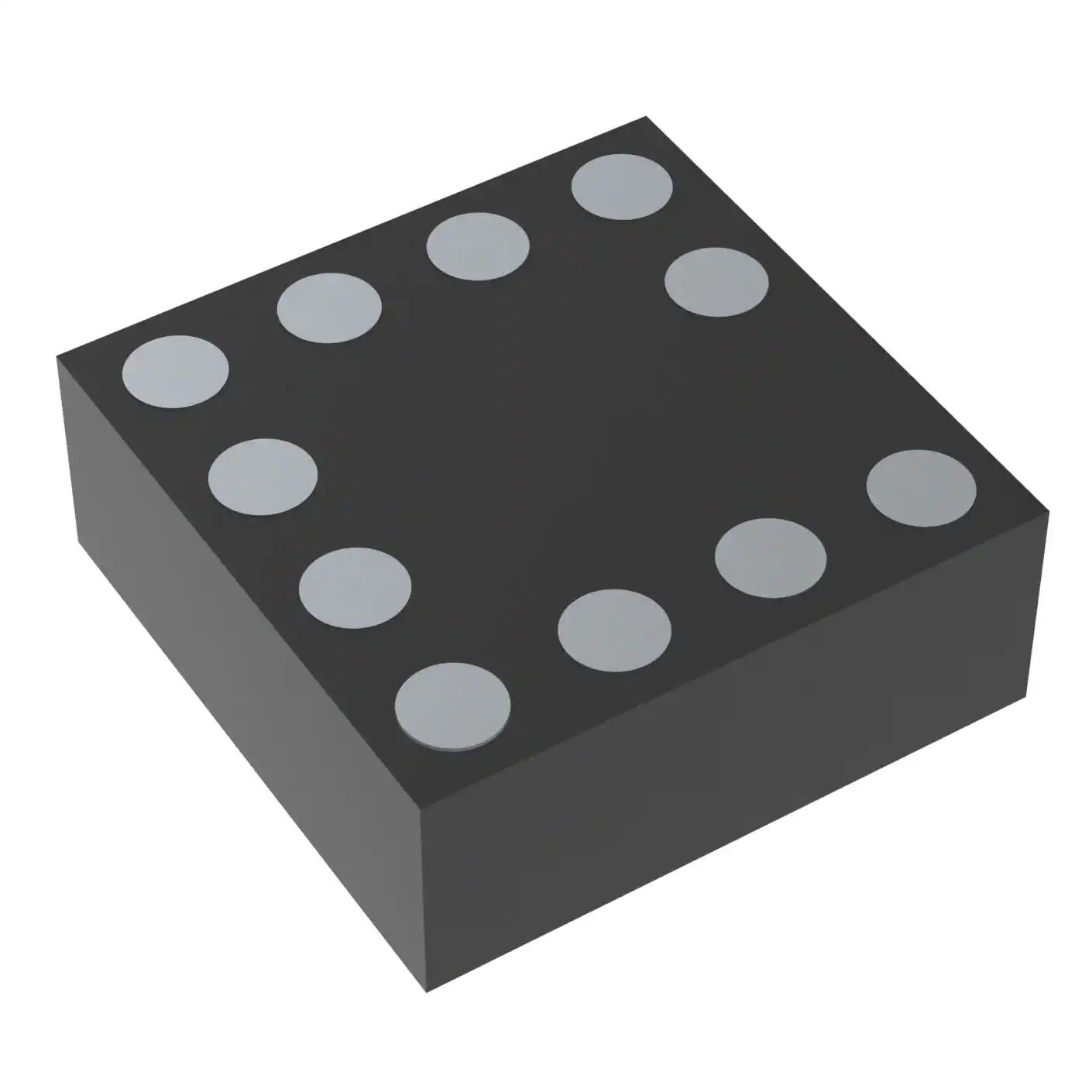
- Part No.:
- AK09940
- Manufacturer:
- Asahi Kasei Microdevices/AKM
- Category:
- Linear, Compass (ICs)
- Package:
- 11-UFLGA
- Datasheet:
-
 AK09940.pdf
- Description:
- IC 3AXIS ELECT MAGNETOMETER 11LG
- Quantity:
- Payment:

- Shipping:

Inventory:1,252
Please send an inquiry. Send us your inquiry, and we will respond immediately.
Product details
Overview
AK09940 from AKM Semiconductor is an ultrahigh-precision 3-axis electronic magnetometer IC using tunneling magnetoresistance (TMR) sensor technology, delivering 18-bit resolution per axis, ±1200 µT measurement range, and 10 nT/LSB sensitivity. It integrates signal conditioning, arithmetic processing, self-test, temperature sensing, and dual-interface support (I²C and 4-wire SPI), targeting high-accuracy compassing and motion sensing in compact portable electronics.
For engineers reviewing the AK09940 datasheet, AK09940 pinout, AK09940 application, or AK09940 equivalent, this page provides verified technical context, real-world operating parameters, validated interface timing, package dimensions, and confirmed alternative options for precision magnetic field sensing in low-voltage embedded systems.
Technical Context
The AK09940 implements a fully integrated TMR-based sensing architecture with on-chip multiplexer, fixed-gain pre-amplifier, 18-bit ADC, and dedicated oscillator (OSC1/OSC2) for autonomous timing control. Its internal sequencer manages magnetic and temperature measurements independently, supporting up to 400 Hz continuous sampling with FIFO buffering.
It features dual power domains: analog supply (VDD = 1.7–1.98 V) powers sensors and analog circuitry, while digital interface supply (VID = 1.65 V to VDD) drives I²C/SPI logic. POR and VID monitor circuits ensure deterministic reset behavior across voltage transitions, and DRDY signaling synchronizes host data reads without polling.
Key Specifications
| Parameter | Value and Actual Design Meaning |
|---|---|
| Measurement Resolution | 18-bit per axis - enables sub-nanotesla discrimination for high-fidelity heading calculation |
| Sensitivity | 10 nT/LSB (typ.) - directly determines smallest detectable field change in navigation algorithms |
| Full-Scale Range | ±1200 µT - covers Earth's geomagnetic field (25–65 µT) with >18× headroom for interference rejection |
| Operating Voltage | VDD = 1.7–1.98 V; VID = 1.65 V to VDD - supports single-cell Li-ion/Li-poly battery operation without level-shifting |
| Current Consumption | 0.5 µA (typ.) in power-down; 0.03–0.20 mA (typ.) in active modes - enables multi-year battery life in wearable sensors |
| Interface Support | I²C (Standard/Fast mode) and 4-wire SPI (Mode 3) - provides flexibility for host MCU peripheral selection and noise immunity |
| Temperature Sensing | Integrated T-sensor with register output - allows real-time thermal compensation of magnetic offset and sensitivity drift |
Pinout & Package
AK09940 is housed in an 11-pin LGA package measuring 1.6 mm × 1.6 mm × 0.58 mm (typ.), optimized for space-constrained PCB layouts in smartphones, earbuds, and IoT trackers.
| Pin/Terminal | Circuit Role | Design Meaning |
|---|---|---|
| DRDY | Data Ready output | CMOS "H"-active signal indicating valid magnetometer/temperature data is ready in registers - eliminates polling overhead and ensures deterministic read timing |
| CSB | Chip select / I²C mode enable | "L"-active for SPI; connect to VID to select I²C - configures interface protocol at hardware level without register writes |
| SCL / SK | Clock input (I²C) or serial clock (SPI) | Dual-function pin: Schmitt-triggered SCL input for I²C; CMOS SK input for SPI - supports both protocols with shared pin count |
| SDA / SI | Data I/O (I²C) or serial input (SPI) | Open-drain SDA for I²C bus sharing; CMOS SI for SPI command loading - enables flexible host interface routing |
| SO | Serial output | CMOS SO for SPI data reads; Hi-Z when I²C selected - prevents bus contention during interface switching |
| CAD0 / CAD1 | I²C slave address inputs | Binary-configurable address pins (VSS/VID) - allows up to four AK09940 devices on same I²C bus without address conflict |
| RSTN | Active-low reset | Asynchronous hardware reset; tie to VID if unused - guarantees known state after power-up or brownout recovery |
| VDD | Analog power supply | 1.7–1.98 V supply for TMR sensors, amplifiers, and ADC - must be filtered separately from digital rail for noise immunity |
| VID | Digital interface supply | 1.65 V to VDD supply for I²C/SPI logic and registers - enables level compatibility with 1.8 V host MCUs |
| VSS | Ground reference | Common return for analog and digital domains - requires low-impedance connection to minimize ground bounce in high-resolution sensing |
Key Features
| Feature | Design Value |
|---|---|
| Self-test with internal magnetic source | Verifies sensor integrity and signal chain functionality at startup or runtime without external field sources - critical for safety-critical orientation systems |
| Selectable sensor drive (low-power / low-noise) | Two distinct TMR excitation modes trade off current (0.03 mA vs. 0.20 mA) against RMS noise (70 nT vs. 40 nT) - enables dynamic power/performance tuning per use case |
| 8-deep FIFO buffer | Stores up to eight full 3-axis + temperature samples - reduces host interrupt frequency and improves data coherency in burst-read applications |
| Built-in temperature sensor | On-die thermal measurement with register output - enables per-sample compensation of TMR offset and sensitivity drift without external components |
| Magnetic overflow monitoring | Dedicated status flag indicates saturation beyond ±1200 µT - alerts firmware to environmental interference or misalignment before corrupting heading calculations |
Applications
| Smartphone Digital Compass | Wearable Activity Tracker |
|---|---|
Use Scenario: Real-time 3D heading estimation during map navigation and AR overlay alignment. IC Role / Device Role / Timing Role: Primary magnetometer providing calibrated X/Y/Z field vectors at 100 Hz continuous mode with DRDY-synchronized reads. Use Value: 10 nT/LSB sensitivity and ±1200 µT range reject EMI from display backlight and wireless transceivers while maintaining <1° heading error. | Use Scenario: Step-counting and gesture recognition via magnetic anomaly detection during arm motion. IC Role / Device Role / Timing Role: Low-power magnetometer operating in 20 Hz continuous mode with FIFO-burst reads to minimize MCU wake-ups. Use Value: 0.03 mA typical current in low-power drive mode extends battery life to >14 days on a 100 mAh cell while preserving 50 nT rms noise floor. |
| Industrial Drone Attitude Control | Medical Endoscope Position Sensing |
Use Scenario: Fusion with IMU for yaw stabilization and magnetic disturbance rejection in GPS-denied environments. IC Role / Device Role / Timing Role: High-accuracy magnetometer supplying 18-bit raw data at 200 Hz with temperature-compensated calibration coefficients. Use Value: Integrated temperature sensor and self-test enable closed-loop recalibration every flight cycle, ensuring <0.5° long-term heading stability. | Use Scenario: Real-time tip orientation tracking inside the human body using external magnetic field gradients. IC Role / Device Role / Timing Role: Ultra-stable magnetometer in single-measurement mode triggered by endoscope controller, with POR-initiated reset on each insertion. Use Value: 0.5 µA power-down current prevents thermal drift during standby; 1.7–1.98 V VDD range matches medical-grade low-noise LDO outputs. |
Equivalent & Alternatives
The following parts are listed as comparable options for similar 3-axis magnetometer applications.
| Alternative Part | Technical Difference | Application Difference | Selection Advice |
|---|---|---|---|
| TDK IAM-20380 | MEMS-based 3-axis magnetometer with 16-bit output, ±4900 µT range, and integrated 6-axis IMU; no self-test magnetic source | Targeted for inertial fusion systems requiring combined accel/gyro/mag; lacks standalone ultra-high resolution for pure compassing | Choose IAM-20380 when sensor fusion is primary requirement and system-level calibration can compensate for lower sensitivity (20 nT/LSB) |
| Honeywell HMC5883L | AMR-based 3-axis magnetometer with 12-bit output, ±800 µT range, I²C-only interface, and no temperature sensor | Legacy compass module for cost-sensitive consumer devices; limited dynamic range and no thermal compensation | Choose HMC5883L only for non-critical heading where 1° accuracy suffices and external temperature compensation is feasible |
Compared with IAM-20380 and HMC5883L, the AK09940 delivers superior resolution (18-bit vs. 16/12-bit), tighter sensitivity (10 nT/LSB), integrated thermal compensation, and hardware self-test - making it the preferred choice for applications demanding <0.3° heading accuracy under variable thermal and EMI conditions.
Availability
AK09940 is available at Aetrix Electronics and suitable for smartphone compassing, wearable activity tracking, industrial drone attitude control, and medical endoscope position sensing requiring stable component supply and long-term lifecycle assurance.
Supply support for AK09940 includes scheduled delivery planning, volume procurement assistance, BOM continuity management, traceable sourcing, and lifecycle availability coordination for OEM customers, industrial embedded developers, connected-device designers, and electronics production programs.
Manufacturer
AKM Semiconductor Inc. is a Japanese fabless semiconductor company specializing in high-precision analog and mixed-signal ICs for sensing, audio, and timing applications.
The AK09940 belongs to AKM's ultrahigh-precision TMR magnetometer product line, designed specifically for applications demanding nanotesla-level resolution, low-voltage operation, and robust on-chip diagnostics in miniaturized form factors.
FAQ
What is the minimum supply voltage required for AK09940 to operate its POR and VID monitor circuits?
The AK09940 POR and VID monitor circuits are active when VDD is between 1.7 V and 1.98 V. At Vid = 0 V, the AK09940 enters reset status and consumes IDD5 current (0.2–5.0 µA). This behavior is explicitly specified in the preliminary datasheet section 9.2, confirming functional reset assertion down to 0 V VID under valid VDD bias.
Does AK09940 support both I²C and SPI interfaces simultaneously, or must one be selected?
The AK09940 does not support simultaneous I²C and SPI operation. Interface selection is hardware-configured: CSB pin tied to VID selects I²C; CSB pulled low selects 4-wire SPI. The block diagram and pin function table confirm exclusive routing - SCL/SDA and SK/SI/SO share pins but cannot be active concurrently. This prevents bus contention and simplifies PCB layout.
How does the AK09940's self-test function verify sensor integrity without external equipment?
The AK09940 incorporates an on-chip magnetic source that generates a known internal field during self-test mode (MODE[4:0] = "10000"). This field induces predictable output shifts in the TMR elements, which the internal arithmetic circuit compares against expected values. The result is reported via ST2 register flags - enabling full signal-chain validation without external magnets or test fixtures.
What is the maximum continuous measurement rate supported by AK09940, and what drive mode is required?
The AK09940 supports up to 400 Hz continuous measurement rate in Continuous Measurement Mode 6 (MODE[4:0] = "01100"), but only when MT[1:0] is set to "00" or "01" (low-power drive modes). This is explicitly stated in section 9.3 and Table 9.2. Higher rates are not achievable in low-noise drive modes due to increased current demand and settling time constraints.
Can the AK09940's built-in temperature sensor be used independently of magnetic measurements?
Yes - the AK09940's temperature sensor operates independently and can be enabled via the TEM bit in CNTL2 register without activating magnetic sensing. When enabled, it measures temperature periodically (at 5 Hz in continuous modes) and stores results in the TMPS register. This allows standalone thermal monitoring or asynchronous compensation scheduling without magnetometer power-up overhead.
AK09940 Specifications
- Product attributes
- Attribute value
- Manufacturer:
- Asahi Kasei Microdevices/AKM
- Series:
- -
- Package/Case:
- 11-UFLGA
- Packaging:
- Tape & Reel (TR)
- Product Status:
- Obsolete
- Technology:
- Magnetoresistive
- Axis:
- X, Y, Z
- Output Type:
- I2C, SPI
- Sensing Range:
- ±1.2mT
- Voltage - Supply:
- 1.7V ~ 1.98V
- Current - Supply (Max):
- 2.5mA
- Current - Output (Max):
- -
- Resolution:
- 18 b
- Bandwidth:
- -
- Operating Temperature:
- -30°C ~ 85°C
- Grade:
- -
- Qualification:
- -
- Features:
- Internal Magnet
- Supplier Device Package:
- 11-LGA (1.6x1.6)
- Mounting Type:
- Surface Mount
AK09940 FAQ
1.How can I place an order for AK09940 through Aetrix?
Please submit a Request for Quotation (RFQ) for AK09940 on Aetrix. Our sales agent will provide a competitive quotation and guide you through the order confirmation once you accept the terms.
2.Are the price and stock information for AK09940 reliable?
The price and inventory of AK09940 are updated periodically and may fluctuate due to market conditions. Stock and pricing data are typically refreshed every 24 hours. Quotation validity for AK09940 is usually 5 days.
3.What payment methods are accepted for AK09940?
We accept Wire Transfer, PayPal, Credit Card, Western Union, MoneyGram, and Escrow for AK09940 transactions.
Note: Certain payment methods may incur a processing fee.
4.How is shipping managed for AK09940?
AK09940 orders can be shipped via leading logistics carriers, including DHL, UPS, FedEx, TNT, or Registered Mail.
Once your AK09940 order is processed, you will receive an email with the shipment details and tracking number.
Note: Tracking information may take up to 24 hours to appear. Express delivery typically takes 3–5 business days.
5.How can I obtain technical support or documentation for AK09940?
For technical support, including AK09940 datasheets, pinout diagrams, or application guidance, please contact our engineering support team. They can provide detailed documentation and assistance for your AK09940 requirements.
6.How does Aetrix verify that AK09940 is sourced from the original manufacturer or authorized distributors?
All AK09940 products on Aetrix are procured from qualified distributors and authorized channels. Our dedicated quality assurance team conducts strict verification, including traceability checks and, if necessary, third-party testing. This ensures that AK09940 meets industry standards.
7.What is the process for return or replacement of AK09940?
All AK09940 units undergo pre-shipment inspection (PSI). If there is an issue with AK09940, returns or replacements are accepted under the following conditions:
1.Quantity discrepancies, incorrect items, or visible external defects (such as breakage or corrosion), acknowledged by Aetrix.
2.The issue is reported within 90 days of delivery.
3.The AK09940 part is unused and in its original packaging.
Return procedure for AK09940:
1.Submit a request within 90 days.
2.Obtain a Return Material Authorization (RMA) from Aetrix.
AK09940 Tags
-
DRV5053VAQDBZR
Texas Instruments
-
MMC5603NJ
Memsic Inc.
-
DRV5055A1QDBZR
Texas Instruments
-
MLX90392ELQ-AAA-011-RE
Melexis Technologies NV

-
CT100LW-HS6
Allegro MicroSystems
-
DRV5056A1ELPGMQ1
Texas Instruments
-
A1304ELHLX-T
Allegro MicroSystems
-
MMC5633NJL
Memsic Inc.
-
A1308KUA-2-T
Allegro MicroSystems
-
A1308KUA-1-T
Allegro MicroSystems
-
SI7210-B-04-IVR
Silicon Labs
-
A1308LLHLT-2-T
Allegro MicroSystems
Tech Hub

A practical engineering and sourcing framework covering lifecycle verification, lifetime-buy calculations, replacement qualification, supplier checks and counterfeit-risk controls.

TTL and CMOS logic families differ in thresholds, loading, output drive, power and timing. This engineering guide compares 74HC and 74HCT, calculates noise margins and checks 3.3 V/5 V compatibility.

A practical engineering guide to 3.3V and 5V logic compatibility, input thresholds, resistor dividers, translator ICs, MOSFET level shifting, I2C pull-ups, timing limits and power-sequencing risks.

The 74HC595 uses push-pull logic outputs, while the TPIC6B595 uses 50 V open-drain DMOS sinks for higher-power loads. This guide compares timing, current limits, 3.3 V interfacing, load wiring, thermal…

The 74HC595 converts serial data into eight stable parallel outputs. This guide covers pin functions, shift and storage timing, OE and MR behavior, drive-current limits, cascading, voltage compatibilit…

A technical comparison of level-sensitive latches and edge-triggered flip-flops, covering timing windows, setup and hold limits, master–slave operation, time borrowing, race-through, HDL inference and…

A D latch stores one bit while Enable controls when data can pass. This reference covers gate-level operation, truth tables, transparency, setup and hold timing, LE versus OE, common ICs and practical …

An SR latch stores one bit through cross-coupled feedback. This engineering reference covers NOR and NAND implementations, truth tables, forbidden-state recovery, gated operation, switch debouncing, fa…

Latch circuits retain one bit through feedback. This technical reference covers SR and D latches, truth tables, transparency, timing limits, latch-versus-flip-flop behavior, applications and common log…

An engineering guide to LED driver operation, constant-current and constant-voltage outputs, linear and switching topologies, dimming, IC selection, calculations, replacement compatibility, and fault c…


