
 My Inquiry
 My Account


Asahi Kasei Microdevices/AKM AK2363
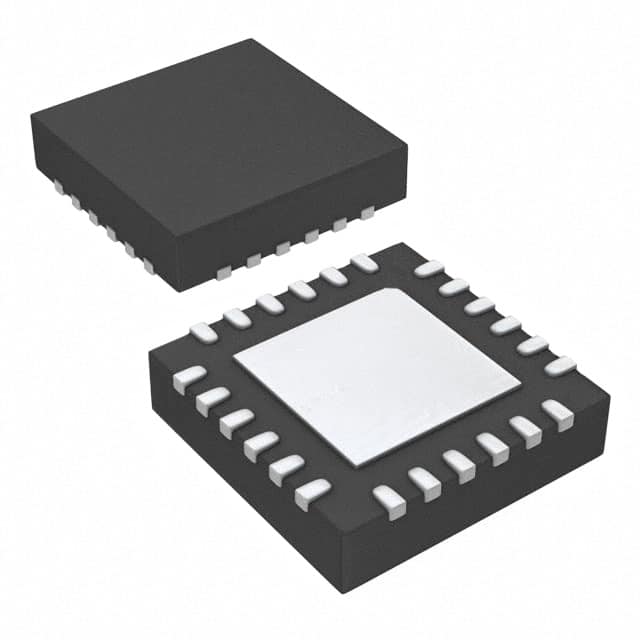
- Part No.:
- AK2363
- Manufacturer:
- Asahi Kasei Microdevices/AKM
- Category:
- Telecom
- Package:
- 24-WFQFN Exposed Pad
- Datasheet:
-
 AK2363.pdf
- Description:
- IC TELECOM INTERFACE 24QFNJ
- Quantity:
- Payment:

- Shipping:

Inventory:4,178
Please send an inquiry. Send us your inquiry, and we will respond immediately.
Product details
Overview
AK2363 from Asahi Kasei is a radio signaling LSI integrating an MSK modem (1200/2400 bit/s) and DTMF receiver on a single chip, operating from 2.6V to 3.7V across –40°C to +85°C, with built-in 3.6864MHz oscillator and support for external clock multiples (7.3728/11.0592/14.7456MHz), used in legacy wireless telemetry and paging systems.
For engineers reviewing the AK2363 datasheet, AK2363 pinout, AK2363 application, or AK2363 equivalent, this page delivers verified functional identity, confirmed 24-pin QFNJ package mapping, validated MSK/DTMF dual-mode operation, real-world BER performance (5.0E–06 @1200 bit/s, SNR=12dB), and precise register-controlled frame detection and AGC/PGA configuration.
Technical Context
The AK2363 implements a fully integrated analog-digital hybrid architecture: its MSK modem uses a DAC-based modulator, BPF-filtered demodulator, and digital PLL for clock recovery, while the DTMF receiver employs programmable gain amplification (0–12dB), AGC control, and 4-bit tone decoding logic. Both subsystems share a common 3.6864MHz master clock source or externally divided multiples.
Control is executed via a three-wire serial interface (CSN/SCLK/SDATA) supporting 14-cycle write and 14-cycle read operations with R/W bit, 4-bit address, and 8-bit data framing; register access enables independent configuration of MSK speed (MSKSL), transmit enable (MSKTX), frame pattern (16-bit), DTMF guard times (GTP/GTA), and PGA/AGC modes (AGCSW/PGA).
Key Specifications
| Parameter | Value and Actual Design Meaning |
|---|---|
| MSK Data Rate | 1200 or 2400 bit/s - selectable via MSKSL register; determines TCLK frequency (417 µs or 833 µs period) and demodulation bandwidth. |
| DTMF Input Range (AGC Enable) | –40 dBx to 0 dBx - enables reliable tone detection under low-SNR field conditions without manual gain adjustment. |
| VR Output Gain Range | –6.0 dB to +6.0 dB in 0.5 dB steps - digitally programmable transmit signal level control at MOD pin for impedance-matched RF stage interfacing. |
| Frame Detection Pattern | 16-bit programmable - allows custom synchronization word matching in MSK receive mode, reducing false lock in noisy channels. |
| Operating Voltage | 2.6 V to 3.7 V - supports single-cell Li-ion or 3.3 V system rails with bypass capacitor requirement (≥0.1 µF between VDD and VSS). |
| Current Consumption (Mode 6) | 2.4–3.8 mA - full active mode with OSC, MSK Tx/Rx, and DTMF Receiver enabled; critical for battery-life estimation in portable radios. |
| BER @1200 bit/s (SNR=12dB) | 5.0E–06 - quantifies raw link reliability under defined channel conditions; validates suitability for mission-critical telemetry. |
Pinout & Package
AK2363 is housed in a 24-pin QFNJ package (4.0 mm × 4.0 mm × 0.75 mm, 0.5 mm pitch) with exposed thermal pad (EP) connected to VSS for thermal management in compact wireless modules.
| Pin/Terminal | Circuit Role | Design Meaning |
|---|---|---|
| RSTN | Hardware reset input | Active-low asynchronous reset; requires ≥111 µs low pulse after power-up for guaranteed register initialization. |
| TDATA | MSK transmit data input | Samples serial bitstream on rising edge of TCLK; must be held stable for ≥1 µs before and after clock edge per timing spec. |
| TCLK | MSK transmit clock output | Provides synchronous timing (417 µs or 833 µs period) for TDATA sampling; derived from internal PLL locked to MCLK. |
| RDFFD/RDATA | MSK receive flag or data output | Configurable via FSL register: low pulse on frame detection (FD) or active-low flag when 8-bit RDATA is ready (RDF). |
| STD | DTMF decode strobe output | High-to-low transition signals valid 4-bit DTMF code update at SD pin; synchronized to internal decoder completion. |
| MODIN | Inverted TXA amplifier input | Accepts filtered MSK signal from external RC network; sets smoothing cutoff (~13 kHz) and gain (0 dB default) for clean transmit output. |
Key Features
| Feature | Design Value |
|---|---|
| Dual-mode MSK modem | 1200/2400 bit/s selection via MSKSL register; supports both legacy telemetry rates without hardware change. |
| Programmable DTMF AGC/PGA | AGC Enable disables manual gain control and extends dynamic range to –40 dBx; PGA[1:0] offers discrete 4 dB steps (0–12 dB) when AGC is off. |
| Flexible clock sourcing | Internal 3.6864 MHz crystal oscillator or external clock inputs at 2×/3×/4× multiple frequencies (7.3728/11.0592/14.7456 MHz) via MCKSL[1:0]. |
| 16-bit frame pattern detection | User-defined synchronization word stored in two 8-bit registers (address 0x4/0x5); enables robust packet alignment in burst-mode transmission. |
| Three-wire serial control interface | CSN/SCLK/SDATA with 14-cycle protocol; supports register read/write and software reset (0xAA to SRST) without external microcontroller GPIO overhead. |
Applications
| Wireless Telemetry Transmitter | Paging System Decoder |
|---|---|
|
Use Scenario: Remote sensor node transmitting temperature/pressure data over narrowband RF link using MSK modulation. IC Role / Device Role / Timing Role: AK2363 acts as the baseband modem and tone decoder - generating compliant MSK waveforms and recovering command tones from downlink bursts. Use Value: Integrated MSK+DTMF eliminates need for separate codec and modem ICs, reducing BOM count and PCB area in space-constrained enclosures. |
Use Scenario: Central office receiver parsing incoming pager messages containing numeric codes and alert tones. IC Role / Device Role / Timing Role: AK2363 serves as the DTMF detector and MSK demodulator - identifying dialed digits and extracting payload data from carrier-modulated frames. Use Value: Programmable guard times (GTP/GTA) and twist tolerance (≤10 dB) ensure reliable decoding of distorted tones in multi-path urban RF environments. |
| Legacy Radio Control Unit | Industrial Alarm Annunciator |
|
Use Scenario: Factory floor remote control sending command sequences (e.g., "start", "stop", "reset") via DTMF tones over UHF link. IC Role / Device Role / Timing Role: AK2363 functions as the DTMF encoder and MSK transmitter - converting button presses into standardized tone pairs and upconverting to RF-ready MSK signal. Use Value: On-chip VR gain control (–6 to +6 dB) allows fine-tuning of transmit amplitude to match antenna feedline loss and regulatory EIRP limits. |
Use Scenario: Building alarm panel detecting emergency call tones (e.g., fire, intrusion) embedded in maintenance channel traffic. IC Role / Device Role / Timing Role: AK2363 operates as high-sensitivity DTMF receiver with AGC enabled - maintaining detection integrity across varying signal levels from distributed sensors. Use Value: –40 dBx minimum detectable level with AGC ensures reliable operation even with weak or attenuated tones from distant zones. |
Equivalent & Alternatives
The following parts are listed as comparable options for similar radio signaling LSI applications.
| Alternative Part | Technical Difference | Application Difference | Selection Advice |
|---|---|---|---|
| AK2362 | Same pinout and register map, but lacks DTMF receiver; MSK-only with identical 1200/2400 bit/s capability and BER performance. | Applicable only where tone decoding is unnecessary - e.g., pure telemetry uplinks without command feedback. | Select AK2362 when DTMF functionality is unused; reduces cost and simplifies firmware by eliminating DTMF register handling. |
| CMX639 | QFN-24 package, supports MSK/FSK/OOK, wider voltage range (2.7–5.5 V), no integrated crystal oscillator; requires external clock source. | Better suited for multi-protocol designs needing FSK fallback or higher supply flexibility; lacks native DTMF decode logic. | Choose CMX639 if future protocol expansion beyond MSK/DTMF is required or if system already provides 3.6864 MHz clock. |
Compared with AK2362 and CMX639, the AK2363 uniquely combines MSK modem and DTMF receiver in one die with integrated oscillator - enabling self-contained, low-component-count solutions for bidirectional legacy radio systems without external timing or tone-decoding ICs.
Availability
AK2363 is available at Aetrix Electronics and suitable for wireless telemetry transmitters, paging system decoders, legacy radio control units, industrial alarm annunciators, and narrowband RF infrastructure requiring stable component supply and long-term obsolescence management.
Supply support for AK2363 includes scheduled delivery planning, volume procurement assistance, BOM continuity management, traceable sourcing, and lifecycle availability coordination for OEM customers, industrial embedded developers, connected-device designers, and electronics production programs.
Manufacturer
Asahi Kasei Microdevices Corporation is a Japanese semiconductor manufacturer specializing in mixed-signal LSI for communications, audio, and sensor interfaces, with decades of expertise in radio-frequency baseband ICs.
The AK2363 belongs to Asahi Kasei's Radio Signaling LSI product line, designed specifically for legacy narrowband wireless systems requiring integrated MSK modulation and DTMF tone processing in compact, low-power form factors.
FAQ
What is the primary function of the AK2363?
The AK2363 is a dual-function radio signaling LSI that integrates an MSK modem (supporting 1200/2400 bit/s) and a DTMF receiver on a single chip. It performs baseband modulation/demodulation for telemetry links and decodes standard telephone-tone commands - all within a 24-pin QFNJ package. Its design targets legacy wireless infrastructure where compact size, low power, and protocol coexistence are essential.
Does the AK2363 require an external crystal oscillator?
No - the AK2363 includes a built-in 3.6864 MHz oscillator circuit requiring only an external 3.6864 MHz crystal connected between XIN and XOUT pins. Alternatively, it accepts external clock inputs at 7.3728 MHz, 11.0592 MHz, or 14.7456 MHz (2×/3×/4× multiples), which are internally divided by the DIV circuit to generate the required MCLK.
How is the MSK transmit data clocked into the AK2363?
The AK2363 reads MSK transmit data from the TDATA pin on the rising edge of the TCLK signal, which it outputs from its own TCLK pin. TCLK period is 417 µs (1200 bit/s) or 833 µs (2400 bit/s), controlled by the MSKSL register. TDATA must be stable for ≥1 µs before and after each TCLK rising edge to meet setup/hold timing requirements.
Can the AK2363 decode DTMF tones under low-signal conditions?
Yes - with AGC enabled, the AK2363 achieves a minimum detectable DTMF input level of –40 dBx at RXINO, significantly extending usable range compared to AGC-disabled operation (–27 dBx). This is achieved through automatic gain adjustment and programmable PGA settings, ensuring reliable tone recognition even with fading or attenuated signals.
What serial interface does the AK2363 use for register configuration?
The AK2363 uses a three-wire synchronous serial interface (CSN, SCLK, SDATA) with 14-cycle framing: 1-bit R/W, 4-bit address (A3–A0), and 8-bit data (D7–D0). Write operations require exactly 14 SCLK pulses while CSN is low; read operations use 5 pulses for address and 9 for data output. Software reset is triggered by writing 0xAA to the SRST register.
AK2363 Specifications
- Product attributes
- Attribute value
- Manufacturer:
- Asahi Kasei Microdevices/AKM
- Series:
- -
- Package/Case:
- 24-WFQFN Exposed Pad
- Packaging:
- Tape & Reel (TR)
- Product Status:
- Obsolete
- Function:
- DTMF Receiver
- Interface:
- Serial
- Number of Circuits:
- 1
- Voltage - Supply:
- 2.6V ~ 3.7V
- Current - Supply:
- 3.8mA
- Power (Watts):
- -
- Operating Temperature:
- -40°C ~ 85°C
- Grade:
- -
- Qualification:
- -
- Mounting Type:
- Surface Mount
- Supplier Device Package:
- 24-QFNJ (4x4)
AK2363 FAQ
1.How can I place an order for AK2363 through Aetrix?
Please submit a Request for Quotation (RFQ) for AK2363 on Aetrix. Our sales agent will provide a competitive quotation and guide you through the order confirmation once you accept the terms.
2.Are the price and stock information for AK2363 reliable?
The price and inventory of AK2363 are updated periodically and may fluctuate due to market conditions. Stock and pricing data are typically refreshed every 24 hours. Quotation validity for AK2363 is usually 5 days.
3.What payment methods are accepted for AK2363?
We accept Wire Transfer, PayPal, Credit Card, Western Union, MoneyGram, and Escrow for AK2363 transactions.
Note: Certain payment methods may incur a processing fee.
4.How is shipping managed for AK2363?
AK2363 orders can be shipped via leading logistics carriers, including DHL, UPS, FedEx, TNT, or Registered Mail.
Once your AK2363 order is processed, you will receive an email with the shipment details and tracking number.
Note: Tracking information may take up to 24 hours to appear. Express delivery typically takes 3–5 business days.
5.How can I obtain technical support or documentation for AK2363?
For technical support, including AK2363 datasheets, pinout diagrams, or application guidance, please contact our engineering support team. They can provide detailed documentation and assistance for your AK2363 requirements.
6.How does Aetrix verify that AK2363 is sourced from the original manufacturer or authorized distributors?
All AK2363 products on Aetrix are procured from qualified distributors and authorized channels. Our dedicated quality assurance team conducts strict verification, including traceability checks and, if necessary, third-party testing. This ensures that AK2363 meets industry standards.
7.What is the process for return or replacement of AK2363?
All AK2363 units undergo pre-shipment inspection (PSI). If there is an issue with AK2363, returns or replacements are accepted under the following conditions:
1.Quantity discrepancies, incorrect items, or visible external defects (such as breakage or corrosion), acknowledged by Aetrix.
2.The issue is reported within 90 days of delivery.
3.The AK2363 part is unused and in its original packaging.
Return procedure for AK2363:
1.Submit a request within 90 days.
2.Obtain a Return Material Authorization (RMA) from Aetrix.
AK2363 Tags

-
LMC567CMX/NOPB
Texas Instruments
-
LM567CMX/NOPB
Texas Instruments
-
LM567CM/NOPB
Texas Instruments
-
VSC8531XMW-02
Microchip Technology
-
VSC8531XMW-05
Microchip Technology

-
GPY115C0VI
MaxLinear, Inc.
-
SI32185-A-FMR
Skyworks Solutions Inc.
-
VSC8541XMV-05
Microchip Technology
-
SI32178-B-FM1R
Skyworks Solutions Inc.
-
GPY215C0VI
MaxLinear, Inc.
-
CPC7514ZTR
Littelfuse Inc.
-
VSC8502XML-03
Microchip Technology
Tech Hub

A practical engineering and sourcing framework covering lifecycle verification, lifetime-buy calculations, replacement qualification, supplier checks and counterfeit-risk controls.

TTL and CMOS logic families differ in thresholds, loading, output drive, power and timing. This engineering guide compares 74HC and 74HCT, calculates noise margins and checks 3.3 V/5 V compatibility.

A practical engineering guide to 3.3V and 5V logic compatibility, input thresholds, resistor dividers, translator ICs, MOSFET level shifting, I2C pull-ups, timing limits and power-sequencing risks.

The 74HC595 uses push-pull logic outputs, while the TPIC6B595 uses 50 V open-drain DMOS sinks for higher-power loads. This guide compares timing, current limits, 3.3 V interfacing, load wiring, thermal…

The 74HC595 converts serial data into eight stable parallel outputs. This guide covers pin functions, shift and storage timing, OE and MR behavior, drive-current limits, cascading, voltage compatibilit…

A technical comparison of level-sensitive latches and edge-triggered flip-flops, covering timing windows, setup and hold limits, master–slave operation, time borrowing, race-through, HDL inference and…

A D latch stores one bit while Enable controls when data can pass. This reference covers gate-level operation, truth tables, transparency, setup and hold timing, LE versus OE, common ICs and practical …

An SR latch stores one bit through cross-coupled feedback. This engineering reference covers NOR and NAND implementations, truth tables, forbidden-state recovery, gated operation, switch debouncing, fa…

Latch circuits retain one bit through feedback. This technical reference covers SR and D latches, truth tables, transparency, timing limits, latch-versus-flip-flop behavior, applications and common log…

An engineering guide to LED driver operation, constant-current and constant-voltage outputs, linear and switching topologies, dimming, IC selection, calculations, replacement compatibility, and fault c…


