
 My Inquiry
 My Account


Asahi Kasei Microdevices/AKM AK7738VQ
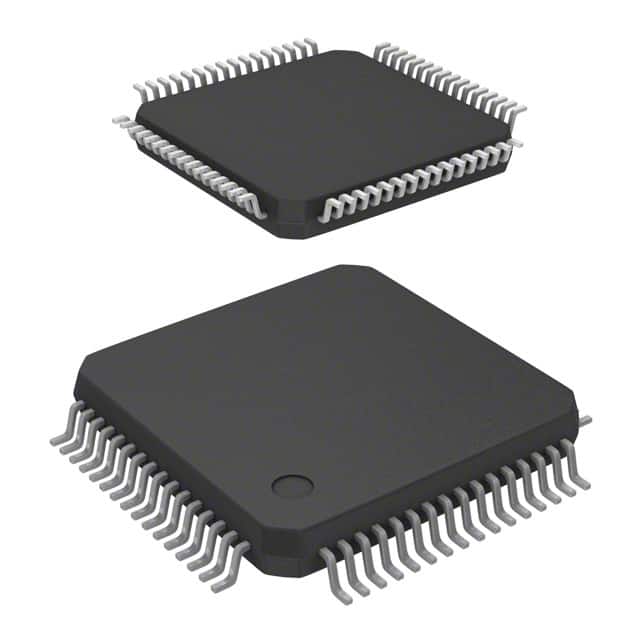
- Part No.:
- AK7738VQ
- Manufacturer:
- Asahi Kasei Microdevices/AKM
- Category:
- DSP (Digital Signal Processors)
- Package:
- 64-LQFP
- Datasheet:
-
 AK7738VQ.pdf
- Description:
- IC DSP 5ADC 4DAC 24BIT 64KQFP
- Quantity:
- Payment:

- Shipping:

Inventory:5,084
Please send an inquiry. Send us your inquiry, and we will respond immediately.
Product details
Overview
AK7738VQ from Asahi Kasei is a multi-core audio DSP IC integrating 5-channel ADC (24-bit stereo MIC + stereo line + mono), 4-channel DAC (two 32-bit stereo), eight sampling rate converters (SRC) up to 192kHz, dual main DSPs and a dedicated Sub DSP - all in a single 64-pin LQFP package. It enables simultaneous hands-free voice processing and high-fidelity audio rendering in automotive infotainment head units.
For engineers reviewing the AK7738VQ datasheet, AK7738VQ pinout, AK7738VQ application, or AK7738VQ equivalent, key selection considerations include its dual-DSP parallel processing architecture (2560 steps/fs at 48kHz), independent power management per DSP core, 24-bit/32-bit mixed-precision data paths, integrated MIC bias outputs, and TDM-capable digital I/O supporting up to 28 channels.
Technical Context
The AK7738VQ implements three independent programmable DSP engines: two main 28-bit word-length DSPs (DSP1/DSP2) sharing memory resources and a 28-bit Sub DSP optimized for auxiliary audio/HF tasks. Each executes at 8.1 ns instruction cycle (2560 steps/fs @ fs=48kHz) with 24×24-bit multipliers, 52-bit ALUs, and floating-point normalization support.
Its analog front-end includes three ADC blocks - ADC1 (stereo MIC with gain amplifiers), ADC2 (stereo line with input selector), and ADCM (mono) - all supporting 8–192 kHz sampling and offering 102 dB SNR (differential input). The dual 32-bit DAC blocks deliver 108 dB SNR and support independent digital volume control (+12 to −115 dB, 0.5 dB step).
Key Specifications
| Parameter | Value and Actual Design Meaning |
|---|---|
| ADC Channels | 5 total: 2ch MIC + 2ch line + 1ch mono, all 24-bit, 8–192 kHz sampling |
| DAC Channels | 4 total: two independent 32-bit stereo DACs, 108 dB SNR @ 48 kHz |
| DSP Cores | Three: DSP1 & DSP2 (shared RAM, 2560 steps/fs @ 48 kHz), Sub DSP (1024-word program RAM) |
| SRC Count | Eight SRCs: four 2-ch SRC blocks + two mono FSCONV units, supporting arbitrary FSI/FSO ratios |
| Digital I/O | Up to 28 TDM channels; five independent LRCK/BICK ports; SPI (7 MHz) and I²C (1 MHz Fast Mode Plus) |
| Package | 64-pin LQFP, 10 mm × 10 mm, 0.5 mm pitch, −40°C to +85°C operating range |
| Power Supplies | AVDD/DVDD/TVDD1/TVDD2/VDD33 = 3.0–3.6 V; integrated 1.2 V regulator for core logic |
Pinout & Package
AK7738VQ is housed in a 64-pin LQFP (10 mm × 10 mm, 0.5 mm pitch) with exposed thermal pad. Pin functions are defined per official Asahi Kasei documentation, including dedicated analog inputs (AINxL/R, INPx, INNx), DAC outputs (AOUT1L/R, AOUT2L/R), TDM serial interfaces (SDIN1–6, SDOUT1–6, LRCK1–5, BICK1–5), programmable GPIOs (GPO0–3), and power domains (AVDD, DVSS1–3, TVDD1–2, VDD33).
| Pin/Terminal | Circuit Role | Design Meaning |
|---|---|---|
| AOUT1L / AOUT1R | DAC1 Left/Right Analog Output | Hi-Z during power-down; supports single-ended output with 2.55–3.11 V full-scale swing |
| AOUT2L / AOUT2R | DAC2 Left/Right Analog Output | Hi-Z during power-down; independent volume control (−115 to +12 dB, 0.5 dB step) |
| AIN1L/INP1, AIN1R/INP2 | MIC Input Channel 1 Differential Pair | Integrated 0–36 dB programmable gain amplifier (2 dB/3 dB steps); low-noise bias outputs MPWR1/MPWR2 |
| SDIN1–6 / SDOUT1–6 | TDM Serial Data I/O | Supports up to 28-channel TDM; each pair tied to dedicated LRCK/BICK (1–5); configurable MSB/LSB, 16/20/24/32-bit formats |
| GPO0–GPO3 | Programmable Digital Outputs | GPIOs mapped to DSP1 (GPO0/GPO1) and DSP2 (GPO2/GPO3); used for status signaling or external control |
| PDN | Power-Down Control Input | Active-low; must be held low during power-up; drives all analog outputs to Hi-Z and halts DSP execution when asserted |
Key Features
| Feature | Design Value |
|---|---|
| Dual synchronized DSP operation | Enables concurrent real-time voice enhancement (e.g., noise suppression) and music playback processing on independent sampling clocks |
| Configurable shared memory architecture | 6144-word coefficient RAM and 6144-word data RAM dynamically allocatable between DSP1/DSP2 for flexible algorithm partitioning |
| Four selectable ADC digital filters | Sharp/SLOW/Short Delay Sharp/Short Delay Slow Roll-Off modes - trade off group delay vs. alias rejection for voice or music use cases |
| Integrated microphone bias supplies | Two low-noise 3.3 V MIC power outputs (MPWR1/MPWR2) with ripple filtering (1 µF cap required), eliminating external LDOs |
| Flexible clock generation | On-chip PLL supports multiple input sources (XTAL, external clock, or CLKIN); generates system clocks for ADC/DAC/SRC/DSP domains |
Applications
| Automotive Infotainment Head Unit | Smart Speaker with Far-Field Voice |
|---|---|
Use Scenario: Central audio processor in vehicle head units handling navigation prompts, Bluetooth streaming, rear-seat entertainment, and hands-free telephony. IC Role / Device Role / Timing Role: Multi-DSP performs echo cancellation, beamforming, and acoustic tuning while routing audio across multiple DACs and SRCs. Use Value: Single-chip integration reduces BOM count and PCB area; 192 kHz SRCs enable seamless mixing of diverse audio sources (e.g., 44.1 kHz Bluetooth + 48 kHz CAN bus alerts). | Use Scenario: Primary audio SoC in premium smart speakers requiring simultaneous wake-word detection, far-field ASR, and high-resolution music playback. IC Role / Device Role / Timing Role: ADC1 captures mic array signals with programmable gain; Sub DSP runs low-latency wake-word engine; main DSPs handle noise suppression and music rendering. Use Value: Independent power management allows Sub DSP to remain active during low-power listening mode while main DSPs sleep - extending battery life in portable variants. |
| Professional Audio Mixer | Industrial Voice-Controlled HMI |
Use Scenario: Compact digital mixer for live sound reinforcement or studio monitoring with multi-source input routing and effects processing. IC Role / Device Role / Timing Role: Eight SRCs convert disparate input sample rates (e.g., 44.1 kHz USB audio, 96 kHz ADAT, 48 kHz wireless mic) to a common internal domain. Use Value: Eliminates need for external SRC ICs; TDM interface supports daisy-chained expansion for >8 input channels without additional controllers. | Use Scenario: Voice-guided human-machine interface in medical devices, kiosks, or factory HMIs where ambient noise and reliability are critical. IC Role / Device Role / Timing Role: ADCM and ADC2 process mono command input and stereo environmental monitoring; DSP1 applies adaptive DRC and HPF for DC offset cancellation. Use Value: 102 dB SNR and analog DRC ensure robust voice capture in noisy industrial environments; programmable filter banks allow field-tuning for specific acoustic conditions. |
Equivalent & Alternatives
The following parts are listed as comparable options for similar multi-DSP audio processing applications.
| Alternative Part | Technical Difference | Application Difference | Selection Advice |
|---|---|---|---|
| AK7734VQ | Fewer resources: 3-channel ADC (no MIC amp), 2-channel DAC, 4 SRCs, no Sub DSP; 48-pin LQFP | Limited to basic stereo audio processing without simultaneous voice+music; no integrated MIC bias | Select when cost-sensitive designs require only stereo I/O and reduced processing load |
| CS47L20-CWZ | Dedicated voice-first DSP with always-on wake-word engine; lower SNR (94 dB ADC), no 192 kHz SRC support; 56-pin WLCSP | Optimized for ultra-low-power voice UI; lacks high-fidelity music playback capability and TDM channel count | Select for battery-powered voice remotes or wearables prioritizing sub-1 mW idle power over audio fidelity |
Compared with AK7734VQ and CS47L20-CWZ, the AK7738VQ uniquely combines full-featured multi-channel audio I/O, dual synchronized DSPs, and 192 kHz SRC flexibility - making it the only option capable of standalone hands-free telephony + HD music rendering in one device.
Availability
AK7738VQ is available at Aetrix Electronics and suitable for automotive infotainment systems, smart speaker platforms, professional audio mixers, and industrial voice-controlled HMIs requiring stable component supply and long-term design-in support.
Supply support for AK7738VQ includes scheduled delivery planning, volume procurement assistance, BOM continuity management, traceable sourcing, and lifecycle availability coordination for OEM customers, industrial embedded developers, connected-device designers, and electronics production programs.
Manufacturer
Asahi Kasei Microdevices (AKM) is a Japanese semiconductor company specializing in high-precision analog and mixed-signal ICs for audio, sensor, and power applications.
The AK7738VQ belongs to AKM's multi-DSP audio processor family, designed specifically for systems requiring concurrent real-time voice processing and high-resolution audio playback in space-constrained, thermally demanding environments.
FAQ
What is the maximum sampling rate supported by the AK7738VQ's ADC and DAC blocks?
The AK7738VQ supports sampling rates from 8 kHz to 192 kHz for all ADC blocks (ADC1, ADC2, ADCM) and both DAC blocks. This enables compatibility with legacy telephony (8 kHz), CD-quality (44.1 kHz), DVD-audio (96 kHz), and high-resolution studio formats (192 kHz), with all SRCs rated for full 192 kHz I/O.
Does the AK7738VQ include integrated microphone bias voltage outputs?
Yes, the AK7738VQ provides two dedicated low-noise microphone power supply outputs (MPWR1 and MPWR2), each capable of delivering regulated 3.3 V bias to electret condenser microphones. External 1 µF ceramic capacitors are required on the MPREF pin for ripple filtering.
How many independent digital audio interfaces does the AK7738VQ support simultaneously?
The AK7738VQ supports five independent LRCK/BICK pairs (LRCK1–5 / BICK1–5), enabling concurrent connection to up to five separate digital audio sources or sinks. Combined with TDM mode, this allows up to 28 total digital audio channels (24 in + 28 out) on shared serial buses.
What is the processing capacity of each DSP core in the AK7738VQ?
Each of the two main DSP cores (DSP1 and DSP2) delivers 2560 steps per sample at 48 kHz (8.1 ns instruction cycle), with shared access to 6144-word coefficient RAM, 6144-word data RAM, and 20480-word delay RAM. The Sub DSP provides 1024-word program RAM and 4096-word data RAM for auxiliary tasks.
Can the AK7738VQ operate without an external crystal oscillator?
Yes, the AK7738VQ can operate using an external clock applied to the XTI pin. When not using a crystal, XTO must be left open and XTI connected to a clean CMOS clock source; the internal PLL will lock to that reference to generate all required system clocks.
AK7738VQ Specifications
- Product attributes
- Attribute value
- Manufacturer:
- Asahi Kasei Microdevices/AKM
- Series:
- -
- Package/Case:
- 64-LQFP
- Packaging:
- Tape & Reel (TR)
- Product Status:
- Active
- Type:
- Floating Point
- Interface:
- I2C, SPI
- Clock Rate:
- 48kHz
- Non-Volatile Memory:
- -
- On-Chip RAM:
- 169.5kB
- Voltage - I/O:
- 3.30V
- Voltage - Core:
- 3.30V
- Operating Temperature:
- -40°C ~ 85°C
- Grade:
- -
- Qualification:
- -
- Mounting Type:
- Surface Mount
- Supplier Device Package:
- 64-LQFP (10x10)
AK7738VQ FAQ
1.How can I place an order for AK7738VQ through Aetrix?
Please submit a Request for Quotation (RFQ) for AK7738VQ on Aetrix. Our sales agent will provide a competitive quotation and guide you through the order confirmation once you accept the terms.
2.Are the price and stock information for AK7738VQ reliable?
The price and inventory of AK7738VQ are updated periodically and may fluctuate due to market conditions. Stock and pricing data are typically refreshed every 24 hours. Quotation validity for AK7738VQ is usually 5 days.
3.What payment methods are accepted for AK7738VQ?
We accept Wire Transfer, PayPal, Credit Card, Western Union, MoneyGram, and Escrow for AK7738VQ transactions.
Note: Certain payment methods may incur a processing fee.
4.How is shipping managed for AK7738VQ?
AK7738VQ orders can be shipped via leading logistics carriers, including DHL, UPS, FedEx, TNT, or Registered Mail.
Once your AK7738VQ order is processed, you will receive an email with the shipment details and tracking number.
Note: Tracking information may take up to 24 hours to appear. Express delivery typically takes 3–5 business days.
5.How can I obtain technical support or documentation for AK7738VQ?
For technical support, including AK7738VQ datasheets, pinout diagrams, or application guidance, please contact our engineering support team. They can provide detailed documentation and assistance for your AK7738VQ requirements.
6.How does Aetrix verify that AK7738VQ is sourced from the original manufacturer or authorized distributors?
All AK7738VQ products on Aetrix are procured from qualified distributors and authorized channels. Our dedicated quality assurance team conducts strict verification, including traceability checks and, if necessary, third-party testing. This ensures that AK7738VQ meets industry standards.
7.What is the process for return or replacement of AK7738VQ?
All AK7738VQ units undergo pre-shipment inspection (PSI). If there is an issue with AK7738VQ, returns or replacements are accepted under the following conditions:
1.Quantity discrepancies, incorrect items, or visible external defects (such as breakage or corrosion), acknowledged by Aetrix.
2.The issue is reported within 90 days of delivery.
3.The AK7738VQ part is unused and in its original packaging.
Return procedure for AK7738VQ:
1.Submit a request within 90 days.
2.Obtain a Return Material Authorization (RMA) from Aetrix.
AK7738VQ Tags
-
TMS320C5535AZAY10
Texas Instruments
-
TMS320VC5501PGF300
Texas Instruments
-
ADSP-BF592KCPZ
Analog Devices Inc.
-
ADAU1463WBCPZ150
Analog Devices Inc.
-
TMS320VC5402PGE100
Texas Instruments
-
ADAU1701JSTZ-RL
Analog Devices Inc.
-
ADAU1701JSTZ
Analog Devices Inc.
-
TMS320VC5502PGF300
Texas Instruments
-
ADAU1462WBCPZ300RL
Analog Devices Inc.
-
ADAU1452KCPZRL
Analog Devices Inc.
-
ADAU1452WBCPZ-RL
Analog Devices Inc.
-
TMS320C6747DZKB3
Texas Instruments
Tech Hub

A practical engineering and sourcing framework covering lifecycle verification, lifetime-buy calculations, replacement qualification, supplier checks and counterfeit-risk controls.

TTL and CMOS logic families differ in thresholds, loading, output drive, power and timing. This engineering guide compares 74HC and 74HCT, calculates noise margins and checks 3.3 V/5 V compatibility.

A practical engineering guide to 3.3V and 5V logic compatibility, input thresholds, resistor dividers, translator ICs, MOSFET level shifting, I2C pull-ups, timing limits and power-sequencing risks.

The 74HC595 uses push-pull logic outputs, while the TPIC6B595 uses 50 V open-drain DMOS sinks for higher-power loads. This guide compares timing, current limits, 3.3 V interfacing, load wiring, thermal…

The 74HC595 converts serial data into eight stable parallel outputs. This guide covers pin functions, shift and storage timing, OE and MR behavior, drive-current limits, cascading, voltage compatibilit…

A technical comparison of level-sensitive latches and edge-triggered flip-flops, covering timing windows, setup and hold limits, master–slave operation, time borrowing, race-through, HDL inference and…

A D latch stores one bit while Enable controls when data can pass. This reference covers gate-level operation, truth tables, transparency, setup and hold timing, LE versus OE, common ICs and practical …

An SR latch stores one bit through cross-coupled feedback. This engineering reference covers NOR and NAND implementations, truth tables, forbidden-state recovery, gated operation, switch debouncing, fa…

Latch circuits retain one bit through feedback. This technical reference covers SR and D latches, truth tables, transparency, timing limits, latch-versus-flip-flop behavior, applications and common log…

An engineering guide to LED driver operation, constant-current and constant-voltage outputs, linear and switching topologies, dimming, IC selection, calculations, replacement compatibility, and fault c…


