
 My Inquiry
 My Account


Asahi Kasei Microdevices/AKM AKD5574

- Part No.:
- AKD5574
- Manufacturer:
- Asahi Kasei Microdevices/AKM
- Package:
- Datasheet:
-
 AKD5574.pdf
- Description:
- EVAL BOARD FOR AK5574
- Quantity:
- Payment:

- Shipping:

Inventory:3,183
Please send an inquiry. Send us your inquiry, and we will respond immediately.
Product details
Overview
AK5574 from Asahi Kasei Microdevices (AKM) is a 4-channel, 32-bit delta-sigma analog-to-digital converter optimized for high-fidelity digital audio systems. It delivers 121 dB dynamic range, supports 8–768 kHz sampling rates, and integrates selectable digital filters and DSD output up to 11.2 MHz - enabling use in professional multi-channel recorders and studio-grade mixers.
For engineers reviewing the AK5574 datasheet, AK5574 pinout, AK5574 application, or AK5574 equivalent, this device is selected for ultra-low-noise audio acquisition where channel summation (4-to-1/4-to-2 modes), TDM interface scalability, and dual-mode PCM/DSD operation are critical design requirements.
Technical Context
The AK5574 implements four independent delta-sigma modulators with decimation filters, programmable high-pass filtering, and configurable channel summation logic that improves SNR by averaging correlated inputs. Its digital core supports master/slave operation, I²C/3-wire control, and flexible power management via PW0–PW2 pins.
It features dual-domain output capability: PCM mode (24/32-bit, I²S/TDM) and native DSD mode (DSD64/128/256), with dedicated DSD clock (DCLK) and data pins (DSDOL1/DSDOR1/etc.). TDM cascade support includes TDM512 (fs=48 kHz), TDM256 (fs=96 kHz), and TDM126 (fs=192 kHz).
Key Specifications
| Parameter | Value and Actual Design Meaning |
|---|---|
| Resolution & Architecture | 32-bit delta-sigma ADC with four fully differential input channels - enables simultaneous high-resolution capture of microphone or line-level signals without external amplification. |
| Dynamic Range (DR) | 121 dB (standard), 124 dB (4-to-2 summation), 127 dB (4-to-1 summation) - directly improves noise floor in multi-mic array or studio recording applications. |
| Sampling Rate Range | 8 kHz to 768 kHz - supports legacy telephony, CD-quality, high-res PCM, and DSD-native audio workflows in a single device. |
| Digital Output Formats | PCM: 24/32-bit MSB-justified I²S or TDM; DSD: native DSD64/128/256 - eliminates need for external format conversion in SACD or high-end DAC designs. |
| Analog Supply Voltage | AVDD = 4.75–5.25 V - compatible with standard ±5 V audio system rails and stable against supply ripple affecting analog performance. |
| Digital Supply Options | TVDD = 1.7–1.98 V (LDO disabled) or 3.0–3.6 V (LDO enabled); VDD18 = 1.7–1.98 V - allows flexible integration with 1.8 V or 3.3 V SoC/DSP domains. |
| Power Consumption | 275 mW at AVDD=5.0 V, TVDD=3.3 V, fs=48 kHz - balances thermal load and battery life in portable pro-audio interfaces. |
Pinout & Package
AK5574 is housed in a 48-pin QFN package (7 mm × 7 mm, 0.5 mm pitch) with exposed thermal pad. The pad must be connected to ground or left open per layout guidelines.
| Pin/Terminal | Circuit Role | Design Meaning |
|---|---|---|
| AIN1P–AIN4N (Pins 47,48,4,5,8,9,13,14) | Differential analog inputs (4 channels) | Accepts ±2.8 Vpp full-scale differential signal - eliminates need for external instrumentation amps in balanced mic preamp stages. |
| BICK/DCLK (Pin 25) | Audio serial clock I/O | Functions as input (slave) or output (master); supports DSD clock generation - simplifies clock tree design in DSD-capable systems. |
| LRCK/DSDOL1 (Pin 26) | Channel clock / DSD data out (Ch1) | Provides frame sync in PCM; outputs DSD bitstream for AIN1 - enables direct connection to DSD-capable DACs without protocol translation. |
| TDMIN/DSDOR1 (Pin 27) | TDM data in / DSD data out (Ch2) | Supports cascaded TDM bus or parallel DSD output - allows daisy-chaining multiple AK5574s or feeding separate DSD DAC channels. |
| SDTO1/SDTO2 (Pins 28,29) | PCM serial data outputs (Ch1–2, Ch3–4) | Delivers time-multiplexed TDM data - reduces PCB routing complexity vs. discrete I²S lanes for 4-channel capture. |
| DP (Pin 43) | DSD mode enable | Hardware-selectable PCM/DSD operation - avoids firmware dependency for mode switching in real-time audio pipelines. |
Key Features
| Feature | Design Value |
|---|---|
| Four selectable digital filter types | Sharp/slow roll-off + short-delay variants - lets designers trade off aliasing rejection vs. group delay for live monitoring or post-processing latency constraints. |
| Channel summation (4-to-2 / 4-to-1) | Boosts DR to 124 dB / 127 dB - improves signal integrity in beamforming arrays or stereo downmixing without DSP overhead. |
| Optimal Data Placement Mode | Maximizes TDM slot efficiency - reduces required BICK frequency and EMI in high-channel-count systems (e.g., 32-channel mixer backplane). |
| Integrated digital HPF | Configurable −3 dB point at 1.0–6.5 Hz - removes DC offset and subsonic rumble while preserving low-frequency content critical in acoustic measurement. |
| I²C and 3-wire serial control | Hardware-configurable interface selection (PSN/I2C pins) - enables reuse of same PCB layout across firmware-controlled and pin-strapped product variants. |
Applications
| Studio Multi-Channel Recorder | High-End Audio Mixer |
|---|---|
Use Scenario: Capturing 4-channel line/mic inputs simultaneously with minimal noise and interchannel crosstalk for post-production editing. IC Role / Device Role / Timing Role: Primary 32-bit ADC front-end with hardware-based channel summation and DSD output capability. Use Value: 127 dB DR in 4-to-1 mode enables clean capture of quiet acoustic sources; TDM512 interface supports seamless integration with FPGA-based recorder controllers. |
Use Scenario: Real-time analog summing and digital routing in a 16-bus analog console with digital recall and effects processing. IC Role / Device Role / Timing Role: High-precision ADC stage for monitor path and auxiliary sends, synchronized via master MCLK. Use Value: Four independent differential inputs eliminate need for external op-amps; S/(N+D) of 112 dB ensures transparent signal path even at unity gain. |
| Professional DSD Recording Interface | Calibration-Grade Audio Analyzer |
Use Scenario: Direct DSD64/128 capture from transformer-coupled microphones for SACD mastering workflows. IC Role / Device Role / Timing Role: Native DSD ADC with dedicated DSDOL/DSDOR pins and DCLK generation. Use Value: Eliminates PCM-to-DSD conversion artifacts; DP pin enables hardware-triggered DSD mode entry for deterministic latency. |
Use Scenario: Measuring THD+N, IMD, and frequency response of audio components with traceable metrology-grade accuracy. IC Role / Device Role / Timing Role: Reference-grade ADC with A-weighted DR of 121 dB and <0.5 dB interchannel gain mismatch. Use Value: Interchannel isolation >110 dB prevents cross-talk errors in multi-port measurements; digital HPF removes thermal drift-induced DC offsets. |
Equivalent & Alternatives
The following parts are listed as comparable options for similar high-resolution audio ADC applications.
| Alternative Part | Technical Difference | Application Difference | Selection Advice |
|---|---|---|---|
| AK5572EN | 2-channel variant, identical architecture and specs per channel; lacks TDM cascade and DSD output. | Suitable for stereo-only interfaces or cost-sensitive dual-mic systems; not usable in 4-channel or DSD workflows. | Select AK5572EN only when channel count and DSD support are unnecessary - saves board space and BOM cost. |
| CS5368-KZZ | 8-channel, 24-bit, 192 kHz max; no DSD support; lower DR (114 dB); uses SPI control instead of I²C/3-wire. | Targeted at broadcast mixing consoles requiring higher channel density but less resolution; lacks native DSD capability. | Choose CS5368-KZZ for 8-channel TDM systems where 24-bit resolution suffices and DSD is irrelevant. |
Compared with AK5574, AK5572EN offers half the channel count and no DSD, making it unsuitable for 4-channel DSD recorders; CS5368-KZZ provides more channels but sacrifices 8 dB DR and DSD compatibility - AK5574 remains optimal for studio-grade 4-channel DSD acquisition where dynamic range and format flexibility are non-negotiable.
Availability
AK5574 is available at Aetrix Electronics and suitable for professional audio equipment, studio recording interfaces, and high-fidelity DSD playback systems requiring stable component supply and long-term production continuity.
Supply support for AK5574 includes scheduled delivery planning, volume procurement assistance, BOM continuity management, traceable sourcing, and lifecycle availability coordination for OEM customers, industrial embedded developers, connected-device designers, and electronics production programs.
Manufacturer
Asahi Kasei Microdevices (AKM) is a Japanese semiconductor company specializing in high-precision analog and mixed-signal ICs for audio, sensor, and power applications.
The AK557x series was designed specifically for ultra-low-noise, multi-channel digital audio acquisition - targeting professional recording, broadcast, and high-end consumer audio where 120+ dB DR and flexible digital interface options are essential.
FAQ
What sampling rates does the AK5574 support?
The AK5574 supports sampling rates from 8 kHz to 768 kHz in PCM mode, and DSD output at 2.8224 MHz (DSD64), 5.6448 MHz (DSD128), and 11.2896 MHz (DSD256). This wide range accommodates everything from voice-band telephony to ultra-high-resolution DSD mastering, with all rates supported across its four differential input channels.
How does channel summation improve performance in the AK5574?
Channel summation in the AK5574 averages data from multiple ADC channels to reduce uncorrelated noise: 4-to-2 mode improves dynamic range to 124 dB, and 4-to-1 mode achieves 127 dB. This is implemented in hardware, requiring no DSP resources, and is especially valuable in microphone array beamforming or stereo downmixing where signal correlation is high.
Does the AK5574 require external anti-aliasing filters?
No - the AK5574 integrates digital decimation filters with four selectable LPF characteristics (sharp/slow roll-off, short-delay variants), eliminating the need for external analog anti-aliasing filters. Its internal filters provide ≥85 dB stopband attenuation and defined passband flatness, meeting professional audio requirements without added passive components.
What power supply configurations does the AK5574 support?
The AK5574 supports dual digital supply schemes: with LDO enabled (LDOE = "H"), TVDD = 3.0–3.6 V powers I/O buffers while VDD18 is unused; with LDO disabled (LDOE = "L"), TVDD = 1.7–1.98 V and VDD18 = 1.7–1.98 V independently power I/O and core logic. AVDD remains fixed at 4.75–5.25 V for analog circuitry in both cases.
Can the AK5574 operate in both I²C and 3-wire serial control modes?
Yes - the AK5574 supports both I²C and 3-wire serial control via hardware pin configuration (I2C and PSN pins). This allows designers to select the interface at boot time without firmware changes, enabling flexible reuse of the same PCB across products using different host controller architectures - such as ARM-based SoCs (I²C) or FPGA-based systems (3-wire).
AKD5574 Specifications
- Product attributes
- Attribute value
- Manufacturer:
- Asahi Kasei Microdevices/AKM
- Series:
- -
- Packaging:
- Box
- Product Status:
- Active
- Number of A/D Converters:
- 4
- Number of Bits:
- 32
- Sampling Rate (Per Second):
- 768k
- Data Interface:
- I2C, Serial
- Input Range:
- ±VREF
- Power (Typ) @ Conditions:
- 275mW @ 768kHz
- Utilized IC / Part:
- AK5574
- Contents:
- Board(s)
AKD5574 FAQ
1.How can I place an order for AKD5574 through Aetrix?
Please submit a Request for Quotation (RFQ) for AKD5574 on Aetrix. Our sales agent will provide a competitive quotation and guide you through the order confirmation once you accept the terms.
2.Are the price and stock information for AKD5574 reliable?
The price and inventory of AKD5574 are updated periodically and may fluctuate due to market conditions. Stock and pricing data are typically refreshed every 24 hours. Quotation validity for AKD5574 is usually 5 days.
3.What payment methods are accepted for AKD5574?
We accept Wire Transfer, PayPal, Credit Card, Western Union, MoneyGram, and Escrow for AKD5574 transactions.
Note: Certain payment methods may incur a processing fee.
4.How is shipping managed for AKD5574?
AKD5574 orders can be shipped via leading logistics carriers, including DHL, UPS, FedEx, TNT, or Registered Mail.
Once your AKD5574 order is processed, you will receive an email with the shipment details and tracking number.
Note: Tracking information may take up to 24 hours to appear. Express delivery typically takes 3–5 business days.
5.How can I obtain technical support or documentation for AKD5574?
For technical support, including AKD5574 datasheets, pinout diagrams, or application guidance, please contact our engineering support team. They can provide detailed documentation and assistance for your AKD5574 requirements.
6.How does Aetrix verify that AKD5574 is sourced from the original manufacturer or authorized distributors?
All AKD5574 products on Aetrix are procured from qualified distributors and authorized channels. Our dedicated quality assurance team conducts strict verification, including traceability checks and, if necessary, third-party testing. This ensures that AKD5574 meets industry standards.
7.What is the process for return or replacement of AKD5574?
All AKD5574 units undergo pre-shipment inspection (PSI). If there is an issue with AKD5574, returns or replacements are accepted under the following conditions:
1.Quantity discrepancies, incorrect items, or visible external defects (such as breakage or corrosion), acknowledged by Aetrix.
2.The issue is reported within 90 days of delivery.
3.The AKD5574 part is unused and in its original packaging.
Return procedure for AKD5574:
1.Submit a request within 90 days.
2.Obtain a Return Material Authorization (RMA) from Aetrix.
AKD5574 Tags
-
1083
Adafruit Industries LLC
-
1085
Adafruit Industries LLC
-
ADS7038Q1EVM-PDK
Texas Instruments
-
ADS8688EVM-PDK
Texas Instruments
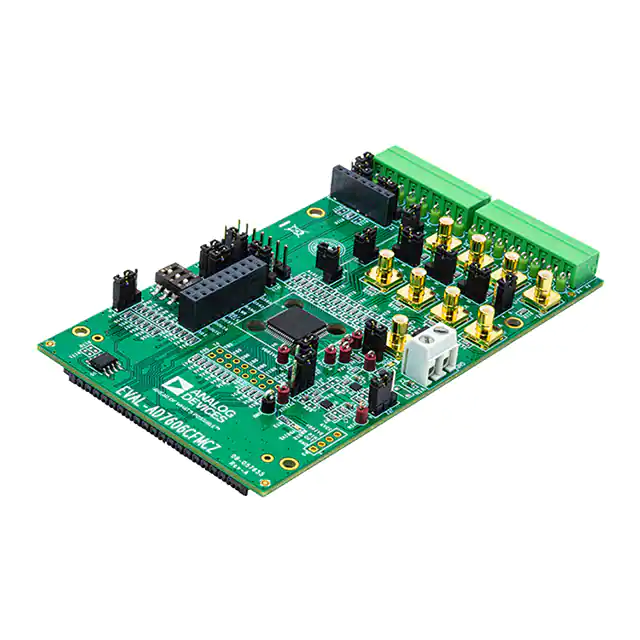
-
EVAL-AD7606C18FMCZ
Analog Devices Inc.
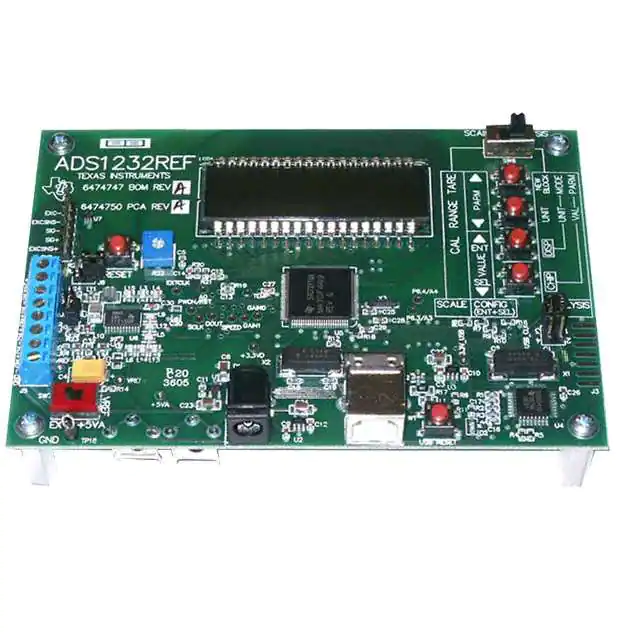
-
ADS1232REF
Texas Instruments
-
EVAL-AD4134FMCZ
Analog Devices Inc.
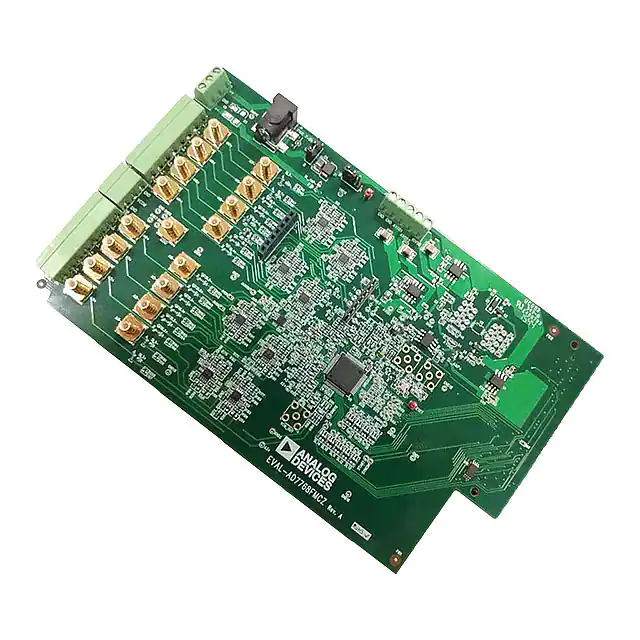
-
EVAL-AD7768FMCZ
Analog Devices Inc.
-
ADC128S102EVM
Texas Instruments
-
ADS124S08EVM
Texas Instruments
-
ADC6140EVM-PDK
Texas Instruments
-
ADS7066EVM-PDK
Texas Instruments
Tech Hub

A practical engineering and sourcing framework covering lifecycle verification, lifetime-buy calculations, replacement qualification, supplier checks and counterfeit-risk controls.

TTL and CMOS logic families differ in thresholds, loading, output drive, power and timing. This engineering guide compares 74HC and 74HCT, calculates noise margins and checks 3.3 V/5 V compatibility.

A practical engineering guide to 3.3V and 5V logic compatibility, input thresholds, resistor dividers, translator ICs, MOSFET level shifting, I2C pull-ups, timing limits and power-sequencing risks.

The 74HC595 uses push-pull logic outputs, while the TPIC6B595 uses 50 V open-drain DMOS sinks for higher-power loads. This guide compares timing, current limits, 3.3 V interfacing, load wiring, thermal…

The 74HC595 converts serial data into eight stable parallel outputs. This guide covers pin functions, shift and storage timing, OE and MR behavior, drive-current limits, cascading, voltage compatibilit…

A technical comparison of level-sensitive latches and edge-triggered flip-flops, covering timing windows, setup and hold limits, master–slave operation, time borrowing, race-through, HDL inference and…

A D latch stores one bit while Enable controls when data can pass. This reference covers gate-level operation, truth tables, transparency, setup and hold timing, LE versus OE, common ICs and practical …

An SR latch stores one bit through cross-coupled feedback. This engineering reference covers NOR and NAND implementations, truth tables, forbidden-state recovery, gated operation, switch debouncing, fa…

Latch circuits retain one bit through feedback. This technical reference covers SR and D latches, truth tables, transparency, timing limits, latch-versus-flip-flop behavior, applications and common log…

An engineering guide to LED driver operation, constant-current and constant-voltage outputs, linear and switching topologies, dimming, IC selection, calculations, replacement compatibility, and fault c…


