
 My Inquiry
 My Account


Texas Instruments AM1806EZCE4
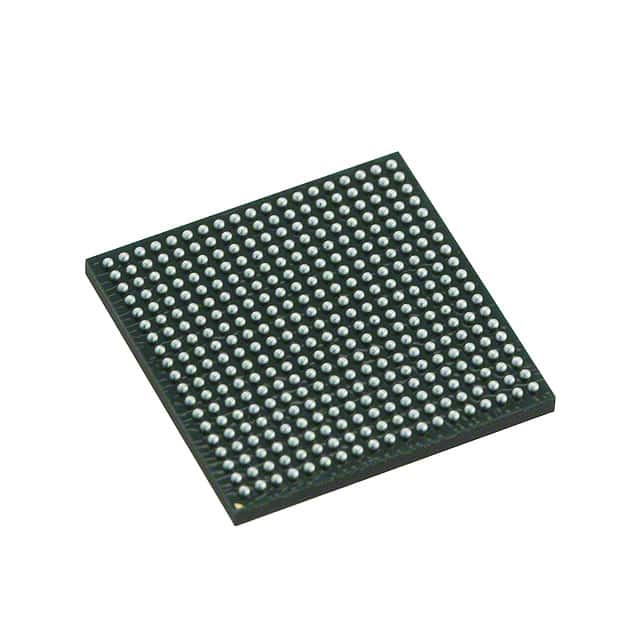
- Part No.:
- AM1806EZCE4
- Manufacturer:
- Texas Instruments
- Category:
- Microprocessors
- Package:
- 361-LFBGA
- Datasheet:
-
 AM1806EZCE4.pdf
- Description:
- IC MPU SITARA 456MHZ 361NFBGA
- Quantity:
- Payment:

- Shipping:

Inventory:4,506
Please send an inquiry. Send us your inquiry, and we will respond immediately.
Product details
Overview
AM1806EZCE4 from Texas Instruments is a 375-MHz ARM926EJ-S™ RISC microprocessor with integrated DDR2/mDDR memory controller, USB 2.0 OTG with PHY, three UARTs, two McASP audio ports, and programmable real-time unit (PRU) subsystem - deployed in industrial HMIs, medical data concentrators, and building automation gateways requiring deterministic I/O and Linux-capable processing.
For engineers reviewing the AM1806EZCE4 datasheet, AM1806EZCE4 pinout, AM1806EZCE4 application, or AM1806EZCE4 equivalent, this page delivers verified technical context, validated package mapping to 361-ball NFBGA (ZCE), confirmed peripheral register layout, and real-world substitution guidance for embedded system design and BOM continuity planning.
Technical Context
The AM1806EZCE4 implements a single-core ARM926EJ-S processor with 16KB instruction and 16KB data caches, MMU, and ETB trace buffer - executing ARMv5TEJ instructions in little-endian mode. It integrates EDMA3 with 64 independent channels and 16 QDMA channels for offloading peripheral-to-memory transfers.
Its memory subsystem includes dual external interfaces: EMIFA supporting NOR/NAND/SDRAM and a dedicated 16-bit DDR2/mDDR controller rated up to 156 MHz (DDR2) or 150 MHz (mDDR). The PRUSS provides two independent 32-bit RISC cores with 4KB IRAM and 512B DRAM each, directly accessible via shared memory and interrupt signaling.
Key Specifications
| Parameter | Value and Actual Design Meaning |
|---|---|
| CPU Core | ARM926EJ-S, 32-bit RISC, supports ARM/Thumb/Java bytecodes, with MMU and VIVT caches |
| Max Clock Frequency | 375 MHz at 1.2V core supply - defines real-time throughput ceiling for Linux-based applications |
| On-Chip Memory | 168KB SRAM (including 128KB general-purpose + 8KB vector table + 64KB ROM) |
| External Memory Support | EMIFA: 8/16-bit NOR/NAND/SDRAM; DDR2/mDDR: 16-bit bus, 256-MB address space |
| USB Interface | USB 2.0 OTG with integrated PHY - supports host (high/full/low-speed) and device (high/full-speed) modes without external transceiver |
| Serial Peripherals | 3× UART (16-byte FIFO, RTS/CTS), 2× McASP (16 serializers, TDM/I2S/DIT), 2× McBSP, 2× SPI, 2× I²C |
| Real-Time I/O | 2× eHRPWM (6 outputs, dead-band control), 3× eCAP (capture/APWM), uPP (8–16-bit parallel, START/ENABLE/WAIT) |
Pinout & Package
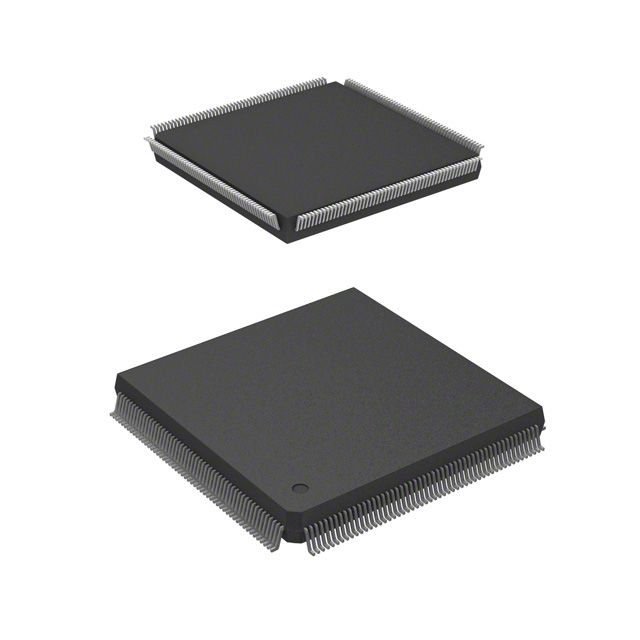
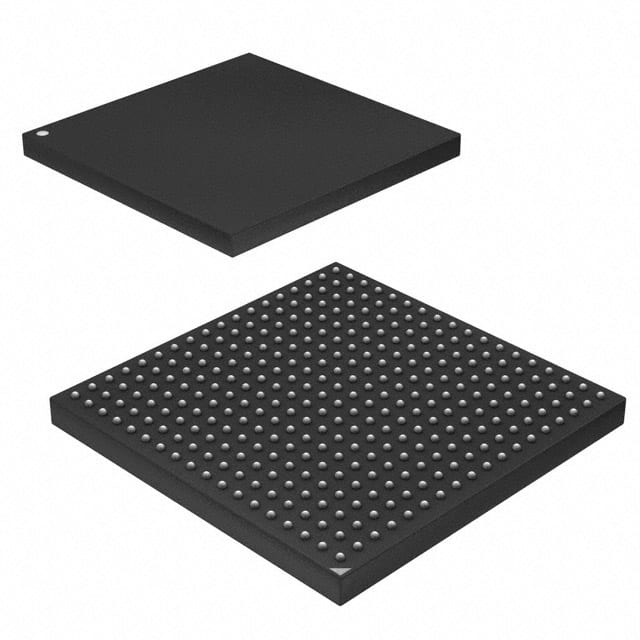
AM1806EZCE4 uses a 361-ball NFBGA (ZCE) package, 13.0 mm × 13.0 mm, 0.65-mm ball pitch, RoHS-compliant and Pb-free. Ball grid layout supports signal integrity-critical routing for DDR2, USB, and high-speed serial interfaces.
| Pin/Terminal | Circuit Role | Design Meaning |
|---|---|---|
| DVDD3318_C | I/O Power Supply | 1.8-V or 3.3-V LVCMOS I/O rail - powers all non-USB/non-DDR2 interface pins |
| VP_CLKOUT2 / MM[TRUNCATED_FOR_EXCEL] | Multiplexed Function Pin | Configurable as PRU1_R30[0], GP6[1], or VP_CLKOUT2 - enables PRU register export or video clock output |
| VSS | GND Reference | Digital ground plane connection - required for noise suppression across ARM subsystem and peripherals |
| NC | No Connect | Unbonded pad - must be left floating or tied to GND per PCB layout guidelines |
Key Features
| Feature | Design Value |
|---|---|
| Programmable Real-Time Unit Subsystem (PRUSS) | Two independent 32-bit RISC cores with 4KB IRAM + 512B DRAM each - executes time-critical I/O tasks without CPU intervention |
| Enhanced DMA (EDMA3) | 64-channel DMA engine with 2 channel controllers and 3 transfer controllers - eliminates CPU overhead for high-bandwidth peripheral transfers |
| Video Port Interface (VPIF) | Dual 8-bit BT.656 capture/display or single 16-bit raw video I/O - enables direct connection to CCD sensors or display panels |
| Universal Parallel Port (uPP) | 8–16-bit bidirectional parallel interface with START/ENABLE/WAIT handshaking - interoperates with FPGAs and high-speed ADCs/DACs |
| Memory Protection Units (MPUs) | Two configurable MPUs enforce access rights across ARM, PRU, and DMA masters - isolates firmware partitions for safety-critical operation |
Applications
| Industrial HMI Gateway | Medical Data Concentrator |
|---|---|
Use Scenario: Central node aggregating sensor data from multiple bedside monitors and relaying to hospital network via Ethernet or cellular modem. IC Role / Device Role / Timing Role: Primary applications processor running Linux RTOS, managing USB-connected peripherals, UART-linked legacy devices, and DDR2-stored patient history buffers. Use Value: Integrated PRUSS handles time-synchronized sampling of analog inputs while ARM core manages secure TLS communication - eliminating need for external FPGA or co-processor. |
Use Scenario: Portable diagnostic device acquiring ECG, SpO₂, and temperature streams, performing on-device FFT analysis, and displaying waveforms on LCD. IC Role / Device Role / Timing Role: Single-chip solution executing real-time signal processing (via PRU), driving 800×480 LCD controller, and buffering data in 128KB on-chip SRAM before SD card storage. Use Value: McASP with DIT capability routes digital audio to external codec; eHRPWM generates precise LED drive signals for optical sensors - all synchronized by shared timer resources. |
| Building Automation Controller | Set-Top Box Media Processor |
Use Scenario: HVAC control unit interfacing with RS-485 Modbus field devices, reading temperature/humidity sensors via I²C, and controlling actuators via PWM outputs. IC Role / Device Role / Timing Role: Host processor managing protocol stacks (Modbus RTU over UART), executing PID loops in PRU, and updating local UI via uPP-connected FPGA logic. Use Value: Three eCAP modules capture encoder position feedback with sub-microsecond timestamp resolution; RTC maintains accurate scheduling across power cycles. |
Use Scenario: Entry-level IPTV set-top box decoding MPEG-2/4 streams, rendering OSD menus, and supporting HDMI/YPbPr video output. IC Role / Device Role / Timing Role: Applications processor booting from NAND flash, loading Linux kernel from DDR2, and feeding decoded video frames to VPIF for BT.656 output to encoder IC. Use Value: USB 2.0 OTG port enables firmware updates via flash drive; LCD controller drives front-panel status display independently of main video path. |
Equivalent & Alternatives
The following parts are listed as comparable options for similar ARM-based applications processors.
| Alternative Part | Technical Difference | Application Difference | Selection Advice |
|---|---|---|---|
| AM1808ZCE4 | Same ZCE package and pinout; higher 456-MHz ARM926EJ-S core (1.3V); identical peripheral set | Requires higher core voltage and thermal margin; suitable where deterministic latency < 2.2 ns is critical | Select AM1808ZCE4 only when application demands >375-MHz sustained throughput and board layout supports 1.3V regulation. |
| AM3352BZCZ100 | ARM Cortex-A8 core (1-GHz), PRU-ICSS instead of PRUSS, different memory map, no EMIFA, DDR2-only interface | Not pin-compatible; requires full PCB redesign; targets higher-performance UI and graphics | AM3352BZCZ100 is a generational upgrade path - not a drop-in replacement - for designs scaling beyond AM1806EZCE4's 375-MHz ceiling. |
Compared with AM1808ZCE4, AM1806EZCE4 offers lower power and thermal footprint at 375 MHz, while AM3352BZCZ100 introduces architectural divergence with Cortex-A8 and PRU-ICSS - making AM1806EZCE4 optimal for cost-sensitive, thermally constrained industrial gateways needing proven ARM9 toolchain compatibility.
Availability
AM1806EZCE4 is available at Aetrix Electronics and suitable for industrial HMIs, medical data concentrators, and building automation controllers requiring stable component supply across multi-year production cycles.
Supply support for AM1806EZCE4 includes scheduled delivery planning, volume procurement assistance, BOM continuity management, traceable sourcing, and lifecycle availability coordination for OEM customers, industrial embedded developers, connected-device designers, and electronics production programs.
Manufacturer
Texas Instruments is a global semiconductor company headquartered in Dallas, Texas, specializing in analog, embedded processing, and connectivity technologies for industrial, automotive, and communications markets.
The AM1806 product line delivers low-power, Linux-capable ARM9 microprocessors with integrated real-time I/O (PRUSS, eHRPWM, eCAP) and memory controllers - designed specifically for cost-sensitive industrial gateways and medical edge devices.
FAQ
What is the maximum operating frequency of the AM1806EZCE4?
The AM1806EZCE4 operates at a maximum frequency of 375 MHz when supplied with 1.2 V to the core voltage rail. This rating is specified under recommended operating conditions and validated across commercial temperature range (0°C to 90°C). The AM1806EZCE4 does not support the 456-MHz mode - that variant is designated AM1806ZWT or AM1808ZCE4. Performance scaling beyond 375 MHz requires voltage and thermal validation per TI SPRS658F Section 5.3.
Does the AM1806EZCE4 include an integrated USB PHY?
Yes, the AM1806EZCE4 integrates a full-speed and high-speed USB 2.0 OTG PHY compliant with the USB 2.0 specification. The USB0 port supports both host and device roles without requiring an external transceiver. Physical layer signaling is handled entirely on-die, with dedicated USB0_VDDA12 (1.2-V analog supply) and USB0_VDD33 (3.3-V I/O supply) rails. This integration reduces BOM count and simplifies layout for portable and space-constrained designs using AM1806EZCE4.
How many independent PRU cores does the AM1806EZCE4 contain?
The AM1806EZCE4 contains two independent 32-bit Programmable Real-Time Unit (PRU) cores within its PRUSS subsystem. Each PRU has 4KB of instruction RAM and 512 bytes of data RAM, and both share access to 12KB of PRUSS shared RAM. Register R30 of each PRU is exported externally for hardware synchronization, and PRUSS can be disabled via software to reduce dynamic power consumption - a capability confirmed in AM1806EZCE4's SPRS658F Section 1.1 and Section 6.29.
What external memory types does the AM1806EZCE4 support via EMIFA?
The AM1806EZCE4 supports NOR Flash (8- or 16-bit), NAND Flash (8- or 16-bit), and 16-bit SDRAM through its External Memory Interface A (EMIFA). EMIFA provides asynchronous timing control with configurable wait states and burst capabilities, enabling direct connection to legacy parallel memories without glue logic. It does not support DDR SDRAM - that function is handled exclusively by the separate DDR2/mDDR memory controller, which supports only DDR2 and Mobile DDR devices.
Is the AM1806EZCE4 pin-compatible with the AM1806ZWT package variant?
No, the AM1806EZCE4 is not pin-compatible with the AM1806ZWT. Although both use 361-ball PBGA packages, AM1806EZCE4 uses the ZCE package (13.0 mm × 13.0 mm, 0.65-mm pitch), while AM1806ZWT uses the ZWT package (16.0 mm × 16.0 mm, 0.80-mm pitch). Ball pitch, mechanical dimensions, and thermal pad layout differ - requiring distinct PCB footprints. TI documentation explicitly lists them as separate orderable variants with no mechanical interchangeability.
AM1806EZCE4 Specifications
- Product attributes
- Attribute value
- Manufacturer:
- Texas Instruments
- Package/Case:
- 361-LFBGA
- Series:
- Sitara™
- Packaging:
- Tray
- Product Status:
- Discontinued at Digi-Key
- Core Processor:
- ARM926EJ-S
- Number of Cores/Bus Width:
- 1 Core, 32-Bit
- Speed:
- 456MHz
- Co-Processors/DSP:
- System Control; CP15
- RAM Controllers:
- LPDDR, DDR2
- Graphics Acceleration:
- No
- Display & Interface Controllers:
- LCD
- Ethernet:
- -
- SATA:
- -
- USB:
- USB 2.0 + PHY (1)
- Voltage - I/O:
- 1.8V, 3.3V
- Operating Temperature:
- 0°C ~ 90°C (TJ)
- Grade:
- -
- Qualification:
- -
- Security Features:
- -
- Mounting Type:
- Surface Mount
- Supplier Device Package:
- 361-NFBGA (13x13)
- Additional Interfaces:
- I2C, McASP, McBSP, SPI, MMC/SD, UART
AM1806EZCE4 FAQ
1.How can I place an order for AM1806EZCE4 through Aetrix?
Please submit a Request for Quotation (RFQ) for AM1806EZCE4 on Aetrix. Our sales agent will provide a competitive quotation and guide you through the order confirmation once you accept the terms.
2.Are the price and stock information for AM1806EZCE4 reliable?
The price and inventory of AM1806EZCE4 are updated periodically and may fluctuate due to market conditions. Stock and pricing data are typically refreshed every 24 hours. Quotation validity for AM1806EZCE4 is usually 5 days.
3.What payment methods are accepted for AM1806EZCE4?
We accept Wire Transfer, PayPal, Credit Card, Western Union, MoneyGram, and Escrow for AM1806EZCE4 transactions.
Note: Certain payment methods may incur a processing fee.
4.How is shipping managed for AM1806EZCE4?
AM1806EZCE4 orders can be shipped via leading logistics carriers, including DHL, UPS, FedEx, TNT, or Registered Mail.
Once your AM1806EZCE4 order is processed, you will receive an email with the shipment details and tracking number.
Note: Tracking information may take up to 24 hours to appear. Express delivery typically takes 3–5 business days.
5.How can I obtain technical support or documentation for AM1806EZCE4?
For technical support, including AM1806EZCE4 datasheets, pinout diagrams, or application guidance, please contact our engineering support team. They can provide detailed documentation and assistance for your AM1806EZCE4 requirements.
6.How does Aetrix verify that AM1806EZCE4 is sourced from the original manufacturer or authorized distributors?
All AM1806EZCE4 products on Aetrix are procured from qualified distributors and authorized channels. Our dedicated quality assurance team conducts strict verification, including traceability checks and, if necessary, third-party testing. This ensures that AM1806EZCE4 meets industry standards.
7.What is the process for return or replacement of AM1806EZCE4?
All AM1806EZCE4 units undergo pre-shipment inspection (PSI). If there is an issue with AM1806EZCE4, returns or replacements are accepted under the following conditions:
1.Quantity discrepancies, incorrect items, or visible external defects (such as breakage or corrosion), acknowledged by Aetrix.
2.The issue is reported within 90 days of delivery.
3.The AM1806EZCE4 part is unused and in its original packaging.
Return procedure for AM1806EZCE4:
1.Submit a request within 90 days.
2.Obtain a Return Material Authorization (RMA) from Aetrix.
AM1806EZCE4 Tags
-
AT91SAM9260B-CU-999
Microchip Technology
-
AT91SAM9G25-CU
Microchip Technology
-
ATSAMA5D27C-CU
Microchip Technology
-
AT91SAM9X35-CU
Microchip Technology
-
AT91SAM9X25-CU
Microchip Technology
-
MCIMX6Y2CVM08AB
NXP Semiconductors
.JPG)
-
AM3352BZCZ100
Texas Instruments
-
AT91SAM9260B-CU
Microchip Technology
-
AT91SAM9260B-QU
Microchip Technology
-
ATSAMA5D31A-CU
Microchip Technology
-
AT91SAM9G20B-CU-999
Microchip Technology
-
MCIMX6Y2CVM05AB
NXP Semiconductors
Tech Hub

A practical engineering guide to 3.3V and 5V logic compatibility, input thresholds, resistor dividers, translator ICs, MOSFET level shifting, I2C pull-ups, timing limits and power-sequencing risks.

The 74HC595 uses push-pull logic outputs, while the TPIC6B595 uses 50 V open-drain DMOS sinks for higher-power loads. This guide compares timing, current limits, 3.3 V interfacing, load wiring, thermal…

The 74HC595 converts serial data into eight stable parallel outputs. This guide covers pin functions, shift and storage timing, OE and MR behavior, drive-current limits, cascading, voltage compatibilit…

A technical comparison of level-sensitive latches and edge-triggered flip-flops, covering timing windows, setup and hold limits, master–slave operation, time borrowing, race-through, HDL inference and…

A D latch stores one bit while Enable controls when data can pass. This reference covers gate-level operation, truth tables, transparency, setup and hold timing, LE versus OE, common ICs and practical …

An SR latch stores one bit through cross-coupled feedback. This engineering reference covers NOR and NAND implementations, truth tables, forbidden-state recovery, gated operation, switch debouncing, fa…

Latch circuits retain one bit through feedback. This technical reference covers SR and D latches, truth tables, transparency, timing limits, latch-versus-flip-flop behavior, applications and common log…

An engineering guide to LED driver operation, constant-current and constant-voltage outputs, linear and switching topologies, dimming, IC selection, calculations, replacement compatibility, and fault c…

Operational amplifier guide covering op amp basics, feedback, ideal vs real op amps, common configurations, buffer circuits, offset, bias current, gain-bandwidth, slew rate, rail-to-rail limits and sel…

Jumper cables guide covering safe connection order, red and black clamp placement, final ground connection, cable gauge, length, clamp quality, copper vs CCA cables, jump starter comparison and battery…


