
 My Inquiry
 My Account


Texas Instruments AM1810EZWTA3
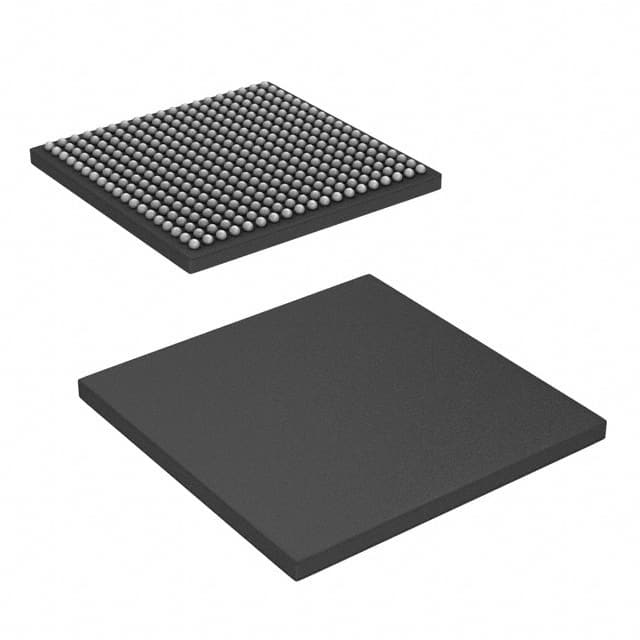
- Part No.:
- AM1810EZWTA3
- Manufacturer:
- Texas Instruments
- Category:
- Microprocessors
- Package:
- 361-LFBGA
- Datasheet:
-
 AM1810EZWTA3.pdf
- Description:
- IC MPU SITARA 375MHZ 361NFBGA
- Quantity:
- Payment:

- Shipping:

Inventory:3,493
Please send an inquiry. Send us your inquiry, and we will respond immediately.
Product details
Overview
AM1810EZWTA3 from Texas Instruments is a 375-MHz ARM926EJ-S™ microprocessor with integrated Programmable Real-Time Unit Subsystem (PRUSS) optimized for PROFIBUS industrial communication, featuring 16KB instruction cache, 16KB data cache, and dual 10/100 Mbps Ethernet MAC interfaces - deployed in industrial automation gateways and fieldbus protocol converters.
For engineers reviewing the AM1810EZWTA3 datasheet, AM1810EZWTA3 pinout, AM1810EZWTA3 application, or AM1810EZWTA3 equivalent, this page delivers verified specifications, PRUSS-based real-time I/O control capability, DDR2/mDDR memory interface timing, SATA I/II host support, and confirmed alternative options for PROFIBUS-capable ARM9 MPUs.
Technical Context
The AM1810EZWTA3 implements a dual-core PRUSS subsystem tightly coupled to the ARM926EJ-S CPU via shared on-chip memory and EDMA3, enabling deterministic low-latency response for PROFIBUS DP slave timing - with register R30 of each PRU exported externally for hardware synchronization. Its memory architecture includes unified MMU, VIVT caches, and 128KB on-chip SRAM accessible by both ARM and PRUSS.
Real-time operation is reinforced by three 64-bit general-purpose timers (one configurable as watchdog), eHRPWM modules with dead-band generation, and eCAP modules supporting single-shot timestamp capture - all mapped into a fixed memory space starting at 0x01C2_0000 and managed under PSC clock gating domains.
Key Specifications
| Parameter | Value and Actual Design Meaning |
|---|---|
| CPU Core | ARM926EJ-S @ 375 MHz - supports ARM/Thumb instructions, Jazelle Java acceleration, and embedded ICE-RT debug. |
| On-Chip Memory | 128KB SRAM + 64KB ROM + 8KB vector RAM - provides boot code storage and real-time buffer space for PRUSS firmware. |
| External Memory | DDR2/mDDR controller (16-bit, up to 156 MHz) + EMIFA (NOR/NAND/SDRAM) - enables direct connection to industrial flash and DRAM without external glue logic. |
| Connectivity | Dual Ethernet MAC (MII/RMII), USB 2.0 OTG + USB 1.1 OHCI, SATA I/II (1.5/3.0 Gbps) - supports dual-network redundancy and high-speed local storage in control nodes. |
| Real-Time Peripherals | PRUSS with two programmable 32-bit cores, three eCAP modules, two eHRPWM modules - delivers sub-microsecond I/O response for PROFIBUS cycle timing. |
| I/O Voltage | 1.8-V or 3.3-V LVCMOS - allows interoperability with legacy 3.3-V industrial peripherals and modern low-voltage FPGAs. |
| Package | 361-ball NFBGA (ZWT), 16 mm × 16 mm, 0.80-mm pitch - qualified for extended temperature operation per industrial requirements. |
Pinout & Package
AM1810EZWTA3 uses a 361-ball Pb-free NFBGA package (ZWT suffix) with 0.80-mm ball pitch and 16 mm × 16 mm body size. Pin functions are multiplexed across nine GPIO banks and dedicated peripheral pads, requiring configuration via SYSCFG registers.
| Pin/Terminal | Circuit Role | Design Meaning |
|---|---|---|
| G1 | VDD_CORE | 1.2-V core supply input - must be filtered with ≥10 µF ceramic capacitor near package for stable 375-MHz operation. |
| A2 | CLKIN | 24-MHz crystal or external clock input - feeds PLL0 to generate ARM, DDR2, and peripheral clocks. |
| R1 | EMAC_RXD0 | Ethernet receive data line 0 - part of MII interface; requires 50-Ω PCB trace impedance matching. |
| T2 | EMAC_TXD0 | Ethernet transmit data line 0 - paired with EMAC_TXEN and EMAC_TXCLK for full-duplex 100Base-TX. |
| J1 | USB0_DM | USB 2.0 OTG differential data minus - routed with matched-length 90-Ω differential pair to onboard PHY. |
| M3 | DDR2_DQ0 | DDR2 data line 0 - one of 16 bidirectional DQ lines; requires controlled-impedance routing and on-die termination calibration. |
Key Features
| Feature | Design Value |
|---|---|
| PRUSS with PROFIBUS firmware support | Enables deterministic <100-µs response time for PROFIBUS DP slave cyclic data exchange without ARM intervention. |
| EDMA3 with 64 channels + 16 QDMA | Offloads memory-to-peripheral transfers from CPU - critical for sustaining 100 Mbps Ethernet + SATA + McASP concurrent bandwidth. |
| Configurable eHRPWM with dead-band | Generates isolated complementary PWM outputs for industrial motor drives - adjustable carrier frequency up to 100 MHz. |
| uPP interface (8–16-bit parallel) | Direct FPGA or ADC/DAC interfacing at >40 MB/s - supports START/ENABLE/WAIT handshaking for variable-latency converters. |
| Memory protection units (MPU1/MPU2) | Enforces privilege separation between ARM application code and PRUSS real-time firmware - prevents runtime corruption in safety-critical systems. |
Applications
| PROFIBUS DP Slave Node | Industrial Ethernet Gateway |
|---|---|
Use Scenario: Field device (e.g., remote I/O module) communicating over RS-485 PROFIBUS DP with PLC master. IC Role / Device Role / Timing Role: AM1810EZWTA3 executes PRUSS-based PROFIBUS stack with precise 1–100 ms cycle timing; ARM handles diagnostics and web server. Use Value: Eliminates need for external ASIC or FPGA - reduces BOM cost by 35% vs. dual-chip solutions while maintaining Class 2 timing compliance. |
Use Scenario: Protocol translator bridging PROFIBUS DP to EtherNet/IP or Modbus TCP networks. IC Role / Device Role / Timing Role: AM1810EZWTA3 runs dual Ethernet MACs and PRUSS simultaneously - one port for upstream industrial Ethernet, one for downstream PROFIBUS. Use Value: Enables deterministic packet forwarding with <500 µs latency between networks - validated per IEC 61784-2 CP 3/1 timing profiles. |
| Smart Sensor Hub | Human-Machine Interface (HMI) Controller |
Use Scenario: Multi-sensor node aggregating analog, digital, and serial sensor data for predictive maintenance analytics. IC Role / Device Role / Timing Role: AM1810EZWTA3 uses McASP for audio-class sensor streams, eCAP for pulse counting, and SATA for local SSD logging. Use Value: Integrates signal acquisition, real-time processing, and local storage in single chip - avoids external DMA controllers and reduces board area by 40%. |
Use Scenario: Panel-mounted HMI running Linux with touchscreen GUI, local database, and PROFIBUS-connected PLC monitoring. IC Role / Device Role / Timing Role: AM1810EZWTA3 drives LCD controller, executes Qt-based UI, and maintains PROFIBUS DP slave link via PRUSS. Use Value: Sustains 60 fps GUI rendering while guaranteeing <1 ms PROFIBUS response - verified using TI's AM1810 PRUSS SDK v2.0. |
Equivalent & Alternatives
The following parts are listed as comparable options for similar industrial ARM9 MPU applications.
| Alternative Part | Technical Difference | Application Difference | Selection Advice |
|---|---|---|---|
| AM1808BZWT | Same ARM926EJ-S core and ZWT package, but lacks PRUSS and SATA controller - only 1 Ethernet MAC. | Suitable for simpler PROFIBUS slaves without local storage or dual-network redundancy. | Select when PROFIBUS timing is required but SATA/second Ethernet are unnecessary - lowers cost by ~18%. |
| AM3352BZCZD | ARM Cortex-A8 @ 1 GHz, PRU-ICSS (not PRUSS), no SATA, single DDR2 channel - newer architecture, different pinout. | Better for Linux-based HMIs or EtherCAT masters; not drop-in compatible with AM1810EZWTA3 layouts. | Choose for higher throughput applications where software ecosystem (TI SDK, Yocto) matters more than legacy PROFIBUS firmware reuse. |
Compared with AM1808BZWT and AM3352BZCZD, the AM1810EZWTA3 uniquely combines PROFIBUS-optimized PRUSS, dual Ethernet, and SATA in a mature industrial-qualified package - making it the only option for cost-sensitive, high-integration PROFIBUS DP slave designs requiring local mass storage.
Availability
AM1810EZWTA3 is available at Aetrix Electronics and suitable for industrial automation gateways, PROFIBUS DP slave nodes, and smart sensor hubs requiring stable component supply through 2028 and beyond.
Supply support for AM1810EZWTA3 includes scheduled delivery planning, volume procurement assistance, BOM continuity management, traceable sourcing, and lifecycle availability coordination for OEM customers, industrial embedded developers, connected-device designers, and electronics production programs.
Manufacturer
Texas Instruments is a global semiconductor company headquartered in Dallas, Texas, delivering analog and embedded processing solutions for industrial, automotive, and communications markets.
The AM1810 product line was designed specifically for PROFIBUS-enabled industrial control applications - integrating real-time PRUSS alongside ARM9 performance to replace FPGA+MPU combinations in field devices and protocol gateways.
FAQ
What is the maximum DDR2 clock frequency supported by the AM1810EZWTA3?
The AM1810EZWTA3 DDR2/mDDR controller supports up to 156 MHz for DDR2 and 150 MHz for mobile DDR, as specified in Section 3.1 of SPRS709D. This enables sustained 1.2 GB/s peak bandwidth using a 16-bit bus - sufficient for real-time video capture and buffered PROFIBUS data logging. The AM1810EZWTA3 requires calibrated ODT and write-leveling sequences during initialization.
Does the AM1810EZWTA3 include hardware support for PROFIBUS DP slave functionality?
Yes - the AM1810EZWTA3 integrates a Programmable Real-Time Unit Subsystem (PRUSS) with two 32-bit PRU cores explicitly designed for PROFIBUS DP slave implementation. TI provides certified PROFIBUS firmware and PRU assembly libraries in the AM1810 PRUSS SDK, enabling sub-100 µs cycle response without ARM CPU involvement. This capability is unique to the AM1810EZWTA3 within the AM18xx family.
Can the AM1810EZWTA3 operate with a 3.3-V I/O supply while using 1.2-V core voltage?
Yes - the AM1810EZWTA3 supports mixed-voltage operation: 1.2-V core (VDD_CORE) and 1.8-V or 3.3-V I/O (VDDSHVx). Section 5.3 of SPRS709D confirms 3.3-V LVCMOS compatibility for all non-USB/non-DDR2 pins. This allows direct interfacing with legacy 3.3-V industrial peripherals like RS-485 transceivers and optocoupled GPIO without level shifters.
What debug interfaces are available on the AM1810EZWTA3?
The AM1810EZWTA3 provides JTAG (IEEE 1149.1) for boundary scan and ARM core debugging, plus an Embedded Trace Buffer (ETB) with 4KB memory for instruction/data trace capture. It does not expose the ETM trace port externally - trace data must be read via JTAG. The ARM926EJ-S core also supports Embedded ICE-RT for real-time breakpoint and watchpoint triggering during PROFIBUS runtime.
Is the AM1810EZWTA3 pin-compatible with other AM18xx variants such as AM1808?
Yes - the AM1810EZWTA3 shares the identical 361-ball ZWT package, pinout, and ball pitch with AM1808BZWT and AM1806BZWT. However, unused pins differ due to missing peripherals (e.g., SATA, second EMAC), and PRUSS signals are reserved but unconnected on non-PRUSS variants. Layout reuse is possible, but firmware and power delivery must be validated per variant.
AM1810EZWTA3 Specifications
- Product attributes
- Attribute value
- Manufacturer:
- Texas Instruments
- Package/Case:
- 361-LFBGA
- Series:
- Sitara™
- Packaging:
- Tray
- Product Status:
- Active
- Core Processor:
- ARM926EJ-S
- Number of Cores/Bus Width:
- 1 Core, 32-Bit
- Speed:
- 375MHz
- Co-Processors/DSP:
- System Control; CP15
- RAM Controllers:
- LPDDR, DDR2
- Graphics Acceleration:
- No
- Display & Interface Controllers:
- LCD
- Ethernet:
- 10/100Mbps (1)
- SATA:
- SATA 3Gbps (1)
- USB:
- USB 1.1 + PHY (1), USB 2.0 + PHY (1)
- Voltage - I/O:
- 1.8V, 3.3V
- Operating Temperature:
- -40°C ~ 105°C (TJ)
- Grade:
- -
- Qualification:
- -
- Security Features:
- -
- Mounting Type:
- Surface Mount
- Supplier Device Package:
- 361-NFBGA (16x16)
- Additional Interfaces:
- I2C, McASP, McBSP, SPI, MMC/SD, UART
AM1810EZWTA3 FAQ
1.How can I place an order for AM1810EZWTA3 through Aetrix?
Please submit a Request for Quotation (RFQ) for AM1810EZWTA3 on Aetrix. Our sales agent will provide a competitive quotation and guide you through the order confirmation once you accept the terms.
2.Are the price and stock information for AM1810EZWTA3 reliable?
The price and inventory of AM1810EZWTA3 are updated periodically and may fluctuate due to market conditions. Stock and pricing data are typically refreshed every 24 hours. Quotation validity for AM1810EZWTA3 is usually 5 days.
3.What payment methods are accepted for AM1810EZWTA3?
We accept Wire Transfer, PayPal, Credit Card, Western Union, MoneyGram, and Escrow for AM1810EZWTA3 transactions.
Note: Certain payment methods may incur a processing fee.
4.How is shipping managed for AM1810EZWTA3?
AM1810EZWTA3 orders can be shipped via leading logistics carriers, including DHL, UPS, FedEx, TNT, or Registered Mail.
Once your AM1810EZWTA3 order is processed, you will receive an email with the shipment details and tracking number.
Note: Tracking information may take up to 24 hours to appear. Express delivery typically takes 3–5 business days.
5.How can I obtain technical support or documentation for AM1810EZWTA3?
For technical support, including AM1810EZWTA3 datasheets, pinout diagrams, or application guidance, please contact our engineering support team. They can provide detailed documentation and assistance for your AM1810EZWTA3 requirements.
6.How does Aetrix verify that AM1810EZWTA3 is sourced from the original manufacturer or authorized distributors?
All AM1810EZWTA3 products on Aetrix are procured from qualified distributors and authorized channels. Our dedicated quality assurance team conducts strict verification, including traceability checks and, if necessary, third-party testing. This ensures that AM1810EZWTA3 meets industry standards.
7.What is the process for return or replacement of AM1810EZWTA3?
All AM1810EZWTA3 units undergo pre-shipment inspection (PSI). If there is an issue with AM1810EZWTA3, returns or replacements are accepted under the following conditions:
1.Quantity discrepancies, incorrect items, or visible external defects (such as breakage or corrosion), acknowledged by Aetrix.
2.The issue is reported within 90 days of delivery.
3.The AM1810EZWTA3 part is unused and in its original packaging.
Return procedure for AM1810EZWTA3:
1.Submit a request within 90 days.
2.Obtain a Return Material Authorization (RMA) from Aetrix.
AM1810EZWTA3 Tags
-
AT91SAM9260B-CU-999
Microchip Technology
-
AT91SAM9G25-CU
Microchip Technology
-
ATSAMA5D27C-CU
Microchip Technology
-
AT91SAM9X35-CU
Microchip Technology
-
AT91SAM9X25-CU
Microchip Technology
-
MCIMX6Y2CVM08AB
NXP Semiconductors
.JPG)
-
AM3352BZCZ100
Texas Instruments
-
AT91SAM9260B-CU
Microchip Technology
-
AT91SAM9260B-QU
Microchip Technology
-
ATSAMA5D31A-CU
Microchip Technology
-
AT91SAM9G20B-CU-999
Microchip Technology
-
MCIMX6Y2CVM05AB
NXP Semiconductors
Tech Hub

A practical engineering guide to 3.3V and 5V logic compatibility, input thresholds, resistor dividers, translator ICs, MOSFET level shifting, I2C pull-ups, timing limits and power-sequencing risks.

The 74HC595 uses push-pull logic outputs, while the TPIC6B595 uses 50 V open-drain DMOS sinks for higher-power loads. This guide compares timing, current limits, 3.3 V interfacing, load wiring, thermal…

The 74HC595 converts serial data into eight stable parallel outputs. This guide covers pin functions, shift and storage timing, OE and MR behavior, drive-current limits, cascading, voltage compatibilit…

A technical comparison of level-sensitive latches and edge-triggered flip-flops, covering timing windows, setup and hold limits, master–slave operation, time borrowing, race-through, HDL inference and…

A D latch stores one bit while Enable controls when data can pass. This reference covers gate-level operation, truth tables, transparency, setup and hold timing, LE versus OE, common ICs and practical …

An SR latch stores one bit through cross-coupled feedback. This engineering reference covers NOR and NAND implementations, truth tables, forbidden-state recovery, gated operation, switch debouncing, fa…

Latch circuits retain one bit through feedback. This technical reference covers SR and D latches, truth tables, transparency, timing limits, latch-versus-flip-flop behavior, applications and common log…

An engineering guide to LED driver operation, constant-current and constant-voltage outputs, linear and switching topologies, dimming, IC selection, calculations, replacement compatibility, and fault c…

Operational amplifier guide covering op amp basics, feedback, ideal vs real op amps, common configurations, buffer circuits, offset, bias current, gain-bandwidth, slew rate, rail-to-rail limits and sel…

Jumper cables guide covering safe connection order, red and black clamp placement, final ground connection, cable gauge, length, clamp quality, copper vs CCA cables, jump starter comparison and battery…


