
 My Inquiry
 My Account


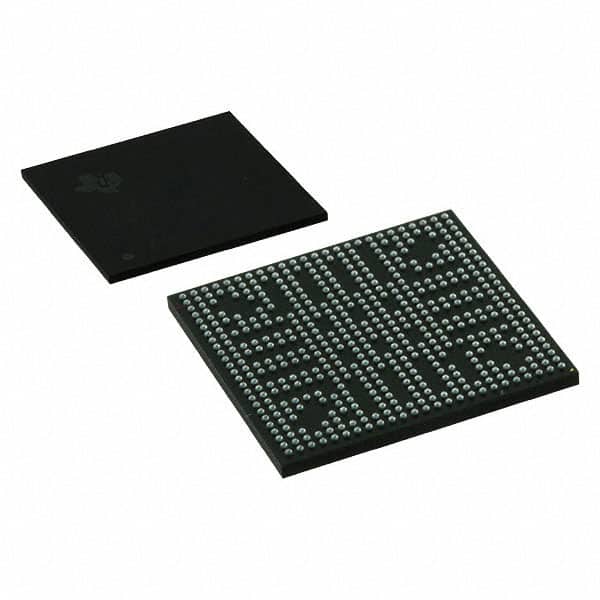
Texas Instruments AM3505AZCNA
- Part No.:
- AM3505AZCNA
- Manufacturer:
- Texas Instruments
- Category:
- Microprocessors
- Package:
- 491-LFBGA
- Datasheet:
-
 AM3505AZCNA.pdf
- Description:
- IC MPU SITARA 600MHZ 491NFBGA
- Quantity:
- Payment:

- Shipping:

Inventory:3,501
Please send an inquiry. Send us your inquiry, and we will respond immediately.
Product details
Overview
AM3505AZCNA from Texas Instruments is a 600-MHz ARM Cortex-A8 microprocessor with integrated SDRC DDR2/mDDR memory controller, 186 GPIOs, dual DACs for NTSC/PAL video output, and industrial-grade temperature support. It delivers real-time multimedia processing for embedded HMI, digital signage, and portable industrial devices requiring Linux or Android OS support.
For engineers reviewing the AM3505AZCNA datasheet, AM3505AZCNA pinout, AM3505AZCNA application, or AM3505AZCNA equivalent, key selection criteria include its 491-pin NFBGA (17.1 × 17.1 mm) package, lack of PowerVR SGX graphics (distinguishing it from AM3517), TV-out capability, and dual 10-bit DAC support - all critical for cost-optimized display and control systems.
Technical Context
The AM3505AZCNA implements an in-order, dual-issue, superscalar ARMv7 architecture with NEON SIMD and VFP coprocessors, enabling efficient media decode and signal processing. Its memory subsystem includes a 256KB L2 cache, 64KB on-chip SRAM, and a 166-MHz 16/32-bit SDRC interface supporting up to 1GB DDR2/mDDR.
Peripheral integration centers on high-bandwidth interconnects: a 32-channel sDMA controller, five McBSP audio interfaces (two with sidetone), four McSPI ports, three I²C controllers, and dedicated VPFE video input with 75-MHz pixel clock support - all managed via programmable power, reset, and clock domains.
Key Specifications
| Parameter | Value and Actual Design Meaning |
|---|---|
| CPU Core | ARM Cortex-A8 @ 600 MHz - enables Linux/Android boot and real-time task scheduling in industrial HMI |
| Memory Interface | SDRC DDR2/mDDR @ 166 MHz - supports 1GB addressable space with SMS scheduler for deterministic latency |
| Graphics | No PowerVR SGX - distinguishes AM3505 from AM3517; reduces BOM cost for non-3D applications |
| Video Output | Dual 10-bit DACs - generate composite NTSC/PAL and S-video signals without external encoder IC |
| Package | NFBGA-491 (17.1 × 17.1 mm, 0.65-mm pitch) - compatible with standard PCB assembly processes |
| IO Voltage | mDDR/DDR2 IOs: 1.8 V; other IOs: 1.8 V or 3.3 V - enables mixed-voltage peripheral interfacing |
| Operating Temp | –40°C to +105°C (extended grade) - qualified for harsh industrial environments |
Pinout & Package
AM3505AZCNA uses a 491-ball NFBGA (ZCN suffix) package with 0.65-mm pitch and Via Channel™ array technology. Ball assignment follows TI's standardized quadrant layout (A–D), with dedicated power/ground banks, configurable I/O banks (VDDSHV, VDDS, VDD_CORE), and function-multiplexed pins controlled via mode registers.
| Pin/Terminal | Circuit Role | Design Meaning |
|---|---|---|
| VDD_CORE | Core power supply | 1.2-V supply for ARM Cortex-A8 core and L1/L2 caches; requires low-noise decoupling |
| SDRC_D0–D31 | DDR2/mDDR data bus | 32-bit bidirectional data path; SSTL_18-compliant; supports 16-/32-bit configurations |
| DSS_PCLK / DSS_HSYNC / DSS_VSYNC | Display subsystem timing | Parallel RGB interface clock and sync signals for direct LCD panel connection |
| TV_OUT1 / TV_OUT2 | Composite video output | Analog outputs from internal 10-bit DACs; support NTSC/PAL encoding without external circuitry |
| USB0_DP / USB0_DM | USB OTG physical layer | Differential pair for HS/FS/LS operation; integrated PHY eliminates need for external transceiver |
| JTAG_TCK / TMS / TDI / TDO | IEEE-1149.1 boundary scan | Standard debug interface for firmware development and production test |
Key Features
| Feature | Design Value |
|---|---|
| ARM Cortex-A8 + NEON + VFP | Enables concurrent execution of Linux kernel tasks and real-time media processing (e.g., video decode + UI rendering) |
| 186 General-Purpose I/O Pins | Configurable as GPIO, UART, I²C, McSPI, or McBSP - supports flexible peripheral expansion without FPGA glue logic |
| Integrated Display Subsystem | Supports dual LCD panels, rotation (90°/180°/270°), resize (¼× to 8×), and alpha blending - reduces external graphics controller cost |
| VPFE Video Input Port | 16-bit parallel interface with 75-MHz max pixel clock - captures HD video directly from CMOS image sensors |
| EMAC + USB OTG + HECC CAN | Single-chip connectivity for industrial Ethernet, host/device USB, and automotive-grade CAN communication |
Applications
| Industrial HMI | Digital Signage |
|---|---|
Use Scenario: Touch-enabled operator interface in factory automation panels with local video playback and network diagnostics. IC Role / Device Role / Timing Role: Main application processor executing Qt-based UI, driving 720p LCD via parallel RGB, and managing EtherNet/IP stack. Use Value: Integrated dual DACs eliminate external video encoder; 186 GPIOs enable direct button/LED control without I/O expanders. |
Use Scenario: Standalone retail kiosk displaying dynamic advertisements with local storage and remote content updates. IC Role / Device Role / Timing Role: System-on-chip handling HDMI-to-LVDS conversion (via external bridge), NAND flash boot, and Wi-Fi/Ethernet comms. Use Value: SDRC DDR2 interface ensures smooth 1080p video buffering; GPMC supports NOR/NAND flash for robust firmware storage. |
| Portable Industrial Terminal | Smart White Goods Control |
Use Scenario: Battery-powered handheld diagnostic tool for HVAC and PLC commissioning with serial/USB/CAN interfaces. IC Role / Device Role / Timing Role: Real-time processor running lightweight RTOS, managing multiple serial protocols (UART, McBSP, McSPI), and powering USB host for flash drive logging. Use Value: Low-power 600-MHz Cortex-A8 core extends battery life; integrated HECC CAN controller enables direct fieldbus access. |
Use Scenario: Washing machine main controller with display, motor drive feedback, and cloud connectivity via Wi-Fi module. IC Role / Device Role / Timing Role: Central MCU coordinating sensor acquisition (ADC inputs), PWM motor control, and secure OTA updates over TLS. Use Value: 12 general-purpose timers support precise motor commutation; dual DACs generate analog audio alerts and status tones. |
Equivalent & Alternatives
The following parts are listed as comparable options for similar microprocessor applications.
| Alternative Part | Technical Difference | Application Difference | Selection Advice |
|---|---|---|---|
| AM3517AZCNA | Includes PowerVR SGX graphics accelerator; identical pinout and package | Required for 3D UI, gaming, or OpenGL ES-accelerated rendering | Select when GPU acceleration is mandatory; otherwise AM3505AZCNA offers lower cost and power |
| AM3352BZCZD | ARM Cortex-A8 @ 1 GHz; PRU-ICSS for real-time I/O; no integrated DACs or VPFE | Suited for programmable logic control and industrial networking where video output is external | Choose for higher CPU performance and deterministic real-time I/O; accept added external video components |
Compared with AM3517AZCNA, AM3505AZCNA removes the PowerVR SGX block to reduce cost and power, making it optimal for display-centric but non-3D applications; versus AM3352BZCZD, it retains integrated video DACs and VPFE but trades off PRU flexibility and clock speed for mature, stable multimedia features.
Availability
AM3505AZCNA is available at Aetrix Electronics and suitable for industrial HMI, digital signage, and portable industrial terminals requiring stable component supply across extended temperature ranges and long product lifecycles.
Supply support for AM3505AZCNA includes scheduled delivery planning, volume procurement assistance, BOM continuity management, traceable sourcing, and lifecycle availability coordination for OEM customers, industrial embedded developers, connected-device designers, and electronics production programs.
Manufacturer
Texas Instruments is a global semiconductor leader specializing in analog, embedded processing, and connectivity solutions for industrial, automotive, and consumer markets.
The AM3505AZCNA belongs to TI's Sitara™ ARM processor family, designed specifically for cost-sensitive, display-rich embedded applications requiring Linux/Android support, integrated video, and industrial reliability - without the overhead of 3D graphics.
FAQ
What is the maximum DDR2 memory capacity supported by the AM3505AZCNA?
The AM3505AZCNA supports up to 1 GB of total addressable space via its SDRC memory controller. This is achieved using 16- or 32-bit DDR2/mDDR SDRAM with a 166-MHz interface clock. The controller includes a SDRAM Memory Scheduler (SMS) and rotation engine to optimize bandwidth and latency for real-time applications. AM3505AZCNA's memory map is fixed and documented in Section 6.4 of the SPRS550F datasheet.
Does the AM3505AZCNA include a graphics accelerator like the PowerVR SGX?
No, the AM3505AZCNA does not include the PowerVR SGX graphics accelerator. That feature is exclusive to the AM3517 variant. The AM3505AZCNA relies on its ARM Cortex-A8 core and NEON coprocessor for 2D graphics and video processing, with hardware-accelerated display functions such as scaling, rotation, and alpha blending handled by the integrated Display Subsystem. This omission reduces cost and power consumption while retaining full video I/O capability.
Can the AM3505AZCNA generate NTSC/PAL video signals directly?
Yes, the AM3505AZCNA integrates two 10-bit digital-to-analog converters (DACs) that directly generate composite NTSC or PAL video signals and S-video (Y/C) outputs. These DACs are part of the Display Subsystem and require no external encoder IC. The device supports luma/chroma separation, optical black clamping, and built-in digital clamping - all confirmed in Section 1.1 Features and Section 5.10 of the AM3505AZCNA datasheet SPRS550F.
What package type and dimensions does the AM3505AZCNA use?
The AM3505AZCNA uses a 491-ball NFBGA package with ZCN suffix, measuring 17.10 mm × 17.10 mm with 0.65-mm ball pitch and Via Channel™ array technology. This package is distinct from the 484-pin PBGA (ZER) variant. Mechanical details, including solder paste stencil recommendations and thermal pad layout, are specified in Section 8 of the SPRS550F datasheet. AM3505AZCNA's ZCN package is optimized for high-density routing and thermal performance in industrial PCBs.
Which operating systems are officially supported on the AM3505AZCNA?
The AM3505AZCNA is officially supported by Linux®, Windows® CE, and Android™ operating systems. TI provides board support packages (BSPs), kernel drivers, and bootloader (X-Loader/U-Boot) reference code for all three. Support includes drivers for integrated peripherals such as EMAC, USB OTG, McSPI, McBSP, and the Display Subsystem. AM3505AZCNA's ARMv7 architecture and NEON/VFP units ensure compatibility with modern OS distributions targeting Cortex-A8.
AM3505AZCNA Specifications
- Product attributes
- Attribute value
- Manufacturer:
- Texas Instruments
- Package/Case:
- 491-LFBGA
- Series:
- Sitara™
- Packaging:
- Tray
- Product Status:
- Active
- Core Processor:
- ARM® Cortex®-A8
- Number of Cores/Bus Width:
- 1 Core, 32-Bit
- Speed:
- 600MHz
- Co-Processors/DSP:
- Multimedia; NEON™ SIMD
- RAM Controllers:
- LPDDR, DDR2
- Graphics Acceleration:
- No
- Display & Interface Controllers:
- LCD
- Ethernet:
- 10/100Mbps (1)
- SATA:
- -
- USB:
- USB 2.0 (3), USB 2.0 + PHY (1)
- Voltage - I/O:
- 1.8V, 3.3V
- Operating Temperature:
- -40°C ~ 105°C (TJ)
- Grade:
- -
- Qualification:
- -
- Security Features:
- -
- Mounting Type:
- Surface Mount
- Supplier Device Package:
- 491-NFBGA (17x17)
- Additional Interfaces:
- CAN, HDQ/1-Wire, I2C, McBSP, McSPI, MMC/SD/SDIO, UART
AM3505AZCNA FAQ
1.How can I place an order for AM3505AZCNA through Aetrix?
Please submit a Request for Quotation (RFQ) for AM3505AZCNA on Aetrix. Our sales agent will provide a competitive quotation and guide you through the order confirmation once you accept the terms.
2.Are the price and stock information for AM3505AZCNA reliable?
The price and inventory of AM3505AZCNA are updated periodically and may fluctuate due to market conditions. Stock and pricing data are typically refreshed every 24 hours. Quotation validity for AM3505AZCNA is usually 5 days.
3.What payment methods are accepted for AM3505AZCNA?
We accept Wire Transfer, PayPal, Credit Card, Western Union, MoneyGram, and Escrow for AM3505AZCNA transactions.
Note: Certain payment methods may incur a processing fee.
4.How is shipping managed for AM3505AZCNA?
AM3505AZCNA orders can be shipped via leading logistics carriers, including DHL, UPS, FedEx, TNT, or Registered Mail.
Once your AM3505AZCNA order is processed, you will receive an email with the shipment details and tracking number.
Note: Tracking information may take up to 24 hours to appear. Express delivery typically takes 3–5 business days.
5.How can I obtain technical support or documentation for AM3505AZCNA?
For technical support, including AM3505AZCNA datasheets, pinout diagrams, or application guidance, please contact our engineering support team. They can provide detailed documentation and assistance for your AM3505AZCNA requirements.
6.How does Aetrix verify that AM3505AZCNA is sourced from the original manufacturer or authorized distributors?
All AM3505AZCNA products on Aetrix are procured from qualified distributors and authorized channels. Our dedicated quality assurance team conducts strict verification, including traceability checks and, if necessary, third-party testing. This ensures that AM3505AZCNA meets industry standards.
7.What is the process for return or replacement of AM3505AZCNA?
All AM3505AZCNA units undergo pre-shipment inspection (PSI). If there is an issue with AM3505AZCNA, returns or replacements are accepted under the following conditions:
1.Quantity discrepancies, incorrect items, or visible external defects (such as breakage or corrosion), acknowledged by Aetrix.
2.The issue is reported within 90 days of delivery.
3.The AM3505AZCNA part is unused and in its original packaging.
Return procedure for AM3505AZCNA:
1.Submit a request within 90 days.
2.Obtain a Return Material Authorization (RMA) from Aetrix.
AM3505AZCNA Tags
-
AT91SAM9260B-CU-999
Microchip Technology
-
AT91SAM9G25-CU
Microchip Technology
-
ATSAMA5D27C-CU
Microchip Technology
-
AT91SAM9X35-CU
Microchip Technology
-
AT91SAM9X25-CU
Microchip Technology
-
MCIMX6Y2CVM08AB
NXP Semiconductors
.JPG)
-
AM3352BZCZ100
Texas Instruments
-
AT91SAM9260B-CU
Microchip Technology
-
AT91SAM9260B-QU
Microchip Technology
-
ATSAMA5D31A-CU
Microchip Technology
-
AT91SAM9G20B-CU-999
Microchip Technology
-
MCIMX6Y2CVM05AB
NXP Semiconductors
Tech Hub

A practical engineering guide to 3.3V and 5V logic compatibility, input thresholds, resistor dividers, translator ICs, MOSFET level shifting, I2C pull-ups, timing limits and power-sequencing risks.

The 74HC595 uses push-pull logic outputs, while the TPIC6B595 uses 50 V open-drain DMOS sinks for higher-power loads. This guide compares timing, current limits, 3.3 V interfacing, load wiring, thermal…

The 74HC595 converts serial data into eight stable parallel outputs. This guide covers pin functions, shift and storage timing, OE and MR behavior, drive-current limits, cascading, voltage compatibilit…

A technical comparison of level-sensitive latches and edge-triggered flip-flops, covering timing windows, setup and hold limits, master–slave operation, time borrowing, race-through, HDL inference and…

A D latch stores one bit while Enable controls when data can pass. This reference covers gate-level operation, truth tables, transparency, setup and hold timing, LE versus OE, common ICs and practical …

An SR latch stores one bit through cross-coupled feedback. This engineering reference covers NOR and NAND implementations, truth tables, forbidden-state recovery, gated operation, switch debouncing, fa…

Latch circuits retain one bit through feedback. This technical reference covers SR and D latches, truth tables, transparency, timing limits, latch-versus-flip-flop behavior, applications and common log…

An engineering guide to LED driver operation, constant-current and constant-voltage outputs, linear and switching topologies, dimming, IC selection, calculations, replacement compatibility, and fault c…

Operational amplifier guide covering op amp basics, feedback, ideal vs real op amps, common configurations, buffer circuits, offset, bias current, gain-bandwidth, slew rate, rail-to-rail limits and sel…

Jumper cables guide covering safe connection order, red and black clamp placement, final ground connection, cable gauge, length, clamp quality, copper vs CCA cables, jump starter comparison and battery…


