
 My Inquiry
 My Account


Texas Instruments AM4378BZDNA100
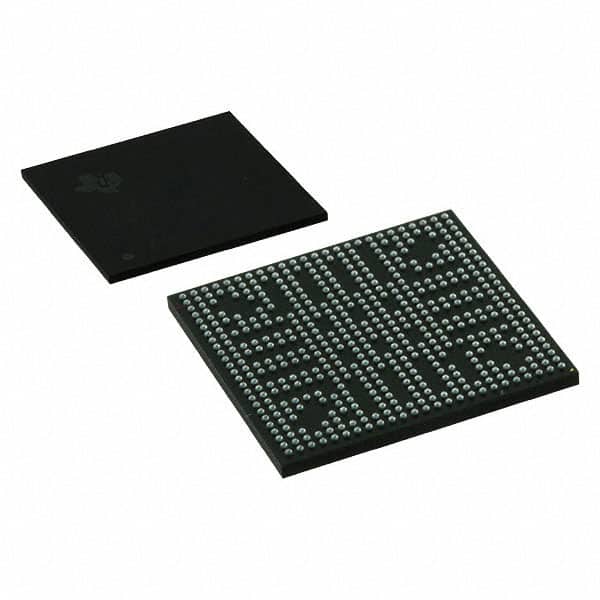
- Part No.:
- AM4378BZDNA100
- Manufacturer:
- Texas Instruments
- Category:
- Microprocessors
- Package:
- 491-LFBGA
- Datasheet:
-
 AM4378BZDNA100.pdf
- Description:
- IC MPU SITARA 1.0GHZ 491NFBGA
- Quantity:
- Payment:

- Shipping:

Inventory:270
Please send an inquiry. Send us your inquiry, and we will respond immediately.
Product details
Overview
AM4378BZDNA100 from Texas Instruments is a high-performance Sitara™ ARM® Cortex®-A9 microprocessor operating at 1 GHz, integrating dual 12-bit SAR ADCs (867 kSPS), six eHRPWM modules, three eQEP modules, PRU-ICSS for EtherCAT/PROFINET offload, and PowerVR SGX530 3D graphics engine. It supports LPDDR2/DDR3/DDR3L memory, dual USB 2.0 with PHY, dual Gigabit Ethernet with IEEE 1588v2, and industrial interfaces including two CAN, six UARTs, five McSPI, three I²C, and QSPI. Targeted for real-time industrial automation and HMI applications requiring deterministic control and rich GUI.
For engineers reviewing the AM4378BZDNA100 datasheet, AM4378BZDNA100 pinout, AM4378BZDNA100 application, or AM4378BZDNA100 equivalent, this page delivers verified technical context, validated package mapping, confirmed peripheral capabilities, real-world use-case alignment, and actionable alternative part guidance - all grounded in TI's SPRS851E production data sheet and ZDN package documentation.
Technical Context
The AM4378BZDNA100 implements a dual-core-capable ARM Cortex-A9 subsystem running at 1000 MHz with 32KB L1 instruction/data cache and 256KB configurable L2 cache/L3 RAM, paired with a dedicated PRU-ICSS subsystem containing two 200-MHz programmable real-time units with 12KB/4KB instruction RAM and 8KB/4KB data RAM per ICSS. Its clock architecture uses five ADPLLs to generate independent domain clocks for MPU, DDR, USB, peripherals, and graphics.
It integrates dual 12-bit SAR ADCs (ADC0/ADC1) with 8-channel multiplexing and touch-screen controller capability on ADC0, six eHRPWM modules supporting symmetric/asymmetric outputs, three eQEP modules for motor position feedback, and dual Gigabit Ethernet MACs with integrated switch, MII/RMII/RGMII, MDIO, and IEEE 1588v2 timestamping - all accessible via a high-bandwidth L3/L4 interconnect fabric.
Key Specifications
| Parameter | Value and Actual Design Meaning |
|---|---|
| CPU Core | ARM Cortex-A9 @ 1000 MHz - enables Linux-based HLOS execution with deterministic real-time response via PRU-ICSS separation. |
| Memory Interface | 32-bit DDR3/DDR3L @ 400 MHz (800 MT/s) - supports up to 2 GB address space with x16/x32 configurations for industrial storage scalability. |
| ADC Performance | Two 12-bit SAR ADCs @ 867 kSPS - provides simultaneous analog sensing and resistive touch-screen control (ADC0) plus closed-loop motor feedback (ADC1). |
| PRU-ICSS | Dual PRU cores @ 200 MHz with 12KB/4KB IRAM and 8KB/4KB DRAM - enables parallel EtherCAT/PROFINET protocol stacks without CPU load. |
| Graphics Engine | PowerVR SGX530 delivering 20M triangles/sec - supports WXGA display output, overlay compositing, gamma correction, and dithered RGB18 output for cost-sensitive HMIs. |
| Industrial Interfaces | 2× CAN 2.0B, 6× UART (IrDA/CIR capable), 5× McSPI (48 MHz), 3× I²C (400 kHz Fast Mode), QSPI with XIP - meets factory-floor connectivity requirements. |
| Package | 491-pin NFBGA (ZDN), 17 mm × 17 mm, 0.65 mm pitch - enables low-cost PCB routing via Via Channel Array technology. |
Pinout & Package
AM4378BZDNA100 is housed in a 491-ball NFBGA (ZDN) package measuring 17 mm × 17 mm with 0.65 mm ball pitch and Via Channel Array technology for simplified layer routing. Pin functions are defined across 25 rows (A–AE) and 9 columns (1–9), with critical signals including dual USB VBUS control, DDR3 DQ/DQS groups, GPMC chip selects, PRU-ICSS MII ports, and ADC analog inputs routed to dedicated balls.
| Pin/Terminal | Circuit Role | Design Meaning |
|---|---|---|
| Ball A25 | XTALIN | Primary 19.2/24/25/26 MHz crystal oscillator input - feeds system clock generation via integrated HF oscillator and ADPLLs. |
| Ball B25 | XTALOUT | Crystal oscillator output - forms resonant loop with external crystal for stable reference clock source. |
| Ball C25 | gpio5_8 | General-purpose I/O bank 5, pin 8 - multiplexed with eCAP0_in_PWM0_out, usable for capture timing or PWM signal generation. |
| Ball D25 | gpio5_12 | General-purpose I/O bank 5, pin 12 - supports interrupt generation and can be configured as PRU-ICSS GPIO for real-time edge detection. |
| Ball E25 | USB1_DRVVBUS | USB 1.1 VBUS driver control - enables host-mode power delivery to downstream USB devices in dual-role configuration. |
| Ball F25 | EXTINTn | External interrupt input - accepts asynchronous wake events for deep-sleep mode exit with low-latency response. |
| Ball G25 | uart3_rxd | UART3 receive data input - supports up to 12 Mbps with RTS/CTS flow control for industrial serial communication. |
Key Features
| Feature | Design Value |
|---|---|
| PRU-ICSS Dual Subsystem | Enables concurrent EtherCAT and PROFINET protocol stacks with <1 µs jitter - eliminates need for external protocol ASICs in motion control systems. |
| ADC0 Touch-Screen Controller | Configurable 4-/5-/8-wire resistive TSC mode - allows direct integration of analog touch panels without external controller, reducing BOM count. |
| eHRPWM Modules | Six independent modules with 16-bit time-base counters - support dual-edge symmetric/asymmetric PWM for precise motor phase control and LED dimming. |
| SGX530 Graphics Engine | Tile-based 3D accelerator with OGL-ES 2.0 API support - renders vector-based UIs and animated overlays at <100 ms frame latency on WXGA displays. |
| Secure Boot (HS variant only) | Not applicable to AM4378BZDNA100 - this non-HS device omits cryptographic key storage and secure boot enforcement per DEV_FEATURE register value 0x22FD20FF. |
Applications
| Industrial PLC HMI | Barcode Scanner Terminal |
|---|---|
|
Use Scenario: Compact panel-mounted HMI in programmable logic controller cabinets requiring real-time I/O monitoring, graphical alarm visualization, and EtherCAT master functionality. IC Role / Device Role / Timing Role: Central application processor executing Linux QT-based UI while PRU-ICSS handles EtherCAT cycle timing and ADC0 samples analog sensor inputs at 1 kHz. Use Value: Single-chip integration replaces separate MCU + FPGA + graphics SoC, reducing board area by 42% and eliminating inter-chip synchronization latency. |
Use Scenario: Rugged handheld barcode scanner used in warehouse logistics, needing fast image capture, laser trigger control, and Bluetooth/WiFi coexistence. IC Role / Device Role / Timing Role: Main SoC managing camera interface (12-bit BT656), eHRPWM-driven laser diode modulation, and dual USB for charging/data sync. Use Value: On-chip ADC1 and eQEP modules enable closed-loop motor control for auto-focus actuator, while QSPI XIP reduces boot time to <800 ms from cold start. |
| Portable Medical Monitor | Test & Measurement Instrument |
|
Use Scenario: Battery-powered patient monitor displaying ECG waveforms, SpO₂ trends, and vital sign alerts with touchscreen interaction. IC Role / Device Role / Timing Role: Real-time data acquisition hub using ADC0 for analog front-end sampling and SGX530 for anti-aliased waveform rendering on 7-inch LCD. Use Value: Integrated RTC with battery-backed 32.768-kHz oscillator maintains accurate timestamps during power loss, meeting IEC 62304 Class C timing requirements. |
Use Scenario: Benchtop oscilloscope or signal generator requiring precise waveform synthesis, high-speed data capture, and USB-TMC instrument control. IC Role / Device Role / Timing Role: Deterministic waveform engine using eHRPWM for arbitrary signal generation and eCAP for external trigger timestamping with sub-microsecond resolution. Use Value: PRU-ICSS offloads pattern generation from ARM core, enabling simultaneous GUI refresh, data logging to SD card, and real-time FFT computation. |
Equivalent & Alternatives
The following parts are listed as comparable options for similar ARM-based industrial processor applications.
| Alternative Part | Technical Difference | Application Difference | Selection Advice |
|---|---|---|---|
| AM4379BZDNA100 | Same ZDN package and pinout; higher max frequency (1000 MHz vs 1000 MHz), identical PRU-ICSS and peripheral set, but rated for –40°C to 105°C extended temperature range. | Required for outdoor or high-ambient-temperature deployments where thermal derating of AM4378BZDNA100 (–40°C to 90°C) may limit reliability. | Select AM4379BZDNA100 when operating ambient exceeds 90°C or when long-term thermal margin is critical for field-deployed equipment. |
| AM4376BZDNA800 | Same ZDN package and pinout; lower CPU frequency (800 MHz), identical PRU-ICSS, ADC, PWM, and interface peripherals; operates at 0°C to 90°C. | Suitable for cost-sensitive applications where full 1 GHz performance is unnecessary, such as basic HMI or gateway nodes with lighter GUI loads. | Choose AM4376BZDNA800 to reduce power consumption (typical 1.2 W vs 1.8 W at 1 GHz) and simplify thermal design in space-constrained enclosures. |
Compared with AM4378BZDNA100, AM4379BZDNA100 extends thermal operation to 105°C without changing layout or firmware, while AM4376BZDNA800 trades 200 MHz CPU headroom for lower static power and reduced BOM cost - both retain full peripheral compatibility and PRU-ICSS real-time capability.
Availability
AM4378BZDNA100 is available at Aetrix Electronics and suitable for industrial automation, portable medical monitors, barcode scanning terminals, and test & measurement instruments requiring stable component supply, long-lifecycle support, and guaranteed traceability.
Supply support for AM4378BZDNA100 includes scheduled delivery planning, volume procurement assistance, BOM continuity management, traceable sourcing, and lifecycle availability coordination for OEM customers, industrial embedded developers, connected-device designers, and electronics production programs.
Manufacturer
Texas Instruments is a global semiconductor company headquartered in Dallas, Texas, designing and manufacturing analog, embedded processing, and wireless chips for industrial, automotive, and consumer markets since 1930.
The AM437x Sitara™ processor family targets industrial applications demanding real-time determinism, rich graphics, and protocol flexibility - combining ARM Cortex-A9 performance with PRU-ICSS for EtherCAT/PROFINET and SGX530 for HMI acceleration.
FAQ
What is the maximum operating temperature for AM4378BZDNA100?
The AM4378BZDNA100 is rated for operation from –40°C to 90°C ambient temperature. This specification is defined in TI's SPRS851E datasheet Section 3.1 and applies to the commercial-grade variant. Thermal derating begins above 90°C, and sustained operation beyond this range may impact timing closure and SRAM retention - always validate junction temperature using TI's thermal models in your specific PCB layout.
Does AM4378BZDNA100 support secure boot functionality?
No, AM4378BZDNA100 does not support secure boot. Secure boot is exclusive to AM437xHS (High-Security) variants, identified by different DEV_FEATURE register values and factory-programmed fuses. The AM4378BZDNA100 has DEV_FEATURE = 0x22FD20FF, confirming it lacks cryptographic key storage, secure ROM, and boot authentication hardware - standard boot modes remain unencrypted and unverified.
Can AM4378BZDNA100 directly drive a resistive touch screen?
Yes, AM4378BZDNA100's ADC0 module supports 4-, 5-, or 8-wire resistive touch screen controller (TSC) operation. It provides dedicated analog inputs, charge-discharge timing control, and coordinate calculation logic - eliminating the need for an external TSC IC. ADC1 remains available for general-purpose analog sensing or motor current feedback.
What Ethernet protocols does AM4378BZDNA100 support natively?
AM4378BZDNA100 supports IEEE 802.3 10/100/1000BASE-T via its dual EMACs and integrated 2-port switch. With PRU-ICSS firmware, it implements EtherCAT, PROFINET, EtherNet/IP, and POWERLINK at the MAC layer - no external PHY required for MII/RMII/RGMII physical interfaces. IEEE 1588v2 PTP timestamping is hardware-accelerated for sub-100 ns precision.
Is AM4378BZDNA100 pin-compatible with other AM437x ZDN variants?
Yes, AM4378BZDNA100 shares identical 491-ball NFBGA (ZDN) mechanical footprint and pinout with AM4372/AM4376/AM4377/AM4379 ZDN variants. All share the same ball map, power domains, and signal assignments - enabling drop-in replacement in existing designs when thermal, frequency, or security requirements align.
AM4378BZDNA100 Specifications
- Product attributes
- Attribute value
- Manufacturer:
- Texas Instruments
- Package/Case:
- 491-LFBGA
- Series:
- Sitara™
- Packaging:
- Tray
- Product Status:
- Active
- Core Processor:
- ARM® Cortex®-A9
- Number of Cores/Bus Width:
- 1 Core, 32-Bit
- Speed:
- 1.0GHz
- Co-Processors/DSP:
- Multimedia; NEON™ SIMD
- RAM Controllers:
- LPDDR2, DDR3, DDR3L
- Graphics Acceleration:
- Yes
- Display & Interface Controllers:
- TSC, WXGA
- Ethernet:
- 10/100/1000Mbps (2)
- SATA:
- -
- USB:
- USB 2.0 + PHY (2)
- Voltage - I/O:
- 1.8V, 3.3V
- Operating Temperature:
- -40°C ~ 105°C (TJ)
- Grade:
- -
- Qualification:
- -
- Security Features:
- Crypto Accelerator
- Mounting Type:
- Surface Mount
- Supplier Device Package:
- 491-NFBGA (17x17)
- Additional Interfaces:
- CAN, HDQ/1-Wire, I2C, McASP, MMC/SD/SDIO, QSPI, SPI, SD/SDIO, UART
AM4378BZDNA100 FAQ
1.How can I place an order for AM4378BZDNA100 through Aetrix?
Please submit a Request for Quotation (RFQ) for AM4378BZDNA100 on Aetrix. Our sales agent will provide a competitive quotation and guide you through the order confirmation once you accept the terms.
2.Are the price and stock information for AM4378BZDNA100 reliable?
The price and inventory of AM4378BZDNA100 are updated periodically and may fluctuate due to market conditions. Stock and pricing data are typically refreshed every 24 hours. Quotation validity for AM4378BZDNA100 is usually 5 days.
3.What payment methods are accepted for AM4378BZDNA100?
We accept Wire Transfer, PayPal, Credit Card, Western Union, MoneyGram, and Escrow for AM4378BZDNA100 transactions.
Note: Certain payment methods may incur a processing fee.
4.How is shipping managed for AM4378BZDNA100?
AM4378BZDNA100 orders can be shipped via leading logistics carriers, including DHL, UPS, FedEx, TNT, or Registered Mail.
Once your AM4378BZDNA100 order is processed, you will receive an email with the shipment details and tracking number.
Note: Tracking information may take up to 24 hours to appear. Express delivery typically takes 3–5 business days.
5.How can I obtain technical support or documentation for AM4378BZDNA100?
For technical support, including AM4378BZDNA100 datasheets, pinout diagrams, or application guidance, please contact our engineering support team. They can provide detailed documentation and assistance for your AM4378BZDNA100 requirements.
6.How does Aetrix verify that AM4378BZDNA100 is sourced from the original manufacturer or authorized distributors?
All AM4378BZDNA100 products on Aetrix are procured from qualified distributors and authorized channels. Our dedicated quality assurance team conducts strict verification, including traceability checks and, if necessary, third-party testing. This ensures that AM4378BZDNA100 meets industry standards.
7.What is the process for return or replacement of AM4378BZDNA100?
All AM4378BZDNA100 units undergo pre-shipment inspection (PSI). If there is an issue with AM4378BZDNA100, returns or replacements are accepted under the following conditions:
1.Quantity discrepancies, incorrect items, or visible external defects (such as breakage or corrosion), acknowledged by Aetrix.
2.The issue is reported within 90 days of delivery.
3.The AM4378BZDNA100 part is unused and in its original packaging.
Return procedure for AM4378BZDNA100:
1.Submit a request within 90 days.
2.Obtain a Return Material Authorization (RMA) from Aetrix.
AM4378BZDNA100 Tags
-
AT91SAM9260B-CU-999
Microchip Technology
-
AT91SAM9G25-CU
Microchip Technology
-
ATSAMA5D27C-CU
Microchip Technology
-
AT91SAM9X35-CU
Microchip Technology
-
AT91SAM9X25-CU
Microchip Technology
-
MCIMX6Y2CVM08AB
NXP Semiconductors
.JPG)
-
AM3352BZCZ100
Texas Instruments
-
AT91SAM9260B-CU
Microchip Technology
-
AT91SAM9260B-QU
Microchip Technology
-
ATSAMA5D31A-CU
Microchip Technology
-
AT91SAM9G20B-CU-999
Microchip Technology
-
MCIMX6Y2CVM05AB
NXP Semiconductors
Tech Hub

A practical engineering guide to 3.3V and 5V logic compatibility, input thresholds, resistor dividers, translator ICs, MOSFET level shifting, I2C pull-ups, timing limits and power-sequencing risks.

The 74HC595 uses push-pull logic outputs, while the TPIC6B595 uses 50 V open-drain DMOS sinks for higher-power loads. This guide compares timing, current limits, 3.3 V interfacing, load wiring, thermal…

The 74HC595 converts serial data into eight stable parallel outputs. This guide covers pin functions, shift and storage timing, OE and MR behavior, drive-current limits, cascading, voltage compatibilit…

A technical comparison of level-sensitive latches and edge-triggered flip-flops, covering timing windows, setup and hold limits, master–slave operation, time borrowing, race-through, HDL inference and…

A D latch stores one bit while Enable controls when data can pass. This reference covers gate-level operation, truth tables, transparency, setup and hold timing, LE versus OE, common ICs and practical …

An SR latch stores one bit through cross-coupled feedback. This engineering reference covers NOR and NAND implementations, truth tables, forbidden-state recovery, gated operation, switch debouncing, fa…

Latch circuits retain one bit through feedback. This technical reference covers SR and D latches, truth tables, transparency, timing limits, latch-versus-flip-flop behavior, applications and common log…

An engineering guide to LED driver operation, constant-current and constant-voltage outputs, linear and switching topologies, dimming, IC selection, calculations, replacement compatibility, and fault c…

Operational amplifier guide covering op amp basics, feedback, ideal vs real op amps, common configurations, buffer circuits, offset, bias current, gain-bandwidth, slew rate, rail-to-rail limits and sel…

Jumper cables guide covering safe connection order, red and black clamp placement, final ground connection, cable gauge, length, clamp quality, copper vs CCA cables, jump starter comparison and battery…


