
 My Inquiry
 My Account


Texas Instruments AM5728BABCXA
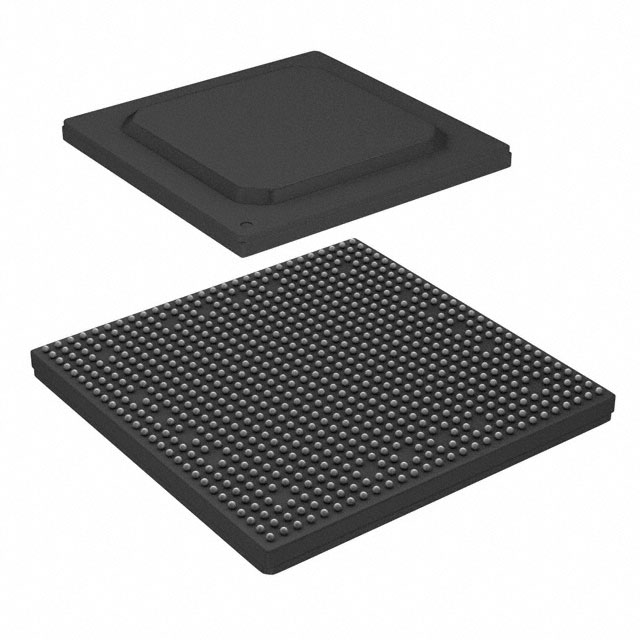
- Part No.:
- AM5728BABCXA
- Manufacturer:
- Texas Instruments
- Category:
- Microprocessors
- Package:
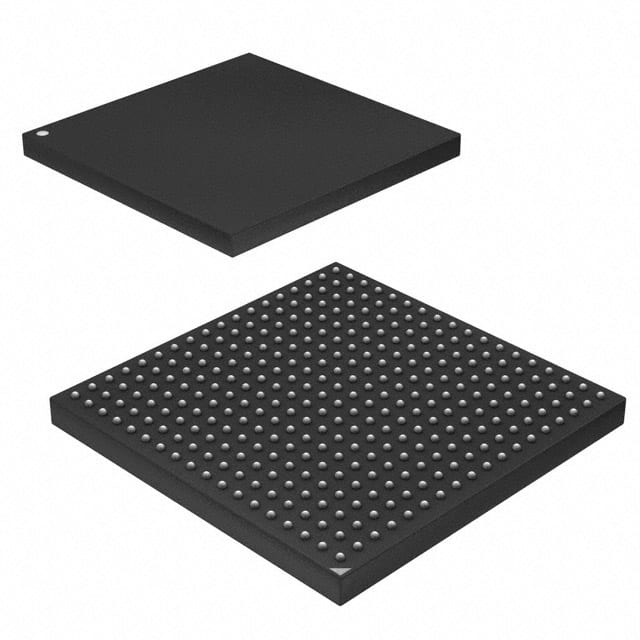
- 760-BFBGA, FCBGA
- Datasheet:
-
 AM5728BABCXA.pdf
- Description:
- IC MPU SITARA 1.5GHZ 760FCBGA
- Quantity:
- Payment:

- Shipping:

Inventory:120
Please send an inquiry. Send us your inquiry, and we will respond immediately.
Product details
Overview
AM5728BABCXA from Texas Instruments is a high-performance Sitara™ Arm applications processor featuring dual Cortex-A15 cores, two C66x DSPs, dual Cortex-M4 coprocessors, four Embedded Vision Engines (EVEs), IVA-HD video subsystem, dual PowerVR SGX544 3D GPU, and hardware crypto accelerators. It supports DDR3-1066 memory, HDMI 1.4a, PCIe Gen2, dual Gigabit Ethernet, and CAN 2.0B - deployed in industrial HMIs and vision-enabled automation systems.
For engineers reviewing the AM5728BABCXA datasheet, AM5728BABCXA pinout, AM5728BABCXA application, or AM5728BABCXA equivalent, key selection criteria include verified EVE support, dual-Cortex-M4 real-time co-processing capability, IVA-HD 4K encode/decode readiness, and 760-pin FCBGA package compatibility with TI's TPS6590379ZWSR PMIC for vdd_dspeve regulation.
Technical Context
The AM5728BABCXA implements a heterogeneous multicore architecture: dual Cortex-A15 CPUs handle OS and control tasks, while two C66x VLIW DSPs execute intensive signal processing; two Cortex-M4 IPU cores manage deterministic real-time functions like PRU-ICSS offload and sensor fusion. The Vision AccelerationPac integrates four EVEs for parallel computer vision workloads without CPU/DSP load.
Its memory subsystem includes two independent DDR3/DDR3L EMIF controllers supporting up to 2GB each, 2.5MB on-chip OCMC RAM with ECC, and GPMC for NAND/NOR/async memory. Video processing is enabled by IVA-HD (4K@15fps H.264), VPE, three display pipelines, HDMI 1.4a encoder, and three VIP modules with dual-input per port.
Key Specifications
| Parameter | Value and Actual Design Meaning |
|---|---|
| CPU Cores | Dual Arm Cortex-A15 @ up to 1.5 GHz - enables Linux RTOS execution with SMP support and NEON acceleration for multimedia compute. |
| DSP Cores | Two TI C66x VLIW floating-point DSPs - object-code compatible with C64x+/C67x, delivering up to 32×16-bit fixed-point multiplies/cycle for algorithm offload. |
| On-Chip Memory | 2.5 MB OCMC RAM with ECC - low-latency shared L3 memory accessible by MPU, DSP, GPU, and DMA, critical for real-time buffer management. |
| Video Acceleration | IVA-HD + VPE + 4× EVE - supports 4K@15fps H.264 encode/decode, 1080p60 for other codecs, and programmable vision kernels via EVE instruction set. |
| Graphics | Dual-core PowerVR SGX544 GPU - OpenGL ES 2.0/3.0 compliant, enabling rich GUI rendering and 3D visualization in HMIs. |
| Connectivity | PCIe Gen2 (2×5 Gbps lanes), dual GMAC (MII/RMII/RGMII), USB 3.0 DRD + USB 2.0 DRD, SATA Gen2, 2× DCAN, 4× McSPI, 5× I2C - full industrial interface stack. |
| Package | 760-pin FCBGA (ABC), 23 mm × 23 mm, 0.8-mm pitch - requires controlled-impedance PCB layout with dedicated power domains for MPU, GPU, DSP, EVE, and IVA rails. |
Pinout & Package
AM5728BABCXA uses a 23 mm × 23 mm, 0.8-mm pitch, 760-ball FCBGA (ABC) package with 247 GPIOs, 32-bit DDR3/DDR3L interfaces (EMIF1/EMIF2), and dedicated power/ground balls including cap_vbbldo_dspeve, cap_vddram_core1–5, and cap_vddram_mpu1/2. Unused balls (e.g., AF7, AE4, AB26) are NC; reserved balls (Y5, K14) must remain unconnected.
| Pin/Terminal | Circuit Role | Design Meaning |
|---|---|---|
| AB17 (rtc_porz) | RTC power-on reset input | Must tie to VSS when RTC unused; optional level-shifted connection to F22 (porz) if RTC required - affects warm-reset behavior. |
| AF14 (rtc_iso) | RTC isolation control | Pull to corresponding supply via external resistor if unused; enables RTC domain isolation during deep-sleep modes. |
| K9 / Y14 / R20 / J16 | LD0 bypass capacitors | Capacitor terminals for vbbldo_dspeve, vbbldo_gpu, vbbldo_iva, vbbldo_mpu - require low-ESR ceramic caps placed <2 mm from ball per TI layout guidelines. |
| L9 / J19 / Y15 / P19 / Y16 | DDR core voltage decoupling | Capacitor pads for vddram_core1–5 - critical for DDR timing margin; placement and value defined in Section 8.2 of SPRS953G. |
| J10 / J9 | EVE DDR voltage decoupling | Capacitor terminals for vddram_dspeve1/2 - mandatory for EVE operation; failure to populate risks functional instability in vision workloads. |
Key Features
| Feature | Design Value |
|---|---|
| Embedded Vision Engine (EVE) array | Four independent EVEs with dedicated instruction set and local memory - enables parallel execution of optical flow, stereo disparity, and CNN inference kernels without CPU/DSP intervention. |
| IVA-HD video subsystem | Hardware-accelerated 4K@15fps H.264 encode/decode + 1080p60 for VP8/VC1/MPEG-4 - reduces host CPU load by >80% vs. software codecs in surveillance and medical imaging. |
| PRU-ICSS dual subsystem | Two independent Programmable Real-Time Unit subsystems with industrial protocol stacks (EtherCAT, PROFINET, Ethernet/IP) - delivers sub-1µs I/O response for motion control and PLC edge nodes. |
| Crypto hardware accelerators | AES-128/256, SHA-1/256, DES/3DES, RNG - enables secure boot, encrypted storage, and TLS offload at line rate without impacting application CPU cycles. |
| Power management architecture | Per-domain voltage regulation (MPU, GPU, DSP, EVE, IVA) with dynamic voltage/frequency scaling (DVFS) - achieves <3 W typical active power in HMI use cases with thermal throttling disabled. |
Applications
| Industrial HMI | Smart Camera System |
|---|---|
|
Use Scenario: Touch-enabled factory floor operator panel with real-time machine status, alarm logging, and remote diagnostics over EtherCAT. IC Role / Device Role / Timing Role: AM5728BABCXA serves as main application processor running Qt-based GUI, executing PRU-ICSS for fieldbus I/O, and managing dual-display output via HDMI and LVDS. Use Value: Dual Cortex-M4 IPU cores handle deterministic I/O scanning independently of Linux scheduler, ensuring <100 µs cycle time for safety-critical control loops. |
Use Scenario: Embedded vision system for automated optical inspection (AOI) in PCB assembly, performing real-time defect detection using CNN models. IC Role / Device Role / Timing Role: AM5728BABCXA hosts EVE-accelerated inference pipeline, IVA-HD for image preprocessing, and VPE for geometric correction - all within single SoC. Use Value: Four EVEs process multiple camera streams concurrently, achieving 22 FPS inference throughput at <5 W total SoC power - eliminating need for external FPGA or GPU. |
| Energy Substation Gateway | Medical Imaging Edge Node |
|
Use Scenario: IEC 61850-compliant substation gateway aggregating data from IEDs, performing synchrophasor analysis, and transmitting to SCADA via redundant Gigabit Ethernet. IC Role / Device Role / Timing Role: AM5728BABCXA runs dual Linux instances (control plane + data plane), leverages EDMA for zero-copy packet forwarding, and uses DCAN for legacy device bridging. Use Value: Hardware crypto accelerators enable AES-GCM encryption of GOOSE messages at 100 Mbps line rate without CPU overhead - meeting IEC 62351-3 security requirements. |
Use Scenario: Portable ultrasound device requiring real-time beamforming, Doppler processing, and HD display output in battery-powered form factor. IC Role / Device Role / Timing Role: AM5728BABCXA executes C66x DSP beamforming algorithms, renders B-mode images via SGX544 GPU, and drives HDMI-connected monitor with VPE color space conversion. Use Value: Integrated VPE and BB2D (GC320) reduce external video path components by 40%, while 2.5 MB OCMC RAM eliminates external frame buffer - lowering BOM cost and EMI emissions. |
Equivalent & Alternatives
The following parts are listed as comparable options for similar high-performance embedded processor applications.
| Alternative Part | Technical Difference | Application Difference | Selection Advice |
|---|---|---|---|
| AM5729BABCXA | Includes EVE1–EVE4, IVA-HD, HDMI, SGX544 GPU, and BB2D - identical feature set to AM5728BABCXA per SPRS953G Table 3-1. | Functionally identical; differs only in die ID fuse bits (0x3B vs. 0x4E) and minor speed binning - validated drop-in replacement in TI reference designs. | Select AM5729BABCXA only if requiring guaranteed qualification for extended temperature grade (-40°C to 105°C) or specific TI software support tier. |
| AM5748BABCXA | Adds dual Cortex-R5F lockstep safety cores, ISO 26262 ASIL-B certification, and enhanced ECC coverage across memory subsystems - not present in AM5728BABCXA. | Targeted at automotive ADAS and industrial functional safety applications where runtime fault detection and fail-safe operation are mandatory. | Choose AM5748BABCXA only when functional safety compliance (IEC 61508 SIL3 or ISO 26262 ASIL-B) is required - otherwise AM5728BABCXA offers superior cost/performance for non-safety systems. |
Compared with AM5729BABCXA, AM5728BABCXA provides identical vision, graphics, and connectivity features at lower unit cost and same footprint; versus AM5748BABCXA, it omits safety-critical R5F cores and certification artifacts, making it optimal for cost-sensitive industrial HMIs and smart cameras where functional safety is not mandated.
Availability
AM5728BABCXA is available at Aetrix Electronics and suitable for industrial HMIs, smart camera systems, energy gateways, and medical imaging edge nodes requiring stable component supply, long-term lifecycle support, and traceable sourcing from authorized TI channels.
Supply support for AM5728BABCXA includes scheduled delivery planning, volume procurement assistance, BOM continuity management, traceable sourcing, and lifecycle availability coordination for OEM customers, industrial embedded developers, connected-device designers, and electronics production programs.
Manufacturer
Texas Instruments is a global semiconductor company headquartered in Dallas, Texas, designing and manufacturing analog ICs, embedded processors, and wireless connectivity solutions for industrial, automotive, and consumer markets.
The AM5728BABCXA belongs to TI's Sitara™ Arm processor family, engineered for high-performance embedded applications demanding heterogeneous compute (CPU+DSP+GPU+EVE), real-time I/O (PRU-ICSS), and industrial-grade connectivity - targeting HMIs, machine vision, and intelligent edge gateways.
FAQ
What is the maximum DDR3 speed supported by AM5728BABCXA?
AM5728BABCXA supports DDR3-1066 (533 MHz) across both EMIF1 and EMIF2 interfaces, with up to 2 GB addressable memory per channel. This is confirmed in Section 1.1 Features and Table 5-5 of SPRS953G Rev G. The AM5728BABCXA requires matched trace lengths and strict termination per TI's DDR3 board design guidelines in Section 8.2 to achieve stable operation at this speed.
Does AM5728BABCXA include hardware support for CAN FD?
No, AM5728BABCXA implements two DCAN modules compliant only with CAN 2.0B protocol, as explicitly stated in Section 1.1 Features and Table 3-1 of SPRS953G. It does not support CAN FD bit rates, arbitration phase extensions, or flexible data-length frames. For CAN FD, designers must use external transceivers with protocol translation or select newer TI processors like AM65x.
Is the AM5728BABCXA pin-compatible with AM5726BABCXA?
No, AM5728BABCXA is not pin-compatible with AM5726BABCXA despite sharing the same ABC package. Table 3-1 confirms AM5726 lacks EVE, IVA-HD, HDMI, SGX544 GPU, and BB2D - meaning key signal balls (e.g., HDMI_Tx, EVE_CLK, IVA_VID) are NC or repurposed on AM5726. PCB layout and power delivery must be redesigned for AM5726.
What power management IC is recommended for AM5728BABCXA?
Texas Instruments specifies the TPS6590379ZWSR PMIC for AM5728BABCXA, particularly to supply the dedicated vdd_dspeve rail required by the four EVEs. This is mandated in Section 3.1 Device Comparison footnote (6) of SPRS953G. Using any other PMIC risks unstable EVE operation and violates TI's power sequencing requirements in Section 5.9.
How many video input channels does AM5728BABCXA support?
AM5728BABCXA supports up to six concurrent video input channels via three VIP modules (VIP1–VIP3), each with dual-input capability (vin1a/vin1b, vin3a/vin3b, vin5a/vin6a). This is documented in Table 3-1 and Section 1.1 Features ("Three video Input Port (VIP) modules"). All six inputs can be active simultaneously with proper clocking and bandwidth allocation.
AM5728BABCXA Specifications
- Product attributes
- Attribute value
- Manufacturer:
- Texas Instruments
- Package/Case:
- 760-BFBGA, FCBGA
- Series:
- Sitara™
- Packaging:
- Tray
- Product Status:
- Active
- Core Processor:
- ARM® Cortex®-A15
- Number of Cores/Bus Width:
- 2 Core, 32-Bit
- Speed:
- 1.5GHz
- Co-Processors/DSP:
- DSP, BB2D, IPU, IVA, GPU, VPE
- RAM Controllers:
- DDR3, SRAM
- Graphics Acceleration:
- Yes
- Display & Interface Controllers:
- -
- Ethernet:
- GbE
- SATA:
- SATA 3Gbps (1)
- USB:
- USB 2.0 (1), USB 3.0 (1)
- Voltage - I/O:
- 1.8V, 3.3V
- Operating Temperature:
- -40°C ~ 105°C (TJ)
- Grade:
- -
- Qualification:
- -
- Security Features:
- -
- Mounting Type:
- Surface Mount
- Supplier Device Package:
- 760-FCBGA (23x23)
- Additional Interfaces:
- -
AM5728BABCXA FAQ
1.How can I place an order for AM5728BABCXA through Aetrix?
Please submit a Request for Quotation (RFQ) for AM5728BABCXA on Aetrix. Our sales agent will provide a competitive quotation and guide you through the order confirmation once you accept the terms.
2.Are the price and stock information for AM5728BABCXA reliable?
The price and inventory of AM5728BABCXA are updated periodically and may fluctuate due to market conditions. Stock and pricing data are typically refreshed every 24 hours. Quotation validity for AM5728BABCXA is usually 5 days.
3.What payment methods are accepted for AM5728BABCXA?
We accept Wire Transfer, PayPal, Credit Card, Western Union, MoneyGram, and Escrow for AM5728BABCXA transactions.
Note: Certain payment methods may incur a processing fee.
4.How is shipping managed for AM5728BABCXA?
AM5728BABCXA orders can be shipped via leading logistics carriers, including DHL, UPS, FedEx, TNT, or Registered Mail.
Once your AM5728BABCXA order is processed, you will receive an email with the shipment details and tracking number.
Note: Tracking information may take up to 24 hours to appear. Express delivery typically takes 3–5 business days.
5.How can I obtain technical support or documentation for AM5728BABCXA?
For technical support, including AM5728BABCXA datasheets, pinout diagrams, or application guidance, please contact our engineering support team. They can provide detailed documentation and assistance for your AM5728BABCXA requirements.
6.How does Aetrix verify that AM5728BABCXA is sourced from the original manufacturer or authorized distributors?
All AM5728BABCXA products on Aetrix are procured from qualified distributors and authorized channels. Our dedicated quality assurance team conducts strict verification, including traceability checks and, if necessary, third-party testing. This ensures that AM5728BABCXA meets industry standards.
7.What is the process for return or replacement of AM5728BABCXA?
All AM5728BABCXA units undergo pre-shipment inspection (PSI). If there is an issue with AM5728BABCXA, returns or replacements are accepted under the following conditions:
1.Quantity discrepancies, incorrect items, or visible external defects (such as breakage or corrosion), acknowledged by Aetrix.
2.The issue is reported within 90 days of delivery.
3.The AM5728BABCXA part is unused and in its original packaging.
Return procedure for AM5728BABCXA:
1.Submit a request within 90 days.
2.Obtain a Return Material Authorization (RMA) from Aetrix.
AM5728BABCXA Tags
-
AT91SAM9260B-CU-999
Microchip Technology
-
AT91SAM9G25-CU
Microchip Technology
-
ATSAMA5D27C-CU
Microchip Technology
-
AT91SAM9X35-CU
Microchip Technology
-
AT91SAM9X25-CU
Microchip Technology
-
MCIMX6Y2CVM08AB
NXP Semiconductors
.JPG)
-
AM3352BZCZ100
Texas Instruments
-
AT91SAM9260B-CU
Microchip Technology
-
AT91SAM9260B-QU
Microchip Technology
-
ATSAMA5D31A-CU
Microchip Technology
-
AT91SAM9G20B-CU-999
Microchip Technology
-
MCIMX6Y2CVM05AB
NXP Semiconductors
Tech Hub

A practical engineering guide to 3.3V and 5V logic compatibility, input thresholds, resistor dividers, translator ICs, MOSFET level shifting, I2C pull-ups, timing limits and power-sequencing risks.

The 74HC595 uses push-pull logic outputs, while the TPIC6B595 uses 50 V open-drain DMOS sinks for higher-power loads. This guide compares timing, current limits, 3.3 V interfacing, load wiring, thermal…

The 74HC595 converts serial data into eight stable parallel outputs. This guide covers pin functions, shift and storage timing, OE and MR behavior, drive-current limits, cascading, voltage compatibilit…

A technical comparison of level-sensitive latches and edge-triggered flip-flops, covering timing windows, setup and hold limits, master–slave operation, time borrowing, race-through, HDL inference and…

A D latch stores one bit while Enable controls when data can pass. This reference covers gate-level operation, truth tables, transparency, setup and hold timing, LE versus OE, common ICs and practical …

An SR latch stores one bit through cross-coupled feedback. This engineering reference covers NOR and NAND implementations, truth tables, forbidden-state recovery, gated operation, switch debouncing, fa…

Latch circuits retain one bit through feedback. This technical reference covers SR and D latches, truth tables, transparency, timing limits, latch-versus-flip-flop behavior, applications and common log…

An engineering guide to LED driver operation, constant-current and constant-voltage outputs, linear and switching topologies, dimming, IC selection, calculations, replacement compatibility, and fault c…

Operational amplifier guide covering op amp basics, feedback, ideal vs real op amps, common configurations, buffer circuits, offset, bias current, gain-bandwidth, slew rate, rail-to-rail limits and sel…

Jumper cables guide covering safe connection order, red and black clamp placement, final ground connection, cable gauge, length, clamp quality, copper vs CCA cables, jump starter comparison and battery…


