
 My Inquiry
 My Account


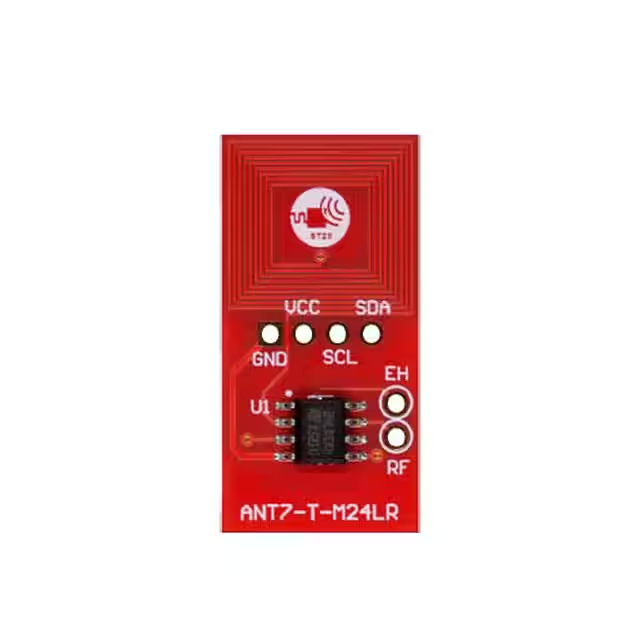
STMicroelectronics ANT7-T-M24LR04E
- Part No.:
- ANT7-T-M24LR04E
- Manufacturer:
- STMicroelectronics
- Category:
- RF, RFID, Wireless Evaluation Boards
- Package:
- Datasheet:
-
 ANT7-T-M24LR04E.pdf
- Description:
- ANTENNA REF BOARD M24LR04E-R
- Quantity:
- Payment:

- Shipping:

Inventory:1,143
Please send an inquiry. Send us your inquiry, and we will respond immediately.
Product details
Overview
M24LR04E-R from STMicroelectronics is a dynamic NFC/RFID tag IC integrating 4-Kbit EEPROM, dual-interface I²C and ISO 15693 RF communication, energy harvesting capability, and a configurable RF busy indicator pin. It operates from 1.8 V to 5.5 V, supports 400 kHz I²C, delivers up to 53 kbit/s RF data rate with Fast commands, and features 64-bit UID and multi-level password security. It enables battery-free sensor tagging in industrial asset tracking systems where passive power and dual-protocol interoperability are critical.
For engineers reviewing the M24LR04E-R datasheet, M24LR04E-R pinout, M24LR04E-R application, or M24LR04E-R equivalent, this device serves as a programmable, energy-harvesting NFC tag for secure, dual-interface (I²C + RF) data exchange in smart labels, maintenance loggers, and IoT edge nodes requiring tamper-resistant memory and field-powered operation.
Technical Context
The M24LR04E-R implements a true dual-interface architecture: its I²C port enables direct microcontroller read/write access to EEPROM while its ISO 15693 RF interface allows contactless interrogation by readers without external power. The internal tuning capacitance (27.5 pF) simplifies antenna matching for 13.56 MHz operation, and the analog Vout pin delivers harvested RF energy to external circuitry at configurable sink current levels.
Memory is partitioned into 512 bytes accessible via I²C and 128 × 32-bit blocks (4 Kbit total) addressable over RF. Security includes single-password protection on I²C and multi-sector password locking in RF mode, with dedicated configuration registers controlling RF WIP/BUSY behavior, energy harvesting enablement, and FIELD_ON status indication.
Key Specifications
| Parameter | Value and Actual Design Meaning |
|---|---|
| Memory capacity | 4-Kbit EEPROM: 512 bytes via I²C, 128 blocks × 32 bits via RF - enables hybrid wired/wireless firmware or calibration data storage. |
| I²C interface | Two-wire, 400 kHz max clock - compatible with standard microcontroller I²C peripherals without timing margin concerns. |
| RF interface | ISO 15693 & ISO 18000-3 Mode 1 compliant, 13.56 MHz ±7 kHz - ensures interoperability with commercial RFID readers and NFC smartphones. |
| Data rates | RF: 6.6 / 26 / 53 kbit/s; I²C: up to 400 kHz - supports fast inventory (53 kbit/s Fast commands) and low-latency host updates. |
| Energy harvesting | Analog Vout pin with 4 configurable sink current ranges - powers external sensors or logic directly from reader field, eliminating batteries. |
| Operating temperature | –40 °C to +85 °C - validated for deployment in industrial enclosures, outdoor asset tags, and automotive under-hood environments. |
| Write endurance | 1 million cycles at 25 °C, 150k at 85 °C - suitable for frequent logging applications with thermal derating awareness. |
| Unique identifier | 64-bit factory-programmed UID - provides immutable device identity for cloud-based asset registration and anti-cloning. |
Pinout & Package
Available in SO8 (MN), TSSOP8 (DW), and UFDFPN8 (MC) ECOPACK2® packages. Pin functions are identical across variants.
| Pin/Terminal | Circuit Role | Design Meaning |
|---|---|---|
| SCL | I²C serial clock input | Master-generated clock synchronizing all I²C transactions; supports standard and fast-mode timing. |
| SDA | I²C bidirectional data line | Open-drain interface requiring external pull-up; carries address, command, and data during I²C operations. |
| RF WIP/BUSY | Configurable digital output | Signals RF write progress or field presence; user-selectable via configuration register for system status monitoring. |
| Vout | Energy harvesting analog output | Delivers rectified RF power to external circuitry; sink current range set by EH_CFG bits for load matching. |
| AC0 / AC1 | RF antenna connection terminals | Differential inputs for 13.56 MHz LC tank; internal 27.5 pF tuning capacitance reduces external component count. |
| VSS | Ground reference | Common return path for I²C, RF, and energy harvesting circuits; must be low-impedance for noise immunity. |
| VCC | Supply voltage input | 1.8–5.5 V DC input enabling direct connection to MCU rails or regulated power; powers I²C logic and internal regulators. |
Key Features
| Feature | Design Value |
|---|---|
| Dual-interface memory access | Simultaneous I²C and RF read/write - allows local MCU updates while retaining contactless readability for maintenance scans. |
| Field-powered operation | Vout pin delivers harvested energy at up to 3.3 V - powers external temperature/humidity sensors without battery or PCB trace routing. |
| Fast RF command set | 53 kbit/s data rate with Fast Inventory/Read - cuts tag enumeration time by >60% vs. standard ISO 15693 (26 kbit/s) in dense asset deployments. |
| Multi-layer security | Single I²C password + per-sector RF passwords + lock bits - prevents unauthorized writes while enabling selective block protection in mixed-access systems. |
| Robust environmental rating | –40 °C to +85 °C operation with >40-year data retention - certified for long-term deployment in uncontrolled industrial or outdoor settings. |
Applications
| Industrial Asset Tagging | Smart Maintenance Loggers |
|---|---|
Use Scenario: Permanent attachment to motors, valves, or transformers in factory floors for lifecycle tracking and service history. IC Role / Device Role / Timing Role: Dual-interface EEPROM storing calibration offsets, firmware version, and last-service timestamp; updated locally via I²C, audited remotely via NFC. Use Value: Eliminates manual logbooks and barcode re-scanning; enables offline updates during maintenance windows and real-time verification during audits. |
Use Scenario: Embedded in handheld diagnostic tools to record equipment test results, technician ID, and pass/fail flags during field service. IC Role / Device Role / Timing Role: Secure, field-powered memory holding encrypted service records; RF interface enables quick upload to supervisor tablets without physical docking. Use Value: Reduces post-service data entry errors by 90%; harvested power sustains memory writes even when tool battery is depleted. |
| Reusable Smart Packaging | Medical Device Calibration Tags |
Use Scenario: Integrated into pharmaceutical or medical consumable packaging to track usage count, sterilization cycles, and expiration. IC Role / Device Role / Timing Role: Tamper-evident memory storing write-locked usage counters and time-stamped events; accessed via pharmacy NFC scanners or hospital ERP systems. Use Value: Prevents reuse of single-use devices; satisfies FDA UDI requirements with cryptographically verifiable audit trail. |
Use Scenario: Attached to ultrasound probes or infusion pumps to store calibration coefficients, operator permissions, and last-verification date. IC Role / Device Role / Timing Role: High-reliability EEPROM with 1M write cycles preserving calibration data across 5+ years of clinical use; RF interface enables quick recalibration verification. Use Value: Reduces annual calibration downtime by 70%; password-protected sectors prevent accidental overwrite of critical coefficients. |
Equivalent & Alternatives
The following parts are listed as comparable options for similar dynamic NFC tag applications.
| Alternative Part | Technical Difference | Application Difference | Selection Advice |
|---|---|---|---|
| NT3H2111W0FHKH | 1-Kbit EEPROM, no energy harvesting, integrated 13.56 MHz antenna matching network | Lacks Vout pin and I²C interface; optimized for pure contactless label use, not hybrid wired/wireless systems | Select when only RF access is needed and PCB space is constrained - eliminates external antenna components but forfeits local MCU control. |
| M24LR16E-R | 16-Kbit EEPROM, identical pinout and feature set, higher memory density | Same dual-interface architecture and energy harvesting capability; differs only in memory size and part marking | Choose for applications requiring >4 Kbit of secure, field-powered storage - drop-in replacement with no layout or firmware changes. |
Compared with NT3H2111W0FHKH, M24LR04E-R adds I²C control and energy harvesting for autonomous edge sensing; versus M24LR16E-R, it trades memory capacity for cost-sensitive deployments where 4 Kbit suffices for calibration and identity data.
Availability
M24LR04E-R is available at Aetrix Electronics and suitable for industrial asset tagging, smart maintenance loggers, reusable smart packaging, and medical device calibration tags requiring stable component supply across multi-year production cycles.
Supply support for M24LR04E-R includes scheduled delivery planning, volume procurement assistance, BOM continuity management, traceable sourcing, and lifecycle availability coordination for OEM customers, industrial embedded developers, connected-device designers, and electronics production programs.
Manufacturer
STMicroelectronics is a global semiconductor leader specializing in microcontrollers, power management, sensors, and connectivity solutions for industrial, automotive, and consumer markets.
The M24LR series belongs to ST's ST25 NFC/RFID product line, designed specifically for secure, energy-harvesting, dual-interface tagging in industrial IoT, smart logistics, and healthcare traceability systems.
FAQ
What is the maximum I²C clock frequency supported by the M24LR04E-R?
The M24LR04E-R supports I²C Fast Mode with a maximum clock frequency of 400 kHz. This is confirmed in Section 5.1 of the datasheet (DocID022208 Rev 11), which specifies timing compliance for standard and fast-mode protocols. No overspeed operation is guaranteed, and timing margins must respect tLOW ≥ 1.3 μs and tHIGH ≥ 0.6 μs at 400 kHz.
How does the energy harvesting function operate, and what load can it drive?
The Vout pin delivers rectified RF energy from the AC0/AC1 antenna interface, with four configurable sink current ranges (1.5 mA, 3 mA, 6 mA, 12 mA) set via the EH_CFG bits. It provides up to ~3.3 V open-circuit output and is intended to power low-current peripherals like temperature sensors or comparators-not microcontrollers or radios-due to limited sustained current.
Can the M24LR04E-R be used without an external MCU, relying solely on RF communication?
Yes. The device operates autonomously in RF mode: it responds to ISO 15693 commands (e.g., Read Single Block, Write Single Block) without any I²C connection or VCC supply. In this configuration, it draws power entirely from the reader's RF field via AC0/AC1 and uses its internal 27.5 pF tuning capacitance for resonance.
What security mechanisms prevent unauthorized writes to the EEPROM via RF or I²C?
RF writes require presentation of valid sector-specific passwords stored in protected system memory; I²C writes are guarded by a single global password. Both interfaces support lock bits that permanently disable further password changes or write access to designated memory regions. These protections are implemented in hardware and enforced regardless of power source or interface used.
ANT7-T-M24LR04E Specifications
- Product attributes
- Attribute value
- Manufacturer:
- STMicroelectronics
- Series:
- -
- Packaging:
- Bulk
- Product Status:
- Obsolete
- Type:
- Antenna
- Frequency:
- 13.56MHz
- Contents:
- Board(s)
- Utilized IC / Part:
- M24LR04E-R
ANT7-T-M24LR04E FAQ
1.How can I place an order for ANT7-T-M24LR04E through Aetrix?
Please submit a Request for Quotation (RFQ) for ANT7-T-M24LR04E on Aetrix. Our sales agent will provide a competitive quotation and guide you through the order confirmation once you accept the terms.
2.Are the price and stock information for ANT7-T-M24LR04E reliable?
The price and inventory of ANT7-T-M24LR04E are updated periodically and may fluctuate due to market conditions. Stock and pricing data are typically refreshed every 24 hours. Quotation validity for ANT7-T-M24LR04E is usually 5 days.
3.What payment methods are accepted for ANT7-T-M24LR04E?
We accept Wire Transfer, PayPal, Credit Card, Western Union, MoneyGram, and Escrow for ANT7-T-M24LR04E transactions.
Note: Certain payment methods may incur a processing fee.
4.How is shipping managed for ANT7-T-M24LR04E?
ANT7-T-M24LR04E orders can be shipped via leading logistics carriers, including DHL, UPS, FedEx, TNT, or Registered Mail.
Once your ANT7-T-M24LR04E order is processed, you will receive an email with the shipment details and tracking number.
Note: Tracking information may take up to 24 hours to appear. Express delivery typically takes 3–5 business days.
5.How can I obtain technical support or documentation for ANT7-T-M24LR04E?
For technical support, including ANT7-T-M24LR04E datasheets, pinout diagrams, or application guidance, please contact our engineering support team. They can provide detailed documentation and assistance for your ANT7-T-M24LR04E requirements.
6.How does Aetrix verify that ANT7-T-M24LR04E is sourced from the original manufacturer or authorized distributors?
All ANT7-T-M24LR04E products on Aetrix are procured from qualified distributors and authorized channels. Our dedicated quality assurance team conducts strict verification, including traceability checks and, if necessary, third-party testing. This ensures that ANT7-T-M24LR04E meets industry standards.
7.What is the process for return or replacement of ANT7-T-M24LR04E?
All ANT7-T-M24LR04E units undergo pre-shipment inspection (PSI). If there is an issue with ANT7-T-M24LR04E, returns or replacements are accepted under the following conditions:
1.Quantity discrepancies, incorrect items, or visible external defects (such as breakage or corrosion), acknowledged by Aetrix.
2.The issue is reported within 90 days of delivery.
3.The ANT7-T-M24LR04E part is unused and in its original packaging.
Return procedure for ANT7-T-M24LR04E:
1.Submit a request within 90 days.
2.Obtain a Return Material Authorization (RMA) from Aetrix.
ANT7-T-M24LR04E Tags
-
113991054
Seeed Technology Co., Ltd
-
SC0918
Raspberry Pi

-
113991114
Seeed Technology Co., Ltd
-
ESP32-C6-DEVKITM-1-N4
Espressif Systems
-
ESP32-DEVKITM-1
Espressif Systems
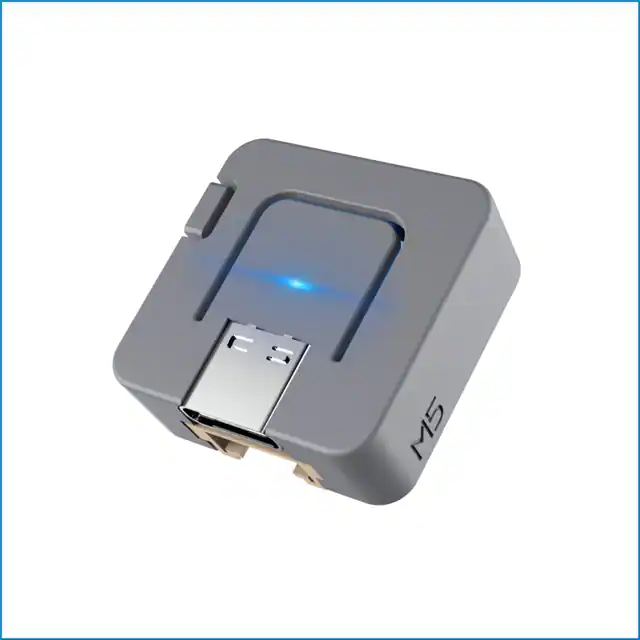
-
C008
M5Stack Technology Co., Ltd.
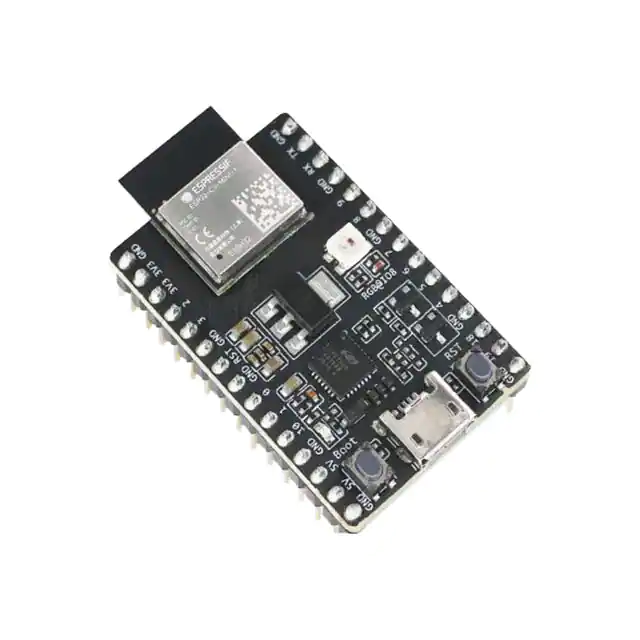
-
ESP32-C3-DEVKITC-02
Espressif Systems
-
ESP32-C6-DEVKITC-1-N8
Espressif Systems
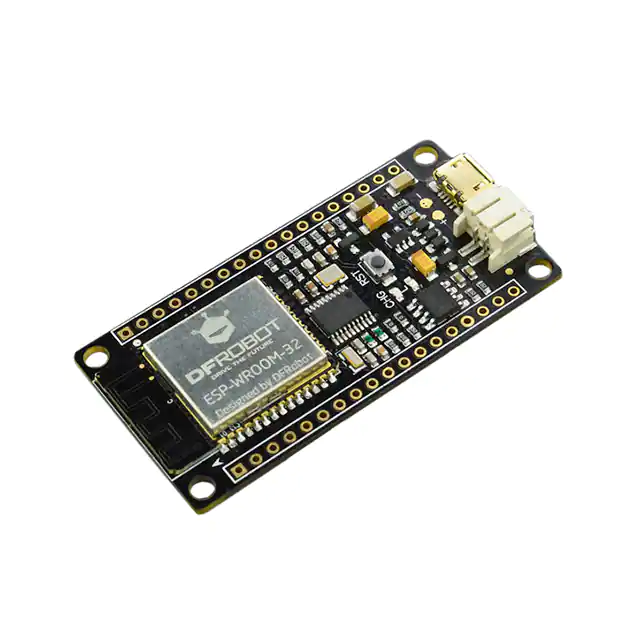
-
DFR0478
DFRobot
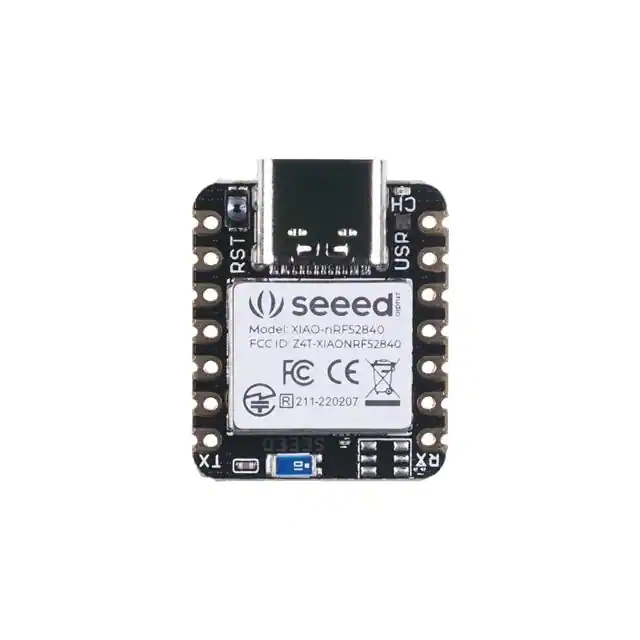
-
102010448
Seeed Technology Co., Ltd
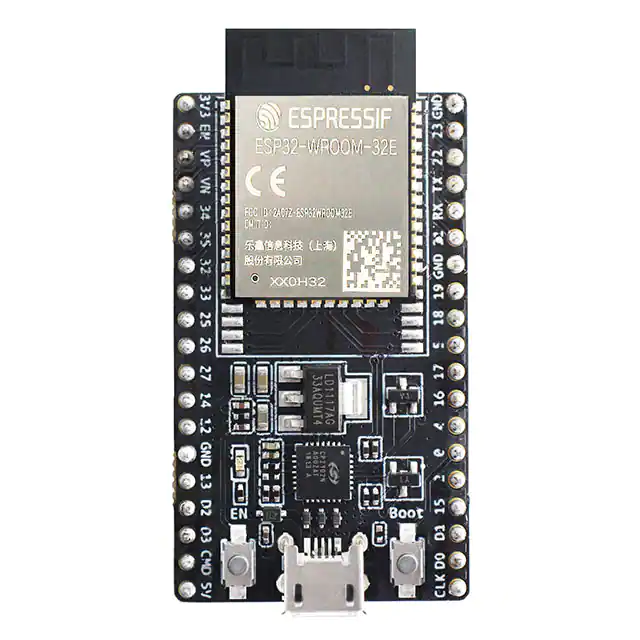
-
ESP32-DEVKITC-32E
Espressif Systems
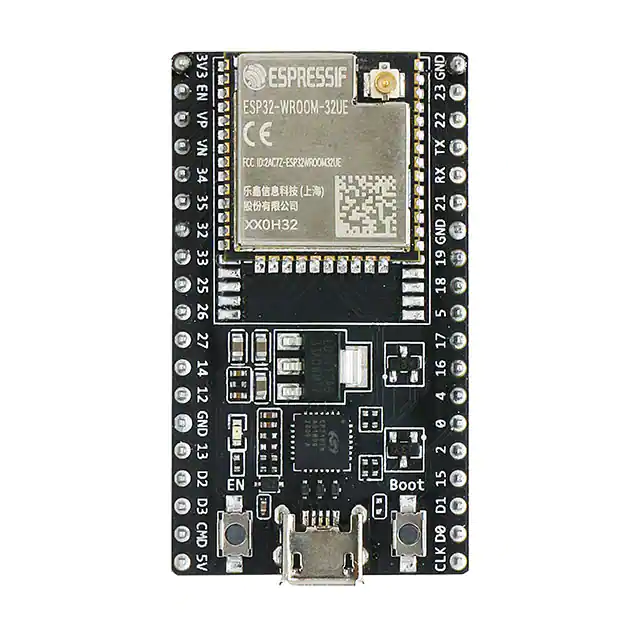
-
ESP32-DEVKITC-32UE
Espressif Systems
Tech Hub

A practical engineering and sourcing framework covering lifecycle verification, lifetime-buy calculations, replacement qualification, supplier checks and counterfeit-risk controls.

TTL and CMOS logic families differ in thresholds, loading, output drive, power and timing. This engineering guide compares 74HC and 74HCT, calculates noise margins and checks 3.3 V/5 V compatibility.

A practical engineering guide to 3.3V and 5V logic compatibility, input thresholds, resistor dividers, translator ICs, MOSFET level shifting, I2C pull-ups, timing limits and power-sequencing risks.

The 74HC595 uses push-pull logic outputs, while the TPIC6B595 uses 50 V open-drain DMOS sinks for higher-power loads. This guide compares timing, current limits, 3.3 V interfacing, load wiring, thermal…

The 74HC595 converts serial data into eight stable parallel outputs. This guide covers pin functions, shift and storage timing, OE and MR behavior, drive-current limits, cascading, voltage compatibilit…

A technical comparison of level-sensitive latches and edge-triggered flip-flops, covering timing windows, setup and hold limits, master–slave operation, time borrowing, race-through, HDL inference and…

A D latch stores one bit while Enable controls when data can pass. This reference covers gate-level operation, truth tables, transparency, setup and hold timing, LE versus OE, common ICs and practical …

An SR latch stores one bit through cross-coupled feedback. This engineering reference covers NOR and NAND implementations, truth tables, forbidden-state recovery, gated operation, switch debouncing, fa…

Latch circuits retain one bit through feedback. This technical reference covers SR and D latches, truth tables, transparency, timing limits, latch-versus-flip-flop behavior, applications and common log…

An engineering guide to LED driver operation, constant-current and constant-voltage outputs, linear and switching topologies, dimming, IC selection, calculations, replacement compatibility, and fault c…


