
 My Inquiry
 My Account


Diodes Incorporated AP1184T5-18L-U
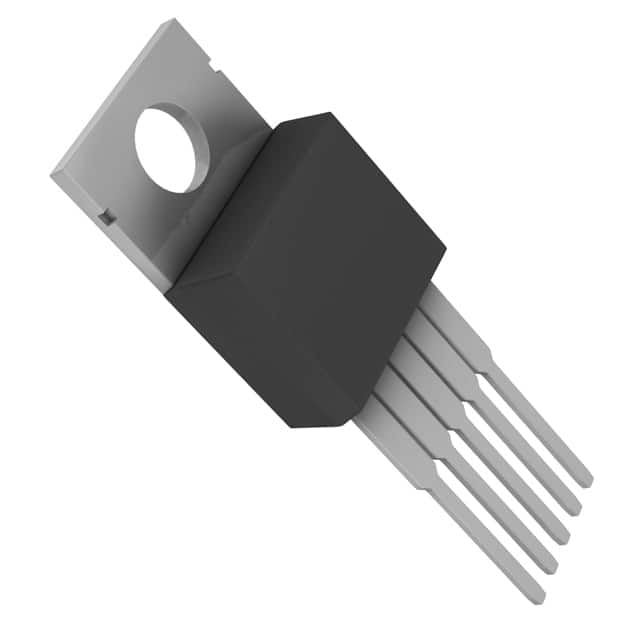
- Part No.:
- AP1184T5-18L-U
- Manufacturer:
- Diodes Incorporated
- Package:
- TO-220-5
- Datasheet:
-
 AP1184T5-18L-U.pdf
- Description:
- IC REG LINEAR 1.8V 4A TO220-5
- Quantity:
- Payment:

- Shipping:

Inventory:934
Please send an inquiry. Send us your inquiry, and we will respond immediately.
Product details
Overview
AP1184T5-18L-U from Diodes Incorporated is a 4A ultra-low dropout positive voltage regulator in TO220-5L package, configured for fixed 1.8V output. It delivers 1.8V at up to 4A with 0.85V maximum dropout (Vin–Vout) at full load, built-in thermal shutdown and current limiting, and remote sensing via Vsense pin for precise load regulation-used in GPU core power supplies derived from 3.3V ATX rails.
For engineers reviewing the AP1184T5-18L-U datasheet, AP1184T5-18L-U pinout, AP1184T5-18L-U application, or AP1184T5-18L-U equivalent, key selection criteria include dropout voltage under 4A load, Vctrl supply requirement (>Vout), remote sense capability, thermal resistance (θJA = 31°C/W), and fixed-output stability with ≥100µF output capacitance.
Technical Context
The AP1184T5-18L-U uses an NPN pass transistor architecture with externally supplied Vctrl pin (≥Vout+1V typical), enabling lower dropout than standard PNP LDOs without base-current penalty. Its dual-input flexibility allows Vctrl to be sourced from a higher rail (e.g., 5V) while Vin comes from 3.3V, optimizing efficiency in multi-rail systems.
It implements true remote sensing via dedicated Vsense pin, compensating for PCB trace IR drop between regulator and load. The internal 1.25V reference and adjustable feedback path (not used in fixed 1.8V variant) support tight initial accuracy (±2% over temperature) and fast transient response (<500ns load step recovery).
Key Specifications
| Parameter | Value and Actual Design Meaning |
|---|---|
| Output Voltage | Fixed 1.800 V ±2% at 10mA–4A, enabling direct GPU core supply without external resistors. |
| Max Dropout (Vin–Vout) | 0.85 V at 4A load, allowing 1.8V output from 2.65V minimum input-critical for 3.3V-to-1.8V conversion with margin. |
| Load Regulation | 15–18 mV over 0–4A, ensuring stable voltage under dynamic GPU current steps without additional compensation. |
| Ripple Rejection | 60–70 dB at 120Hz, suppressing input ripple from switching PSUs before delivery to noise-sensitive logic cores. |
| Thermal Shutdown | Activates above 125°C junction temperature, protecting against sustained overload or inadequate heatsinking in compact enclosures. |
| Vctrl Supply Requirement | Must exceed Vout by ≥1V (e.g., ≥2.8V); enables use of separate 5V rail to reduce pass transistor dissipation and improve efficiency. |
| Stability Capacitance | Requires ≥100µF aluminum electrolytic at Vout with 50–100mΩ ESR-standard for motherboard VRMs and compatible with low-cost bulk capacitors. |
Pinout & Package
AP1184T5-18L-U is housed in a TO220-5L package with exposed tab electrically connected to Vout for thermal conduction and low-inductance output return. The tab must be mounted to a heatsink or copper pour per Diodes Inc. layout AP02001.
| Pin/Terminal | Circuit Role | Design Meaning |
|---|---|---|
| Vout (Pin 1, Tab) | Regulated output | Primary power delivery node; tab connection enables high-current output return and thermal transfer to heatsink. |
| Vsense (Pin 2) | Remote output sense | Connects directly to load point to cancel PCB trace voltage drop-enables ±1% regulation at point-of-load. |
| Adj/GND (Pin 3) | Feedback reference / GND | Internally tied to ground for fixed 1.8V mode; unused as adjustment node-simplifies layout vs. adjustable variants. |
| Vctrl (Pin 4) | Control circuit supply | Provides bias for internal control circuitry and base drive; must be ≥Vout+1V to sustain regulation under full load. |
| Vin (Pin 5) | Main input supply | Accepts input rail (e.g., 3.3V ATX); dropout performance defined relative to this pin, not Vctrl. |
Key Features
| Feature | Design Value |
|---|---|
| Ultra-low dropout operation | 0.85V max (Vin–Vout) at 4A enables efficient 3.3V-to-1.8V conversion without switching complexity or EMI. |
| Dedicated remote sense (Vsense) | Compensates for up to 50mΩ PCB trace resistance, maintaining <±1% output accuracy at GPU die despite board-level IR loss. |
| Separate Vctrl supply pin | Allows Vctrl to be driven from higher rail (e.g., 5V), reducing pass transistor power loss and improving thermal headroom. |
| Integrated protection | Thermal shutdown + current limiting prevent damage during startup surge, short-circuit, or heatsink failure-no external circuitry needed. |
| Fixed 1.8V output | Eliminates external resistor network and associated tolerance/temperature drift-reduces BOM count and improves long-term stability. |
Applications
| GPU Core Power Supply | ATX Motherboard VRM Stage |
|---|---|
Use Scenario: Delivering stable 1.8V/4A to discrete graphics processor cores from 3.3V ATX auxiliary rail. IC Role / Device Role / Timing Role: Primary linear post-regulator providing low-noise, fast-transient power with remote sensing at GPU package ball grid. Use Value: Eliminates need for complex multi-phase buck converters in cost-sensitive mid-tier GPUs while meeting ±2% voltage tolerance and sub-500ns transient recovery. | Use Scenario: Generating 1.8V auxiliary rail for chipset I/O or memory interface on desktop motherboards with legacy ATX power distribution. IC Role / Device Role / Timing Role: Fixed-output LDO stage downstream of main 3.3V switching converter, decoupling noise and stabilizing voltage under dynamic load changes. Use Value: Provides clean, ripple-free 1.8V with 70dB AC rejection-prevents timing jitter in DDR memory clock paths and PCIe SerDes lanes. |
| Industrial FPGA I/O Bank | Test Equipment Power Rail |
Use Scenario: Supplying configurable 1.8V I/O banks on Xilinx/Intel FPGAs in programmable logic controllers where EMI from switchers is prohibited. IC Role / Device Role / Timing Role: Low-noise linear regulator with remote sense ensuring accurate voltage at FPGA BGA pads despite long PCB traces. Use Value: Maintains signal integrity for 1.8V LVCMOS interfaces by eliminating switching noise-induced bit errors and setup/hold violations. | Use Scenario: Providing calibrated 1.8V supply to precision ADC/DAC reference circuits in automated test equipment requiring minimal voltage drift. IC Role / Device Role / Timing Role: Precision voltage source with <0.02%/W thermal regulation and 1.25V internal reference stability over temperature. Use Value: Enables ±0.1% absolute accuracy in 16-bit data converters without external trimming or calibration firmware. |
Equivalent & Alternatives
The following parts are listed as comparable options for similar fixed-output LDO regulator applications.
| Alternative Part | Technical Difference | Application Difference | Selection Advice |
|---|---|---|---|
| AP1186T5-18L-U | Same pinout and 1.8V fixed output, but rated for 5A continuous current and 0.75V max dropout at 5A. | Suitable for next-gen GPUs requiring >4A or tighter thermal margin; requires larger heatsink due to higher Pd. | Select when future-proofing for 5A loads or operating near thermal limits-identical layout compatibility. |
| TPS7A8300RGRT | 4A, 1.8V fixed LDO with 0.6V dropout, integrated soft-start, and PMBus interface; QFN-20 package. | Supports digital monitoring and sequencing in server-grade designs; lacks Vsense pin-requires local regulation only. | Choose for systems needing telemetry, programmable ramp rates, or space-constrained layouts-no remote sense capability. |
Compared with AP1184T5-18L-U, AP1186T5-18L-U offers higher current headroom and lower dropout but identical footprint, while TPS7A8300RGRT adds digital control and smaller size at the cost of remote sensing and analog simplicity.
Availability
AP1184T5-18L-U is available at Aetrix Electronics and suitable for GPU core power supplies, ATX motherboard VRM stages, industrial FPGA I/O banks, and test equipment power rails requiring stable component supply with lead-free compliance and TO220 thermal management.
Supply support for AP1184T5-18L-U includes scheduled delivery planning, volume procurement assistance, BOM continuity management, traceable sourcing, and lifecycle availability coordination for OEM customers, industrial embedded developers, connected-device designers, and electronics production programs.
Manufacturer
Diodes Incorporated is a global manufacturer of discrete semiconductors and analog ICs, specializing in power management, signal integrity, and protection solutions for computing, industrial, and consumer markets.
The AP1184 product line delivers ultra-low-dropout linear regulators optimized for high-current, low-voltage applications in graphics subsystems and motherboard power delivery-designed to replace switching regulators where noise and complexity must be minimized.
FAQ
What is the minimum required Vctrl voltage for AP1184T5-18L-U to regulate properly?
Vctrl must be at least 1V greater than Vout (i.e., ≥2.8V) across the full operating temperature range and load condition. At 25°C and 4A load, typical Vctrl is 4.3V; operation below 2.8V causes loss of regulation and uncontrolled output collapse. This requirement ensures sufficient base drive for the NPN pass transistor under worst-case conditions.
Can AP1184T5-18L-U be used without remote sensing (Vsense tied to Vout)?
Yes-Vsense may be directly connected to Vout for local regulation, but doing so forfeits remote-sense accuracy. Load regulation degrades from 15–18 mV to ~25 mV over 0–4A due to uncompensated PCB trace resistance. For GPU or FPGA applications where voltage must be held at the die, Vsense must route separately to the load point.
Why does AP1184T5-18L-U require both Vin and Vctrl inputs instead of a single supply?
The dual-input architecture separates power delivery (Vin) from control bias (Vctrl) to minimize pass transistor power loss. Vctrl powers the internal error amplifier and base driver independently, allowing it to be sourced from a higher-efficiency rail (e.g., 5V) while Vin comes from the lower 3.3V rail-reducing total dissipation by up to 30% versus single-supply LDOs.
Is AP1184T5-18L-U recommended for new designs according to Diodes Incorporated?
No-Diodes Incorporated marks AP1184 as "NOT RECOMMENDED FOR NEW DESIGN" in its official documentation (Rev. 6, October 2014). This reflects obsolescence planning; however, the part remains actively manufactured and supported for legacy system repair, replacement, and continuity programs through authorized channels including Aetrix Electronics.
AP1184T5-18L-U Specifications
- Product attributes
- Attribute value
- Manufacturer:
- Diodes Incorporated
- Series:
- -
- Package/Case:
- TO-220-5
- Packaging:
- Tube
- Product Status:
- Discontinued at Digi-Key
- Output Configuration:
- Positive
- Output Type:
- Fixed
- Number of Regulators:
- 1
- Voltage - Input (Max):
- 16V
- Voltage - Output (Min/Fixed):
- 1.8V
- Voltage - Output (Max):
- -
- Voltage Dropout (Max):
- 0.85V @ 4A
- Current - Output:
- 4A
- Current - Quiescent (Iq):
- 25 mA
- Current - Supply (Max):
- 70 mA
- PSRR:
- 70dB (120Hz)
- Control Features:
- -
- Protection Features:
- Over Current, Over Temperature
- Operating Temperature:
- 0°C ~ 125°C (TJ)
- Grade:
- -
- Qualification:
- -
- Mounting Type:
- Through Hole
- Supplier Device Package:
- TO-220-5
AP1184T5-18L-U FAQ
1.How can I place an order for AP1184T5-18L-U through Aetrix?
Please submit a Request for Quotation (RFQ) for AP1184T5-18L-U on Aetrix. Our sales agent will provide a competitive quotation and guide you through the order confirmation once you accept the terms.
2.Are the price and stock information for AP1184T5-18L-U reliable?
The price and inventory of AP1184T5-18L-U are updated periodically and may fluctuate due to market conditions. Stock and pricing data are typically refreshed every 24 hours. Quotation validity for AP1184T5-18L-U is usually 5 days.
3.What payment methods are accepted for AP1184T5-18L-U?
We accept Wire Transfer, PayPal, Credit Card, Western Union, MoneyGram, and Escrow for AP1184T5-18L-U transactions.
Note: Certain payment methods may incur a processing fee.
4.How is shipping managed for AP1184T5-18L-U?
AP1184T5-18L-U orders can be shipped via leading logistics carriers, including DHL, UPS, FedEx, TNT, or Registered Mail.
Once your AP1184T5-18L-U order is processed, you will receive an email with the shipment details and tracking number.
Note: Tracking information may take up to 24 hours to appear. Express delivery typically takes 3–5 business days.
5.How can I obtain technical support or documentation for AP1184T5-18L-U?
For technical support, including AP1184T5-18L-U datasheets, pinout diagrams, or application guidance, please contact our engineering support team. They can provide detailed documentation and assistance for your AP1184T5-18L-U requirements.
6.How does Aetrix verify that AP1184T5-18L-U is sourced from the original manufacturer or authorized distributors?
All AP1184T5-18L-U products on Aetrix are procured from qualified distributors and authorized channels. Our dedicated quality assurance team conducts strict verification, including traceability checks and, if necessary, third-party testing. This ensures that AP1184T5-18L-U meets industry standards.
7.What is the process for return or replacement of AP1184T5-18L-U?
All AP1184T5-18L-U units undergo pre-shipment inspection (PSI). If there is an issue with AP1184T5-18L-U, returns or replacements are accepted under the following conditions:
1.Quantity discrepancies, incorrect items, or visible external defects (such as breakage or corrosion), acknowledged by Aetrix.
2.The issue is reported within 90 days of delivery.
3.The AP1184T5-18L-U part is unused and in its original packaging.
Return procedure for AP1184T5-18L-U:
1.Submit a request within 90 days.
2.Obtain a Return Material Authorization (RMA) from Aetrix.
AP1184T5-18L-U Tags
-
MIC5504-1.8YM5-TR
Microchip Technology
-
MIC5504-3.3YM5-TR
Microchip Technology
-
MIC5365-3.0YC5-TR
Microchip Technology
-
MIC5365-1.8YC5-TR
Microchip Technology
-
MIC5365-2.5YC5-TR
Microchip Technology
-
MIC5365-3.3YC5-TR
Microchip Technology
-
MIC5365-3.3YD5-TR
Microchip Technology
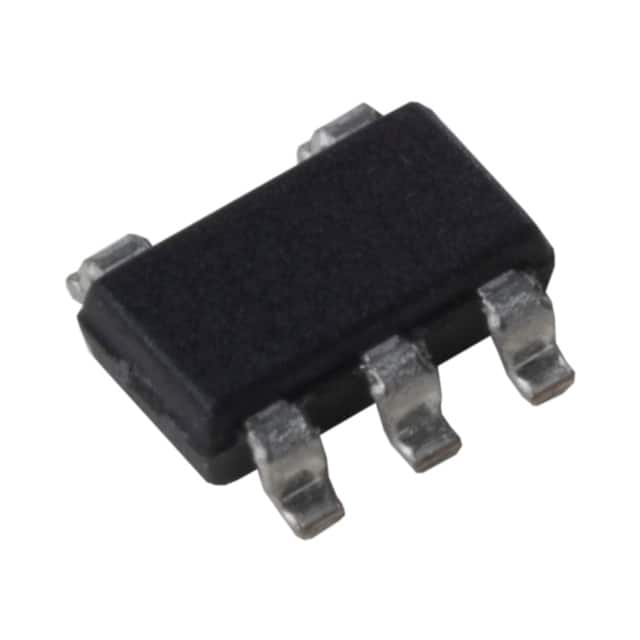
-
MIC5317-3.3YM5-TR
Microchip Technology
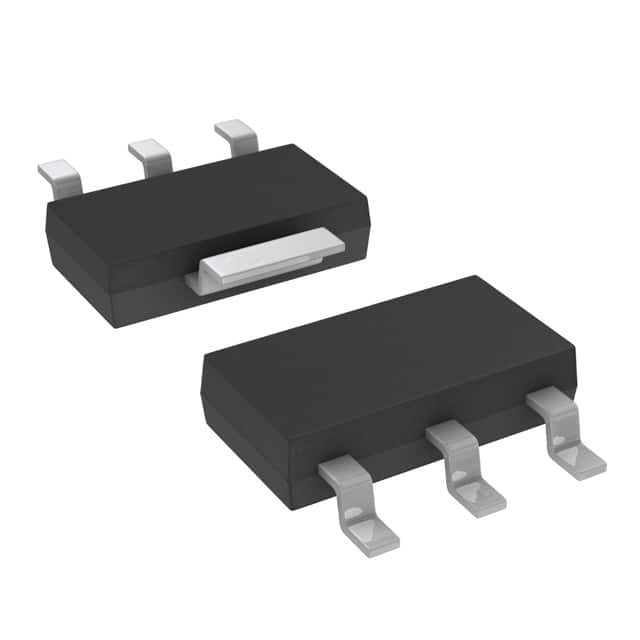
-
TLV1117LV33DCYR
Texas Instruments
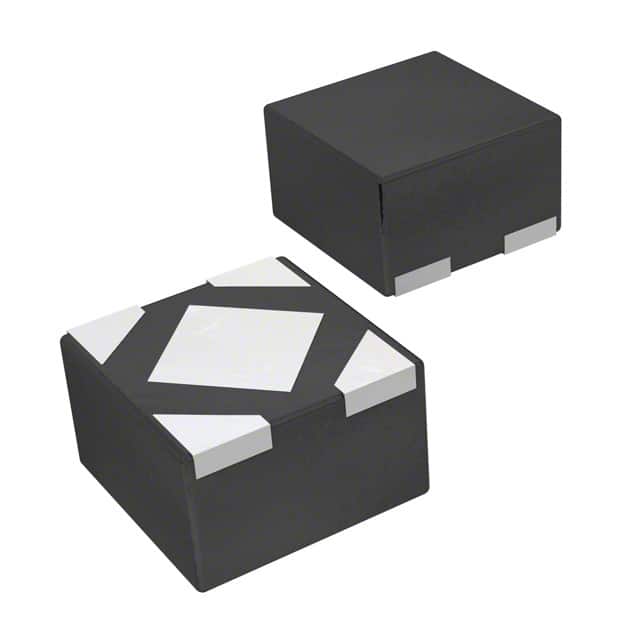
-
MIC5317-3.3YMT-TZ
Microchip Technology
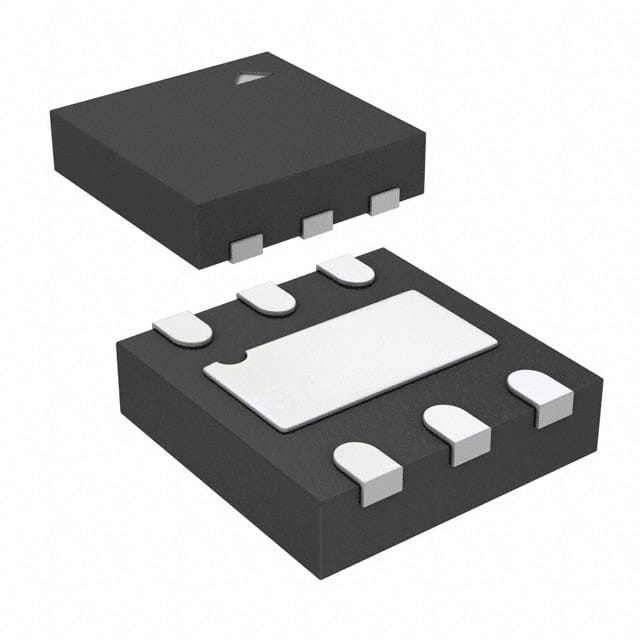
-
MIC5528-3.3YMT-TR
Microchip Technology
-
TLV75801PDRVR
Texas Instruments
Tech Hub

TTL and CMOS logic families differ in thresholds, loading, output drive, power and timing. This engineering guide compares 74HC and 74HCT, calculates noise margins and checks 3.3 V/5 V compatibility.

A practical engineering guide to 3.3V and 5V logic compatibility, input thresholds, resistor dividers, translator ICs, MOSFET level shifting, I2C pull-ups, timing limits and power-sequencing risks.

The 74HC595 uses push-pull logic outputs, while the TPIC6B595 uses 50 V open-drain DMOS sinks for higher-power loads. This guide compares timing, current limits, 3.3 V interfacing, load wiring, thermal…

The 74HC595 converts serial data into eight stable parallel outputs. This guide covers pin functions, shift and storage timing, OE and MR behavior, drive-current limits, cascading, voltage compatibilit…

A technical comparison of level-sensitive latches and edge-triggered flip-flops, covering timing windows, setup and hold limits, master–slave operation, time borrowing, race-through, HDL inference and…

A D latch stores one bit while Enable controls when data can pass. This reference covers gate-level operation, truth tables, transparency, setup and hold timing, LE versus OE, common ICs and practical …

An SR latch stores one bit through cross-coupled feedback. This engineering reference covers NOR and NAND implementations, truth tables, forbidden-state recovery, gated operation, switch debouncing, fa…

Latch circuits retain one bit through feedback. This technical reference covers SR and D latches, truth tables, transparency, timing limits, latch-versus-flip-flop behavior, applications and common log…

An engineering guide to LED driver operation, constant-current and constant-voltage outputs, linear and switching topologies, dimming, IC selection, calculations, replacement compatibility, and fault c…

Operational amplifier guide covering op amp basics, feedback, ideal vs real op amps, common configurations, buffer circuits, offset, bias current, gain-bandwidth, slew rate, rail-to-rail limits and sel…


