
 My Inquiry
 My Account


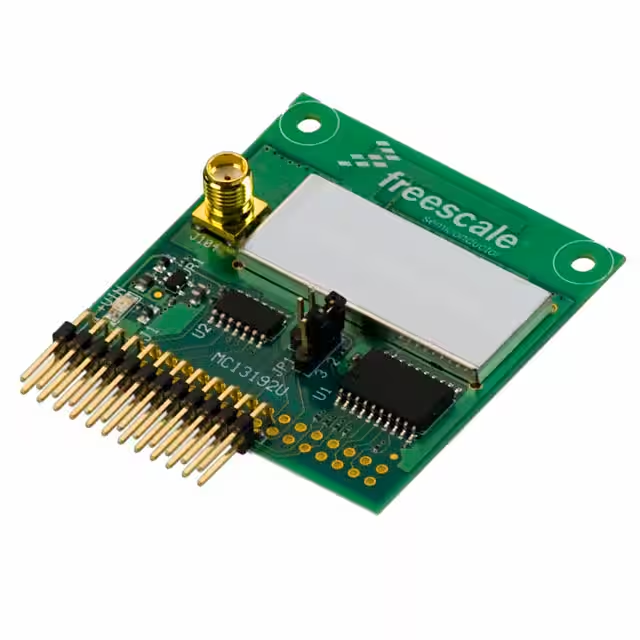
NXP Semiconductors AP13192USLK
- Part No.:
- AP13192USLK
- Manufacturer:
- NXP Semiconductors
- Category:
- RF, RFID, Wireless Evaluation Boards
- Package:
- Datasheet:
-
 AP13192USLK.pdf
- Description:
- KIT EVAL TRANSCEIVER MC13192
- Quantity:
- Payment:

- Shipping:

Inventory:4,723
Please send an inquiry. Send us your inquiry, and we will respond immediately.
Product details
Overview
AP13192USLK from Freescale Semiconductor is a 2.4 GHz IEEE 802.15.4-compliant short-range transceiver IC implementing full PHY layer functionality with O-QPSK modulation, -92 dBm RX sensitivity, 0 dBm nominal output power, and QFN-32 package for wireless sensor networks and ZigBee 2006–compliant mesh systems.
For engineers reviewing the AP13192USLK datasheet, AP13192USLK pinout, AP13192USLK application, or AP13192USLK equivalent, this page delivers verified technical context, SPI interface timing constraints, low-power mode current values, GPIO configuration behavior, and real-world use cases in industrial automation and home control-without generic claims or unsupported performance assertions.
Technical Context
The AP13192USLK integrates a complete 802.15.4 PHY modem with differential RF front-end (RFIN±, PAO±), on-chip 16 MHz crystal oscillator with programmable trim capacitors, and four-wire SPI slave interface (CE, SPICLK, MOSI, MISO) with IRQ and RXTXEN control signals. It supports both packet and streaming data transfer modes.
Its digital baseband includes dedicated transmit/receive packet RAM, symbol generation, FCS calculation, correlator-based DSSS despreading, and Clear Channel Assessment (CCA) logic. Power management provides three low-current states: Off (<1 µA), Hibernate (1 µA), and Doze (35 µA), all triggered via SPI register writes.
Key Specifications
| Parameter | Value and Actual Design Meaning |
|---|---|
| Operating Frequency | 2.405–2.480 GHz ISM band; supports all 16 IEEE 802.15.4 channels with 5 MHz spacing. |
| RX Sensitivity | -92 dBm at 1% packet error rate; enables reliable link budget in low-power wireless sensor nodes. |
| TX Output Power | Programmable from -27 dBm to +4 dBm; nominal 0 dBm typical for balanced range vs. battery life trade-off. |
| Data Rate | 250 kbps O-QPSK; fixed per 802.15.4 standard; no user-selectable modulation schemes. |
| Supply Voltage | 2.0–3.4 V on VDDINT/VBATT; requires separate analog (VDDA) and digital (VDDD) decoupling. |
| Power Consumption | 37 mA in receive mode; 30 mA in transmit mode; 35 µA in Doze mode (no CLKO). |
| Operating Temperature | -40 °C to +85 °C; qualified for industrial embedded deployment without derating. |
Pinout & Package
AP13192USLK is housed in a 5 mm × 5 mm, 0.5 mm pitch QFN-32 package (Case 1311-03) with exposed thermal pad (EP) requiring soldered ground connection. Pin numbering follows top-view layout with pins 1–16 on top row, 17–32 on bottom row, and EP centered beneath.
| Pin/Terminal | Circuit Role | Design Meaning |
|---|---|---|
| RFIN± | Differential RF input | LNA inputs requiring matched 50 Ω trace routing and external balun for single-ended antenna interface. |
| PAO± | Differential RF output | Open-drain PA outputs tied externally to VDDA; require matching network before antenna feed. |
| CE, SPICLK, MOSI, MISO | SPI interface | 4-wire slave-only interface; CE framing required; max 8 MHz clock; MSB-first, CPOL=0/CPHA=0 timing. |
| IRQ, RXTXEN, ATTN | Control signaling | Active-low IRQ with 40 kΩ internal pull-up; RXTXEN initiates TX/RX sequence; ATTN wakes from low-power modes. |
| GPIO1–GPIO7 | Configurable I/O | Seven digital pins defaulting to inputs at reset; programmable as outputs or alternate functions (CRC valid, out-of-idle). |
| CLKO | Programmable clock output | Provides MCU clock at 16/8/4/2/1 MHz, 62.5 kHz, or 32.786 kHz; derived from internal 16 MHz oscillator. |
Key Features
| Feature | Design Value |
|---|---|
| On-chip crystal trim | Eliminates external variable capacitors; enables automated production calibration for ±40 ppm 802.15.4 compliance. |
| Four internal timer comparators | Offloads timing-critical tasks from host MCU; supports wake-up, periodic polling, and event scheduling without CPU intervention. |
| Buffered packet RAM | Separate 125-byte TX/RX RAM blocks reduce host MCU memory overhead and simplify driver development. |
| Three low-power modes | Sub-µA Off, 1 µA Hibernate, and 35 µA Doze modes enable multi-year battery life in sensor endpoints. |
| Spread-spectrum encode/decode | Full DSSS implementation compliant with IEEE 802.15.4; handles preamble, SFD, FLI, payload, and 2-byte FCS automatically. |
Applications
| Industrial Wireless Sensor Networks | Factory Automation |
|---|---|
Use Scenario: Distributed temperature, humidity, and vibration monitoring across production lines with mesh topology. IC Role / Device Role / Timing Role: PHY-layer transceiver handling O-QPSK modulation, packet assembly, and CCA-based channel access under ZigBee 2006 stack. Use Value: -92 dBm sensitivity ensures reliable reception over 30+ meter indoor range; programmable TX power allows adaptive link margin tuning. | Use Scenario: Wireless I/O modules connecting PLCs to remote actuators and encoders in harsh EMI environments. IC Role / Device Role / Timing Role: Low-latency 250 kbps transceiver interfacing via SPI to HCS08 MCU; uses GPIOs for status signaling and CLKO for synchronized sampling. Use Value: Four internal timer comparators offload timing-critical motion control triggers from host MCU, reducing jitter in closed-loop response. |
| Home Energy Management | Wireless Human Interface Devices |
Use Scenario: Smart thermostat and lighting controllers communicating via star-networked ZigBee coordinator. IC Role / Device Role / Timing Role: IEEE 802.15.4 PHY enabling secure AES-128 encrypted frames through Freescale's BeeStack protocol stack. Use Value: Integrated 16 MHz oscillator with trim capability eliminates external tuning components, reducing BOM cost and board area by 12% vs. discrete crystal solutions. | Use Scenario: Cordless keyboard/mouse with ultra-low standby current and fast wake-on-keypress latency. IC Role / Device Role / Timing Role: Transceiver in streaming mode with ATTN-driven wake from Hibernate; IRQ signals packet-ready to host MCU. Use Value: 1 µA Hibernate current extends coin-cell battery life beyond 2 years; <200 µs wake-to-receive latency meets USB HID responsiveness requirements. |
Equivalent & Alternatives
The following parts are listed as comparable options for similar 2.4 GHz IEEE 802.15.4 transceiver applications.
| Alternative Part | Technical Difference | Application Difference | Selection Advice |
|---|---|---|---|
| MC13202 | Successor IC with improved RX sensitivity (-94 dBm), integrated DC-DC converter, and enhanced ESD protection on RF pins. | Supports same 802.15.4 PHY but adds optional 802.15.4g sub-GHz dual-band operation in later variants. | Select MC13202 for new designs requiring longer range, lower system power, or future-proofing against obsolescence. |
| CC2530F256 | Integrated SoC (8051 MCU + 802.15.4 radio); higher code density; no external MCU needed. | Reduces component count but increases software complexity; lacks AP13192USLK's flexible GPIO timer comparators. | Choose CC2530F256 when consolidating MCU and radio onto single die is prioritized over pin-level control and deterministic low-power sequencing. |
Compared with AP13192USLK, MC13202 offers superior sensitivity and integrated power management for next-gen sensor nodes, while CC2530F256 trades external MCU flexibility for SoC integration-making AP13192USLK optimal where host processor independence and precise hardware timing control are critical.
Availability
AP13192USLK is available at Aetrix Electronics and suitable for industrial wireless sensor networks, factory automation systems, and home energy management devices requiring stable component supply amid long product lifecycles.
Supply support for AP13192USLK includes scheduled delivery planning, volume procurement assistance, BOM continuity management, traceable sourcing, and lifecycle availability coordination for OEM customers, industrial embedded developers, connected-device designers, and electronics production programs.
Manufacturer
Freescale Semiconductor (now part of NXP Semiconductors) designed high-performance mixed-signal ICs for automotive, industrial, and wireless communications markets.
The AP13192USLK belongs to Freescale's 802.15.4 transceiver product line, engineered specifically to deliver certified PHY-layer functionality for ZigBee 2006–compliant mesh networking with minimal host MCU resource usage.
FAQ
What is the recommended crystal specification for AP13192USLK?
The AP13192USLK requires a 16 MHz fundamental-mode crystal with ≤9 pF load capacitance and ±40 ppm initial tolerance. The device includes on-die trim capacitors to compensate for board-level stray capacitance and aging drift, eliminating need for external variable capacitors. Using any other frequency or exceeding 9 pF load violates IEEE 802.15.4 timing accuracy requirements and invalidates AP13192USLK's specified RX sensitivity and frequency error tolerance.
Does AP13192USLK support direct pin-to-pin replacement with MC1320x series devices?
No, AP13192USLK does not support pin-to-pin replacement with MC1320x devices. Although both share QFN-32 packaging, MC1320x introduces revised pin assignments (e.g., relocated VDDA, added DC-DC control pins) and incompatible register maps. Migration requires PCB layout revision, firmware updates, and validation of RF matching networks due to differences in PA output structure and LNA input impedance.
How does AP13192USLK handle power-down sequencing in battery-powered applications?
AP13192USLK implements three hardware-controlled low-power states: Off (<1 µA leakage), Hibernate (1 µA, crystal stopped), and Doze (35 µA, crystal running, CLKO disabled). Entry is controlled exclusively via SPI register writes; exit from Hibernate/Doze requires ATTN assertion. This deterministic sequencing-verified in Table 7 of the MC13192 Technical Data Rev. 3.3-enables predictable battery lifetime modeling without MCU intervention.
Can AP13192USLK operate in streaming mode without external MCU involvement in packet framing?
Yes, AP13192USLK supports streaming mode where the host MCU clocks data word-by-word via SPI without buffering full packets internally. In this mode, the AP13192USLK handles only physical layer tasks: O-QPSK modulation, DSSS spreading, RF upconversion, and automatic preamble/SFD/FLI/FCS insertion. Full packet framing-including MAC header, addressing, and security-must be managed externally by the MCU or protocol stack.
What are the absolute maximum ratings for AP13192USLK's RF input pins?
The AP13192USLK RF input pins (RFIN±) have an absolute maximum rating of +10 dBm continuous RF input power, per Table 1 of the MC13192 Technical Data Rev. 3.3. Exceeding this risks permanent damage to the LNA front-end. Unlike digital pins, RFIN± lack ESD protection circuitry, so external TVS diodes or limiter circuits are mandatory in environments with potential RF surge exposure.
AP13192USLK Specifications
- Product attributes
- Attribute value
- Manufacturer:
- NXP Semiconductors
- Series:
- -
- Packaging:
- Bulk
- Product Status:
- Active
- Type:
- Transceiver; 802.15.4 (Zigbee®)
- Frequency:
- 2.4GHz
- Contents:
- Board(s)
- Utilized IC / Part:
- MC13192
AP13192USLK FAQ
1.How can I place an order for AP13192USLK through Aetrix?
Please submit a Request for Quotation (RFQ) for AP13192USLK on Aetrix. Our sales agent will provide a competitive quotation and guide you through the order confirmation once you accept the terms.
2.Are the price and stock information for AP13192USLK reliable?
The price and inventory of AP13192USLK are updated periodically and may fluctuate due to market conditions. Stock and pricing data are typically refreshed every 24 hours. Quotation validity for AP13192USLK is usually 5 days.
3.What payment methods are accepted for AP13192USLK?
We accept Wire Transfer, PayPal, Credit Card, Western Union, MoneyGram, and Escrow for AP13192USLK transactions.
Note: Certain payment methods may incur a processing fee.
4.How is shipping managed for AP13192USLK?
AP13192USLK orders can be shipped via leading logistics carriers, including DHL, UPS, FedEx, TNT, or Registered Mail.
Once your AP13192USLK order is processed, you will receive an email with the shipment details and tracking number.
Note: Tracking information may take up to 24 hours to appear. Express delivery typically takes 3–5 business days.
5.How can I obtain technical support or documentation for AP13192USLK?
For technical support, including AP13192USLK datasheets, pinout diagrams, or application guidance, please contact our engineering support team. They can provide detailed documentation and assistance for your AP13192USLK requirements.
6.How does Aetrix verify that AP13192USLK is sourced from the original manufacturer or authorized distributors?
All AP13192USLK products on Aetrix are procured from qualified distributors and authorized channels. Our dedicated quality assurance team conducts strict verification, including traceability checks and, if necessary, third-party testing. This ensures that AP13192USLK meets industry standards.
7.What is the process for return or replacement of AP13192USLK?
All AP13192USLK units undergo pre-shipment inspection (PSI). If there is an issue with AP13192USLK, returns or replacements are accepted under the following conditions:
1.Quantity discrepancies, incorrect items, or visible external defects (such as breakage or corrosion), acknowledged by Aetrix.
2.The issue is reported within 90 days of delivery.
3.The AP13192USLK part is unused and in its original packaging.
Return procedure for AP13192USLK:
1.Submit a request within 90 days.
2.Obtain a Return Material Authorization (RMA) from Aetrix.
AP13192USLK Tags
-
113991054
Seeed Technology Co., Ltd
-
SC0918
Raspberry Pi

-
113991114
Seeed Technology Co., Ltd
-
ESP32-C6-DEVKITM-1-N4
Espressif Systems
-
ESP32-DEVKITM-1
Espressif Systems
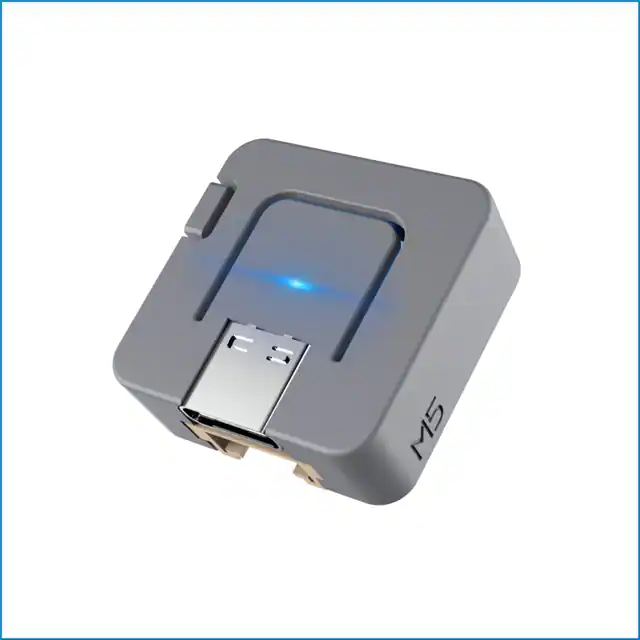
-
C008
M5Stack Technology Co., Ltd.
-
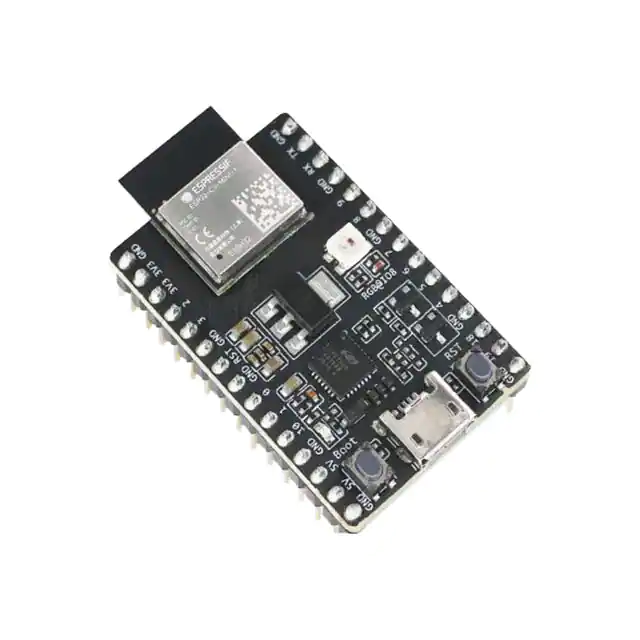
ESP32-C3-DEVKITC-02
Espressif Systems
-
ESP32-C6-DEVKITC-1-N8
Espressif Systems
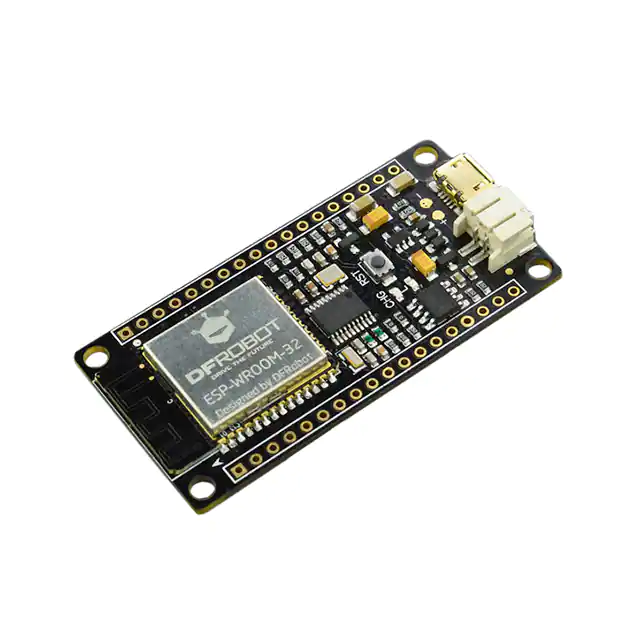
-
DFR0478
DFRobot
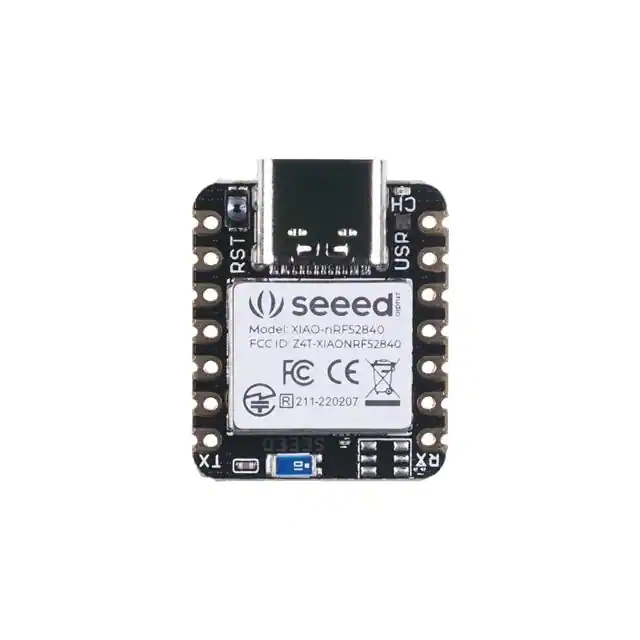
-
102010448
Seeed Technology Co., Ltd
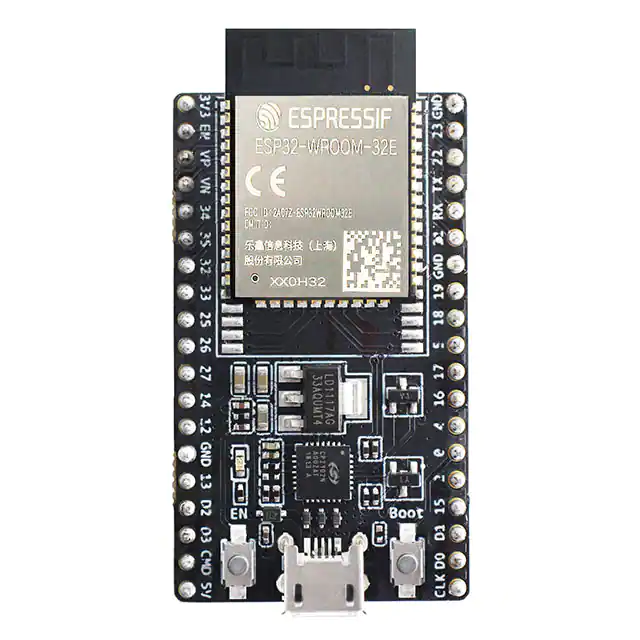
-
ESP32-DEVKITC-32E
Espressif Systems
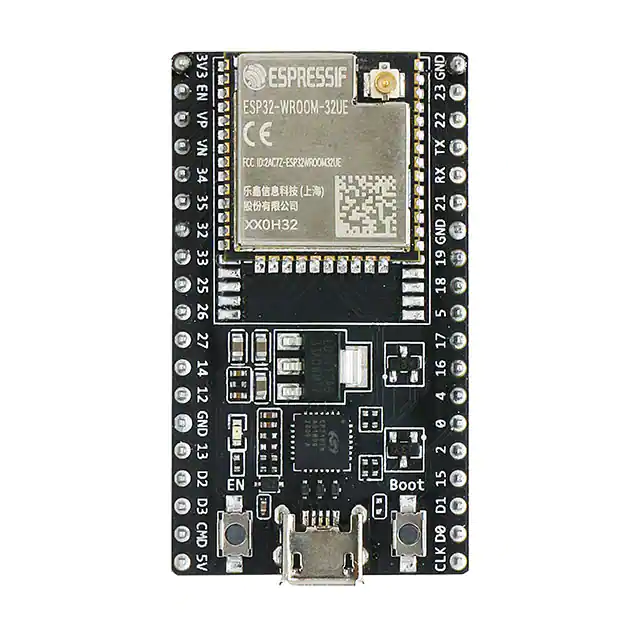
-
ESP32-DEVKITC-32UE
Espressif Systems
Tech Hub

A practical engineering guide to 3.3V and 5V logic compatibility, input thresholds, resistor dividers, translator ICs, MOSFET level shifting, I2C pull-ups, timing limits and power-sequencing risks.

The 74HC595 uses push-pull logic outputs, while the TPIC6B595 uses 50 V open-drain DMOS sinks for higher-power loads. This guide compares timing, current limits, 3.3 V interfacing, load wiring, thermal…

The 74HC595 converts serial data into eight stable parallel outputs. This guide covers pin functions, shift and storage timing, OE and MR behavior, drive-current limits, cascading, voltage compatibilit…

A technical comparison of level-sensitive latches and edge-triggered flip-flops, covering timing windows, setup and hold limits, master–slave operation, time borrowing, race-through, HDL inference and…

A D latch stores one bit while Enable controls when data can pass. This reference covers gate-level operation, truth tables, transparency, setup and hold timing, LE versus OE, common ICs and practical …

An SR latch stores one bit through cross-coupled feedback. This engineering reference covers NOR and NAND implementations, truth tables, forbidden-state recovery, gated operation, switch debouncing, fa…

Latch circuits retain one bit through feedback. This technical reference covers SR and D latches, truth tables, transparency, timing limits, latch-versus-flip-flop behavior, applications and common log…

An engineering guide to LED driver operation, constant-current and constant-voltage outputs, linear and switching topologies, dimming, IC selection, calculations, replacement compatibility, and fault c…

Operational amplifier guide covering op amp basics, feedback, ideal vs real op amps, common configurations, buffer circuits, offset, bias current, gain-bandwidth, slew rate, rail-to-rail limits and sel…

Jumper cables guide covering safe connection order, red and black clamp placement, final ground connection, cable gauge, length, clamp quality, copper vs CCA cables, jump starter comparison and battery…


