
 My Inquiry
 My Account


Diodes Incorporated AP2301SN-7
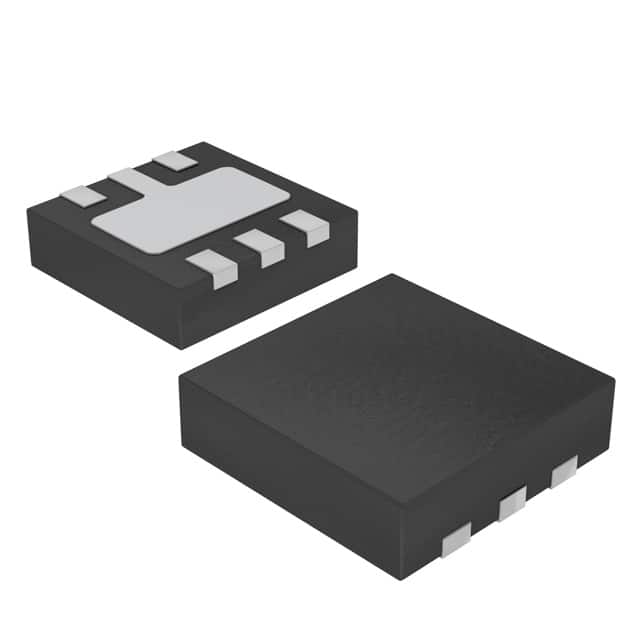
- Part No.:
- AP2301SN-7
- Manufacturer:
- Diodes Incorporated
- Package:
- 6-UDFN Exposed Pad
- Datasheet:
-
 AP2301SN-7.pdf
- Description:
- IC PWR SWITCH P-CH 1:1 6DFN2020
- Quantity:
- Payment:

- Shipping:

Inventory:1,213
Please send an inquiry. Send us your inquiry, and we will respond immediately.
Product details
Overview
AP2301SN-7 from Diodes Incorporated is a single-channel, active-low enable, current-limited high-side power switch in U-DFN2020-6 package, delivering 2.5A accurate current limiting, 70mΩ RDS(ON) at 5V, and fast 2µs short-circuit response. It integrates output discharge, reverse current blocking, UVLO (2.0V threshold), thermal shutdown (+140°C), and 7ms deglitched FLG reporting - designed for USB hot-swap and capacitive-load power distribution in compact consumer electronics.
For engineers reviewing the AP2301SN-7 datasheet, AP2301SN-7 pinout, AP2301SN-7 application, or AP2301SN-7 equivalent, key selection criteria include its active-low EN logic, 2.7–5.5V input range, 0.6ms typical rise time with soft-start, integrated discharge path (RDIS = 100Ω), and thermal cycling behavior under sustained overload.
Technical Context
The AP2301SN-7 implements a P-channel MOSFET high-side switch with embedded current-sense FET architecture-enabling precise 2.5A over-current trip without external sensing resistors. Its internal discharge N-MOS activates only when disabled, providing controlled VOUT decay via 100Ω path.
UVLO (2.0V typ, 50mV hysteresis) prevents turn-on during brown-out; thermal protection cycles the switch off at +140°C with +20°C hysteresis. The open-drain FLG pin asserts low after 7ms deglitch upon over-current or over-temperature fault, eliminating false triggers from inrush or transient loads.
Key Specifications
| Parameter | Value and Actual Design Meaning |
|---|---|
| Current Limit | 2.5A typical; clamps output current precisely to prevent damage during sustained overload or short circuit. |
| RDS(ON) | 70mΩ max at 5V/25°C; minimizes conduction loss and self-heating in high-current USB ports. |
| Short-Circuit Response | 2µs; enables rapid current limiting before energy dissipation exceeds safe SOA limits. |
| Input Voltage Range | 2.7V to 5.5V; supports full USB 2.0/3.0 bus voltage range including margin for ripple and drop. |
| Enable Logic | Active-low; matches common system-level reset or power-control signaling without level-shifting. |
| Discharge Resistance | 100Ω typical; ensures controlled VOUT decay <0.6ms to <0.5V when disabled, preventing floating rail issues. |
| FLG Blanking Time | 7ms typical; suppresses false fault reports during load switching or capacitor inrush transients. |
| Thermal Shutdown | +140°C with +20°C hysteresis; provides autonomous recovery after fault removal without host intervention. |
Pinout & Package
AP2301SN-7 uses the U-DFN2020-6 package: 2.0mm × 2.0mm, 0.5mm pitch, 0.55mm height, exposed thermal pad (connected to GND). No lead, halogen-free, RoHS-compliant.
| Pin/Terminal | Circuit Role | Design Meaning |
|---|---|---|
| GND | Ground reference | Primary return path for power, logic, and thermal pad; must be connected to PCB ground plane via thermal vias. |
| IN | Power input | Accepts 2.7–5.5V supply; requires ≥0.1µF ceramic bypass capacitor placed adjacent to pin. |
| EN | Enable control | Active-low digital input; pulls low to enable switch; high-Z when pulled up externally to IN. |
| FLG | Fault indicator | Open-drain output; sinks current when over-current or over-temperature occurs after 7ms deglitch. |
| OUT | Switched output | Delivers regulated current to load; all OUT pins tied internally; connects to downstream USB port or peripheral rail. |
| NC | No connection | Internally unconnected; recommended to tie externally to OUT for EMI reduction and layout symmetry. |
Key Features
| Feature | Design Value |
|---|---|
| Integrated Output Discharge | 100Ω internal discharge path ensures VOUT decays to <0.5V within 0.6ms when disabled-eliminates need for external bleed resistor. |
| Reverse Current Blocking | Prevents backflow from VOUT to VIN when disabled; critical for shared-bus systems with multiple power domains. |
| Built-in Soft-Start | 0.6ms typical rise time limits inrush current into heavy capacitive loads (e.g., 120µF USB ports), avoiding input rail collapse. |
| 7ms Fault Blanking | Hardware-based deglitch on FLG prevents false fault latching during normal load switching or hot-plug events-no external RC needed. |
| Thermal Cycling Protection | Auto-recovers after cooling ~20°C post-shutdown; maintains system visibility via FLG while protecting silicon from thermal runaway. |
| USB-Compliant Switching | Meets USB 2.0/3.0 hot-swap timing and current-limit requirements; validated for use in certified USB hubs and charging ports. |
Applications
| USB 3.0 Hub Power Management | Laptop USB-C Docking Station |
|---|---|
Use Scenario: Individual USB 3.0 ports require independent over-current protection and hot-swap capability without affecting upstream controller. IC Role / Device Role / Timing Role: High-side power switch controlling VBUS delivery per port; enables/disables power under host software control with sub-millisecond response. Use Value: Prevents bus-wide shutdown during single-port short; 2µs fault detection preserves data integrity during hot-plug; discharge function avoids residual VBUS leakage. | Use Scenario: Docking station supplies power to multiple peripherals (HDMI, Ethernet, storage) via USB-C PD contract negotiation. IC Role / Device Role / Timing Role: Secondary power switch isolating downstream 5V rails; activated only after PD negotiation confirms 5V profile. Use Value: 70mΩ RDS(ON) minimizes voltage drop across long PCB traces; UVLO ensures clean turn-on only after stable 5V rail establishment. |
| Set-Top Box USB Peripheral Port | Industrial USB Host Controller Interface |
Use Scenario: Consumer STB provides USB ports for flash drives or wireless adapters subject to accidental shorts and ESD exposure. IC Role / Device Role / Timing Role: Front-end protection device between SoC USB PHY and connector; handles inrush, short, and thermal faults autonomously. Use Value: 2kV HBM ESD rating protects downstream PHY; 7ms FLG blanking rejects ESD-induced transient over-current spikes. | Use Scenario: Embedded industrial controller uses USB for firmware updates and diagnostics; requires guaranteed fault isolation in harsh environments. IC Role / Device Role / Timing Role: Isolation switch on USB VBUS line; monitors current and temperature continuously; reports faults to MCU via FLG. Use Value: Thermal cycling behavior allows safe operation under sustained 2A load in 70°C ambient; RoHS/Green compliance meets industrial certification requirements. |
Equivalent & Alternatives
The following parts are listed as comparable options for similar high-side current-limited power switch applications.
| Alternative Part | Technical Difference | Application Difference | Selection Advice |
|---|---|---|---|
| AP2311SN-7 | Same package and specs, but active-high EN logic; no change in RDS(ON), current limit, or protection features. | Requires inverted enable signal; suitable where system MCU GPIO defaults high or shares EN net with other active-high devices. | Select when board-level EN routing favors active-high logic to reduce external inverters. |
| TCK112G,LF | Lower 45mΩ RDS(ON) at 5V, but 1.5A current limit; smaller 1.6×1.6mm UDFN package; no integrated discharge function. | Lacks output discharge path-requires external 10kΩ resistor for VOUT decay; limited to lighter loads. | Choose for ultra-low-loss 1.5A applications where board space is tighter and discharge is handled externally. |
Compared with AP2311SN-7, AP2301SN-7 offers identical protection and performance but simplifies interface design in systems with active-low reset or enable architecture; versus TCK112G, it trades slightly higher RDS(ON) for integrated discharge and higher 2.5A current capacity-critical for USB 3.x and docking use cases.
Availability
AP2301SN-7 is available at Aetrix Electronics and suitable for USB 3.0 hub power management, laptop docking stations, and set-top box peripheral ports requiring stable component supply, long-term lifecycle support, and green-compliant packaging.
Supply support for AP2301SN-7 includes scheduled delivery planning, volume procurement assistance, BOM continuity management, traceable sourcing, and lifecycle availability coordination for OEM customers, industrial embedded developers, connected-device designers, and electronics production programs.
Manufacturer
Diodes Incorporated is a global manufacturer of discrete semiconductors and analog ICs, specializing in high-reliability power management, signal integrity, and protection solutions for consumer, industrial, and computing markets.
The AP2301/AP2311 family targets USB-compliant hot-swap power distribution, emphasizing robust fault handling, minimal external components, and compact packaging for space-constrained portable and embedded systems.
FAQ
What is the maximum continuous load current supported by AP2301SN-7?
The AP2301SN-7 supports 2.0A maximum continuous load current per its datasheet specification, with a 2.5A typical current-limit threshold that engages during overload. This rating assumes proper PCB thermal design-including connection of the exposed pad to a solid ground plane with thermal vias-and ambient temperatures ≤+85°C. Derating applies above 70°C ambient.
Does AP2301SN-7 require an external pull-up resistor on the EN pin?
Yes-EN is an active-low, CMOS-compatible input with no internal pull-up. A 10kΩ external pull-up to IN is recommended for default-disabled operation. Leakage current is ≤1µA, so higher-value resistors (up to 100kΩ) may be used if GPIO drive strength permits, but 10kΩ ensures reliable noise immunity and fast edge response in noisy environments.
Can AP2301SN-7 be used in dual-purpose USB/MHL ports?
No-it is explicitly not recommended for dual-purpose ports (e.g., HDMI/MHL) where the output may be back-driven by a peripheral's battery or constant-voltage source. Its integrated discharge function actively pulls VOUT to GND when disabled, risking overstress on the discharge transistor and unintended battery drain. Use dedicated MHL-compliant switches without discharge functionality for such applications.
How does the FLG pin behave during thermal shutdown?
During thermal shutdown, FLG asserts low after the 7ms deglitch timeout and remains low until both over-temperature and over-current conditions are fully cleared. If thermal cycling occurs (repeated shutdown/re-enable), FLG stays low throughout-providing continuous fault indication to the host MCU without requiring polling. FLG releases only after junction temperature falls below +120°C (140°C − 20°C hysteresis) and load current drops below trip threshold.
AP2301SN-7 Specifications
- Product attributes
- Attribute value
- Manufacturer:
- Diodes Incorporated
- Package/Case:
- 6-UDFN Exposed Pad
- Series:
- -
- Packaging:
- Tape & Reel (TR)
- Product Status:
- Active
- Switch Type:
- USB Switch
- Number of Outputs:
- 1
- Ratio - Input:Output:
- 1:1
- Output Configuration:
- High Side
- Output Type:
- P-Channel
- Interface:
- On/Off
- Voltage - Load:
- 2.7V ~ 5.5V
- Voltage - Supply (Vcc/Vdd):
- Not Required
- Current - Output (Max):
- 2A
- Rds On (Typ):
- 70mOhm
- Input Type:
- Non-Inverting
- Features:
- Load Discharge, Status Flag
- Fault Protection:
- Current Limiting (Fixed), Over Temperature, Reverse Current, UVLO
- Operating Temperature:
- -40°C ~ 85°C (TA)
- Grade:
- -
- Qualification:
- -
- Mounting Type:
- Surface Mount
- Supplier Device Package:
- U-DFN2020-6
AP2301SN-7 FAQ
1.How can I place an order for AP2301SN-7 through Aetrix?
Please submit a Request for Quotation (RFQ) for AP2301SN-7 on Aetrix. Our sales agent will provide a competitive quotation and guide you through the order confirmation once you accept the terms.
2.Are the price and stock information for AP2301SN-7 reliable?
The price and inventory of AP2301SN-7 are updated periodically and may fluctuate due to market conditions. Stock and pricing data are typically refreshed every 24 hours. Quotation validity for AP2301SN-7 is usually 5 days.
3.What payment methods are accepted for AP2301SN-7?
We accept Wire Transfer, PayPal, Credit Card, Western Union, MoneyGram, and Escrow for AP2301SN-7 transactions.
Note: Certain payment methods may incur a processing fee.
4.How is shipping managed for AP2301SN-7?
AP2301SN-7 orders can be shipped via leading logistics carriers, including DHL, UPS, FedEx, TNT, or Registered Mail.
Once your AP2301SN-7 order is processed, you will receive an email with the shipment details and tracking number.
Note: Tracking information may take up to 24 hours to appear. Express delivery typically takes 3–5 business days.
5.How can I obtain technical support or documentation for AP2301SN-7?
For technical support, including AP2301SN-7 datasheets, pinout diagrams, or application guidance, please contact our engineering support team. They can provide detailed documentation and assistance for your AP2301SN-7 requirements.
6.How does Aetrix verify that AP2301SN-7 is sourced from the original manufacturer or authorized distributors?
All AP2301SN-7 products on Aetrix are procured from qualified distributors and authorized channels. Our dedicated quality assurance team conducts strict verification, including traceability checks and, if necessary, third-party testing. This ensures that AP2301SN-7 meets industry standards.
7.What is the process for return or replacement of AP2301SN-7?
All AP2301SN-7 units undergo pre-shipment inspection (PSI). If there is an issue with AP2301SN-7, returns or replacements are accepted under the following conditions:
1.Quantity discrepancies, incorrect items, or visible external defects (such as breakage or corrosion), acknowledged by Aetrix.
2.The issue is reported within 90 days of delivery.
3.The AP2301SN-7 part is unused and in its original packaging.
Return procedure for AP2301SN-7:
1.Submit a request within 90 days.
2.Obtain a Return Material Authorization (RMA) from Aetrix.
AP2301SN-7 Tags
-
TPS22919DCKR
Texas Instruments
-
MIC2091-1YM5-TR
Microchip Technology
-
MIC2090-1YM5-TR
Microchip Technology

-
TPS22995RZFR
Texas Instruments
-
TPS22975DSGR
Texas Instruments
-
SIP32510DT-T1-GE3
Vishay Siliconix
-
ULN2003D1013TR
STMicroelectronics
-
MIC2005A-1YM5-TR
Microchip Technology

-
MIC2005A-1YM6-TR
Microchip Technology
-
TPS22916BYFPR
Texas Instruments

-
TPS22917DBVR
Texas Instruments

-
ULN2003APWR
Texas Instruments
Tech Hub

An engineering guide to LED driver operation, constant-current and constant-voltage outputs, linear and switching topologies, dimming, IC selection, calculations, replacement compatibility, and fault c…

Operational amplifier guide covering op amp basics, feedback, ideal vs real op amps, common configurations, buffer circuits, offset, bias current, gain-bandwidth, slew rate, rail-to-rail limits and sel…

Jumper cables guide covering safe connection order, red and black clamp placement, final ground connection, cable gauge, length, clamp quality, copper vs CCA cables, jump starter comparison and battery…

LDO regulator guide covering low dropout voltage, power dissipation, thermal design, PSRR, output noise, capacitor stability, adjustable LDO circuits, LDO vs buck converter and datasheet selection chec…

Conditional Access Module guide covering CAM meaning, CI/CI+ interface, smart card authorization, DVB security workflow, TV and set-top box compatibility, internal electronics, ESD protection, connecto…

Guide to electronic component obsolescence covering EOL risk, PCN/PDN notices, last-time buy planning, replacement options, form-fit-function validation, counterfeit risk and BOM lifecycle management.

18650 battery guide covering lithium-ion cell basics, 3.6V/3.7V voltage, 4.2V charging, mAh and Wh capacity, protected cells, chargers, BMS, series-parallel packs, holders, welding and sourcing checks.…

Hall effect sensor guide covering working principle, linear and digital sensors, Arduino circuits, current sensing, speed detection, automotive applications, A3144 examples, signal filtering and datash…

Product Change Notification guide for electronic components, covering PCN meaning, PCN vs PDN/EOL, common change types, risk levels, form-fit-function review, engineering validation, BOM control, LTB/L…

A practical guide to blend door actuators, covering HVAC function, symptoms, location, AC and heater issues, reset and calibration, replacement cost, electrical diagnosis, compatibility checks, and rep…


