
 My Inquiry
 My Account


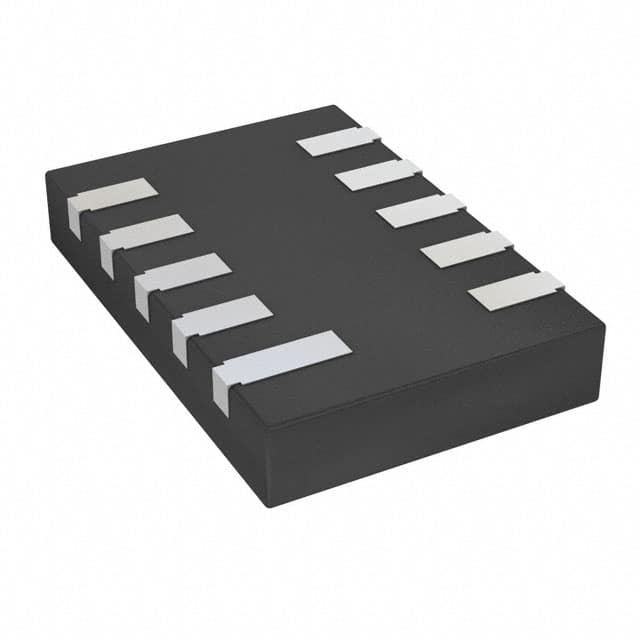
Diodes Incorporated AP9101CK-AMTRG1
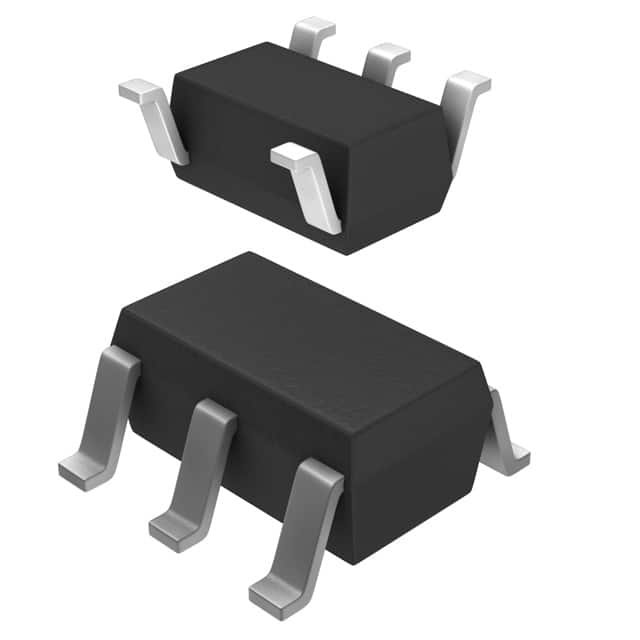
- Part No.:
- AP9101CK-AMTRG1
- Manufacturer:
- Diodes Incorporated
- Category:
- Battery Management
- Package:
- SC-74A, SOT-753
- Datasheet:
-
 AP9101CK-AMTRG1.pdf
- Description:
- IC BATT PROT LI-ION 1CELL SOT25
- Quantity:
- Payment:

- Shipping:

Inventory:3,661
Please send an inquiry. Send us your inquiry, and we will respond immediately.
Product details
Overview
AP9101CK-AMTRG1 from Diodes Incorporated is a single-chip lithium-ion battery protection IC for 1-cell packs, featuring overcharge detection at 4.375V ±25mV, overdischarge detection at 2.300V ±35mV, discharge overcurrent detection at 0.180V ±15mV, and integrated fixed-delay timing with no external capacitor required. It controls external N-channel MOSFETs via dedicated CO and DO gate drive pins in portable power tools and Bluetooth headsets.
For engineers reviewing the AP9101CK-AMTRG1 datasheet, AP9101CK-AMTRG1 pinout, AP9101CK-AMTRG1 application, or AP9101CK-AMTRG1 equivalent, this device delivers precise voltage thresholds, selectable 0V charge and power-down modes, high-voltage VM–VDD tolerance (up to 30V), and RoHS/Green compliance - critical for compact, safety-certified Li+ pack designs.
Technical Context
The AP9101CK-AMTRG1 implements independent analog comparators for overcharge (VCU = 4.375V), overdischarge (VDL = 2.300V), discharge overcurrent (VDOC = 0.180V), short-circuit (VSHORT = 0.700V), and charge overcurrent (VCOC = −0.180V), each with programmable hysteresis and ±20% delay time accuracy. Its logic circuit directly drives CO and DO outputs without external level shifters.
It uses internal high-voltage CMOS process enabling 30V differential rating between VDD and VM pins, supports 0V battery charging activation at ≥1.2V charger input, and includes factory-configurable power-down mode (enabled) and auto-release overcharge protection - all operating across −40°C to +85°C ambient.
Key Specifications
| Parameter | Value and Actual Design Meaning |
|---|---|
| Overcharge Detection Voltage | 4.375V ±25mV - triggers CO pin low after tCU delay to halt charging before cell damage |
| Overdischarge Detection Voltage | 2.300V ±35mV - asserts DO pin low after tDL delay to prevent deep discharge degradation |
| Discharge Overcurrent Threshold | 0.180V ±15mV - detects excessive load current via VM–VSS sense voltage, disabling DO |
| Supply Current (Operation) | 3.0µA typ at VDD = 3.5V - enables multi-year runtime in always-on battery monitoring |
| VM–VDD Absolute Max Rating | 30V - allows direct connection to high-side charger inputs without external clamping |
| Operating Temperature | −40°C to +85°C - supports industrial-grade portable equipment deployment |
| Package | SOT25 - 5-pin surface-mount package with 1.6mm × 2.9mm footprint for space-constrained PCBs |
Pinout & Package
SOT25 package: 5-pin, small-outline transistor outline with gull-wing leads; 1.6mm × 2.9mm body size, 0.95mm height, 0.95mm pitch.
| Pin/Terminal | Circuit Role | Design Meaning |
|---|---|---|
| 1 (VM) | Charger Negative Input / Current Sense Node | Monitors voltage drop across R2 to detect charge/discharge current; connects internally to RVMS/RVMD during fault states |
| 2 (VDD) | Positive Power Input | Supplies IC core from battery anode; accepts 1.5V–5.5V; rated up to 30V vs VM |
| 3 (VSS) | Negative Power Input / Ground Reference | System ground reference for all comparators and logic; tied to battery cathode |
| 4 (DO) | Discharge FET Gate Control Output | Drives gate of external N-MOSFET (P− path); high = discharge enabled, low = discharge blocked |
| 5 (CO) | Charge FET Gate Control Output | Drives gate of external N-MOSFET (P+ path); high = charge enabled, low = charge blocked |
Key Features
| Feature | Design Value |
|---|---|
| Fixed-time protection delay | No external capacitor needed - reduces BOM count and layout area by eliminating timing RC networks |
| Selectable 0V battery charge | Factory-enabled - permits safe recharge of fully depleted cells without manual reset or external wake-up circuitry |
| Power-down mode | 0.01µA typ standby current - extends shelf life of sealed battery packs during storage |
| High-accuracy voltage detection | ±25mV overcharge threshold tolerance - ensures tight cell voltage control within JEITA limits |
| Overvoltage charger detection | 8.0V fixed VOVCHG threshold - protects against faulty chargers exceeding safe 1-cell Li+ limits |
Applications
| Power Tool Battery Packs | Wireless Headset Batteries |
|---|---|
|
Use Scenario: 18V/20V cordless drill battery with dual-MOSFET protection circuit. IC Role / Device Role / Timing Role: Primary protection controller monitoring cell voltage, charge/discharge current, and charger overvoltage; asserts CO/DO within 1.0ms typical delay. Use Value: Prevents thermal runaway during high-current operation and enables automatic recovery after charger disconnect. |
Use Scenario: Compact 3.7V Li+ pack in noise-cancelling Bluetooth earbuds with ultra-low quiescent current requirement. IC Role / Device Role / Timing Role: Low-power protector managing 0V charge enablement and overdischarge release at 2.400V to preserve cycle life. Use Value: Extends shelf life via 0.01µA power-down mode and avoids false lockout during brief low-load voltage sag. |
| Medical Portable Monitors | Smart Wearable Sensors |
|
Use Scenario: Rechargeable vital-sign monitor using 1-cell Li+ with IEC 62368-1 safety compliance requirements. IC Role / Device Role / Timing Role: Safety-critical voltage/current supervisor enforcing strict overcharge (4.375V) and overdischarge (2.300V) limits per medical standards. Use Value: Meets functional safety margin requirements with ±25mV detection accuracy and fixed-delay fault response. |
Use Scenario: Fitness tracker with 120mAh Li+ cell requiring minimal footprint and long idle battery life. IC Role / Device Role / Timing Role: Integrated protector providing short-circuit detection (0.700V threshold) and discharge overcurrent cutoff (0.180V) without external components. Use Value: Eliminates need for discrete sense resistors and comparator circuits, reducing solution size by >30%. |
Equivalent & Alternatives
The following parts are listed as comparable options for similar lithium-ion battery protection applications.
| Alternative Part | Technical Difference | Application Difference | Selection Advice |
|---|---|---|---|
| AP9101CK-AETRG1 | Lower overdischarge release voltage (3.000V vs 2.400V); higher VDOC (0.300V vs 0.180V) | Better suited for high-impedance loads where voltage recovery post-discharge is slow | Select when system requires wider VDL–VDU hysteresis to avoid chatter during marginal discharge conditions |
| AP9101CK-AFTRG1 | Higher VDOC (0.180V → 0.180V same), but VCU/VCL shifted to 4.425V/4.225V; identical SOT25 package | Optimized for higher-voltage Li+ cells (e.g., 4.4V max-rated) while retaining same fault timing | Choose for newer high-energy-density cells needing tighter upper voltage margin without changing layout |
Compared with AP9101CK-AETRG1 and AP9101CK-AFTRG1, the AP9101CK-AMTRG1 provides the narrowest overdischarge hysteresis (2.300V → 2.400V) and lowest VDL, making it optimal for applications demanding aggressive low-voltage cutoff to maximize usable capacity in space-constrained devices.
Availability
AP9101CK-AMTRG1 is available at Aetrix Electronics and suitable for power tool battery packs, wireless headset batteries, medical portable monitors, and smart wearable sensors requiring stable component supply, full RoHS/Green compliance, and guaranteed long-term lifecycle support.
Supply support for AP9101CK-AMTRG1 includes scheduled delivery planning, volume procurement assistance, BOM continuity management, traceable sourcing, and lifecycle availability coordination for OEM customers, industrial embedded developers, connected-device designers, and electronics production programs.
Manufacturer
Diodes Incorporated is a global manufacturer of discrete semiconductors and analog ICs, headquartered in Plano, Texas, with design centers across Asia and manufacturing in IATF 16949-certified facilities.
The AP9101C product line delivers single-chip Li+ battery protection solutions targeting cost-sensitive, space-constrained portable electronics - emphasizing precision voltage sensing, ultra-low quiescent current, and simplified external component count.
FAQ
What is the function of the VM pin on the AP9101CK-AMTRG1?
The VM pin serves as the current-sense input node between the battery pack's P− terminal and the discharge MOSFET source. It measures voltage drop across the sense resistor (R2) to detect discharge overcurrent, charge overcurrent, and short-circuit conditions. Internally, it connects to high-impedance resistors (RVMS/RVMD) during fault states to bias the pin for accurate threshold comparison without loading the sense path.
Does the AP9101CK-AMTRG1 support 0V battery charging, and how is it activated?
Yes - the AP9101CK-AMTRG1 has factory-enabled 0V battery charge functionality. When the battery voltage is 0V, connecting a charger that supplies ≥1.2V at the VDD pin activates internal wake-up circuitry, allowing the IC to exit power-down mode and enable charging via the CO pin. No external reset or jumper is required.
How does the overcharge protection release mechanism work on this device?
The AP9101CK-AMTRG1 uses auto-release overcharge protection: once overcharge is triggered (VCU exceeded for tCU), the CO pin goes low to disable charging. Release occurs when battery voltage falls to ≤4.175V (VCL) *and* the VM pin voltage drops below VDOC (0.180V), indicating no active charge current - ensuring safe re-enablement only after both voltage and current conditions are satisfied.
Can the AP9101CK-AMTRG1 be used in automotive applications?
No - the AP9101CK-AMTRG1 is not AEC-Q100 qualified and is specified for industrial temperature range (−40°C to +85°C), not automotive grade (−40°C to +125°C). Diodes Incorporated offers separate AEC-Q100-qualified variants (e.g., AP9101CA series) with PPAP documentation and IATF 16949 manufacturing for automotive use cases.
AP9101CK-AMTRG1 Specifications
- Product attributes
- Attribute value
- Manufacturer:
- Diodes Incorporated
- Series:
- -
- Package/Case:
- SC-74A, SOT-753
- Packaging:
- Tape & Reel (TR)
- Product Status:
- Obsolete
- Function:
- Battery Protection
- Battery Chemistry:
- Lithium Ion/Polymer
- Number of Cells:
- 1
- Fault Protection:
- Over Current, Over Voltage
- Interface:
- -
- Operating Temperature:
- -40°C ~ 85°C (TA)
- Grade:
- -
- Qualification:
- -
- Mounting Type:
- Surface Mount
- Supplier Device Package:
- SOT-25
AP9101CK-AMTRG1 FAQ
1.How can I place an order for AP9101CK-AMTRG1 through Aetrix?
Please submit a Request for Quotation (RFQ) for AP9101CK-AMTRG1 on Aetrix. Our sales agent will provide a competitive quotation and guide you through the order confirmation once you accept the terms.
2.Are the price and stock information for AP9101CK-AMTRG1 reliable?
The price and inventory of AP9101CK-AMTRG1 are updated periodically and may fluctuate due to market conditions. Stock and pricing data are typically refreshed every 24 hours. Quotation validity for AP9101CK-AMTRG1 is usually 5 days.
3.What payment methods are accepted for AP9101CK-AMTRG1?
We accept Wire Transfer, PayPal, Credit Card, Western Union, MoneyGram, and Escrow for AP9101CK-AMTRG1 transactions.
Note: Certain payment methods may incur a processing fee.
4.How is shipping managed for AP9101CK-AMTRG1?
AP9101CK-AMTRG1 orders can be shipped via leading logistics carriers, including DHL, UPS, FedEx, TNT, or Registered Mail.
Once your AP9101CK-AMTRG1 order is processed, you will receive an email with the shipment details and tracking number.
Note: Tracking information may take up to 24 hours to appear. Express delivery typically takes 3–5 business days.
5.How can I obtain technical support or documentation for AP9101CK-AMTRG1?
For technical support, including AP9101CK-AMTRG1 datasheets, pinout diagrams, or application guidance, please contact our engineering support team. They can provide detailed documentation and assistance for your AP9101CK-AMTRG1 requirements.
6.How does Aetrix verify that AP9101CK-AMTRG1 is sourced from the original manufacturer or authorized distributors?
All AP9101CK-AMTRG1 products on Aetrix are procured from qualified distributors and authorized channels. Our dedicated quality assurance team conducts strict verification, including traceability checks and, if necessary, third-party testing. This ensures that AP9101CK-AMTRG1 meets industry standards.
7.What is the process for return or replacement of AP9101CK-AMTRG1?
All AP9101CK-AMTRG1 units undergo pre-shipment inspection (PSI). If there is an issue with AP9101CK-AMTRG1, returns or replacements are accepted under the following conditions:
1.Quantity discrepancies, incorrect items, or visible external defects (such as breakage or corrosion), acknowledged by Aetrix.
2.The issue is reported within 90 days of delivery.
3.The AP9101CK-AMTRG1 part is unused and in its original packaging.
Return procedure for AP9101CK-AMTRG1:
1.Submit a request within 90 days.
2.Obtain a Return Material Authorization (RMA) from Aetrix.
AP9101CK-AMTRG1 Tags
-
BQ29700DSER
Texas Instruments
-
S-8241ABKMC-GBKT2G
ABLIC Inc.
-
S-8241ABPMC-GBPT2G
ABLIC Inc.

-
BQ27427YZFR
Texas Instruments
-
BQ27426YZFR
Texas Instruments
-
STC3117IJT
STMicroelectronics
-
STC3115IJT
STMicroelectronics
-
BQ76925RGER
Texas Instruments
-
NPM1100-QDAA-R
Nordic Semiconductor ASA
-
BQ27441DRZR-G1A
Texas Instruments
-
STC3115AIQT
STMicroelectronics

-
S-8252AAL-M6T1U
ABLIC Inc.
Tech Hub

An engineering guide to LED driver operation, constant-current and constant-voltage outputs, linear and switching topologies, dimming, IC selection, calculations, replacement compatibility, and fault c…

Operational amplifier guide covering op amp basics, feedback, ideal vs real op amps, common configurations, buffer circuits, offset, bias current, gain-bandwidth, slew rate, rail-to-rail limits and sel…

Jumper cables guide covering safe connection order, red and black clamp placement, final ground connection, cable gauge, length, clamp quality, copper vs CCA cables, jump starter comparison and battery…

LDO regulator guide covering low dropout voltage, power dissipation, thermal design, PSRR, output noise, capacitor stability, adjustable LDO circuits, LDO vs buck converter and datasheet selection chec…

Conditional Access Module guide covering CAM meaning, CI/CI+ interface, smart card authorization, DVB security workflow, TV and set-top box compatibility, internal electronics, ESD protection, connecto…

Guide to electronic component obsolescence covering EOL risk, PCN/PDN notices, last-time buy planning, replacement options, form-fit-function validation, counterfeit risk and BOM lifecycle management.

18650 battery guide covering lithium-ion cell basics, 3.6V/3.7V voltage, 4.2V charging, mAh and Wh capacity, protected cells, chargers, BMS, series-parallel packs, holders, welding and sourcing checks.…

Hall effect sensor guide covering working principle, linear and digital sensors, Arduino circuits, current sensing, speed detection, automotive applications, A3144 examples, signal filtering and datash…

Product Change Notification guide for electronic components, covering PCN meaning, PCN vs PDN/EOL, common change types, risk levels, form-fit-function review, engineering validation, BOM control, LTB/L…

A practical guide to blend door actuators, covering HVAC function, symptoms, location, AC and heater issues, reset and calibration, replacement cost, electrical diagnosis, compatibility checks, and rep…


