
 My Inquiry
 My Account


Diodes Incorporated AP9101CK-BETRG1
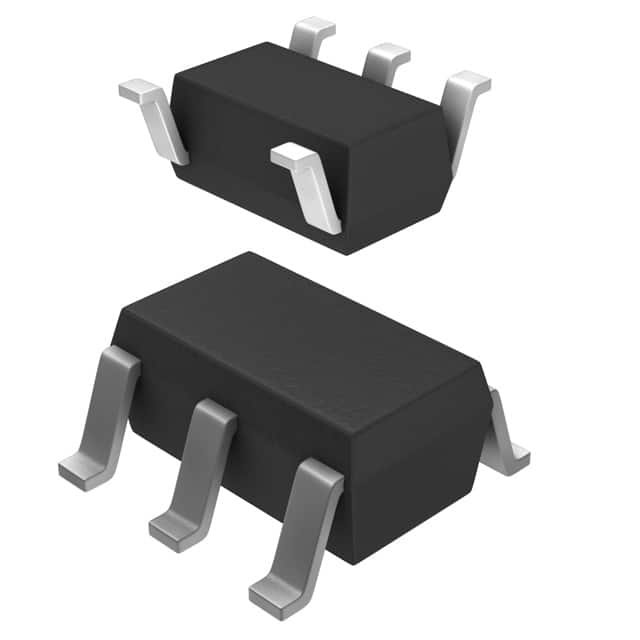
- Part No.:
- AP9101CK-BETRG1
- Manufacturer:
- Diodes Incorporated
- Category:
- Battery Management
- Package:
- SC-74A, SOT-753
- Datasheet:
-
 AP9101CK-BETRG1.pdf
- Description:
- IC BATT PROT LI-ION 1CELL SOT25
- Quantity:
- Payment:

- Shipping:

Inventory:1,796
Please send an inquiry. Send us your inquiry, and we will respond immediately.
Product details
Overview
AP9101CK-BETRG1 from Diodes Incorporated is a single-chip lithium-ion battery protection IC for 1-cell packs, featuring overcharge detection at 4.425 V ±25 mV, overdischarge detection at 2.500 V ±35 mV, and discharge overcurrent detection at 0.150 V ±15 mV. It integrates fixed-delay timing circuits, supports selectable 0V battery charging, and controls external N-channel MOSFETs via DO and CO gate drive pins in SOT25 package.
For engineers reviewing the AP9101CK-BETRG1 datasheet, AP9101CK-BETRG1 pinout, AP9101CK-BETRG1 application, or AP9101CK-BETRG1 equivalent, this device is selected for precision voltage monitoring, low-quiescent-current battery safety systems, and compact 1-cell Li+ pack designs requiring factory-configured protection thresholds and auto-release behavior.
Technical Context
The AP9101CK-BETRG1 implements dual independent voltage comparators with hysteresis for overcharge (VCU = 4.425 V, VCL = 4.225 V) and overdischarge (VDL = 2.500 V, VDU = 2.900 V), plus current-sense comparators referenced to VM–VSS for discharge overcurrent (VDOC = 0.150 V), short-circuit (VSHORT = 0.700 V), and charge overcurrent (VCOC = –0.150 V). All detection delays are internally fixed and temperature-compensated.
It uses high-voltage CMOS process enabling 30 V VM–VDD rating, supports power-down mode (0.01 µA typ), and includes overvoltage charger detection (VOVCHG = 8.0 V, VOVCHGR = 7.3 V) with immediate response-no delay circuitry-while maintaining separate RVMD/RVMS internal resistors for status-dependent VM biasing during fault conditions.
Key Specifications
| Parameter | Value and Actual Design Meaning |
|---|---|
| Overcharge Detection Voltage | 4.425 V ±25 mV - sets precise upper cell voltage limit before disabling charge path |
| Overdischarge Detection Voltage | 2.500 V ±35 mV - prevents deep discharge damage to Li+ cell anode structure |
| Discharge Overcurrent Threshold | 0.150 V ±15 mV - detects >1.5 A through 100 mΩ sense resistor with tight tolerance |
| Operating Current (Typ) | 3.0 µA at 3.5 V - enables multi-year runtime on small Li+ cells without significant self-discharge impact |
| Power-Down Current (Typ) | 0.01 µA - extends shelf life of dormant battery packs during storage or logistics |
| VM–VDD Absolute Max | 30 V - supports compatibility with high-voltage chargers and transient surge immunity |
| Package | SOT25 - 5-pin surface-mount footprint compatible with automated PCB assembly and thermal relief design |
Pinout & Package
SOT25 package: 5-pin, lead-free, RoHS-compliant, 1.6 mm × 2.9 mm × 1.1 mm body height. Pin 1 marked with dot; recommended reflow profile per J-STD-020.
| Pin/Terminal | Circuit Role | Design Meaning |
|---|---|---|
| 1 (VM) | Charge Negative Input / Current Sense | Monitors voltage drop across external sense resistor between P– and battery negative; enables overcurrent and short-circuit detection |
| 2 (VDD) | Positive Power Input | Supplies IC core from battery positive; operates from 1.5 V to 5.5 V; tolerates up to 30 V differential to VM |
| 3 (VSS) | Negative Power Input / Ground Reference | Common return for all internal comparators and logic; tied directly to battery negative terminal |
| 4 (DO) | Discharge FET Gate Control | Drives gate of external N-MOSFET in discharge path; pulls low to disable discharge during overdischarge or overcurrent faults |
| 5 (CO) | Charge FET Gate Control | Drives gate of external N-MOSFET in charge path; pulls low to disable charging during overcharge, overvoltage, or charge overcurrent |
Key Features
| Feature | Design Value |
|---|---|
| Factory-Configured Protection Thresholds | Fixed VCU = 4.425 V, VDL = 2.500 V, VDOC = 0.150 V - eliminates external resistor trimming and reduces BOM count |
| Integrated Delay Timing | No external capacitor required - fixed tCU/tDL/tDOC delays reduce layout area and improve consistency across units |
| Selectably Enabled 0V Battery Charging | Permits safe recharge of deeply discharged cells down to 0 V - avoids permanent capacity loss in stored devices |
| Overvoltage Charger Detection | 8.0 V detection with 7.3 V release - protects against faulty or mismatched chargers without added components |
| High-Voltage VM–VDD Tolerance | 30 V rating - accommodates charger transients and enables use with boost-based charging architectures |
Applications
| Smart Wearable Battery Pack | Medical Portable Monitor |
|---|---|
|
Use Scenario: Compact 1-cell Li+ pack powering ECG sensor and BLE radio with strict size and self-discharge constraints. IC Role / Device Role / Timing Role: Primary protection controller monitoring cell voltage and discharge current; triggers DO/CO shutdown within 120 ms of overdischarge detection. Use Value: 3.0 µA operating current extends shelf life beyond 18 months; SOT25 footprint fits <8 mm² PCB area. |
Use Scenario: Rechargeable battery module for handheld diagnostic tool requiring FDA-grade reliability and zero field failures. IC Role / Device Role / Timing Role: Fault-isolating safety element that disables charge/discharge paths upon ±25 mV overcharge threshold breach. Use Value: Factory-trimmed 4.425 V detection eliminates calibration labor; RoHS/Green compliance meets IEC 60601-1 material requirements. |
| Bluetooth Headset Power System | IoT Asset Tracker |
|
Use Scenario: Ultra-low-power earbud battery management where standby current must be sub-µA to meet 6-month shelf life target. IC Role / Device Role / Timing Role: Dual-mode supervisor: active protection during use, power-down mode (0.01 µA) during storage. Use Value: Selectable power-down mode cuts leakage by 99.7% vs. operation mode - critical for long-term unattended deployment. |
Use Scenario: GPS-enabled tracker mounted on shipping container, exposed to wide temperature (-40°C to +85°C) and intermittent charging. IC Role / Device Role / Timing Role: Robust protector handling voltage drift across temperature: VDL = 2.500 V ±130 mV over full range ensures consistent cutoff. Use Value: Built-in hysteresis (0.4 V) prevents oscillation near threshold; VM–VDD 30 V rating survives load-dump transients in vehicle environments. |
Equivalent & Alternatives
The following parts are listed as comparable options for similar battery protection applications.
| Alternative Part | Technical Difference | Application Difference | Selection Advice |
|---|---|---|---|
| AP9101CK-AATRG1 | Overcharge detection at 4.375 V (50 mV lower); same VDL/VDOC/0V charge option | Suitable for cells with tighter upper voltage margin (e.g., LCO chemistry with 4.35 V max) | Select when cell OCV curve requires earlier charge termination than 4.425 V allows |
| AP9101CK-AHTRG1 | VDOC = 0.075 V (half of AP9101CK-BETRG1); same VCU/VDL; identical package and pinout | Enables higher current sensing with 50 mΩ shunt (vs. 100 mΩ), reducing power loss in high-drain devices | Choose for portable power tools or drones needing >3 A continuous discharge with minimal heat generation |
Compared with AP9101CK-AATRG1, the BE version provides later overcharge cutoff for higher-capacity Li+ cells; versus AH, it trades lower overcurrent sensitivity for improved noise immunity in noisy EMI environments-critical for medical or industrial deployments.
Availability
AP9101CK-BETRG1 is available at Aetrix Electronics and suitable for smart wearables, portable medical monitors, Bluetooth audio systems, and IoT asset trackers requiring stable component supply, guaranteed long-term sourcing, and full traceability.
Supply support for AP9101CK-BETRG1 includes scheduled delivery planning, volume procurement assistance, BOM continuity management, traceable sourcing, and lifecycle availability coordination for OEM customers, industrial embedded developers, connected-device designers, and electronics production programs.
Manufacturer
Diodes Incorporated is a global semiconductor company specializing in discrete, analog, and mixed-signal ICs, with manufacturing certified to IATF 16949 and product lines compliant with AEC-Q100/101/200 standards.
The AP9101C series is part of Diodes' battery management portfolio, designed specifically for cost-sensitive, space-constrained 1-cell Li+ applications requiring factory-programmed precision protection without external passive tuning.
FAQ
What is the function of the VM pin on AP9101CK-BETRG1?
The VM pin serves as the current-sense input referenced to VSS, detecting voltage drop across an external sense resistor to trigger discharge overcurrent, short-circuit, and charge overcurrent protection. Internally, it connects to RVMS (to VSS) or RVMD (to VDD) depending on fault state, enabling automatic status-dependent biasing without external circuitry.
Does AP9101CK-BETRG1 support overvoltage protection for the charger input?
Yes-it includes a dedicated overvoltage charger detection circuit monitoring VDD-to-VM voltage, with fixed 8.0 V detection and 7.3 V release thresholds. This feature activates instantly (no delay) to disable the CO pin and halt charging if the input exceeds safe limits, protecting both battery and IC from charger faults.
Can AP9101CK-BETRG1 be used with lithium iron phosphate (LiFePO₄) cells?
No-its overdischarge detection threshold (2.500 V) and hysteresis (0.400 V) are optimized for Li-ion/Li-polymer chemistries. LiFePO₄ cells require ~2.0 V cutoff and different hysteresis; using this IC risks premature shutdown or cell damage due to mismatched voltage windows.
Is the 0V battery charge function enabled by default on AP9101CK-BETRG1?
Yes-the "K" suffix and ordering code "BETRG1" confirm factory configuration with 0V battery charge permission enabled. When battery voltage is 0 V, the IC allows charger connection to initiate recovery charging once VDD rises above 1.2 V, preventing irreversible capacity loss from deep storage discharge.
AP9101CK-BETRG1 Specifications
- Product attributes
- Attribute value
- Manufacturer:
- Diodes Incorporated
- Series:
- -
- Package/Case:
- SC-74A, SOT-753
- Packaging:
- Tape & Reel (TR)
- Product Status:
- Active
- Function:
- Battery Protection
- Battery Chemistry:
- Lithium Ion/Polymer
- Number of Cells:
- 1
- Fault Protection:
- Over Current, Over Voltage
- Interface:
- -
- Operating Temperature:
- -40°C ~ 85°C (TA)
- Grade:
- -
- Qualification:
- -
- Mounting Type:
- Surface Mount
- Supplier Device Package:
- SOT-25
AP9101CK-BETRG1 FAQ
1.How can I place an order for AP9101CK-BETRG1 through Aetrix?
Please submit a Request for Quotation (RFQ) for AP9101CK-BETRG1 on Aetrix. Our sales agent will provide a competitive quotation and guide you through the order confirmation once you accept the terms.
2.Are the price and stock information for AP9101CK-BETRG1 reliable?
The price and inventory of AP9101CK-BETRG1 are updated periodically and may fluctuate due to market conditions. Stock and pricing data are typically refreshed every 24 hours. Quotation validity for AP9101CK-BETRG1 is usually 5 days.
3.What payment methods are accepted for AP9101CK-BETRG1?
We accept Wire Transfer, PayPal, Credit Card, Western Union, MoneyGram, and Escrow for AP9101CK-BETRG1 transactions.
Note: Certain payment methods may incur a processing fee.
4.How is shipping managed for AP9101CK-BETRG1?
AP9101CK-BETRG1 orders can be shipped via leading logistics carriers, including DHL, UPS, FedEx, TNT, or Registered Mail.
Once your AP9101CK-BETRG1 order is processed, you will receive an email with the shipment details and tracking number.
Note: Tracking information may take up to 24 hours to appear. Express delivery typically takes 3–5 business days.
5.How can I obtain technical support or documentation for AP9101CK-BETRG1?
For technical support, including AP9101CK-BETRG1 datasheets, pinout diagrams, or application guidance, please contact our engineering support team. They can provide detailed documentation and assistance for your AP9101CK-BETRG1 requirements.
6.How does Aetrix verify that AP9101CK-BETRG1 is sourced from the original manufacturer or authorized distributors?
All AP9101CK-BETRG1 products on Aetrix are procured from qualified distributors and authorized channels. Our dedicated quality assurance team conducts strict verification, including traceability checks and, if necessary, third-party testing. This ensures that AP9101CK-BETRG1 meets industry standards.
7.What is the process for return or replacement of AP9101CK-BETRG1?
All AP9101CK-BETRG1 units undergo pre-shipment inspection (PSI). If there is an issue with AP9101CK-BETRG1, returns or replacements are accepted under the following conditions:
1.Quantity discrepancies, incorrect items, or visible external defects (such as breakage or corrosion), acknowledged by Aetrix.
2.The issue is reported within 90 days of delivery.
3.The AP9101CK-BETRG1 part is unused and in its original packaging.
Return procedure for AP9101CK-BETRG1:
1.Submit a request within 90 days.
2.Obtain a Return Material Authorization (RMA) from Aetrix.
AP9101CK-BETRG1 Tags
-
BQ29700DSER
Texas Instruments
-
S-8241ABKMC-GBKT2G
ABLIC Inc.
-
S-8241ABPMC-GBPT2G
ABLIC Inc.

-
BQ27427YZFR
Texas Instruments
-
BQ27426YZFR
Texas Instruments
-
STC3117IJT
STMicroelectronics
-
STC3115IJT
STMicroelectronics
-
BQ76925RGER
Texas Instruments
-
NPM1100-QDAA-R
Nordic Semiconductor ASA
-
BQ27441DRZR-G1A
Texas Instruments
-
STC3115AIQT
STMicroelectronics

-
S-8252AAL-M6T1U
ABLIC Inc.
Tech Hub

An engineering guide to LED driver operation, constant-current and constant-voltage outputs, linear and switching topologies, dimming, IC selection, calculations, replacement compatibility, and fault c…

Operational amplifier guide covering op amp basics, feedback, ideal vs real op amps, common configurations, buffer circuits, offset, bias current, gain-bandwidth, slew rate, rail-to-rail limits and sel…

Jumper cables guide covering safe connection order, red and black clamp placement, final ground connection, cable gauge, length, clamp quality, copper vs CCA cables, jump starter comparison and battery…

LDO regulator guide covering low dropout voltage, power dissipation, thermal design, PSRR, output noise, capacitor stability, adjustable LDO circuits, LDO vs buck converter and datasheet selection chec…

Conditional Access Module guide covering CAM meaning, CI/CI+ interface, smart card authorization, DVB security workflow, TV and set-top box compatibility, internal electronics, ESD protection, connecto…

Guide to electronic component obsolescence covering EOL risk, PCN/PDN notices, last-time buy planning, replacement options, form-fit-function validation, counterfeit risk and BOM lifecycle management.

18650 battery guide covering lithium-ion cell basics, 3.6V/3.7V voltage, 4.2V charging, mAh and Wh capacity, protected cells, chargers, BMS, series-parallel packs, holders, welding and sourcing checks.…

Hall effect sensor guide covering working principle, linear and digital sensors, Arduino circuits, current sensing, speed detection, automotive applications, A3144 examples, signal filtering and datash…

Product Change Notification guide for electronic components, covering PCN meaning, PCN vs PDN/EOL, common change types, risk levels, form-fit-function review, engineering validation, BOM control, LTB/L…

A practical guide to blend door actuators, covering HVAC function, symptoms, location, AC and heater issues, reset and calibration, replacement cost, electrical diagnosis, compatibility checks, and rep…


