
 My Inquiry
 My Account


NXP Semiconductors ASL5015FHV/0Y
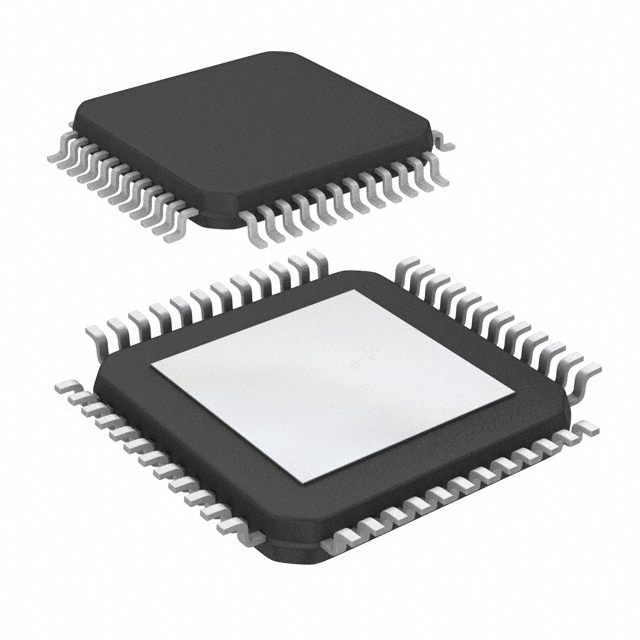
- Part No.:
- ASL5015FHV/0Y
- Manufacturer:
- NXP Semiconductors
- Category:
- LED Drivers
- Package:
- 48-LQFP Exposed Pad
- Datasheet:
-
 ASL5015FHV/0Y.pdf
- Description:
- IC LED DRV CTRL PWM 1.5A 48HLQFP
- Quantity:
- Payment:

- Shipping:

Inventory:1,022
Please send an inquiry. Send us your inquiry, and we will respond immediately.
Product details
Overview
ASL5015FHV/0Y from NXP Semiconductors is a Smart-mode Matrix LED Controller (MLC) for automotive exterior lighting, delivering 1.5 A per channel, 12-bit PWM dimming with on-chip polynomial curve generation, and CAN-FD interface support. It enables glare-free high beam (ADB/GFHB), dynamic rear lights, and welcoming scenarios with integrated LED brightness variation correction and thermal monitoring via direct NTC input.
For engineers reviewing the ASL5015FHV/0Y datasheet, ASL5015FHV/0Y pinout, ASL5015FHV/0Y application, or ASL5015FHV/0Y equivalent, this device serves as a scalable, AEC-Q100 Grade 1–qualified solution for high-channel-count, safety-critical LED matrix systems requiring reduced MCU data traffic, internal clock accuracy < 0.25 %, and diagnostic-rich operation up to +125 °C ambient.
Technical Context
The ASL5015FHV/0Y implements a Smart PWM architecture where dimming curves are preloaded into on-chip memory and dynamically selected by the host MCU via CAN-FD-eliminating continuous PWM value updates. Its 12-channel output is grouped into four configurable 3-switch blocks, each floating up to 60 V relative to ground and paralleling-capable for flexible LED string topologies.
It integrates a trimmed 200 MHz internal oscillator (no external crystal required), 9-bit junction temperature telemetry, and full fault diagnostics-including open/short detection per LED, charge pump failure mode (CPFSO), Limp Home Mode (LHM) on communication loss, and external component monitoring (NTC, ID resistor, charge pump capacitor).
Key Specifications
| Parameter | Value and Actual Design Meaning |
|---|---|
| Max current per switch | 1.5 A - supports high-brightness LED segments in ADB headlamps without external boost or current amplification |
| PWM resolution | 12-bit - enables smooth, glitch-free dimming across full luminance range with >4096 discrete steps |
| Interface | CAN-FD - provides higher bandwidth and deterministic latency vs. classical CAN for real-time multi-IC synchronization |
| Operating temp | –40 °C to +125 °C ambient - qualified for under-hood and exterior lamp housing environments |
| RDS(on) | 100 mΩ - minimizes conduction loss and thermal dissipation at 1.5 A continuous load per channel |
| Supply voltage | 5 V ± 0.5 V - compatible with standard automotive 5 V rail; includes under-voltage lockout protection |
| Package | HLQFP48 (SOT1571-1) - thermally enhanced, leaded package with improved manufacturability and AOI compatibility |
Pinout & Package
ASL5015FHV/0Y is housed in a 48-pin HLQFP package (SOT1571-1) with exposed thermal pad, optimized for IMS PCB mounting and single-layer routing. Pin assignment follows NXP's standardized MLC layout for block-wise channel grouping and diagnostic signal separation.
| Pin/Terminal | Circuit Role | Design Meaning |
|---|---|---|
| VCC | Power supply input | 5 V ± 0.5 V main supply; powers internal logic, drivers, and CAN-FD transceiver |
| GND | Ground reference | Dedicated analog/digital ground pins minimize noise coupling in high-speed switching environment |
| LEDx_OUT (x=1–12) | High-side LED driver output | 12 individually controllable high-side switches; each rated 1.5 A, 57 V max string voltage |
| NTC_IN | Analog temperature sensor input | 6-bit resolution NTC monitoring for closed-loop LED thermal derating and lifetime management |
| ID_RES | PCB identification resistor input | Enables automatic board variant recognition and configuration loading without firmware update |
| CAN_H / CAN_L | CAN-FD differential bus interface | Supports up to 32 daisy-chained MLCs on one network; broadcast messaging reduces system latency |
| POK | Power OK status flag | Open-drain output confirms stable internal power rails and functional readiness after POR |
Key Features
| Feature | Design Value |
|---|---|
| Smart PWM with on-chip curve storage | Reduces MCU-to-MLC data traffic by >90 % versus direct PWM; stores up to eight 12-bit dimming polynomials |
| LED brightness variation correction | Compensates for binning-induced luminance mismatch across LEDs driven at identical current-ensures uniform light field |
| Integrated 200 MHz oscillator | Eliminates external quartz, lowering BOM cost and improving EMC performance; trimmed via CAN-ID for < 0.25 % accuracy |
| Full diagnostic suite with dynamic reset | OC/SC flags and internal MOSFETs can be cleared and reinitialized over CAN-FD-no power cycle required |
| Limp Home Mode (LHM) | Activates predefined safe-state lighting pattern upon CAN-FD communication failure-meets ASIL-B functional safety expectations |
Applications
| Matrix High Beam (ADB/GFHB) | Dynamic Rear Lighting |
|---|---|
Use Scenario: Adaptive driving beam system that selectively blanks LED segments to avoid dazzling oncoming traffic while maintaining maximum illumination elsewhere. IC Role / Device Role / Timing Role: Primary high-side LED matrix controller managing 12 independently dimmed channels with real-time curve selection and thermal feedback. Use Value: Enables pixel-level beam shaping using only two ASL5015FHV/0Y ICs per headlamp, leveraging 1.5 A per channel and CAN-FD synchronized updates. |
Use Scenario: Brake, turn, and position lights that animate during vehicle maneuvers-e.g., sweeping turn indicators or sequential stop lighting. IC Role / Device Role / Timing Role: Centralized LED driver executing preprogrammed animation sequences stored in on-chip PWM curves, triggered by CAN-FD broadcast commands. Use Value: Eliminates need for dedicated animation microcontrollers; ASL5015FHV/0Y's internal curve engine delivers precise timing and smooth transitions without MCU intervention. |
| Dynamic Cornering Lights | Vehicle Welcoming Scenarios |
Use Scenario: Low-beam extension activated during steering input, illuminating road curvature ahead of the vehicle. IC Role / Device Role / Timing Role: LED driver responding to CAN-FD steering angle and speed messages to activate specific channel groups with calibrated intensity ramping. Use Value: Uses ASL5015FHV/0Y's incremental PWM calculation and phase-shifted outputs to prevent visible flicker during rapid intensity changes. |
Use Scenario: Illuminated entry sequence-e.g., sequential light sweep along door handles and mirrors when key fob is detected. IC Role / Device Role / Timing Role: Standalone lighting sequencer executing stored animations upon wake-up command, operating in low-power sleep mode until triggered. Use Value: Leverages ASL5015FHV/0Y's < 1.35 mA standby current and CAN-FD wake-on-message capability for energy-efficient welcome lighting. |
Equivalent & Alternatives
The following parts are listed as comparable options for similar matrix LED control applications.
| Alternative Part | Technical Difference | Application Difference | Selection Advice |
|---|---|---|---|
| ASL5015SHV | Same HLQFP48 package and Smart PWM architecture, but uses classical CAN (not CAN-FD); no CAN-FD bandwidth or error framing | Suitable for legacy automotive platforms lacking CAN-FD PHY or requiring lower data throughput | Select ASL5015SHV if CAN-FD infrastructure is unavailable; retains identical pinout, thermal specs, and curve storage capability |
| ASL5115FHV | Same HLQFP48 package and CAN-FD interface, but operates in Direct PWM mode-requires continuous PWM value updates from MCU per channel | Better suited for applications needing real-time, frame-by-frame dimming control (e.g., camera-synchronized lighting) | Choose ASL5115FHV when full MCU control over every PWM cycle is required; otherwise ASL5015FHV/0Y reduces software overhead and bus load |
Compared with ASL5015SHV and ASL5115FHV, the ASL5015FHV/0Y uniquely combines CAN-FD's high-speed deterministic communication with Smart PWM's autonomous curve execution-optimizing both system responsiveness and MCU resource efficiency in next-gen ADB systems.
Availability
ASL5015FHV/0Y is available at Aetrix Electronics and suitable for automotive exterior lighting, adaptive driving beam (ADB), and dynamic rear lighting applications requiring stable component supply, long-term lifecycle assurance, and AEC-Q100 Grade 1 compliance.
Supply support for ASL5015FHV/0Y includes scheduled delivery planning, volume procurement assistance, BOM continuity management, traceable sourcing, and lifecycle availability coordination for OEM customers, industrial embedded developers, connected-device designers, and electronics production programs.
Manufacturer
NXP Semiconductors is a global semiconductor leader specializing in secure connectivity solutions for automotive, industrial, and IoT applications, with deep expertise in automotive-grade mixed-signal ICs and functional safety design.
The ASL5xxxyHz product line was developed specifically to address the scalability, diagnostic rigor, and thermal resilience demands of automotive matrix LED lighting-enabling pixel-level beam control without compromising ASIL-B compliance or system-level EMC performance.
FAQ
What is the primary function of the ASL5015FHV/0Y in an automotive lighting system?
The ASL5015FHV/0Y serves as a Smart-mode Matrix LED Controller that manages up to 12 high-brightness LED channels with 1.5 A per switch, executing preprogrammed PWM dimming curves autonomously via CAN-FD commands. It reduces MCU data traffic, corrects LED luminance variation, and provides comprehensive diagnostics-including NTC-based thermal monitoring and open/short detection-making it ideal for ADB and dynamic rear lighting systems.
Does the ASL5015FHV/0Y require an external crystal oscillator?
No, the ASL5015FHV/0Y integrates a trimmed 200 MHz internal oscillator, eliminating the need for an external quartz. Clock accuracy remains below 0.25 %, and trimming is performed dynamically via CAN-FD messages-reducing BOM cost, board space, and electromagnetic emissions compared to crystal-based timing solutions.
How does the ASL5015FHV/0Y handle LED thermal management?
The ASL5015FHV/0Y features a dedicated 6-bit NTC_IN pin for direct connection to an NTC thermistor mounted near the LED array. This enables real-time LED temperature monitoring, allowing the host MCU to adjust dimming curves or current limits dynamically. Internal junction temperature is also reported via 9-bit telemetry over CAN-FD for system-level thermal supervision.
Can multiple ASL5015FHV/0Y ICs be synchronized on a single CAN-FD network?
Yes, up to 32 ASL5015FHV/0Y ICs can operate on one CAN-FD network using broadcast messaging. This enables precise inter-IC timing for coordinated animations-such as sweeping rear lights or synchronized ADB blanking-without requiring individual addressing or additional synchronization hardware.
What safety features does the ASL5015FHV/0Y provide for automotive use?
The ASL5015FHV/0Y includes Power-on-Reset (POR) monitoring, Limp Home Mode (LHM) activation upon CAN-FD failure, charge pump failure safe operation (CPFSO), and dynamic fault flag clearing-all supporting ASIL-B compliance. It is fully AEC-Q100 Grade 1 and AEC-Q006 qualified, with operation validated from –40 °C to +125 °C ambient and 175 °C junction temperature.
ASL5015FHV/0Y Specifications
- Product attributes
- Attribute value
- Manufacturer:
- NXP Semiconductors
- Series:
- -
- Package/Case:
- 48-LQFP Exposed Pad
- Packaging:
- Tape & Reel (TR)
- Product Status:
- Active
- Type:
- DC DC Controller
- Topology:
- Switched Capacitor (Charge Pump)
- Internal Switch(s):
- Yes
- Number of Outputs:
- 12
- Voltage - Supply (Min):
- 4.5V
- Voltage - Supply (Max):
- 5.5V
- Voltage - Output:
- -
- Current - Output / Channel:
- 1.5A
- Frequency:
- 200MHz
- Dimming:
- PWM
- Applications:
- -
- Operating Temperature:
- -40°C ~ 125°C (TA)
- Grade:
- Automotive
- Qualification:
- -
- Mounting Type:
- Surface Mount
- Supplier Device Package:
- 48-HLQFP (7x7)
ASL5015FHV/0Y FAQ
1.How can I place an order for ASL5015FHV/0Y through Aetrix?
Please submit a Request for Quotation (RFQ) for ASL5015FHV/0Y on Aetrix. Our sales agent will provide a competitive quotation and guide you through the order confirmation once you accept the terms.
2.Are the price and stock information for ASL5015FHV/0Y reliable?
The price and inventory of ASL5015FHV/0Y are updated periodically and may fluctuate due to market conditions. Stock and pricing data are typically refreshed every 24 hours. Quotation validity for ASL5015FHV/0Y is usually 5 days.
3.What payment methods are accepted for ASL5015FHV/0Y?
We accept Wire Transfer, PayPal, Credit Card, Western Union, MoneyGram, and Escrow for ASL5015FHV/0Y transactions.
Note: Certain payment methods may incur a processing fee.
4.How is shipping managed for ASL5015FHV/0Y?
ASL5015FHV/0Y orders can be shipped via leading logistics carriers, including DHL, UPS, FedEx, TNT, or Registered Mail.
Once your ASL5015FHV/0Y order is processed, you will receive an email with the shipment details and tracking number.
Note: Tracking information may take up to 24 hours to appear. Express delivery typically takes 3–5 business days.
5.How can I obtain technical support or documentation for ASL5015FHV/0Y?
For technical support, including ASL5015FHV/0Y datasheets, pinout diagrams, or application guidance, please contact our engineering support team. They can provide detailed documentation and assistance for your ASL5015FHV/0Y requirements.
6.How does Aetrix verify that ASL5015FHV/0Y is sourced from the original manufacturer or authorized distributors?
All ASL5015FHV/0Y products on Aetrix are procured from qualified distributors and authorized channels. Our dedicated quality assurance team conducts strict verification, including traceability checks and, if necessary, third-party testing. This ensures that ASL5015FHV/0Y meets industry standards.
7.What is the process for return or replacement of ASL5015FHV/0Y?
All ASL5015FHV/0Y units undergo pre-shipment inspection (PSI). If there is an issue with ASL5015FHV/0Y, returns or replacements are accepted under the following conditions:
1.Quantity discrepancies, incorrect items, or visible external defects (such as breakage or corrosion), acknowledged by Aetrix.
2.The issue is reported within 90 days of delivery.
3.The ASL5015FHV/0Y part is unused and in its original packaging.
Return procedure for ASL5015FHV/0Y:
1.Submit a request within 90 days.
2.Obtain a Return Material Authorization (RMA) from Aetrix.
ASL5015FHV/0Y Tags
-
BCR402RE6327HTSA1
Infineon Technologies

-
BCR430UXTSA2
Infineon Technologies
-
BCR420UE6433HTMA1
Infineon Technologies
-
BCR420UE6327HTSA1
Infineon Technologies
-
BCR421UE6327HTSA1
Infineon Technologies
-
LYT1604D-TL
Power Integrations

-
HV9910CLG-G
Microchip Technology

-
CL2N8-G
Microchip Technology
-
BCR420UW6-7
Diodes Incorporated
-
BCR421UW6-7
Diodes Incorporated
-
BCR420UFD-7
Diodes Incorporated
-
BCR421UFD-7
Diodes Incorporated
Tech Hub

A practical engineering guide to 3.3V and 5V logic compatibility, input thresholds, resistor dividers, translator ICs, MOSFET level shifting, I2C pull-ups, timing limits and power-sequencing risks.

The 74HC595 uses push-pull logic outputs, while the TPIC6B595 uses 50 V open-drain DMOS sinks for higher-power loads. This guide compares timing, current limits, 3.3 V interfacing, load wiring, thermal…

The 74HC595 converts serial data into eight stable parallel outputs. This guide covers pin functions, shift and storage timing, OE and MR behavior, drive-current limits, cascading, voltage compatibilit…

A technical comparison of level-sensitive latches and edge-triggered flip-flops, covering timing windows, setup and hold limits, master–slave operation, time borrowing, race-through, HDL inference and…

A D latch stores one bit while Enable controls when data can pass. This reference covers gate-level operation, truth tables, transparency, setup and hold timing, LE versus OE, common ICs and practical …

An SR latch stores one bit through cross-coupled feedback. This engineering reference covers NOR and NAND implementations, truth tables, forbidden-state recovery, gated operation, switch debouncing, fa…

Latch circuits retain one bit through feedback. This technical reference covers SR and D latches, truth tables, transparency, timing limits, latch-versus-flip-flop behavior, applications and common log…

An engineering guide to LED driver operation, constant-current and constant-voltage outputs, linear and switching topologies, dimming, IC selection, calculations, replacement compatibility, and fault c…

Operational amplifier guide covering op amp basics, feedback, ideal vs real op amps, common configurations, buffer circuits, offset, bias current, gain-bandwidth, slew rate, rail-to-rail limits and sel…

Jumper cables guide covering safe connection order, red and black clamp placement, final ground connection, cable gauge, length, clamp quality, copper vs CCA cables, jump starter comparison and battery…


