
 My Inquiry
 My Account


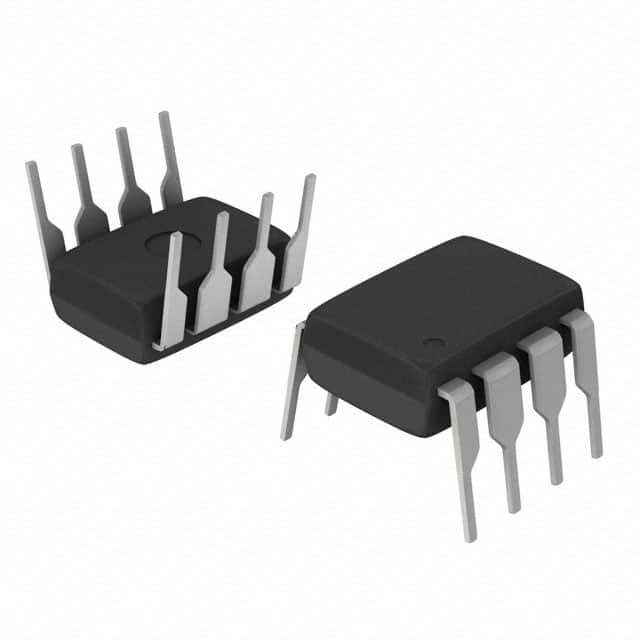
Microchip Technology AT24C164-10PC-2.7
- Part No.:
- AT24C164-10PC-2.7
- Manufacturer:
- Microchip Technology
- Category:
- Memory
- Package:
- 8-DIP (0.300", 7.62mm)
- Datasheet:
-
 AT24C164-10PC-2.7.pdf
- Description:
- IC EEPROM 16KBIT I2C 400KHZ 8DIP
- Quantity:
- Payment:

- Shipping:

Inventory:2,571
Please send an inquiry. Send us your inquiry, and we will respond immediately.
Product details
Overview
AT24C164-10PC-2.7 from Atmel (now Microchip) is a 16 Kbit (2048 × 8) two-wire serial EEPROM optimized for low-voltage embedded systems. It operates from 2.7V to 5.5V, supports 100 kHz I²C bus speed, features hardware write protection via WP pin, and delivers 1 million write cycles with 100-year data retention in an 8-pin PDIP package.
For engineers reviewing the AT24C164-10PC-2.7 datasheet, AT24C164-10PC-2.7 pinout, AT24C164-10PC-2.7 application, or AT24C164-10PC-2.7 equivalent, key selection considerations include its 2.7V–5.5V supply range, 16-byte page write capability, Schmitt-triggered noise-immune inputs, cascading support for up to eight devices on one bus, and industrial-grade reliability metrics.
Technical Context
The AT24C164-10PC-2.7 implements a standard I²C-compatible two-wire interface with open-drain SDA and edge-triggered SCL, supporting bidirectional data transfer and 9-bit device addressing (including 3 hardware-selectable A0–A2 bits). Its memory is organized into 256 pages of 8 bytes each, enabling both byte and 16-byte page writes with automatic address incrementing within page boundaries.
It uses internal self-timed write cycles (max 10 ms), supports acknowledge polling for write completion detection, and includes Schmitt-triggered, filtered inputs for robust operation in electrically noisy environments. The WP pin provides hardware-level write inhibition when driven high, independent of software control.
Key Specifications
| Parameter | Value and Actual Design Meaning |
|---|---|
| Memory Size | 16 Kbit (2048 × 8 bits), organized as 256 pages × 8 bytes - enables compact firmware parameter storage with efficient page-level updates |
| Supply Voltage Range | 2.7V to 5.5V - supports direct interfacing with 3.3V and 5V microcontrollers without level shifting |
| I²C Bus Speed | 100 kHz maximum - compatible with legacy and low-power I²C controllers; timing validated at 2.7V min |
| Write Endurance | 1 million cycles - suitable for frequent calibration data logging or configuration updates in field-deployed equipment |
| Data Retention | 100 years at +25°C - ensures long-term nonvolatile storage of critical system identifiers or security keys |
| ESD Protection | >3,000 V HBM - enhances robustness during board handling and in-system programming |
| Operating Temperature | 0°C to +70°C (Commercial grade) - validated for use in consumer, industrial control, and office automation applications |
Pinout & Package
AT24C164-10PC-2.7 is supplied in an 8-pin plastic dual in-line package (PDIP), 0.300" wide (JEDEC MS-001 BA), with through-hole mounting and industry-standard footprint.
| Pin/Terminal | Circuit Role | Design Meaning |
|---|---|---|
| A0, A1, A2 | Device Address Inputs | Hardwired or driven logic inputs selecting one of eight possible I²C addresses (0x50–0x57); enable multi-device bus sharing |
| SDA | Serial Data I/O | Open-drain bidirectional line for I²C data transfer; requires external pull-up resistor; supports wire-OR with other open-drain devices |
| SCL | Serial Clock Input | Positive-edge clock input synchronizing all data transfers; controls timing of read/write operations and ACK/NACK responses |
| WP | Write Protect Control | Active-high hardware lock: when tied to VCC, disables all write operations including page and byte writes - prevents accidental overwrites |
| VCC | Power Supply | Primary power input (2.7V–5.5V); powers internal logic and memory array; decoupling capacitor recommended near pin |
| GND | Ground Reference | System ground return path for all internal circuits and I/O signals; must be low-impedance connection |
Key Features
| Feature | Design Value |
|---|---|
| 16-byte Page Write Mode | Reduces I²C transaction overhead by allowing up to 16 bytes to be written per stop condition - cuts write time vs. byte-by-byte by ~85% for full-page updates |
| Schmitt Trigger & Filtered Inputs | Enables reliable operation in noisy industrial environments by rejecting fast transients and ensuring clean signal thresholds on SCL/SDA/A0–A2 |
| Cascadable Architecture | Supports up to eight AT24C164-10PC-2.7 devices on a single I²C bus using unique A2:A0 combinations - scales total EEPROM capacity to 128 Kbit without additional buses |
| Self-Timed Write Cycle | Internal write completion timer (≤10 ms) eliminates need for fixed delay loops; ACK polling allows host to resume operations immediately after write finishes |
| Hardware Write Protection | WP pin provides fail-safe, non-software-dependent write blocking - critical for safeguarding boot configuration or security credentials |
Applications
| Industrial Sensor Calibration Storage | Consumer Device Configuration Memory |
|---|---|
Use Scenario: Storing factory-calibrated offset/gain coefficients and temperature compensation tables in smart pressure or humidity sensors. IC Role / Device Role / Timing Role: Nonvolatile parameter store accessed during sensor power-up and periodic self-test routines via I²C. Use Value: Enables field-replaceable sensor modules with persistent calibration data across power cycles and firmware updates - no recalibration required after replacement. |
Use Scenario: Holding user preferences (brightness, language, network SSID) and device-specific settings in smart thermostats or audio remotes. IC Role / Device Role / Timing Role: Low-power configuration EEPROM interfaced to an ARM Cortex-M0+ MCU during boot and settings save events. Use Value: Guarantees settings retention for >100 years with 1M write cycles - supports daily adjustments over 10+ year product lifetime without wear-out risk. |
| Medical Diagnostic Equipment Boot Parameters | Automotive Body Control Module NVM |
Use Scenario: Storing safety-critical boot flags, last-known operational state, and diagnostic fault logs in portable ECG monitors. IC Role / Device Role / Timing Role: Secure, tamper-resistant NVM accessed only during controlled startup sequences and error recovery paths. Use Value: WP pin prevents runtime corruption; 100-year retention ensures integrity of life-support-relevant metadata across device service life. |
Use Scenario: Recording door lock status history, window position limits, and seat memory profiles in automotive BCMs. IC Role / Device Role / Timing Role: Automotive-qualified EEPROM (via pin-compatible industrial variants) used for infrequent but mission-critical state persistence. Use Value: Validated operation down to 2.7V ensures reliable writes during cold-cranking battery dips - avoids data loss during engine start. |
Equivalent & Alternatives
The following parts are listed as comparable options for similar serial EEPROM applications.
| Alternative Part | Technical Difference | Application Difference | Selection Advice |
|---|---|---|---|
| Microchip 24LC16B-I/P | Same 16Kbit density, 2.5V–5.5V range, 100 kHz max speed; identical PDIP-8 pinout and I²C protocol; rated for -40°C to +85°C (Industrial) | Broader temperature range suits under-hood or outdoor deployments where AT24C164-10PC-2.7's 0°C–70°C limit is insufficient | Select when extended temperature operation or Microchip's current production roadmap is preferred over legacy Atmel branding |
| ON Semiconductor CAT24C16WI-GT3 | 16Kbit, 1.7V–5.5V range, 400 kHz I²C support; same 8-pin SOIC/PDIP options; 1M endurance, 100-year retention; AEC-Q100 Grade 3 qualified | Qualified for automotive applications; higher bus speed enables faster configuration loading in telematics units | Choose for new automotive designs requiring AEC-Q100 compliance or 400 kHz throughput - not drop-in due to different voltage min and qualification scope |
Compared with AT24C164-10PC-2.7, the 24LC16B-I/P offers wider temperature coverage without changing PCB layout, while the CAT24C16WI-GT3 adds automotive qualification and faster I²C but requires validation of 1.7V operation and AEC-Q100 integration requirements.
Availability
AT24C164-10PC-2.7 is available at Aetrix Electronics and suitable for industrial sensor calibration storage, consumer device configuration memory, and medical diagnostic equipment boot parameters requiring stable component supply and long-term obsolescence management.
Supply support for AT24C164-10PC-2.7 includes scheduled delivery planning, volume procurement assistance, BOM continuity management, traceable sourcing, and lifecycle availability coordination for OEM customers, industrial embedded developers, connected-device designers, and electronics production programs.
Manufacturer
Microchip Technology (formerly Atmel) is a global semiconductor company specializing in microcontrollers, analog components, and nonvolatile memory solutions for embedded systems.
The AT24C164 series was designed as a low-voltage, high-reliability serial EEPROM family targeting cost-sensitive industrial, medical, and consumer applications requiring robust parameter storage with minimal board space and power budget.
FAQ
What is the minimum operating voltage for AT24C164-10PC-2.7?
The AT24C164-10PC-2.7 is specified for operation from 2.7V to 5.5V. Its 2.7V lower limit enables compatibility with 3.3V systems and tolerance to brown-out conditions during power-up or battery discharge. This version does not support operation below 2.7V - for 1.8V systems, the AT24C164-10PC-1.8 variant must be selected.
Does AT24C164-10PC-2.7 support page write operations?
Yes, AT24C164-10PC-2.7 supports 16-byte page write mode, allowing up to 16 sequential bytes to be written in a single I²C transaction. This reduces bus overhead and total write time compared to individual byte writes. Partial page writes are also permitted, and the internal address counter automatically increments within the current 8-byte page boundary.
How is write protection implemented on AT24C164-10PC-2.7?
AT24C164-10PC-2.7 uses a dedicated WP (Write Protect) pin for hardware-level write inhibition. When WP is driven high (to VCC), all write operations - including byte writes, page writes, and memory clears - are blocked regardless of I²C command sequence. This provides deterministic, non-software-dependent protection for critical configuration data stored in the device.
What is the maximum I²C clock frequency supported by AT24C164-10PC-2.7?
The AT24C164-10PC-2.7 supports a maximum I²C clock frequency of 100 kHz when operating within its 2.7V–5.5V supply range. This is confirmed in the AC characteristics table and ordering information section of the datasheet. Higher speeds (e.g., 400 kHz) require the 5.0V-rated variant (AT24C164-10PC) and are not guaranteed for AT24C164-10PC-2.7.
Is AT24C164-10PC-2.7 pin-compatible with other AT24C164 variants?
Yes, AT24C164-10PC-2.7 shares identical pinout and package (8-pin PDIP) with all other AT24C164 variants, including AT24C164-10PC, AT24C164-10PI-2.7, and AT24C164-10SC-2.7. Pin functions (A0–A2, SDA, SCL, WP, VCC, GND) and physical dimensions are fully consistent across the family, enabling direct substitution where voltage and temperature requirements align.
AT24C164-10PC-2.7 Specifications
- Product attributes
- Attribute value
- Manufacturer:
- Microchip Technology
- Series:
- -
- Package/Case:
- 8-DIP (0.300", 7.62mm)
- Packaging:
- Tube
- Product Status:
- Obsolete
- Programmable:
- Not Verified
- Memory Type:
- Non-Volatile
- Memory Format:
- EEPROM
- Technology:
- EEPROM
- Memory Size:
- 16Kbit
- Memory Organization:
- 2K x 8
- Memory Interface:
- I2C
- Clock Frequency:
- 400 kHz
- Write Cycle Time - Word, Page:
- 10ms
- Access Time:
- 900 ns
- Voltage - Supply:
- 2.7V ~ 5.5V
- Operating Temperature:
- 0°C ~ 70°C (TA)
- Grade:
- -
- Qualification:
- -
- Mounting Type:
- Through Hole
- Supplier Device Package:
- 8-PDIP
AT24C164-10PC-2.7 FAQ
1.How can I place an order for AT24C164-10PC-2.7 through Aetrix?
Please submit a Request for Quotation (RFQ) for AT24C164-10PC-2.7 on Aetrix. Our sales agent will provide a competitive quotation and guide you through the order confirmation once you accept the terms.
2.Are the price and stock information for AT24C164-10PC-2.7 reliable?
The price and inventory of AT24C164-10PC-2.7 are updated periodically and may fluctuate due to market conditions. Stock and pricing data are typically refreshed every 24 hours. Quotation validity for AT24C164-10PC-2.7 is usually 5 days.
3.What payment methods are accepted for AT24C164-10PC-2.7?
We accept Wire Transfer, PayPal, Credit Card, Western Union, MoneyGram, and Escrow for AT24C164-10PC-2.7 transactions.
Note: Certain payment methods may incur a processing fee.
4.How is shipping managed for AT24C164-10PC-2.7?
AT24C164-10PC-2.7 orders can be shipped via leading logistics carriers, including DHL, UPS, FedEx, TNT, or Registered Mail.
Once your AT24C164-10PC-2.7 order is processed, you will receive an email with the shipment details and tracking number.
Note: Tracking information may take up to 24 hours to appear. Express delivery typically takes 3–5 business days.
5.How can I obtain technical support or documentation for AT24C164-10PC-2.7?
For technical support, including AT24C164-10PC-2.7 datasheets, pinout diagrams, or application guidance, please contact our engineering support team. They can provide detailed documentation and assistance for your AT24C164-10PC-2.7 requirements.
6.How does Aetrix verify that AT24C164-10PC-2.7 is sourced from the original manufacturer or authorized distributors?
All AT24C164-10PC-2.7 products on Aetrix are procured from qualified distributors and authorized channels. Our dedicated quality assurance team conducts strict verification, including traceability checks and, if necessary, third-party testing. This ensures that AT24C164-10PC-2.7 meets industry standards.
7.What is the process for return or replacement of AT24C164-10PC-2.7?
All AT24C164-10PC-2.7 units undergo pre-shipment inspection (PSI). If there is an issue with AT24C164-10PC-2.7, returns or replacements are accepted under the following conditions:
1.Quantity discrepancies, incorrect items, or visible external defects (such as breakage or corrosion), acknowledged by Aetrix.
2.The issue is reported within 90 days of delivery.
3.The AT24C164-10PC-2.7 part is unused and in its original packaging.
Return procedure for AT24C164-10PC-2.7:
1.Submit a request within 90 days.
2.Obtain a Return Material Authorization (RMA) from Aetrix.
AT24C164-10PC-2.7 Tags

-
M24C02-WMN6TP
STMicroelectronics
-
AT24C02C-XHM-T
Microchip Technology
-
AT21CS01-STUM10-T
Microchip Technology

-
AT24C02C-SSHM-T
Microchip Technology
-
24LC01BT-I/OT
Microchip Technology
-
M24C02-FMC6TG
STMicroelectronics
-
AT24CS02-SSHM-T
Microchip Technology

-
93LC46BT-I/OT
Microchip Technology
-
AT24C04C-SSHM-T
Microchip Technology

-
24LC01BT-I/SN
Microchip Technology
-
24AA02UIDT-I/OT
Microchip Technology
-
AT24C08C-STUM-T
Microchip Technology
Tech Hub

TTL and CMOS logic families differ in thresholds, loading, output drive, power and timing. This engineering guide compares 74HC and 74HCT, calculates noise margins and checks 3.3 V/5 V compatibility.

A practical engineering guide to 3.3V and 5V logic compatibility, input thresholds, resistor dividers, translator ICs, MOSFET level shifting, I2C pull-ups, timing limits and power-sequencing risks.

The 74HC595 uses push-pull logic outputs, while the TPIC6B595 uses 50 V open-drain DMOS sinks for higher-power loads. This guide compares timing, current limits, 3.3 V interfacing, load wiring, thermal…

The 74HC595 converts serial data into eight stable parallel outputs. This guide covers pin functions, shift and storage timing, OE and MR behavior, drive-current limits, cascading, voltage compatibilit…

A technical comparison of level-sensitive latches and edge-triggered flip-flops, covering timing windows, setup and hold limits, master–slave operation, time borrowing, race-through, HDL inference and…

A D latch stores one bit while Enable controls when data can pass. This reference covers gate-level operation, truth tables, transparency, setup and hold timing, LE versus OE, common ICs and practical …

An SR latch stores one bit through cross-coupled feedback. This engineering reference covers NOR and NAND implementations, truth tables, forbidden-state recovery, gated operation, switch debouncing, fa…

Latch circuits retain one bit through feedback. This technical reference covers SR and D latches, truth tables, transparency, timing limits, latch-versus-flip-flop behavior, applications and common log…

An engineering guide to LED driver operation, constant-current and constant-voltage outputs, linear and switching topologies, dimming, IC selection, calculations, replacement compatibility, and fault c…

Operational amplifier guide covering op amp basics, feedback, ideal vs real op amps, common configurations, buffer circuits, offset, bias current, gain-bandwidth, slew rate, rail-to-rail limits and sel…


