
 My Inquiry
 My Account


Microchip Technology AT27C256R-45PU
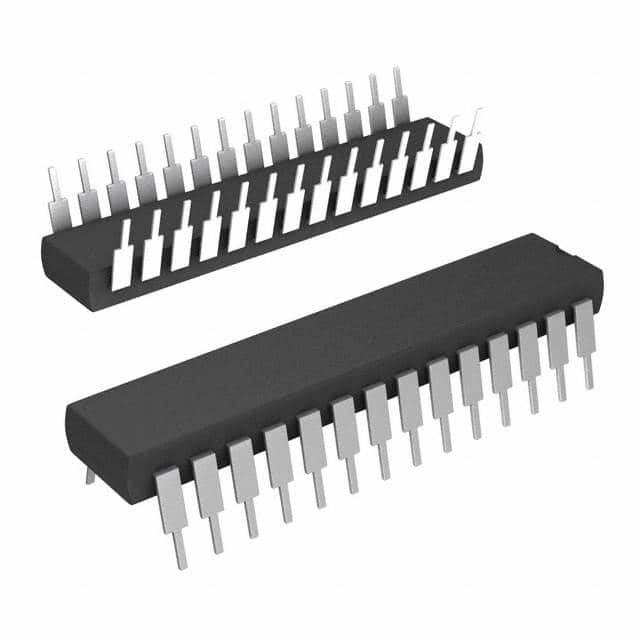
- Part No.:
- AT27C256R-45PU
- Manufacturer:
- Microchip Technology
- Category:
- Memory
- Package:
- 28-DIP (0.600", 15.24mm)
- Datasheet:
-
 AT27C256R-45PU.pdf
- Description:
- IC EPROM 256KBIT PARALLEL 28DIP
- Quantity:
- Payment:

- Shipping:

Inventory:6,752
Please send an inquiry. Send us your inquiry, and we will respond immediately.
Product details
Overview
AT27C256R-45PU from Microchip Technology (formerly Atmel) is a 32K × 8-bit, one-time programmable EPROM used for firmware storage in microprocessor systems. It delivers 45ns read access time, operates on a single 5V ±10% supply, and supports industrial temperature range (–40°C to +85°C) in a 28-lead PDIP package. Its dual-line control (CE/OE) prevents bus contention in embedded controllers and legacy instrumentation.
For engineers reviewing the AT27C256R-45PU datasheet, AT27C256R-45PU pinout, AT27C256R-45PU application, or AT27C256R-45PU equivalent, key selection criteria include fast read timing under 45ns, low active current (20mA max at 5MHz), CMOS/TTL compatibility, rapid programming (100µs/byte), and JEDEC-standard 28P6 PDIP packaging with verified pin mapping.
Technical Context
The AT27C256R-45PU implements a parallel-addressed OTP EPROM architecture with asynchronous read operation controlled by CE and OE inputs. Its internal array is organized as 32,768 × 8 bits, enabling byte-level random access without wait states in high-speed 8/16-bit bus systems.
It uses scaled CMOS technology for low power: standby current ≤100µA (CMOS mode), active current ≤20mA at 5MHz, and features 2,000V ESD protection and 200mA latchup immunity. Programming requires VPP = 12.0V ±0.5V and follows a rapid algorithm with 100µs CE pulses and verify-reprogram loops per byte.
Key Specifications
| Parameter | Value and Actual Design Meaning |
|---|---|
| Memory size | 32K × 8-bit (262,144-bit OTP EPROM) |
| Read access time | 45ns maximum - eliminates WAIT states in 5MHz+ microprocessor buses |
| Supply voltage | 5V ±10% - compatible with standard TTL/CMOS logic rails |
| Active current | 20mA max at 5MHz - enables low-power embedded firmware execution |
| Standby current | 100µA max (CMOS CE mode) - supports low-quiescent power sleep modes |
| Programming speed | 100µs/byte typical - reduces production programming cycle time |
| Operating temp. | –40°C to +85°C - qualified for industrial control and instrumentation |
Pinout & Package
AT27C256R-45PU is supplied in a 28-lead plastic dual inline package (PDIP), JEDEC MS-011 AB compliant, 0.600" wide body with matte tin lead finish. Pin 1 is marked by a notch or dot; pins 1–14 and 15–28 are on opposite sides of the package.
| Pin/Terminal | Circuit Role | Design Meaning |
|---|---|---|
| A0–A14 | Address inputs | 15-bit address bus supporting full 32K-byte addressing |
| O0–O7 | Data outputs | 8-bit bidirectional data bus (output only; no input during read) |
| CE | Chip enable | Active-low global device select; controls power state transition |
| OE | Output enable | Active-low output gate; enables data bus drivers independently of CE |
| VCC | Power supply | +5V ±10% main supply; must be applied before/with VPP during programming |
| GND | Ground reference | Signal and power return; requires local 0.1µF ceramic decoupling |
| VPP | Programming voltage | 12.0V ±0.5V input required only during programming; not used in read mode |
| NC | No connect | Pins 12 and 24 are unconnected; must remain floating per datasheet |
Key Features
| Feature | Design Value |
|---|---|
| Rapid programming algorithm | 100µs/byte typical programming time with automatic verify-and-reprogram loop per location |
| Integrated product ID code | Two-byte electronic ID (0x1E/0x8C) enables auto-detection by industry-standard programmers |
| CMOS/TTL compatibility | Input thresholds (VIL ≤0.8V, VIH ≥2.0V) and output drive (2.1mA sink, –400µA source) meet both logic families |
| High-reliability process | 2,000V HBM ESD rating and 200mA latchup immunity ensure robustness in noisy industrial environments |
| Green packaging option | Pb/halide-free construction meets RoHS Directive 2011/65/EU without performance trade-offs |
Applications
| Industrial PLC Firmware Storage | Legacy Medical Instrument Boot Code |
|---|---|
Use Scenario: Storing fixed boot firmware and calibration tables in programmable logic controllers deployed in factory automation. IC Role / Device Role / Timing Role: Non-volatile program memory providing deterministic 45ns read latency to CPU address/data bus. Use Value: Eliminates wait states in 80C188/80C186-based control engines, ensuring real-time response to I/O interrupts. | Use Scenario: Holding diagnostic self-test routines and safety-critical initialization code in Class II medical analyzers. IC Role / Device Role / Timing Role: One-time programmable ROM for immutable startup sequence, resistant to accidental overwrite. Use Value: Guarantees firmware integrity over 10+ year service life without battery backup or refresh cycles. |
| Avionics Subsystem Configuration | Test Equipment Pattern Memory |
Use Scenario: Storing configuration bitstreams and sensor compensation coefficients in airborne navigation subsystems. IC Role / Device Role / Timing Role: Industrial-temp-rated EPROM interfaced via ISA-compatible bus for deterministic read timing. Use Value: Supports –40°C to +85°C operation without derating, meeting DO-160E environmental test requirements. | Use Scenario: Providing stimulus pattern storage in automated test equipment for semiconductor wafer probing. IC Role / Device Role / Timing Role: High-speed parallel memory delivering 32K-byte test vectors to pattern generator logic. Use Value: 45ns tACC enables >10MHz vector rate without external buffering or pipelining. |
Equivalent & Alternatives
The following parts are listed as comparable options for similar OTP EPROM applications.
| Alternative Part | Technical Difference | Application Difference | Selection Advice |
|---|---|---|---|
| AT27C256R-45JU | Same die, 32-lead PLCC package instead of 28-lead PDIP; identical timing and electrical specs | Requires PCB redesign for surface-mount assembly; better thermal dissipation in dense layouts | Select when board space constraints favor SMT or higher pin-count routing flexibility |
| AM27C256B-45DC | AMD-manufactured 32K×8 OTP EPROM; 45ns access, 5V supply, but lacks integrated ID code and has 1mA TTL standby current | Compatible pinout and function, but requires manual programmer setup due to missing auto-ID feature | Select when cost sensitivity outweighs programming automation benefits and PLCC/PDIP footprint matches |
Compared with AT27C256R-45PU, the AT27C256R-45JU offers identical functionality in PLCC packaging for SMT use, while AM27C256B-45DC provides a lower-cost alternative without integrated identification-requiring manual algorithm selection in production programming.
Availability
AT27C256R-45PU is available at Aetrix Electronics and suitable for industrial PLC firmware storage, legacy medical instrument boot code, and avionics subsystem configuration requiring stable component supply across extended product lifecycles.
Supply support for AT27C256R-45PU includes scheduled delivery planning, volume procurement assistance, BOM continuity management, traceable sourcing, and lifecycle availability coordination for OEM customers, industrial embedded developers, connected-device designers, and electronics production programs.
Manufacturer
Microchip Technology acquired Atmel in 2016 and maintains its legacy EPROM portfolio for long-lifecycle industrial and aerospace applications.
The AT27C256R product line delivers cost-effective, radiation-tolerant, one-time programmable memory for firmware storage in systems where flash endurance or reprogrammability is unnecessary.
FAQ
What is the maximum operating frequency supported by the AT27C256R-45PU?
The AT27C256R-45PU does not operate at a clock frequency itself-it is an asynchronous memory. Its 45ns access time supports reliable interface with microprocessors running up to approximately 10MHz bus cycles (tACC ≤ 45ns). For example, it fully satisfies timing requirements of Intel 80C186 and Motorola 68HC11 systems without wait-state insertion. The AT27C256R-45PU achieves this using CMOS/TTL-compatible signaling and dual-line control (CE/OE).
Can the AT27C256R-45PU be reprogrammed after initial programming?
No, the AT27C256R-45PU is a one-time programmable (OTP) EPROM. Once programmed, its contents cannot be electrically erased or rewritten. Programming requires VPP = 12.0V ±0.5V applied to pin 1, and the rapid algorithm uses 100µs CE pulses per byte. The AT27C256R-45PU contains no UV-erasable window or flash memory cells-its oxide breakdown mechanism is irreversible.
Does the AT27C256R-45PU require external decoupling capacitors?
Yes, the AT27C256R-45PU requires a 0.1µF high-frequency ceramic capacitor between VCC and GND, placed as close as possible to pins 14 and 28. For boards with multiple EPROMs, a 4.7µF bulk electrolytic capacitor should also be added near the power entry point. These capacitors suppress transient voltage excursions during CE transitions, preventing non-conformance per the AT27C256R-45PU datasheet Section 3.
How is the manufacturer and device identification accessed on the AT27C256R-45PU?
The AT27C256R-45PU integrates a two-byte electronic ID: manufacturer code 0x1E and device code 0x8C. To read it, hold all address lines low except A9 (set to VH = 12.0V) and toggle A0 (low for manufacturer ID, high for device ID) while keeping CE and OE low. This feature allows industry-standard programmers to auto-detect the AT27C256R-45PU and select correct algorithms without manual configuration.
Is the AT27C256R-45PU RoHS-compliant?
Yes, the AT27C256R-45PU is offered in a green (Pb/halide-free) packaging option compliant with EU RoHS Directive 2011/65/EU. The matte tin lead finish and halogen-free molding compound meet restricted substance limits without impacting electrical performance, timing, or reliability. This version is explicitly listed in the Atmel ordering information table as the standard offering for AT27C256R-45PU.
AT27C256R-45PU Specifications
- Product attributes
- Attribute value
- Manufacturer:
- Microchip Technology
- Series:
- -
- Package/Case:
- 28-DIP (0.600", 15.24mm)
- Packaging:
- Tube
- Product Status:
- Active
- Programmable:
- Verified
- Memory Type:
- Non-Volatile
- Memory Format:
- EPROM
- Technology:
- EPROM - OTP
- Memory Size:
- 256Kbit
- Memory Organization:
- 32K x 8
- Memory Interface:
- Parallel
- Clock Frequency:
- -
- Write Cycle Time - Word, Page:
- -
- Access Time:
- 45 ns
- Voltage - Supply:
- 4.5V ~ 5.5V
- Operating Temperature:
- -40°C ~ 85°C (TC)
- Grade:
- -
- Qualification:
- -
- Mounting Type:
- Through Hole
- Supplier Device Package:
- 28-PDIP
AT27C256R-45PU FAQ
1.How can I place an order for AT27C256R-45PU through Aetrix?
Please submit a Request for Quotation (RFQ) for AT27C256R-45PU on Aetrix. Our sales agent will provide a competitive quotation and guide you through the order confirmation once you accept the terms.
2.Are the price and stock information for AT27C256R-45PU reliable?
The price and inventory of AT27C256R-45PU are updated periodically and may fluctuate due to market conditions. Stock and pricing data are typically refreshed every 24 hours. Quotation validity for AT27C256R-45PU is usually 5 days.
3.What payment methods are accepted for AT27C256R-45PU?
We accept Wire Transfer, PayPal, Credit Card, Western Union, MoneyGram, and Escrow for AT27C256R-45PU transactions.
Note: Certain payment methods may incur a processing fee.
4.How is shipping managed for AT27C256R-45PU?
AT27C256R-45PU orders can be shipped via leading logistics carriers, including DHL, UPS, FedEx, TNT, or Registered Mail.
Once your AT27C256R-45PU order is processed, you will receive an email with the shipment details and tracking number.
Note: Tracking information may take up to 24 hours to appear. Express delivery typically takes 3–5 business days.
5.How can I obtain technical support or documentation for AT27C256R-45PU?
For technical support, including AT27C256R-45PU datasheets, pinout diagrams, or application guidance, please contact our engineering support team. They can provide detailed documentation and assistance for your AT27C256R-45PU requirements.
6.How does Aetrix verify that AT27C256R-45PU is sourced from the original manufacturer or authorized distributors?
All AT27C256R-45PU products on Aetrix are procured from qualified distributors and authorized channels. Our dedicated quality assurance team conducts strict verification, including traceability checks and, if necessary, third-party testing. This ensures that AT27C256R-45PU meets industry standards.
7.What is the process for return or replacement of AT27C256R-45PU?
All AT27C256R-45PU units undergo pre-shipment inspection (PSI). If there is an issue with AT27C256R-45PU, returns or replacements are accepted under the following conditions:
1.Quantity discrepancies, incorrect items, or visible external defects (such as breakage or corrosion), acknowledged by Aetrix.
2.The issue is reported within 90 days of delivery.
3.The AT27C256R-45PU part is unused and in its original packaging.
Return procedure for AT27C256R-45PU:
1.Submit a request within 90 days.
2.Obtain a Return Material Authorization (RMA) from Aetrix.
AT27C256R-45PU Tags
-
M24C02-WMN6TP
STMicroelectronics
-
AT24C02C-XHM-T
Microchip Technology
-
AT21CS01-STUM10-T
Microchip Technology

-
AT24C02C-SSHM-T
Microchip Technology

-
24LC01BT-I/OT
Microchip Technology
-
M24C02-FMC6TG
STMicroelectronics
-
AT24CS02-SSHM-T
Microchip Technology

-
93LC46BT-I/OT
Microchip Technology
-
AT24C04C-SSHM-T
Microchip Technology

-
24LC01BT-I/SN
Microchip Technology
-
24AA02UIDT-I/OT
Microchip Technology
-
AT24C08C-STUM-T
Microchip Technology
Tech Hub

TTL and CMOS logic families differ in thresholds, loading, output drive, power and timing. This engineering guide compares 74HC and 74HCT, calculates noise margins and checks 3.3 V/5 V compatibility.

A practical engineering guide to 3.3V and 5V logic compatibility, input thresholds, resistor dividers, translator ICs, MOSFET level shifting, I2C pull-ups, timing limits and power-sequencing risks.

The 74HC595 uses push-pull logic outputs, while the TPIC6B595 uses 50 V open-drain DMOS sinks for higher-power loads. This guide compares timing, current limits, 3.3 V interfacing, load wiring, thermal…

The 74HC595 converts serial data into eight stable parallel outputs. This guide covers pin functions, shift and storage timing, OE and MR behavior, drive-current limits, cascading, voltage compatibilit…

A technical comparison of level-sensitive latches and edge-triggered flip-flops, covering timing windows, setup and hold limits, master–slave operation, time borrowing, race-through, HDL inference and…

A D latch stores one bit while Enable controls when data can pass. This reference covers gate-level operation, truth tables, transparency, setup and hold timing, LE versus OE, common ICs and practical …

An SR latch stores one bit through cross-coupled feedback. This engineering reference covers NOR and NAND implementations, truth tables, forbidden-state recovery, gated operation, switch debouncing, fa…

Latch circuits retain one bit through feedback. This technical reference covers SR and D latches, truth tables, transparency, timing limits, latch-versus-flip-flop behavior, applications and common log…

An engineering guide to LED driver operation, constant-current and constant-voltage outputs, linear and switching topologies, dimming, IC selection, calculations, replacement compatibility, and fault c…

Operational amplifier guide covering op amp basics, feedback, ideal vs real op amps, common configurations, buffer circuits, offset, bias current, gain-bandwidth, slew rate, rail-to-rail limits and sel…


