
 My Inquiry
 My Account


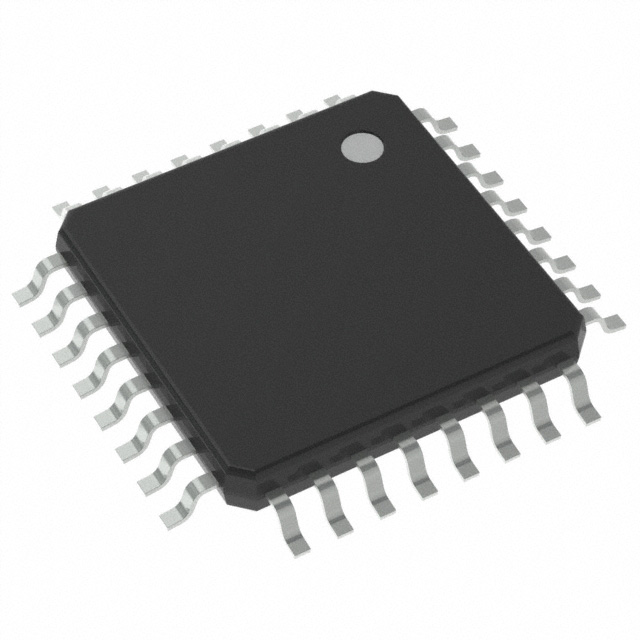
Microchip Technology AT42QT1481-AN
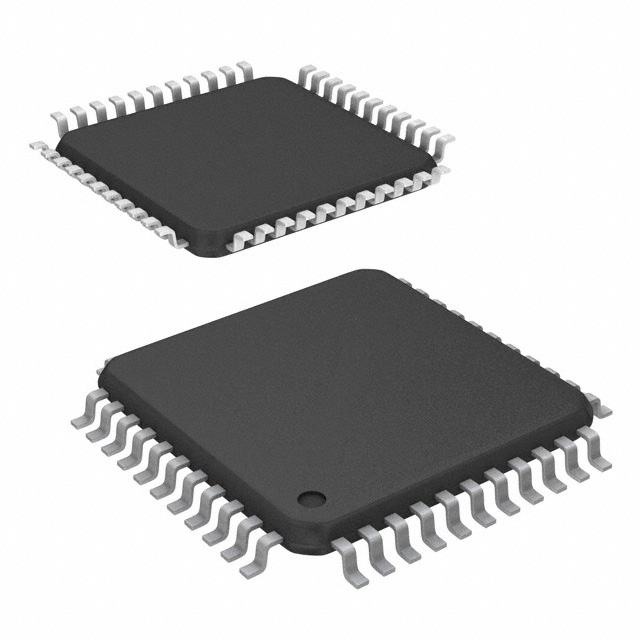
- Part No.:
- AT42QT1481-AN
- Manufacturer:
- Microchip Technology
- Category:
- Sensor, Capacitive Touch
- Package:
- 44-TQFP
- Datasheet:
-
 AT42QT1481-AN.pdf
- Description:
- 44TQFP, 10X101MM, TRAY
- Quantity:
- Payment:

- Shipping:

Inventory:2,254
Please send an inquiry. Send us your inquiry, and we will respond immediately.
Product details
Overview
AT42QT1481-AN from Microchip Technology (formerly Atmel) is a 48-key QMatrix® capacitive touch sensor IC implementing patented transverse charge-transfer sensing with frequency hopping. It operates from 4.75–5.25 V, supports UART and SPI interfaces (up to 4 MHz), and delivers FMEA-compliant, IEC/EN/UL60730-certified touch detection for safety-critical human interface panels up to 50 mm thick glass.
For engineers reviewing the AT42QT1481-AN datasheet, AT42QT1481-AN pinout, AT42QT1481-AN application, or AT42QT1481-AN equivalent, this device is selected for robust multi-key touch control in Class B/C appliances, industrial HMIs, and medical devices requiring self-calibration, Adjacent Key Suppression®, and real-time signal strength reporting via simple byte-level commands.
Technical Context
The AT42QT1481-AN uses burst-mode transverse charge-transfer sensing across an 8×6 X-Y matrix (X0–X7, Y0A/Y0B–Y5A/Y5B), enabling up to 48 keys with individually configurable burst length (BL), dwell time, and detect integrator limits. Its dual-tier fast/normal detection integrators provide noise-immune touch confirmation without host intervention.
Hardware timing is anchored to a 16 MHz ±1% crystal/resonator (XT1/XT2), and all signal processing-including auto-drift compensation, saturation monitoring, and key failure reporting-is performed on-chip. The STATUS pin provides active-low event notification, while DRDY enables synchronous host polling with 100 µs grace period.
Key Specifications
| Parameter | Value and Actual Design Meaning |
|---|---|
| Max Keys | 48 keys in 8×6 X-Y matrix; supports mixed sizes/shapes on single panel |
| Supply Voltage | +4.75 V to +5.25 V; uses VDD as analog reference-requires clean LDO supply |
| Interface | UART (RX/TX) or SPI slave (MOSI/MISO/SCK/SS); mutually exclusive, software-selectable |
| Oscillator | 16 MHz ±1% crystal or ceramic resonator; XT1/XT2 require 12–22 pF load caps |
| Safety Compliance | IEC/EN/UL60730 Class B & C certified; includes FMEA-compliant self-tests and error reporting |
| Panel Thickness | Up to 50 mm glass or 20 mm plastic; sensitivity adjustable per key via serial command |
| Response Time | Worst-case 36 ms (no mains sync); reduced to ~26 ms using STATUS-triggered polling |
Pinout & Package
AT42QT1481-AN is housed in a RoHS-compliant 44-pin 10 × 10 mm TQFP package with exposed thermal pad (not electrically connected). Pin functions are validated per Atmel datasheet 9621EX–AT42–07/2014.
| Pin/Terminal | Circuit Role | Design Meaning |
|---|---|---|
| MOSI, MISO, SCK, SS | SPI interface signals | Enable host-configurable setup and real-time key status readout at ≤4 MHz clock |
| RX, TX | UART interface signals | Support asynchronous communication with simple byte commands/responses; TX has internal pull-up |
| STATUS / DBG_DATA | Active-low status output or debug data | Asserts low on key press or error; doubles as debug data line when configured |
| DRDY | Data-ready handshake | Open-drain output requiring external pull-up; must be monitored before reading UART/SPI data |
| X0–X7 | X-matrix drive lines | 8 dedicated push-pull outputs driving X electrodes; unused lines left open |
| Y0A/Y0B–Y5A/Y5B | Y-matrix receive lines | 12 bidirectional pins for charge sampling; support two-part electrode layouts with jumpers or two-layer PCBs |
| WS | Wake/sync input | Low pulse wakes device from sleep; also serves as sync input for scope triggering |
| RST | Active-low reset | Hardware reset with internal 30–60 kΩ pull-up; ≥10 µs pulse required |
Key Features
| Feature | Design Value |
|---|---|
| Transverse Charge-Transfer Sensing | Eliminates need for overlay ground plane; enables operation through thick insulators and adjacent grounded metal |
| Adjacent Key Suppression® | Prevents false triggers during multi-finger or palm touches by dynamically adjusting inter-key crosstalk thresholds |
| Per-Key Burst Length Control | Allows independent sensitivity tuning across 48 keys-e.g., larger buttons use longer bursts, smaller ones use shorter bursts |
| FMEA & EN60730 Self-Tests | On-power-up and runtime diagnostics verify oscillator, memory, ADC, and logic integrity; results require host validation |
| Real-Time Signal Monitoring | QmBtn PC software reads raw signal counts (250–750 typical) and error codes for each key during development |
Applications
| Home Appliance Control Panel | Industrial HMI Front Panel |
|---|---|
Use Scenario: Touch interface on oven, dishwasher, or washing machine front panel with painted plastic overlay up to 15 mm thick. IC Role / Device Role / Timing Role: Primary touch sensor IC performing real-time key scanning, drift compensation, and EN60730-compliant fault reporting. Use Value: Enables reliable operation through thick, painted surfaces without grounding requirements-reducing mechanical complexity and cost. | Use Scenario: Operator interface on factory automation equipment with metal bezel adjacent to keys and ESD-prone environment. IC Role / Device Role / Timing Role: Safety-certified touch controller handling up to 48 function keys with automatic calibration and adjacent-metal tolerance. Use Value: Eliminates need for isolation gaps around keys; maintains stable performance despite thermal drift and conducted noise per IEC61000-4-6. |
| Medical Device User Interface | Commercial Kitchen Equipment |
Use Scenario: Disinfectant-resistant touch panel on infusion pump or diagnostic monitor with glass overlay and glove operation. IC Role / Device Role / Timing Role: FMEA-compliant sensor providing touch detection, key failure reporting, and self-test logging for regulatory audit trails. Use Value: Meets UL60730 Class C requirements for life-critical systems; supports configurable sensitivity for gloved or wet-finger operation. | Use Scenario: Grease- and moisture-resistant control panel on combi-oven or fryer with stainless steel housing and frequent cleaning cycles. IC Role / Device Role / Timing Role: Robust capacitive controller managing 32+ function keys with auto-compensation for condensation-induced signal drift. Use Value: Maintains >10-count signal swing under high-humidity conditions; suppresses false triggers from water film via dynamic baseline adjustment. |
Equivalent & Alternatives
The following parts are listed as comparable options for similar capacitive touch sensor applications.
| Alternative Part | Technical Difference | Application Difference | Selection Advice |
|---|---|---|---|
| AT42QT2120-MAH | 12-key variant in 20-pin SOIC; no X-Y matrix, uses self-capacitance sensing | Targeted for small-button applications (e.g., remote controls), not large multi-key panels | Select when panel size, key count, or layout complexity is significantly lower |
| CY8CMBR2044-LQXI | Cypress (Infineon) CapSense® device; 44-key max, supports I²C, no built-in EN60730 self-tests | Requires external safety firmware implementation; lacks integrated FMEA diagnostics and key failure reporting | Select when I²C interface or lower BOM cost is prioritized over out-of-box safety certification |
Compared with AT42QT1481-AN, the AT42QT2120-MAH reduces system footprint but sacrifices matrix scalability and thick-panel capability, while the CY8CMBR2044-LQXI offers I²C convenience yet shifts safety validation burden to the host MCU-making AT42QT1481-AN optimal for drop-in certified designs demanding 48-key density and 50 mm glass compatibility.
Availability
AT42QT1481-AN is available at Aetrix Electronics and suitable for home appliance control panels, industrial HMI front panels, and medical device user interfaces requiring stable component supply, long-term lifecycle assurance, and full safety documentation traceability.
Supply support for AT42QT1481-AN includes scheduled delivery planning, volume procurement assistance, BOM continuity management, traceable sourcing, and lifecycle availability coordination for OEM customers, industrial embedded developers, connected-device designers, and electronics production programs.
Manufacturer
Microchip Technology acquired Atmel in 2016 and maintains full technical and manufacturing continuity for the AT42QT product family.
The AT42QT series was designed specifically for QMatrix®-based capacitive touch control in safety-critical applications-emphasizing FMEA compliance, self-calibration, and robustness against environmental stressors like humidity, temperature drift, and ESD.
FAQ
What is the maximum panel thickness supported by the AT42QT1481-AN?
The AT42QT1481-AN supports up to 50 mm of glass or 20 mm of plastic panel thickness, with key sensitivity individually adjustable per key via serial interface commands. Performance depends on electrode design and coupling; thicker panels require optimized burst length and sample resistor values to maintain ≥10-count signal swing for finger touch detection.
Does the AT42QT1481-AN require external microcontroller firmware for basic operation?
No-the AT42QT1481-AN performs all signal acquisition, filtering, calibration, and touch decision logic autonomously. A host microcontroller is only needed to issue configuration commands (e.g., set burst length or threshold) and read key status via UART or SPI. No firmware development is required for functional touch detection.
How does the AT42QT1481-AN achieve IEC/EN60730 compliance?
The AT42QT1481-AN integrates hardware-level FMEA-compliant self-tests covering oscillator stability, memory integrity, ADC functionality, and logic path verification. These tests execute at power-up and periodically during operation; their results must be read and validated by the host MCU to complete the safety chain per IEC/EN60730 Class B/C requirements.
Can the AT42QT1481-AN interface with both UART and SPI simultaneously?
No-the AT42QT1481-AN supports UART and SPI interfaces exclusively; they cannot operate concurrently. Interface selection is determined by hardware configuration (e.g., SS pin state at power-up) and fixed in firmware. Switching requires power cycle or hardware reset-designs must commit to one interface during layout.
What is the purpose of the DRDY pin on the AT42QT1481-AN?
The DRDY pin on the AT42QT1481-AN is an open-drain data-ready indicator that asserts low when UART or SPI data is valid for reading. Host systems must wait ≥100 µs after DRDY goes low before initiating a read transaction; this ensures internal processing completes and prevents data corruption or incomplete register reads in the AT42QT1481-AN.
AT42QT1481-AN Specifications
- Product attributes
- Attribute value
- Manufacturer:
- Microchip Technology
- Package/Case:
- 44-TQFP
- Series:
- QMatrix™
- Packaging:
- Tray
- Product Status:
- Active
- Programmable:
- Not Verified
- Type:
- Buttons
- Proximity Detection:
- No
- Number of Inputs:
- Up to 48
- LED Driver Channels:
- -
- Interface:
- SPI, UART
- Resolution:
- 11 b
- Voltage - Supply:
- 4.75V ~ 5.25V
- Current - Supply:
- 13mA
- Operating Temperature:
- -40°C ~ 105°C
- Grade:
- -
- Qualification:
- -
- Mounting Type:
- Surface Mount
- Supplier Device Package:
- 44-TQFP (10x10)
AT42QT1481-AN FAQ
1.How can I place an order for AT42QT1481-AN through Aetrix?
Please submit a Request for Quotation (RFQ) for AT42QT1481-AN on Aetrix. Our sales agent will provide a competitive quotation and guide you through the order confirmation once you accept the terms.
2.Are the price and stock information for AT42QT1481-AN reliable?
The price and inventory of AT42QT1481-AN are updated periodically and may fluctuate due to market conditions. Stock and pricing data are typically refreshed every 24 hours. Quotation validity for AT42QT1481-AN is usually 5 days.
3.What payment methods are accepted for AT42QT1481-AN?
We accept Wire Transfer, PayPal, Credit Card, Western Union, MoneyGram, and Escrow for AT42QT1481-AN transactions.
Note: Certain payment methods may incur a processing fee.
4.How is shipping managed for AT42QT1481-AN?
AT42QT1481-AN orders can be shipped via leading logistics carriers, including DHL, UPS, FedEx, TNT, or Registered Mail.
Once your AT42QT1481-AN order is processed, you will receive an email with the shipment details and tracking number.
Note: Tracking information may take up to 24 hours to appear. Express delivery typically takes 3–5 business days.
5.How can I obtain technical support or documentation for AT42QT1481-AN?
For technical support, including AT42QT1481-AN datasheets, pinout diagrams, or application guidance, please contact our engineering support team. They can provide detailed documentation and assistance for your AT42QT1481-AN requirements.
6.How does Aetrix verify that AT42QT1481-AN is sourced from the original manufacturer or authorized distributors?
All AT42QT1481-AN products on Aetrix are procured from qualified distributors and authorized channels. Our dedicated quality assurance team conducts strict verification, including traceability checks and, if necessary, third-party testing. This ensures that AT42QT1481-AN meets industry standards.
7.What is the process for return or replacement of AT42QT1481-AN?
All AT42QT1481-AN units undergo pre-shipment inspection (PSI). If there is an issue with AT42QT1481-AN, returns or replacements are accepted under the following conditions:
1.Quantity discrepancies, incorrect items, or visible external defects (such as breakage or corrosion), acknowledged by Aetrix.
2.The issue is reported within 90 days of delivery.
3.The AT42QT1481-AN part is unused and in its original packaging.
Return procedure for AT42QT1481-AN:
1.Submit a request within 90 days.
2.Obtain a Return Material Authorization (RMA) from Aetrix.
AT42QT1481-AN Tags

-
IQS228B00000000TSR
Azoteq (Pty) Ltd

-
MTCH101T-I/OT
Microchip Technology
-
IQS323001CSR
Azoteq (Pty) Ltd

-
AT42QT1010-TSHR
Microchip Technology
-
AT42QT1012-TSHR
Microchip Technology
-
AT42QT1011-TSHR
Microchip Technology
-
CAP1206-1-SL-TR
Microchip Technology
-
MTCH102T-I/MS
Microchip Technology
-
IQS323001DNR
Azoteq (Pty) Ltd
-
AT42QT1070-SSUR
Microchip Technology
-
CAP1188-1-CP-TR
Microchip Technology
-
AT42QT1110-AUR
Microchip Technology
Tech Hub

TTL and CMOS logic families differ in thresholds, loading, output drive, power and timing. This engineering guide compares 74HC and 74HCT, calculates noise margins and checks 3.3 V/5 V compatibility.

A practical engineering guide to 3.3V and 5V logic compatibility, input thresholds, resistor dividers, translator ICs, MOSFET level shifting, I2C pull-ups, timing limits and power-sequencing risks.

The 74HC595 uses push-pull logic outputs, while the TPIC6B595 uses 50 V open-drain DMOS sinks for higher-power loads. This guide compares timing, current limits, 3.3 V interfacing, load wiring, thermal…

The 74HC595 converts serial data into eight stable parallel outputs. This guide covers pin functions, shift and storage timing, OE and MR behavior, drive-current limits, cascading, voltage compatibilit…

A technical comparison of level-sensitive latches and edge-triggered flip-flops, covering timing windows, setup and hold limits, master–slave operation, time borrowing, race-through, HDL inference and…

A D latch stores one bit while Enable controls when data can pass. This reference covers gate-level operation, truth tables, transparency, setup and hold timing, LE versus OE, common ICs and practical …

An SR latch stores one bit through cross-coupled feedback. This engineering reference covers NOR and NAND implementations, truth tables, forbidden-state recovery, gated operation, switch debouncing, fa…

Latch circuits retain one bit through feedback. This technical reference covers SR and D latches, truth tables, transparency, timing limits, latch-versus-flip-flop behavior, applications and common log…

An engineering guide to LED driver operation, constant-current and constant-voltage outputs, linear and switching topologies, dimming, IC selection, calculations, replacement compatibility, and fault c…

Operational amplifier guide covering op amp basics, feedback, ideal vs real op amps, common configurations, buffer circuits, offset, bias current, gain-bandwidth, slew rate, rail-to-rail limits and sel…


