
 My Inquiry
 My Account


Microchip Technology AT42QT2120-MMHR
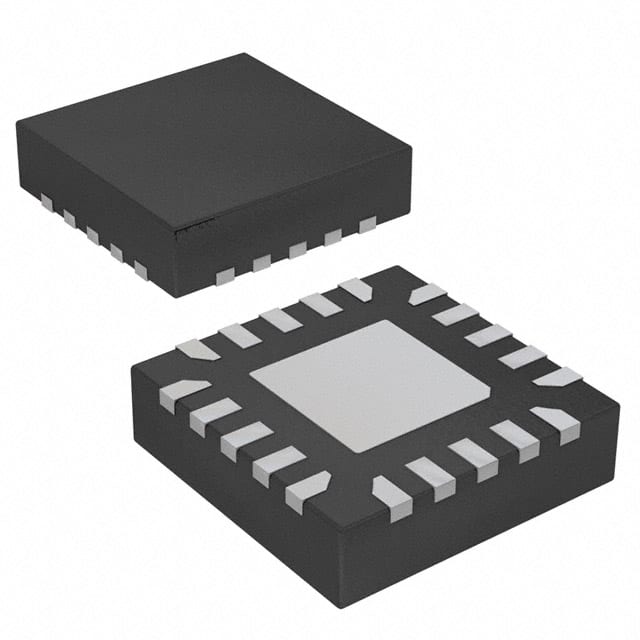
- Part No.:
- AT42QT2120-MMHR
- Manufacturer:
- Microchip Technology
- Category:
- Sensor, Capacitive Touch
- Package:
- 20-VFQFN Exposed Pad
- Datasheet:
-
 AT42QT2120-MMHR.pdf
- Description:
- IC TOUCH SENSOR 12CH 20VQFN
- Quantity:
- Payment:

- Shipping:

Inventory:25,314
Please send an inquiry. Send us your inquiry, and we will respond immediately.
Product details
Overview
AT42QT2120-MMHR from Microchip Technology is a 12-channel QTouchADC capacitive touch sensor IC supporting up to 12 keys, 1 slider/wheel (using 3 channels), or 1 proximity + 1 guard channel in Comms Mode; operates from 1.8 V to 5.5 V; features I²C interface (400 kHz), CHANGE interrupt pin, and patented Adjacent Key Suppression (AKS®); used in industrial HMI panels, appliance control interfaces, and consumer electronics with glass or plastic overlays up to 15 mm thick.
For engineers reviewing the AT42QT2120-MMHR datasheet, AT42QT2120-MMHR pinout, AT42QT2120-MMHR application, or AT42QT2120-MMHR equivalent, key selection considerations include mode-dependent key/output allocation (Comms vs. Standalone), AKS group configuration, LP mode timing trade-offs, proximity/guard channel assignment, and I²C address fixed at 0x1C - all critical for reliable touch performance under ESD, RF noise, and panel thickness variation.
Technical Context
The AT42QT2120-MMHR implements spread-spectrum QTouchADC charge-transfer acquisition with self-calibration, auto-drift compensation (TTD/ATD), and noise filtering. It supports two mutually exclusive operational modes: Comms Mode (I²C-configurable thresholds, AKS groups, LP settings, TRD) and Standalone Mode (hard-coded firmware defaults including fixed 10-count detect threshold, 30 s TRD, guard on KEY1, proximity on KEY0).
In Comms Mode, up to 10 key pins may be reconfigured as general-purpose outputs (GPOs); in Standalone Mode, KEY2–KEY6 drive push-pull outputs (OUT2–OUT6) high on touch. Signal processing includes Detect Integrator (1–32 samples), hysteresis (12.5% of DTHR), and Drift Hold Time (~4 s default) to prevent sensitivity shift during multi-key actuation.
Key Specifications
| Parameter | Value and Actual Design Meaning |
|---|---|
| Touch Channels | 12 configurable electrodes: up to 12 keys, or 9 keys + 1 slider/wheel (3 channels), or 5 keys + 1 guard + 1 proximity in Standalone Mode |
| Interface | I²C slave (400 kHz, fixed address 0x1C) in Comms Mode; no interface required in Standalone Mode |
| Supply Voltage | 1.8 V to 5.5 V - enables direct integration with 3.3 V or 5 V microcontroller systems without level-shifting |
| Power Modes | 255 Low Power (LP) intervals (16 ms base cycle); LP = 0 enters power-down; wake via I²C or RESET |
| Signal Processing | Patented AKS® (up to 3 groups), self-calibration, TTD/ATD drift compensation, 12.5% hysteresis, 1–32-sample Detect Integrator |
| Panel Compatibility | Supports FR-4, PET, glass (≤15 mm for keys, ≤4 mm for wheel/slider), plastic (≤10 mm), ITO/PEDOT/copper electrodes |
| ESD & Noise Immunity | Spread-spectrum burst modulation; built-in noise filtering; compatible with grounded adjacent metal; Rs series resistors (4.7–100 kΩ) recommended per electrode |
Pinout & Package
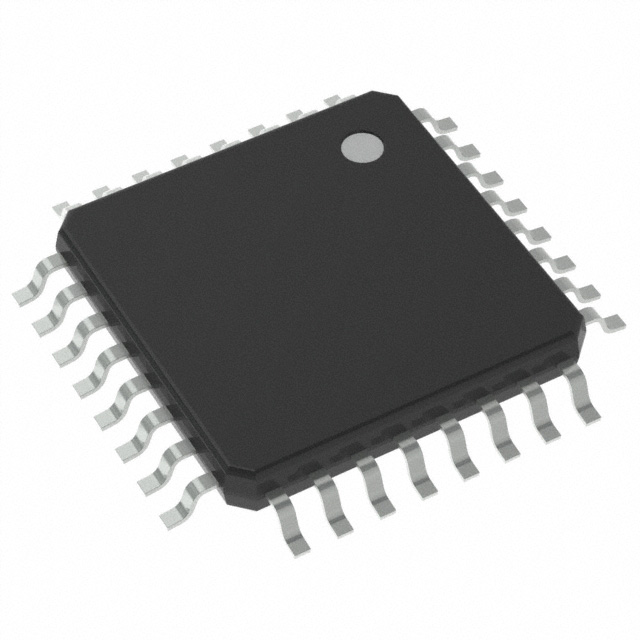
AT42QT2120-MMHR is supplied in a RoHS-compliant 20-pin VQFN package (3.5 mm × 3.5 mm, 0.5 mm pitch, exposed thermal pad). Pin functions differ between Comms and Standalone modes; MODE pin selects mode (VSS for Comms, VDD for Standalone).
| Pin | Circuit Role | Design Meaning |
|---|---|---|
| 1–7, 16–20 (VQFN) | KEY0–KEY6 / GPO0–GPO6 / OUT2–OUT6 | Configurable as touch inputs, general-purpose outputs (Comms), or discrete push-pull outputs (Standalone); KEY0 = proximity, KEY1 = guard in Standalone |
| 8, 9 | VSS / VDD | Ground and power supply pins - require local 0.1 µF ceramic bypass capacitor placed adjacent to IC |
| 10 | MODE | Hardware mode selector: tie to VSS for Comms Mode (I²C active), VDD for Standalone Mode (firmware defaults) |
| 11, 12, 15 | SDA / RESET / CHANGE | I²C data (OD, pull-up required), active-low reset (60 kΩ internal pull-up), open-drain status change interrupt (47 kΩ pull-up) |
| 13, 14 | PXOUT / N/C | Standalone-only open-drain proximity output; unused in Comms Mode |
Key Features
| Feature | Design Value |
|---|---|
| Spread-spectrum QTouchADC | Eliminates external sampling capacitors; enables single-pin sensing with superior noise immunity and reduced BOM cost |
| Adjacent Key Suppression (AKS®) | Prevents false multi-key detection on tightly spaced electrodes by enforcing mutual exclusion within up to 3 user-defined groups |
| Guard & Proximity Channels | Programmable guard (any key in Comms Mode; KEY1 fixed in Standalone) and proximity (KEY0 in Standalone) improve robustness against palm rejection and hover detection |
| Self-calibrating Drift Compensation | Towards-Touch Drift (TTD) and Away-from-Touch Drift (ATD) algorithms maintain stable baseline under temperature/humidity shifts and panel contamination |
| Flexible Output Configuration | 10 pins reassignable as GPOs in Comms Mode; 5 dedicated push-pull outputs (OUT2–OUT6) in Standalone Mode for LED driving or logic signaling |
Applications
| Industrial Control Panel | Home Appliance Interface |
|---|---|
Use Scenario: Touch-sensitive front panel on PLC operator terminals or HVAC controllers with 8 mm thick polycarbonate overlay and metal bezel. IC Role / Device Role / Timing Role: AT42QT2120-MMHR acts as the primary capacitive sensing front-end, acquiring signals from 8 keys and 1 slider while suppressing interference from adjacent grounded metal. Use Value: Enables reliable operation through thick insulating material and eliminates mechanical switch wear; AKS® ensures accurate single-key selection even when fingers bridge adjacent keys. | Use Scenario: Wash-cycle selector and function buttons on front-loading washing machine with painted ABS plastic fascia (3 mm thick). IC Role / Device Role / Timing Role: AT42QT2120-MMHR provides 5-key standalone operation with integrated OUT2–OUT6 outputs driving status LEDs directly - no host MCU required. Use Value: Reduces system cost and complexity by eliminating external driver circuitry; fixed firmware settings ensure consistent behavior across production units without calibration. |
| Consumer Electronics Remote | Medical Device Keypad |
Use Scenario: Slim IR remote control with circular 5-segment wheel for volume control and 4 radial keys, using PET film substrate and ITO electrodes. IC Role / Device Role / Timing Role: AT42QT2120-MMHR configures KEY2–KEY4 as wheel segments and KEY5–KEY8 as keys in Comms Mode, reporting position and key state over I²C to an ultra-low-power MCU. Use Value: Spatial interpolation enables smooth 360° wheel tracking without physical potentiometer; spread-spectrum acquisition rejects RF noise from nearby Bluetooth/WiFi modules. | Use Scenario: Disinfectant-resistant touch keypad on patient monitor with 6 mm tempered glass overlay and silver trace electrodes. IC Role / Device Role / Timing Role: AT42QT2120-MMHR operates in Comms Mode with guard channel (KEY1) surrounding 4 critical function keys to prevent accidental activation during glove use or liquid contact. Use Value: Guard channel increases sensitivity margin for intentional touch while rejecting false triggers from moisture films or gloved fingertips; self-calibration maintains accuracy after repeated alcohol wipe cleaning. |
Equivalent & Alternatives
The following parts are listed as comparable options for similar capacitive touch sensor applications.
| Alternative Part | Technical Difference | Application Difference | Selection Advice |
|---|---|---|---|
| AT42QT1070-MMU | 7-channel variant; same QTouchADC architecture, 20-pin SOIC/VQFN, identical I²C interface and firmware structure | Limited to 7 keys or 4 keys + slider; lacks proximity channel and one GPO in Comms Mode | Select when design requires fewer channels and lower pin count - reduces layout area but sacrifices flexibility for complex UIs |
| CY8CMBR2016-LQXI | Cypress CapSense® device; 16-channel, CapSense Sigma-Delta acquisition; different register map and tuning methodology | Requires PSoC Creator tuning tools; supports more advanced gestures but needs host MCU intervention for calibration | Choose for higher channel count and gesture support; avoid if firmware simplicity and minimal host dependency are priorities |
Compared with AT42QT2120-MMHR, AT42QT1070-MMU offers identical reliability and noise immunity in a smaller footprint but limits UI scalability, while CY8CMBR2016-LQXI delivers greater channel density and gesture capability at the cost of increased development effort and host resource usage.
Availability
AT42QT2120-MMHR is available at Aetrix Electronics and suitable for industrial HMI panels, home appliance interfaces, and medical device keypads requiring stable component supply, long-term lifecycle assurance, and RoHS-compliant packaging.
Supply support for AT42QT2120-MMHR includes scheduled delivery planning, volume procurement assistance, BOM continuity management, traceable sourcing, and lifecycle availability coordination for OEM customers, industrial embedded developers, connected-device designers, and electronics production programs.
Manufacturer
Microchip Technology is a U.S.-based semiconductor manufacturer specializing in microcontrollers, analog devices, and human interface solutions with emphasis on reliability, longevity, and industrial-grade qualification.
The AT42QT2120-MMHR belongs to Microchip's QTouch family of capacitive touch controllers, designed specifically for robust, low-cost, and maintenance-free touch interfaces in harsh environments - targeting applications where mechanical switches fail due to wear, contamination, or sealing requirements.
FAQ
What is the difference between Comms Mode and Standalone Mode for the AT42QT2120-MMHR?
In Comms Mode, the AT42QT2120-MMHR communicates via I²C (address 0x1C) allowing full runtime configuration of thresholds, AKS groups, LP mode, and TRD. In Standalone Mode (MODE = VDD), it uses hard-coded firmware defaults: fixed 10-count detect threshold, 30 s TRD, guard on KEY1, proximity on KEY0, and OUT2–OUT6 outputs driven high on touch - eliminating need for a host MCU.
Can the AT42QT2120-MMHR support both a slider and proximity sensing simultaneously?
Yes - in Comms Mode, the AT42QT2120-MMHR can allocate any combination of its 12 channels: for example, 3 channels for a spatially interpolated slider, 1 channel for proximity (KEY0), 1 for guard (KEY1), and remaining channels for keys. Standalone Mode restricts proximity to KEY0 and guard to KEY1, leaving only KEY2–KEY6 for keys or outputs.
What is the maximum panel thickness supported by the AT42QT2120-MMHR for reliable touch detection?
The AT42QT2120-MMHR supports up to 15 mm of glass or 10 mm of plastic for standard keys, and up to 4 mm glass or 3 mm plastic for wheel/slider implementations. Performance depends on electrode size, Cx (recommended 1–30 pF), and Rs series resistor value - thicker panels require larger electrodes and optimized Rs (4.7–20 kΩ typical).
How does the Adjacent Key Suppression (AKS®) feature work in the AT42QT2120-MMHR?
AKS® in the AT42QT2120-MMHR enforces mutual exclusion within user-defined groups: only one key per group can report "touched" at a time. Once a key enters detect, others in its AKS group are suppressed until it releases. Groups are configured via Key Control register bits; AKS is active in both Comms and Standalone Modes, with KEY1 automatically assigned as guard in Standalone Mode.
Does the AT42QT2120-MMHR require external capacitors for operation?
No - the AT42QT2120-MMHR uses QTouchADC charge-transfer acquisition, which eliminates the need for external sampling capacitors (Cs). Only a 0.1 µF ceramic bypass capacitor is required between VDD and VSS, placed close to the IC pins. Series Rs resistors (4.7–100 kΩ) are recommended per electrode for ESD/RFI protection but are not mandatory for basic functionality.
AT42QT2120-MMHR Specifications
- Product attributes
- Attribute value
- Manufacturer:
- Microchip Technology
- Package/Case:
- 20-VFQFN Exposed Pad
- Series:
- QTouch™
- Packaging:
- Tape & Reel (TR)
- Product Status:
- Active
- Programmable:
- Not Verified
- Type:
- Buttons, Slider, Wheel
- Proximity Detection:
- Yes
- Number of Inputs:
- Up to 12
- LED Driver Channels:
- Up to 10
- Interface:
- I2C
- Resolution:
- -
- Voltage - Supply:
- 1.8V ~ 5.5V
- Current - Supply:
- -
- Operating Temperature:
- -40°C ~ 85°C
- Grade:
- -
- Qualification:
- -
- Mounting Type:
- Surface Mount
- Supplier Device Package:
- 20-VQFN (3x3)
AT42QT2120-MMHR FAQ
1.How can I place an order for AT42QT2120-MMHR through Aetrix?
Please submit a Request for Quotation (RFQ) for AT42QT2120-MMHR on Aetrix. Our sales agent will provide a competitive quotation and guide you through the order confirmation once you accept the terms.
2.Are the price and stock information for AT42QT2120-MMHR reliable?
The price and inventory of AT42QT2120-MMHR are updated periodically and may fluctuate due to market conditions. Stock and pricing data are typically refreshed every 24 hours. Quotation validity for AT42QT2120-MMHR is usually 5 days.
3.What payment methods are accepted for AT42QT2120-MMHR?
We accept Wire Transfer, PayPal, Credit Card, Western Union, MoneyGram, and Escrow for AT42QT2120-MMHR transactions.
Note: Certain payment methods may incur a processing fee.
4.How is shipping managed for AT42QT2120-MMHR?
AT42QT2120-MMHR orders can be shipped via leading logistics carriers, including DHL, UPS, FedEx, TNT, or Registered Mail.
Once your AT42QT2120-MMHR order is processed, you will receive an email with the shipment details and tracking number.
Note: Tracking information may take up to 24 hours to appear. Express delivery typically takes 3–5 business days.
5.How can I obtain technical support or documentation for AT42QT2120-MMHR?
For technical support, including AT42QT2120-MMHR datasheets, pinout diagrams, or application guidance, please contact our engineering support team. They can provide detailed documentation and assistance for your AT42QT2120-MMHR requirements.
6.How does Aetrix verify that AT42QT2120-MMHR is sourced from the original manufacturer or authorized distributors?
All AT42QT2120-MMHR products on Aetrix are procured from qualified distributors and authorized channels. Our dedicated quality assurance team conducts strict verification, including traceability checks and, if necessary, third-party testing. This ensures that AT42QT2120-MMHR meets industry standards.
7.What is the process for return or replacement of AT42QT2120-MMHR?
All AT42QT2120-MMHR units undergo pre-shipment inspection (PSI). If there is an issue with AT42QT2120-MMHR, returns or replacements are accepted under the following conditions:
1.Quantity discrepancies, incorrect items, or visible external defects (such as breakage or corrosion), acknowledged by Aetrix.
2.The issue is reported within 90 days of delivery.
3.The AT42QT2120-MMHR part is unused and in its original packaging.
Return procedure for AT42QT2120-MMHR:
1.Submit a request within 90 days.
2.Obtain a Return Material Authorization (RMA) from Aetrix.
AT42QT2120-MMHR Tags

-
IQS228B00000000TSR
Azoteq (Pty) Ltd

-
MTCH101T-I/OT
Microchip Technology
-
IQS323001CSR
Azoteq (Pty) Ltd

-
AT42QT1010-TSHR
Microchip Technology
-
AT42QT1012-TSHR
Microchip Technology
-
AT42QT1011-TSHR
Microchip Technology
-
CAP1206-1-SL-TR
Microchip Technology
-
MTCH102T-I/MS
Microchip Technology
-
IQS323001DNR
Azoteq (Pty) Ltd
-
AT42QT1070-SSUR
Microchip Technology
-
CAP1188-1-CP-TR
Microchip Technology
-
AT42QT1110-AUR
Microchip Technology
Tech Hub

TTL and CMOS logic families differ in thresholds, loading, output drive, power and timing. This engineering guide compares 74HC and 74HCT, calculates noise margins and checks 3.3 V/5 V compatibility.

A practical engineering guide to 3.3V and 5V logic compatibility, input thresholds, resistor dividers, translator ICs, MOSFET level shifting, I2C pull-ups, timing limits and power-sequencing risks.

The 74HC595 uses push-pull logic outputs, while the TPIC6B595 uses 50 V open-drain DMOS sinks for higher-power loads. This guide compares timing, current limits, 3.3 V interfacing, load wiring, thermal…

The 74HC595 converts serial data into eight stable parallel outputs. This guide covers pin functions, shift and storage timing, OE and MR behavior, drive-current limits, cascading, voltage compatibilit…

A technical comparison of level-sensitive latches and edge-triggered flip-flops, covering timing windows, setup and hold limits, master–slave operation, time borrowing, race-through, HDL inference and…

A D latch stores one bit while Enable controls when data can pass. This reference covers gate-level operation, truth tables, transparency, setup and hold timing, LE versus OE, common ICs and practical …

An SR latch stores one bit through cross-coupled feedback. This engineering reference covers NOR and NAND implementations, truth tables, forbidden-state recovery, gated operation, switch debouncing, fa…

Latch circuits retain one bit through feedback. This technical reference covers SR and D latches, truth tables, transparency, timing limits, latch-versus-flip-flop behavior, applications and common log…

An engineering guide to LED driver operation, constant-current and constant-voltage outputs, linear and switching topologies, dimming, IC selection, calculations, replacement compatibility, and fault c…

Operational amplifier guide covering op amp basics, feedback, ideal vs real op amps, common configurations, buffer circuits, offset, bias current, gain-bandwidth, slew rate, rail-to-rail limits and sel…


