
 My Inquiry
 My Account


Microchip Technology AT83C25OK100-RDTIM
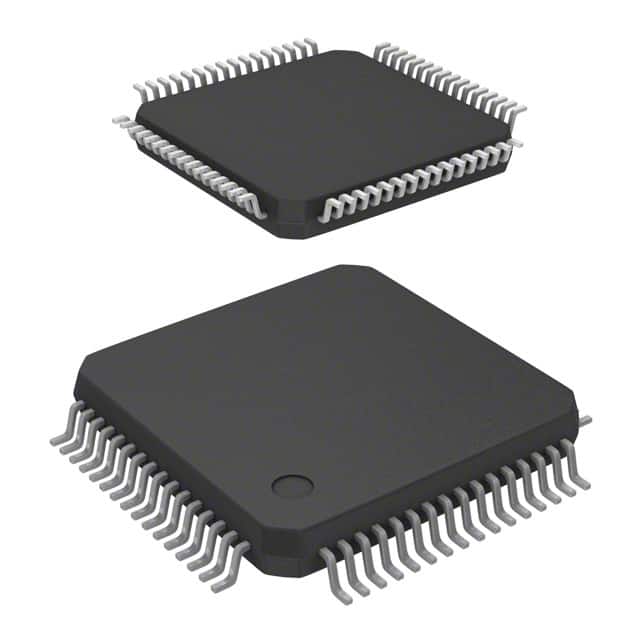
- Part No.:
- AT83C25OK100-RDTIM
- Manufacturer:
- Microchip Technology
- Category:
- Specialized
- Package:
- 64-LQFP
- Datasheet:
-
 AT83C25OK100-RDTIM.pdf
- Description:
- IC INTERFACE SPECIALIZED 64LQFP
- Quantity:
- Payment:

- Shipping:

Inventory:4,482
Please send an inquiry. Send us your inquiry, and we will respond immediately.
Product details
Overview
AT83C25OK100-RDTIM from Atmel is a certified smart card interface controller IC for PCMCIA-based readers, compliant with ISO 7816 and EMV 2000, supporting T=0/T=1 protocols, 1.8V/3V/5V smart cards, 60 mA card power supply, and auto-detection of card type and movement. It targets secure payment terminals and embedded banking systems.
For engineers reviewing the AT83C25OK100-RDTIM datasheet, AT83C25OK100-RDTIM pinout, AT83C25OK100-RDTIM application, or AT83C25OK100-RDTIM equivalent, key selection criteria include PCMCIA host interface compliance, dual-voltage smart card support, thermal/short-circuit protection, WHQL and EMV 2000 certification status, and VQFP64 package integration readiness.
Technical Context
The AT83C25OK100-RDTIM implements a dedicated smart card interface engine with hardware-level protocol handling for T=0 and T=1, integrated card power regulation (60 mA), and automatic card insertion/removal detection with auto-power-off. It embeds firmware for ISO 7816-3 physical layer signaling and supports TWI (S=8), SLE4432/42 (S=10), and SLE4418/28 (S=9) variants.
Its host interface is strictly PCMCIA-compliant with 16 Mbit/sec transmission speed and requires no external driver development for Windows 98/ME/NT4.0/2000/XP/CE 3.0, Linux, or macOS X - all drivers are delivered pre-certified and bundled.
Key Specifications
| Parameter | Value and Actual Design Meaning |
|---|---|
| Smart Card Voltage Support | 1.8 V, 3 V, and 5 V - enables single-reader compatibility across legacy and modern contact smart cards. |
| Card Power Supply | 60 mA max - sufficient to drive high-current EMV-compliant cards without external boost circuitry. |
| Host Interface | PCMCIA Type II - direct plug-in capability into notebook or industrial PCMCIA slots without bridge logic. |
| Data Rate | 16 Mbit/sec - meets PCMCIA 2.1 timing requirements for burst-mode smart card data transfer. |
| Certifications | WHQL, EMV 2000, ISO 7816, HBCI, PCMCIA - eliminates need for end-system re-certification in financial and e-banking deployments. |
| Operating Temperature | −40°C to +85°C - qualified for industrial-grade embedded reader applications including kiosks and point-of-sale terminals. |
| Package | VQFP64 - 10 mm × 10 mm footprint with 0.5 mm pitch, optimized for compact PCMCIA module PCB layout. |
Pinout & Package
VQFP64 (Very Thin Quad Flat Package, 64-pin), 10 mm × 10 mm body, 0.5 mm lead pitch, exposed thermal pad (not electrically connected), moisture sensitivity level 3.
| Pin/Terminal | Circuit Role | Design Meaning |
|---|---|---|
| VCC | Core & I/O supply | 3.3 V nominal - powers internal logic and PCMCIA interface buffers; decoupling required per PCMCIA spec. |
| VCCCARD | Smart card power output | Programmable 1.8/3/5 V output - regulated by on-chip DC-DC converter; delivers up to 60 mA with short-circuit foldback. |
| RST | Smart card reset control | Open-drain active-low output - drives card RST pin with slew-rate controlled edge for ISO 7816-3 timing compliance. |
| CLK | Smart card clock input | Driven by internal PLL - generates precise 1–5 MHz card clock from 3.3 V system clock; supports automatic frequency adaptation. |
| I/O | Smart card data bidirectional | Level-shifted, ESD-protected I/O - handles T=0/T=1 protocol data exchange with built-in voltage translation and noise filtering. |
| CD | Card detect input | Active-high digital input - detects mechanical card insertion/removal; triggers auto-power-off sequence within 100 ms. |
| PCMCIA Address/Data Bus | Host interface signals | Pins A0–A9, D0–D15 - directly connects to PCMCIA slot address/data lines; no glue logic needed for Type II mode. |
Key Features
| Feature | Design Value |
|---|---|
| Auto card type detection | Identifies SLE44x2, SLE44x8, and TWI cards at power-on - eliminates manual configuration and enables plug-and-play multi-card support. |
| Thermal & short-circuit protection | Shuts down VCCCARD within 2 µs on overtemperature (>125°C) or >70 mA sustained load - prevents damage during card fault conditions. |
| EMV 2000 pre-certification | Validated against Europay/Mastercard/Visa test suite - reduces end-product certification time from months to days for payment terminal OEMs. |
| PC/SC driver stack | Fully compliant with PC/SC v1.0+ - enables seamless integration with Windows Smart Card Resource Manager and third-party middleware (e.g., OpenSC). |
| 2-wire & 3-wire protocol support | Hardware-accelerated S=8 (TWI), S=10 (SLE4432), S=9 (SLE4418) modes - avoids firmware overhead and ensures deterministic timing for cryptographic operations. |
Applications
| Payment Terminal Integration | Banking Kiosk Reader |
|---|---|
Use Scenario: Embedded in countertop or self-service ATM/payment terminals requiring EMV L1/L2 certification. IC Role / Device Role / Timing Role: Primary smart card interface controller managing card power, reset, clock, and I/O under PCMCIA host arbitration. Use Value: Pre-certified EMV 2000 and WHQL compliance eliminates redundant validation; 60 mA VCCCARD supports dual-interface (contact + contactless bridge) power budgets. | Use Scenario: Integrated into public-access banking kiosks deployed in branch lobbies or retail environments. IC Role / Device Role / Timing Role: Secure card interface with auto-detection and thermal protection - critical for unattended operation with variable ambient temperature. Use Value: Auto card movement detection and power-off reduce standby current to <10 µA, extending kiosk uptime between maintenance cycles. |
| eID Document Reader | Healthcare Smart Card Station |
Use Scenario: Used in national eID card readers for citizen authentication in government service portals. IC Role / Device Role / Timing Role: ISO 7816-compliant interface handling PACE and BAC protocols for ICAO 9303 ePassports and national ID cards. Use Value: Supports 1.8 V cards (e.g., German eID) and 5 V legacy cards (e.g., French Carte Vitale) in same hardware - no redesign needed for multi-country deployment. | Use Scenario: Deployed in hospital registration stations for patient identity verification via health insurance smart cards. IC Role / Device Role / Timing Role: Reliable card interface with short-circuit protection - essential when non-technical staff insert cards repeatedly in high-traffic clinical settings. Use Value: On-chip thermal shutdown prevents field failures during extended use; HBCI certification ensures interoperability with German banking backend systems. |
Equivalent & Alternatives
The following parts are listed as comparable options for similar smart card interface controller applications.
| Alternative Part | Technical Difference | Application Difference | Selection Advice |
|---|---|---|---|
| INFINEON SLE66CLXX series | Integrated 8051 core, no PCMCIA interface; requires external bus interface logic and custom driver stack. | Targeted at standalone smart card readers with custom host MCU, not PCMCIA slot integration. | Select when designing non-PCMCIA form factor or needing higher security certification (Common Criteria EAL5+). |
| NXP SLB9635TT | TPM 1.2-compliant secure element with limited ISO 7816 interface; lacks EMV 2000 pre-certification and 60 mA card power. | Designed for platform authentication, not primary smart card reader functionality. | Select only if combining TPM and basic card I/O in resource-constrained designs - not a functional replacement for AT83C25OK100-RDTIM. |
Compared with SLE66CLXX and SLB9635TT, the AT83C25OK100-RDTIM uniquely delivers PCMCIA-native integration, full EMV 2000 pre-certification, and 60 mA programmable card power - making it the only drop-in solution for certified notebook-embedded or industrial PCMCIA smart card readers.
Availability
AT83C25OK100-RDTIM is available at Aetrix Electronics and suitable for payment terminals, banking kiosks, and eID document readers requiring stable component supply, long-term industrial temperature support, and certified smart card interface functionality.
Supply support for AT83C25OK100-RDTIM includes scheduled delivery planning, volume procurement assistance, BOM continuity management, traceable sourcing, and lifecycle availability coordination for OEM customers, industrial embedded developers, connected-device designers, and electronics production programs.
Manufacturer
Atmel Corporation (now part of Microchip Technology) designed high-reliability microcontrollers, ASSPs, and smart card solutions for secure embedded systems before its 2016 acquisition.
The AT83C25OK product line delivers pre-certified, turnkey smart card interface controllers targeting rapid integration into PCMCIA-based financial, government, and healthcare terminals - reducing time-to-market for certified reader designs.
FAQ
What certifications does the AT83C25OK100-RDTIM hold?
The AT83C25OK100-RDTIM holds WHQL (Microsoft), EMV 2000, ISO 7816, HBCI, and PCMCIA certifications. These are factory-validated and documented in the official Atmel summary document 4308AS–SCR–05/04. No additional certification effort is required by the system integrator for these standards when using the AT83C25OK100-RDTIM in compliant host designs.
Does the AT83C25OK100-RDTIM support 1.8 V smart cards?
Yes, the AT83C25OK100-RDTIM supports 1.8 V, 3 V, and 5 V smart cards via its programmable VCCCARD output. The device automatically detects card voltage class during initialization and configures the regulator accordingly - confirmed in the "Smart Card Interface" section of the 4308AS–SCR–05/04 datasheet summary.
What is the maximum current supplied to the smart card by the AT83C25OK100-RDTIM?
The AT83C25OK100-RDTIM supplies up to 60 mA to the smart card through its VCCCARD pin. This is explicitly stated in the Features section of the 4308AS–SCR–05/04 document and is sufficient for powering EMV-compliant cards, including those with embedded secure elements and RF interfaces.
Is PCMCIA interface support built into the AT83C25OK100-RDTIM hardware?
Yes, the AT83C25OK100-RDTIM includes native PCMCIA interface logic supporting Type II operation at 16 Mbit/sec. Its pinout maps directly to standard PCMCIA address/data/control lines (A0–A9, D0–D15), eliminating need for external bus translators or FPGA glue logic - as verified in the Ordering Information and Description sections of 4308AS–SCR–05/04.
What operating systems are supported by the AT83C25OK100-RDTIM driver stack?
The AT83C25OK100-RDTIM supports Windows 98, ME, NT 4.0, 2000, XP, CE 3.0/CE.NET, Linux, and macOS X via its pre-certified PC/SC-compliant driver stack. Driver binaries and source are included in the Design-In Kit referenced in the Deliverables section of 4308AS–SCR–05/04.
What package type and temperature grade does the AT83C25OK100-RDTIM use?
The AT83C25OK100-RDTIM uses a VQFP64 package and is rated for industrial temperature range (−40°C to +85°C). This is confirmed in the Ordering Information table of 4308AS–SCR–05/04, where "RDTIM" suffix denotes Industrial grade in VQFP64 tray packaging.
AT83C25OK100-RDTIM Specifications
- Product attributes
- Attribute value
- Manufacturer:
- Microchip Technology
- Series:
- -
- Package/Case:
- 64-LQFP
- Packaging:
- Tray
- Product Status:
- Obsolete
- Applications:
- -
- Interface:
- PCMCIA (PC Card)
- Voltage - Supply:
- 1.8V ~ 5V
- Supplier Device Package:
- 64-LQFP (10x10)
- Grade:
- -
- Qualification:
- -
- Mounting Type:
- Surface Mount
AT83C25OK100-RDTIM FAQ
1.How can I place an order for AT83C25OK100-RDTIM through Aetrix?
Please submit a Request for Quotation (RFQ) for AT83C25OK100-RDTIM on Aetrix. Our sales agent will provide a competitive quotation and guide you through the order confirmation once you accept the terms.
2.Are the price and stock information for AT83C25OK100-RDTIM reliable?
The price and inventory of AT83C25OK100-RDTIM are updated periodically and may fluctuate due to market conditions. Stock and pricing data are typically refreshed every 24 hours. Quotation validity for AT83C25OK100-RDTIM is usually 5 days.
3.What payment methods are accepted for AT83C25OK100-RDTIM?
We accept Wire Transfer, PayPal, Credit Card, Western Union, MoneyGram, and Escrow for AT83C25OK100-RDTIM transactions.
Note: Certain payment methods may incur a processing fee.
4.How is shipping managed for AT83C25OK100-RDTIM?
AT83C25OK100-RDTIM orders can be shipped via leading logistics carriers, including DHL, UPS, FedEx, TNT, or Registered Mail.
Once your AT83C25OK100-RDTIM order is processed, you will receive an email with the shipment details and tracking number.
Note: Tracking information may take up to 24 hours to appear. Express delivery typically takes 3–5 business days.
5.How can I obtain technical support or documentation for AT83C25OK100-RDTIM?
For technical support, including AT83C25OK100-RDTIM datasheets, pinout diagrams, or application guidance, please contact our engineering support team. They can provide detailed documentation and assistance for your AT83C25OK100-RDTIM requirements.
6.How does Aetrix verify that AT83C25OK100-RDTIM is sourced from the original manufacturer or authorized distributors?
All AT83C25OK100-RDTIM products on Aetrix are procured from qualified distributors and authorized channels. Our dedicated quality assurance team conducts strict verification, including traceability checks and, if necessary, third-party testing. This ensures that AT83C25OK100-RDTIM meets industry standards.
7.What is the process for return or replacement of AT83C25OK100-RDTIM?
All AT83C25OK100-RDTIM units undergo pre-shipment inspection (PSI). If there is an issue with AT83C25OK100-RDTIM, returns or replacements are accepted under the following conditions:
1.Quantity discrepancies, incorrect items, or visible external defects (such as breakage or corrosion), acknowledged by Aetrix.
2.The issue is reported within 90 days of delivery.
3.The AT83C25OK100-RDTIM part is unused and in its original packaging.
Return procedure for AT83C25OK100-RDTIM:
1.Submit a request within 90 days.
2.Obtain a Return Material Authorization (RMA) from Aetrix.
AT83C25OK100-RDTIM Tags
-
NVT4857UKAZ
NXP Semiconductors
-
TCA8418RTWR
Texas Instruments

-
PCA9546APWR
Texas Instruments

-
MD0100N8-G
Microchip Technology
-
PCA9548APW,118
NXP Semiconductors
-
PCA9540BDP,118
NXP Semiconductors
-
PCA9548APWR
Texas Instruments
-
PCA9546APW,118
NXP Semiconductors
-
PTN3360DBS,518
NXP Semiconductors
-
PCA9546ABS,118
NXP Semiconductors
-
PCA9518PWR
Texas Instruments
-
PCA9545APW,118
NXP Semiconductors
Tech Hub

TTL and CMOS logic families differ in thresholds, loading, output drive, power and timing. This engineering guide compares 74HC and 74HCT, calculates noise margins and checks 3.3 V/5 V compatibility.

A practical engineering guide to 3.3V and 5V logic compatibility, input thresholds, resistor dividers, translator ICs, MOSFET level shifting, I2C pull-ups, timing limits and power-sequencing risks.

The 74HC595 uses push-pull logic outputs, while the TPIC6B595 uses 50 V open-drain DMOS sinks for higher-power loads. This guide compares timing, current limits, 3.3 V interfacing, load wiring, thermal…

The 74HC595 converts serial data into eight stable parallel outputs. This guide covers pin functions, shift and storage timing, OE and MR behavior, drive-current limits, cascading, voltage compatibilit…

A technical comparison of level-sensitive latches and edge-triggered flip-flops, covering timing windows, setup and hold limits, master–slave operation, time borrowing, race-through, HDL inference and…

A D latch stores one bit while Enable controls when data can pass. This reference covers gate-level operation, truth tables, transparency, setup and hold timing, LE versus OE, common ICs and practical …

An SR latch stores one bit through cross-coupled feedback. This engineering reference covers NOR and NAND implementations, truth tables, forbidden-state recovery, gated operation, switch debouncing, fa…

Latch circuits retain one bit through feedback. This technical reference covers SR and D latches, truth tables, transparency, timing limits, latch-versus-flip-flop behavior, applications and common log…

An engineering guide to LED driver operation, constant-current and constant-voltage outputs, linear and switching topologies, dimming, IC selection, calculations, replacement compatibility, and fault c…

Operational amplifier guide covering op amp basics, feedback, ideal vs real op amps, common configurations, buffer circuits, offset, bias current, gain-bandwidth, slew rate, rail-to-rail limits and sel…


