
 My Inquiry
 My Account


Microchip Technology AT88SC6416CRF-MY1

- Part No.:
- AT88SC6416CRF-MY1
- Manufacturer:
- Microchip Technology
- Category:
- RFID Transponders, Tags
- Package:
- Datasheet:
-
 AT88SC6416CRF-MY1.pdf
- Description:
- RFID TAG R/W 13.56MHZ INLAY
- Quantity:
- Payment:

- Shipping:

Inventory:2,574
Please send an inquiry. Send us your inquiry, and we will respond immediately.
Product details
Overview
AT88SC6416CRF-MY1 from Microchip Technology (acquired Atmel in 2016) is a contactless 13.56 MHz CryptoRF EEPROM memory IC optimized for secure RF smart cards and tamper-resistant data storage. It delivers 64 kilobits of user memory across sixteen 512-byte zones, ISO/IEC 14443-2 & -3 Type B compliance, and integrated 82 pF tuning capacitance - enabling single-coil antenna operation in access control and e-ID applications.
For engineers reviewing the AT88SC6416CRF-MY1 datasheet, AT88SC6416CRF-MY1 pinout, AT88SC6416CRF-MY1 application, or AT88SC6416CRF-MY1 equivalent, key selection considerations include its 100,000-write-cycle endurance, −25°C to +85°C industrial temperature range, 64-bit mutual authentication protocol, and zone-level password/key access control with anti-tearing protection.
Technical Context
The AT88SC6416CRF-MY1 implements a dedicated RF interface compliant exclusively with ISO/IEC 14443-2:2001 and -3:2001 Type B signaling, including Slot-MARKER anticollision and 106 kbps half-duplex communication with 2-byte CRC_B error detection. It draws power entirely from the RF field - no battery or external supply required.
Its security architecture supports three distinct communication modes: Standard (clear data), Authentication (encrypted passwords + MAC), and Encryption (end-to-end encrypted data + MAC). Each of the 16 user zones can be independently secured using four key sets, eight 24-bit password pairs, and programmable access rights stored in a 2-Kbit configuration zone.
Key Specifications
| Parameter | Value and Actual Design Meaning |
|---|---|
| RF Frequency | 13.56 MHz - Enables interoperability with standard ISO/IEC 14443-B readers and infrastructure. |
| User Memory | 64 kbit (16 × 512-byte zones) - Supports multi-application partitioning (e.g., transit + ID + loyalty on one card). |
| Configuration Memory | 2 kbit - Stores AFI, anticollision response, keys, passwords, and zone-specific access registers. |
| Write Endurance | 100,000 cycles - Ensures long-term reliability in high-frequency transaction environments like fare collection. |
| Data Retention | 10 years - Guarantees persistent storage without refresh under specified operating conditions. |
| Operating Temp | −25°C to +85°C - Validated for industrial-grade deployment in outdoor access terminals and transport systems. |
| Tuning Capacitance | 82 pF ±10% - Integrated capacitor eliminates need for external tuning components; simplifies antenna design. |
Pinout & Package
AT88SC6416CRF-MY1 is supplied in an R Module package: 2-terminal, XOA2-style RF smart card module (5.06 mm × 8.00 mm, 0.38 mm thick), with AC1 and AC2 serving as coil connection terminals. No VDD/VSS pins - power is harvested from the RF field.
| Pin/Terminal | Circuit Role | Design Meaning |
|---|---|---|
| AC1 | RF Antenna Terminal 1 | Connects to one end of external planar coil; forms resonant LC tank with internal 82 pF capacitor. |
| AC2 | RF Antenna Terminal 2 | Connects to other end of external coil; completes RF coupling path for power harvesting and bidirectional data exchange. |
Key Features
| Feature | Design Value |
|---|---|
| ISO/IEC 14443-3 Type B Anticollision | Enables reliable multi-card polling in dense reader fields without collision-induced read failures. |
| 64-bit Mutual Authentication (ELVA licensed) | Prevents cloning and man-in-the-middle attacks by cryptographically verifying both card and reader identity. |
| Zone-Level Access Control | Allows independent password/key policies per 512-byte zone - essential for multi-tenant secure credentialing. |
| Anti-Tearing Function | Guarantees atomic write integrity during unexpected RF field loss via dual-phase EEPROM write buffering. |
| Transport Password ($70 BA 2E) | Provides factory-default secure entry point to configuration memory for initial personalization and provisioning. |
Applications
| Physical Access Control | Electronic Identity Cards |
|---|---|
Use Scenario: Secure door entry system using contactless badges issued to employees and contractors. IC Role / Device Role / Timing Role: Contactless secure memory storing biometric templates, access permissions, and audit logs - authenticated via mutual challenge-response. Use Value: Prevents badge cloning and unauthorized zone access through per-zone encryption keys and tamper sensors. | Use Scenario: National ID card with citizen photo, fingerprint hash, and digital signature certificate. IC Role / Device Role / Timing Role: Tamper-resistant storage for cryptographic keys and personal identifiers - accessed only after AFI-based anticollision filtering and 64-bit mutual authentication. Use Value: Meets ICAO Doc 9303 requirements for e-passport security via hardware-enforced access rights and anti-tearing writes. |
| Public Transport Fare Media | Secure Loyalty & Payment Tokens |
Use Scenario: Rechargeable transit card used across buses, trains, and ferries with offline balance updates. IC Role / Device Role / Timing Role: High-endurance EEPROM storing encrypted balance, transaction history, and reload counters - updated via authenticated Write commands. Use Value: Withstands 100,000+ tap transactions while preventing balance manipulation via stream encryption and password attempt counters. | Use Scenario: Dual-interface loyalty token supporting both contactless redemption and mobile NFC pairing. IC Role / Device Role / Timing Role: Secure credential store for merchant-specific keys and dynamic session tokens - isolated across zones for cross-program compatibility. Use Value: Enables issuer-defined AFI codes and programmable anticollision responses to coexist with other RF protocols in multi-brand wallets. |
Equivalent & Alternatives
The following parts are listed as comparable options for similar contactless secure memory applications.
| Alternative Part | Technical Difference | Application Difference | Selection Advice |
|---|---|---|---|
| NXP NTAG 424 DNA | 13.56 MHz Type A only; 888 bytes user memory; AES-128 crypto; no integrated tuning cap. | Optimized for NFC Forum Type 4 tag use cases (e.g., smartphone interaction), not multi-reader Type B infrastructure. | Select when NFC phone compatibility and AES-based signing are prioritized over ISO/IEC 14443-B interoperability and larger memory. |
| Infineon SLE 78 CLP | 13.56 MHz Type A/B dual-mode; 64 kB Flash; JavaCard OS; requires external power or complex energy harvesting. | Targeted at full smart card OS deployments (e.g., banking applets), not standalone secure EEPROM use. | Select when microprocessor-based applet execution and dual-protocol support outweigh cost, size, and passive operation constraints. |
Compared with NTAG 424 DNA and SLE 78 CLP, the AT88SC6416CRF-MY1 uniquely combines ISO/IEC 14443-B compliance, integrated tuning capacitance, 64-kbit EEPROM, and hardware-enforced zone-level security - making it optimal for cost-sensitive, battery-free, high-assurance smart card applications requiring proven reader interoperability.
Availability
AT88SC6416CRF-MY1 is available at Aetrix Electronics and suitable for physical access control systems, electronic identity cards, and public transport fare media requiring stable component supply, long-term lifecycle support, and RoHS-compliant packaging.
Supply support for AT88SC6416CRF-MY1 includes scheduled delivery planning, volume procurement assistance, BOM continuity management, traceable sourcing, and lifecycle availability coordination for OEM customers, industrial embedded developers, connected-device designers, and electronics production programs.
Manufacturer
Microchip Technology acquired Atmel in 2016 and maintains full product support, documentation, and manufacturing continuity for the CryptoRF family.
The AT88SC6416CRF-MY1 belongs to Microchip's CryptoRF secure memory product line - designed specifically for contactless, battery-free, high-security applications in government ID, access control, and transit systems where ISO/IEC 14443-B interoperability and hardware-enforced cryptography are mandatory.
FAQ
What is the primary function of the AT88SC6416CRF-MY1?
The AT88SC6416CRF-MY1 is a contactless 13.56 MHz secure EEPROM IC implementing ISO/IEC 14443-2 and -3 Type B protocols. Its primary function is to provide tamper-resistant, authenticated, and encrypted data storage in battery-free smart cards - with 64 kbit user memory, 2 kbit configuration space, and hardware-accelerated 64-bit mutual authentication. The AT88SC6416CRF-MY1 operates entirely from harvested RF energy and requires no external power source.
Does the AT88SC6416CRF-MY1 support ISO/IEC 14443 Type A?
No, the AT88SC6416CRF-MY1 is compliant only with ISO/IEC 14443-2 and -3 Type B specifications. However, its RF interface is tolerant of Type A signals - meaning exposure to Type A modulation will not damage the device or cause latch-up, though it will not respond to Type A commands. The AT88SC6416CRF-MY1 must be used with Type B readers for functional operation.
What is the purpose of the integrated 82 pF capacitor in the AT88SC6416CRF-MY1?
The integrated 82 pF ±10% tuning capacitor enables the AT88SC6416CRF-MY1 to form a resonant LC circuit with an external antenna coil - eliminating the need for discrete capacitors in the RF front-end. This simplifies PCB or tag layout, reduces bill-of-materials cost, and improves manufacturing yield. The AT88SC6416CRF-MY1 relies on this integrated capacitance to achieve optimal power harvesting and data communication at 13.56 MHz.
How is security enforced across different memory zones in the AT88SC6416CRF-MY1?
Security is enforced per zone using independently configurable access rights stored in the 2-kbit configuration memory. Each of the 16 user zones can be assigned unique Read/Write passwords, authentication keys, and encryption keys - with separate attempt counters and anti-tearing settings. The AT88SC6416CRF-MY1 validates credentials before granting access, and zone-level fuses lock configuration data after personalization to prevent tampering.
What is the transport password for initial configuration of the AT88SC6416CRF-MY1?
The factory-default transport password for accessing the configuration memory of the AT88SC6416CRF-MY1 is $70 BA 2E (hexadecimal). This secure code must be presented using the Check Password command before programming AFI, anticollision response, keys, or passwords. Once personalization begins, the transport password may be overwritten - so it should be used only during initial setup. The AT88SC6416CRF-MY1 ships with all security features disabled, requiring this step to activate protected functionality.
AT88SC6416CRF-MY1 Specifications
- Product attributes
- Attribute value
- Manufacturer:
- Microchip Technology
- Series:
- CryptoMemory®, CryptoRF®
- Packaging:
- Tape & Reel (TR)
- Product Status:
- Obsolete
- Style:
- Inlay
- Technology:
- Passive
- Frequency:
- 13.56MHz
- Memory Type:
- Read/Write
- Writable Memory:
- 64kb (User)
- Standards:
- ISO 14443
- Operating Temperature:
- -25°C ~ 85°C
- Size / Dimension:
- 0.495" L x 0.495" W (12.58mm x 12.58mm)
AT88SC6416CRF-MY1 FAQ
1.How can I place an order for AT88SC6416CRF-MY1 through Aetrix?
Please submit a Request for Quotation (RFQ) for AT88SC6416CRF-MY1 on Aetrix. Our sales agent will provide a competitive quotation and guide you through the order confirmation once you accept the terms.
2.Are the price and stock information for AT88SC6416CRF-MY1 reliable?
The price and inventory of AT88SC6416CRF-MY1 are updated periodically and may fluctuate due to market conditions. Stock and pricing data are typically refreshed every 24 hours. Quotation validity for AT88SC6416CRF-MY1 is usually 5 days.
3.What payment methods are accepted for AT88SC6416CRF-MY1?
We accept Wire Transfer, PayPal, Credit Card, Western Union, MoneyGram, and Escrow for AT88SC6416CRF-MY1 transactions.
Note: Certain payment methods may incur a processing fee.
4.How is shipping managed for AT88SC6416CRF-MY1?
AT88SC6416CRF-MY1 orders can be shipped via leading logistics carriers, including DHL, UPS, FedEx, TNT, or Registered Mail.
Once your AT88SC6416CRF-MY1 order is processed, you will receive an email with the shipment details and tracking number.
Note: Tracking information may take up to 24 hours to appear. Express delivery typically takes 3–5 business days.
5.How can I obtain technical support or documentation for AT88SC6416CRF-MY1?
For technical support, including AT88SC6416CRF-MY1 datasheets, pinout diagrams, or application guidance, please contact our engineering support team. They can provide detailed documentation and assistance for your AT88SC6416CRF-MY1 requirements.
6.How does Aetrix verify that AT88SC6416CRF-MY1 is sourced from the original manufacturer or authorized distributors?
All AT88SC6416CRF-MY1 products on Aetrix are procured from qualified distributors and authorized channels. Our dedicated quality assurance team conducts strict verification, including traceability checks and, if necessary, third-party testing. This ensures that AT88SC6416CRF-MY1 meets industry standards.
7.What is the process for return or replacement of AT88SC6416CRF-MY1?
All AT88SC6416CRF-MY1 units undergo pre-shipment inspection (PSI). If there is an issue with AT88SC6416CRF-MY1, returns or replacements are accepted under the following conditions:
1.Quantity discrepancies, incorrect items, or visible external defects (such as breakage or corrosion), acknowledged by Aetrix.
2.The issue is reported within 90 days of delivery.
3.The AT88SC6416CRF-MY1 part is unused and in its original packaging.
Return procedure for AT88SC6416CRF-MY1:
1.Submit a request within 90 days.
2.Obtain a Return Material Authorization (RMA) from Aetrix.
AT88SC6416CRF-MY1 Tags
-
SL3S1013FTB0,115
NXP Semiconductors
-
NTP53321G0JHKZ
NXP Semiconductors
-
HTSH4801ETK,118
NXP Semiconductors
-
NTA53321G0FHKZ
NXP Semiconductors
-
RF-HDT-DVBE-N2
Texas Instruments
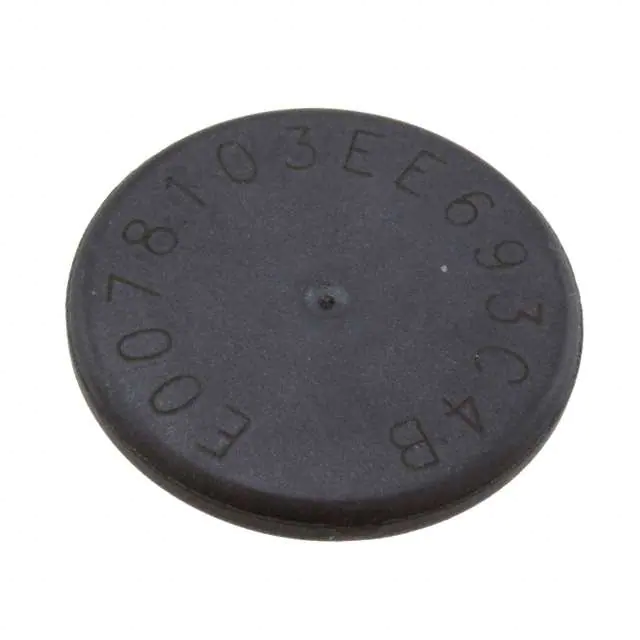
-
RF-HDT-DVBB-N2
Texas Instruments
-
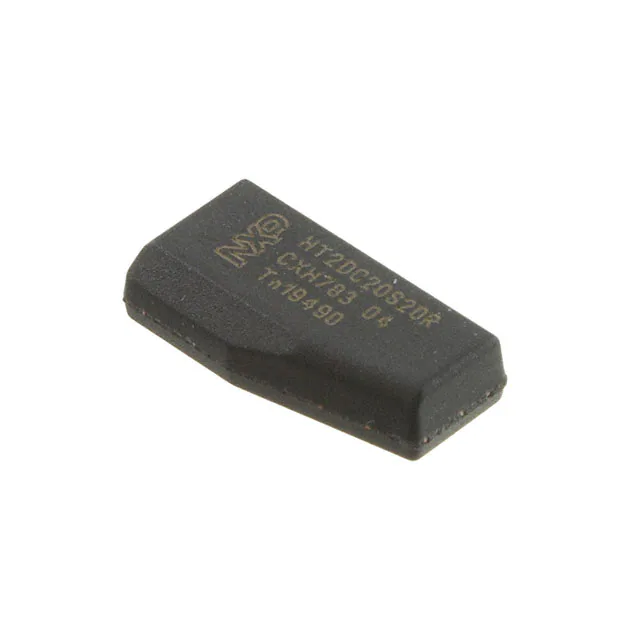
HT2DC20S20/F/RSP
NXP Semiconductors
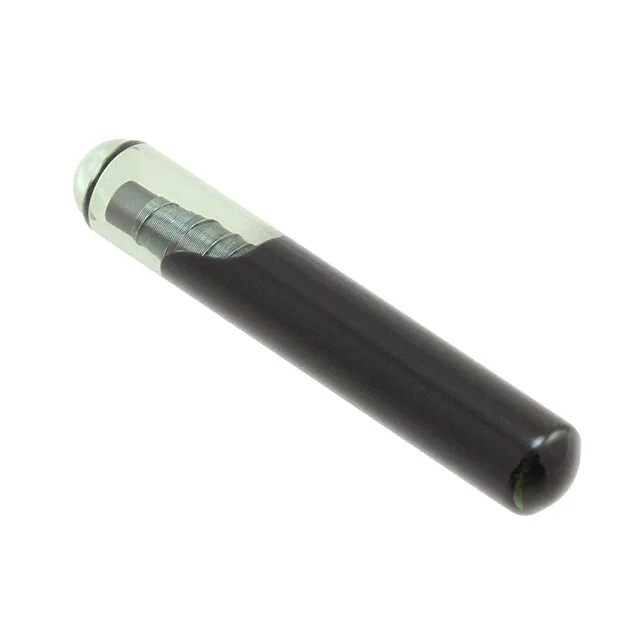
-
TRPGR30ATGA
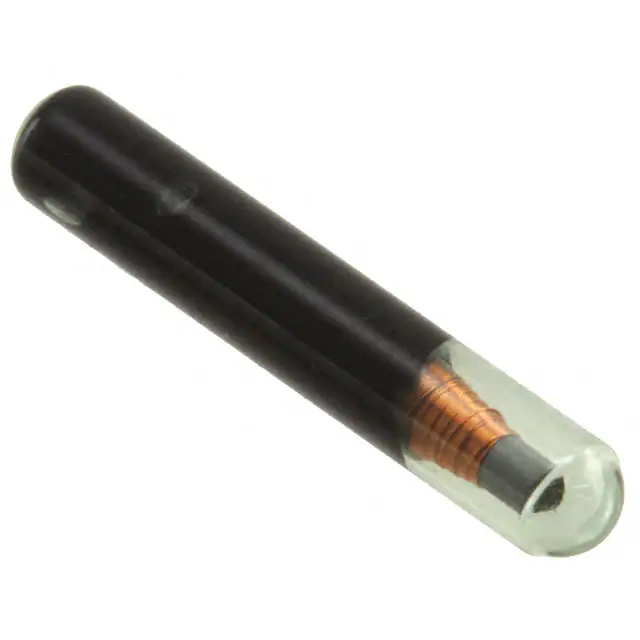
Texas Instruments
-
TRPGR30ATGC
Texas Instruments
-
RI-TRP-DR2B-40
Texas Instruments
-
V680-D1KP52MT
Omron Automation and Safety
-
HTMS8001FTB/AF,115
NXP USA Inc.
Tech Hub

TTL and CMOS logic families differ in thresholds, loading, output drive, power and timing. This engineering guide compares 74HC and 74HCT, calculates noise margins and checks 3.3 V/5 V compatibility.

A practical engineering guide to 3.3V and 5V logic compatibility, input thresholds, resistor dividers, translator ICs, MOSFET level shifting, I2C pull-ups, timing limits and power-sequencing risks.

The 74HC595 uses push-pull logic outputs, while the TPIC6B595 uses 50 V open-drain DMOS sinks for higher-power loads. This guide compares timing, current limits, 3.3 V interfacing, load wiring, thermal…

The 74HC595 converts serial data into eight stable parallel outputs. This guide covers pin functions, shift and storage timing, OE and MR behavior, drive-current limits, cascading, voltage compatibilit…

A technical comparison of level-sensitive latches and edge-triggered flip-flops, covering timing windows, setup and hold limits, master–slave operation, time borrowing, race-through, HDL inference and…

A D latch stores one bit while Enable controls when data can pass. This reference covers gate-level operation, truth tables, transparency, setup and hold timing, LE versus OE, common ICs and practical …

An SR latch stores one bit through cross-coupled feedback. This engineering reference covers NOR and NAND implementations, truth tables, forbidden-state recovery, gated operation, switch debouncing, fa…

Latch circuits retain one bit through feedback. This technical reference covers SR and D latches, truth tables, transparency, timing limits, latch-versus-flip-flop behavior, applications and common log…

An engineering guide to LED driver operation, constant-current and constant-voltage outputs, linear and switching topologies, dimming, IC selection, calculations, replacement compatibility, and fault c…

Operational amplifier guide covering op amp basics, feedback, ideal vs real op amps, common configurations, buffer circuits, offset, bias current, gain-bandwidth, slew rate, rail-to-rail limits and sel…


