
 My Inquiry
 My Account


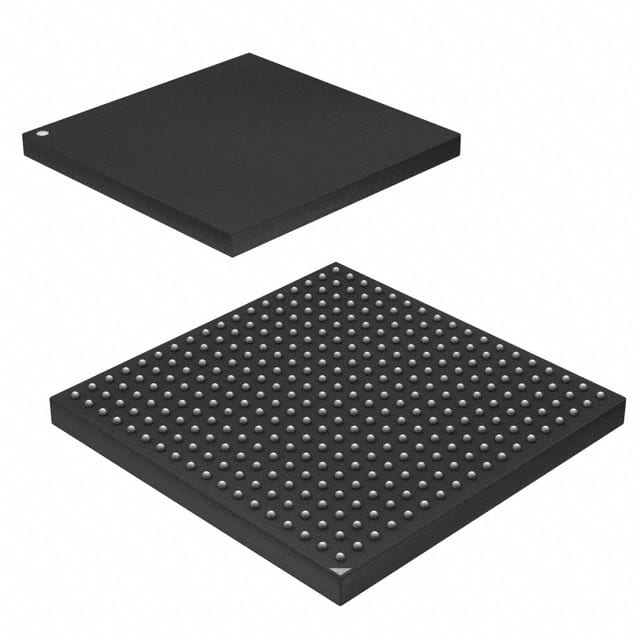
Microchip Technology AT91SAM9M10C-CU
- Part No.:
- AT91SAM9M10C-CU
- Manufacturer:
- Microchip Technology
- Category:
- Microprocessors
- Package:
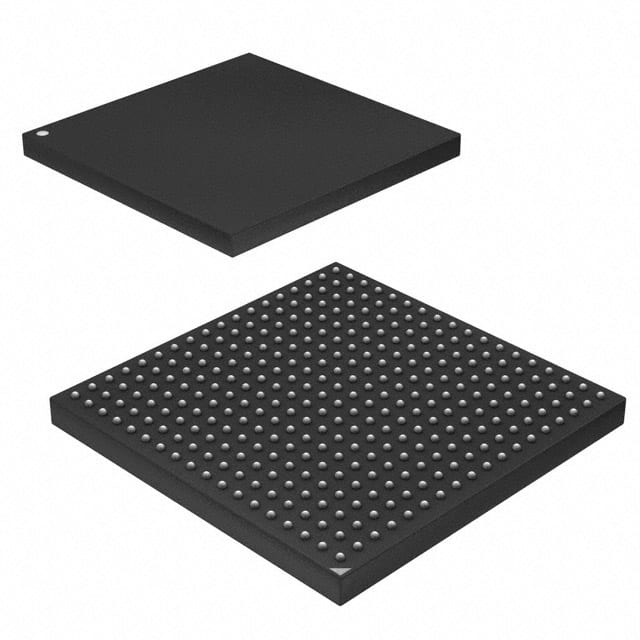
- 324-TFBGA
- Datasheet:
-
 AT91SAM9M10C-CU.pdf
- Description:
- IC MPU SAM9M 400MHZ 324TFBGA
- Quantity:
- Payment:

- Shipping:

Inventory:136
Please send an inquiry. Send us your inquiry, and we will respond immediately.
Product details
Overview
AT91SAM9M10C-CU from Microchip Technology (formerly Atmel) is a 400 MHz ARM926EJ-S-based multimedia-optimized embedded MPU with integrated video decoder (H.264/MPEG-4/MPEG-2/VC-1/H.263), LCD controller supporting up to 1280×860, 10/100 Ethernet MAC, dual high-speed USB (host/device), and 8-channel 10-bit touchscreen ADC. It targets media-rich human-machine interfaces in POS terminals, medical displays, and home automation panels.
For engineers reviewing the AT91SAM9M10C-CU datasheet, AT91SAM9M10C-CU pinout, AT91SAM9M10C-CU application, or AT91SAM9M10C-CU equivalent, key selection considerations include DDR2/LPDDR memory interface support, 324-ball TFBGA package with 0.8 mm pitch, 3.3 V/1.8 V I/O voltage flexibility, hardware-accelerated video decode at D1/WVGA resolution, and triple low-power modes (Idle/Ultra Low-power/Backup).
Technical Context
The AT91SAM9M10C-CU integrates a 400 MHz ARM926EJ-S core with 32 KB instruction and 32 KB data caches plus MMU, backed by a 133 MHz multi-layer AHB bus matrix and 37 DMA channels. Its system architecture includes two PLLs-one for general system clocking and a dedicated 480 MHz PLL optimized for USB High-Speed operation.
Peripherals are distributed across multiple clock domains: the video decoder (VDEC) and LCD controller operate on independent pixel clocks; the ISI image sensor interface supports ITU-R BT.601/656; and the EMAC supports both MII and RMII PHY interfaces. Power management includes clock gating, battery-backed RTC/RTT/GPBR, and three software-selectable low-power states with distinct peripheral retention profiles.
Key Specifications
| Parameter | Value and Actual Design Meaning |
|---|---|
| CPU Core | ARM926EJ-S @ 400 MHz with 32 KB I-cache, 32 KB D-cache, and MMU for OS support |
| Video Decoder | Hardware VDEC supporting H.264, MPEG-4, MPEG-2, VC-1, H.263 at ≤30 fps @ D1 (720×576) or WVGA (800×480) |
| Memory Interface | 4-port DDR2/LPDDR controller + EBI with 4-bank SDR/LPSDR, NAND Flash (with ECC), CompactFlash, and SRAM support |
| Display Support | LCDC driving STN/TFT up to 1280×860; integrated 8-channel 10-bit ADC with 4-wire resistive touchscreen interface |
| Connectivity | 10/100 Mbps EMAC (MII/RMII), dual USB 2.0 HS host ports + USB 2.0 HS device port (UTMI+), two SDIO/SDCard/MMC hosts |
| Package | 324-ball TFBGA, 15×15×1.2 mm, 0.8 mm ball pitch, RoHS-compliant |
| Power Modes | Three selectable low-power modes: Idle (CPU stopped, full bus speed), Ultra Low-power (CPU stopped, min bus speed), Backup (RTC/RTT/GPBR only) |
Pinout & Package
The AT91SAM9M10C-CU is housed in a 324-ball TFBGA package (15 × 15 × 1.2 mm, 0.8 mm pitch) with I/Os configurable for 1.8 V or 3.3 V operation-eliminating external level shifters. Power domains include VDDCORE (0.9–1.1 V), VDDIOM0/1 (1.65–1.95 V or 3.0–3.6 V), VDDIOP0–2 (1.65–3.6 V), and VDDBU (1.8–3.6 V).
| Pin/Terminal | Circuit Role | Design Meaning |
|---|---|---|
| A12 | Address Bus Line | EBI address line A12 for static memory or NAND Flash access |
| E10 | NAND Write Enable | Active-low control signal for NAND Flash write operations |
| K1 | Parallel I/O Port E Bit 21 | Programmable GPIO or peripheral multiplexed function (e.g., PWM, TC) |
| P10 | JTAG Test Mode Select | Input controlling JTAG state machine; pulled down internally (15 kΩ) |
| V18 | USB Bias Voltage Reference | Analog reference (VBG) for internal USB transceivers; requires 0.01 µF decoupling |
Key Features
| Feature | Design Value |
|---|---|
| Hardware Video Decode Acceleration | Offloads CPU from real-time video decoding of five major codecs, enabling smooth playback on resource-constrained UIs |
| Flexible I/O Voltage Configuration | Independent 1.8 V / 3.3 V settings per I/O group (memory, peripherals, ISI) eliminate external level shifters and reduce BOM cost |
| Tightly Coupled Memory (TCM) | 64 KB internal SRAM configurable as ITCM/DTCM for zero-wait-state critical code/data execution at 400 MHz processor speed |
| True Random Number Generator (TRNG) | Dedicated hardware entropy source for cryptographic key generation and secure boot protocols compliant with FIPS 140-2 requirements |
| Triple Low-Power Operating Modes | Enables system-level power optimization: Idle mode retains full peripheral functionality; Backup mode draws <10 µA while preserving RTC and 128-bit GPBR |
Applications
| POS Terminal Display | Medical Patient Monitor UI |
|---|---|
Use Scenario: Touch-enabled retail checkout interface with video product demos and receipt printing. IC Role / Device Role / Timing Role: Central MPU executing Linux-based UI stack, driving TFT LCD via LCDC, capturing touch input via TSADCC, and communicating with thermal printer over USART. Use Value: Hardware VDEC enables local playback of promotional videos without CPU load; 4-wire touchscreen ADC provides precise stylus-free interaction. | Use Scenario: Bedside vital sign display with waveform rendering, alarm triggering, and networked data upload. IC Role / Device Role / Timing Role: Real-time data aggregator running RTOS, acquiring analog sensor data via ADC, rendering waveforms on STN LCD, and transmitting over 10/100 Ethernet. Use Value: Dual USB hosts support legacy medical peripherals (e.g., barcode scanners); Backup mode maintains RTC during AC power loss for accurate timestamping. |
| Home Automation Control Panel | Internet Appliance Media Hub |
Use Scenario: Wall-mounted smart-home controller with HVAC, lighting, and security status visualization. IC Role / Device Role / Timing Role: Embedded Linux application processor managing CAN/Ethernet backhaul, driving resistive touchscreen, and decoding UI assets from NAND Flash. Use Value: EBI supports direct NAND Flash boot with ECC; 324-ball TFBGA enables compact PCB layout for space-constrained enclosures. | Use Scenario: Connected media player streaming video to HDMI display via bridge IC and playing local content from SD card. IC Role / Device Role / Timing Role: Multimedia engine handling video decode, audio via AC'97, storage via dual SDIO hosts, and network streaming via EMAC. Use Value: VDEC + post-processing (scaling/color conversion/rotation) enables adaptive UI rendering across varying display resolutions. |
Equivalent & Alternatives
The following parts are listed as comparable options for similar embedded MPU applications.
| Alternative Part | Technical Difference | Application Difference | Selection Advice |
|---|---|---|---|
| ATSAMA5D36-CU | ARM Cortex-A5 @ 536 MHz, no integrated video decoder, adds GPU and LVDS output | Better suited for GUI-intensive applications requiring OpenGL ES; lacks hardware video decode acceleration | Select when higher CPU performance and graphics acceleration outweigh need for on-chip video decode |
| i.MX283 (NXP) | ARM9 @ 454 MHz, integrated LCD controller and 10/100 Ethernet, but no hardware video decoder | Targeted at industrial HMI with strong crypto (CAAM) and secure boot; limited multimedia codec support | Select for secure boot-critical applications where video decode is handled externally or via software |
Compared with ATSAMA5D36-CU and i.MX283, the AT91SAM9M10C-CU uniquely delivers hardware-accelerated multi-standard video decode in a cost-optimized ARM9 platform-making it optimal for media-rich displays where CPU offload and power efficiency are prioritized over raw compute throughput or advanced GPU features.
Availability
AT91SAM9M10C-CU is available at Aetrix Electronics and suitable for POS terminals, medical patient monitors, and home automation control panels requiring stable component supply, long-term lifecycle support, and RoHS-compliant packaging.
Supply support for AT91SAM9M10C-CU includes scheduled delivery planning, volume procurement assistance, BOM continuity management, traceable sourcing, and lifecycle availability coordination for OEM customers, industrial embedded developers, connected-device designers, and electronics production programs.
Manufacturer
Microchip Technology acquired Atmel in 2016 and maintains the SMART ARM portfolio, emphasizing reliability, longevity, and industrial-grade qualification for embedded microprocessors.
The AT91SAM9M10C-CU belongs to the SMART SAM9 family designed specifically for cost-sensitive, multimedia-capable human-machine interfaces-balancing performance, peripheral integration, and power efficiency for display-centric edge devices.
FAQ
What is the maximum supported resolution for the LCD Controller in AT91SAM9M10C-CU?
The AT91SAM9M10C-CU LCD Controller supports TFT and STN displays up to 1280×860 pixels. This capability is enabled by its programmable pixel clock, dual-panel support, and integrated timing generator-allowing direct drive of high-resolution industrial panels without external timing logic. The LCDC operates independently of the CPU clock, ensuring stable video output during intensive processing tasks.
Does AT91SAM9M10C-CU support booting directly from NAND Flash?
Yes, the AT91SAM9M10C-CU supports NAND Flash boot with built-in hardware ECC correction (up to 4-bit per 512-byte sector). The NAND Flash Controller handles address mapping, bad-block management, and error detection during ROM bootloader execution-enabling reliable field-upgradable firmware storage without external ECC co-processors.
What are the power supply requirements for VDDCORE and VDDIOM0 on AT91SAM9M10C-CU?
AT91SAM9M10C-CU requires VDDCORE at 0.9–1.1 V (typ. 1.0 V) and VDDIOM0 at 1.65–1.95 V (typ. 1.8 V) for DDR2/LPDDR I/O lines. These supplies must meet strict sequencing: VDDIOM0 must reach VOH within 418 µs after VDDCORE crosses VT+, and both must be stable before releasing the internal POR. GNDCORE and GNDIOM are separate ground planes.
Can AT91SAM9M10C-CU simultaneously operate USB Host and USB Device functions?
Yes, the AT91SAM9M10C-CU integrates two independent USB 2.0 High-Speed controllers: one UHPHS (dual-port host) and one UDPHS (device). They share no physical transceiver resources-enabling concurrent host enumeration (e.g., USB keyboard/mouse) and device mode (e.g., CDC ACM serial emulation) without arbitration or mode switching delays.
How does the AT91SAM9M10C-CU handle touchscreen input acquisition?
The AT91SAM9M10C-CU integrates an 8-channel 10-bit ADC (TSADCC) with dedicated analog inputs (AD0XP/AD1XM/AD2YP/AD3YM) for 4-wire resistive touchscreen measurement. It supports automatic X/Y coordinate scanning, pen-down detection, and programmable sampling rates-delivering sub-2 ms conversion latency and eliminating need for external touchscreen controllers.
AT91SAM9M10C-CU Specifications
- Product attributes
- Attribute value
- Manufacturer:
- Microchip Technology
- Package/Case:
- 324-TFBGA
- Series:
- SAM9M
- Packaging:
- Tray
- Product Status:
- Active
- Core Processor:
- ARM926EJ-S
- Number of Cores/Bus Width:
- 1 Core, 32-Bit
- Speed:
- 400MHz
- Co-Processors/DSP:
- -
- RAM Controllers:
- LPDDR, LPSDR, DDR2, SDR, SRAM
- Graphics Acceleration:
- No
- Display & Interface Controllers:
- LCD, Touchscreen, Video Decoder
- Ethernet:
- 10/100Mbps
- SATA:
- -
- USB:
- USB 2.0 (3)
- Voltage - I/O:
- 1.8V, 3.3V
- Operating Temperature:
- -40°C ~ 85°C (TA)
- Grade:
- -
- Qualification:
- -
- Security Features:
- -
- Mounting Type:
- Surface Mount
- Supplier Device Package:
- 324-TFBGA (15x15)
- Additional Interfaces:
- AC97, EBI/EMI, I2C, ISI, MMC/SD/SDIO, SPI, SSC, UART/USART
AT91SAM9M10C-CU FAQ
1.How can I place an order for AT91SAM9M10C-CU through Aetrix?
Please submit a Request for Quotation (RFQ) for AT91SAM9M10C-CU on Aetrix. Our sales agent will provide a competitive quotation and guide you through the order confirmation once you accept the terms.
2.Are the price and stock information for AT91SAM9M10C-CU reliable?
The price and inventory of AT91SAM9M10C-CU are updated periodically and may fluctuate due to market conditions. Stock and pricing data are typically refreshed every 24 hours. Quotation validity for AT91SAM9M10C-CU is usually 5 days.
3.What payment methods are accepted for AT91SAM9M10C-CU?
We accept Wire Transfer, PayPal, Credit Card, Western Union, MoneyGram, and Escrow for AT91SAM9M10C-CU transactions.
Note: Certain payment methods may incur a processing fee.
4.How is shipping managed for AT91SAM9M10C-CU?
AT91SAM9M10C-CU orders can be shipped via leading logistics carriers, including DHL, UPS, FedEx, TNT, or Registered Mail.
Once your AT91SAM9M10C-CU order is processed, you will receive an email with the shipment details and tracking number.
Note: Tracking information may take up to 24 hours to appear. Express delivery typically takes 3–5 business days.
5.How can I obtain technical support or documentation for AT91SAM9M10C-CU?
For technical support, including AT91SAM9M10C-CU datasheets, pinout diagrams, or application guidance, please contact our engineering support team. They can provide detailed documentation and assistance for your AT91SAM9M10C-CU requirements.
6.How does Aetrix verify that AT91SAM9M10C-CU is sourced from the original manufacturer or authorized distributors?
All AT91SAM9M10C-CU products on Aetrix are procured from qualified distributors and authorized channels. Our dedicated quality assurance team conducts strict verification, including traceability checks and, if necessary, third-party testing. This ensures that AT91SAM9M10C-CU meets industry standards.
7.What is the process for return or replacement of AT91SAM9M10C-CU?
All AT91SAM9M10C-CU units undergo pre-shipment inspection (PSI). If there is an issue with AT91SAM9M10C-CU, returns or replacements are accepted under the following conditions:
1.Quantity discrepancies, incorrect items, or visible external defects (such as breakage or corrosion), acknowledged by Aetrix.
2.The issue is reported within 90 days of delivery.
3.The AT91SAM9M10C-CU part is unused and in its original packaging.
Return procedure for AT91SAM9M10C-CU:
1.Submit a request within 90 days.
2.Obtain a Return Material Authorization (RMA) from Aetrix.
AT91SAM9M10C-CU Tags
-
AT91SAM9260B-CU-999
Microchip Technology
-
AT91SAM9G25-CU
Microchip Technology
-
ATSAMA5D27C-CU
Microchip Technology
-
AT91SAM9X35-CU
Microchip Technology
-
AT91SAM9X25-CU
Microchip Technology
-
MCIMX6Y2CVM08AB
NXP Semiconductors
.JPG)
-
AM3352BZCZ100
Texas Instruments
-
AT91SAM9260B-CU
Microchip Technology
-
AT91SAM9260B-QU
Microchip Technology
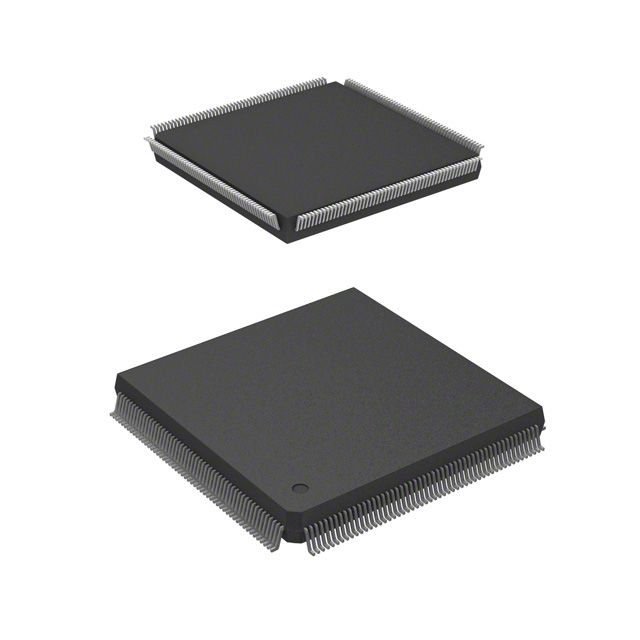
-
ATSAMA5D31A-CU
Microchip Technology
-
AT91SAM9G20B-CU-999
Microchip Technology
-
MCIMX6Y2CVM05AB
NXP Semiconductors
Tech Hub

TTL and CMOS logic families differ in thresholds, loading, output drive, power and timing. This engineering guide compares 74HC and 74HCT, calculates noise margins and checks 3.3 V/5 V compatibility.

A practical engineering guide to 3.3V and 5V logic compatibility, input thresholds, resistor dividers, translator ICs, MOSFET level shifting, I2C pull-ups, timing limits and power-sequencing risks.

The 74HC595 uses push-pull logic outputs, while the TPIC6B595 uses 50 V open-drain DMOS sinks for higher-power loads. This guide compares timing, current limits, 3.3 V interfacing, load wiring, thermal…

The 74HC595 converts serial data into eight stable parallel outputs. This guide covers pin functions, shift and storage timing, OE and MR behavior, drive-current limits, cascading, voltage compatibilit…

A technical comparison of level-sensitive latches and edge-triggered flip-flops, covering timing windows, setup and hold limits, master–slave operation, time borrowing, race-through, HDL inference and…

A D latch stores one bit while Enable controls when data can pass. This reference covers gate-level operation, truth tables, transparency, setup and hold timing, LE versus OE, common ICs and practical …

An SR latch stores one bit through cross-coupled feedback. This engineering reference covers NOR and NAND implementations, truth tables, forbidden-state recovery, gated operation, switch debouncing, fa…

Latch circuits retain one bit through feedback. This technical reference covers SR and D latches, truth tables, transparency, timing limits, latch-versus-flip-flop behavior, applications and common log…

An engineering guide to LED driver operation, constant-current and constant-voltage outputs, linear and switching topologies, dimming, IC selection, calculations, replacement compatibility, and fault c…

Operational amplifier guide covering op amp basics, feedback, ideal vs real op amps, common configurations, buffer circuits, offset, bias current, gain-bandwidth, slew rate, rail-to-rail limits and sel…


