
 My Inquiry
 My Account


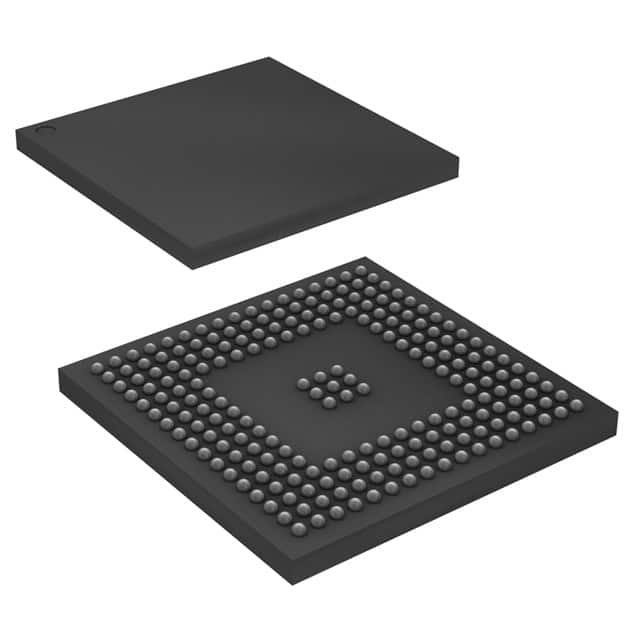
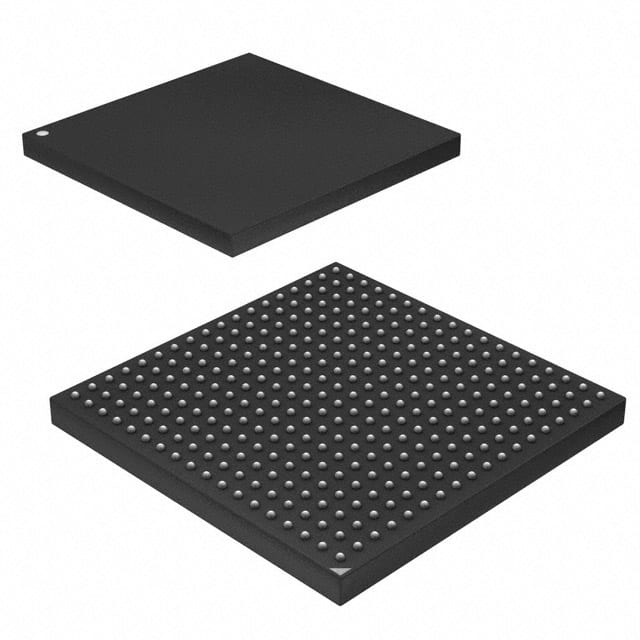
Microchip Technology AT91SAM9XE512B-CU
- Part No.:
- AT91SAM9XE512B-CU
- Manufacturer:
- Microchip Technology
- Category:
- Microprocessors
- Package:
- 217-LFBGA
- Datasheet:
-
 AT91SAM9XE512B-CU.pdf
- Description:
- IC MPU SAM9XE 180MHZ 217LFBGA
- Quantity:
- Payment:

- Shipping:

Inventory:3,546
Please send an inquiry. Send us your inquiry, and we will respond immediately.
Product details
Overview
AT91SAM9XE512B-CU from Microchip Technology (formerly Atmel) is an ARM926EJ-S-based embedded microcontroller featuring 32 KB ROM, 32 KB SRAM, and 512 KB on-chip high-speed Flash memory. It integrates Ethernet MAC (10/100 Base-T), USB Device + dual-port USB Host, six UARTs, SPI, TWI, ADC, ISI, and EBI for SDRAM/NAND/CompactFlash-targeting industrial HMI, networked gateways, and imaging edge nodes.
For engineers reviewing the AT91SAM9XE512B-CU datasheet, AT91SAM9XE512B-CU pinout, AT91SAM9XE512B-CU application, or AT91SAM9XE512B-CU equivalent, key selection criteria include its 208-pin PQFP package, 180 MHz operation, dual-voltage I/O domains (1.65–3.6 V), Flash page-erase capability, and full JTAG boundary scan support.
Technical Context
The AT91SAM9XE512B-CU implements a 6-layer AHB bus matrix enabling concurrent access by six masters-including ARM926 instruction/data units, PDC, USB Host, ISI, and EMAC-maximizing internal bandwidth. Its system controller includes dedicated reset, shutdown, clock generation (dual PLL up to 240 MHz), and power management units with programmable low-power modes.
It supports MII/RMII Ethernet interfaces, configurable USB transceivers (single-port host in PQFP), and a 12-bit Image Sensor Interface compliant with ITU-R BT.601/656. The Flash controller enables 4 ms page programming and 10,000 write cycles with page lock and security bit protection.
Key Specifications
| Parameter | Value and Actual Design Meaning |
|---|---|
| CPU Core | ARM926EJ-S @ 180 MHz: DSP extensions, Jazelle Java acceleration, MMU, 8 KB D-cache / 16 KB I-cache |
| Embedded Memory | 32 KB ROM (boot), 32 KB SRAM (single-cycle), 512 KB Flash (256 pages × 512 B, 45 ns read, 4 ms page program) |
| Connectivity | Ethernet MAC (10/100, MII/RMII), USB Device (12 Mbps), USB Host (1 port, 12 Mbps), 6× USART, 2× SPI, 2× TWI, SSC, MCI |
| Analog & Imaging | 4-channel 10-bit ADC, Image Sensor Interface (ISI) with 12-bit data path, ITU-R BT.601/656 sync, preview scaler |
| I/O & Power | 96 programmable PIO lines (3×32), 3.0–3.6 V VDDIOP0/VDDANA, 1.65–1.95 V VDDCORE/VDDPLL, ERASE pin with 15 kΩ pull-down |
| Package | 208-pin PQFP (0.5 mm pitch), RoHS-compliant, pin-compatible with SAM9260 except ERASE replaces BMS |
| Debug & Security | JTAG ICE, Debug Unit (DBGU), EmbeddedICE, Flash lock bits, security bit, brownout detector, watchdog timer |
Pinout & Package
AT91SAM9XE512B-CU is supplied in a 208-pin Plastic Quad Flat Package (PQFP) with 0.5 mm pitch, RoHS-compliant. Pin functions are defined per Table 3-1 of Atmel-6254E; all digital pins support IEEE 1149.1 boundary scan. The ERASE pin (Pin 40) is active-high, debounced via RC oscillator, and powered by VDDIOP0.
| Pin/Terminal | Circuit Role | Design Meaning |
|---|---|---|
| Pin 40 (ERASE) | Flash/NVM configuration control | Triggers full Flash erase and NVM bit re-initialization; internal 15 kΩ pull-down allows floating for normal operation |
| Pins 54–55 (DDM/DDP) | USB Device differential pair | On-chip transceiver interface for full-speed USB 2.0 device mode; no external PHY required |
| Pins 105/113/115–117/124 (RAS/CAS/SDCK/SDCKE/SDWE) | SDRAM interface signals | Direct connection to synchronous DRAM without glue logic; supports burst transfers and auto-refresh |
| Pins 68/69/70/72 (NCS0/CFOE/NRD/CFWE/NWE) | Static memory & CompactFlash control | Enables seamless interfacing with NOR flash, SRAM, and CompactFlash via EBI with hardware wait-state generation |
| Pins 157/160/174/199/204 (ADVREF/VDDANA/VDDCORE/VDDIOP0/GND) | Multi-rail power distribution | Separate analog (3.3 V), core (1.8 V), and I/O (3.3 V or 1.8 V) supplies enable noise isolation and mixed-signal integrity |
Key Features
| Feature | Design Value |
|---|---|
| ARM926EJ-S with MMU | Enables Linux/RTOS execution with memory protection, virtual addressing, and secure firmware partitioning |
| 512 KB Embedded Flash | Eliminates external non-volatile storage; supports in-system programming via JTAG or parallel interface |
| Dual-voltage I/O domains | VDDIOP0 (3.0–3.6 V) powers USB/analog peripherals; VDDIOP1 (1.65–3.6 V) supports ISI voltage scaling for image sensors |
| Image Sensor Interface (ISI) | Hardware-accelerated frame capture with SAV/EAV sync, YCbCr format, and preview path scaler-reduces CPU load in vision applications |
| 6-layer AHB Bus Matrix | Prevents bus contention between CPU, DMA, USB, Ethernet, and ISI-ensuring deterministic real-time throughput |
| Full JTAG Boundary Scan | Enables production-level PCB testability and debug visibility across all digital pins without requiring additional test pads |
Applications
| Industrial HMI Gateway | Networked Building Controller |
|---|---|
Use Scenario: Standalone panel PC in factory automation collecting sensor data via RS485/Modbus and forwarding to SCADA over Ethernet. IC Role / Device Role / Timing Role: Primary application processor executing Linux, managing dual UARTs for fieldbus comms, EMAC for TCP/IP stack, and Flash for firmware storage. Use Value: Integrated Ethernet MAC and 512 KB Flash eliminate external PHY and boot ROM, reducing BOM cost and board area by >15%. | Use Scenario: HVAC controller with local display, temperature/humidity sensing, and remote diagnostics via web server. IC Role / Device Role / Timing Role: Real-time system controller running FreeRTOS, using ADC for analog sensor inputs, USB Device for service port, and MCI for SD card logging. Use Value: On-chip 32 KB SRAM enables fast interrupt response (<1 µs latency), while dual PLLs allow independent clock domains for USB (48 MHz) and Ethernet (25 MHz). |
| Embedded Vision Node | Secure Field Data Logger |
Use Scenario: Low-power camera module capturing motion-triggered JPEG frames in smart lighting systems. IC Role / Device Role / Timing Role: Image acquisition engine using ISI for raw sensor input, DMA for zero-copy frame transfer to SDRAM, and JPEG encoder in software. Use Value: ISI's 12-bit data path and programmable frame rate support high-dynamic-range CMOS sensors without FPGA preprocessing. | Use Scenario: Tamper-resistant environmental monitor storing encrypted sensor logs to NAND flash in remote utility substations. IC Role / Device Role / Timing Role: Trusted execution environment leveraging MMU, Flash security bit, and brownout detection to prevent unauthorized firmware access or corruption. Use Value: Built-in Flash lock bits and 10-year data retention ensure regulatory compliance for critical infrastructure logging without external secure elements. |
Equivalent & Alternatives
The following parts are listed as comparable options for similar embedded microcontroller applications.
| Alternative Part | Technical Difference | Application Difference | Selection Advice |
|---|---|---|---|
| SAMA5D36-CU | ARM Cortex-A5 @ 536 MHz, 128 MB DDR2 controller, no on-chip Flash, higher power consumption | Requires external boot memory; targets Linux-based multimedia with video decode acceleration | Select when needing >200 DMIPS performance and external DDR, not for Flash-resident bare-metal or RTOS use cases |
| ATSAM9X35-CU | ARM926EJ-S @ 400 MHz, 128 KB Flash, no ISI, single USB host port, same PQFP package | Lacks image sensor interface and second USB host channel; optimized for cost-sensitive industrial control | Choose for non-imaging applications where lower Flash density and reduced peripheral count reduce total system cost |
Compared with SAMA5D36-CU and ATSAM9X35-CU, the AT91SAM9XE512B-CU uniquely balances legacy ARM9 software compatibility, integrated 512 KB Flash, and dedicated ISI-making it optimal for resource-constrained, Flash-booted vision and gateway designs without external memory.
Availability
AT91SAM9XE512B-CU is available at Aetrix Electronics and suitable for industrial HMI, building automation controllers, embedded vision nodes, and secure field data loggers requiring stable component supply across multi-year production cycles.
Supply support for AT91SAM9XE512B-CU includes scheduled delivery planning, volume procurement assistance, BOM continuity management, traceable sourcing, and lifecycle availability coordination for OEM customers, industrial embedded developers, connected-device designers, and electronics production programs.
Manufacturer
Microchip Technology acquired Atmel in 2016 and maintains full support for the SMART SAM9XE product line, including documentation, tools, and long-term supply assurance.
The SAM9XE series was designed specifically for cost-sensitive, Flash-resident embedded applications requiring Ethernet, USB, imaging, and industrial I/O-emphasizing software compatibility with legacy ARM9 ecosystems and minimal external components.
FAQ
What is the maximum operating frequency of the AT91SAM9XE512B-CU?
The AT91SAM9XE512B-CU operates at a maximum CPU frequency of 180 MHz, achieved via its integrated PLL generating a stable core clock from a 3–20 MHz external crystal. This frequency is validated across the full industrial temperature range (−40°C to +85°C) and supports sustained 200 MIPS performance with ARM and Thumb instruction sets.
Does the AT91SAM9XE512B-CU support external SDRAM?
Yes, the AT91SAM9XE512B-CU supports external SDRAM through its dedicated SDRAM Controller (SDRAMC) with signals including SDCK, SDCKE, SDCS, RAS, CAS, and SDA10. It handles auto-refresh, burst accesses, and bank management-enabling direct connection to standard x16 or x32 SDRAM devices without external logic.
How does the ERASE pin function on the AT91SAM9XE512B-CU?
The ERASE pin (Pin 40) on the AT91SAM9XE512B-CU is an active-high input that triggers full Flash memory and NVM configuration bit erasure. It features an internal 15 kΩ pull-down resistor, allowing safe floating during normal operation. Debouncing is performed via the RC oscillator with a minimum 200 ms assertion time to prevent spurious activation.
Is the AT91SAM9XE512B-CU pin-compatible with other SAM9 devices?
The AT91SAM9XE512B-CU is pin-compatible with the AT91SAM9260 eMPU in its 208-pin PQFP package, with one exception: Pin 40 is ERASE instead of BMS. All other signal assignments, power domains, and mechanical dimensions match-enabling drop-in replacement in existing SAM9260 designs with minor firmware adaptation for Flash erase control.
What development tools are officially supported for the AT91SAM9XE512B-CU?
Microchip provides official support for the AT91SAM9XE512B-CU via SAM-BA In-System Programmer, Atmel Studio 7 (with GCC toolchain), and evaluation kits including the AT91SAM9XE-EK. Third-party Linux BSPs (e.g., Buildroot, Yocto) and RTOS ports (FreeRTOS, ThreadX) are maintained with validated drivers for EMAC, USB, ISI, and EBI peripherals.
AT91SAM9XE512B-CU Specifications
- Product attributes
- Attribute value
- Manufacturer:
- Microchip Technology
- Package/Case:
- 217-LFBGA
- Series:
- SAM9XE
- Packaging:
- Tray
- Product Status:
- Active
- Core Processor:
- ARM926EJ-S
- Number of Cores/Bus Width:
- 1 Core, 32-Bit
- Speed:
- 180MHz
- Co-Processors/DSP:
- -
- RAM Controllers:
- SDRAM, SRAM
- Graphics Acceleration:
- No
- Display & Interface Controllers:
- LCD, Touchscreen
- Ethernet:
- 10/100Mbps
- SATA:
- -
- USB:
- USB 2.0 (3)
- Voltage - I/O:
- 1.8V, 2.5V, 3.3V
- Operating Temperature:
- -40°C ~ 85°C (TA)
- Grade:
- -
- Qualification:
- -
- Security Features:
- -
- Mounting Type:
- Surface Mount
- Supplier Device Package:
- 217-LFBGA (15x15)
- Additional Interfaces:
- EBI/EMI, I2C, ISI, MMC/SD/SDIO, SPI, SSC, UART/USART
AT91SAM9XE512B-CU FAQ
1.How can I place an order for AT91SAM9XE512B-CU through Aetrix?
Please submit a Request for Quotation (RFQ) for AT91SAM9XE512B-CU on Aetrix. Our sales agent will provide a competitive quotation and guide you through the order confirmation once you accept the terms.
2.Are the price and stock information for AT91SAM9XE512B-CU reliable?
The price and inventory of AT91SAM9XE512B-CU are updated periodically and may fluctuate due to market conditions. Stock and pricing data are typically refreshed every 24 hours. Quotation validity for AT91SAM9XE512B-CU is usually 5 days.
3.What payment methods are accepted for AT91SAM9XE512B-CU?
We accept Wire Transfer, PayPal, Credit Card, Western Union, MoneyGram, and Escrow for AT91SAM9XE512B-CU transactions.
Note: Certain payment methods may incur a processing fee.
4.How is shipping managed for AT91SAM9XE512B-CU?
AT91SAM9XE512B-CU orders can be shipped via leading logistics carriers, including DHL, UPS, FedEx, TNT, or Registered Mail.
Once your AT91SAM9XE512B-CU order is processed, you will receive an email with the shipment details and tracking number.
Note: Tracking information may take up to 24 hours to appear. Express delivery typically takes 3–5 business days.
5.How can I obtain technical support or documentation for AT91SAM9XE512B-CU?
For technical support, including AT91SAM9XE512B-CU datasheets, pinout diagrams, or application guidance, please contact our engineering support team. They can provide detailed documentation and assistance for your AT91SAM9XE512B-CU requirements.
6.How does Aetrix verify that AT91SAM9XE512B-CU is sourced from the original manufacturer or authorized distributors?
All AT91SAM9XE512B-CU products on Aetrix are procured from qualified distributors and authorized channels. Our dedicated quality assurance team conducts strict verification, including traceability checks and, if necessary, third-party testing. This ensures that AT91SAM9XE512B-CU meets industry standards.
7.What is the process for return or replacement of AT91SAM9XE512B-CU?
All AT91SAM9XE512B-CU units undergo pre-shipment inspection (PSI). If there is an issue with AT91SAM9XE512B-CU, returns or replacements are accepted under the following conditions:
1.Quantity discrepancies, incorrect items, or visible external defects (such as breakage or corrosion), acknowledged by Aetrix.
2.The issue is reported within 90 days of delivery.
3.The AT91SAM9XE512B-CU part is unused and in its original packaging.
Return procedure for AT91SAM9XE512B-CU:
1.Submit a request within 90 days.
2.Obtain a Return Material Authorization (RMA) from Aetrix.
AT91SAM9XE512B-CU Tags
-
AT91SAM9260B-CU-999
Microchip Technology
-
AT91SAM9G25-CU
Microchip Technology
-
ATSAMA5D27C-CU
Microchip Technology
-
AT91SAM9X35-CU
Microchip Technology
-
AT91SAM9X25-CU
Microchip Technology
-
MCIMX6Y2CVM08AB
NXP Semiconductors
.JPG)
-
AM3352BZCZ100
Texas Instruments
-
AT91SAM9260B-CU
Microchip Technology
-
AT91SAM9260B-QU
Microchip Technology
-
ATSAMA5D31A-CU
Microchip Technology
-
AT91SAM9G20B-CU-999
Microchip Technology
-
MCIMX6Y2CVM05AB
NXP Semiconductors
Tech Hub

TTL and CMOS logic families differ in thresholds, loading, output drive, power and timing. This engineering guide compares 74HC and 74HCT, calculates noise margins and checks 3.3 V/5 V compatibility.

A practical engineering guide to 3.3V and 5V logic compatibility, input thresholds, resistor dividers, translator ICs, MOSFET level shifting, I2C pull-ups, timing limits and power-sequencing risks.

The 74HC595 uses push-pull logic outputs, while the TPIC6B595 uses 50 V open-drain DMOS sinks for higher-power loads. This guide compares timing, current limits, 3.3 V interfacing, load wiring, thermal…

The 74HC595 converts serial data into eight stable parallel outputs. This guide covers pin functions, shift and storage timing, OE and MR behavior, drive-current limits, cascading, voltage compatibilit…

A technical comparison of level-sensitive latches and edge-triggered flip-flops, covering timing windows, setup and hold limits, master–slave operation, time borrowing, race-through, HDL inference and…

A D latch stores one bit while Enable controls when data can pass. This reference covers gate-level operation, truth tables, transparency, setup and hold timing, LE versus OE, common ICs and practical …

An SR latch stores one bit through cross-coupled feedback. This engineering reference covers NOR and NAND implementations, truth tables, forbidden-state recovery, gated operation, switch debouncing, fa…

Latch circuits retain one bit through feedback. This technical reference covers SR and D latches, truth tables, transparency, timing limits, latch-versus-flip-flop behavior, applications and common log…

An engineering guide to LED driver operation, constant-current and constant-voltage outputs, linear and switching topologies, dimming, IC selection, calculations, replacement compatibility, and fault c…

Operational amplifier guide covering op amp basics, feedback, ideal vs real op amps, common configurations, buffer circuits, offset, bias current, gain-bandwidth, slew rate, rail-to-rail limits and sel…


