
 My Inquiry
 My Account


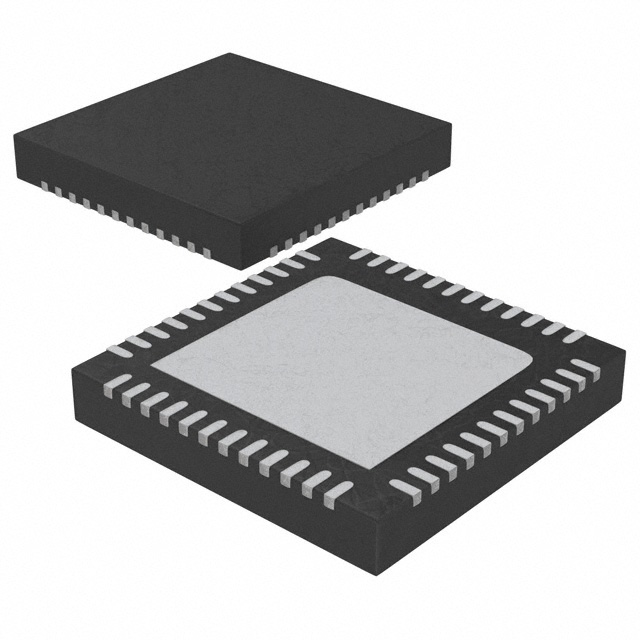
Microchip Technology ATA5428C-PLQW
- Part No.:
- ATA5428C-PLQW
- Manufacturer:
- Microchip Technology
- Category:
- RF Transceiver ICs
- Package:
- 48-VFQFN Exposed Pad
- Datasheet:
-
 ATA5428C-PLQW.pdf
- Description:
- IC RF TXRX ISM<1GHZ 48VQFN
- Quantity:
- Payment:

- Shipping:

Inventory:2,709
Please send an inquiry. Send us your inquiry, and we will respond immediately.
Product details
Overview
ATA5428C-PLQW from Microchip Technology (formerly Atmel) is a highly integrated UHF ASK/FSK multi-channel half-duplex transceiver in a 7 × 7 mm QFN48 package. It operates across 431.5–436.5 MHz and 862–872 MHz bands, delivers ±106 dBm FSK sensitivity at 20 kbit/s, supports 1–20 kbit/s Manchester FSK and 1–10 kbit/s ASK data rates, and integrates fractional-N synthesizer, low-IF receiver, PA, RX/TX switch, SPI interface, and five push-button inputs - enabling compact remote control and access control systems.
For engineers reviewing the ATA5428C-PLQW datasheet, ATA5428C-PLQW pinout, ATA5428C-PLQW application, or ATA5428C-PLQW equivalent, key selection considerations include its dual-band operation without external VCO/PLL components, programmable output power (0–10 dBm), RSSI and DEM_OUT analog/digital outputs, low supply current (10.5 mA RX/TX at 3 V), and built-in protocol handling with FIFO buffering for challenge-response crypto systems.
Technical Context
The ATA5428C-PLQW implements a fully integrated low-IF receiver architecture with 226 kHz IF frequency, 30 dB image rejection, and 170 kHz usable IF bandwidth. Its fractional-N synthesizer enables precise channel tuning (±2.5 MHz range), compensates XTAL tolerances to ±0.5 ppm, and provides high PLL bandwidth with >55 dB blocking at ±750 kHz.
Transmit functionality uses closed-loop FSK modulation via the synthesizer and ASK switching of the PA, both supported by integrated RX/TX switch and single-ended RF I/O. The device includes on-chip voltage regulators, reset generation, clock output (CLK), low-battery indication, and five wake-up-capable button inputs active in power-down mode.
Key Specifications
| Parameter | Value and Actual Design Meaning |
|---|---|
| Operating Frequency Bands | 431.5–436.5 MHz and 862–872 MHz - supports global sub-GHz ISM bands without external VCO or PLL components |
| Receiver Sensitivity | –106 dBm at 20 kbit/s FSK / –112.5 dBm at 10 kbit/s ASK (433.92 MHz, BER = 10⁻³) - enables reliable reception in low-power remote units |
| Data Rate Support | 1–20 kbit/s Manchester FSK; 1–10 kbit/s Manchester ASK - compatible with standard remote control protocols |
| Output Power Range | 0 to 10 dBm, adjustable via external resistor R_PWR - allows optimization for range vs. battery life in compact enclosures |
| Supply Voltage Ranges | 2.4–3.6 V (VS1) or 4.4–6.6 V (VS2) - supports single-cell Li-ion (3 V) and dual-cell (6 V) battery configurations |
| RF Interface | Single-ended RF_IN and RF_OUT with integrated RX/TX switch - simplifies antenna matching and enables loop antenna integration |
| Interface Protocol | SPI up to 500 kbit/s with CS, SCK, SDI_TMDI, SDO_TMDO - enables direct connection to low-cost 4-/8-bit MCUs |
Pinout & Package
ATA5428C-PLQW is housed in a 7 × 7 mm, 48-pin QFN package with exposed thermal pad (PLQW suffix). Pin functions are validated per Atmel/Microchip datasheet 4841H–WIRE–09/14, including dedicated RF, power, crystal, SPI, key input, and system control terminals.
| Pin/Terminal | Circuit Role | Design Meaning |
|---|---|---|
| RF_IN | RF input | Low-noise amplifier input; matched to 50 Ω source impedance for optimal sensitivity |
| RF_OUT | RF output | Power amplifier output; supports 0–10 dBm output via R_PWR resistor and PWR_H select |
| 433_N868 | Band select | Logic-level input to configure operation in 433 MHz or 868 MHz band |
| R_PWR | Power set resistor | External resistor sets output power level; 22 kΩ yields ~5.5 dBm at 433.92 MHz |
| PWR_H | Power level select | High/low logic selects high/low output power range (e.g., 10 dBm vs. 5.5 dBm) |
| XTAL1 / XTAL2 | Crysal oscillator terminals | Drive 13.25311 MHz crystal; internal load capacitors eliminate external caps |
| CS / SCK / SDI_TMDI / SDO_TMDO | SPI interface | Full-duplex serial interface up to 500 kbit/s; supports register access and FIFO data transfer |
| T1–T5 | Push-button inputs | Five wake-up-capable digital inputs; active-low, debounced in hardware during power-down |
| RSSI / DEM_OUT | Analog/digital demod outputs | RSSI provides analog signal strength; DEM_OUT is open-drain raw demodulated bitstream |
| N_RESET / IRQ / CLK | System control signals | N_RESET resets external MCU; IRQ signals event completion; CLK supplies 4.5 MHz clock to MCU |
Key Features
| Feature | Design Value |
|---|---|
| Fractional-N synthesizer with 800 Hz RF resolution | Enables precise multi-channel tuning and full compensation of crystal tolerance (±0.5 ppm after calibration) |
| Integrated low-IF receiver (226 kHz IF) | Delivers 30 dB image rejection and eliminates need for external SAW filter in remote control units |
| Self-polling digital control logic with FIFO RAM | Handles Manchester encoding, challenge-response arbitration, and protocol timing - offloads MCU for crypto computation |
| Dual supply rails (VS1/VS2) and auxiliary supply (VAUX) | Supports 3 V or 6 V battery operation; VAUX enables inductive supply when battery is depleted |
| ESD protection (1.5 kV HBM, 200 V MM, 1 kV FCDM) | Robust pin-level protection suitable for consumer and industrial handheld devices |
Applications
| Remote Keyless Entry (RKE) | Passive Entry & Start (PEPS) |
|---|---|
Use Scenario: Battery-powered fob communicates with vehicle ECU via short-range bidirectional handshake within 100 ms. IC Role / Device Role / Timing Role: ATA5428C-PLQW acts as complete RF transceiver and protocol engine - performing FSK/ASK demodulation, FIFO buffering, self-polling, and crypto-ready message composition. Use Value: Enables bi-directional RKE/PEPS on same PCB size and current budget as legacy unidirectional fobs, using only a 4-/8-bit MCU clocked by ATA5428C-PLQW's CLK output. |
Use Scenario: Driver approaches vehicle; fob and base station exchange encrypted challenge-response messages while fob remains in ultra-low-power mode. IC Role / Device Role / Timing Role: ATA5428C-PLQW manages wake-up via T1–T5 buttons or field-induced activation, executes fast RX/TX arbitration, and maintains <100 ms latency for seamless entry. Use Value: Eliminates need for high-performance MCU; integrated power management, reset, clock, and low-battery signaling reduce BOM count and firmware complexity. |
| Home Automation Remote Control | Energy Meter Telemetry |
Use Scenario: Compact plastic remote controls lighting, HVAC, or security systems using loop antenna and single Li-ion cell. IC Role / Device Role / Timing Role: ATA5428C-PLQW serves as RF front-end and protocol co-processor - handling ASK modulation, RSSI-based link quality feedback, and button-driven wake-up. Use Value: Single-ended RF design allows flexible loop antenna routing around PCB; integrated XTAL caps and minimal external components (11 caps, 1 resistor, 2 inductors) cut bill-of-materials cost. |
Use Scenario: Utility meter transmits consumption data periodically to gateway using robust ASK modulation in noisy electrical environments. IC Role / Device Role / Timing Role: ATA5428C-PLQW operates in 868 MHz band with high blocking immunity (70 dB at ±10 MHz), delivering –112.5 dBm sensitivity at 10 kbit/s for reliable long-range transmission. Use Value: Superior selectivity and intermodulation performance (IIP3 = –20 dBm) avoids SAW filters - reducing size, cost, and insertion loss in sealed meter housings. |
Equivalent & Alternatives
The following parts are listed as comparable options for similar UHF ASK/FSK transceiver applications.
| Alternative Part | Technical Difference | Application Difference | Selection Advice |
|---|---|---|---|
| Silicon Labs Si4362-B1B-FMR | Higher max data rate (1 Mbps), lower RX current (9.5 mA), but requires external crystal load caps and lacks integrated key inputs | Preferred for high-throughput telemetry; less suited for ultra-low-BOM remote fobs with button wake-up | Choose Si4362-B1B-FMR when higher data rate or lower RX current outweighs need for integrated buttons and crystal caps |
| NXP PCF7962AT | Optimized for 125 kHz LF + 434/868 MHz UHF dual-band; includes embedded crypto accelerator but no FIFO or self-polling logic | Targeted at automotive immobilizer + RKE combo systems; not standalone for pure remote control | Choose PCF7962AT only when LF+UHF dual-band and hardware crypto are mandatory; ATA5428C-PLQW offers simpler integration for UHF-only designs |
Compared with Si4362-B1B-FMR and PCF7962AT, the ATA5428C-PLQW uniquely combines integrated crystal capacitors, five hardware-debounced wake-up inputs, self-polling protocol engine, and single-ended loop-antenna support - making it the most cost- and space-efficient choice for battery-powered remote control units requiring fast challenge-response without MCU overhead.
Availability
ATA5428C-PLQW is available at Aetrix Electronics and suitable for remote keyless entry, passive entry & start, home automation remotes, and energy meter telemetry requiring stable component supply, long-lifecycle assurance, and consistent parametric performance across temperature and voltage.
Supply support for ATA5428C-PLQW includes scheduled delivery planning, volume procurement assistance, BOM continuity management, traceable sourcing, and lifecycle availability coordination for OEM customers, industrial embedded developers, connected-device designers, and electronics production programs.
Manufacturer
Microchip Technology acquired Atmel in 2016 and continues to support, manufacture, and qualify the ATA5428 family for automotive and industrial applications.
The ATA5428 product line was designed specifically for ultra-low-power, high-integration UHF remote control and access control systems - emphasizing minimal external components, robust RF performance in compact enclosures, and MCU offload capability for secure bidirectional communication.
FAQ
What is the operating frequency range supported by the ATA5428C-PLQW?
The ATA5428C-PLQW supports two licensed ISM bands: 431.5–436.5 MHz and 862–872 MHz. It achieves full coverage in both bands without external VCO or PLL components, using its integrated fractional-N synthesizer and configurable 433_N868 pin to select the target band. This dual-band capability makes the ATA5428C-PLQW suitable for global remote control deployments across Europe (868 MHz) and North America/Asia (433 MHz).
Does the ATA5428C-PLQW require external crystal load capacitors?
No, the ATA5428C-PLQW integrates load capacitors for the XTAL1 and XTAL2 pins - eliminating the need for external crystal load capacitors. A 13.25311 MHz crystal is used, and the internal capacitors are factory-trimmed to support typical 9 pF crystal loads. This integration reduces BOM count and PCB area, which is critical for space-constrained remote control fobs where the ATA5428C-PLQW is commonly deployed.
How does the ATA5428C-PLQW handle power management in battery-operated systems?
The ATA5428C-PLQW supports multiple supply rails (VS1: 2.4–3.6 V; VS2: 4.4–6.6 V) and includes an auxiliary supply input (VAUX) that enables inductive charging when the main battery is depleted. It features five dedicated wake-up inputs (T1–T5), hardware-debounced in power-down mode, and automatic low-battery indication sent to the host MCU. These features collectively extend operational lifetime and enable robust power cycling in remote controls powered by single- or dual-cell lithium batteries.
Can the ATA5428C-PLQW be used with a loop antenna?
Yes, the ATA5428C-PLQW is explicitly designed for loop antenna integration. Its single-ended RF_IN/RF_OUT architecture, high isolation between PLL/VCO and PA, and ground-referenced layout allow the loop antenna to surround the entire PCB - maximizing effective aperture. Application note figures confirm successful implementation with 20 mm × 0.4 mm wire loops, achieving full sensitivity without SAW filtering due to the device's inherent blocking performance (≥55 dB at ±750 kHz).
What interfaces does the ATA5428C-PLQW provide for microcontroller connectivity?
The ATA5428C-PLQW provides a 4-wire SPI interface (CS, SCK, SDI_TMDI, SDO_TMDO) operating up to 500 kbit/s, plus dedicated control signals: N_RESET (open-drain MCU reset), IRQ (active-low interrupt), and CLK (4.5 MHz clock output). It also includes five push-button inputs (T1–T5) and a PWR_ON enable pin. This comprehensive interface set allows direct connection to low-cost 4-/8-bit MCUs - eliminating the need for external level shifters, timers, or GPIO expanders in remote control designs using the ATA5428C-PLQW.
ATA5428C-PLQW Specifications
- Product attributes
- Attribute value
- Manufacturer:
- Microchip Technology
- Series:
- -
- Package/Case:
- 48-VFQFN Exposed Pad
- Packaging:
- Tape & Reel (TR)
- Product Status:
- Obsolete
- Programmable:
- Not Verified
- Type:
- TxRx Only
- RF Family/Standard:
- General ISM < 1GHz
- Protocol:
- -
- Modulation:
- ASK, FSK
- Frequency:
- 433MHz, 868MHz
- Data Rate (Max):
- 20kbps
- Power - Output:
- 10dBm
- Sensitivity:
- -116.5dBm
- Memory Size:
- -
- Serial Interfaces:
- SPI
- GPIO:
- -
- Voltage - Supply:
- 2.4V ~ 3.6V, 4.4V ~ 6.6V
- Current - Receiving:
- 10.3mA ~ 10.5mA
- Current - Transmitting:
- 6.5mA ~ 17.3mA
- Operating Temperature:
- -40°C ~ 85°C
- Grade:
- -
- Qualification:
- -
- Supplier Device Package:
- 48-VQFN (7x7)
ATA5428C-PLQW FAQ
1.How can I place an order for ATA5428C-PLQW through Aetrix?
Please submit a Request for Quotation (RFQ) for ATA5428C-PLQW on Aetrix. Our sales agent will provide a competitive quotation and guide you through the order confirmation once you accept the terms.
2.Are the price and stock information for ATA5428C-PLQW reliable?
The price and inventory of ATA5428C-PLQW are updated periodically and may fluctuate due to market conditions. Stock and pricing data are typically refreshed every 24 hours. Quotation validity for ATA5428C-PLQW is usually 5 days.
3.What payment methods are accepted for ATA5428C-PLQW?
We accept Wire Transfer, PayPal, Credit Card, Western Union, MoneyGram, and Escrow for ATA5428C-PLQW transactions.
Note: Certain payment methods may incur a processing fee.
4.How is shipping managed for ATA5428C-PLQW?
ATA5428C-PLQW orders can be shipped via leading logistics carriers, including DHL, UPS, FedEx, TNT, or Registered Mail.
Once your ATA5428C-PLQW order is processed, you will receive an email with the shipment details and tracking number.
Note: Tracking information may take up to 24 hours to appear. Express delivery typically takes 3–5 business days.
5.How can I obtain technical support or documentation for ATA5428C-PLQW?
For technical support, including ATA5428C-PLQW datasheets, pinout diagrams, or application guidance, please contact our engineering support team. They can provide detailed documentation and assistance for your ATA5428C-PLQW requirements.
6.How does Aetrix verify that ATA5428C-PLQW is sourced from the original manufacturer or authorized distributors?
All ATA5428C-PLQW products on Aetrix are procured from qualified distributors and authorized channels. Our dedicated quality assurance team conducts strict verification, including traceability checks and, if necessary, third-party testing. This ensures that ATA5428C-PLQW meets industry standards.
7.What is the process for return or replacement of ATA5428C-PLQW?
All ATA5428C-PLQW units undergo pre-shipment inspection (PSI). If there is an issue with ATA5428C-PLQW, returns or replacements are accepted under the following conditions:
1.Quantity discrepancies, incorrect items, or visible external defects (such as breakage or corrosion), acknowledged by Aetrix.
2.The issue is reported within 90 days of delivery.
3.The ATA5428C-PLQW part is unused and in its original packaging.
Return procedure for ATA5428C-PLQW:
1.Submit a request within 90 days.
2.Obtain a Return Material Authorization (RMA) from Aetrix.
ATA5428C-PLQW Tags
-
ESP32-D0WD-V3
Espressif Systems
-
ESP8266EX
Espressif Systems

-
ESP32-S3
Espressif Systems
-
NRF24L01P-R7
Nordic Semiconductor ASA
-
NRF24L01P-R
Nordic Semiconductor ASA
-
ESP32-U4WDH
Espressif Systems
-
DA14531-00000OG2
Renesas
-
ESP32-C6FH4
Espressif Systems
-
DA14531-00000FX2
Renesas
-
NRF24L01P-T
Nordic Semiconductor ASA
-
NRF52810-QCAA-R
Nordic Semiconductor ASA
-
ESP32-S3FN8
Espressif Systems
Tech Hub

TTL and CMOS logic families differ in thresholds, loading, output drive, power and timing. This engineering guide compares 74HC and 74HCT, calculates noise margins and checks 3.3 V/5 V compatibility.

A practical engineering guide to 3.3V and 5V logic compatibility, input thresholds, resistor dividers, translator ICs, MOSFET level shifting, I2C pull-ups, timing limits and power-sequencing risks.

The 74HC595 uses push-pull logic outputs, while the TPIC6B595 uses 50 V open-drain DMOS sinks for higher-power loads. This guide compares timing, current limits, 3.3 V interfacing, load wiring, thermal…

The 74HC595 converts serial data into eight stable parallel outputs. This guide covers pin functions, shift and storage timing, OE and MR behavior, drive-current limits, cascading, voltage compatibilit…

A technical comparison of level-sensitive latches and edge-triggered flip-flops, covering timing windows, setup and hold limits, master–slave operation, time borrowing, race-through, HDL inference and…

A D latch stores one bit while Enable controls when data can pass. This reference covers gate-level operation, truth tables, transparency, setup and hold timing, LE versus OE, common ICs and practical …

An SR latch stores one bit through cross-coupled feedback. This engineering reference covers NOR and NAND implementations, truth tables, forbidden-state recovery, gated operation, switch debouncing, fa…

Latch circuits retain one bit through feedback. This technical reference covers SR and D latches, truth tables, transparency, timing limits, latch-versus-flip-flop behavior, applications and common log…

An engineering guide to LED driver operation, constant-current and constant-voltage outputs, linear and switching topologies, dimming, IC selection, calculations, replacement compatibility, and fault c…

Operational amplifier guide covering op amp basics, feedback, ideal vs real op amps, common configurations, buffer circuits, offset, bias current, gain-bandwidth, slew rate, rail-to-rail limits and sel…


