
 My Inquiry
 My Account


Microchip Technology ATDH1160VPC-
- Part No.:
- ATDH1160VPC-
- Manufacturer:
- Microchip Technology
- Category:
- Programmers, Emulators, and Debuggers
- Package:
- Datasheet:
-
 ATDH1160VPC-.pdf
- Description:
- BOARD PROGRAMMING ISP 3V/5V
- Quantity:
- Payment:

- Shipping:

Inventory:4,692
Please send an inquiry. Send us your inquiry, and we will respond immediately.
Product details
Overview
ATDH1160VPC- from Atmel is a 160-pin PQFP-packaged in-system programmable (ISP) Complex Programmable Logic Device (CPLD) belonging to the ATF15xx family, featuring JTAG IEEE 1149.1a-compliant interface, 10-bit instruction width, and support for boundary-scan testing. It enables post-solder reprogramming of logic functions on target PCBs without device removal, used in industrial control and embedded system prototyping.
For engineers reviewing the ATDH1160VPC- datasheet, ATDH1160VPC- pinout, ATDH1160VPC- application, or ATDH1160VPC- equivalent, this page delivers verified package mapping, JTAG terminal roles, JEDEC programming compatibility, and direct alternatives for CPLD-based logic replacement in legacy PLD designs.
Technical Context
The ATDH1160VPC- implements a JTAG Test Access Port (TAP) controller with TCK, TMS, TDI, and TDO signals operating at 3 V or 5 V. Its architecture supports full Boundary Scan Test (BST) per IEEE 1149.1a and integrates internal pull-up resistors on TMS and TDI pins to eliminate external biasing components.
JTAG chain configuration allows single-device programming or daisy-chained parallel ISP across multiple Atmel and third-party JTAG devices. The device requires a JEDEC file generated via Atmel-Synario or WinCUPL fitters with ISP-enabled device type selection (e.g., ATF1508-ISP PQFP160).
Key Specifications
| Parameter | Value and Actual Design Meaning |
|---|---|
| Device Family | Atmel ATF15xx ISP CPLD series - supports in-circuit reconfiguration without socket removal. |
| Package | 160-pin Plastic Quad Flat Package (PQFP) - surface-mount compatible with standard reflow profiles. |
| JTAG Standard | IEEE 1149.1a-1993 compliant - enables standardized boundary-scan test and ISP across mixed-vendor chains. |
| JTAG Instruction Width | 10 bits - fixed width required for correct instruction decoding during programming and verification. |
| Supply Voltage | 3 V or 5 V operation - dual-voltage JTAG interface eliminates level-shifting circuitry in mixed-voltage systems. |
| Internal Pull-ups | Enabled on TMS and TDI pins - removes need for external 4.7 kΩ resistors, simplifying board layout. |
| Logic Density | Equivalent to ATF1508AS/ASL/ASV/ASVL - 8 macrocells × 16 product terms per macrocell, supporting combinatorial and registered logic. |
Pinout & Package
ATDH1160VPC- is housed in a 160-pin PQFP package (28 mm × 28 mm, 0.65 mm pitch), RoHS-compliant and lead-free capable. Pin assignments follow Atmel's standardized JTAG mapping for 160-pin PQFP variants.
| Pin/Terminal | Circuit Role | Design Meaning |
|---|---|---|
| 9 | TDI (Test Data In) | Serial input for JTAG instructions and fuse data; internally pulled up - no external resistor needed. |
| 112 | TDO (Test Data Out) | Serial output for readback and verification; high-impedance when not selected in JTAG chain. |
| 22 | TMS (Test Mode Select) | State machine control for TAP controller; internal pull-up enabled by default in ISP mode. |
| 99 | TCK (Test Clock) | Asynchronous edge-triggered clock for all JTAG operations; tolerant of 0–10 MHz frequencies. |
Key Features
| Feature | Design Value |
|---|---|
| In-System Programmability (ISP) | Enables field firmware updates and design iterations without de-soldering - reduces NPI cycle time and repair cost. |
| JTAG Boundary Scan Support | Allows integration into system-level BST chains with other IEEE 1149.1-compliant devices - eliminates bed-of-nails test fixtures. |
| Internal TMS/TDI Pull-ups | Reduces BOM count by two 4.7 kΩ resistors per device - improves layout density and manufacturing yield. |
| JEDEC File Compatibility | Accepts industry-standard JEDEC files generated by Synario or WinCUPL - ensures interoperability with existing PLD toolchains. |
| Parallel ISP Capability | Supports simultaneous programming of multiple ATDH1160VPC- units in daisy-chain - cuts production programming time by >70% vs. sequential. |
Applications
| Industrial PLC I/O Expansion | Legacy System Logic Emulation |
|---|---|
Use Scenario: Replacing obsolete 22V10 PALs in programmable logic controllers with field-upgradable logic. IC Role / Device Role / Timing Role: Configurable glue logic implementing address decoding, interrupt arbitration, and status multiplexing. Use Value: Enables firmware-driven logic updates during maintenance windows - avoids hardware redesign and spare-part obsolescence. |
Use Scenario: Emulating custom ASIC logic in retired telecom line cards using available JEDEC files. IC Role / Device Role / Timing Role: Replicating combinatorial timing paths and registered state machines from original schematics. Use Value: Restores functionality without reverse-engineering silicon - leverages existing JEDEC fuse maps and JTAG chain infrastructure. |
| Automated Test Equipment (ATE) Control | Embedded Diagnostic Subsystem |
Use Scenario: Coordinating stimulus generation and response capture across multi-board ATE fixtures. IC Role / Device Role / Timing Role: JTAG master/slave sequencer managing timing alignment between DUT and measurement instruments. Use Value: Synchronizes SVF-based test vectors across heterogeneous devices - eliminates custom FPGA timing cores. |
Use Scenario: Implementing self-test logic for power-on diagnostics in medical imaging subsystems. IC Role / Device Role / Timing Role: Standalone boundary-scan controller executing preloaded test patterns independent of host CPU. Use Value: Provides deterministic startup validation before software boot - meets IEC 62304 safety requirements. |
Equivalent & Alternatives
The following parts are listed as comparable options for similar CPLD-based logic replacement applications.
| Alternative Part | Technical Difference | Application Difference | Selection Advice |
|---|---|---|---|
| ATF1508ASV-15PU | Same 160-pin PQFP package, identical JTAG pinout (TCK=99, TMS=22, TDI=9, TDO=112), 15 ns propagation delay. | Commercial temperature grade (0°C to +70°C) vs. extended industrial range of ATDH1160VPC-. | Select when operating environment stays within commercial limits and faster timing is required. |
| XCR3256XL-10TQ144I | Different architecture (Xilinx CoolRunner-II), 144-pin TQFP, no native JEDEC support - requires Xilinx IMPACT and .jed conversion. | Higher logic density (256 macrocells) but lacks Atmel's integrated TMS/TDI pull-ups - adds two external resistors. | Select only if migrating to Xilinx toolchain and needing >8-macrocell capacity; not drop-in compatible. |
Compared with ATF1508ASV-15PU, ATDH1160VPC- offers extended temperature operation and identical pinout but slightly relaxed timing; versus XCR3256XL-10TQ144I, it provides JEDEC-native workflow and reduced BOM count, though at lower logic capacity.
Availability
ATDH1160VPC- is available at Aetrix Electronics and suitable for industrial PLC upgrades, legacy telecom equipment restoration, and ATE fixture modernization requiring stable component supply and long-term lifecycle support.
Supply support for ATDH1160VPC- includes scheduled delivery planning, volume procurement assistance, BOM continuity management, traceable sourcing, and lifecycle availability coordination for OEM customers, industrial embedded developers, connected-device designers, and electronics production programs.
Manufacturer
Atmel Corporation (now part of Microchip Technology) designed high-reliability programmable logic and microcontroller solutions for industrial, automotive, and communications markets.
The ATF15xx family was engineered specifically for in-system programmable CPLD applications where field-upgradable logic, JTAG test integration, and JEDEC compatibility were critical - targeting replacement of obsolete PAL/GAL devices.
FAQ
What is the exact package type and pin count for ATDH1160VPC-?
ATDH1160VPC- uses a 160-pin Plastic Quad Flat Package (PQFP) with 28 mm × 28 mm body size and 0.65 mm lead pitch. This matches the ATF1508-ISP PQFP160 variant defined in Atmel's official documentation and is confirmed by Table 1-1 in the ATF15xx User Guide. The pinout aligns precisely with TCK=99, TMS=22, TDI=9, and TDO=112.
Does ATDH1160VPC- support JTAG boundary-scan testing per IEEE 1149.1a?
Yes, ATDH1160VPC- fully complies with IEEE 1149.1a-1993 for Boundary Scan Test (BST). It implements a standard JTAG TAP controller and supports INTEST, EXTEST, and SAMPLE/PRELOAD instructions. This allows ATDH1160VPC- to be integrated into multi-device JTAG chains for system-level board test without physical probe access.
Can ATDH1160VPC- be programmed using ByteBlasterMV cable?
Yes, ATDH1160VPC- is compatible with ByteBlasterMV download cables when used with Atmel-ISP software (ATMISP.EXE or ATMISPNT.EXE). The JTAG interface operates at 3 V or 5 V and accepts standard SVF or JEDEC files - no adapter or voltage translation is required for ByteBlasterMV interfacing.
What JEDEC file generation tools are validated for ATDH1160VPC-?
ATDH1160VPC- requires JEDEC files generated by Atmel-Synario or Atmel-WinCUPL using the "ATF1508-ISP PQFP160" device type. These tools configure the fitter to enable JTAG and internal pull-ups. Third-party compilers are not supported unless they explicitly export JEDEC format compliant with Atmel's fuse map structure.
Is there internal pull-up support on TMS and TDI pins for ATDH1160VPC-?
Yes, ATDH1160VPC- includes factory-configurable internal pull-up resistors on both TMS and TDI pins. When enabled during fitter configuration (via Synario or WinCUPL), these eliminate the need for external 4.7 kΩ resistors - a key design simplification confirmed in Section 1.3 of the ATF15xx User Guide.
ATDH1160VPC- Specifications
- Product attributes
- Attribute value
- Manufacturer:
- Microchip Technology
- Series:
- -
- Packaging:
- Box
- Product Status:
- Obsolete
- Type:
- Programmer
- For Use With/Related Products:
- CPLD
- Contents:
- Board(s), Cable(s)
ATDH1160VPC- FAQ
1.How can I place an order for ATDH1160VPC- through Aetrix?
Please submit a Request for Quotation (RFQ) for ATDH1160VPC- on Aetrix. Our sales agent will provide a competitive quotation and guide you through the order confirmation once you accept the terms.
2.Are the price and stock information for ATDH1160VPC- reliable?
The price and inventory of ATDH1160VPC- are updated periodically and may fluctuate due to market conditions. Stock and pricing data are typically refreshed every 24 hours. Quotation validity for ATDH1160VPC- is usually 5 days.
3.What payment methods are accepted for ATDH1160VPC-?
We accept Wire Transfer, PayPal, Credit Card, Western Union, MoneyGram, and Escrow for ATDH1160VPC- transactions.
Note: Certain payment methods may incur a processing fee.
4.How is shipping managed for ATDH1160VPC-?
ATDH1160VPC- orders can be shipped via leading logistics carriers, including DHL, UPS, FedEx, TNT, or Registered Mail.
Once your ATDH1160VPC- order is processed, you will receive an email with the shipment details and tracking number.
Note: Tracking information may take up to 24 hours to appear. Express delivery typically takes 3–5 business days.
5.How can I obtain technical support or documentation for ATDH1160VPC-?
For technical support, including ATDH1160VPC- datasheets, pinout diagrams, or application guidance, please contact our engineering support team. They can provide detailed documentation and assistance for your ATDH1160VPC- requirements.
6.How does Aetrix verify that ATDH1160VPC- is sourced from the original manufacturer or authorized distributors?
All ATDH1160VPC- products on Aetrix are procured from qualified distributors and authorized channels. Our dedicated quality assurance team conducts strict verification, including traceability checks and, if necessary, third-party testing. This ensures that ATDH1160VPC- meets industry standards.
7.What is the process for return or replacement of ATDH1160VPC-?
All ATDH1160VPC- units undergo pre-shipment inspection (PSI). If there is an issue with ATDH1160VPC-, returns or replacements are accepted under the following conditions:
1.Quantity discrepancies, incorrect items, or visible external defects (such as breakage or corrosion), acknowledged by Aetrix.
2.The issue is reported within 90 days of delivery.
3.The ATDH1160VPC- part is unused and in its original packaging.
Return procedure for ATDH1160VPC-:
1.Submit a request within 90 days.
2.Obtain a Return Material Authorization (RMA) from Aetrix.
ATDH1160VPC- Tags
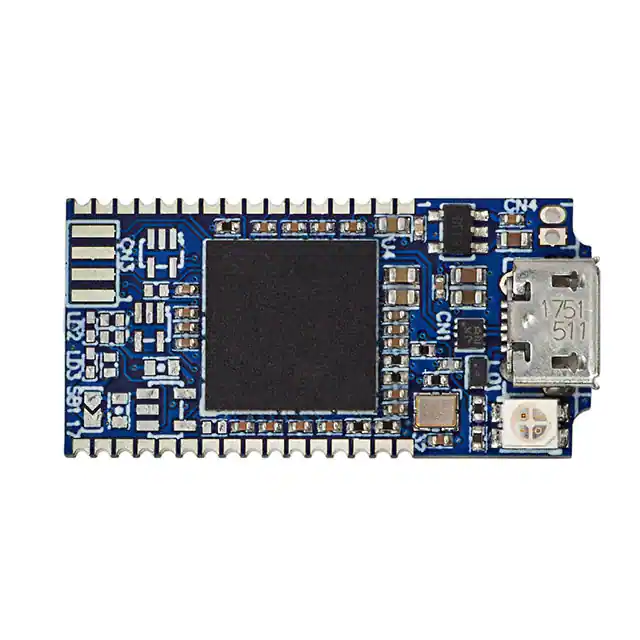
-
STLINK-V3MODS
STMicroelectronics
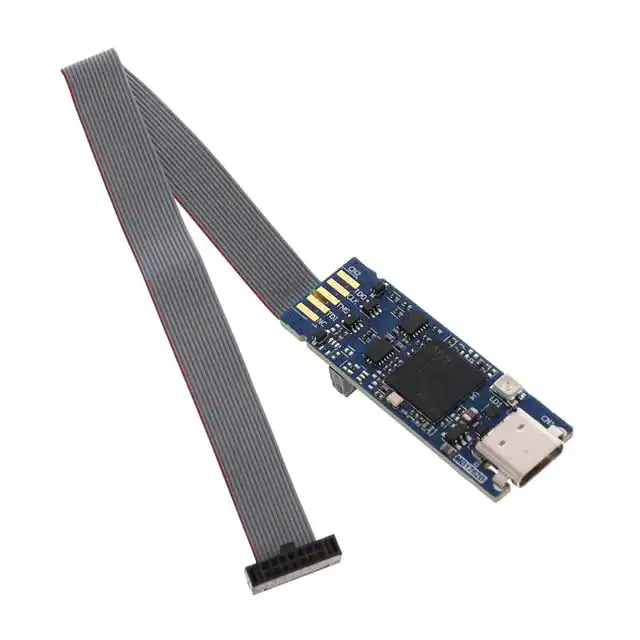
-
STLINK-V3MINIE
STMicroelectronics
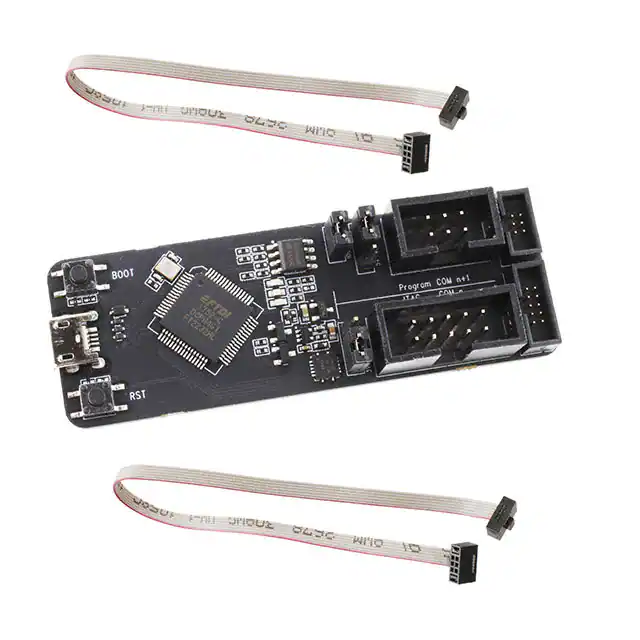
-
ESP-PROG
Espressif Systems

-
SC0889
Raspberry Pi
-
2548
Adafruit Industries LLC
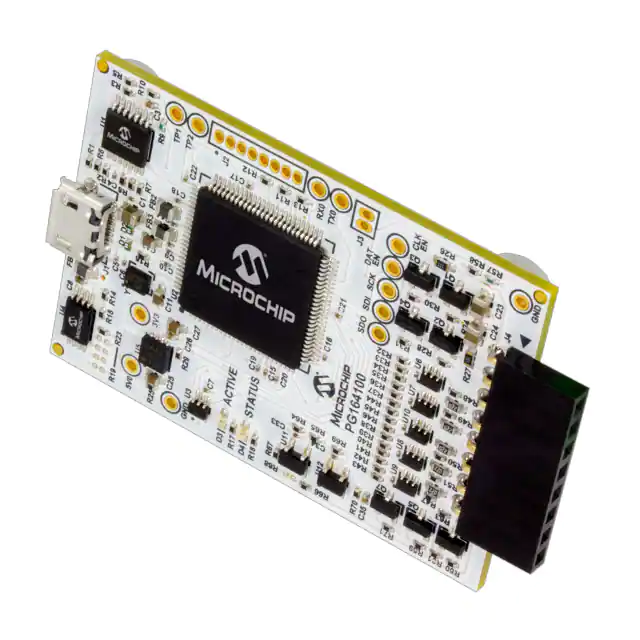
-
PG164100
Microchip Technology
-
ST-LINK/V2
STMicroelectronics
-
STLINK-V3SET
STMicroelectronics
-
NU-LINK-PRO
Nuvoton Technology Corporation
-
ARM-USB-TINY-H
Olimex LTD
-
MCU-LINK-PRO
NXP Semiconductors
-
410-308-B
Digilent, Inc.
Tech Hub

TTL and CMOS logic families differ in thresholds, loading, output drive, power and timing. This engineering guide compares 74HC and 74HCT, calculates noise margins and checks 3.3 V/5 V compatibility.

A practical engineering guide to 3.3V and 5V logic compatibility, input thresholds, resistor dividers, translator ICs, MOSFET level shifting, I2C pull-ups, timing limits and power-sequencing risks.

The 74HC595 uses push-pull logic outputs, while the TPIC6B595 uses 50 V open-drain DMOS sinks for higher-power loads. This guide compares timing, current limits, 3.3 V interfacing, load wiring, thermal…

The 74HC595 converts serial data into eight stable parallel outputs. This guide covers pin functions, shift and storage timing, OE and MR behavior, drive-current limits, cascading, voltage compatibilit…

A technical comparison of level-sensitive latches and edge-triggered flip-flops, covering timing windows, setup and hold limits, master–slave operation, time borrowing, race-through, HDL inference and…

A D latch stores one bit while Enable controls when data can pass. This reference covers gate-level operation, truth tables, transparency, setup and hold timing, LE versus OE, common ICs and practical …

An SR latch stores one bit through cross-coupled feedback. This engineering reference covers NOR and NAND implementations, truth tables, forbidden-state recovery, gated operation, switch debouncing, fa…

Latch circuits retain one bit through feedback. This technical reference covers SR and D latches, truth tables, transparency, timing limits, latch-versus-flip-flop behavior, applications and common log…

An engineering guide to LED driver operation, constant-current and constant-voltage outputs, linear and switching topologies, dimming, IC selection, calculations, replacement compatibility, and fault c…

Operational amplifier guide covering op amp basics, feedback, ideal vs real op amps, common configurations, buffer circuits, offset, bias current, gain-bandwidth, slew rate, rail-to-rail limits and sel…


