
 My Inquiry
 My Account


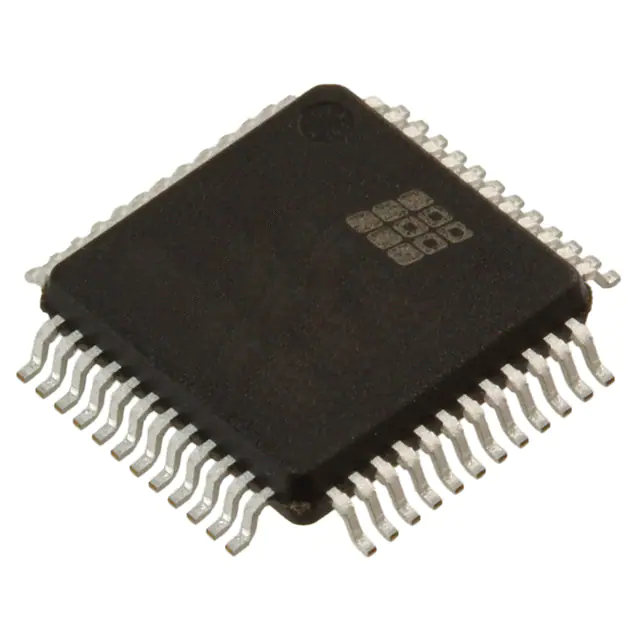
Microchip Technology ATF1504AS-10AU44
- Part No.:
- ATF1504AS-10AU44
- Manufacturer:
- Microchip Technology
- Package:
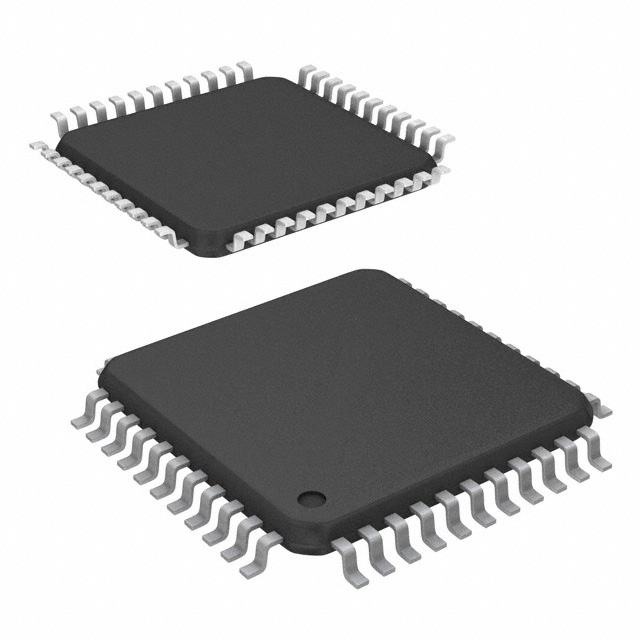
- 44-TQFP
- Datasheet:
-
 ATF1504AS-10AU44.pdf
- Description:
- IC CPLD 64MC 10NS 44TQFP
- Quantity:
- Payment:

- Shipping:

Inventory:1,286
Please send an inquiry. Send us your inquiry, and we will respond immediately.
Product details
Overview
ATF1504AS-10AU44 from Microchip Technology (formerly Atmel) is a high-density, electrically-erasable Complex Programmable Logic Device (CPLD) with 64 macrocells, 5 product terms per macrocell (expandable to 40), and 7.5 ns pin-to-pin delay. It supports registered operation up to 125 MHz, operates at 3.3V or 5.0V I/O, and features JTAG-based in-system programmability (ISP) for field reconfiguration without board removal - used in legacy PCI interface logic, industrial control state machines, and embedded glue logic consolidation.
For engineers reviewing the ATF1504AS-10AU44 datasheet, ATF1504AS-10AU44 pinout, ATF1504AS-10AU44 application, or ATF1504AS-10AU44 equivalent, key selection criteria include its 44-pin TQFP package, -10 speed grade (125 MHz max clock), dual-voltage I/O compatibility, JTAG boundary-scan compliance (IEEE 1149.1), and programmable power-down via PD1/PD2 pins.
Technical Context
The ATF1504AS-10AU44 implements a flexible macrocell architecture with five configurable sections per macrocell: product term generation, OR/XOR/cascade logic, D/T/latch flip-flop, output select/enable, and logic array inputs. Its global bus carries all 68 possible inputs (including 64 buried macrocell feedbacks) and feeds a 40-signal switch matrix per logic block.
It integrates three global clock pins (GCLK1–GCLK3), input transition detection (ITD) on clocks/I/Os, fast registered input from product terms, and programmable pin-keeper circuits. Power management includes automatic µA standby (L-version), pin-controlled 1 mA power-down mode, and per-macrocell reduced-power bit - all configurable in the design file.
Key Specifications
| Parameter | Value and Actual Design Meaning |
|---|---|
| Logic Density | 64 macrocells - enables replacement of multiple TTL/SSI/MSI devices or classic PLDs in glue logic applications |
| Speed Grade | -10 = 125 MHz max internal clock frequency - supports high-speed control timing in industrial automation |
| Pin-to-pin Delay | 7.5 ns maximum - ensures tight timing closure for synchronous logic interfacing with microcontrollers or FPGAs |
| I/O Voltage Support | 3.3V or 5.0V - allows direct interfacing with mixed-voltage systems without level shifters |
| Package | 44-lead TQFP (AU44) - surface-mount footprint compatible with standard PCB assembly processes |
| JTAG Compliance | IEEE Std. 1149.1-1990 & 1149.1a-1993 - enables boundary-scan testing and ISP programming via standard debug interfaces |
| Power-down Current | <10 mA in PD mode - reduces system standby power in battery-backed or energy-sensitive applications |
Pinout & Package
ATF1504AS-10AU44 is housed in a 44-lead Thin Quad Flat Package (TQFP) with 0.8 mm lead pitch and exposed thermal pad. Pin numbering follows standard counter-clockwise top-view orientation starting from pin 1 (top-left corner).
| Pin/Terminal | Circuit Role | Design Meaning |
|---|---|---|
| 1, 44, 22, 33 | GND | Four dedicated ground connections - essential for noise suppression and stable logic reference in high-speed CPLD operation |
| 11, 24, 36, 41 | VCC | Four VCC supply pins - distribute power across package to minimize IR drop and support full 64-macrocell utilization |
| 3, 4, 5, 6, 7, 8, 9, 10, 12, 13, 14, 15, 16, 17, 18, 19, 20, 21, 23, 25, 26, 27, 28, 29, 30, 31, 32, 34, 35, 37, 38, 39, 40, 42, 43 | I/O | 35 bidirectional I/O pins - configurable as inputs, outputs, or open-drain; support slew rate control and pin-keeper option |
| 2 | I/O/TDI | JTAG Test Data In - primary serial input for ISP programming and boundary-scan instruction/data loading |
| 32 | I/O/TDO | JTAG Test Data Out - serial output for readback and verification during JTAG operations |
| 31 | I/O/TMS | JTAG Test Mode Select - controls TAP controller state transitions during boundary-scan or ISP |
| 26 | I/O/TCK | JTAG Test Clock - synchronizes all JTAG operations; requires clean, low-jitter clock source |
| 19, 37 | PD1/I/O, PD2/I/O | Power-down control inputs - drive high to enter sub-10 mA standby; disable logic I/O functionality when active |
| 27, 40 | GCLK1/I, GCLK3/I/O | Global clock inputs - feed synchronous logic across all macrocells; support ITD for glitch-free edge detection |
| 29 | GCLR/I | Global clear input - asynchronous reset for all macrocell flip-flops; configurable per-macrocell as product-term OR'd with GCLEAR |
| 30 | OE1/I | Output enable input - controls group output drivers; selectable per macrocell via product term or dedicated pin |
| 28 | GCLK2/OE2/I | Dual-function pin - serves as second global clock or second output enable signal depending on configuration |
Key Features
| Feature | Design Value |
|---|---|
| Programmable pin-keeper circuits | Prevents floating inputs/I/Os without external pull-ups - eliminates DC leakage and system noise in unconnected states |
| Per-macrocell reduced-power bit | Reduces dynamic power consumption individually per macrocell - critical for optimizing total ICC in partial-utilization designs |
| Three global clock inputs with ITD | Enables robust clock domain crossing and glitch-immune edge detection on critical control signals |
| Combinatorial output with registered feedback | Allows buried register feedback within combinatorial macrocells - increases logic density without sacrificing timing performance |
| Security fuse + 16-bit User Signature | Protects design IP while allowing traceability via user-programmable revision/date/project fields accessible even when fuse is set |
| VCC power-up reset with hysteresis options | Ensures deterministic state machine initialization; Large hysteresis reduces ICC by several hundred µA |
Applications
| PCI Bus Interface Logic | Industrial PLC I/O Expansion |
|---|---|
Use Scenario: Implementing address decoding, bus arbitration, and protocol handshaking between microcontroller and PCI peripheral cards in legacy industrial PCs. IC Role / Device Role / Timing Role: Glue logic CPLD providing high-current, low-skew outputs compliant with PCI electrical specs while managing timing-critical setup/hold windows. Use Value: Replaces discrete TTL and PAL devices with single-chip solution supporting 3.3V/5V mixed signaling and JTAG in-field updates. |
Use Scenario: Adding custom digital I/O expansion to programmable logic controllers handling sensor inputs and actuator outputs in factory automation. IC Role / Device Role / Timing Role: Configurable logic engine performing real-time signal conditioning, debounce, and safety interlock sequencing with deterministic <7.5 ns propagation. Use Value: Enables rapid hardware iteration via ISP without board respin; pin-keeper circuits eliminate need for external pull resistors on unused I/Os. |
| Legacy System Emulation | Embedded Bootloader Sequencing |
Use Scenario: Emulating obsolete PAL/GAL devices in aging medical or aerospace equipment where original parts are no longer available. IC Role / Device Role / Timing Role: Pin-compatible functional replacement with identical macrocell count, product term structure, and timing behavior under -10 speed grade. Use Value: Extends product lifecycle using field-programmable architecture; security fuse prevents reverse engineering of legacy logic functions. |
Use Scenario: Managing power-on reset sequencing, memory mapping, and secure boot enable signals in resource-constrained microcontroller-based systems. IC Role / Device Role / Timing Role: State-machine controller coordinating voltage rail ramp-up, clock stabilization, and flash initialization before CPU release. Use Value: Leverages VCC power-up reset with hysteresis and programmable register initialization to guarantee deterministic boot state across temperature ranges. |
Equivalent & Alternatives
The following parts are listed as comparable options for similar CPLD applications.
| Alternative Part | Technical Difference | Application Difference | Selection Advice |
|---|---|---|---|
| ATF1504AS-10AI44 | Same architecture and pinout, but rated for -40°C to +85°C industrial temperature range vs. commercial 0°C–70°C | Required for outdoor, automotive under-hood, or factory-floor deployments where ambient extremes exceed commercial spec | Select ATF1504AS-10AI44 when operating outside 0–70°C; otherwise ATF1504AS-10AU44 suffices for office/lab environments |
| EPM3064ATC44-10N | Intel MAX 3000A CPLD with 64 macrocells, same 44-TQFP package, but uses different architecture (EEPROM vs. Flash), no pin-keeper, and lacks ITD circuits | Compatible for basic logic replacement but lacks advanced power management and input transition detection needed for noise-prone industrial settings | Choose EPM3064ATC44-10N only if existing toolchain targets Intel MAX devices; ATF1504AS-10AU44 offers superior low-power and diagnostic features |
Compared with ATF1504AS-10AI44, the ATF1504AS-10AU44 trades extended temperature tolerance for lower cost and qualification overhead in benign environments; versus EPM3064ATC44-10N, it delivers finer-grained power control, built-in input monitoring, and seamless JTAG-based firmware updates without requiring external configuration memory.
Availability
ATF1504AS-10AU44 is available at Aetrix Electronics and suitable for industrial control systems, legacy PCI interface upgrades, and embedded bootloader sequencing requiring stable component supply and long-term obsolescence management.
Supply support for ATF1504AS-10AU44 includes scheduled delivery planning, volume procurement assistance, BOM continuity management, traceable sourcing, and lifecycle availability coordination for OEM customers, industrial embedded developers, connected-device designers, and electronics production programs.
Manufacturer
Microchip Technology acquired Atmel in 2016 and maintains full support for the ATF1504AS family, including datasheets, programming tools, and application notes - delivering reliable, long-lifecycle programmable logic solutions.
The ATF1504AS series was designed for high-reliability, in-system reconfigurable logic in industrial, communications, and legacy system modernization - emphasizing EEPROM nonvolatility, JTAG accessibility, and low-power flexibility over raw gate count.
FAQ
What is the maximum operating frequency of the ATF1504AS-10AU44?
The ATF1504AS-10AU44 supports a maximum internal global clock frequency of 125 MHz, as confirmed by its -10 speed grade designation and AC characteristics table. This applies to registered logic paths using GCLK inputs; combinatorial paths achieve 7.5 ns pin-to-pin delay. The ATF1504AS-10AU44 achieves this performance while maintaining full EEPROM-based nonvolatility and JTAG in-system programmability.
Does the ATF1504AS-10AU44 support both 3.3V and 5.0V I/O operation?
Yes, the ATF1504AS-10AU44 supports dual-voltage I/O operation: VCCIO can be configured for either 3.0–3.6V or 4.75–5.25V, enabling direct interfacing with mixed-voltage systems. Its I/O buffers are designed to meet TTL and CMOS voltage thresholds under both conditions, and slew rate control is available per output to manage signal integrity in either regime - a key capability of the ATF1504AS-10AU44.
How does the power-down feature work on the ATF1504AS-10AU44?
The ATF1504AS-10AU44 implements pin-controlled power-down: asserting PD1 or PD2 high reduces supply current to below 10 mA while latching all internal logic states and outputs. Inputs (except PD pins) are blocked, and pin-keeper circuits maintain last-driven levels. This mode is enabled in the design file - not hardware-strapped - and the ATF1504AS-10AU44 retains full JTAG accessibility during power-down for diagnostics.
Can the JTAG pins of the ATF1504AS-10AU44 be used as general-purpose I/O?
Yes, the JTAG pins (TDI, TDO, TMS, TCK) of the ATF1504AS-10AU44 can be repurposed as general I/O when JTAG boundary-scan and ISP are disabled in the programming configuration. This recovers four additional logic resources - a documented capability in the ATF1504AS-10AU44 datasheet that increases usable I/O count in non-debug configurations.
What packaging and lead finish does the ATF1504AS-10AU44 use?
The ATF1504AS-10AU44 is supplied in a 44-lead TQFP (Thin Quad Flat Package) with lead finish of matte tin (Sn), RoHS-compliant and compatible with standard Pb-free reflow profiles. The "U" in AU44 denotes the TQFP package variant, distinct from PLCC (P) or PQFP (Q) options - a mechanical specification confirmed in Atmel's official ordering information for the ATF1504AS-10AU44.
ATF1504AS-10AU44 Specifications
- Product attributes
- Attribute value
- Manufacturer:
- Microchip Technology
- Series:
- ATF15xx
- Package/Case:
- 44-TQFP
- Packaging:
- Tray
- Product Status:
- Active
- Programmable:
- Verified
- Programmable Type:
- In System Programmable (min 10K program/erase cycles)
- Delay Time tpd(1) Max:
- 10 ns
- Voltage Supply - Internal:
- 4.5V ~ 5.5V
- Number of Logic Elements/Blocks:
- -
- Number of Macrocells:
- 64
- Number of Gates:
- -
- Number of I/O:
- 32
- Operating Temperature:
- -40°C ~ 85°C (TA)
- Grade:
- -
- Qualification:
- -
- Mounting Type:
- Surface Mount
- Supplier Device Package:
- 44-TQFP (10x10)
ATF1504AS-10AU44 FAQ
1.How can I place an order for ATF1504AS-10AU44 through Aetrix?
Please submit a Request for Quotation (RFQ) for ATF1504AS-10AU44 on Aetrix. Our sales agent will provide a competitive quotation and guide you through the order confirmation once you accept the terms.
2.Are the price and stock information for ATF1504AS-10AU44 reliable?
The price and inventory of ATF1504AS-10AU44 are updated periodically and may fluctuate due to market conditions. Stock and pricing data are typically refreshed every 24 hours. Quotation validity for ATF1504AS-10AU44 is usually 5 days.
3.What payment methods are accepted for ATF1504AS-10AU44?
We accept Wire Transfer, PayPal, Credit Card, Western Union, MoneyGram, and Escrow for ATF1504AS-10AU44 transactions.
Note: Certain payment methods may incur a processing fee.
4.How is shipping managed for ATF1504AS-10AU44?
ATF1504AS-10AU44 orders can be shipped via leading logistics carriers, including DHL, UPS, FedEx, TNT, or Registered Mail.
Once your ATF1504AS-10AU44 order is processed, you will receive an email with the shipment details and tracking number.
Note: Tracking information may take up to 24 hours to appear. Express delivery typically takes 3–5 business days.
5.How can I obtain technical support or documentation for ATF1504AS-10AU44?
For technical support, including ATF1504AS-10AU44 datasheets, pinout diagrams, or application guidance, please contact our engineering support team. They can provide detailed documentation and assistance for your ATF1504AS-10AU44 requirements.
6.How does Aetrix verify that ATF1504AS-10AU44 is sourced from the original manufacturer or authorized distributors?
All ATF1504AS-10AU44 products on Aetrix are procured from qualified distributors and authorized channels. Our dedicated quality assurance team conducts strict verification, including traceability checks and, if necessary, third-party testing. This ensures that ATF1504AS-10AU44 meets industry standards.
7.What is the process for return or replacement of ATF1504AS-10AU44?
All ATF1504AS-10AU44 units undergo pre-shipment inspection (PSI). If there is an issue with ATF1504AS-10AU44, returns or replacements are accepted under the following conditions:
1.Quantity discrepancies, incorrect items, or visible external defects (such as breakage or corrosion), acknowledged by Aetrix.
2.The issue is reported within 90 days of delivery.
3.The ATF1504AS-10AU44 part is unused and in its original packaging.
Return procedure for ATF1504AS-10AU44:
1.Submit a request within 90 days.
2.Obtain a Return Material Authorization (RMA) from Aetrix.
ATF1504AS-10AU44 Tags
-
5M40ZE64C5N
Intel
-
ATF1502ASV-15AU44
Microchip Technology
-
5M80ZE64C5N
Intel
-
5M80ZT100C5N
Intel
-
ATF1502AS-10AU44
Microchip Technology
-
ATF1502AS-10JU44
Microchip Technology
-
5M80ZE64I5N
Intel
-
5M80ZT100I5N
Intel
-
LC4032V-75TN48C
Lattice Semiconductor Corporation
-
ATF1504ASV-15AU44
Microchip Technology
-
ATF1504AS-10JU44
Microchip Technology
-
5M160ZE64C5N
Intel
Tech Hub

TTL and CMOS logic families differ in thresholds, loading, output drive, power and timing. This engineering guide compares 74HC and 74HCT, calculates noise margins and checks 3.3 V/5 V compatibility.

A practical engineering guide to 3.3V and 5V logic compatibility, input thresholds, resistor dividers, translator ICs, MOSFET level shifting, I2C pull-ups, timing limits and power-sequencing risks.

The 74HC595 uses push-pull logic outputs, while the TPIC6B595 uses 50 V open-drain DMOS sinks for higher-power loads. This guide compares timing, current limits, 3.3 V interfacing, load wiring, thermal…

The 74HC595 converts serial data into eight stable parallel outputs. This guide covers pin functions, shift and storage timing, OE and MR behavior, drive-current limits, cascading, voltage compatibilit…

A technical comparison of level-sensitive latches and edge-triggered flip-flops, covering timing windows, setup and hold limits, master–slave operation, time borrowing, race-through, HDL inference and…

A D latch stores one bit while Enable controls when data can pass. This reference covers gate-level operation, truth tables, transparency, setup and hold timing, LE versus OE, common ICs and practical …

An SR latch stores one bit through cross-coupled feedback. This engineering reference covers NOR and NAND implementations, truth tables, forbidden-state recovery, gated operation, switch debouncing, fa…

Latch circuits retain one bit through feedback. This technical reference covers SR and D latches, truth tables, transparency, timing limits, latch-versus-flip-flop behavior, applications and common log…

An engineering guide to LED driver operation, constant-current and constant-voltage outputs, linear and switching topologies, dimming, IC selection, calculations, replacement compatibility, and fault c…

Operational amplifier guide covering op amp basics, feedback, ideal vs real op amps, common configurations, buffer circuits, offset, bias current, gain-bandwidth, slew rate, rail-to-rail limits and sel…


