
 My Inquiry
 My Account


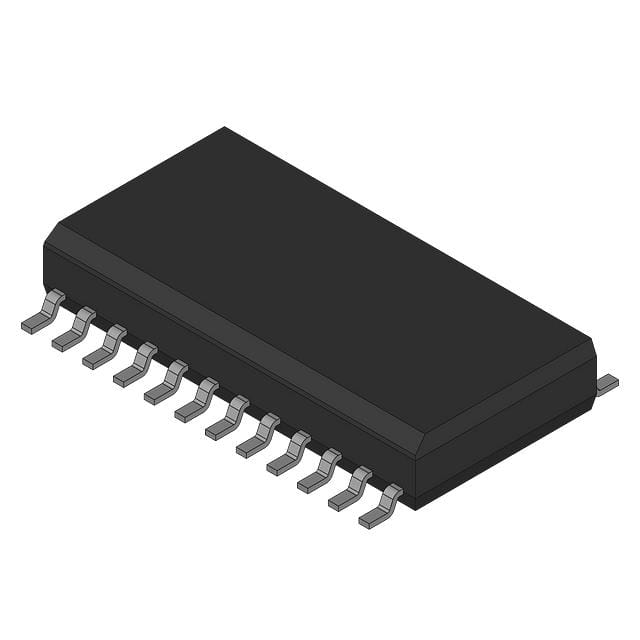
Microchip Technology ATF22LV10CZ-25SC
- Part No.:
- ATF22LV10CZ-25SC
- Manufacturer:
- Microchip Technology
- Category:
- PLDs (Programmable Logic Device)
- Package:
- 24-SOIC (0.295", 7.50mm Width)
- Datasheet:
-
 ATF22LV10CZ-25SC.pdf
- Description:
- IC PLD 10MC 25NS 24SOIC
- Quantity:
- Payment:

- Shipping:

Inventory:4,531
Please send an inquiry. Send us your inquiry, and we will respond immediately.
Product details
Overview
ATF22LV10CZ-25SC from Atmel is a low-voltage, electrically erasable programmable logic device (PLD) with 12 inputs, 10 I/O macrocells, 25ns propagation delay, 25µA maximum standby current, and 3.0V–5.5V supply operation - deployed in battery-powered industrial control logic and legacy PAL replacement applications.
For engineers reviewing the ATF22LV10CZ-25SC datasheet, ATF22LV10CZ-25SC pinout, ATF22LV10CZ-25SC application, or ATF22LV10CZ-25SC equivalent, key selection considerations include input transition detection (ITD)-enabled zero-power idle mode, 5V-tolerant CMOS/TTL-compatible I/Os, registered/combinatorial output configurability, and PLCC/SOIC/TSSOP package compatibility for retrofit designs.
Technical Context
The ATF22LV10CZ-25SC implements a variable product-term architecture with 8–16 product terms per output plus two global synchronous/asynchronous reset terms. Its Input Transition Detection (ITD) circuitry enables automatic entry into zero-power standby when inputs are static, eliminating external power management logic.
Each of its 10 macrocells supports active-high/low and registered/combinatorial output modes, enabling emulation of most 24-pin PAL devices. Register preload and a security fuse support secure, testable state-machine initialization without external boot ROM.
Key Specifications
| Parameter | Value and Actual Design Meaning |
|---|---|
| Propagation Delay (tPD) | 25 ns max - ensures timing compliance in 33 MHz clock domains with margin |
| Standby Current (ISB) | 25 µA max at VCC = 5.5V - enables multi-year battery life in always-on sensor nodes |
| Supply Voltage Range | 3.0V to 5.5V - interoperates with both 3.3V microcontrollers and legacy 5V TTL systems |
| I/O Pin Count | 10 bidirectional I/Os + 12 dedicated inputs - supports complex glue logic with minimal external components |
| Operating Temperature | -40°C to +85°C - qualified for industrial ambient environments without derating |
| Input Voltage Tolerance | 5V tolerant on all inputs - allows direct connection to 5V buses without level shifters |
| Product Terms per Output | 8–16 configurable terms - delivers high logic density for state-machine encoding and address decoding |
Pinout & Package
ATF22LV10CZ-25SC is supplied in a 24-lead, 0.300" wide plastic gull-wing small outline (SOIC) package (24S), compliant with JEDEC MS-012AB, with 1.27 mm pitch and 7.4–7.6 mm body width.
| Pin/Terminal | Circuit Role | Design Meaning |
|---|---|---|
| CLK/IN | Clock input or general-purpose input | Dual-function pin supporting edge-triggered register updates or combinational logic input |
| IN1–IN11 | Dedicated logic inputs | 11 total dedicated inputs (including CLK/IN); all 5V tolerant and equipped with keeper circuits |
| I/O1–I/O10 | Bidirectional macrocell I/Os | Configurable as registered/combinatorial, active-high/low outputs with internal pull-up keepers |
| VCC | Power supply | 3.0–5.5V supply; decoupling required within 1 cm due to fast switching transients |
| GND | Ground reference | Single ground pin; layout must minimize inductance for stable ITD operation |
Key Features
| Feature | Design Value |
|---|---|
| Input Transition Detection (ITD) | Automatically powers down to 25 µA standby when inputs are static - eliminates need for external sleep controllers |
| Pin Keeper Circuits | Maintains last-driven logic state on all inputs and I/Os - removes requirement for external pull-up/down resistors |
| Security Fuse | Prevents unauthorized readback of programmed logic pattern - critical for IP-protected firmware glue logic |
| User Signature Memory | 64-bit accessible nonvolatile memory - stores revision ID, calibration data, or traceability codes without security fuse restriction |
| Power-up Reset | Guaranteed register initialization at VRST = 2.3–2.7V - ensures deterministic state-machine startup without external POR circuit |
Applications
| Industrial Sensor Interface | Legacy System Retrofit |
|---|---|
Use Scenario: Interfacing analog sensor front-ends with 8-bit microcontrollers in factory-floor temperature monitoring nodes. IC Role / Device Role / Timing Role: Glue logic for multiplexing ADC channels, debouncing pushbutton inputs, and generating SPI chip-select strobes. Use Value: Zero-power standby extends AA battery life beyond 5 years; 5V-tolerant I/Os simplify integration with legacy 5V sensor modules. | Use Scenario: Replacing obsolete PAL16L8 devices in aging telecom line-card control planes. IC Role / Device Role / Timing Role: Combinatorial address decoder and status flag encoder for FPGA configuration sequencers. Use Value: Pin-compatible SOIC footprint and identical 24-pin DIP/SOIC/TSSOP options enable drop-in replacement without PCB rework. |
| Portable Medical Device Logic | Automated Test Equipment (ATE) |
Use Scenario: Managing button matrix scanning, LED indicators, and buzzer timing in handheld ECG analyzers. IC Role / Device Role / Timing Role: Registered state machine implementing user-interface sequencing and fault-signal latching. Use Value: Register preload simplifies production test coverage; 20-year data retention ensures field-programmed logic remains valid over product lifetime. | Use Scenario: Generating synchronized stimulus patterns and capture windows for mixed-signal IC validation. IC Role / Device Role / Timing Role: High-speed combinatorial logic for real-time pass/fail decision gating and result multiplexing. Use Value: 25ns tPD enables precise 33 MHz pattern generation; latch-up immunity (200 mA) prevents damage during probe contact faults. |
Equivalent & Alternatives
The following parts are listed as comparable options for similar programmable logic device applications.
| Alternative Part | Technical Difference | Application Difference | Selection Advice |
|---|---|---|---|
| ATF22LV10CQZ-30SC | 30 ns tPD, 18–50 mA active current (vs. 50–90 mA), same 24S package and pinout | Lower active power ideal for thermally constrained ATE fixtures; same industrial temp range | Select when lower dynamic power and relaxed timing margins are acceptable |
| AMD AM22V10CPC | 25 ns tPD, 5V-only supply (4.75–5.25V), no ITD or zero-power mode | Requires external power management; limited to 5V-only systems with higher standby draw | Choose only for strict 5V legacy compatibility where zero-power operation is unnecessary |
Compared with ATF22LV10CZ-25SC, the ATF22LV10CQZ-30SC reduces active current by >40% but trades 5 ns speed; the AM22V10CPC matches speed but lacks voltage flexibility and zero-power capability - making ATF22LV10CZ-25SC optimal for battery-critical, mixed-voltage industrial retrofits.
Availability
ATF22LV10CZ-25SC is available at Aetrix Electronics and suitable for industrial sensor interfaces, portable medical device logic, legacy system retrofits, and automated test equipment requiring stable component supply across extended product lifecycles.
Supply support for ATF22LV10CZ-25SC includes scheduled delivery planning, volume procurement assistance, BOM continuity management, traceable sourcing, and lifecycle availability coordination for OEM customers, industrial embedded developers, connected-device designers, and electronics production programs.
Manufacturer
Atmel Corporation was a U.S.-based semiconductor manufacturer specializing in microcontrollers, nonvolatile memory, and programmable logic, acquired by Microchip Technology in 2016.
The ATF22LV10CZ series was designed as a low-voltage, flash-based replacement for bipolar PAL devices, targeting power-sensitive industrial and portable electronics where reprogrammability and long-term data retention were essential.
FAQ
What is the maximum operating frequency supported by the ATF22LV10CZ-25SC?
The ATF22LV10CZ-25SC supports a maximum clock frequency of 33.3 MHz under external feedback conditions (1/(tS + tCO)), verified across its full 3.0V–5.5V supply and -40°C to +85°C temperature range. This is derived from its guaranteed 25 ns propagation delay and 15 ns setup time, making it suitable for high-speed control logic in industrial PLC modules and test instrumentation where deterministic timing is required. The ATF22LV10CZ-25SC maintains this performance without speed de-rating at industrial temperatures.
Does the ATF22LV10CZ-25SC require an external power-down controller?
No, the ATF22LV10CZ-25SC does not require an external power-down controller. Its patented Input Transition Detection (ITD) circuitry automatically places the device into zero-power standby mode (≤25 µA) whenever inputs remain static, eliminating quiescent current without software or hardware intervention. This feature is intrinsic to the ATF22LV10CZ-25SC silicon design and functions independently of host processor activity, making it ideal for energy-harvesting and battery-backed applications where continuous monitoring must coexist with ultra-low power consumption.
Can the ATF22LV10CZ-25SC be used in 5V systems despite its low-voltage rating?
Yes, the ATF22LV10CZ-25SC is fully compatible with 5V systems: its absolute maximum input voltage is +7.0V, all inputs are explicitly rated as 5V tolerant, and it operates reliably across a 3.0V–5.5V supply range. This dual-voltage capability allows direct interfacing with legacy 5V TTL logic families while retaining low-power advantages in mixed-voltage designs - a key differentiator from strictly 3.3V-only PLDs. The ATF22LV10CZ-25SC's VIH specification (≥2.0V) and VIL (≤0.8V) ensure robust noise margins in both 3.3V and 5V signaling environments.
How does the security fuse on the ATF22LV10CZ-25SC protect intellectual property?
The security fuse on the ATF22LV10CZ-25SC permanently disables fuse pattern readback and preload verification once programmed, preventing unauthorized copying of the configured logic array. Crucially, this protection applies only to the main 22V10 logic configuration - the 64-bit User Signature memory remains fully accessible even after fuse programming, allowing storage of calibration data or traceability codes. This architecture enables secure deployment of proprietary glue logic in medical and industrial equipment while preserving field-serviceability for non-logic data. The ATF22LV10CZ-25SC security mechanism is implemented in hardware and cannot be bypassed via standard programming protocols.
Is the ATF22LV10CZ-25SC still recommended for new designs?
No, the ATF22LV10CZ-25SC is Not Recommended for New Designs (NRND), as stated in Atmel document 0779M–PLD–7/10. It has been superseded by the ATF22LV10CQZ-30SC, which offers lower active current (18–50 mA vs. 50–90 mA), improved thermal performance, and green RoHS-compliant packaging. However, the ATF22LV10CZ-25SC remains actively supported for legacy design refreshes, repair, and obsolescence mitigation where exact timing, power, and footprint compatibility are mandatory - particularly in aerospace, medical, and industrial systems with long certification cycles.
ATF22LV10CZ-25SC Specifications
- Product attributes
- Attribute value
- Manufacturer:
- Microchip Technology
- Series:
- 22V10
- Package/Case:
- 24-SOIC (0.295", 7.50mm Width)
- Packaging:
- Tube
- Product Status:
- Obsolete
- Programmable:
- Verified
- Programmable Type:
- EE PLD
- Number of Macrocells:
- 10
- Voltage - Input:
- 3.3V
- Speed:
- 25 ns
- Mounting Type:
- Surface Mount
- Supplier Device Package:
- 24-SOIC
ATF22LV10CZ-25SC FAQ
1.How can I place an order for ATF22LV10CZ-25SC through Aetrix?
Please submit a Request for Quotation (RFQ) for ATF22LV10CZ-25SC on Aetrix. Our sales agent will provide a competitive quotation and guide you through the order confirmation once you accept the terms.
2.Are the price and stock information for ATF22LV10CZ-25SC reliable?
The price and inventory of ATF22LV10CZ-25SC are updated periodically and may fluctuate due to market conditions. Stock and pricing data are typically refreshed every 24 hours. Quotation validity for ATF22LV10CZ-25SC is usually 5 days.
3.What payment methods are accepted for ATF22LV10CZ-25SC?
We accept Wire Transfer, PayPal, Credit Card, Western Union, MoneyGram, and Escrow for ATF22LV10CZ-25SC transactions.
Note: Certain payment methods may incur a processing fee.
4.How is shipping managed for ATF22LV10CZ-25SC?
ATF22LV10CZ-25SC orders can be shipped via leading logistics carriers, including DHL, UPS, FedEx, TNT, or Registered Mail.
Once your ATF22LV10CZ-25SC order is processed, you will receive an email with the shipment details and tracking number.
Note: Tracking information may take up to 24 hours to appear. Express delivery typically takes 3–5 business days.
5.How can I obtain technical support or documentation for ATF22LV10CZ-25SC?
For technical support, including ATF22LV10CZ-25SC datasheets, pinout diagrams, or application guidance, please contact our engineering support team. They can provide detailed documentation and assistance for your ATF22LV10CZ-25SC requirements.
6.How does Aetrix verify that ATF22LV10CZ-25SC is sourced from the original manufacturer or authorized distributors?
All ATF22LV10CZ-25SC products on Aetrix are procured from qualified distributors and authorized channels. Our dedicated quality assurance team conducts strict verification, including traceability checks and, if necessary, third-party testing. This ensures that ATF22LV10CZ-25SC meets industry standards.
7.What is the process for return or replacement of ATF22LV10CZ-25SC?
All ATF22LV10CZ-25SC units undergo pre-shipment inspection (PSI). If there is an issue with ATF22LV10CZ-25SC, returns or replacements are accepted under the following conditions:
1.Quantity discrepancies, incorrect items, or visible external defects (such as breakage or corrosion), acknowledged by Aetrix.
2.The issue is reported within 90 days of delivery.
3.The ATF22LV10CZ-25SC part is unused and in its original packaging.
Return procedure for ATF22LV10CZ-25SC:
1.Submit a request within 90 days.
2.Obtain a Return Material Authorization (RMA) from Aetrix.
ATF22LV10CZ-25SC Tags
-
ATF16V8B-15PU
Microchip Technology
-
ATF16V8B-15JU
Microchip Technology
-
ATF16V8BQL-15PU
Microchip Technology
-
ATF22V10C-15PU
Microchip Technology
.jpg)
-
ATF22V10C-15JU
Microchip Technology
-
ATF22V10C-10JU
Microchip Technology
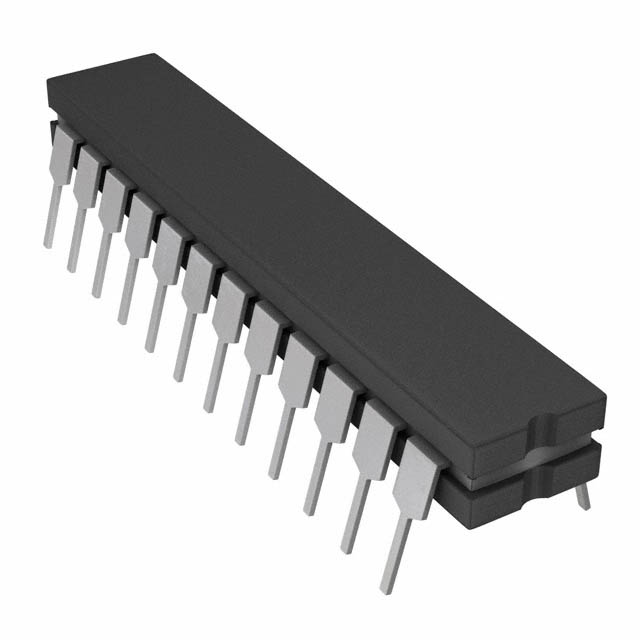
-
ATF22V10B-15GM/883
Microchip Technology
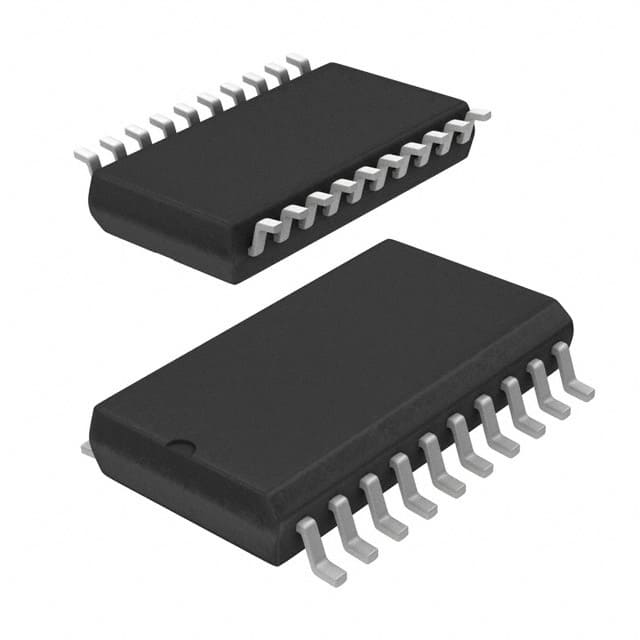
-
ATF16V8B-15SU
Microchip Technology
-
ATF16V8BQL-15SU
Microchip Technology
-
ATF16V8BQL-15JU
Microchip Technology
-
ATF16V8B-10JU
Microchip Technology
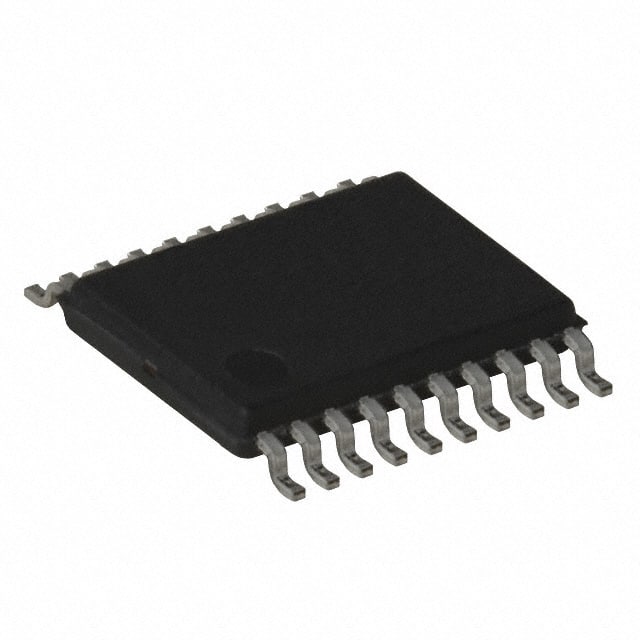
-
ATF16V8BQL-15XU
Microchip Technology
Tech Hub

TTL and CMOS logic families differ in thresholds, loading, output drive, power and timing. This engineering guide compares 74HC and 74HCT, calculates noise margins and checks 3.3 V/5 V compatibility.

A practical engineering guide to 3.3V and 5V logic compatibility, input thresholds, resistor dividers, translator ICs, MOSFET level shifting, I2C pull-ups, timing limits and power-sequencing risks.

The 74HC595 uses push-pull logic outputs, while the TPIC6B595 uses 50 V open-drain DMOS sinks for higher-power loads. This guide compares timing, current limits, 3.3 V interfacing, load wiring, thermal…

The 74HC595 converts serial data into eight stable parallel outputs. This guide covers pin functions, shift and storage timing, OE and MR behavior, drive-current limits, cascading, voltage compatibilit…

A technical comparison of level-sensitive latches and edge-triggered flip-flops, covering timing windows, setup and hold limits, master–slave operation, time borrowing, race-through, HDL inference and…

A D latch stores one bit while Enable controls when data can pass. This reference covers gate-level operation, truth tables, transparency, setup and hold timing, LE versus OE, common ICs and practical …

An SR latch stores one bit through cross-coupled feedback. This engineering reference covers NOR and NAND implementations, truth tables, forbidden-state recovery, gated operation, switch debouncing, fa…

Latch circuits retain one bit through feedback. This technical reference covers SR and D latches, truth tables, transparency, timing limits, latch-versus-flip-flop behavior, applications and common log…

An engineering guide to LED driver operation, constant-current and constant-voltage outputs, linear and switching topologies, dimming, IC selection, calculations, replacement compatibility, and fault c…

Operational amplifier guide covering op amp basics, feedback, ideal vs real op amps, common configurations, buffer circuits, offset, bias current, gain-bandwidth, slew rate, rail-to-rail limits and sel…


