
 My Inquiry
 My Account


Microchip Technology ATMEGA1284RFR2-ZUR
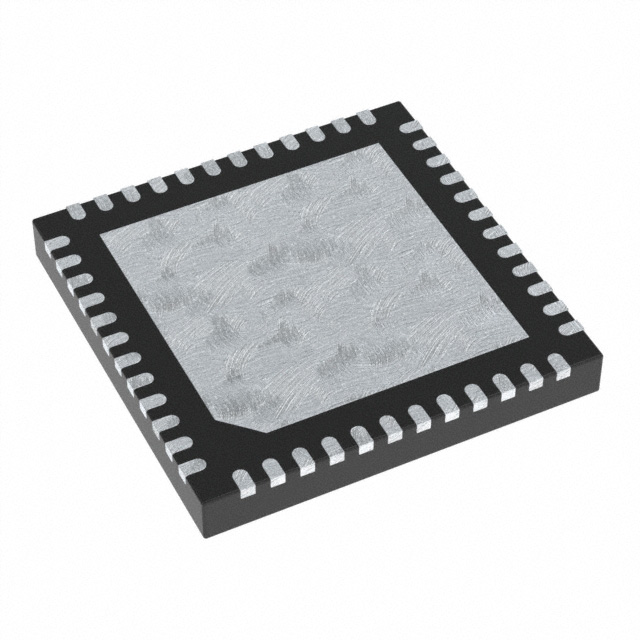
- Part No.:
- ATMEGA1284RFR2-ZUR
- Manufacturer:
- Microchip Technology
- Category:
- RF Transceiver ICs
- Package:
- 48-VFQFN Exposed Pad
- Datasheet:
-
 ATMEGA1284RFR2-ZUR.pdf
- Description:
- IC RF TXRX+MCU 802.15.4 48QFN
- Quantity:
- Payment:

- Shipping:

Inventory:2,442
Please send an inquiry. Send us your inquiry, and we will respond immediately.
Product details
Overview
ATMEGA1284RFR2-ZUR from Microchip Technology (formerly Atmel) is an integrated 8-bit AVR microcontroller with a fully embedded 2.4 GHz IEEE 802.15.4/ZigBee transceiver in a single QFN48 package. It delivers 128 KB Flash, 4 KB EEPROM, 16 KB SRAM, 33 programmable I/O lines, and operates from 1.8–3.6 V. It targets low-power wireless sensor nodes and mesh network routers requiring concurrent MCU execution and robust RF communication.
For engineers reviewing the ATMEGA1284RFR2-ZUR datasheet, ATMEGA1284RFR2-ZUR pinout, ATMEGA1284RFR2-ZUR application, or ATMEGA1284RFR2-ZUR equivalent, key selection criteria include its integrated transceiver's -100 dBm RX sensitivity, hardware-accelerated MAC, AES security engine, 32-bit symbol counter, and support for 250 kb/s to 2 Mb/s data rates in the 2.4 GHz ISM band.
Technical Context
The ATMEGA1284RFR2-ZUR integrates an enhanced RISC AVR core with a fully featured 2.4 GHz DSSS transceiver on a monolithic die. Its architecture includes a fractional-N PLL synthesizer with 5 MHz/500 kHz channel spacing, hardware-assisted PAN address filtering, auto-acknowledge/auto-retry MAC, and dedicated 128-byte TX/RX frame buffers.
It supports seven ADC input channels (10-bit, 330 ks/s), two USARTs, SPI, TWI, RTC with 32.768 kHz oscillator, and six software-selectable power modes-including Deep Sleep at <700 nA-enabled by internal voltage regulation and separate analog/digital supply domains (EVDD/DEVDD, AVSS_RFP/AVSS_RFN).
Key Specifications
| Parameter | Value and Actual Design Meaning |
|---|---|
| Core Architecture | AVR 8-bit RISC with 135 instructions; most execute in one cycle; 32 general-purpose registers; 16 MIPS @ 16 MHz, 1.8 V |
| Flash / EEPROM / SRAM | 128 KB ISP Flash (10k write/erase cycles @ 125°C); 4 KB EEPROM (20k cycles @ 125°C); 16 KB SRAM |
| RF Performance | -100 dBm RX sensitivity; +3.5 dBm max TX output; 250 kb/s to 2 Mb/s data rates; hardware CRC-16 and SFD detection |
| Power Consumption | CPU Active (16 MHz): 4.1 mA; RX_ON: 6.0 mA; TX (max power): 14.5 mA; Deep Sleep: <700 nA @ 25°C |
| ADC & Timers | 10-bit, 8-channel ADC (330 ks/s); Real Time Counter; six flexible Timer/Counters with PWM; 32-bit Timer/Counter |
| Supply & Temp Range | 1.8–3.6 V operation; industrial temperature range: -40°C to +125°C; QFN48 (7×7 mm) RoHS-compliant package |
| Security & Clocking | Hardware AES-128 engine; true random number generator; integrated 16 MHz and 32.768 kHz oscillators (external crystals required) |
Pinout & Package
ATMEGA1284RFR2-ZUR uses a 48-pin QFN (7×7 mm, RoHS-compliant) with exposed thermal pad internally connected to AVSS. The package provides 33 programmable I/O lines across Ports B, D, E, F, and G, plus dedicated RF (RFP/RFN), crystal (XTAL1/XTAL2), and supply pins (EVDD, DEVDD, AVDD, DVDD, AVSS, DVSS, AVSS_RFP, AVSS_RFN).
| Pin/Terminal | Circuit Role | Design Meaning |
|---|---|---|
| RFP / RFN | Differential RF I/O port | 100 Ω differential interface for 2.4 GHz transceiver; requires external balun for single-ended antenna connection |
| XTAL1 / XTAL2 | 16 MHz crystal oscillator terminals | Drive external 16 MHz crystal for transceiver reference clock; layout critical for frequency stability in high-data-rate modes |
| PG3 / PG4 | 32.768 kHz crystal terminals | Connect external 32.768 kHz crystal for low-power RTC and IEEE 802.15.4 symbol counter; total shunt capacitance ≤15 pF |
| PE0 / PE1 | USART0 RXD0 / TXD0 | Primary serial interface for bootloader, debug, or host communication; supports asynchronous full-duplex operation |
| PD0 / PD1 | Two-wire Serial Interface (TWI) | Compatible with I²C protocol; used for sensor interfacing or peripheral control without additional UART resources |
| PF0–PF2, PF5–PF7 | ADC0–ADC7 inputs | Seven single-ended ADC channels (10-bit, 330 ks/s); AVDD as reference; no AREF pin exposed in QFN48 package |
| RSTN | Active-low reset input | Asynchronous reset assertion ≥ minimum pulse width required; resets CPU, peripherals, and transceiver state machine |
| TST | Test mode enable | Must be tied low if unused; enables JTAG boundary-scan and on-chip debug; floating state may cause instability |
Key Features
| Feature | Design Value |
|---|---|
| Hardware MAC Acceleration | Auto-acknowledge, auto-retry, and 32-bit IEEE 802.15.4 symbol counter offload protocol stack processing from CPU |
| Integrated Security Engine | Dedicated AES-128 block cipher accelerator and true random number generator enable secure key exchange and encrypted payload handling |
| Dual-Crystal Oscillator Support | Separate 16 MHz (transceiver timing) and 32.768 kHz (low-power RTC/symbol counter) crystal interfaces minimize sleep-mode current |
| RF Power Optimization | TX spectrum side-lobe suppression and configurable output power reduce interference and extend battery life in duty-cycled applications |
| Multi-Voltage Domain Isolation | Dedicated EVDD/DEVDD supplies and AVSS_RFP/AVSS_RFN grounds isolate RF analog noise from digital logic and MCU core |
Applications
| Smart Utility Metering | ZigBee Router Node |
|---|---|
|
Use Scenario: Battery-powered gas/water meters transmitting consumption data hourly via mesh network to concentrator. IC Role / Device Role / Timing Role: Full-function ZigBee router with hardware MAC, AES encryption, and 32-bit symbol counter for time-synchronized reporting. Use Value: Enables multi-year battery life using Deep Sleep (<700 nA) between transmissions while maintaining network routing capability. |
Use Scenario: Indoor lighting control hub aggregating commands from multiple end devices and forwarding to central gateway. IC Role / Device Role / Timing Role: Network coordinator/router executing ZigBee Pro stack with hardware-assisted PAN filtering and frame buffering. Use Value: Reduces MCU load and latency via hardware CRC, auto-ack, and 128-byte TX/RX buffers-critical for real-time lighting response. |
| Industrial Sensor Gateway | Wireless Building Automation |
|
Use Scenario: Factory-floor vibration/temperature node relaying data to edge controller over IEEE 802.15.4 mesh. IC Role / Device Role / Timing Role: Low-power end-node with 10-bit ADC, hardware AES, and 250 kb/s DSSS link for reliable short-range telemetry. Use Value: Eliminates external transceiver and security IC, reducing BOM cost and PCB area while meeting industrial -40°C to +125°C requirements. |
Use Scenario: HVAC zone controller wirelessly receiving occupancy and temperature inputs from wall-mounted sensors. IC Role / Device Role / Timing Role: Reduced Function Device (RFD) with hardware timer-based wake-up and sub-1 µA 32.768 kHz oscillator for precise scheduling. Use Value: Achieves deterministic low-latency polling using hardware symbol counter and asynchronous timer-no software timing drift. |
Equivalent & Alternatives
The following parts are listed as comparable options for similar 2.4 GHz wireless MCU applications.
| Alternative Part | Technical Difference | Application Difference | Selection Advice |
|---|---|---|---|
| ATMEGA2564RFR2-ZUR | 256 KB Flash, 8 KB EEPROM, 32 KB SRAM; higher memory for complex ZigBee Pro stacks | Suitable for large network coordinators and routers requiring extensive routing tables and OTA update storage | Select when firmware size exceeds 128 KB or when extended EEPROM/SRAM is needed for logging or caching |
| ATMEGA644RFR2-ZUR | 64 KB Flash, 2 KB EEPROM, 8 KB SRAM; identical RF performance and pinout | Optimized for simple end-nodes with minimal protocol stack footprint and sensor-only functionality | Choose for cost-sensitive, battery-constrained endpoints where full MCU resources are unnecessary |
Compared with ATMEGA2564RFR2-ZUR and ATMEGA644RFR2-ZUR, the ATMEGA1284RFR2-ZUR offers balanced memory (128 KB Flash/4 KB EEPROM/16 KB SRAM) ideal for mid-tier ZigBee routers-supporting full network layer implementation without over-provisioning silicon or cost.
Availability
ATMEGA1284RFR2-ZUR is available at Aetrix Electronics and suitable for smart metering, industrial sensor networks, building automation, and wireless lighting control requiring stable component supply and long-term lifecycle support.
Supply support for ATMEGA1284RFR2-ZUR includes scheduled delivery planning, volume procurement assistance, BOM continuity management, traceable sourcing, and lifecycle availability coordination for OEM customers, industrial embedded developers, connected-device designers, and electronics production programs.
Manufacturer
Microchip Technology acquired Atmel in 2016 and maintains full support for the AVR wireless MCU portfolio. Atmel pioneered highly integrated RF+MCU solutions for low-power IoT applications.
The ATMEGA1284RFR2-ZUR belongs to the ATmegaRFR2 family, designed specifically for IEEE 802.15.4 and ZigBee-compliant wireless embedded systems requiring co-integrated processing, security, and radio in a single chip.
FAQ
What is the maximum transmit output power of the ATMEGA1284RFR2-ZUR?
The ATMEGA1284RFR2-ZUR achieves up to +3.5 dBm TX output power in the 2.4 GHz ISM band. This value is measured under specified conditions with optimal matching network and is supported by hardware TX spectrum side-lobe suppression to meet regulatory spectral mask requirements. The actual output level is configurable in firmware and depends on antenna matching and supply voltage.
Does the ATMEGA1284RFR2-ZUR require external crystals?
Yes, the ATMEGA1284RFR2-ZUR requires two external crystals: a 16 MHz crystal connected to XTAL1/XTAL2 for the transceiver's reference clock, and a 32.768 kHz crystal connected to PG3/PG4 for the low-power RTC and IEEE 802.15.4 symbol counter. Neither oscillator is fully internal-the device integrates the oscillator circuitry but relies on external crystals for frequency accuracy and stability.
How many ADC channels does the ATMEGA1284RFR2-ZUR support?
The ATMEGA1284RFR2-ZUR supports seven single-ended ADC input channels (ADC0–ADC7), mapped to PF0–PF2 and PF5–PF7. The AREF pin is not exposed in the QFN48 package; AVDD serves as the ADC reference voltage. Differential input with programmable gain is not available in this package variant due to pin count constraints.
Is the ATMEGA1284RFR2-ZUR pin-compatible with other ATmegaRFR2 variants?
Yes, the ATMEGA1284RFR2-ZUR is pin-compatible with ATMEGA2564RFR2-ZUR and ATMEGA644RFR2-ZUR in the QFN48 package. All share identical pinout, supply domains, RF interface (RFP/RFN), crystal connections, and peripheral mappings. Memory size differences do not affect physical or electrical compatibility-only firmware image size and runtime resource allocation differ.
What power-saving modes are available on the ATMEGA1284RFR2-ZUR?
The ATMEGA1284RFR2-ZUR offers six software-selectable power modes: Idle, Power-down, Power-save, ADC Noise Reduction, Standby, and Extended Standby. Deep Sleep mode draws <700 nA at 25°C and retains only the watchdog timer, MAC symbol counter, and 32.768 kHz oscillator-enabling ultra-long battery life in intermittently active wireless sensor applications.
ATMEGA1284RFR2-ZUR Specifications
- Product attributes
- Attribute value
- Manufacturer:
- Microchip Technology
- Series:
- -
- Package/Case:
- 48-VFQFN Exposed Pad
- Packaging:
- Tape & Reel (TR)
- Product Status:
- Active
- Programmable:
- Not Verified
- Type:
- TxRx + MCU
- RF Family/Standard:
- 802.15.4
- Protocol:
- Zigbee®
- Modulation:
- O-QPSK
- Frequency:
- 2.4GHz
- Data Rate (Max):
- 2Mbps
- Power - Output:
- 3.5dBm
- Sensitivity:
- -100dBm
- Memory Size:
- 128kB Flash, 4kB EEPROM, 16kB SRAM
- Serial Interfaces:
- I2C, JTAG, SPI, USART
- GPIO:
- 32
- Voltage - Supply:
- 1.8V ~ 3.6V
- Current - Receiving:
- 5mA ~ 12.5mA
- Current - Transmitting:
- 8mA ~ 14.5mA
- Operating Temperature:
- -40°C ~ 85°C
- Grade:
- -
- Qualification:
- -
- Supplier Device Package:
- 48-QFN (7x7)
ATMEGA1284RFR2-ZUR FAQ
1.How can I place an order for ATMEGA1284RFR2-ZUR through Aetrix?
Please submit a Request for Quotation (RFQ) for ATMEGA1284RFR2-ZUR on Aetrix. Our sales agent will provide a competitive quotation and guide you through the order confirmation once you accept the terms.
2.Are the price and stock information for ATMEGA1284RFR2-ZUR reliable?
The price and inventory of ATMEGA1284RFR2-ZUR are updated periodically and may fluctuate due to market conditions. Stock and pricing data are typically refreshed every 24 hours. Quotation validity for ATMEGA1284RFR2-ZUR is usually 5 days.
3.What payment methods are accepted for ATMEGA1284RFR2-ZUR?
We accept Wire Transfer, PayPal, Credit Card, Western Union, MoneyGram, and Escrow for ATMEGA1284RFR2-ZUR transactions.
Note: Certain payment methods may incur a processing fee.
4.How is shipping managed for ATMEGA1284RFR2-ZUR?
ATMEGA1284RFR2-ZUR orders can be shipped via leading logistics carriers, including DHL, UPS, FedEx, TNT, or Registered Mail.
Once your ATMEGA1284RFR2-ZUR order is processed, you will receive an email with the shipment details and tracking number.
Note: Tracking information may take up to 24 hours to appear. Express delivery typically takes 3–5 business days.
5.How can I obtain technical support or documentation for ATMEGA1284RFR2-ZUR?
For technical support, including ATMEGA1284RFR2-ZUR datasheets, pinout diagrams, or application guidance, please contact our engineering support team. They can provide detailed documentation and assistance for your ATMEGA1284RFR2-ZUR requirements.
6.How does Aetrix verify that ATMEGA1284RFR2-ZUR is sourced from the original manufacturer or authorized distributors?
All ATMEGA1284RFR2-ZUR products on Aetrix are procured from qualified distributors and authorized channels. Our dedicated quality assurance team conducts strict verification, including traceability checks and, if necessary, third-party testing. This ensures that ATMEGA1284RFR2-ZUR meets industry standards.
7.What is the process for return or replacement of ATMEGA1284RFR2-ZUR?
All ATMEGA1284RFR2-ZUR units undergo pre-shipment inspection (PSI). If there is an issue with ATMEGA1284RFR2-ZUR, returns or replacements are accepted under the following conditions:
1.Quantity discrepancies, incorrect items, or visible external defects (such as breakage or corrosion), acknowledged by Aetrix.
2.The issue is reported within 90 days of delivery.
3.The ATMEGA1284RFR2-ZUR part is unused and in its original packaging.
Return procedure for ATMEGA1284RFR2-ZUR:
1.Submit a request within 90 days.
2.Obtain a Return Material Authorization (RMA) from Aetrix.
ATMEGA1284RFR2-ZUR Tags
-
ESP32-D0WD-V3
Espressif Systems
-
ESP8266EX
Espressif Systems

-
ESP32-S3
Espressif Systems
-
NRF24L01P-R7
Nordic Semiconductor ASA
-
NRF24L01P-R
Nordic Semiconductor ASA
-
ESP32-U4WDH
Espressif Systems
-
DA14531-00000OG2
Renesas
-
ESP32-C6FH4
Espressif Systems
-
DA14531-00000FX2
Renesas
-
NRF24L01P-T
Nordic Semiconductor ASA
-
NRF52810-QCAA-R
Nordic Semiconductor ASA
-
ESP32-S3FN8
Espressif Systems
Tech Hub

TTL and CMOS logic families differ in thresholds, loading, output drive, power and timing. This engineering guide compares 74HC and 74HCT, calculates noise margins and checks 3.3 V/5 V compatibility.

A practical engineering guide to 3.3V and 5V logic compatibility, input thresholds, resistor dividers, translator ICs, MOSFET level shifting, I2C pull-ups, timing limits and power-sequencing risks.

The 74HC595 uses push-pull logic outputs, while the TPIC6B595 uses 50 V open-drain DMOS sinks for higher-power loads. This guide compares timing, current limits, 3.3 V interfacing, load wiring, thermal…

The 74HC595 converts serial data into eight stable parallel outputs. This guide covers pin functions, shift and storage timing, OE and MR behavior, drive-current limits, cascading, voltage compatibilit…

A technical comparison of level-sensitive latches and edge-triggered flip-flops, covering timing windows, setup and hold limits, master–slave operation, time borrowing, race-through, HDL inference and…

A D latch stores one bit while Enable controls when data can pass. This reference covers gate-level operation, truth tables, transparency, setup and hold timing, LE versus OE, common ICs and practical …

An SR latch stores one bit through cross-coupled feedback. This engineering reference covers NOR and NAND implementations, truth tables, forbidden-state recovery, gated operation, switch debouncing, fa…

Latch circuits retain one bit through feedback. This technical reference covers SR and D latches, truth tables, transparency, timing limits, latch-versus-flip-flop behavior, applications and common log…

An engineering guide to LED driver operation, constant-current and constant-voltage outputs, linear and switching topologies, dimming, IC selection, calculations, replacement compatibility, and fault c…

Operational amplifier guide covering op amp basics, feedback, ideal vs real op amps, common configurations, buffer circuits, offset, bias current, gain-bandwidth, slew rate, rail-to-rail limits and sel…


