
 My Inquiry
 My Account


Microchip Technology ATR2732-PBPW
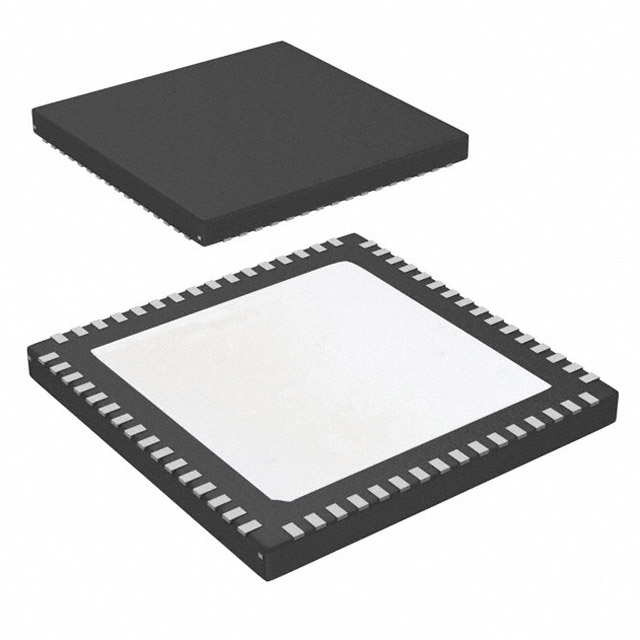
- Part No.:
- ATR2732-PBPW
- Manufacturer:
- Microchip Technology
- Category:
- RF Front End (LNA + PA)
- Package:
- 64-VFQFN Exposed Pad
- Datasheet:
-
 ATR2732-PBPW.pdf
- Description:
- IC INT ONE-CHIP FRONT END 64VQFN
- Quantity:
- Payment:

- Shipping:

Inventory:1,363
Please send an inquiry. Send us your inquiry, and we will respond immediately.
Product details
Overview
ATR2732-PBPW from Atmel (now Microchip Technology) is a highly integrated DAB front-end IC for Band III (174–240 MHz) and L-band (1452–1492 MHz) reception, featuring dual fractional PLLs, fully integrated VCOs, on-chip reference oscillator with digital tuning, and three-stage IF gain control. It delivers –98 dBm VHF sensitivity and –96 dBm L-band sensitivity at 8 dB SNR, operating from a single 3.3 V supply in automotive and portable DAB radio systems.
For engineers reviewing the ATR2732-PBPW datasheet, ATR2732-PBPW pinout, ATR2732-PBPW application, or ATR2732-PBPW equivalent, key selection criteria include its QFN64 package, SPI-controlled AGC architecture, VHF/L-band dual-band support, integrated filter-tuning DACs, and compatibility with the ATR2740 baseband processor.
Technical Context
The ATR2732-PBPW implements two independent RF signal paths: one for VHF Band III using a fractional-N PLL with 200–290 MHz LO and another for L-band using an integer PLL with 1.26–1.27 GHz LO. Both paths integrate LNAs, mixers, and programmable gain stages, with AGC loops controlling RF, mixer, and IF amplifiers via external capacitors.
Its clocking engine includes a digitally tunable crystal oscillator (16–32 MHz, ±210 ppm tuning range), dual programmable reference dividers (6-bit + 3-bit), and a 13-bit main divider supporting N/N+1 fractional synthesis. Filter alignment is enabled by three DAC outputs (VFIL1–VFIL3) and a reference-tank interface (TNKREFO/TNKREFI/VTNKREF).
Key Specifications
| Parameter | Value and Actual Design Meaning |
|---|---|
| VHF Frequency Range | 174–240 MHz - supports full DAB Band III broadcast spectrum |
| L-band Frequency Range | 1452–1492 MHz - covers entire ETSI DAB L-band allocation |
| VHF Sensitivity | –98 dBm @ 8 dB SNR - enables reliable reception in weak-signal urban environments |
| L-band Sensitivity | –96 dBm @ 8 dB SNR - maintains robust performance with higher path loss |
| Supply Voltage | 3.0–3.5 V - compatible with standard 3.3 V system rails, low-noise operation |
| SPI Clock Frequency | Up to 5 MHz - allows fast register configuration without timing bottlenecks |
| Package | QFN64, 9 mm × 9 mm, 0.5 mm pitch - surface-mountable, thermally enhanced with exposed pad |
Pinout & Package
ATR2732-PBPW uses a 64-pin QFN package (9 mm × 9 mm, 0.5 mm pitch) with exposed thermal pad. Pin functions are defined per Atmel preliminary datasheet 4918AS–DAB–03/06, including dedicated supply, ground, RF/IF differential I/O, PLL/VCO control, filter-tuning DAC outputs, and SPI interface signals.
| Pin/Terminal | Circuit Role | Design Meaning |
|---|---|---|
| VAMIXL, VAVCOL, VA1, VA2, VALNA, VABIAS, VDD | Supply rails | Separate analog/digital/LNA/mixer/VCO supplies enable noise isolation and optimized biasing |
| LNAVIN±, LNALIN±, MIXVIN±, MILIN±, IF1IN±, IF2IN±, IF1O±, IF2O±, LNAVO±, LNALO±, IFAGCIN± | Differential RF/IF I/O | Full differential signaling minimizes common-mode noise and improves dynamic range |
| TUNVL, TUNVV, PFDOUTL, PFDOUTV, VFIL1–3, VTNKREF, TNKREFO/I | PLL & filter tuning | Direct interface to external loop filters and varactor-tuned VHF/L-band preselection filters |
| MOSI, MISO, SCK, NSS, SWITCHEN, WAGC | Digital control | SPI bus + auxiliary control pins enable full functional configuration and power-state management |
| XTALA/XTALB, XOUT, VDI | Clock interface | Crystal input, VCXO output, and baseband voltage sensing allow flexible clock tree integration |
Key Features
| Feature | Design Value |
|---|---|
| Dual-band fractional PLL architecture | Enables simultaneous VHF/L-band DAB reception with <16 kHz frequency step resolution in VHF |
| Three independent AGC loops | RF (LNA/mixer), IF1, and IF2 gain control with programmable time constants (0.2× to ∞) |
| Integrated filter-tuning DACs | Three 8-bit DACs (VFIL1–VFIL3) + reference-tank interface automate VHF antenna/preselection filter alignment |
| Digitally tunable reference oscillator | 12-bit tuning (XOTi bits) over ±210 ppm allows precise LO calibration without external components |
| Low-voltage SPI interface with VDI sensing | Adapts logic levels to baseband supply (1.65–3.6 V), eliminating level-shifters in mixed-voltage systems |
Applications
| Commercial DAB Receivers | DAB Car Radio Systems |
|---|---|
Use Scenario: Standalone tabletop or home DAB receiver with antenna diversity and high-fidelity audio output. IC Role / Device Role / Timing Role: Primary RF front-end IC handling all band-selective downconversion, AGC, and IF conditioning prior to baseband processing. Use Value: Eliminates discrete VCOs, filters, and gain blocks-reducing BOM count by >40% versus discrete solutions while maintaining –98 dBm sensitivity. | Use Scenario: Integrated infotainment head unit requiring EMI-robust DAB reception in noisy automotive electrical environment. IC Role / Device Role / Timing Role: Dual-band tuner IC providing interference-resistant RF front-end with automatic filter alignment and temperature-compensated tuning. Use Value: VFIL DACs and Loop/Offset mode enable real-time VHF filter tracking across –40°C to +85°C, ensuring consistent selectivity in varying cabin temperatures. |
| Portable DAB Radios | DAB Baseband Reference Designs |
Use Scenario: Battery-powered handheld DAB player with compact form factor and extended playback time. IC Role / Device Role / Timing Role: Low-power front-end IC delivering 80 mA typical current consumption with multiple power-down modes (SWITCHEN/WAGC controlled). Use Value: Selective power gating reduces active current by >45% during null-symbol periods, directly extending battery life in burst-reception protocols. | Use Scenario: Reference platform for DAB system validation using Atmel's ATR2740 baseband processor. IC Role / Device Role / Timing Role: Optimized companion front-end IC with matched IF output impedance (56–100 Ω) and synchronized clocking (XOUT to ATR2740). Use Value: Seamless SPI register mapping and shared VDI voltage sensing eliminate interface glue logic, accelerating time-to-demo by ~3 weeks. |
Equivalent & Alternatives
The following parts are listed as comparable options for similar DAB front-end applications.
| Alternative Part | Technical Difference | Application Difference | Selection Advice |
|---|---|---|---|
| Si2151-A10-GM | Single-band (VHF-only) silicon tuner; no L-band support; requires external crystal; no integrated filter-tuning DACs | Lacks L-band capability and automatic VHF filter alignment-unsuitable for dual-band DAB systems | Select only for cost-sensitive VHF-only receivers where L-band is not required |
| MAX2175ETJ+ | Wideband RF-to-bits receiver; integrates ADC and digital demodulator; no analog IF output; 3.3 V supply | Replaces both ATR2732-PBPW and baseband processor-requires complete firmware redesign | Choose when migrating to software-defined radio architecture, not for drop-in ATR2740-based designs |
Compared with Si2151-A10-GM and MAX2175ETJ+, the ATR2732-PBPW uniquely delivers dual-band analog IF output with hardware-accelerated filter tuning and direct ATR2740 interoperability-making it irreplaceable in existing Atmel DAB reference platforms without PCB or firmware changes.
Availability
ATR2732-PBPW is available at Aetrix Electronics and suitable for commercial DAB receivers, automotive infotainment systems, and portable DAB radios requiring stable component supply, long-term lifecycle support, and qualified sourcing for production ramp.
Supply support for ATR2732-PBPW includes scheduled delivery planning, volume procurement assistance, BOM continuity management, traceable sourcing, and lifecycle availability coordination for OEM customers, industrial embedded developers, connected-device designers, and electronics production programs.
Manufacturer
Microchip Technology (formerly Atmel) is a global semiconductor company specializing in microcontrollers, analog, FPGA, and wireless solutions, with deep expertise in automotive, industrial, and consumer communications ICs.
The ATR2732 product line was developed specifically for digital audio broadcasting (DAB) front-end applications, integrating RF, IF, PLL, and tuning functions into a single SiGe BiCMOS die to minimize external components and accelerate DAB system design.
FAQ
What is the primary function of the ATR2732-PBPW in a DAB system?
The ATR2732-PBPW serves as a monolithic DAB front-end IC that performs RF amplification, downconversion, IF amplification, AGC control, and clock generation for both VHF Band III (174–240 MHz) and L-band (1452–1492 MHz). It interfaces directly with the ATR2740 baseband processor and outputs a 38.912 MHz IF signal. Its integrated fractional PLLs, VCOs, and filter-tuning DACs eliminate the need for discrete tuning components in production DAB receivers.
Does the ATR2732-PBPW support both VHF and L-band DAB reception simultaneously?
Yes, the ATR2732-PBPW supports concurrent VHF and L-band DAB reception through physically separate RF paths: a VHF LNA/mixer with fractional-N PLL and an L-band LNA/mixer with integer PLL. The device does not process both bands at the exact same instant but enables rapid band switching via SPI register reconfiguration, with hardware-assisted filter tuning for each band using dedicated DAC outputs (VFIL1–VFIL3) and tank references.
What are the critical supply voltage requirements for the ATR2732-PBPW?
The ATR2732-PBPW requires a nominal 3.3 V supply across multiple rails: VCC (3.0–3.5 V) for analog core, VDI (1.65–3.6 V) for SPI interface level adaptation, and dedicated supplies for LNAs (VALNA), mixers (VAMIXL), VCOs (VAVCOL/VAVCOV), and digital circuits (VDD). All supplies must be well-decoupled; the exposed thermal pad must be soldered to a solid ground plane for thermal and electrical integrity.
How does the ATR2732-PBPW implement automatic filter tuning for VHF antennas?
The ATR2732-PBPW implements automatic VHF filter tuning using three integrated 8-bit DACs (VFIL1, VFIL2, VFIL3) and a reference-tank circuit (TNKREFO/TNKREFI/VTNKREF). In Loop/Offset mode-which is recommended-the DACs generate tuning voltages referenced to a temperature-compensated varactor tank, enabling real-time alignment of external VHF antenna and preselection filters across operating temperature and frequency.
Is the ATR2732-PBPW pin-compatible with other variants in the ATR2732 family?
Yes, the ATR2732-PBPW is pin-compatible with the ATR2732-PBQW variant, sharing identical QFN64 (9 mm × 9 mm) mechanical footprint, thermal pad layout, and pin assignment per datasheet 4918AS–DAB–03/06. Both variants differ only in tape-and-reel packaging specifications and moisture sensitivity level (MSL), not in electrical or functional behavior-enabling direct substitution in manufacturing without PCB revision.
ATR2732-PBPW Specifications
- Product attributes
- Attribute value
- Manufacturer:
- Microchip Technology
- Series:
- -
- Packaging:
- Tape & Reel (TR)
- Product Status:
- Obsolete
- RF Type:
- DAB, Broadcast Radio
- Frequency:
- 1.452GHz ~ 1.492GHz, 167MHz ~ 240GHz
- Features:
- Fractional PLL for VHF
- Grade:
- -
- Qualification:
- -
- Supplier Device Package:
- 64-VQFN (9x9)
ATR2732-PBPW FAQ
1.How can I place an order for ATR2732-PBPW through Aetrix?
Please submit a Request for Quotation (RFQ) for ATR2732-PBPW on Aetrix. Our sales agent will provide a competitive quotation and guide you through the order confirmation once you accept the terms.
2.Are the price and stock information for ATR2732-PBPW reliable?
The price and inventory of ATR2732-PBPW are updated periodically and may fluctuate due to market conditions. Stock and pricing data are typically refreshed every 24 hours. Quotation validity for ATR2732-PBPW is usually 5 days.
3.What payment methods are accepted for ATR2732-PBPW?
We accept Wire Transfer, PayPal, Credit Card, Western Union, MoneyGram, and Escrow for ATR2732-PBPW transactions.
Note: Certain payment methods may incur a processing fee.
4.How is shipping managed for ATR2732-PBPW?
ATR2732-PBPW orders can be shipped via leading logistics carriers, including DHL, UPS, FedEx, TNT, or Registered Mail.
Once your ATR2732-PBPW order is processed, you will receive an email with the shipment details and tracking number.
Note: Tracking information may take up to 24 hours to appear. Express delivery typically takes 3–5 business days.
5.How can I obtain technical support or documentation for ATR2732-PBPW?
For technical support, including ATR2732-PBPW datasheets, pinout diagrams, or application guidance, please contact our engineering support team. They can provide detailed documentation and assistance for your ATR2732-PBPW requirements.
6.How does Aetrix verify that ATR2732-PBPW is sourced from the original manufacturer or authorized distributors?
All ATR2732-PBPW products on Aetrix are procured from qualified distributors and authorized channels. Our dedicated quality assurance team conducts strict verification, including traceability checks and, if necessary, third-party testing. This ensures that ATR2732-PBPW meets industry standards.
7.What is the process for return or replacement of ATR2732-PBPW?
All ATR2732-PBPW units undergo pre-shipment inspection (PSI). If there is an issue with ATR2732-PBPW, returns or replacements are accepted under the following conditions:
1.Quantity discrepancies, incorrect items, or visible external defects (such as breakage or corrosion), acknowledged by Aetrix.
2.The issue is reported within 90 days of delivery.
3.The ATR2732-PBPW part is unused and in its original packaging.
Return procedure for ATR2732-PBPW:
1.Submit a request within 90 days.
2.Obtain a Return Material Authorization (RMA) from Aetrix.
ATR2732-PBPW Tags
-
RFX2401C
Skyworks Solutions Inc.
.jpg)
-
NRF21540-QDAA-R
Nordic Semiconductor ASA
-
NRF21540-QDAA-R7
Nordic Semiconductor ASA
-
RFX2411N
Skyworks Solutions Inc.
-
SE2438T-R
Skyworks Solutions Inc.
-
SKY66118-11
Skyworks Solutions Inc.
-
SKY85712-21
Skyworks Solutions Inc.

-
SKY85329-11
Skyworks Solutions Inc.
-
SKY66422-11
Skyworks Solutions Inc.

-
SKY66119-11
Skyworks Solutions Inc.
-
NJG1156PCD-TE1
Nisshinbo Micro Devices Inc.
-
SE2435L-R
Skyworks Solutions Inc.
Tech Hub

TTL and CMOS logic families differ in thresholds, loading, output drive, power and timing. This engineering guide compares 74HC and 74HCT, calculates noise margins and checks 3.3 V/5 V compatibility.

A practical engineering guide to 3.3V and 5V logic compatibility, input thresholds, resistor dividers, translator ICs, MOSFET level shifting, I2C pull-ups, timing limits and power-sequencing risks.

The 74HC595 uses push-pull logic outputs, while the TPIC6B595 uses 50 V open-drain DMOS sinks for higher-power loads. This guide compares timing, current limits, 3.3 V interfacing, load wiring, thermal…

The 74HC595 converts serial data into eight stable parallel outputs. This guide covers pin functions, shift and storage timing, OE and MR behavior, drive-current limits, cascading, voltage compatibilit…

A technical comparison of level-sensitive latches and edge-triggered flip-flops, covering timing windows, setup and hold limits, master–slave operation, time borrowing, race-through, HDL inference and…

A D latch stores one bit while Enable controls when data can pass. This reference covers gate-level operation, truth tables, transparency, setup and hold timing, LE versus OE, common ICs and practical …

An SR latch stores one bit through cross-coupled feedback. This engineering reference covers NOR and NAND implementations, truth tables, forbidden-state recovery, gated operation, switch debouncing, fa…

Latch circuits retain one bit through feedback. This technical reference covers SR and D latches, truth tables, transparency, timing limits, latch-versus-flip-flop behavior, applications and common log…

An engineering guide to LED driver operation, constant-current and constant-voltage outputs, linear and switching topologies, dimming, IC selection, calculations, replacement compatibility, and fault c…

Operational amplifier guide covering op amp basics, feedback, ideal vs real op amps, common configurations, buffer circuits, offset, bias current, gain-bandwidth, slew rate, rail-to-rail limits and sel…


