
 My Inquiry
 My Account


Microchip Technology ATR2732-PBQW
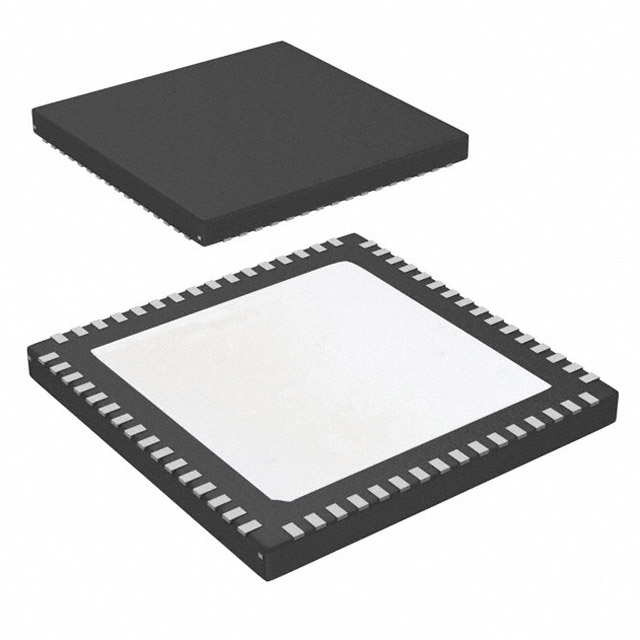
- Part No.:
- ATR2732-PBQW
- Manufacturer:
- Microchip Technology
- Category:
- RF Front End (LNA + PA)
- Package:
- 64-VFQFN Exposed Pad
- Datasheet:
-
 ATR2732-PBQW.pdf
- Description:
- IC INT ONE-CHIP FRONT END 64VQFN
- Quantity:
- Payment:

- Shipping:

Inventory:2,349
Please send an inquiry. Send us your inquiry, and we will respond immediately.
Product details
Overview
ATR2732-PBQW from Atmel (now Microchip Technology) is a monolithic DAB front-end IC fabricated in SiGe BiCMOS, integrating RF/IF signal processing and clock generation for Band III (174–240 MHz) and L-band (1452–1492 MHz) reception. It features dual fractional PLLs, integrated VCOs, high-performance LNAs, three-stage IF VGAs, and SPI-controlled AGC with programmable time constants. It is designed for seamless interfacing with the ATR2740 baseband processor in commercial and automotive DAB receivers.
For engineers reviewing the ATR2732-PBQW datasheet, ATR2732-PBQW pinout, ATR2732-PBQW application, or ATR2732-PBQW equivalent, key selection criteria include its dual-band tuning support, 38.912 MHz IF output, 3.3 V single-supply operation, QFN64 9 mm × 9 mm package, and SPI-configurable filter-tuning DACs for automatic VHF/L-band preselection alignment.
Technical Context
The ATR2732-PBQW implements two independent PLL paths: a fractional-N PLL for VHF Band III (200–290 MHz LO) with 16 kHz frequency step resolution, and an integer PLL for L-band (1.26–1.27 GHz LO), both locked to a digitally tunable on-chip crystal oscillator (16–32 MHz, ±210 ppm tuning range). Its RF path includes differential LNAs with external PIN diode attenuation control (IPINDIO), while the IF path comprises three gain-controlled amplifiers feeding a 38.912 MHz baseband interface.
Filter tuning is enabled by three dedicated DAC outputs (VFIL1–VFIL3) and reference-tank circuitry (TNKREFO/TNKREFI/VTNKREF) supporting automatic alignment of external varactor-tuned VHF antenna and preselection filters. The SPI interface adapts to baseband supply voltage (1.65–3.6 V) via VDI sensing and supports full register configuration-including 12-bit reference oscillator tuning (XOTi), 6-bit reference dividers, and 13-bit main dividers-with lock detection verified via PFDOUTV/PFDOUTL phase comparator outputs.
Key Specifications
| Parameter | Value and Actual Design Meaning |
|---|---|
| RF Frequency Range | Band III: 174–240 MHz; L-band: 1452–1492 MHz - enables full DAB coverage across both primary broadcast bands |
| IF Output Frequency | 38.912 MHz - fixed, standardized DAB intermediate frequency compatible with ATR2740 baseband processor |
| Supply Voltage | 3.0–3.5 V - single low-voltage rail simplifies power design and reduces system-level DC-DC complexity |
| Sensitivity | –98 dBm (VHF), –96 dBm (L-band) at 8 dB SNR - meets DAB field strength requirements for portable and vehicular reception |
| Package | QFN64, 9 mm × 9 mm, 0.5 mm pitch, exposed thermal pad - provides thermal efficiency and board-space optimization for compact receivers |
| Control Interface | 3-wire SPI (NSS/SCK/MOSI/MISO) with VDI-sensed logic level adaptation - ensures interoperability with 1.65–3.6 V baseband processors |
| AGC Architecture | Three independent AGCs (RF, mixer, IF) with programmable time-constant factors (0.2× to ∞) - enables dynamic range management across varying signal environments |
Pinout & Package
ATR2732-PBQW is housed in a lead-free QFN64 package (9 mm × 9 mm, 0.5 mm pitch) with an exposed thermal pad for enhanced thermal dissipation in high-density DAB receiver designs.
| Pin | Circuit Role | Design Meaning |
|---|---|---|
| 1–4, 9, 13, 23, 32, 49, 60 | Supply/Ground terminals (VAMIXL, VAVCOL, VALNA, GNDLNA, VA1, VAVCOV, VA2, VDD) | Dedicated power domains isolate LNA, mixer, VCO, IF, digital, and bias circuits to minimize crosstalk and optimize noise performance |
| 5, 8, 14, 15, 17, 18, 26, 27, 28, 29, 30, 31, 42, 43, 45, 46, 47, 48 | Differential RF/IF signal paths (LNAVIN±, LNALIN±, LNAVO±, MIXVIN±, MIXVO±, IF1IN±, IF1O±, IF2IN±, IF2O±, IFAGCIN±) | Full differential architecture improves common-mode rejection, linearity, and EMI immunity in noisy automotive/portable environments |
| 3, 33, 35–37, 38–40, 41, 61 | Tuning & PLL control (TUNVL, TUNVV, VFIL1–3, VTNKREF, TNKREFI/O, PFDOUTV/L) | Enables closed-loop automatic alignment of external varactor-tuned filters and precise VCO locking without external loop filters |
| 52–55, 56–59 | SPI interface + crystal (MOSI/NSS/SCK/MISO, XOUT/XTALA/XTALB) | Configures all functional blocks; crystal pins support 16–32 MHz fundamental-mode crystals with digital frequency trimming |
| 16, 50, 51 | System control (IPINDIO, WAGC, SWITCHEN) | IPINDIO drives external PIN diode attenuator; WAGC freezes AGC during null symbols; SWITCHEN toggles between low-power and normal-reception modes |
Key Features
| Feature | Design Value |
|---|---|
| Fractional-N VHF PLL | Enables 16 kHz LO step resolution and superior phase-noise performance critical for robust DAB demodulation in mobile environments |
| Digitally Tunable Reference Oscillator | 12-bit SPI-controlled tuning (±210 ppm) allows single-crystal operation across Band III and L-band without hardware changes |
| Three-Stage Programmable IF VGAs | Provides >100 dB total gain control range with AGC feedback to maintain consistent IF output level into baseband processor |
| Automatic Filter Tuning DACs | Three dedicated DAC outputs (VFIL1–VFIL3) and reference-tank circuitry simplify production calibration of external VHF/L-band filters |
| VHF/L-band Dual-Path Architecture | Independent LNAs, mixers, and PLLs eliminate band-switching latency and enable simultaneous monitoring or diversity reception |
| Single 3.3 V Supply Operation | Reduces BOM count and PCB area versus multi-rail solutions while maintaining >80 dB SFDR across RF/IF chain |
Applications
| Automotive DAB Radio | Portable DAB Receiver |
|---|---|
|
Use Scenario: Integrated into head-unit infotainment systems requiring robust reception under high-speed multipath and engine noise. IC Role / Device Role / Timing Role: Primary DAB front-end IC handling RF-to-IF conversion, clock synthesis, and AGC for ATR2740 baseband processor. Use Value: Dual-band support eliminates need for separate tuners; automatic filter tuning compensates for temperature drift in vehicle cabin environments. |
Use Scenario: Compact battery-powered handheld DAB radios needing low power consumption and minimal external components. IC Role / Device Role / Timing Role: Complete RF/IF signal chain with integrated VCOs, LNAs, and SPI-configurable power-down modes. Use Value: 80 mA average current draw and SWITCHEN-controlled low-power mode extend battery life; QFN64 package enables < 3 cm² PCB footprint. |
| Commercial DAB Set-Top Box | DAB+ Broadcast Monitoring Unit |
|
Use Scenario: Fixed-location home receivers requiring stable sensitivity and compatibility with legacy DAB/DAB+ standards. IC Role / Device Role / Timing Role: Front-end tuner delivering 38.912 MHz IF output synchronized to ATR2740's internal timing engine. Use Value: –96 dBm (L-band) and –98 dBm (VHF) sensitivity ensures reliable reception even with indoor antennas; RSSI reporting aids signal diagnostics. |
Use Scenario: Field-deployable spectrum monitoring equipment verifying DAB transmitter compliance across multiple frequencies. IC Role / Device Role / Timing Role: Programmable dual-band tuner with precise LO control and real-time AGC status via SPI readback. Use Value: Fractional-N PLL and 12-bit reference tuning allow accurate frequency stepping across entire DAB band; WAGC pin enables AGC freeze during measurement windows. |
Equivalent & Alternatives
The following parts are listed as comparable options for similar DAB front-end applications.
| Alternative Part | Technical Difference | Application Difference | Selection Advice |
|---|---|---|---|
| Si2151-A10-GM (Silicon Labs) | Single-band (VHF-only) tuner; lacks L-band support and integrated reference oscillator tuning; uses I²C interface instead of SPI | Requires external L-band solution for full DAB coverage; no automatic filter tuning DACs | Choose when only Band III reception is needed and cost-sensitive designs prioritize smaller QFN40 package |
| MAX2175ETJ+ (Maxim Integrated) | Wideband RF tuner (100 kHz–2.5 GHz); requires external IF filtering and clock generation; supports DAB via firmware configuration | Greater flexibility for multi-standard (DAB/FM/DVB-T) but higher BOM and layout complexity | Prefer for future-proof platforms needing concurrent DAB/FM reception, accepting added design effort |
Compared with Si2151-A10-GM and MAX2175ETJ+, the ATR2732-PBQW delivers purpose-built dual-band DAB integration with zero external VCOs, built-in filter tuning, and guaranteed 38.912 MHz IF alignment-reducing development time and component count in dedicated DAB receiver designs.
Availability
ATR2732-PBQW is available at Aetrix Electronics and suitable for automotive infotainment systems, portable DAB radios, and commercial set-top boxes requiring stable component supply and long-term lifecycle support.
Supply support for ATR2732-PBQW includes scheduled delivery planning, volume procurement assistance, BOM continuity management, traceable sourcing, and lifecycle availability coordination for OEM customers, industrial embedded developers, connected-device designers, and electronics production programs.
Manufacturer
Atmel Corporation, now part of Microchip Technology, is a semiconductor manufacturer specializing in microcontrollers, nonvolatile memory, and RF analog products for embedded applications.
The ATR2732 product line was developed specifically for digital audio broadcasting (DAB) front-end integration, targeting simplified, high-performance tuner designs with minimal external components and seamless pairing with Atmel's ATR2740 baseband processor.
FAQ
What is the primary function of the ATR2732-PBQW in a DAB receiver system?
The ATR2732-PBQW serves as a complete monolithic DAB front-end IC, performing RF amplification, down-conversion, IF amplification, clock generation, and AGC control for both Band III (174–240 MHz) and L-band (1452–1492 MHz) signals. It delivers a standardized 38.912 MHz IF output directly compatible with the ATR2740 baseband processor, eliminating the need for external VCOs, loop filters, or discrete gain stages. Its integrated architecture reduces bill-of-materials and accelerates time-to-market for certified DAB receivers.
Does the ATR2732-PBQW support automatic tuning of external filters?
Yes, the ATR2732-PBQW includes three dedicated DAC outputs (VFIL1, VFIL2, VFIL3) and reference-tank circuitry (TNKREFO, TNKREFI, VTNKREF) to automatically align external varactor-tuned VHF antenna and preselection filters. This feature compensates for component tolerances and temperature drift during manufacturing and operation, reducing calibration labor and improving production yield. The DACs operate in Loop/Offset mode with built-in temperature compensation, as detailed in Atmel Application Note AN2732-TUNING.
What are the power supply requirements for the ATR2732-PBQW?
The ATR2732-PBQW operates from a single 3.0–3.5 V supply (VDD) for digital circuits, with dedicated analog rails including VAMIXL, VAVCOL, VALNA, VA1, VAVCOV, and VA2-all specified for 3.0–3.5 V operation. The baseband interface voltage (VDI) is sensed to adapt SPI logic levels for compatibility with 1.65–3.6 V host processors. Total typical current consumption is 80 mA in active mode, dropping to 140 mA during power-off tuning and as low as 3 µA in full shutdown (leakage current).
How does the ATR2732-PBQW handle AGC across its signal chain?
The ATR2732-PBQW implements three independent AGC loops: one for RF gain control (LNAs and external PIN diode via IPINDIO), one for VHF mixer gain, and one for IF VGA stages. Each AGC uses charge-pump-based control with externally connected capacitors (AGCRF, AGCSAW, AGCIF) and offers eight programmable time-constant factors (0.2× to ∞) via SPI. The WAGC pin allows hardware-level freezing of all AGCs during null symbols or power-down sequences, ensuring stable IF output during critical baseband processing intervals.
Is the ATR2732-PBQW pin-compatible with other members of the ATR27xx family?
No, the ATR2732-PBQW is not pin-compatible with other ATR27xx devices such as ATR2740 (baseband processor) or ATR2731 (earlier revision). Its QFN64 pinout is unique to the ATR2732 front-end IC and maps specifically to dual-band RF/IF functions, PLL control, filter tuning DACs, and SPI interface. While it is functionally designed to pair with ATR2740, physical interconnection requires matching the documented pin assignments-not mechanical or electrical substitution. Board layout must follow the ATR2732-PBQW-specific footprint and decoupling guidelines in the preliminary datasheet.
ATR2732-PBQW Specifications
- Product attributes
- Attribute value
- Manufacturer:
- Microchip Technology
- Series:
- -
- Packaging:
- Tape & Reel (TR)
- Product Status:
- Obsolete
- RF Type:
- DAB, Broadcast Radio
- Frequency:
- 1.452GHz ~ 1.492GHz, 167MHz ~ 240GHz
- Features:
- Fractional PLL for VHF
- Grade:
- -
- Qualification:
- -
- Supplier Device Package:
- 64-VQFN (9x9)
ATR2732-PBQW FAQ
1.How can I place an order for ATR2732-PBQW through Aetrix?
Please submit a Request for Quotation (RFQ) for ATR2732-PBQW on Aetrix. Our sales agent will provide a competitive quotation and guide you through the order confirmation once you accept the terms.
2.Are the price and stock information for ATR2732-PBQW reliable?
The price and inventory of ATR2732-PBQW are updated periodically and may fluctuate due to market conditions. Stock and pricing data are typically refreshed every 24 hours. Quotation validity for ATR2732-PBQW is usually 5 days.
3.What payment methods are accepted for ATR2732-PBQW?
We accept Wire Transfer, PayPal, Credit Card, Western Union, MoneyGram, and Escrow for ATR2732-PBQW transactions.
Note: Certain payment methods may incur a processing fee.
4.How is shipping managed for ATR2732-PBQW?
ATR2732-PBQW orders can be shipped via leading logistics carriers, including DHL, UPS, FedEx, TNT, or Registered Mail.
Once your ATR2732-PBQW order is processed, you will receive an email with the shipment details and tracking number.
Note: Tracking information may take up to 24 hours to appear. Express delivery typically takes 3–5 business days.
5.How can I obtain technical support or documentation for ATR2732-PBQW?
For technical support, including ATR2732-PBQW datasheets, pinout diagrams, or application guidance, please contact our engineering support team. They can provide detailed documentation and assistance for your ATR2732-PBQW requirements.
6.How does Aetrix verify that ATR2732-PBQW is sourced from the original manufacturer or authorized distributors?
All ATR2732-PBQW products on Aetrix are procured from qualified distributors and authorized channels. Our dedicated quality assurance team conducts strict verification, including traceability checks and, if necessary, third-party testing. This ensures that ATR2732-PBQW meets industry standards.
7.What is the process for return or replacement of ATR2732-PBQW?
All ATR2732-PBQW units undergo pre-shipment inspection (PSI). If there is an issue with ATR2732-PBQW, returns or replacements are accepted under the following conditions:
1.Quantity discrepancies, incorrect items, or visible external defects (such as breakage or corrosion), acknowledged by Aetrix.
2.The issue is reported within 90 days of delivery.
3.The ATR2732-PBQW part is unused and in its original packaging.
Return procedure for ATR2732-PBQW:
1.Submit a request within 90 days.
2.Obtain a Return Material Authorization (RMA) from Aetrix.
ATR2732-PBQW Tags
-
RFX2401C
Skyworks Solutions Inc.
.jpg)
-
NRF21540-QDAA-R
Nordic Semiconductor ASA
-
NRF21540-QDAA-R7
Nordic Semiconductor ASA
-
RFX2411N
Skyworks Solutions Inc.
-
SE2438T-R
Skyworks Solutions Inc.
-
SKY66118-11
Skyworks Solutions Inc.
-
SKY85712-21
Skyworks Solutions Inc.

-
SKY85329-11
Skyworks Solutions Inc.
-
SKY66422-11
Skyworks Solutions Inc.

-
SKY66119-11
Skyworks Solutions Inc.
-
NJG1156PCD-TE1
Nisshinbo Micro Devices Inc.
-
SE2435L-R
Skyworks Solutions Inc.
Tech Hub

TTL and CMOS logic families differ in thresholds, loading, output drive, power and timing. This engineering guide compares 74HC and 74HCT, calculates noise margins and checks 3.3 V/5 V compatibility.

A practical engineering guide to 3.3V and 5V logic compatibility, input thresholds, resistor dividers, translator ICs, MOSFET level shifting, I2C pull-ups, timing limits and power-sequencing risks.

The 74HC595 uses push-pull logic outputs, while the TPIC6B595 uses 50 V open-drain DMOS sinks for higher-power loads. This guide compares timing, current limits, 3.3 V interfacing, load wiring, thermal…

The 74HC595 converts serial data into eight stable parallel outputs. This guide covers pin functions, shift and storage timing, OE and MR behavior, drive-current limits, cascading, voltage compatibilit…

A technical comparison of level-sensitive latches and edge-triggered flip-flops, covering timing windows, setup and hold limits, master–slave operation, time borrowing, race-through, HDL inference and…

A D latch stores one bit while Enable controls when data can pass. This reference covers gate-level operation, truth tables, transparency, setup and hold timing, LE versus OE, common ICs and practical …

An SR latch stores one bit through cross-coupled feedback. This engineering reference covers NOR and NAND implementations, truth tables, forbidden-state recovery, gated operation, switch debouncing, fa…

Latch circuits retain one bit through feedback. This technical reference covers SR and D latches, truth tables, transparency, timing limits, latch-versus-flip-flop behavior, applications and common log…

An engineering guide to LED driver operation, constant-current and constant-voltage outputs, linear and switching topologies, dimming, IC selection, calculations, replacement compatibility, and fault c…

Operational amplifier guide covering op amp basics, feedback, ideal vs real op amps, common configurations, buffer circuits, offset, bias current, gain-bandwidth, slew rate, rail-to-rail limits and sel…


