
 My Inquiry
 My Account


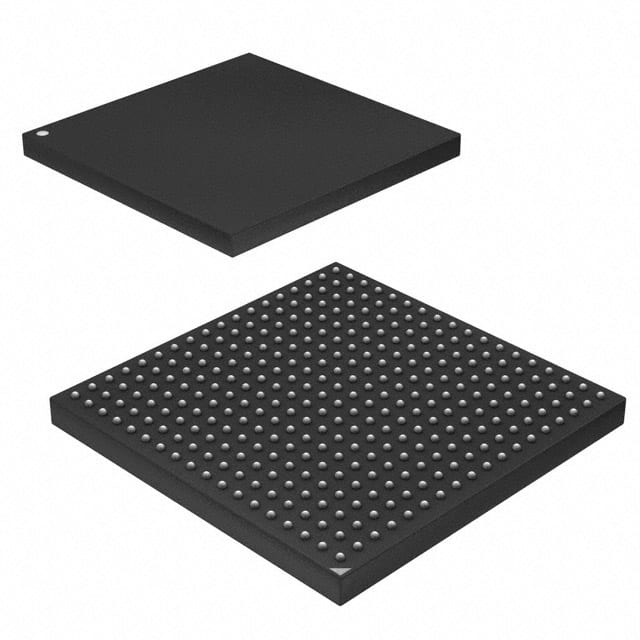
Microchip Technology ATSAMA5D34A-CUR
- Part No.:
- ATSAMA5D34A-CUR
- Manufacturer:
- Microchip Technology
- Category:
- Microprocessors
- Package:
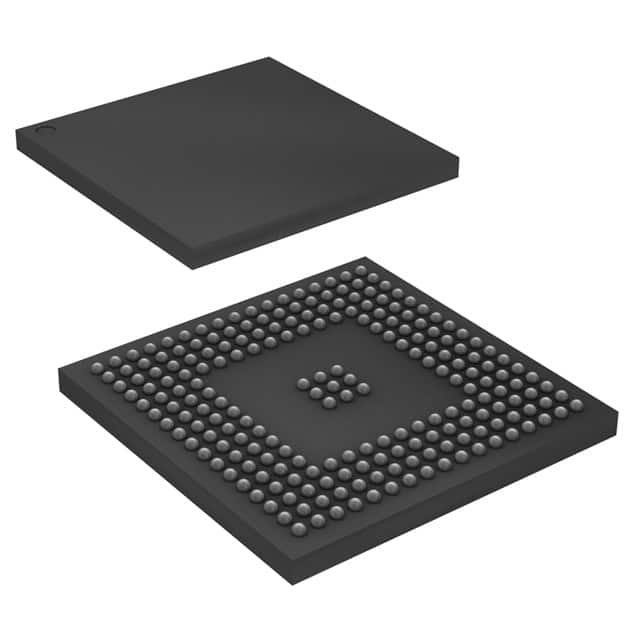
- 324-LFBGA
- Datasheet:
-
 ATSAMA5D34A-CUR.pdf
- Description:
- IC MPU SAMA5D3 536MHZ 324LFBGA
- Quantity:
- Payment:

- Shipping:

Inventory:500
Please send an inquiry. Send us your inquiry, and we will respond immediately.
Product details
Overview
ATSAMA5D34A-CUR from Microchip Technology is a high-performance, low-power Arm® Cortex®-A5-based microprocessor unit (MPU) operating at up to 536 MHz with integrated FPU, dual CAN controllers, Gigabit Ethernet with IEEE 1588 support, and hardware-accelerated AES/SHA security engines. It integrates LCD controller, 12-channel 12-bit ADC with resistive touchscreen interface, and supports DDR2/LPDDR2 and MLC NAND Flash with 24-bit ECC - deployed in industrial HMI panels requiring real-time connectivity and secure boot.
For engineers reviewing the ATSAMA5D34A-CUR datasheet, ATSAMA5D34A-CUR pinout, ATSAMA5D34A-CUR application, or ATSAMA5D34A-CUR equivalent, key selection criteria include dual-CAN + GMAC/EMAC coexistence, 324-ball LFBGA package compatibility, 160 I/O count with programmable pull/resistors, and verified support for Linux-based embedded systems with secure firmware update capability.
Technical Context
The ATSAMA5D34A-CUR implements a multi-layer bus architecture with 39 DMA channels to sustain high-bandwidth data flow between its Cortex-A5 core, DDR2/LPDDR2 memory controller, and peripherals including GMAC, EMAC, dual CAN, and LCD controller. Its system clock runs up to 166 MHz, supported by dual PLLs (400–1000 MHz for system, 480 MHz for USB).
Security is implemented via dedicated hardware blocks: TRNG, AES-128/192/256, TDES, SHA-1/224/256/384/512, and secure boot with ROM-based bootloader supporting boot from NAND Flash, eMMC, SD card, or DataFlash - all confirmed for ATSAMA5D34A-CUR per device differences table.
Key Specifications
| Parameter | Value and Actual Design Meaning |
|---|---|
| CPU Core | Arm Cortex-A5, ARMv7-A Thumb-2, up to 536 MHz - enables Linux RTOS execution with deterministic interrupt latency |
| FPU | VFPv4 floating-point unit - accelerates signal processing, math-intensive UI rendering, and control algorithms |
| Memory Interface | 32-bit DDR2/LPDDR2 controller (512 MB max), SLC/MLC NAND with 24-bit PMECC - ensures robust storage for firmware and graphics assets |
| Connectivity | Gigabit EMAC + 10/100 EMAC + dual CAN 2.0A/B - supports redundant industrial networking and automotive diagnostics |
| Security | AES-256, SHA-512, TRNG, secure boot - meets FIPS PUB 197/46-3 for encrypted OTA updates and anti-cloning |
| Human Interface | 24-bit LCD controller with overlays, alpha-blending, rotation, scaling; 12-channel 12-bit ADC with resistive touchscreen - enables rich GUI on cost-sensitive displays |
| I/O Count | 160 configurable GPIOs with Schmitt-trigger inputs, programmable pull-up/down, slew rate control - simplifies board-level signal integrity design |
Pinout & Package
ATSAMA5D34A-CUR is housed in a 324-ball LFBGA package (15 × 15 × 1.4 mm, 0.8 mm pitch), RoHS-compliant and qualified for industrial temperature range (–40°C to +85°C). Pin functions are validated per Microchip DS60001609B Table 3-1.
| Pin/Terminal | Circuit Role | Design Meaning |
|---|---|---|
| PA0–PA31 | Parallel I/O Controller A | Primary LCD data bus (LCDDAT0–23), also supports ISI_D0–D11 and PWM outputs - enables direct RGB interface and camera input |
| PB0–PB26 | Parallel I/O Controller B | GMAC physical layer signals (GTX0–7, GRX0–7, GTXCK, GRXCK) - supports full Gigabit Ethernet PHY interfacing without external transceiver |
| PC0–PC31 | Parallel I/O Controller C | Dual CAN (CANRX0/CANTX0, CANRX1/CANTX1), USART0–3, SPI1, TWI1–2 - provides isolated CAN bus routing and multi-protocol serial expansion |
| PD0–PD31 | Parallel I/O Controller D | MCI0–MCI2 (eMMC/SD/SDIO), ADC analog inputs (AD0–AD11), PCK0–PCK2 clocks - integrates storage, sensing, and timing in single domain |
| PE0–PE31 | Parallel I/O Controller E | External Bus Interface (EBI): A0–A25, D0–D15, NCS0–NCS3, NWE/NRD - enables legacy parallel NOR/NAND and FPGA/FPGA co-processor interfacing |
Key Features
| Feature | Design Value |
|---|---|
| Secure Boot with ROM Loader | Enables authenticated firmware launch from NAND/eMMC/SD - eliminates need for external secure element in cost-sensitive HMIs |
| Hardware AES/SHA Engines | Offloads encryption/decryption and hash generation from CPU - sustains >100 Mbps encrypted data throughput without performance penalty |
| Integrated LCD Controller | Supports 24-bit RGB output, overlay composition, rotation, and color space conversion - reduces GPU dependency and BOM cost |
| Dual CAN + Gigabit + 10/100 Ethernet | Simultaneous CAN FD-capable (via software stack) and time-critical Ethernet traffic handling - ideal for IIoT gateways with fieldbus bridging |
| 12-channel Resistive Touchscreen ADC | Direct analog front-end with ADTRG trigger and panel voltage references - eliminates external touch controller IC and calibration firmware overhead |
Applications
| Industrial HMI Panel | Smart Energy Gateway |
|---|---|
Use Scenario: Operator-facing control panel in factory automation with real-time machine status, alarm logging, and recipe management. IC Role / Device Role / Timing Role: Main application processor executing Linux Qt-based GUI, managing dual CAN for PLC communication, and driving 800×480 TFT display via RGB interface. Use Value: Integrated LCD controller and 24-bit color depth eliminate external video encoder; dual CAN allows concurrent connection to servo drives and safety modules without arbitration delay. | Use Scenario: DIN-rail mounted gateway aggregating data from smart meters (via M-Bus or RS-485), solar inverters (CAN), and cloud via Ethernet/Wi-Fi. IC Role / Device Role / Timing Role: Central protocol translator running Yocto Linux, performing TLS-secured MQTT publishing, and timestamping events using IEEE 1588 PTP over GMAC. Use Value: Hardware SHA-512 and AES-256 enable zero-trust firmware signing and encrypted telemetry; 125 MHz G125CKO output synchronizes external PHY for sub-microsecond PTP accuracy. |
| Medical Diagnostic Display | Automotive Test Bench Controller |
Use Scenario: Portable ultrasound or patient monitor with touchscreen UI, image buffering, and DICOM export over Ethernet. IC Role / Device Role / Timing Role: High-bandwidth imaging processor handling raw sensor data via ISI interface, compressing frames with hardware-accelerated crypto before network transmission. Use Value: ISI_D0–D11 + LCDDAT0–23 sharing PA pins enables compact PCB layout; 12-bit ADC with AD0UL/AD1UR inputs directly digitizes analog touch coordinates without external op-amp network. | Use Scenario: Lab bench system validating ECUs using UDS over CAN, capturing CAN trace logs, and displaying results on local LCD. IC Role / Device Role / Timing Role: Dual-CAN host controller running CANoe-compatible stack, simultaneously monitoring CAN0 (diagnostic) and CAN1 (data acquisition), while rendering UI on integrated LCD. Use Value: Eight mailbox per CAN controller ensures non-blocking message queuing; hardware CRC offload in CAN peripheral reduces CPU load during high-speed trace capture (>500 kbps). |
Equivalent & Alternatives
The following parts are listed as comparable options for similar MPU applications.
| Alternative Part | Technical Difference | Application Difference | Selection Advice |
|---|---|---|---|
| ATSAMA5D35A-CUR | Includes LCDC and TC1 timer; lacks EMAC; same pinout and core specs | Better suited for pure display-centric designs without 10/100 Ethernet requirement | Select when LCD + Gigabit only is needed and 10/100 EMAC is unused - reduces software driver footprint |
| ATSAMA5D27-SOM1 | ARM Cortex-A5 @ 500 MHz, includes LPDDR2, no CAN, adds TrustZone and QSPI boot | Targets secure IoT edge nodes with minimal peripheral count and smaller footprint | Choose for cloud-connected devices needing hardware root-of-trust but no industrial fieldbus interfaces |
Compared with ATSAMA5D34A-CUR, ATSAMA5D35A-CUR removes EMAC but retains identical dual-CAN and LCD capability, while ATSAMA5D27-SOM1 trades CAN and EMAC for TrustZone security and QSPI flexibility - making ATSAMA5D34A-CUR uniquely balanced for industrial HMI with dual-network redundancy.
Availability
ATSAMA5D34A-CUR is available at Aetrix Electronics and suitable for industrial HMI panels, smart energy gateways, medical diagnostic displays, and automotive test bench controllers requiring stable component supply across extended product lifecycles.
Supply support for ATSAMA5D34A-CUR includes scheduled delivery planning, volume procurement assistance, BOM continuity management, traceable sourcing, and lifecycle availability coordination for OEM customers, industrial embedded developers, connected-device designers, and electronics production programs.
Manufacturer
Microchip Technology is a leading provider of microcontrollers, analog components, and Flash-IP solutions, serving industrial, automotive, and communications markets with vertically integrated silicon and development tools.
The SAMA5D3 series was designed specifically for high-connectivity, low-power embedded applications demanding rich user interfaces - combining Arm Cortex-A5 performance with industrial-grade peripherals and hardware security in a single die.
FAQ
What is the maximum operating frequency of the ATSAMA5D34A-CUR processor core?
The ATSAMA5D34A-CUR features an Arm Cortex-A5 core rated for operation up to 536 MHz. This frequency is achieved under specified voltage and thermal conditions per Microchip's DS60001609B datasheet, enabling Linux kernel execution with real-time responsiveness for industrial HMI and gateway applications. The ATSAMA5D34A-CUR maintains this speed while supporting simultaneous DDR2 access, dual CAN, and Gigabit Ethernet traffic.
Does the ATSAMA5D34A-CUR support both Gigabit and 10/100 Ethernet simultaneously?
Yes, the ATSAMA5D34A-CUR integrates two independent Ethernet MACs: a Gigabit EMAC (GMAC) compliant with IEEE 1588 and a separate 10/100 EMAC. Both operate concurrently, allowing distinct network domains - for example, GMAC for cloud uplink and EMAC for local SCADA LAN - without resource contention. The ATSAMA5D34A-CUR pinout allocates dedicated I/O banks (PB0–PB19 for GMAC, PC0–PC9 for EMAC) to ensure signal integrity.
How many CAN controllers does the ATSAMA5D34A-CUR include, and what standards do they support?
The ATSAMA5D34A-CUR includes two fully independent CAN controllers (CAN0 and CAN1), each with eight mailboxes and full compliance with CAN 2.0 Part A and Part B specifications. These controllers support bit rates up to 1 Mbps and are validated for use in industrial automation and automotive diagnostics. Unlike some derivatives, the ATSAMA5D34A-CUR retains both CAN interfaces while also providing GMAC and EMAC - a combination confirmed in the SAMA5D3 Device Differences table.
What types of external memory does the ATSAMA5D34A-CUR support, and what error correction is provided?
The ATSAMA5D34A-CUR supports DDR2, LPDDR, and LPDDR2 SDRAM (up to 512 MB) via its 32-bit dynamic RAM controller, and SLC/MLC NAND Flash via its Static Memory Controller with Programmable Multibit ECC (PMECC) supporting up to 24-bit correction per 512-byte sector. This ECC level enables reliable boot and data storage on consumer-grade NAND, critical for long-life industrial deployments. The ATSAMA5D34A-CUR does not support LPDDR3 or DDR3.
Is the ATSAMA5D34A-CUR pin-compatible with other SAMA5D3 variants like the ATSAMA5D36A-CUR?
No, the ATSAMA5D34A-CUR is not pin-compatible with ATSAMA5D36A-CUR. While both use the 324-ball LFBGA package, their peripheral allocations differ significantly - for example, ATSAMA5D36A-CUR includes LCDC and TC1 but omits EMAC, whereas ATSAMA5D34A-CUR retains EMAC and dual CAN. Pin mappings for GMAC, EMAC, and CAN signals are unique to each variant per DS60001609B Table 3-1, requiring board redesign for substitution.
ATSAMA5D34A-CUR Specifications
- Product attributes
- Attribute value
- Manufacturer:
- Microchip Technology
- Package/Case:
- 324-LFBGA
- Series:
- SAMA5D3
- Packaging:
- Tape & Reel (TR)
- Product Status:
- Active
- Core Processor:
- ARM® Cortex®-A5
- Number of Cores/Bus Width:
- 1 Core, 32-Bit
- Speed:
- 536MHz
- Co-Processors/DSP:
- -
- RAM Controllers:
- LPDDR, LPDDR2, DDR2
- Graphics Acceleration:
- No
- Display & Interface Controllers:
- LCD, Touchscreen
- Ethernet:
- 10/100/1000Mbps (1)
- SATA:
- -
- USB:
- USB 2.0 (3)
- Voltage - I/O:
- 1.2V, 1.8V, 3.3V
- Operating Temperature:
- -40°C ~ 85°C (TA)
- Grade:
- -
- Qualification:
- -
- Security Features:
- AES, SHA, TDES, TRNG
- Mounting Type:
- Surface Mount
- Supplier Device Package:
- 324-LFBGA (15x15)
- Additional Interfaces:
- CAN, I2C, MMC/SD/SDIO, SPI, SSC, USART
ATSAMA5D34A-CUR FAQ
1.How can I place an order for ATSAMA5D34A-CUR through Aetrix?
Please submit a Request for Quotation (RFQ) for ATSAMA5D34A-CUR on Aetrix. Our sales agent will provide a competitive quotation and guide you through the order confirmation once you accept the terms.
2.Are the price and stock information for ATSAMA5D34A-CUR reliable?
The price and inventory of ATSAMA5D34A-CUR are updated periodically and may fluctuate due to market conditions. Stock and pricing data are typically refreshed every 24 hours. Quotation validity for ATSAMA5D34A-CUR is usually 5 days.
3.What payment methods are accepted for ATSAMA5D34A-CUR?
We accept Wire Transfer, PayPal, Credit Card, Western Union, MoneyGram, and Escrow for ATSAMA5D34A-CUR transactions.
Note: Certain payment methods may incur a processing fee.
4.How is shipping managed for ATSAMA5D34A-CUR?
ATSAMA5D34A-CUR orders can be shipped via leading logistics carriers, including DHL, UPS, FedEx, TNT, or Registered Mail.
Once your ATSAMA5D34A-CUR order is processed, you will receive an email with the shipment details and tracking number.
Note: Tracking information may take up to 24 hours to appear. Express delivery typically takes 3–5 business days.
5.How can I obtain technical support or documentation for ATSAMA5D34A-CUR?
For technical support, including ATSAMA5D34A-CUR datasheets, pinout diagrams, or application guidance, please contact our engineering support team. They can provide detailed documentation and assistance for your ATSAMA5D34A-CUR requirements.
6.How does Aetrix verify that ATSAMA5D34A-CUR is sourced from the original manufacturer or authorized distributors?
All ATSAMA5D34A-CUR products on Aetrix are procured from qualified distributors and authorized channels. Our dedicated quality assurance team conducts strict verification, including traceability checks and, if necessary, third-party testing. This ensures that ATSAMA5D34A-CUR meets industry standards.
7.What is the process for return or replacement of ATSAMA5D34A-CUR?
All ATSAMA5D34A-CUR units undergo pre-shipment inspection (PSI). If there is an issue with ATSAMA5D34A-CUR, returns or replacements are accepted under the following conditions:
1.Quantity discrepancies, incorrect items, or visible external defects (such as breakage or corrosion), acknowledged by Aetrix.
2.The issue is reported within 90 days of delivery.
3.The ATSAMA5D34A-CUR part is unused and in its original packaging.
Return procedure for ATSAMA5D34A-CUR:
1.Submit a request within 90 days.
2.Obtain a Return Material Authorization (RMA) from Aetrix.
ATSAMA5D34A-CUR Tags
-
AT91SAM9260B-CU-999
Microchip Technology
-
AT91SAM9G25-CU
Microchip Technology
-
ATSAMA5D27C-CU
Microchip Technology
-
AT91SAM9X35-CU
Microchip Technology
-
AT91SAM9X25-CU
Microchip Technology
-
MCIMX6Y2CVM08AB
NXP Semiconductors
.JPG)
-
AM3352BZCZ100
Texas Instruments
-
AT91SAM9260B-CU
Microchip Technology
-
AT91SAM9260B-QU
Microchip Technology
-
ATSAMA5D31A-CU
Microchip Technology
-
AT91SAM9G20B-CU-999
Microchip Technology
-
MCIMX6Y2CVM05AB
NXP Semiconductors
Tech Hub

TTL and CMOS logic families differ in thresholds, loading, output drive, power and timing. This engineering guide compares 74HC and 74HCT, calculates noise margins and checks 3.3 V/5 V compatibility.

A practical engineering guide to 3.3V and 5V logic compatibility, input thresholds, resistor dividers, translator ICs, MOSFET level shifting, I2C pull-ups, timing limits and power-sequencing risks.

The 74HC595 uses push-pull logic outputs, while the TPIC6B595 uses 50 V open-drain DMOS sinks for higher-power loads. This guide compares timing, current limits, 3.3 V interfacing, load wiring, thermal…

The 74HC595 converts serial data into eight stable parallel outputs. This guide covers pin functions, shift and storage timing, OE and MR behavior, drive-current limits, cascading, voltage compatibilit…

A technical comparison of level-sensitive latches and edge-triggered flip-flops, covering timing windows, setup and hold limits, master–slave operation, time borrowing, race-through, HDL inference and…

A D latch stores one bit while Enable controls when data can pass. This reference covers gate-level operation, truth tables, transparency, setup and hold timing, LE versus OE, common ICs and practical …

An SR latch stores one bit through cross-coupled feedback. This engineering reference covers NOR and NAND implementations, truth tables, forbidden-state recovery, gated operation, switch debouncing, fa…

Latch circuits retain one bit through feedback. This technical reference covers SR and D latches, truth tables, transparency, timing limits, latch-versus-flip-flop behavior, applications and common log…

An engineering guide to LED driver operation, constant-current and constant-voltage outputs, linear and switching topologies, dimming, IC selection, calculations, replacement compatibility, and fault c…

Operational amplifier guide covering op amp basics, feedback, ideal vs real op amps, common configurations, buffer circuits, offset, bias current, gain-bandwidth, slew rate, rail-to-rail limits and sel…


