
 My Inquiry
 My Account


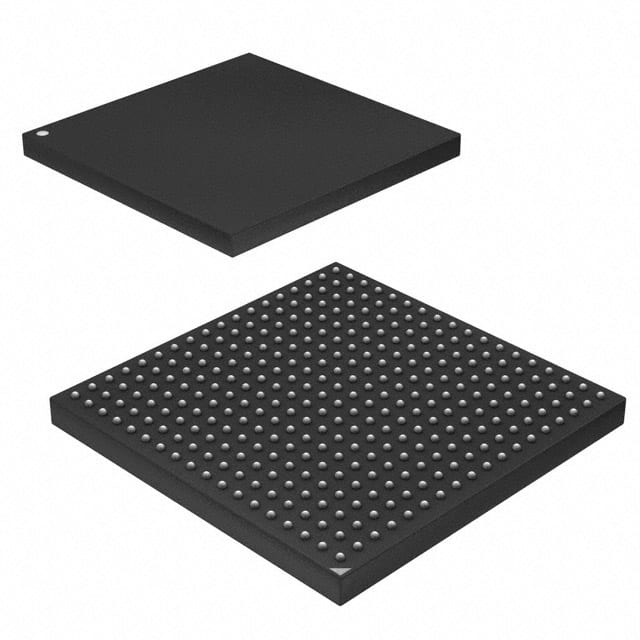
Microchip Technology ATSAMA5D41A-CUR
- Part No.:
- ATSAMA5D41A-CUR
- Manufacturer:
- Microchip Technology
- Category:
- Microprocessors
- Package:
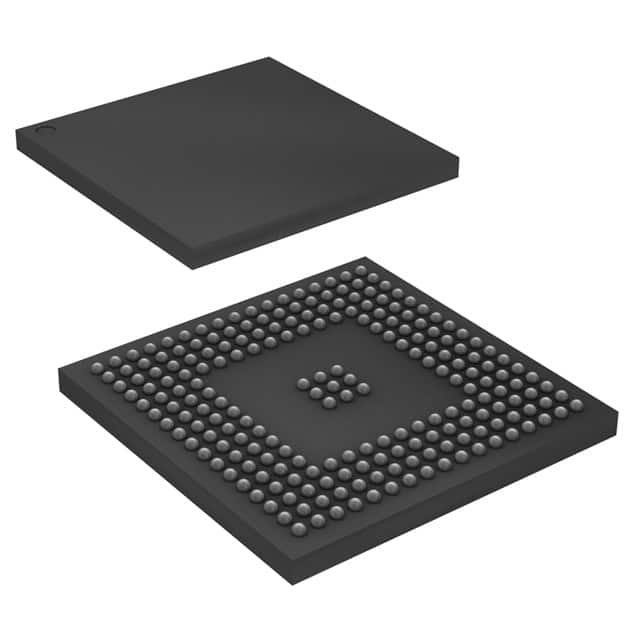
- 289-LFBGA
- Datasheet:
-
 ATSAMA5D41A-CUR.pdf
- Description:
- IC MPU SAMA5D4 600MHZ 289LFBGA
- Quantity:
- Payment:

- Shipping:

Inventory:2,600
Please send an inquiry. Send us your inquiry, and we will respond immediately.
Product details
Overview
ATSAMA5D41A-CUR from Microchip Technology is a 600 MHz Arm® Cortex®-A5-based MPU with TrustZone® security, 128 KB L2 cache, NEON™ SIMD engine, and dual 10/100 Ethernet MACs with IEEE 1588 v2 support. It integrates a 5-channel 10-bit ADC with resistive touchscreen interface, LCD controller (720p), ITU-R BT.601/656 image sensor interface, and hardware video decoder for MPEG-4/H.264/VP8/JPEG - deployed in industrial HMIs and secure IoT gateways.
For engineers reviewing the ATSAMA5D41A-CUR datasheet, ATSAMA5D41A-CUR pinout, ATSAMA5D41A-CUR application, or ATSAMA5D41A-CUR equivalent, key selection criteria include its LFBGA289 package, 16-bit DDR datapath, absence of integrated video decoder, AESB-enabled DDR encryption, and dedicated public-key coprocessor for RSA/ECC/AES/SHA/TRNG operations.
Technical Context
The ATSAMA5D41A-CUR implements a multi-layer bus architecture with 32 DMA channels to sustain high-bandwidth data flow between the Cortex-A5 core, peripherals, and external memory. Its system clock runs up to 200 MHz in worst-case conditions, supported by dual PLLs (600–1200 MHz for system, 480 MHz for USB HS) and low-power oscillators (12 MHz RC, 32.768 kHz).
Security is enforced via TrustZone®-partitioned memory, Integrity Check Monitor (ICM) using SHA256, tamper-detection PIOBU pins, scrambled internal ROM/SRAM, and a dedicated CPKCC coprocessor with Classical Public Key Cryptography Library (CPKCL) for RSA/ECC acceleration - all enabling secure boot, on-the-fly DDR encryption/decryption, and cryptographic offload.
Key Specifications
| Parameter | Value and Actual Design Meaning |
|---|---|
| CPU Core | Arm Cortex-A5 @ 600 MHz, Thumb2 instruction set, MMU, TrustZone, NEON SIMD engine |
| Memory Interface | 16-bit DDR2/LPDDR/LPDDR2 controller with 24-bit ECC, no integrated video decoder (per SAMA5D4 series table) |
| Security Engine | Dedicated CPKCC coprocessor for RSA/ECC, AES-256/192/128, TDES, SHA1–512, TRNG compliant with NIST SP 800-22 & FIPS 140-2/140-3 |
| Peripherals | Dual 10/100 Ethernet MACs (IEEE 1588 v2), 5× USART, 3× SPI, 4× TWI/I²C, 3× 32-bit TC, 4× PWM, 5-channel 10-bit ADC with touchscreen |
| Package | 289-ball stubless LFBGA, 14×14 mm body, 0.8 mm pitch, thermal pad exposed on bottom |
| Power Modes | Three software-selectable modes: Idle (CPU halted, full bus speed), Ultra-low-power (CPU halted, min bus speed), Backup (RTC + backup SRAM only) |
Pinout & Package
ATSAMA5D41A-CUR uses a 289-ball stubless LFBGA package (14×14 mm, 0.8 mm pitch) with exposed thermal pad. Pin functions are multiplexed across five parallel I/O controllers (PIOA–PIOE), supporting slew rate control, Schmitt-trigger inputs, programmable pull-up/pull-down, and input-change interrupts.
| Pin/Terminal | Circuit Role | Design Meaning |
|---|---|---|
| NRST | Microprocessor Reset Input | Active-low asynchronous reset; must be held low ≥100 ns after power stabilization |
| XIN / XOUT | Main Crystal Oscillator Interface | Supports 12 MHz fundamental-mode crystal; drives internal PLL for system clock generation |
| DDR_A0–A13, DDR_D0–D15 | DDR Address & Data Bus | 16-bit bidirectional DDR interface with DQS strobes; requires impedance-controlled routing and DDR calibration (DDR_CALP/N) |
| G0_TX0–G0_TX3, G0_RX0–G0_RX3 | Ethernet PHY Interface (GMAC0) | 10/100 Mbps MII signals; supports IEEE 1588 timestamping via GMAC0/GMAC1 hardware timestamp registers |
| AD0–AD4 | Analog Inputs with Touchscreen | 5-channel 10-bit SAR ADC; supports 4-wire resistive touch measurement with ADTRG trigger and ADVREF reference |
| PIOBU0–PIOBU7 | Secure Tamper Detection I/O | Eight dedicated secured I/Os for static/dynamic intrusion detection per Secure Box Module (SBM) specification |
Key Features
| Feature | Design Value |
|---|---|
| TrustZone®-enabled memory partitioning | Hardware-enforced isolation between secure/non-secure worlds for bootloader, crypto keys, and firmware updates |
| Advanced Encryption Standard Bridge (AESB) | Automatic 128-bit AES encryption/decryption of DDR traffic without CPU intervention - critical for protecting external memory contents |
| Integrity Check Monitor (ICM) | SHA256-based real-time monitoring of internal/external memory regions to detect unauthorized modification or corruption |
| Public Key Coprocessor (CPKCC) | Hardware-accelerated RSA/ECC GF(p)/GF(2ⁿ) operations enabling fast TLS handshake, secure firmware signing, and device authentication |
| Scrambled internal ROM/SRAM | 128 KB single-cycle ROM containing Microchip's secure boot loader; 128 KB SRAM with non-imprinting erase capability for sensitive runtime data |
Applications
| Industrial HMI Control Panel | Secure Edge Gateway |
|---|---|
Use Scenario: Embedded panel PC in factory automation displaying real-time SCADA data, accepting operator input via resistive touchscreen, and driving local LCD display at 720p resolution. IC Role / Device Role / Timing Role: Main application processor executing Linux OS, managing graphics composition via LCD controller overlays, sampling touch coordinates via integrated ADC, and synchronizing Ethernet timestamps for deterministic I/O. Use Value: Eliminates need for external video decoder or crypto co-processor; TrustZone and AESB protect HMI firmware and operator credentials stored in DDR. | Use Scenario: Field-deployable gateway aggregating Modbus/TCP, CAN, and sensor data from legacy industrial equipment before forwarding to cloud via TLS-secured MQTT over dual Ethernet ports. IC Role / Device Role / Timing Role: Root-of-trust anchor running secure boot chain, performing TLS offload via CPKCC, encrypting DDR-stored certificates with AESB, and maintaining precise time sync across networks using IEEE 1588 hardware timestamping. Use Value: Meets IEC 62443-3-3 requirements for secure boot, encrypted storage, and cryptographic agility - reducing BOM cost vs discrete security IC + MPU solutions. |
| Medical Device UI Terminal | Smart Energy Meter Hub |
Use Scenario: Patient-facing bedside terminal rendering diagnostic imaging previews, capturing clinician annotations via stylus, and logging audit trails to encrypted NAND flash. IC Role / Device Role / Timing Role: Application processor executing certified medical Linux stack, decoding JPEG/MPEG-4 thumbnails via software (no hardware VDEC), enforcing access controls via TrustZone, and validating firmware signatures using CPKCL library. Use Value: Scrambled ROM/SRAM and tamper-detect pins (PIOBU[0:7]) satisfy FDA cybersecurity guidance for data integrity and physical intrusion detection. | Use Scenario: Utility-grade meter hub collecting consumption data from submeters via RS-485 and wireless M-Bus, then transmitting encrypted usage reports over cellular/Ethernet with time-stamped billing intervals. IC Role / Device Role / Timing Role: Real-time data concentrator with secure boot, AES-256 encryption of stored logs, SHA512 integrity checks on firmware updates, and RTC-backed timestamping aligned to utility grid cycles. Use Value: Integrated TRNG, SHA, and AES meet ANSI C12.22 and DLMS/COSEM security profiles - avoiding external crypto IC qualification overhead. |
Equivalent & Alternatives
The following parts are listed as comparable options for similar MPU applications.
| Alternative Part | Technical Difference | Application Difference | Selection Advice |
|---|---|---|---|
| ATSAMA5D43A-CUR | Same LFBGA289 package but includes hardware video decoder (VDEC) and 32-bit DDR datapath; higher DDR bandwidth and native video decode offload | Required where 720p video playback (H.264/MPEG-4) is performed locally without software decode overhead | Select ATSAMA5D43A-CUR if video decoding is mandatory; ATSAMA5D41A-CUR saves cost and power when video is handled externally or via software |
| ATSAMA5D27-SOM1 | ARM Cortex-A5-based SOM with integrated DDR3, eMMC, and PMIC; pre-certified Linux BSP, smaller footprint (LGA), but fixed memory configuration and no TrustZone-secured boot ROM | Targeted at rapid prototyping and volume OEM designs needing turnkey hardware/software integration rather than custom board design | Choose ATSAMA5D27-SOM1 for faster time-to-market with validated Linux stack; ATSAMA5D41A-CUR offers full flexibility in memory, security, and peripheral routing for custom carrier boards |
Compared with ATSAMA5D43A-CUR, ATSAMA5D41A-CUR trades hardware video decode and wider DDR bus for lower power and cost in non-video HMI/gateway roles; versus ATSAMA5D27-SOM1, it provides full schematic/layout control, TrustZone-secured boot ROM, and customizable DDR/NAND interfaces - essential for long-lifecycle industrial deployments.
Availability
ATSAMA5D41A-CUR is available at Aetrix Electronics and suitable for industrial HMI control panels, secure edge gateways, medical UI terminals, and smart energy meter hubs requiring stable component supply, long-term lifecycle support, and traceable sourcing.
Supply support for ATSAMA5D41A-CUR includes scheduled delivery planning, volume procurement assistance, BOM continuity management, traceable sourcing, and lifecycle availability coordination for OEM customers, industrial embedded developers, connected-device designers, and electronics production programs.
Manufacturer
Microchip Technology Inc. is a leading provider of microcontrollers, analog devices, FPGAs, and security solutions, serving automotive, industrial, consumer, and communications markets with vertically integrated silicon and development tools.
The SAMA5D4 series is designed for high-performance, low-power embedded applications demanding advanced security, rich multimedia interfaces, and industrial connectivity - specifically targeting secure IoT gateways and graphical human-machine interfaces.
FAQ
What is the primary function of the ATSAMA5D41A-CUR in an embedded system?
The ATSAMA5D41A-CUR serves as a high-performance, security-focused application processor executing Linux-based firmware in industrial HMIs and secure gateways. It integrates Arm Cortex-A5 core, TrustZone, cryptographic accelerators (CPKCC, AESB, TRNG), dual IEEE 1588 Ethernet, LCD controller, and 5-channel ADC - eliminating need for external security ICs or video decoders in many designs. Its role centers on trusted execution, secure data handling, and rich peripheral interfacing.
Does the ATSAMA5D41A-CUR include a hardware video decoder?
No, the ATSAMA5D41A-CUR does not include a hardware video decoder. Per Microchip's official SAMA5D4 series documentation (DS60001525C, page 3), the ATSAMA5D41 variant lacks the VDEC block present in ATSAMA5D43/44. Video decoding must be implemented in software or handled by an external IC. This omission reduces silicon area, power consumption, and cost - aligning with use cases where local video playback is unnecessary.
What security features distinguish the ATSAMA5D41A-CUR from standard MPUs?
The ATSAMA5D41A-CUR includes TrustZone-enforced memory partitioning, on-the-fly AES-128 DDR encryption via AESB, SHA256-based Integrity Check Monitor (ICM), tamper-detection PIOBU pins, scrambled boot ROM/SRAM, and a dedicated CPKCC coprocessor for RSA/ECC acceleration. These features enable secure boot, runtime memory integrity verification, cryptographic offload, and physical intrusion detection - meeting IEC 62443 and FIPS-aligned requirements without external security ICs.
Which package type and pin count does the ATSAMA5D41A-CUR use?
The ATSAMA5D41A-CUR uses a 289-ball stubless LFBGA package with 14×14 mm body size and 0.8 mm ball pitch. It includes an exposed thermal pad on the underside for enhanced heat dissipation. This package matches the pinout and mechanical footprint of other SAMA5D41 variants and is distinct from the 361-ball TFBGA used by SAMA5D42/44 devices.
How does the ATSAMA5D41A-CUR support IEEE 1588 Precision Time Protocol?
The ATSAMA5D41A-CUR supports IEEE 1588 v2 through hardware timestamping logic embedded in both GMAC0 and GMAC1 Ethernet MAC controllers. Each MAC provides dedicated timestamp registers for transmit and receive paths, enabling sub-microsecond synchronization accuracy when paired with a compliant PHY. The internal 64-bit timer/counter and programmable clocks (PCK0–PCK2) further support PTP clock domain management and servo loop implementation in software.
ATSAMA5D41A-CUR Specifications
- Product attributes
- Attribute value
- Manufacturer:
- Microchip Technology
- Package/Case:
- 289-LFBGA
- Series:
- SAMA5D4
- Packaging:
- Tape & Reel (TR)
- Product Status:
- Obsolete
- Core Processor:
- ARM® Cortex®-A5
- Number of Cores/Bus Width:
- 1 Core, 32-Bit
- Speed:
- 600MHz
- Co-Processors/DSP:
- Multimedia; NEON™ SIMD
- RAM Controllers:
- LPDDR, LPDDR2, DDR2
- Graphics Acceleration:
- Yes
- Display & Interface Controllers:
- LCD, Touchscreen
- Ethernet:
- 10/100Mbps (1)
- SATA:
- -
- USB:
- USB 2.0 (3)
- Voltage - I/O:
- 1.2V, 1.8V, 3.3V
- Operating Temperature:
- -40°C ~ 85°C (TA)
- Grade:
- -
- Qualification:
- -
- Security Features:
- AES, SHA, TDES, TRNG
- Mounting Type:
- Surface Mount
- Supplier Device Package:
- 289-LFBGA (14x14)
- Additional Interfaces:
- EBI, I2C, MMC/SD/SDIO, SPI, SSC, UART, USART
ATSAMA5D41A-CUR FAQ
1.How can I place an order for ATSAMA5D41A-CUR through Aetrix?
Please submit a Request for Quotation (RFQ) for ATSAMA5D41A-CUR on Aetrix. Our sales agent will provide a competitive quotation and guide you through the order confirmation once you accept the terms.
2.Are the price and stock information for ATSAMA5D41A-CUR reliable?
The price and inventory of ATSAMA5D41A-CUR are updated periodically and may fluctuate due to market conditions. Stock and pricing data are typically refreshed every 24 hours. Quotation validity for ATSAMA5D41A-CUR is usually 5 days.
3.What payment methods are accepted for ATSAMA5D41A-CUR?
We accept Wire Transfer, PayPal, Credit Card, Western Union, MoneyGram, and Escrow for ATSAMA5D41A-CUR transactions.
Note: Certain payment methods may incur a processing fee.
4.How is shipping managed for ATSAMA5D41A-CUR?
ATSAMA5D41A-CUR orders can be shipped via leading logistics carriers, including DHL, UPS, FedEx, TNT, or Registered Mail.
Once your ATSAMA5D41A-CUR order is processed, you will receive an email with the shipment details and tracking number.
Note: Tracking information may take up to 24 hours to appear. Express delivery typically takes 3–5 business days.
5.How can I obtain technical support or documentation for ATSAMA5D41A-CUR?
For technical support, including ATSAMA5D41A-CUR datasheets, pinout diagrams, or application guidance, please contact our engineering support team. They can provide detailed documentation and assistance for your ATSAMA5D41A-CUR requirements.
6.How does Aetrix verify that ATSAMA5D41A-CUR is sourced from the original manufacturer or authorized distributors?
All ATSAMA5D41A-CUR products on Aetrix are procured from qualified distributors and authorized channels. Our dedicated quality assurance team conducts strict verification, including traceability checks and, if necessary, third-party testing. This ensures that ATSAMA5D41A-CUR meets industry standards.
7.What is the process for return or replacement of ATSAMA5D41A-CUR?
All ATSAMA5D41A-CUR units undergo pre-shipment inspection (PSI). If there is an issue with ATSAMA5D41A-CUR, returns or replacements are accepted under the following conditions:
1.Quantity discrepancies, incorrect items, or visible external defects (such as breakage or corrosion), acknowledged by Aetrix.
2.The issue is reported within 90 days of delivery.
3.The ATSAMA5D41A-CUR part is unused and in its original packaging.
Return procedure for ATSAMA5D41A-CUR:
1.Submit a request within 90 days.
2.Obtain a Return Material Authorization (RMA) from Aetrix.
ATSAMA5D41A-CUR Tags
-
AT91SAM9260B-CU-999
Microchip Technology
-
AT91SAM9G25-CU
Microchip Technology
-
ATSAMA5D27C-CU
Microchip Technology
-
AT91SAM9X35-CU
Microchip Technology
-
AT91SAM9X25-CU
Microchip Technology
-
MCIMX6Y2CVM08AB
NXP Semiconductors
.JPG)
-
AM3352BZCZ100
Texas Instruments
-
AT91SAM9260B-CU
Microchip Technology
-
AT91SAM9260B-QU
Microchip Technology
-
ATSAMA5D31A-CU
Microchip Technology
-
AT91SAM9G20B-CU-999
Microchip Technology
-
MCIMX6Y2CVM05AB
NXP Semiconductors
Tech Hub

TTL and CMOS logic families differ in thresholds, loading, output drive, power and timing. This engineering guide compares 74HC and 74HCT, calculates noise margins and checks 3.3 V/5 V compatibility.

A practical engineering guide to 3.3V and 5V logic compatibility, input thresholds, resistor dividers, translator ICs, MOSFET level shifting, I2C pull-ups, timing limits and power-sequencing risks.

The 74HC595 uses push-pull logic outputs, while the TPIC6B595 uses 50 V open-drain DMOS sinks for higher-power loads. This guide compares timing, current limits, 3.3 V interfacing, load wiring, thermal…

The 74HC595 converts serial data into eight stable parallel outputs. This guide covers pin functions, shift and storage timing, OE and MR behavior, drive-current limits, cascading, voltage compatibilit…

A technical comparison of level-sensitive latches and edge-triggered flip-flops, covering timing windows, setup and hold limits, master–slave operation, time borrowing, race-through, HDL inference and…

A D latch stores one bit while Enable controls when data can pass. This reference covers gate-level operation, truth tables, transparency, setup and hold timing, LE versus OE, common ICs and practical …

An SR latch stores one bit through cross-coupled feedback. This engineering reference covers NOR and NAND implementations, truth tables, forbidden-state recovery, gated operation, switch debouncing, fa…

Latch circuits retain one bit through feedback. This technical reference covers SR and D latches, truth tables, transparency, timing limits, latch-versus-flip-flop behavior, applications and common log…

An engineering guide to LED driver operation, constant-current and constant-voltage outputs, linear and switching topologies, dimming, IC selection, calculations, replacement compatibility, and fault c…

Operational amplifier guide covering op amp basics, feedback, ideal vs real op amps, common configurations, buffer circuits, offset, bias current, gain-bandwidth, slew rate, rail-to-rail limits and sel…


