
 My Inquiry
 My Account


Microchip Technology ATSAMR30M18AT-I/RM100
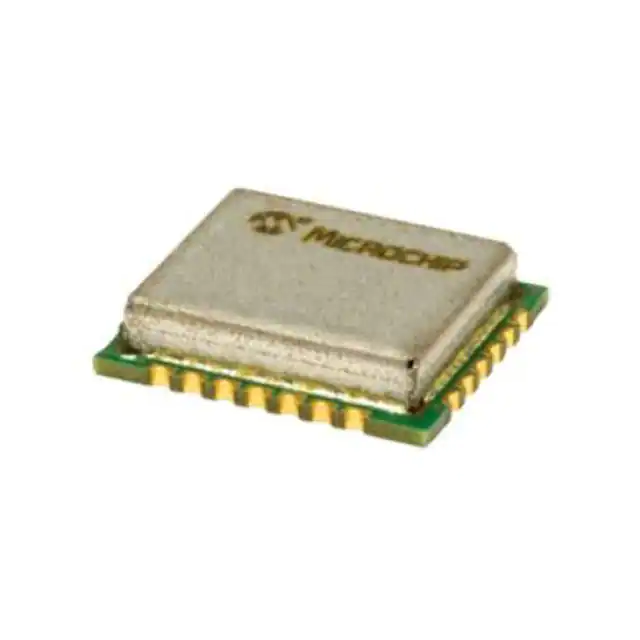
- Part No.:
- ATSAMR30M18AT-I/RM100
- Manufacturer:
- Microchip Technology
- Category:
- RF Transceiver ICs
- Package:
- 25-SMD Module
- Datasheet:
-
 ATSAMR30M18AT-I/RM100.pdf
- Description:
- IC RF TXRX+MCU 802.15.4 MODULE
- Quantity:
- Payment:

- Shipping:

Inventory:473
Please send an inquiry. Send us your inquiry, and we will respond immediately.
Product details
Overview
ATSAMR30M18AT-I/RM100 from Microchip is a fully certified, compact 802.15.4 Sub-GHz SiP module integrating an ARM Cortex-M0+ MCU (48 MHz), 256 KB Flash, 40 KB RAM, and an ultra-low-power transceiver for 780/868/915 MHz ISM bands. It delivers self-healing mesh networking via MiWi, 6LoWPAN, and Zigbee PHY, targeting battery-powered wireless sensors and home automation endpoints.
For engineers reviewing the ATSAMR30M18AT-I/RM100 datasheet, ATSAMR30M18AT-I/RM100 pinout, ATSAMR30M18AT-I/RM100 application, or ATSAMR30M18AT-I/RM100 equivalent, key selection criteria include regulatory-compliant RF front-end (FCC/ETSI), integrated AES-128 crypto engine, 16 GPIOs, USB 2.0 full-speed interface, and SERCOM-based serial peripheral flexibility.
Technical Context
The ATSAMR30M18AT-I/RM100 implements IEEE 802.15.4-2006 compliant PHY/MAC with automatic retransmission, 32-bit MAC symbol counter, and hardware-accelerated AES-128 encryption. Its transceiver supports O-QPSK modulation in 780/868/915 MHz bands with integrated harmonic filtering and FCC/ETSI certification.
It embeds a 48 MHz ARM Cortex-M0+ core with 256 KB on-chip Flash and 40 KB SRAM, plus a 12-bit 350 ksps ADC, I²C up to 3.4 MHz, and two configurable SERCOM units-enabling UART, SPI, or I²C peripherals without external components.
Key Specifications
| Parameter | Value and Actual Design Meaning |
|---|---|
| Core | ARM Cortex-M0+, 48 MHz max - enables real-time protocol stack execution with low latency interrupt response |
| Memory | 256 KB Flash / 40 KB RAM - sufficient for MiWi mesh stack + application logic without external memory |
| RF Band | 780 / 868 / 915 MHz ISM - single hardware design supports regional regulatory compliance across China, EU, and North America |
| Crypto Engine | AES-128 hardware accelerator - offloads encryption from CPU, preserving power and timing determinism for secure frame transmission |
| ADC | 12-bit, 350 ksps - supports high-resolution analog sensor interfacing (e.g., temperature, humidity) with minimal sampling jitter |
| USB Interface | Full-speed (12 Mbps) USB 2.0 - enables direct PC connectivity for firmware updates, debugging, and host-controlled sensor data streaming |
| GPIO Count | 16 dedicated I/O pins - provides sufficient digital control and sensing lines for sensor node expansion without multiplexing conflicts |
Pinout & Package
ATSAMR30M18AT-I/RM100 is housed in a compact, regulatory-certified 12.7 mm × 11.0 mm surface-mount SiP package with 40-pin LGA footprint (0.5 mm pitch), designed for automated assembly and RF performance stability.
| Pin/Terminal | Circuit Role | Design Meaning |
|---|---|---|
| VDDIO | Digital I/O supply | 1.8–3.6 V input powering all GPIOs, SERCOMs, and USB PHY - supports direct Li-ion or coin-cell operation |
| VDDANA | Analog supply | Independent 1.8–3.6 V rail for ADC and RF reference - reduces digital noise coupling into sensitive analog paths |
| ANT | RF antenna interface | 50 Ω matched differential RF output - connects directly to PCB trace antenna or IPEX connector with no external matching required |
| USB_DP / USB_DM | USB 2.0 differential pair | Full-speed USB signaling - enables CDC-class virtual COM port for seamless firmware update and debug logging |
| PA00–PA15 | General-purpose I/O | 16 configurable GPIOs with internal pull-up/down - support wake-on-change, PWM output, and peripheral control without external logic |
Key Features
| Feature | Design Value |
|---|---|
| FCC/ETSI-certified RF front end | Integrated harmonic filter and pre-certified layout eliminates need for RF chamber validation in end-product certification |
| Hardware AES-128 engine | Zero-cycle encryption overhead per frame - maintains sub-100 µs MAC layer latency for time-critical mesh routing |
| Self-healing mesh networking | Native MiWi protocol stack support - enables autonomous node recovery and topology adaptation without gateway intervention |
| Two SERCOM units | Configurable as UART/SPI/I²C - allows concurrent sensor communication (e.g., I²C temp sensor + SPI accelerometer) without resource contention |
| 12-bit 350 ksps ADC | Single-cycle sampling at 12-bit resolution - captures fast transient events (e.g., door slam detection) with <1 µs aperture jitter |
Applications
| Smart Building Sensor Node | Home Automation Remote Control |
|---|---|
Use Scenario: Wireless occupancy, temperature, and humidity monitoring in HVAC zones with battery life >5 years. IC Role / Device Role / Timing Role: Primary SoC executing MiWi mesh routing, ADC sampling, and AES-encrypted frame transmission every 30 seconds. Use Value: Integrated transceiver and crypto eliminate discrete RF IC and security co-processor, reducing BOM count by 3 parts and PCB area by 28 mm². | Use Scenario: Battery-powered wall switch controlling lights, blinds, and outlets via Zigbee-compatible 802.15.4 PHY. IC Role / Device Role / Timing Role: Edge node handling button debouncing, LED feedback, and encrypted command relay to coordinator using 915 MHz band. Use Value: 16 GPIOs enable direct drive of RGB LED and tactile switch matrix; USB interface allows field firmware upgrades without JTAG probe. |
| Industrial Asset Monitor | Wireless Alarm Panel Peripheral |
Use Scenario: Vibration and temperature monitoring on rotating machinery in factory settings with IP65 enclosure. IC Role / Device Role / Timing Role: Real-time sensor fusion hub collecting ADC and digital inputs, then transmitting encrypted alerts over 868 MHz mesh. Use Value: Hardware AES-128 ensures tamper-proof alert integrity; SERCOM-configured UART interfaces directly to MEMS vibration sensor UART output. | Use Scenario: Door/window contact sensor with tamper detection and low-battery reporting in residential security systems. IC Role / Device Role / Timing Role: Ultra-low-power endpoint waking every 2 seconds to poll reed switch, then transmitting encrypted status via 780 MHz band. Use Value: Single-supply 1.8–3.6 V operation extends CR2032 battery life to 3+ years; integrated RF front end meets China SRRC Class A emission limits. |
Equivalent & Alternatives
The following parts are listed as comparable options for similar Sub-GHz IoT module applications.
| Alternative Part | Technical Difference | Application Difference | Selection Advice |
|---|---|---|---|
| EMB-868-01 (Embedded Artists) | Based on EFR32MG12; supports 868 MHz only, no 780/915 MHz variants; lacks integrated USB interface | Requires external USB-to-UART bridge for firmware updates; limited to EU deployments | Select when regional 868 MHz-only operation suffices and USB connectivity is not required |
| CC1352P-2RSMR (Texas Instruments) | Dual-band (Sub-GHz + 2.4 GHz); 352 KB Flash, 80 KB RAM; no integrated USB; requires external crystal for Sub-GHz path | Enables hybrid network deployment but increases BOM cost and layout complexity for Sub-GHz-only use cases | Prefer when future 2.4 GHz Bluetooth LE coexistence or dual-band gateway integration is planned |
Compared with EMB-868-01 and CC1352P-2RSMR, ATSAMR30M18AT-I/RM100 uniquely combines tri-band Sub-GHz support, integrated USB 2.0, FCC/ETSI pre-certification, and hardware AES in a single 12.7×11.0 mm SiP-reducing time-to-certification and eliminating external RF matching components.
Availability
ATSAMR30M18AT-I/RM100 is available at Aetrix Electronics and suitable for smart building sensor nodes, home automation remotes, and industrial asset monitors requiring stable component supply and long-term production continuity.
Supply support for ATSAMR30M18AT-I/RM100 includes scheduled delivery planning, volume procurement assistance, BOM continuity management, traceable sourcing, and lifecycle availability coordination for OEM customers, industrial embedded developers, connected-device designers, and electronics production programs.
Manufacturer
Microchip Technology is a U.S.-based semiconductor company specializing in microcontrollers, analog devices, FPGAs, and wireless solutions for industrial, automotive, and IoT markets.
The ATSAMR30 product line delivers certified Sub-GHz system-in-package modules targeting ultra-low-power, self-organizing wireless sensor networks with minimal external components and rapid regulatory approval.
FAQ
What frequency bands does the ATSAMR30M18AT-I/RM100 support?
The ATSAMR30M18AT-I/RM100 supports three regional Sub-GHz ISM bands: 780 MHz (China), 868 MHz (Europe), and 915 MHz (North America). Its integrated transceiver and pre-certified RF front end allow a single hardware design to meet FCC, ETSI, and SRRC requirements without component changes or layout modifications between regions.
Does the ATSAMR30M18AT-I/RM100 include a hardware crypto engine?
Yes, the ATSAMR30M18AT-I/RM100 integrates a dedicated 128-bit Advanced Encryption Standard (AES) crypto engine. This hardware accelerator performs encryption and decryption operations independently of the Cortex-M0+ CPU, enabling deterministic, low-latency secure frame transmission essential for MiWi and Zigbee-compliant mesh networking in the ATSAMR30M18AT-I/RM100.
How many GPIOs are available on the ATSAMR30M18AT-I/RM100?
The ATSAMR30M18AT-I/RM100 provides 16 dedicated General Purpose Input/Output (GPIO) lines. These pins support multiple functions including external interrupt generation, PWM output, and peripheral control, and are accessible via the 40-pin LGA package. All 16 GPIOs are software-configurable with internal pull-up/pull-down resistors and wake-on-change capability for ultra-low-power operation.
Is USB connectivity built into the ATSAMR30M18AT-I/RM100?
Yes, the ATSAMR30M18AT-I/RM100 includes a full-speed (12 Mbps) Universal Serial Bus (USB) 2.0 interface. This integrated USB PHY enables direct connection to host PCs for firmware updates, debug logging via CDC virtual COM port, and real-time sensor data streaming-eliminating the need for external USB-to-UART bridges in development and field maintenance workflows involving the ATSAMR30M18AT-I/RM100.
What development tools are supported for the ATSAMR30M18AT-I/RM100?
The ATSAMR30M18AT-I/RM100 is supported by Microchip's SAM R30 Xplained Pro evaluation kit (ATSAMR30-XPRO), Atmel Studio 7, MPLAB X IDE with Harmony v3 framework, and the free MiWi protocol stack. Community resources include 6LoWPAN porting examples and GitHub-hosted reference designs specifically validated for the ATSAMR30M18AT-I/RM100.
ATSAMR30M18AT-I/RM100 Specifications
- Product attributes
- Attribute value
- Manufacturer:
- Microchip Technology
- Series:
- -
- Package/Case:
- 25-SMD Module
- Packaging:
- Tape & Reel (TR)
- Product Status:
- Active
- Programmable:
- Not Verified
- Type:
- TxRx + MCU
- RF Family/Standard:
- 802.15.4
- Protocol:
- 6LoWPAN, Zigbee®
- Modulation:
- -
- Frequency:
- 700MHz, 800MHz, 900MHz
- Data Rate (Max):
- -
- Power - Output:
- -
- Sensitivity:
- -
- Memory Size:
- 256kB Flash, 40kB RAM
- Serial Interfaces:
- ADC, I2C, USB
- GPIO:
- 16
- Voltage - Supply:
- 1.8V ~ 3.6V
- Current - Receiving:
- -
- Current - Transmitting:
- -
- Operating Temperature:
- -
- Grade:
- -
- Qualification:
- -
- Supplier Device Package:
- Module
ATSAMR30M18AT-I/RM100 FAQ
1.How can I place an order for ATSAMR30M18AT-I/RM100 through Aetrix?
Please submit a Request for Quotation (RFQ) for ATSAMR30M18AT-I/RM100 on Aetrix. Our sales agent will provide a competitive quotation and guide you through the order confirmation once you accept the terms.
2.Are the price and stock information for ATSAMR30M18AT-I/RM100 reliable?
The price and inventory of ATSAMR30M18AT-I/RM100 are updated periodically and may fluctuate due to market conditions. Stock and pricing data are typically refreshed every 24 hours. Quotation validity for ATSAMR30M18AT-I/RM100 is usually 5 days.
3.What payment methods are accepted for ATSAMR30M18AT-I/RM100?
We accept Wire Transfer, PayPal, Credit Card, Western Union, MoneyGram, and Escrow for ATSAMR30M18AT-I/RM100 transactions.
Note: Certain payment methods may incur a processing fee.
4.How is shipping managed for ATSAMR30M18AT-I/RM100?
ATSAMR30M18AT-I/RM100 orders can be shipped via leading logistics carriers, including DHL, UPS, FedEx, TNT, or Registered Mail.
Once your ATSAMR30M18AT-I/RM100 order is processed, you will receive an email with the shipment details and tracking number.
Note: Tracking information may take up to 24 hours to appear. Express delivery typically takes 3–5 business days.
5.How can I obtain technical support or documentation for ATSAMR30M18AT-I/RM100?
For technical support, including ATSAMR30M18AT-I/RM100 datasheets, pinout diagrams, or application guidance, please contact our engineering support team. They can provide detailed documentation and assistance for your ATSAMR30M18AT-I/RM100 requirements.
6.How does Aetrix verify that ATSAMR30M18AT-I/RM100 is sourced from the original manufacturer or authorized distributors?
All ATSAMR30M18AT-I/RM100 products on Aetrix are procured from qualified distributors and authorized channels. Our dedicated quality assurance team conducts strict verification, including traceability checks and, if necessary, third-party testing. This ensures that ATSAMR30M18AT-I/RM100 meets industry standards.
7.What is the process for return or replacement of ATSAMR30M18AT-I/RM100?
All ATSAMR30M18AT-I/RM100 units undergo pre-shipment inspection (PSI). If there is an issue with ATSAMR30M18AT-I/RM100, returns or replacements are accepted under the following conditions:
1.Quantity discrepancies, incorrect items, or visible external defects (such as breakage or corrosion), acknowledged by Aetrix.
2.The issue is reported within 90 days of delivery.
3.The ATSAMR30M18AT-I/RM100 part is unused and in its original packaging.
Return procedure for ATSAMR30M18AT-I/RM100:
1.Submit a request within 90 days.
2.Obtain a Return Material Authorization (RMA) from Aetrix.
ATSAMR30M18AT-I/RM100 Tags
-
ESP32-D0WD-V3
Espressif Systems
-
ESP8266EX
Espressif Systems

-
ESP32-S3
Espressif Systems
-
NRF24L01P-R7
Nordic Semiconductor ASA
-
NRF24L01P-R
Nordic Semiconductor ASA
-
ESP32-U4WDH
Espressif Systems
-
DA14531-00000OG2
Renesas
-
ESP32-C6FH4
Espressif Systems
-
DA14531-00000FX2
Renesas
-
NRF24L01P-T
Nordic Semiconductor ASA
-
NRF52810-QCAA-R
Nordic Semiconductor ASA
-
ESP32-S3FN8
Espressif Systems
Tech Hub

TTL and CMOS logic families differ in thresholds, loading, output drive, power and timing. This engineering guide compares 74HC and 74HCT, calculates noise margins and checks 3.3 V/5 V compatibility.

A practical engineering guide to 3.3V and 5V logic compatibility, input thresholds, resistor dividers, translator ICs, MOSFET level shifting, I2C pull-ups, timing limits and power-sequencing risks.

The 74HC595 uses push-pull logic outputs, while the TPIC6B595 uses 50 V open-drain DMOS sinks for higher-power loads. This guide compares timing, current limits, 3.3 V interfacing, load wiring, thermal…

The 74HC595 converts serial data into eight stable parallel outputs. This guide covers pin functions, shift and storage timing, OE and MR behavior, drive-current limits, cascading, voltage compatibilit…

A technical comparison of level-sensitive latches and edge-triggered flip-flops, covering timing windows, setup and hold limits, master–slave operation, time borrowing, race-through, HDL inference and…

A D latch stores one bit while Enable controls when data can pass. This reference covers gate-level operation, truth tables, transparency, setup and hold timing, LE versus OE, common ICs and practical …

An SR latch stores one bit through cross-coupled feedback. This engineering reference covers NOR and NAND implementations, truth tables, forbidden-state recovery, gated operation, switch debouncing, fa…

Latch circuits retain one bit through feedback. This technical reference covers SR and D latches, truth tables, transparency, timing limits, latch-versus-flip-flop behavior, applications and common log…

An engineering guide to LED driver operation, constant-current and constant-voltage outputs, linear and switching topologies, dimming, IC selection, calculations, replacement compatibility, and fault c…

Operational amplifier guide covering op amp basics, feedback, ideal vs real op amps, common configurations, buffer circuits, offset, bias current, gain-bandwidth, slew rate, rail-to-rail limits and sel…


