
 My Inquiry
 My Account


Microchip Technology ATWILC1000B-UU-T
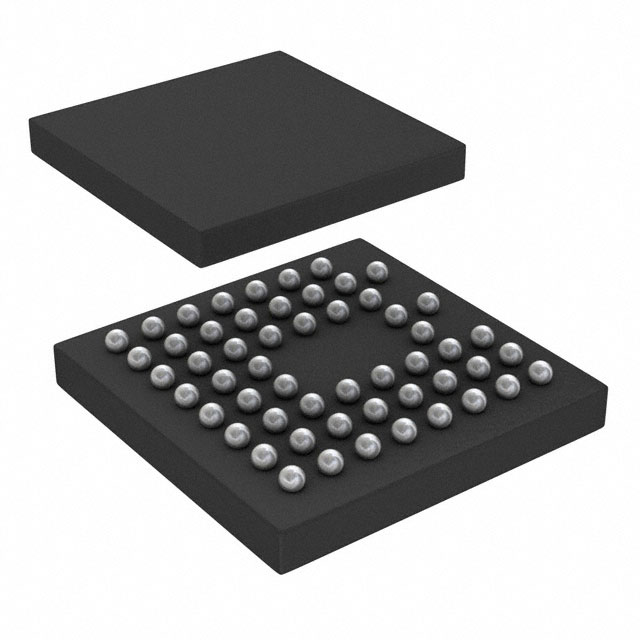
- Part No.:
- ATWILC1000B-UU-T
- Manufacturer:
- Microchip Technology
- Category:
- RF Transceiver ICs
- Package:
- 55-UFBGA, WLCSP
- Datasheet:
-
 ATWILC1000B-UU-T.pdf
- Description:
- IC RF TXRX+MCU WIFI 55WLCSP
- Quantity:
- Payment:

- Shipping:

Inventory:2,726
Please send an inquiry. Send us your inquiry, and we will respond immediately.
Product details
Overview
ATWILC1000B-UU-T from Microchip Technology is a single-chip IEEE 802.11b/g/n Wi-Fi link controller SoC with integrated PA, LNA, T/R switch, and power management. It delivers up to 72 Mbps PHY rate in 2.4 GHz ISM band using 1x1 MIMO, operates from −40°C to +85°C, supports SPI/SDIO host interfaces, and achieves <1 μA deep power-down current at 3.3V I/O - enabling ultra-low-power IoT sensor nodes and battery-powered edge devices.
For engineers reviewing the ATWILC1000B-UU-T datasheet, ATWILC1000B-UU-T pinout, ATWILC1000B-UU-T application, or ATWILC1000B-UU-T equivalent, key selection criteria include its WLCSP 3.24 × 3.24 mm package, 26 MHz crystal requirement, dual-host-interface flexibility (SPI/SDIO), hardware-accelerated A-MSDU/A-MPDU aggregation, and verified WPA2-Enterprise security compliance.
Technical Context
The ATWILC1000B-UU-T integrates a Cortus APS3 32-bit processor handling MAC-layer functions including association, authentication, and security key management, alongside dedicated hardware accelerators for OFDM channel estimation, equalization, and carrier/timing synchronization. Its RF subsystem includes fully integrated PA, LNA, and T/R switch optimized for 2.4 GHz operation.
It supports two host interface modes via SDIO_SPI_CFG pin: SDIO (default) or SPI, with separate clocking paths - external 26 MHz crystal for main oscillator and optional 32.768 kHz input for RTC. Power architecture features on-chip buck converter (VBATT_BUCK → VSW → VREG_BUCK) delivering regulated core voltage, plus multiple isolated supply domains (VDD_RF_TX, VDD_AMS, VDD_SXDIG) for analog/RF integrity.
Key Specifications
| Parameter | Value and Actual Design Meaning |
|---|---|
| Wi-Fi Standard | IEEE 802.11b/g/n (20 MHz, 1x1), 2.4 GHz ISM band only - defines maximum 72 Mbps PHY rate and backward compatibility with legacy b/g clients. |
| Host Interface | SPI or SDIO selectable via SDIO_SPI_CFG pin - enables flexible integration with microcontrollers lacking SDIO peripherals or requiring deterministic low-latency SPI timing. |
| Operating Temp | −40°C to +85°C - qualifies for industrial and automotive cabin applications without derating. |
| Power Supply | VBATT: 3.0–4.2 V; VDDIO: 1.62–3.6 V - supports direct Li-ion battery input and wide I/O voltage compatibility with 1.8 V/3.3 V hosts. |
| Deep Power-Down | <1 μA typical at 3.3 V I/O - enables multi-year battery life in periodic-sensor wake-up architectures. |
| Crystal Frequency | 26 MHz ±100 ppm initial tolerance - requires external crystal with ≤150 Ω ESR; internal 5 pF load capacitance must be included in external capacitor calculation. |
| Security Support | WEP, WPA, WPA2, WPA2-Enterprise (802.1X/EAP-TLS) - provides production-ready enterprise network onboarding and TLS-based credential exchange. |
Pinout & Package
ATWILC1000B-UU-T uses a 3.24 × 3.24 mm Wafer Level Chip Scale Package (WLCSP) with 0.35 mm ball pitch and 0.20 mm ball diameter. The package includes 41 functional balls (including ground and power) and requires system board grounding of all GND balls (GND_IO, GND_RF_RX, GND_BATT_PA, etc.) per layout guidelines.
| Pin/Terminal | Circuit Role | Design Meaning |
|---|---|---|
| XO_P / XO_N | Differential crystal input | Accepts 26 MHz fundamental-mode crystal; internal 5 pF capacitance per terminal must be compensated by external loading capacitors. |
| SDIO_SPI_CFG | Interface mode select | Pulled high (via 1 MΩ) for SPI; grounded for SDIO - determines physical layer protocol and pin function mapping (e.g., SD_DAT0 = SPI_TXD). |
| CHIP_EN | Global device enable | Active-high; must be driven low at power-up or pulled down via 1 MΩ resistor to ensure controlled startup and avoid floating state. |
| RESETN | Asynchronous active-low reset | Asserted low to force hardware reset; requires host-controlled pull-up after power stabilization to exit reset cleanly. |
| GPIO0/HOST_WAKEUP | Host wake request output | Drives low to signal host MCU during beacon monitoring or event-driven wake; supports fast exit from Doze mode. |
| VBATT_BUCK / VSW / VREG_BUCK | Buck converter power path | VBATT_BUCK accepts 3.0–4.2 V input; VSW is switching node; VREG_BUCK outputs regulated core voltage - requires 10 μF + 0.01 μF decoupling. |
Key Features
| Feature | Design Value |
|---|---|
| Hardware-accelerated frame aggregation | Two-level A-MSDU/A-MPDU + Block Ack reduces host CPU overhead and airtime usage by up to 40% vs. unaggregated frames. |
| On-chip memory management engine | Offloads packet buffering, descriptor management, and DMA coordination from host - cuts host RAM footprint and interrupt frequency. |
| Integrated RF front-end | PA, LNA, and T/R switch co-designed with baseband - eliminates 9 external RF components and simplifies matching network design. |
| Advanced PHY signal processing | Real-time channel estimation, equalization, and synchronization algorithms improve sensitivity by 3 dB over standard 802.11n receivers. |
| Wi-Fi Direct® & Soft-AP support | Enables peer-to-peer connectivity and local hotspot creation without external AP - validated in Microchip's WILC Linux/RTOS firmware stacks. |
Applications
| Smart Home Sensor Node | Industrial Wireless Gateway |
|---|---|
Use Scenario: Battery-powered temperature/humidity sensor transmitting data every 5 minutes to cloud via home Wi-Fi router. IC Role / Device Role / Timing Role: Wi-Fi link controller managing association, secure TLS handshake, and low-duty-cycle beacon listening in Doze mode. Use Value: <1 μA deep power-down extends CR2032 battery life beyond 3 years; hardware frame aggregation minimizes TX time and RF exposure. |
Use Scenario: DIN-rail mounted gateway collecting Modbus RTU data from PLCs and forwarding to SCADA via secured enterprise Wi-Fi. IC Role / Device Role / Timing Role: Embedded Wi-Fi client implementing WPA2-Enterprise authentication and certificate-based TLS 1.2 tunneling. Use Value: On-chip security accelerators reduce host CPU load during crypto operations; −40°C to +85°C rating ensures reliability in unconditioned control cabinets. |
| Medical Wearable Monitor | Asset Tracking Tag |
Use Scenario: Patch-style ECG monitor uploading 30-second waveform snippets to hospital network upon clinician request. IC Role / Device Role / Timing Role: Low-latency Wi-Fi transceiver supporting rapid connection setup and burst transmission with minimal sleep-wake latency. Use Value: Fast host wake-up from Doze mode (<5 ms) enables immediate response to BLE-initiated Wi-Fi handoff; SPI interface simplifies integration with ultra-low-power MCU. |
Use Scenario: GPS-enabled logistics tag reporting location every 6 hours via public Wi-Fi hotspots in warehouses and transport hubs. IC Role / Device Role / Timing Role: Standalone Wi-Fi client performing autonomous SSID scanning, open-network join, and HTTP POST upload. Use Value: Integrated PA delivers +17 dBm output for reliable link budget in noisy RF environments; WLCSP package enables compact PCB layout under 10 cm². |
Equivalent & Alternatives
The following parts are listed as comparable options for similar Wi-Fi link controller applications.
| Alternative Part | Technical Difference | Application Difference | Selection Advice |
|---|---|---|---|
| ESP32-WROOM-32 | Includes dual-core Xtensa LX6 MCU, Bluetooth LE, and larger flash/RAM; lacks certified WPA2-Enterprise stack out-of-box. | Requires full embedded OS (FreeRTOS) and custom security integration; better suited for compute-intensive edge AI tasks. | Choose when onboard application processing, BLE coexistence, or OTA update capability is required - not for pure low-power Wi-Fi offload. |
| RTL8720DN | ARM Cortex-M23 core, 2.4/5 GHz dual-band, higher peak throughput (150 Mbps); consumes >2× more active current than ATWILC1000B-UU-T. | Targets high-throughput streaming (audio/video); thermal and power constraints limit use in coin-cell designs. | Choose for dual-band operation or higher data rates; avoid when sub-μA sleep current or WLCSP size are mandatory. |
Compared with ESP32-WROOM-32 and RTL8720DN, ATWILC1000B-UU-T delivers the lowest deep-sleep current and smallest footprint for dedicated Wi-Fi offload, while providing production-certified WPA2-Enterprise support without host software development burden.
Availability
ATWILC1000B-UU-T is available at Aetrix Electronics and suitable for smart home sensor nodes, industrial wireless gateways, medical wearables, asset tracking tags, and battery-powered IoT endpoints requiring stable component supply across multi-year production cycles.
Supply support for ATWILC1000B-UU-T includes scheduled delivery planning, volume procurement assistance, BOM continuity management, traceable sourcing, and lifecycle availability coordination for OEM customers, industrial embedded developers, connected-device designers, and electronics production programs.
Manufacturer
Microchip Technology is a U.S.-based semiconductor company specializing in microcontrollers, analog devices, and connectivity solutions, with ISO 9001-certified manufacturing and global distribution.
The ATWILC1000B product line delivers highly integrated, low-power Wi-Fi SoCs targeting resource-constrained embedded systems where host offload, security certification, and long battery life are critical design requirements.
FAQ
What is the package type and dimensions of ATWILC1000B-UU-T?
ATWILC1000B-UU-T uses a 3.24 × 3.24 mm Wafer Level Chip Scale Package (WLCSP) with 0.35 mm ball pitch and 0.20 mm solder ball diameter. It contains 41 functional balls, including dedicated ground, power, RF, and I/O connections. The package requires strict adherence to Microchip's reflow profile and board-level grounding recommendations for RF performance and thermal dissipation.
Does ATWILC1000B-UU-T include a MAC address, and how is it provisioned?
ATWILC1000B-UU-T ships without a pre-programmed MAC address (as indicated by "-UU-T" suffix and absence of "042" in ordering code). MAC address and calibration data are stored in 768-bit eFuse memory across six 128-bit banks. Customers program Bank 0 or later via JTAG or serial interface using Microchip's provisioning tools before deployment.
Can ATWILC1000B-UU-T operate without an external 26 MHz crystal?
No. ATWILC1000B-UU-T requires an external 26 MHz fundamental-mode crystal connected to XO_P/XO_N pins. The internal oscillator lacks sufficient accuracy for Wi-Fi timing compliance. An external clock source may bypass the crystal but must meet 26 MHz ±25 ppm stability, 0.5–1.2 VPP swing, and drive 5 pF load - verified per Table 3-2 in DS70005386C.
What host interface options does ATWILC1000B-UU-T support, and how are they selected?
ATWILC1000B-UU-T supports both SDIO and SPI host interfaces. Selection is controlled by the SDIO_SPI_CFG pin: tied to GND for SDIO mode, or pulled high (via 1 MΩ resistor to VDDIO) for SPI mode. Pin functions remap accordingly - e.g., SD_DAT0 becomes SPI_TXD, and SD_CMD becomes SPI_SCK - requiring corresponding host driver configuration.
Is ATWILC1000B-UU-T qualified for industrial temperature operation?
Yes. ATWILC1000B-UU-T is specified for operation from −40°C to +85°C ambient temperature, with validated performance across this range for all electrical parameters, RF characteristics, and power states. This qualification covers industrial control panels, outdoor sensors, and automotive cabin applications where extended thermal margins are required.
ATWILC1000B-UU-T Specifications
- Product attributes
- Attribute value
- Manufacturer:
- Microchip Technology
- Series:
- -
- Package/Case:
- 55-UFBGA, WLCSP
- Packaging:
- Tape & Reel (TR)
- Product Status:
- Active
- Programmable:
- Not Verified
- Type:
- TxRx + MCU
- RF Family/Standard:
- WiFi
- Protocol:
- 802.11b/g/n
- Modulation:
- CCK, DSSS, OFDM
- Frequency:
- 2.4GHz
- Data Rate (Max):
- 72.2Mbps
- Power - Output:
- 20.5dBm
- Sensitivity:
- -98dBm
- Memory Size:
- 128kB ROM, 224kB RAM
- Serial Interfaces:
- I2C, SDIO, SPI, UART
- GPIO:
- 9
- Voltage - Supply:
- 1.62V ~ 3.6V
- Current - Receiving:
- 52.5mA ~ 58.5mA
- Current - Transmitting:
- 244mA ~ 294mA
- Operating Temperature:
- -40°C ~ 85°C
- Grade:
- -
- Qualification:
- -
- Supplier Device Package:
- 55-WLCSP (3.25x3.25)
ATWILC1000B-UU-T FAQ
1.How can I place an order for ATWILC1000B-UU-T through Aetrix?
Please submit a Request for Quotation (RFQ) for ATWILC1000B-UU-T on Aetrix. Our sales agent will provide a competitive quotation and guide you through the order confirmation once you accept the terms.
2.Are the price and stock information for ATWILC1000B-UU-T reliable?
The price and inventory of ATWILC1000B-UU-T are updated periodically and may fluctuate due to market conditions. Stock and pricing data are typically refreshed every 24 hours. Quotation validity for ATWILC1000B-UU-T is usually 5 days.
3.What payment methods are accepted for ATWILC1000B-UU-T?
We accept Wire Transfer, PayPal, Credit Card, Western Union, MoneyGram, and Escrow for ATWILC1000B-UU-T transactions.
Note: Certain payment methods may incur a processing fee.
4.How is shipping managed for ATWILC1000B-UU-T?
ATWILC1000B-UU-T orders can be shipped via leading logistics carriers, including DHL, UPS, FedEx, TNT, or Registered Mail.
Once your ATWILC1000B-UU-T order is processed, you will receive an email with the shipment details and tracking number.
Note: Tracking information may take up to 24 hours to appear. Express delivery typically takes 3–5 business days.
5.How can I obtain technical support or documentation for ATWILC1000B-UU-T?
For technical support, including ATWILC1000B-UU-T datasheets, pinout diagrams, or application guidance, please contact our engineering support team. They can provide detailed documentation and assistance for your ATWILC1000B-UU-T requirements.
6.How does Aetrix verify that ATWILC1000B-UU-T is sourced from the original manufacturer or authorized distributors?
All ATWILC1000B-UU-T products on Aetrix are procured from qualified distributors and authorized channels. Our dedicated quality assurance team conducts strict verification, including traceability checks and, if necessary, third-party testing. This ensures that ATWILC1000B-UU-T meets industry standards.
7.What is the process for return or replacement of ATWILC1000B-UU-T?
All ATWILC1000B-UU-T units undergo pre-shipment inspection (PSI). If there is an issue with ATWILC1000B-UU-T, returns or replacements are accepted under the following conditions:
1.Quantity discrepancies, incorrect items, or visible external defects (such as breakage or corrosion), acknowledged by Aetrix.
2.The issue is reported within 90 days of delivery.
3.The ATWILC1000B-UU-T part is unused and in its original packaging.
Return procedure for ATWILC1000B-UU-T:
1.Submit a request within 90 days.
2.Obtain a Return Material Authorization (RMA) from Aetrix.
ATWILC1000B-UU-T Tags
-
ESP32-D0WD-V3
Espressif Systems
-
ESP8266EX
Espressif Systems

-
ESP32-S3
Espressif Systems
-
NRF24L01P-R7
Nordic Semiconductor ASA
-
NRF24L01P-R
Nordic Semiconductor ASA
-
ESP32-U4WDH
Espressif Systems
-
DA14531-00000OG2
Renesas
-
ESP32-C6FH4
Espressif Systems
-
DA14531-00000FX2
Renesas
-
NRF24L01P-T
Nordic Semiconductor ASA
-
NRF52810-QCAA-R
Nordic Semiconductor ASA
-
ESP32-S3FN8
Espressif Systems
Tech Hub

TTL and CMOS logic families differ in thresholds, loading, output drive, power and timing. This engineering guide compares 74HC and 74HCT, calculates noise margins and checks 3.3 V/5 V compatibility.

A practical engineering guide to 3.3V and 5V logic compatibility, input thresholds, resistor dividers, translator ICs, MOSFET level shifting, I2C pull-ups, timing limits and power-sequencing risks.

The 74HC595 uses push-pull logic outputs, while the TPIC6B595 uses 50 V open-drain DMOS sinks for higher-power loads. This guide compares timing, current limits, 3.3 V interfacing, load wiring, thermal…

The 74HC595 converts serial data into eight stable parallel outputs. This guide covers pin functions, shift and storage timing, OE and MR behavior, drive-current limits, cascading, voltage compatibilit…

A technical comparison of level-sensitive latches and edge-triggered flip-flops, covering timing windows, setup and hold limits, master–slave operation, time borrowing, race-through, HDL inference and…

A D latch stores one bit while Enable controls when data can pass. This reference covers gate-level operation, truth tables, transparency, setup and hold timing, LE versus OE, common ICs and practical …

An SR latch stores one bit through cross-coupled feedback. This engineering reference covers NOR and NAND implementations, truth tables, forbidden-state recovery, gated operation, switch debouncing, fa…

Latch circuits retain one bit through feedback. This technical reference covers SR and D latches, truth tables, transparency, timing limits, latch-versus-flip-flop behavior, applications and common log…

An engineering guide to LED driver operation, constant-current and constant-voltage outputs, linear and switching topologies, dimming, IC selection, calculations, replacement compatibility, and fault c…

Operational amplifier guide covering op amp basics, feedback, ideal vs real op amps, common configurations, buffer circuits, offset, bias current, gain-bandwidth, slew rate, rail-to-rail limits and sel…


