
 My Inquiry
 My Account


Microchip Technology ATWINC1500B-MU-T042
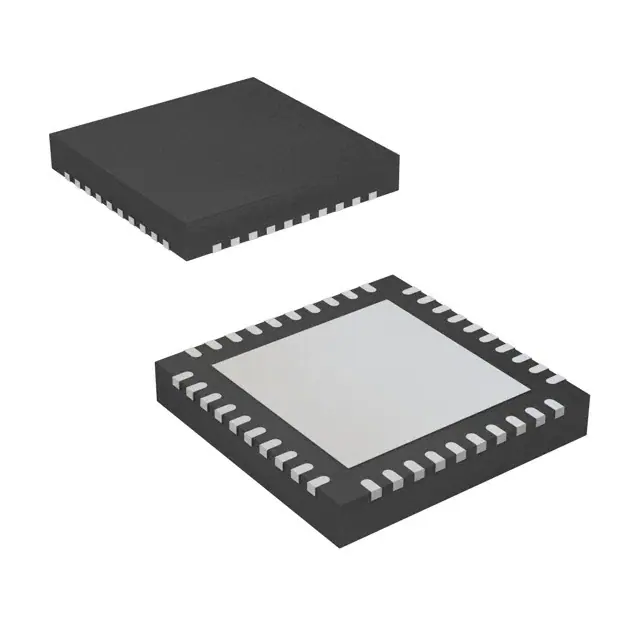
- Part No.:
- ATWINC1500B-MU-T042
- Manufacturer:
- Microchip Technology
- Category:
- RF Transceiver ICs
- Package:
- 40-VFQFN Exposed Pad
- Datasheet:
-
 ATWINC1500B-MU-T042.pdf
- Description:
- IC RF TXRX+MCU WIFI 40QFN
- Quantity:
- Payment:

- Shipping:

Inventory:3,788
Please send an inquiry. Send us your inquiry, and we will respond immediately.
Product details
Overview
ATWINC1500B-MU-T042 from Microchip Technology is a fully integrated IEEE 802.11b/g/n Wi-Fi SoC with on-chip Cortus APS3 32-bit processor, 4 Mb Flash, and hardware-accelerated TLS/TCP/IP stack. It delivers up to 72 Mbps PHY rate in 2.4 GHz ISM band, supports Soft-AP mode, and operates from -40°C to +85°C with 2.7–3.6 V I/O voltage. It interfaces via SPI and requires only a 26 MHz crystal oscillator.
For engineers reviewing the ATWINC1500B-MU-T042 datasheet, ATWINC1500B-MU-T042 pinout, ATWINC1500B-MU-T042 application, or ATWINC1500B-MU-T042 equivalent, key selection criteria include integrated flash size (4 Mb), MAC ID assignment status, tape-and-reel packaging, power-down current (<4 µA), and SPI host interface compatibility with resource-constrained MCUs.
Technical Context
The ATWINC1500B-MU-T042 integrates RF transceiver, baseband, MAC, and network stack into a single QFN package. Its WLAN subsystem uses dedicated datapath engines for FCS checking and AES-CCMP encryption, hardwired logic for EDCA/QoS timing and block ACK control, and firmware-executed functions for association management and beacon processing.
It implements a dual-power architecture: VBATT (3.0–4.2 V) powers the DC/DC converter and PA stages, while VDDIO (2.7–3.6 V) supplies digital I/Os. The chip includes an on-chip 32 kHz low-power oscillator and supports external RTC clock input on GPIO1/RTC_CLK, though current firmware does not require it.
Key Specifications
| Parameter | Value and Actual Design Meaning |
|---|---|
| Wi-Fi Standard | IEEE 802.11b/g/n, 2.4 GHz ISM band, 20 MHz channel bandwidth, 1x1 MIMO |
| PHY Data Rate | Up to 72 Mbps - maximum single-stream HT-MCS7 rate at 20 MHz |
| Flash Memory | 4 Mb - stores full Wi-Fi firmware, network stack, and application binaries |
| Power-Down Current | <4 µA typical at 3.3 V - enables battery-powered IoT endpoints with multi-year shelf life |
| Operating Temperature | -40°C to +85°C - qualified for industrial and outdoor embedded deployments |
| I/O Voltage Range | 2.7 V to 3.6 V - compatible with common 3.3 V MCU interfaces without level-shifting |
| Clock Requirement | 26 MHz crystal oscillator - minimal external timing component; internal 5 pF load per pin |
Pinout & Package
The ATWINC1500B-MU-T042 is housed in a 40-pin QFN package (5 mm × 5 mm, 0.4 mm pitch) with exposed thermal paddle connected to system ground. Pin functions are validated per Microchip DS70005374B, pages 6–8.
| Pin/Terminal | Circuit Role | Design Meaning |
|---|---|---|
| SPI_SSN | SPI Slave Select (active-low) | Host-controlled chip enable for SPI transactions; must be pulled high when inactive |
| SPI_SCK | SPI Clock | Host-generated clock synchronizing data transfer; supports up to 20 MHz operation |
| SPI_TXD | SPI MISO (Master In, Slave Out) | Carries Wi-Fi firmware responses and RX packet data to host MCU |
| SPI_RXD | SPI MOSI (Master Out, Slave In) | Receives commands, configuration, and TX packet payloads from host MCU |
| GPIO2/IRQN | Interrupt Output / GPIO | Active-low interrupt signaling host on event completion (e.g., packet received, connection established) |
| CHIP_EN | Module Enable | Hardware power-gating control; drives module into <4 µA Power-Down mode when low |
| RESETN | Active-Low Reset | Hard reset input; must be held low ≥100 ns then released to initiate cold boot sequence |
| XO_P / XO_N | Crytal Oscillator Inputs | Differential 26 MHz crystal interface; internal 5 pF capacitance per pin defines external load calculation |
Key Features
| Feature | Design Value |
|---|---|
| On-Chip Network Stack | Hardware-accelerated TCP/UDP/DHCP/ARP/HTTP/TLS/DNS offloads host MCU and eliminates external protocol stack licensing |
| Hardware Security Acceleration | Dedicated AES-CCMP, SHA-256, and RSA engines reduce TLS handshake time by >60% vs. software-only implementation |
| Two-Level Frame Aggregation | A-MSDU + A-MPDU with Block ACK achieves >85% MAC layer efficiency in high-throughput STA-to-AP traffic |
| Integrated Power Management Unit | On-die DC/DC converter and ultra-low-power sleep oscillator enable sub-1 mA average current in beacon-monitoring Doze mode |
| Firmware OTA Upgrade | Secure, signed over-the-air updates preserve device identity and prevent rollback via eFuse-based version validation |
Applications
| Smart Home Sensor Hub | Industrial Wireless Gateway |
|---|---|
Use Scenario: Battery-powered temperature/humidity sensor node transmitting data every 5 minutes to cloud via home Wi-Fi router. IC Role / Device Role / Timing Role: Standalone Wi-Fi client (STA mode) with integrated TLS stack handling secure MQTT transmission. Use Value: 4 Mb Flash stores full firmware + OTA update image; <4 µA Power-Down current extends CR2032 battery life beyond 3 years. | Use Scenario: DIN-rail mounted PLC extension module adding wireless connectivity to legacy RS-485 fieldbus networks. IC Role / Device Role / Timing Role: Dual-role device acting as Wi-Fi STA to upstream controller and Soft-AP for local configuration via mobile app. Use Value: Hardware-accelerated A-MPDU aggregation sustains 45 Mbps sustained throughput across 10+ concurrent Modbus TCP sessions. |
| Medical Wearable Monitor | Asset Tracking Beacon |
Use Scenario: ECG patch streaming encrypted waveform data to nursing station during patient ambulation. IC Role / Device Role / Timing Role: Low-latency Wi-Fi client with fast AP re-association (150 ms) maintaining connection during handoff between access points. Use Value: On-chip memory management engine reduces host DMA overhead; SPI interface allows direct integration with ultra-low-power ARM Cortex-M0+ MCU. | Use Scenario: GPS-enabled logistics tag reporting location every 30 minutes using Wi-Fi positioning in warehouses where GNSS is unavailable. IC Role / Device Role / Timing Role: Intermittent STA-mode client performing passive Wi-Fi scanning and BSSID lookup without active association. Use Value: 380 µA Doze mode preserves battery during beacon monitoring intervals; eFuse-stored calibration ensures consistent RSSI accuracy across units. |
Equivalent & Alternatives
The following parts are listed as comparable options for similar Wi-Fi SoC applications.
| Alternative Part | Technical Difference | Application Difference | Selection Advice |
|---|---|---|---|
| ATWINC1510B-MU-T042 | 8 Mb Flash (vs. 4 Mb); same pinout, firmware, and RF performance | Required for applications needing larger OTA images, custom web servers, or extended TLS certificate stores | Select when firmware footprint exceeds 3.2 MB or future-proofing for feature-rich OTA updates is critical |
| ESP32-WROOM-32 | Integrated dual-core Xtensa LX6 CPU, Bluetooth LE, no hardware TLS accelerator, 4 MB PSRAM optional | Requires external TLS library and host-level network stack management; higher host processing load | Choose when Bluetooth coexistence or lower unit cost outweighs deterministic security acceleration and minimal host dependency |
Compared with ATWINC1510B-MU-T042, ATWINC1500B-MU-T042 offers identical RF performance and power modes but halves Flash capacity-sufficient for certified WPA2/WPA3 stacks and lightweight HTTP clients. Versus ESP32-WROOM-32, it trades dual-radio flexibility for guaranteed hardware-accelerated TLS and zero-host-network-stack design, reducing BOM count and certification effort.
Availability
ATWINC1500B-MU-T042 is available at Aetrix Electronics and suitable for smart home sensor hubs, industrial wireless gateways, medical wearables, asset tracking beacons, and battery-powered IoT endpoints requiring stable component supply and long-term lifecycle support.
Supply support for ATWINC1500B-MU-T042 includes scheduled delivery planning, volume procurement assistance, BOM continuity management, traceable sourcing, and lifecycle availability coordination for OEM customers, industrial embedded developers, connected-device designers, and electronics production programs.
Manufacturer
Microchip Technology Inc. is a U.S.-based semiconductor manufacturer specializing in microcontrollers, analog devices, and connectivity solutions for industrial, automotive, and IoT markets.
The ATWINC15x0B product line was designed as a certified, low-power Wi-Fi SoC family targeting resource-constrained embedded systems needing secure, standards-compliant wireless connectivity with minimal host MCU involvement.
FAQ
What distinguishes ATWINC1500B-MU-T042 from other variants in the ATWINC15x0B family?
The ATWINC1500B-MU-T042 is a specific ordering variant of the ATWINC1500B with 4 Mb Flash, pre-programmed MAC address (indicated by "042" suffix), and shipped in tape-and-reel packaging. It shares identical RF performance, power characteristics, and pinout with ATWINC1500B-MU-Y042 (tray-packaged) and ATWINC1500B-MU-T (no MAC ID), but differs from ATWINC1510B-MU-T042 which contains 8 Mb Flash.
Does ATWINC1500B-MU-T042 support WPA3 or only WPA2 security protocols?
The ATWINC1500B-MU-T042 supports WPA2 (802.11i) with AES-CCMP and TKIP out-of-the-box. WPA3 support requires firmware version 19.7.1 or later and is enabled via OTA update; the hardware includes all necessary cryptographic accelerators (AES, SHA-256, ECC) to execute WPA3-SAE handshake and encryption without host intervention.
Can ATWINC1500B-MU-T042 operate without an external 26 MHz crystal?
No - the ATWINC1500B-MU-T042 requires an external 26 MHz crystal connected to XO_P and XO_N pins. The internal oscillator lacks the stability needed for 802.11 timing compliance. While the datasheet mentions bypass capability for an external 26 MHz clock signal, this still requires a precision AC-coupled source meeting jitter (<1 psec RMS) and phase noise (-130 dBc/Hz @ 10 kHz) specs - not a generic MCU clock output.
Is the SPI interface of ATWINC1500B-MU-T042 compatible with standard 3.3 V logic levels?
Yes - ATWINC1500B-MU-T042 operates with VDDIO between 2.7 V and 3.6 V, making it directly compatible with standard 3.3 V SPI peripherals. All digital I/O pins (SPI_SSN, SPI_SCK, SPI_TXD, SPI_RXD, GPIO2/IRQN) are 3.3 V tolerant and do not require level shifters when interfaced with common ARM Cortex-M or PIC MCU families.
How is the MAC address stored and managed in ATWINC1500B-MU-T042?
The ATWINC1500B-MU-T042 has its MAC address pre-programmed into Bank 1 of the 768-bit eFuse memory during manufacturing - confirmed by the "042" suffix indicating assigned MAC ID. The firmware reads this value at boot and uses it for 802.11 association. Customers may program alternate MAC addresses into unused eFuse banks (e.g., Bank 2 or 3) for field reconfiguration, provided the original bank is invalidated first.
ATWINC1500B-MU-T042 Specifications
- Product attributes
- Attribute value
- Manufacturer:
- Microchip Technology
- Series:
- -
- Package/Case:
- 40-VFQFN Exposed Pad
- Packaging:
- Tape & Reel (TR)
- Product Status:
- Active
- Programmable:
- Not Verified
- Type:
- TxRx + MCU
- RF Family/Standard:
- WiFi
- Protocol:
- 802.11b/g/n
- Modulation:
- CCK, DSSS, OFDM
- Frequency:
- 2.4GHz
- Data Rate (Max):
- 72.2Mbps
- Power - Output:
- 20.5dBm
- Sensitivity:
- -98dBm
- Memory Size:
- 4MB Flash, 128kB ROM, 224kB RAM
- Serial Interfaces:
- I2C, SDIO, SPI, UART
- GPIO:
- 9
- Voltage - Supply:
- 2.7V ~ 3.6V
- Current - Receiving:
- 22mA ~ 58.5mA
- Current - Transmitting:
- 22mA ~ 294mA
- Operating Temperature:
- -40°C ~ 85°C
- Grade:
- -
- Qualification:
- -
- Supplier Device Package:
- 40-QFN (5x5)
ATWINC1500B-MU-T042 FAQ
1.How can I place an order for ATWINC1500B-MU-T042 through Aetrix?
Please submit a Request for Quotation (RFQ) for ATWINC1500B-MU-T042 on Aetrix. Our sales agent will provide a competitive quotation and guide you through the order confirmation once you accept the terms.
2.Are the price and stock information for ATWINC1500B-MU-T042 reliable?
The price and inventory of ATWINC1500B-MU-T042 are updated periodically and may fluctuate due to market conditions. Stock and pricing data are typically refreshed every 24 hours. Quotation validity for ATWINC1500B-MU-T042 is usually 5 days.
3.What payment methods are accepted for ATWINC1500B-MU-T042?
We accept Wire Transfer, PayPal, Credit Card, Western Union, MoneyGram, and Escrow for ATWINC1500B-MU-T042 transactions.
Note: Certain payment methods may incur a processing fee.
4.How is shipping managed for ATWINC1500B-MU-T042?
ATWINC1500B-MU-T042 orders can be shipped via leading logistics carriers, including DHL, UPS, FedEx, TNT, or Registered Mail.
Once your ATWINC1500B-MU-T042 order is processed, you will receive an email with the shipment details and tracking number.
Note: Tracking information may take up to 24 hours to appear. Express delivery typically takes 3–5 business days.
5.How can I obtain technical support or documentation for ATWINC1500B-MU-T042?
For technical support, including ATWINC1500B-MU-T042 datasheets, pinout diagrams, or application guidance, please contact our engineering support team. They can provide detailed documentation and assistance for your ATWINC1500B-MU-T042 requirements.
6.How does Aetrix verify that ATWINC1500B-MU-T042 is sourced from the original manufacturer or authorized distributors?
All ATWINC1500B-MU-T042 products on Aetrix are procured from qualified distributors and authorized channels. Our dedicated quality assurance team conducts strict verification, including traceability checks and, if necessary, third-party testing. This ensures that ATWINC1500B-MU-T042 meets industry standards.
7.What is the process for return or replacement of ATWINC1500B-MU-T042?
All ATWINC1500B-MU-T042 units undergo pre-shipment inspection (PSI). If there is an issue with ATWINC1500B-MU-T042, returns or replacements are accepted under the following conditions:
1.Quantity discrepancies, incorrect items, or visible external defects (such as breakage or corrosion), acknowledged by Aetrix.
2.The issue is reported within 90 days of delivery.
3.The ATWINC1500B-MU-T042 part is unused and in its original packaging.
Return procedure for ATWINC1500B-MU-T042:
1.Submit a request within 90 days.
2.Obtain a Return Material Authorization (RMA) from Aetrix.
ATWINC1500B-MU-T042 Tags
-
ESP32-D0WD-V3
Espressif Systems
-
ESP8266EX
Espressif Systems

-
ESP32-S3
Espressif Systems
-
NRF24L01P-R7
Nordic Semiconductor ASA
-
NRF24L01P-R
Nordic Semiconductor ASA
-
ESP32-U4WDH
Espressif Systems
-
DA14531-00000OG2
Renesas
-
ESP32-C6FH4
Espressif Systems
-
DA14531-00000FX2
Renesas
-
NRF24L01P-T
Nordic Semiconductor ASA
-
NRF52810-QCAA-R
Nordic Semiconductor ASA
-
ESP32-S3FN8
Espressif Systems
Tech Hub

TTL and CMOS logic families differ in thresholds, loading, output drive, power and timing. This engineering guide compares 74HC and 74HCT, calculates noise margins and checks 3.3 V/5 V compatibility.

A practical engineering guide to 3.3V and 5V logic compatibility, input thresholds, resistor dividers, translator ICs, MOSFET level shifting, I2C pull-ups, timing limits and power-sequencing risks.

The 74HC595 uses push-pull logic outputs, while the TPIC6B595 uses 50 V open-drain DMOS sinks for higher-power loads. This guide compares timing, current limits, 3.3 V interfacing, load wiring, thermal…

The 74HC595 converts serial data into eight stable parallel outputs. This guide covers pin functions, shift and storage timing, OE and MR behavior, drive-current limits, cascading, voltage compatibilit…

A technical comparison of level-sensitive latches and edge-triggered flip-flops, covering timing windows, setup and hold limits, master–slave operation, time borrowing, race-through, HDL inference and…

A D latch stores one bit while Enable controls when data can pass. This reference covers gate-level operation, truth tables, transparency, setup and hold timing, LE versus OE, common ICs and practical …

An SR latch stores one bit through cross-coupled feedback. This engineering reference covers NOR and NAND implementations, truth tables, forbidden-state recovery, gated operation, switch debouncing, fa…

Latch circuits retain one bit through feedback. This technical reference covers SR and D latches, truth tables, transparency, timing limits, latch-versus-flip-flop behavior, applications and common log…

An engineering guide to LED driver operation, constant-current and constant-voltage outputs, linear and switching topologies, dimming, IC selection, calculations, replacement compatibility, and fault c…

Operational amplifier guide covering op amp basics, feedback, ideal vs real op amps, common configurations, buffer circuits, offset, bias current, gain-bandwidth, slew rate, rail-to-rail limits and sel…


