
 My Inquiry
 My Account


Diodes Incorporated AZ1084CS-ADJTRG1
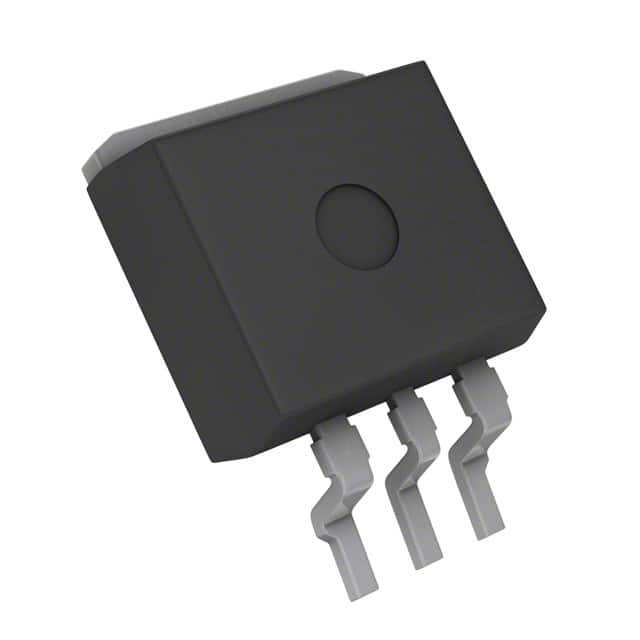
- Part No.:
- AZ1084CS-ADJTRG1
- Manufacturer:
- Diodes Incorporated
- Package:
- TO-263-4, D2PAK (3 Leads + Tab), TO-263AA
- Datasheet:
-
 AZ1084CS-ADJTRG1.pdf
- Description:
- IC REG LINEAR POS ADJ 5A TO263
- Quantity:
- Payment:

- Shipping:

Inventory:1,414
Please send an inquiry. Send us your inquiry, and we will respond immediately.
Product details
Overview
AZ1084CS-ADJTRG1 from Diodes Incorporated is an adjustable 5A low-dropout linear regulator in TO252-2 (3) package, delivering 1.225V to 12V output via external resistors, with 1.35V typical dropout at full load and integrated thermal shutdown and current limiting. It serves as a post-regulator for switch-mode supplies and powers microprocessor cores in embedded systems requiring stable, low-noise DC voltage.
For engineers reviewing the AZ1084CS-ADJTRG1 datasheet, AZ1084CS-ADJTRG1 pinout, AZ1084CS-ADJTRG1 application, or AZ1084CS-ADJTRG1 equivalent, key selection criteria include dropout voltage at 5A, adjust pin current stability over temperature, compatibility with ceramic output capacitors, and thermal resistance (θJC = 7.36°C/W) for PCB heatsink design.
Technical Context
The AZ1084CS-ADJTRG1 uses a trimmed bandgap reference (1.225–1.270V) and internal current-limiting circuitry to maintain regulation under overload. Its feedback loop accepts voltage division from two external resistors connected to the ADJ pin, enabling precise output setting across 1.225V–12V range while maintaining 0.1% typical load regulation.
Thermal protection activates when junction temperature exceeds +150°C, and the device operates continuously from 0°C to +125°C junction temperature. It supports low-ESR ceramic capacitors (≥10µF input, ≥22µF output) and achieves 72dB PSRR at 120Hz with 5A load and 3V headroom.
Key Specifications
| Parameter | Value and Actual Design Meaning |
|---|---|
| Output Current | 5A continuous - supports high-current digital loads like SoC cores and FPGA I/O banks |
| Dropout Voltage | 1.35V typical at 5A - enables operation with minimal input–output differential, reducing power loss |
| Reference Voltage | 1.225V to 1.270V - sets output accuracy and stability across temperature and load |
| Line Regulation | 0.015% typical - ensures <±1.5mV output shift over full input voltage range (2.85–10V) |
| Load Regulation | 0.1% typical - guarantees ≤±5mV variation from no-load to full 5A load at fixed VIN–VOUT |
| Thermal Resistance θJC | 7.36°C/W - allows direct heatsinking to PCB copper; enables >4W dissipation before thermal shutdown |
| Adjust Pin Current | 55–120µA - determines resistor sizing for output accuracy and minimizes divider current error |
Pinout & Package
Package: TO252-2 (3), surface-mount, single-gate thermally enhanced DPAK variant with exposed drain pad for PCB heatsinking. Dimensions: 10.4 × 6.7 × 2.38 mm (L × W × H); weight ≈ 0.312 g.
| Pin/Terminal | Circuit Role | Design Meaning |
|---|---|---|
| 1 (INPUT) | Input voltage supply terminal | Accepts 2.85–12V DC; requires ≥10µF low-ESR ceramic capacitor for stability |
| 2 (OUTPUT) | Regulated output voltage node | Delivers up to 5A; connects to ≥22µF ceramic output capacitor and load |
| 3 (ADJ) | Feedback reference input | Sets output via R1–R2 divider; draws 55–120µA; sensitive to noise coupling |
Key Features
| Feature | Design Value |
|---|---|
| Low ESR capacitor support | Stable with ≥10µF ceramic input and ≥22µF ceramic output - eliminates need for tantalum or electrolytic caps |
| Integrated thermal shutdown | Activates at TJ ≥ +150°C and recovers automatically on cooldown - prevents permanent die damage during sustained overload |
| Current limiting | 6.5A typical foldback limit - protects against short-circuit and excessive load without external sensing |
| RMS output noise | 0.003% of VOUT (10Hz–10kHz) - delivers ultra-low-noise bias for analog circuits and ADC references |
| Lead-free & green compliance | Fully RoHS 3 compliant (<900ppm Br/Cl, <1000ppm Sb) - meets global environmental and automotive supply chain requirements |
Applications
| Battery Charger Post-Regulation | Microprocessor Core Supply |
|---|---|
Use Scenario: Final-stage voltage regulation after buck converter in Li-ion fast-charging systems. IC Role / Device Role / Timing Role: Low-noise, high-current LDO providing clean 3.3V or adjustable core voltage to charging ICs and battery management units. Use Value: Eliminates switching ripple-induced charge termination errors and improves battery cycle life by delivering <10µV RMS noise. | Use Scenario: Powering ARM Cortex-A series or RISC-V SoC cores in industrial gateways and edge AI modules. IC Role / Device Role / Timing Role: Adjustable main core rail (e.g., 0.8–1.2V) with tight load regulation and fast transient response. Use Value: Maintains ±5mV output tolerance across 0–5A dynamic load steps, preventing CPU brownouts during burst processing. |
| Post-Regulation for SMPS | Desktop PC VRM Auxiliary Rail |
Use Scenario: Secondary regulation stage following 12V-to-5V buck converter in telecom power systems. IC Role / Device Role / Timing Role: High-current LDO improving PSRR and reducing conducted EMI into sensitive analog subsystems. Use Value: Delivers 72dB ripple rejection at 120Hz and maintains regulation down to 1.35V dropout - extends usable input range. | Use Scenario: Standby or auxiliary 3.3V/5V rail generation in ATX-compliant desktop motherboards. IC Role / Device Role / Timing Role: Fixed or adjustable auxiliary supply for chipset I/O, USB controllers, and SMBus interfaces. Use Value: Supports 5A peak loads during PCIe enumeration and provides thermal fault signaling via junction temperature monitoring. |
Equivalent & Alternatives
The following parts are listed as comparable options for similar adjustable 5A LDO applications.
| Alternative Part | Technical Difference | Application Difference | Selection Advice |
|---|---|---|---|
| LT1963AEST-ADJ#TRPBF | Lower dropout (340mV @ 1.5A), but rated only to 1.5A; higher PSRR (77dB @ 120Hz) | Not suitable for 5A continuous loads; better for low-power precision analog rails | Select only if load current ≤1.5A and ultra-low dropout is critical |
| TPS75733KTTR | Fixed 3.3V output; 5A rating; 1.15V dropout @ 5A; no adjust pin | Lacks output voltage flexibility; requires redesign for non-3.3V use cases | Choose only when system requires fixed 3.3V and board space permits larger TO-220 package |
Compared with LT1963AEST-ADJ#TRPBF and TPS75733KTTR, the AZ1084CS-ADJTRG1 uniquely combines 5A adjustability, TO252 thermal performance, and 1.35V dropout - making it the only option for compact, high-current, programmable LDO designs where both current and voltage flexibility are mandatory.
Availability
AZ1084CS-ADJTRG1 is available at Aetrix Electronics and suitable for battery charger post-regulation, microprocessor core supply, and SMPS post-regulation requiring stable component supply, long-lifecycle assurance, and RoHS 3–compliant sourcing.
Supply support for AZ1084CS-ADJTRG1 includes scheduled delivery planning, volume procurement assistance, BOM continuity management, traceable sourcing, and lifecycle availability coordination for OEM customers, industrial embedded developers, connected-device designers, and electronics production programs.
Manufacturer
Diodes Incorporated is a global manufacturer of discrete semiconductors and analog ICs, headquartered in Plano, Texas, with design, manufacturing, and sales operations across Asia, Europe, and the Americas.
The AZ1084C series belongs to Diodes' high-current LDO product line, engineered specifically for post-regulation in power-constrained embedded and computing systems where thermal efficiency, noise immunity, and design flexibility are critical.
FAQ
What is the minimum required output capacitance for stable operation?
The AZ1084CS-ADJTRG1 requires ≥22µF ceramic output capacitance with ESR ≤10mΩ for guaranteed stability across all operating conditions. Lower values may cause oscillation under heavy load transients. The datasheet validates performance with 22µF X7R 1206 or larger case size.
Can this regulator be used with input voltages below 3V?
No. The absolute minimum input voltage is 2.85V per the recommended operating conditions, and the device requires ≥1.35V headroom above the desired output to maintain regulation at 5A. For 1.2V output, VIN must be ≥2.55V - but functional margin and startup behavior are not characterized below 2.85V.
How does the ADJ pin current affect output voltage accuracy?
Adjust pin current (55–120µA) flows through the lower resistor (R1) in the feedback divider, introducing a voltage error equal to IADJ × R1. To limit this error to <0.5%, R1 should be ≤10kΩ when using the typical 1.25V reference. Higher R1 values degrade accuracy and increase temperature drift.
Is thermal pad soldering required for rated 5A operation?
Yes. The exposed thermal pad (Pin 2 tab) must be soldered to ≥4 cm² of 2-oz copper with ≥4 thermal vias to internal ground planes. Without this, θJA rises from ~60°C/W to >100°C/W, causing thermal shutdown at <3A continuous load per datasheet thermal characterization.
AZ1084CS-ADJTRG1 Specifications
- Product attributes
- Attribute value
- Manufacturer:
- Diodes Incorporated
- Series:
- -
- Package/Case:
- TO-263-4, D2PAK (3 Leads + Tab), TO-263AA
- Packaging:
- Tape & Reel (TR)
- Product Status:
- Obsolete
- Output Configuration:
- Positive
- Output Type:
- Adjustable
- Number of Regulators:
- 1
- Voltage - Input (Max):
- 12V
- Voltage - Output (Min/Fixed):
- 1.25V
- Voltage - Output (Max):
- 10.5V
- Voltage Dropout (Max):
- 1.5V @ 4.5A
- Current - Output:
- 5A
- Current - Quiescent (Iq):
- 10 mA
- Current - Supply (Max):
- -
- PSRR:
- 72dB (120Hz)
- Control Features:
- -
- Protection Features:
- Over Current, Over Temperature
- Operating Temperature:
- 0°C ~ 125°C
- Grade:
- -
- Qualification:
- -
- Mounting Type:
- Surface Mount
- Supplier Device Package:
- TO-263
AZ1084CS-ADJTRG1 FAQ
1.How can I place an order for AZ1084CS-ADJTRG1 through Aetrix?
Please submit a Request for Quotation (RFQ) for AZ1084CS-ADJTRG1 on Aetrix. Our sales agent will provide a competitive quotation and guide you through the order confirmation once you accept the terms.
2.Are the price and stock information for AZ1084CS-ADJTRG1 reliable?
The price and inventory of AZ1084CS-ADJTRG1 are updated periodically and may fluctuate due to market conditions. Stock and pricing data are typically refreshed every 24 hours. Quotation validity for AZ1084CS-ADJTRG1 is usually 5 days.
3.What payment methods are accepted for AZ1084CS-ADJTRG1?
We accept Wire Transfer, PayPal, Credit Card, Western Union, MoneyGram, and Escrow for AZ1084CS-ADJTRG1 transactions.
Note: Certain payment methods may incur a processing fee.
4.How is shipping managed for AZ1084CS-ADJTRG1?
AZ1084CS-ADJTRG1 orders can be shipped via leading logistics carriers, including DHL, UPS, FedEx, TNT, or Registered Mail.
Once your AZ1084CS-ADJTRG1 order is processed, you will receive an email with the shipment details and tracking number.
Note: Tracking information may take up to 24 hours to appear. Express delivery typically takes 3–5 business days.
5.How can I obtain technical support or documentation for AZ1084CS-ADJTRG1?
For technical support, including AZ1084CS-ADJTRG1 datasheets, pinout diagrams, or application guidance, please contact our engineering support team. They can provide detailed documentation and assistance for your AZ1084CS-ADJTRG1 requirements.
6.How does Aetrix verify that AZ1084CS-ADJTRG1 is sourced from the original manufacturer or authorized distributors?
All AZ1084CS-ADJTRG1 products on Aetrix are procured from qualified distributors and authorized channels. Our dedicated quality assurance team conducts strict verification, including traceability checks and, if necessary, third-party testing. This ensures that AZ1084CS-ADJTRG1 meets industry standards.
7.What is the process for return or replacement of AZ1084CS-ADJTRG1?
All AZ1084CS-ADJTRG1 units undergo pre-shipment inspection (PSI). If there is an issue with AZ1084CS-ADJTRG1, returns or replacements are accepted under the following conditions:
1.Quantity discrepancies, incorrect items, or visible external defects (such as breakage or corrosion), acknowledged by Aetrix.
2.The issue is reported within 90 days of delivery.
3.The AZ1084CS-ADJTRG1 part is unused and in its original packaging.
Return procedure for AZ1084CS-ADJTRG1:
1.Submit a request within 90 days.
2.Obtain a Return Material Authorization (RMA) from Aetrix.
AZ1084CS-ADJTRG1 Tags
-
MIC5504-1.8YM5-TR
Microchip Technology
-
MIC5504-3.3YM5-TR
Microchip Technology
-
MIC5365-3.0YC5-TR
Microchip Technology
-
MIC5365-1.8YC5-TR
Microchip Technology
-
MIC5365-2.5YC5-TR
Microchip Technology
-
MIC5365-3.3YC5-TR
Microchip Technology
-
MIC5365-3.3YD5-TR
Microchip Technology
-
MIC5317-3.3YM5-TR
Microchip Technology
-
TLV1117LV33DCYR
Texas Instruments
-
MIC5317-3.3YMT-TZ
Microchip Technology
-
MIC5528-3.3YMT-TR
Microchip Technology
-
TLV75801PDRVR
Texas Instruments
Tech Hub
An SR latch stores one bit through cross-coupled feedback. This engineering reference covers NOR and NAND implementations, truth tables, forbidden-state recovery, gated operation, switch debouncing, fa…

Latch circuits retain one bit through feedback. This technical reference covers SR and D latches, truth tables, transparency, timing limits, latch-versus-flip-flop behavior, applications and common log…

An engineering guide to LED driver operation, constant-current and constant-voltage outputs, linear and switching topologies, dimming, IC selection, calculations, replacement compatibility, and fault c…

Operational amplifier guide covering op amp basics, feedback, ideal vs real op amps, common configurations, buffer circuits, offset, bias current, gain-bandwidth, slew rate, rail-to-rail limits and sel…

Jumper cables guide covering safe connection order, red and black clamp placement, final ground connection, cable gauge, length, clamp quality, copper vs CCA cables, jump starter comparison and battery…

LDO regulator guide covering low dropout voltage, power dissipation, thermal design, PSRR, output noise, capacitor stability, adjustable LDO circuits, LDO vs buck converter and datasheet selection chec…

Conditional Access Module guide covering CAM meaning, CI/CI+ interface, smart card authorization, DVB security workflow, TV and set-top box compatibility, internal electronics, ESD protection, connecto…

Guide to electronic component obsolescence covering EOL risk, PCN/PDN notices, last-time buy planning, replacement options, form-fit-function validation, counterfeit risk and BOM lifecycle management.

18650 battery guide covering lithium-ion cell basics, 3.6V/3.7V voltage, 4.2V charging, mAh and Wh capacity, protected cells, chargers, BMS, series-parallel packs, holders, welding and sourcing checks.…

Hall effect sensor guide covering working principle, linear and digital sensors, Arduino circuits, current sensing, speed detection, automotive applications, A3144 examples, signal filtering and datash…


