
 My Inquiry
 My Account


Diodes Incorporated AZ7042RTR-E1
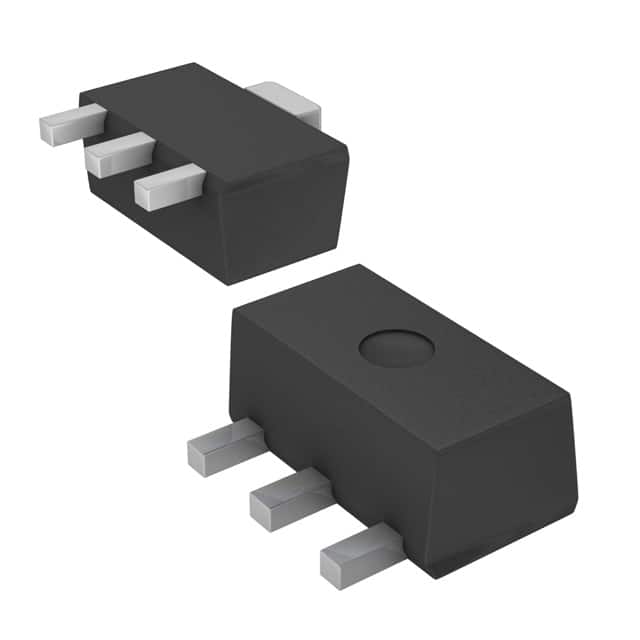
- Part No.:
- AZ7042RTR-E1
- Manufacturer:
- Diodes Incorporated
- Category:
- Supervisors
- Package:
- TO-243AA
- Datasheet:
-
 AZ7042RTR-E1.pdf
- Description:
- IC SUPERVISOR 1 CHANNEL SOT89
- Quantity:
- Payment:

- Shipping:

Inventory:966
Please send an inquiry. Send us your inquiry, and we will respond immediately.
Product details
Overview
AZ7042RTR-E1 from BCD Semiconductor Manufacturing Limited is a precision voltage detector IC with 4.2 V detection threshold, open-collector output, and built-in 50 mV hysteresis-designed for reliable power-on reset and brown-out monitoring in microcontroller-based systems. It operates from 0.8 V minimum supply, consumes only 30 µA typical quiescent current at VCC = 5.25 V, and functions across –40 °C to +85 °C for industrial-grade embedded applications.
For engineers reviewing the AZ7042RTR-E1 datasheet, AZ7042RTR-E1 pinout, AZ7042RTR-E1 application, or AZ7042RTR-E1 equivalent, this device serves as a low-power, temperature-stable reset supervisor for CPU systems requiring accurate 4.2 V supply monitoring, fast response to voltage transients (tpLH = 15 µs), and robust noise immunity via internal hysteresis.
Technical Context
The AZ7042RTR-E1 integrates a precision on-chip voltage reference and comparator to monitor VCC against a fixed 4.2 V threshold (VDET− = 4.05–4.35 V). Its open-collector output pulls low when VCC falls below VDET−, with release occurring at VDET+ = VDET− + VHYS (typ. 4.25 V) to prevent chatter near threshold.
It features a minimum operating voltage of 0.8 V (typ.), enabling valid output behavior down to ultra-low supply levels, and supports load currents up to 16 mA over full temperature range while maintaining VOL ≤ 0.4 V at RL = 200 Ω.
Key Specifications
| Parameter | Value and Actual Design Meaning |
|---|---|
| Detect Voltage | 4.2 V (typ.), ±0.15 V tolerance - sets precise reset activation point for 4.2 V Li-ion or regulated rail monitoring |
| Hysteresis Voltage | 50 mV (typ.) - prevents false triggering during noisy or slowly varying supply conditions |
| Quiescent Current | 30 µA (typ.) at 5.25 V - enables long battery life in always-on monitoring circuits |
| Output Type | Open-collector - allows flexible pull-up to any logic rail (e.g., 3.3 V or 5 V) and wired-OR reset bus configuration |
| Min Operating Voltage | 0.8 V (typ.) - ensures functional reset assertion even during deep brown-out or capacitor discharge decay |
| Delay Times | tpHL = 10 µs, tpLH = 15 µs - provides deterministic timing for synchronous system initialization |
| Temp Range | –40 °C to +85 °C - validated for industrial ambient operation without derating |
Pinout & Package
The AZ7042RTR-E1 is housed in a SOT-89 surface-mount package (4.4 × 4.6 × 1.1 mm), optimized for thermal performance (θJC = 74 °C/W) and board space efficiency in compact power management layouts.
| Pin/Terminal | Circuit Role | Design Meaning |
|---|---|---|
| 1 (VCC) | Supply Input | Primary power connection; monitors input rail for undervoltage condition |
| 2 (GND) | Ground Reference | Return path for internal reference and comparator; must be low-impedance |
| 3 (OUT) | Open-Collector Output | Active-low reset signal; requires external pull-up resistor to define logic high level |
Key Features
| Feature | Design Value |
|---|---|
| Precision Threshold Accuracy | ±0.15 V over temperature - eliminates need for external trimming in cost-sensitive reset circuits |
| Ultra-Low Standby Current | 30 µA typical at 5.25 V - extends battery runtime in portable devices with periodic wake-up |
| Built-in Hysteresis | 50 mV typical - removes requirement for external positive feedback network |
| Robust Output Drive | 16 mA sink capability at –40 °C to +85 °C - directly drives standard logic inputs or small LEDs |
| Wide Supply Range | 0.8 V to 18 V operation - supports direct monitoring of unregulated battery inputs or post-regulator rails |
Applications
| Low-Battery Indicator | Processor Reset Generator |
|---|---|
|
Use Scenario: Monitoring single-cell Li-ion battery voltage during discharge to warn user before cutoff. IC Role / Device Role / Timing Role: Voltage detector asserting active-low flag when cell drops below 4.2 V nominal, signaling end-of-charge state. Use Value: Enables early warning before system shutdown, using only 30 µA quiescent current to preserve remaining capacity. |
Use Scenario: Generating clean, debounced reset pulse for ARM Cortex-M microcontrollers during power-up and brown-out events. IC Role / Device Role / Timing Role: Supervisory IC providing guaranteed reset assertion until VCC exceeds 4.25 V (VDET+) with 15 µs delay. Use Value: Eliminates need for RC-based reset circuits, ensuring deterministic initialization timing across temperature and voltage variations. |
| Power-Fail Indicator | Battery Backup Control |
|
Use Scenario: Detecting AC/DC adapter failure in wall-powered IoT gateways to trigger graceful shutdown and data save. IC Role / Device Role / Timing Role: Undervoltage monitor asserting fault signal when main 5 V rail collapses below 4.2 V threshold. Use Value: Provides fast, noise-immune detection (10 µs tpHL) to initiate backup power switchover before data corruption occurs. |
Use Scenario: Enabling backup power path from coin cell to RTC or SRAM when main supply falls below safe operating level. IC Role / Device Role / Timing Role: Control signal generator activating MOSFET switch when VCC drops below 4.2 V, isolating primary rail. Use Value: Ensures seamless transition to backup source with no glitch, leveraging open-collector output compatibility with diverse backup regulators. |
Equivalent & Alternatives
The following parts are listed as comparable options for similar voltage detector applications.
| Alternative Part | Technical Difference | Application Difference | Selection Advice |
|---|---|---|---|
| TLV803EB42DBZR | 4.2 V threshold, 360 nA IQ, SOT-23-3 package, push-pull output | Lower power but lacks hysteresis; requires external resistor network for noise immunity | Preferred where ultra-low IQ dominates and board space is constrained; not drop-in due to output architecture |
| MAX809SEUR+T | 4.2 V threshold, 12 µA IQ, SOT-23-3, open-collector, ±1.5% accuracy | Tighter threshold tolerance (±1.5% vs ±3.6%), but higher temp coefficient (±100 ppm/°C vs ±0.01%/°C) | Chosen when tighter initial accuracy is critical and thermal drift is less dominant than absolute tolerance |
Compared with TLV803EB42DBZR and MAX809SEUR+T, the AZ7042RTR-E1 offers superior temperature stability (±0.01 %/°C), integrated hysteresis eliminating external components, and higher output drive (16 mA) - making it optimal for industrial environments where thermal variation and noise immunity are prioritized over minimal quiescent current.
Availability
AZ7042RTR-E1 is available at Aetrix Electronics and suitable for low-battery detection, processor reset generation, and power-fail indication requiring stable component supply across automotive infotainment modules, industrial PLC I/O cards, and medical wearable monitors.
Supply support for AZ7042RTR-E1 includes scheduled delivery planning, volume procurement assistance, BOM continuity management, traceable sourcing, and lifecycle availability coordination for OEM customers, industrial embedded developers, connected-device designers, and electronics production programs.
Manufacturer
BCD Semiconductor Manufacturing Limited is a Shanghai-based analog and mixed-signal IC designer and foundry, specializing in high-reliability power management and interface solutions for industrial and consumer markets.
The AZ70XX series belongs to BCD's precision supervisory IC product line, engineered specifically for accurate, low-power voltage monitoring in resource-constrained embedded systems where reset integrity and thermal stability are critical.
FAQ
What is the recommended pull-up resistor value for the AZ7042RTR-E1 open-collector output?
A 10 kΩ pull-up resistor to 3.3 V or 5 V is recommended for most applications, balancing speed (tpLH < 15 µs), power consumption (< 0.5 mW), and noise immunity. Lower values (e.g., 4.7 kΩ) improve rise time but increase static current; higher values (> 100 kΩ) risk slow edges and EMI susceptibility in noisy environments.
Can the AZ7042RTR-E1 operate from a 3.3 V supply while monitoring a separate 4.2 V rail?
No - the AZ7042RTR-E1 monitors its own VCC pin; it cannot sense an independent voltage rail. To monitor a 4.2 V supply while powered from 3.3 V, a resistive divider or dedicated high-voltage detector like the AZ7042ZTR-E1 (TO-92 variant) with appropriate scaling would be required.
Does the AZ7042RTR-E1 require an external capacitor on the VCC pin?
No external bypass capacitor is mandatory per datasheet, but a 1 µF ceramic capacitor placed within 5 mm of the VCC and GND pins is strongly recommended to suppress high-frequency noise and ensure stable detection during transient load changes on the monitored rail.
How does hysteresis affect the reset release point for AZ7042RTR-E1?
Hysteresis raises the release voltage to VDET+ = VDET− + VHYS ≈ 4.25 V (typ.), meaning the output remains low until VCC rises above ~4.25 V after falling below 4.2 V. This prevents oscillation during slow-rising supplies or noisy conditions near the threshold.
AZ7042RTR-E1 Specifications
- Product attributes
- Attribute value
- Manufacturer:
- Diodes Incorporated
- Series:
- -
- Package/Case:
- TO-243AA
- Packaging:
- Tape & Reel (TR)
- Product Status:
- Active
- Programmable:
- Not Verified
- Type:
- Voltage Detector
- Number of Voltages Monitored:
- 1
- Voltage - Threshold:
- 4.2V
- Output:
- Open Drain or Open Collector
- Reset:
- Active Low
- Reset Timeout:
- -
- Operating Temperature:
- -40°C ~ 85°C (TA)
- Grade:
- -
- Qualification:
- -
- Mounting Type:
- Surface Mount
- Supplier Device Package:
- SOT-89-3
AZ7042RTR-E1 FAQ
1.How can I place an order for AZ7042RTR-E1 through Aetrix?
Please submit a Request for Quotation (RFQ) for AZ7042RTR-E1 on Aetrix. Our sales agent will provide a competitive quotation and guide you through the order confirmation once you accept the terms.
2.Are the price and stock information for AZ7042RTR-E1 reliable?
The price and inventory of AZ7042RTR-E1 are updated periodically and may fluctuate due to market conditions. Stock and pricing data are typically refreshed every 24 hours. Quotation validity for AZ7042RTR-E1 is usually 5 days.
3.What payment methods are accepted for AZ7042RTR-E1?
We accept Wire Transfer, PayPal, Credit Card, Western Union, MoneyGram, and Escrow for AZ7042RTR-E1 transactions.
Note: Certain payment methods may incur a processing fee.
4.How is shipping managed for AZ7042RTR-E1?
AZ7042RTR-E1 orders can be shipped via leading logistics carriers, including DHL, UPS, FedEx, TNT, or Registered Mail.
Once your AZ7042RTR-E1 order is processed, you will receive an email with the shipment details and tracking number.
Note: Tracking information may take up to 24 hours to appear. Express delivery typically takes 3–5 business days.
5.How can I obtain technical support or documentation for AZ7042RTR-E1?
For technical support, including AZ7042RTR-E1 datasheets, pinout diagrams, or application guidance, please contact our engineering support team. They can provide detailed documentation and assistance for your AZ7042RTR-E1 requirements.
6.How does Aetrix verify that AZ7042RTR-E1 is sourced from the original manufacturer or authorized distributors?
All AZ7042RTR-E1 products on Aetrix are procured from qualified distributors and authorized channels. Our dedicated quality assurance team conducts strict verification, including traceability checks and, if necessary, third-party testing. This ensures that AZ7042RTR-E1 meets industry standards.
7.What is the process for return or replacement of AZ7042RTR-E1?
All AZ7042RTR-E1 units undergo pre-shipment inspection (PSI). If there is an issue with AZ7042RTR-E1, returns or replacements are accepted under the following conditions:
1.Quantity discrepancies, incorrect items, or visible external defects (such as breakage or corrosion), acknowledged by Aetrix.
2.The issue is reported within 90 days of delivery.
3.The AZ7042RTR-E1 part is unused and in its original packaging.
Return procedure for AZ7042RTR-E1:
1.Submit a request within 90 days.
2.Obtain a Return Material Authorization (RMA) from Aetrix.
AZ7042RTR-E1 Tags
-
MIC826SYMT-TR
Microchip Technology
-
APX803S-31SA-7
Diodes Incorporated
-
APX803L20-29SA-7
Diodes Incorporated
-
TPS3828-33DBVR
Texas Instruments

-
V6340RSP3B+
EM Microelectronic
-
EM6325CXSP5B-2.9+
EM Microelectronic
-
MCP120T-300I/TT
Microchip Technology
-
MCP130T-315I/TT
Microchip Technology
-
MCP120T-475I/TT
Microchip Technology
-
MCP111T-300E/TT
Microchip Technology
-
MCP120T-315I/TT
Microchip Technology
-
MCP809T-315I/TT
Microchip Technology
Tech Hub

An engineering guide to LED driver operation, constant-current and constant-voltage outputs, linear and switching topologies, dimming, IC selection, calculations, replacement compatibility, and fault c…

Operational amplifier guide covering op amp basics, feedback, ideal vs real op amps, common configurations, buffer circuits, offset, bias current, gain-bandwidth, slew rate, rail-to-rail limits and sel…

Jumper cables guide covering safe connection order, red and black clamp placement, final ground connection, cable gauge, length, clamp quality, copper vs CCA cables, jump starter comparison and battery…

LDO regulator guide covering low dropout voltage, power dissipation, thermal design, PSRR, output noise, capacitor stability, adjustable LDO circuits, LDO vs buck converter and datasheet selection chec…

Conditional Access Module guide covering CAM meaning, CI/CI+ interface, smart card authorization, DVB security workflow, TV and set-top box compatibility, internal electronics, ESD protection, connecto…

Guide to electronic component obsolescence covering EOL risk, PCN/PDN notices, last-time buy planning, replacement options, form-fit-function validation, counterfeit risk and BOM lifecycle management.

18650 battery guide covering lithium-ion cell basics, 3.6V/3.7V voltage, 4.2V charging, mAh and Wh capacity, protected cells, chargers, BMS, series-parallel packs, holders, welding and sourcing checks.…

Hall effect sensor guide covering working principle, linear and digital sensors, Arduino circuits, current sensing, speed detection, automotive applications, A3144 examples, signal filtering and datash…

Product Change Notification guide for electronic components, covering PCN meaning, PCN vs PDN/EOL, common change types, risk levels, form-fit-function review, engineering validation, BOM control, LTB/L…

A practical guide to blend door actuators, covering HVAC function, symptoms, location, AC and heater issues, reset and calibration, replacement cost, electrical diagnosis, compatibility checks, and rep…


