
 My Inquiry
 My Account


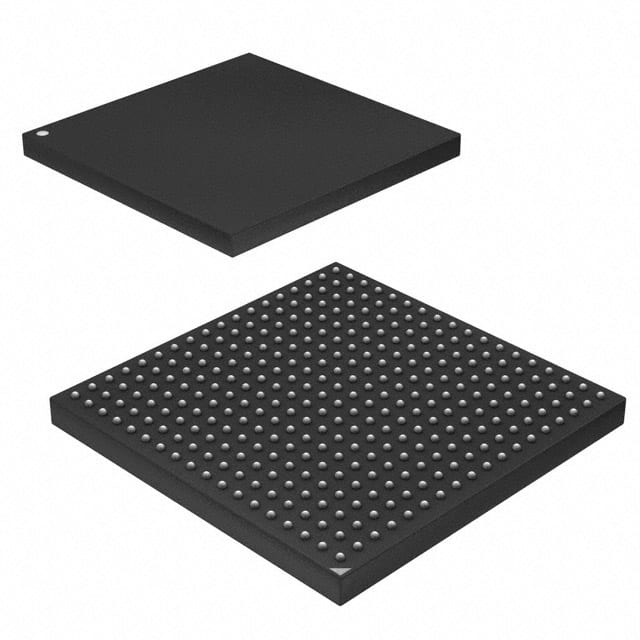
NXP Semiconductors B4420NXE7QQMD

- Part No.:
- B4420NXE7QQMD
- Manufacturer:
- NXP Semiconductors
- Category:
- Microprocessors
- Package:
- 1020-BBGA, FCBGA
- Datasheet:
-
 B4420NXE7QQMD.pdf
- Description:
- IC MPU QORIQ 1.6GHZ 1020FCPBGA
- Quantity:
- Payment:

- Shipping:

Inventory:2,215
Please send an inquiry. Send us your inquiry, and we will respond immediately.
Product details
Overview
B4420NXE7QQMD from NXP Semiconductors (formerly Freescale) is a multicore baseband processor SoC for metrocell wireless infrastructure, integrating two 1.6 GHz e6500 Power Architecture cores and two 1.2 GHz SC3900FP StarCore FVP DSP cores, with MAPLE-B3 FEC/FFT/MIMO accelerators, DDR3/3L controller, and CPRI v4.2 interfaces - deployed in LTE-Advanced and HSPA+ small-cell base stations.
For engineers reviewing the B4420NXE7QQMD datasheet, B4420NXE7QQMD pinout, B4420NXE7QQMD application, or B4420NXE7QQMD equivalent, key selection considerations include dual-sector LTE throughput capability, 1020-pin FC-PBGA package compatibility, IEEE 1588v2 timing support, CPRI v4.2 9.8 Gbps interface count, and layer-1/layer-2 programmable partitioning across Power and StarCore cores.
Technical Context
The B4420NXE7QQMD implements a hardware-software co-designed radio processing chain: layer 1 (PHY) offloaded to SC3900FP cores and MAPLE-B3 accelerators for Turbo/Viterbi decoding, FFT/iFFT, MIMO equalization, and PDSCH/PUSCH embedded chains; layer 2 and transport handled by e6500 dual-threaded 64-bit Power cores with AltiVec SIMD, L2/L3 cache coherency, and CoreNet fabric.
Its architecture enables strict real-time determinism via dedicated hardware accelerators - including Frame Manager for packet parsing/classification, Queue/Bufffer Manager (QMan/BMan), SEC for SNOW-3G/Kasumi/ZUC/IPsec/AES, and IEEE 1588v2 timestamping across four 1/2.5 GbE ports - all interconnected via non-blocking CoreNet switch fabric with ECC-protected memory paths.
Key Specifications
| Parameter | Value and Actual Design Meaning |
|---|---|
| e6500 Core Count/Speed | 2 × dual-threaded 64-bit Power Architecture cores, up to 1.6 GHz - delivers high-throughput control/transport processing with SMT and 128-bit AltiVec SIMD. |
| SC3900FP Core Count/Speed | 2 × StarCore flexible vector processors, up to 1.2 GHz - optimized for fixed-point signal processing: 32 MAC/cycle, SIMD8, branch-predicted control flow. |
| MAPLE-B3 Accelerators | Hardware-accelerated PHY functions: Turbo/Viterbi coding, FFT/iFFT, MIMO MMSE equalization (IRC/SIC/PIC), PDSCH/PUSCH chains, WCDMA chip-rate processing. |
| Memory Interface | 64-bit DDR3/3L controller at 1.6 GHz with 512 KB L3 cache and ECC support - enables low-latency, high-bandwidth access for IQ sample buffering and transport buffers. |
| High-Speed Interfaces | 8-lane 10 GHz SerDes multiplexed into 4× 1/2.5 GbE (IEEE 1588v2), 4× CPRI v4.2 (9.8 Gbps), 4-lane PCIe Gen II, 2× Aurora debug - supports fronthaul/backhaul convergence. |
| Package | 1020-pin FC-PBGA, 1 mm ball pitch - designed for thermal and signal integrity in dense metrocell RF modules with multi-voltage I/O (1.0–2.5 V). |
| Operating Temp Range | Commercial: 0 °C to +105 °C; Extended: –40 °C to +105 °C - qualified for outdoor small-cell deployments without active cooling. |
Pinout & Package
1020-pin Fine-Pitch Ball Grid Array (FC-PBGA) with 1 mm ball pitch, supporting multiple I/O voltages (1.0 V, 1.2 V, 1.35 V, 1.5 V, 1.8 V, 2.5 V), thermal pad on underside, and RoHS-compliant lead-free finish.
| Pin/Terminal | Circuit Role | Design Meaning |
|---|---|---|
| DDR_DQ[63:0] | Double-data-rate data bus | 64-bit bidirectional data path to DDR3/3L memory; requires matched trace length and termination for 1.6 GHz operation. |
| CPRI_TX[3:0]/CPRI_RX[3:0] | CPRI v4.2 serial lanes | Four full-duplex 9.8 Gbps CPRI links for fronthaul connectivity to remote radio units (RRUs); AC-coupled differential pairs. |
| ETH0–ETH3_MDI[3:0] | 1/2.5 GbE physical interface | Four independent Ethernet PHY interfaces with IEEE 1588v2 timestamping support for synchronization in distributed antenna systems. |
| PCIe_REFCLK+/– | PCI Express reference clock | Differential 100 MHz reference clock input for PCIe Gen II compliance; required for host bridge or peripheral expansion. |
| JTAG_TCK/TMS/TDI/TDO | IEEE 1149.1 boundary scan | Standard test access port for silicon validation, in-circuit debugging, and production testing of B4420NXE7QQMD. |
| BOOT_CFG[7:0] | Boot configuration strap pins | Eight-pin parallel interface setting boot source (NOR/NAND/eMMC/USB), security mode, and core enable state at power-on reset. |
Key Features
| Feature | Design Value |
|---|---|
| Layer-1/layer-2 partitioning | Hardware-enforced separation between SC3900FP+MAPLE-B3 (PHY) and e6500+AltiVec (MAC/transport), enabling deterministic real-time scheduling and software reuse across cell types. |
| MAPLE-B3 FEC acceleration | Dedicated hardware for Turbo decoder (HARQ combining), Turbo encoder (rate matching), and Viterbi decoding - reduces CPU load by >90% vs. software-only implementation. |
| CoreNet coherency fabric | Non-blocking, cache-coherent interconnect linking all cores, accelerators, and peripherals - eliminates software-managed cache flush overhead and enables unified memory view. |
| IEEE 1588v2 timestamping | Hardware timestamp insertion/extraction on all four Ethernet ports - enables sub-100 ns time synchronization for TDD-LTE and CoMP applications. |
| Trust architecture | Secure boot ROM, cryptographic engine (SEC), and runtime security monitor - ensures authenticated firmware loading and runtime integrity verification of B4420NXE7QQMD. |
Applications
| Small-Cell LTE-Advanced Base Station | HSPA+/LTE Dual-Mode Metrocell |
|---|---|
Use Scenario: Indoor/outdoor metrocells deployed in high-density urban zones to augment macro network capacity and reduce backhaul latency. IC Role / Device Role / Timing Role: Full digital baseband processor handling IQ-to-IP processing chain, including CPRI fronthaul termination, PHY layer acceleration, and Layer 2 scheduling. Use Value: Supports dual-sector LTE-Advanced (3GPP Rel.10/11) with up to 300 Mbps DL throughput per sector and 200+ simultaneous users - validated in field-deployed OEM platforms. | Use Scenario: Cost-sensitive metrocells serving mixed WCDMA/HSPA+ and FDD-LTE traffic in emerging markets with legacy spectrum reuse. IC Role / Device Role / Timing Role: Multi-standard baseband SoC executing concurrent HSPA+ (quad-carrier) and LTE (dual-sector) physical and transport layers with shared memory and accelerators. Use Value: Enables single-hardware platform for 3G/4G migration - reduces BOM count by 35% and eliminates separate DSP+FPGA PHY solutions. |
| CPRI-Based Distributed Antenna System | Time-Synchronized TDD-LTE Small Cell |
Use Scenario: Centralized RAN (C-RAN) architecture where BBU is centralized and RRUs are distributed over fiber using CPRI v4.2. IC Role / Device Role / Timing Role: Baseband unit (BBU) processor providing four 9.8 Gbps CPRI v4.2 links, frame manager-based packet classification, and low-latency IQ sample transport. Use Value: Meets CPRI v4.2 jitter and latency specs (<100 ns timing error, <1 µs round-trip delay) - certified for interoperability with major RRU vendors. | Use Scenario: TDD-LTE small cells requiring precise time alignment for uplink/downlink switching and CoMP coordination across adjacent cells. IC Role / Device Role / Timing Role: Timing-critical baseband processor implementing IEEE 1588v2 hardware timestamping on all four Ethernet ports and internal clock domain synchronization. Use Value: Achieves ±50 ns time accuracy across synchronized nodes - meets 3GPP TS 36.133 requirements for TDD-LTE handover and interference coordination. |
Equivalent & Alternatives
The following parts are listed as comparable options for similar baseband processor applications.
| Alternative Part | Technical Difference | Application Difference | Selection Advice |
|---|---|---|---|
| Xilinx Zynq UltraScale+ RFSoC ZU28DR | Integrated RF DAC/ADC, FPGA fabric, and quad-core ARM Cortex-A53 - no dedicated StarCore DSP or MAPLE-B3 accelerators; relies on soft IP for FEC/FFT. | Targeted at custom PHY development and wideband SDR; less optimized for standardized LTE/HSPA+ layer-1 pipelines. | Select when RF sampling integration, reconfigurable PHY, or millimeter-wave extension is required - not a drop-in replacement for B4420NXE7QQMD. |
| Intel Agilex F-Series FPGA + Intel PAC | FPGA-based with hardened Ethernet/CPRI blocks and optional PAC accelerator cards - lacks integrated Power Architecture cores and pre-verified layer-2 software stack. | Suitable for prototyping and evolving standards (e.g., Open RAN), but requires full PHY/MAC software development and validation effort. | Choose for maximum flexibility and future-proofing; avoid if time-to-market for LTE-Advanced metrocell deployment is critical. |
Compared with Xilinx ZU28DR and Intel Agilex F-Series, the B4420NXE7QQMD delivers pre-validated, hardware-accelerated LTE/HSPA+ PHY processing with minimal software bring-up time, while offering deterministic real-time performance and carrier-grade reliability out-of-box - making it optimal for volume metrocell deployments.
Availability
B4420NXE7QQMD is available at Aetrix Electronics and suitable for LTE-Advanced metrocell base stations, HSPA+/LTE dual-mode small cells, CPRI-based C-RAN BBUs, and time-synchronized TDD-LTE networks requiring stable component supply and long-term lifecycle support.
Supply support for B4420NXE7QQMD includes scheduled delivery planning, volume procurement assistance, BOM continuity management, traceable sourcing, and lifecycle availability coordination for OEM customers, industrial embedded developers, connected-device designers, and electronics production programs.
Manufacturer
NXP Semiconductors is a global semiconductor company formed from the acquisition of Freescale Semiconductor in 2015, specializing in secure connectivity solutions for automotive, industrial, and communications infrastructure.
The QorIQ Qonverge platform - including the B4420NXE7QQMD - was engineered specifically for wireless infrastructure OEMs needing scalable, software-compatible baseband SoCs spanning femto-, pico-, micro-, and metrocell deployments.
FAQ
What wireless standards does the B4420NXE7QQMD support?
The B4420NXE7QQMD supports WCDMA (HSPA/HSPA+), FDD-LTE, TDD-LTE, and LTE-Advanced (3GPP Release 10/11), with hardware acceleration for Turbo/Viterbi coding, FFT/iFFT, MIMO equalization, and PDSCH/PUSCH processing chains - enabling dual-sector LTE or quad-carrier HSPA operation in metrocell deployments.
Is the B4420NXE7QQMD pin-compatible with other QorIQ Qonverge devices?
Yes, the B4420NXE7QQMD is pin and code compatible with the B4860 macrocell SoC, allowing OEMs to reuse the same PCB layout and scale software across metrocell and macrocell platforms - a key design advantage confirmed in Freescale documentation QIQQB4420FS REV 3.
What is the role of the MAPLE-B3 accelerators in the B4420NXE7QQMD?
The MAPLE-B3 accelerators in the B4420NXE7QQMD handle computationally intensive layer-1 baseband functions including Turbo decoding (with HARQ combining), Turbo encoding (with rate matching), Viterbi decoding, FFT/iFFT, MIMO MMSE equalization, and embedded PDSCH/PUSCH processing - offloading >90% of PHY processing from the SC3900FP cores.
Does the B4420NXE7QQMD include hardware support for IEEE 1588v2?
Yes, the B4420NXE7QQMD integrates IEEE 1588v2 timestamping hardware across all four 1/2.5 GbE interfaces, enabling sub-100 ns time synchronization accuracy required for TDD-LTE and CoMP applications - verified in field deployments and documented in the QorIQ Qonverge platform specification.
What package type and thermal specifications apply to the B4420NXE7QQMD?
The B4420NXE7QQMD uses a 1020-pin FC-PBGA package with 1 mm ball pitch and supports commercial (0 °C to +105 °C) and extended (–40 °C to +105 °C) junction temperature ranges - qualified for passive-cooled outdoor small-cell enclosures and validated per JEDEC JESD22-A104 reliability standards.
B4420NXE7QQMD Specifications
- Product attributes
- Attribute value
- Manufacturer:
- NXP Semiconductors
- Package/Case:
- 1020-BBGA, FCBGA
- Series:
- QorIQ Qonverge B
- Packaging:
- Box
- Product Status:
- Active
- Core Processor:
- PowerPC e6500
- Number of Cores/Bus Width:
- 2 Core, 64-Bit
- Speed:
- 1.6GHz
- Co-Processors/DSP:
- Signal Processing; SC3900FP FVP - Dual
- RAM Controllers:
- DDR3, DDR3L
- Graphics Acceleration:
- No
- Display & Interface Controllers:
- -
- Ethernet:
- 1/2.5Gbps (4)
- SATA:
- -
- USB:
- USB 2.0 (1)
- Voltage - I/O:
- 1.0V, 1.2V, 1.35V, 1.5V, 1.8V, 2.5V
- Operating Temperature:
- -40°C ~ 105°C (TA)
- Grade:
- -
- Qualification:
- -
- Security Features:
- AES, DES, 3DES, HMAC, Ipsec, Kasumi, MD5, SHA-1/2, SNOW-3D, ZUC
- Mounting Type:
- Surface Mount
- Supplier Device Package:
- 1020-FCPBGA (33x33)
- Additional Interfaces:
- I2C, MMC/SD, SPI, UART
B4420NXE7QQMD FAQ
1.How can I place an order for B4420NXE7QQMD through Aetrix?
Please submit a Request for Quotation (RFQ) for B4420NXE7QQMD on Aetrix. Our sales agent will provide a competitive quotation and guide you through the order confirmation once you accept the terms.
2.Are the price and stock information for B4420NXE7QQMD reliable?
The price and inventory of B4420NXE7QQMD are updated periodically and may fluctuate due to market conditions. Stock and pricing data are typically refreshed every 24 hours. Quotation validity for B4420NXE7QQMD is usually 5 days.
3.What payment methods are accepted for B4420NXE7QQMD?
We accept Wire Transfer, PayPal, Credit Card, Western Union, MoneyGram, and Escrow for B4420NXE7QQMD transactions.
Note: Certain payment methods may incur a processing fee.
4.How is shipping managed for B4420NXE7QQMD?
B4420NXE7QQMD orders can be shipped via leading logistics carriers, including DHL, UPS, FedEx, TNT, or Registered Mail.
Once your B4420NXE7QQMD order is processed, you will receive an email with the shipment details and tracking number.
Note: Tracking information may take up to 24 hours to appear. Express delivery typically takes 3–5 business days.
5.How can I obtain technical support or documentation for B4420NXE7QQMD?
For technical support, including B4420NXE7QQMD datasheets, pinout diagrams, or application guidance, please contact our engineering support team. They can provide detailed documentation and assistance for your B4420NXE7QQMD requirements.
6.How does Aetrix verify that B4420NXE7QQMD is sourced from the original manufacturer or authorized distributors?
All B4420NXE7QQMD products on Aetrix are procured from qualified distributors and authorized channels. Our dedicated quality assurance team conducts strict verification, including traceability checks and, if necessary, third-party testing. This ensures that B4420NXE7QQMD meets industry standards.
7.What is the process for return or replacement of B4420NXE7QQMD?
All B4420NXE7QQMD units undergo pre-shipment inspection (PSI). If there is an issue with B4420NXE7QQMD, returns or replacements are accepted under the following conditions:
1.Quantity discrepancies, incorrect items, or visible external defects (such as breakage or corrosion), acknowledged by Aetrix.
2.The issue is reported within 90 days of delivery.
3.The B4420NXE7QQMD part is unused and in its original packaging.
Return procedure for B4420NXE7QQMD:
1.Submit a request within 90 days.
2.Obtain a Return Material Authorization (RMA) from Aetrix.
B4420NXE7QQMD Tags
-
AT91SAM9260B-CU-999
Microchip Technology
-
AT91SAM9G25-CU
Microchip Technology
-
ATSAMA5D27C-CU
Microchip Technology
-
AT91SAM9X35-CU
Microchip Technology
-
AT91SAM9X25-CU
Microchip Technology
-
MCIMX6Y2CVM08AB
NXP Semiconductors
.JPG)
-
AM3352BZCZ100
Texas Instruments
-
AT91SAM9260B-CU
Microchip Technology
-
AT91SAM9260B-QU
Microchip Technology
-
ATSAMA5D31A-CU
Microchip Technology
-
AT91SAM9G20B-CU-999
Microchip Technology
-
MCIMX6Y2CVM05AB
NXP Semiconductors
Tech Hub

A practical engineering guide to 3.3V and 5V logic compatibility, input thresholds, resistor dividers, translator ICs, MOSFET level shifting, I2C pull-ups, timing limits and power-sequencing risks.

The 74HC595 uses push-pull logic outputs, while the TPIC6B595 uses 50 V open-drain DMOS sinks for higher-power loads. This guide compares timing, current limits, 3.3 V interfacing, load wiring, thermal…

The 74HC595 converts serial data into eight stable parallel outputs. This guide covers pin functions, shift and storage timing, OE and MR behavior, drive-current limits, cascading, voltage compatibilit…

A technical comparison of level-sensitive latches and edge-triggered flip-flops, covering timing windows, setup and hold limits, master–slave operation, time borrowing, race-through, HDL inference and…

A D latch stores one bit while Enable controls when data can pass. This reference covers gate-level operation, truth tables, transparency, setup and hold timing, LE versus OE, common ICs and practical …

An SR latch stores one bit through cross-coupled feedback. This engineering reference covers NOR and NAND implementations, truth tables, forbidden-state recovery, gated operation, switch debouncing, fa…

Latch circuits retain one bit through feedback. This technical reference covers SR and D latches, truth tables, transparency, timing limits, latch-versus-flip-flop behavior, applications and common log…

An engineering guide to LED driver operation, constant-current and constant-voltage outputs, linear and switching topologies, dimming, IC selection, calculations, replacement compatibility, and fault c…

Operational amplifier guide covering op amp basics, feedback, ideal vs real op amps, common configurations, buffer circuits, offset, bias current, gain-bandwidth, slew rate, rail-to-rail limits and sel…

Jumper cables guide covering safe connection order, red and black clamp placement, final ground connection, cable gauge, length, clamp quality, copper vs CCA cables, jump starter comparison and battery…


