
 My Inquiry
 My Account


STMicroelectronics BALF-SPI2-01D3
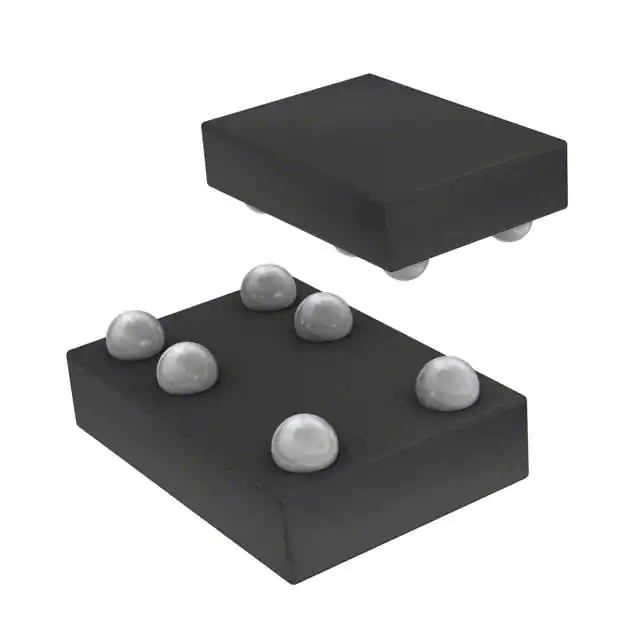
- Part No.:
- BALF-SPI2-01D3
- Manufacturer:
- STMicroelectronics
- Category:
- Balun
- Package:
- 6-UFBGA, FCBGA
- Datasheet:
-
 BALF-SPI2-01D3.pdf
- Description:
- BALUN 868MHZ-928MHZ 50/50 6UFBGA
- Quantity:
- Payment:

- Shipping:

Inventory:20,587
Please send an inquiry. Send us your inquiry, and we will respond immediately.
Product details
Overview
BALF-SPI2-01D3 from STMicroelectronics is an ultra-miniature flip-chip balun filter integrating matching network and harmonic suppression, specifically conjugate-matched to the ST S2-LP RF transceiver for 860–930 MHz operation. It delivers 2.0 dB typical RX insertion loss, <1.6 dB amplitude imbalance, <9° phase imbalance, 50 Ω antenna port impedance, and 45 dB attenuation at 2fo - enabling compact sub-GHz IoT node front-ends.
For engineers reviewing the BALF-SPI2-01D3 datasheet, BALF-SPI2-01D3 pinout, BALF-SPI2-01D3 application, or BALF-SPI2-01D3 equivalent, key selection criteria include its 6-bump flip-chip footprint (2.10 × 1.55 mm), 620 µm max profile after reflow, ECOPACK®2 compliance, and verified integration with ST S2-LP evaluation boards.
Technical Context
This device implements a monolithic IPD (Integrated Passive Device) structure on non-conductive glass substrate, enabling precise impedance transformation between the differential RX port of the S2-LP and single-ended antenna path while simultaneously filtering harmonics up to 7fo. Its architecture integrates both balun functionality and bandpass filtering in one passive component.
The 6-bump flip-chip configuration places TX, RXP, RXN, ANT, and two GND terminals in fixed spatial layout optimized for minimal parasitic coupling. Matching is fixed and not tunable - designed exclusively for nominal 50 Ω antenna interface and S2-LP's differential 100 Ω RX input / 50 Ω TX output.
Key Specifications
| Parameter | Value and Actual Design Meaning |
|---|---|
| Frequency Range | 860–930 MHz bandwidth - covers EU 868 MHz and US 915 MHz ISM bands without retuning |
| RX Insertion Loss | 2.0 dB typ - directly impacts receiver sensitivity; lower than discrete LC solutions by ~0.5 dB |
| TX Filter Attenuation @ 2fo | 45 dB min - suppresses second harmonic to meet ETSI EN 300 220 spectral mask requirements |
| Amplitude Imbalance | 1.6 dB typ - ensures <0.5 dB I/Q gain error in S2-LP's differential RX path |
| Phase Imbalance | 9° typ - maintains <2° quadrature error critical for OOK/GFSK demodulation fidelity |
| Max Profile After Reflow | 620 µm - enables use in ultra-thin wearables and coin-cell-powered sensors |
| ESD Rating (HBM) | 2000 V - protects against handling damage during PCB assembly without external TVS |
Pinout & Package
Package: Flip-Chip 6 bumps (2.10 × 1.55 × 0.63 mm), ECOPACK®2-compliant, glass substrate IPD technology.
| Pin/Terminal | Circuit Role | Design Meaning |
|---|---|---|
| TX | Single-ended transmitter output | Connects to S2-LP's 50 Ω TX pin; feeds filtered RF to antenna via ANT |
| RXP | Differential RX positive input | One leg of S2-LP's 100 Ω differential RX port; requires matched trace length to RXN |
| RXN | Differential RX negative input | Second leg of S2-LP's differential RX port; symmetry critical for imbalance performance |
| ANT | Single-ended antenna interface | 50 Ω nominal port; connects directly to PCB antenna or matching network |
| GND (×2) | RF ground reference | Two dedicated ground bumps - must be connected to solid RF ground plane with minimum via inductance |
Key Features
| Feature | Design Value |
|---|---|
| Conjugate matching to ST S2-LP | Eliminates need for external matching components - reduces BOM count by ≥4 passives |
| Integrated harmonic filter | Provides ≥45 dB rejection at 2fo - meets regulatory emission limits without added filters |
| Flip-chip 6-bump layout | Enables 2.1 × 1.55 mm footprint - saves >60% board area vs. QFN baluns |
| Low-profile construction | 620 µm max height - supports conformal coating and mechanical sealing in compact enclosures |
| ECOPACK®2 compliance | Lead-free, halogen-free, RoHS-compliant - qualified for industrial and medical applications |
Applications
| Smart Utility Meters | Wireless Sensor Nodes |
|---|---|
Use Scenario: Sub-GHz AMR (Automatic Meter Reading) nodes transmitting burst telemetry over 1–5 km in dense urban environments. IC Role / Device Role / Timing Role: Balun + harmonic filter between S2-LP transceiver and PCB trace antenna or chip antenna. Use Value: Enables certified ETSI-compliant transmission with 2.0 dB RX loss - preserving 10+ years battery life in lithium-thionyl chloride powered meters. | Use Scenario: Battery-powered environmental sensors (temp/humidity/pressure) deployed in agricultural fields or industrial plants. IC Role / Device Role / Timing Role: Single-component RF interface providing matched 50 Ω antenna port and differential RX termination for S2-LP. Use Value: Reduces RF section area to <3 mm² - allowing full sensor + MCU + battery in <15 cm³ enclosure. |
| Asset Trackers | Home Automation Hubs |
Use Scenario: GPS-denied indoor/outdoor asset tags using LoRa-like GFSK modulation at 868/915 MHz. IC Role / Device Role / Timing Role: Integrated balun-filter ensuring clean spectral output and stable RX sensitivity across temperature (-40°C to +105°C). Use Value: Maintains <1.6 dB amplitude imbalance over full operating range - preventing packet loss due to I/Q distortion. | Use Scenario: Multi-protocol smart home hubs supporting sub-GHz wireless alongside BLE/Wi-Fi. IC Role / Device Role / Timing Role: Front-end interface for S2-LP-based proprietary mesh networking layer. Use Value: 620 µm profile allows co-location with Wi-Fi module under shared metal shield - no RF crosstalk penalty. |
Availability
BALF-SPI2-01D3 is available at Aetrix Electronics and suitable for smart utility meters, wireless sensor nodes, and asset trackers requiring stable component supply, high-volume tape-and-reel delivery, and long-term lifecycle assurance.
Supply support for BALF-SPI2-01D3 includes scheduled delivery planning, volume procurement assistance, BOM continuity management, traceable sourcing, and lifecycle availability coordination for OEM customers, industrial embedded developers, connected-device designers, and electronics production programs.
Manufacturer
STMicroelectronics is a global semiconductor leader delivering intelligent power, sensing, connectivity, and microcontroller solutions for automotive, industrial, and consumer markets.
BALF-SPI2-01D3 belongs to ST's IPD balun filter product line - engineered to replace discrete matching networks in sub-GHz RF designs, targeting space-constrained IoT endpoints with strict regulatory compliance needs.
FAQ
What is the recommended PCB land pattern for BALF-SPI2-01D3?
The datasheet specifies a 220 µm copper pad diameter with 320 µm solder mask opening and 220 µm stencil aperture for 3-mil stencils. Clearance of 250 µm around pads is required for optimal sensitivity. A 1000 µm trace length between S2-LP QFN center and balun IPD center is mandatory to maintain impedance integrity.
Can BALF-SPI2-01D3 be used with RFICs other than ST S2-LP?
No - its impedance matching is fixed and optimized exclusively for the S2-LP's differential RX (100 Ω) and single-ended TX (50 Ω) ports. Using it with other transceivers results in >10 dB return loss degradation and harmonic filter misalignment, violating spectral masks.
What reflow profile should be used for this flip-chip device?
ST specifies a peak temperature of 240–245 °C for 60 seconds (max 90 s), ramp-up rate ≤3 °C/s, and cooling rate ≤6 °C/s. Air convection must be minimized to prevent component shift. The 0.9 °C/s preheat slope ensures uniform thermal distribution across the glass substrate.
Is external ESD protection needed despite the 2000 V HBM rating?
No - the 2000 V HBM rating is sufficient for standard SMT handling and field operation in Class 1B environments. ST validates this rating per JESD22-A114-C with all I/O tested individually while others are grounded, making external TVS diodes unnecessary in typical IoT deployments.
BALF-SPI2-01D3 Specifications
- Product attributes
- Attribute value
- Manufacturer:
- STMicroelectronics
- Series:
- -
- Package/Case:
- 6-UFBGA, FCBGA
- Packaging:
- Tape & Reel (TR)
- Product Status:
- Active
- Frequency Range:
- 868MHz ~ 928MHz
- Impedance - Unbalanced/Balanced:
- 50 / 50Ohm
- Phase Difference:
- 7°
- Insertion Loss (Max):
- 2.1dB
- Return Loss (Min):
- 10dB
- Mounting Type:
- Surface Mount
BALF-SPI2-01D3 FAQ
1.How can I place an order for BALF-SPI2-01D3 through Aetrix?
Please submit a Request for Quotation (RFQ) for BALF-SPI2-01D3 on Aetrix. Our sales agent will provide a competitive quotation and guide you through the order confirmation once you accept the terms.
2.Are the price and stock information for BALF-SPI2-01D3 reliable?
The price and inventory of BALF-SPI2-01D3 are updated periodically and may fluctuate due to market conditions. Stock and pricing data are typically refreshed every 24 hours. Quotation validity for BALF-SPI2-01D3 is usually 5 days.
3.What payment methods are accepted for BALF-SPI2-01D3?
We accept Wire Transfer, PayPal, Credit Card, Western Union, MoneyGram, and Escrow for BALF-SPI2-01D3 transactions.
Note: Certain payment methods may incur a processing fee.
4.How is shipping managed for BALF-SPI2-01D3?
BALF-SPI2-01D3 orders can be shipped via leading logistics carriers, including DHL, UPS, FedEx, TNT, or Registered Mail.
Once your BALF-SPI2-01D3 order is processed, you will receive an email with the shipment details and tracking number.
Note: Tracking information may take up to 24 hours to appear. Express delivery typically takes 3–5 business days.
5.How can I obtain technical support or documentation for BALF-SPI2-01D3?
For technical support, including BALF-SPI2-01D3 datasheets, pinout diagrams, or application guidance, please contact our engineering support team. They can provide detailed documentation and assistance for your BALF-SPI2-01D3 requirements.
6.How does Aetrix verify that BALF-SPI2-01D3 is sourced from the original manufacturer or authorized distributors?
All BALF-SPI2-01D3 products on Aetrix are procured from qualified distributors and authorized channels. Our dedicated quality assurance team conducts strict verification, including traceability checks and, if necessary, third-party testing. This ensures that BALF-SPI2-01D3 meets industry standards.
7.What is the process for return or replacement of BALF-SPI2-01D3?
All BALF-SPI2-01D3 units undergo pre-shipment inspection (PSI). If there is an issue with BALF-SPI2-01D3, returns or replacements are accepted under the following conditions:
1.Quantity discrepancies, incorrect items, or visible external defects (such as breakage or corrosion), acknowledged by Aetrix.
2.The issue is reported within 90 days of delivery.
3.The BALF-SPI2-01D3 part is unused and in its original packaging.
Return procedure for BALF-SPI2-01D3:
1.Submit a request within 90 days.
2.Obtain a Return Material Authorization (RMA) from Aetrix.
BALF-SPI2-01D3 Tags

-
2450BL15B0100001E
Johanson Technology Inc.
-
0900BL15D0050001E
Johanson Technology Inc.
-
0900PC16J0042001E
Johanson Technology Inc.
-
2450BM15A0002001E
Johanson Technology Inc.
-
2450BM14G0011001T
Johanson Technology Inc.
-
BD0810N50100AHF
TTM Technologies, Inc.
-
1720BL15B0050001E
Johanson Technology Inc.
-
0900PC15A0036001E
Johanson Technology Inc.
-
0868BM15C0001001E
Johanson Technology Inc.
-
0915BM15A0001001E
Johanson Technology Inc.
-
HHM1776B3
TDK Corporation
-
2450BM14E0003001T
Johanson Technology Inc.
Tech Hub

A practical engineering and sourcing framework covering lifecycle verification, lifetime-buy calculations, replacement qualification, supplier checks and counterfeit-risk controls.

TTL and CMOS logic families differ in thresholds, loading, output drive, power and timing. This engineering guide compares 74HC and 74HCT, calculates noise margins and checks 3.3 V/5 V compatibility.

A practical engineering guide to 3.3V and 5V logic compatibility, input thresholds, resistor dividers, translator ICs, MOSFET level shifting, I2C pull-ups, timing limits and power-sequencing risks.

The 74HC595 uses push-pull logic outputs, while the TPIC6B595 uses 50 V open-drain DMOS sinks for higher-power loads. This guide compares timing, current limits, 3.3 V interfacing, load wiring, thermal…

The 74HC595 converts serial data into eight stable parallel outputs. This guide covers pin functions, shift and storage timing, OE and MR behavior, drive-current limits, cascading, voltage compatibilit…

A technical comparison of level-sensitive latches and edge-triggered flip-flops, covering timing windows, setup and hold limits, master–slave operation, time borrowing, race-through, HDL inference and…

A D latch stores one bit while Enable controls when data can pass. This reference covers gate-level operation, truth tables, transparency, setup and hold timing, LE versus OE, common ICs and practical …

An SR latch stores one bit through cross-coupled feedback. This engineering reference covers NOR and NAND implementations, truth tables, forbidden-state recovery, gated operation, switch debouncing, fa…

Latch circuits retain one bit through feedback. This technical reference covers SR and D latches, truth tables, transparency, timing limits, latch-versus-flip-flop behavior, applications and common log…

An engineering guide to LED driver operation, constant-current and constant-voltage outputs, linear and switching topologies, dimming, IC selection, calculations, replacement compatibility, and fault c…


