
 My Inquiry
 My Account


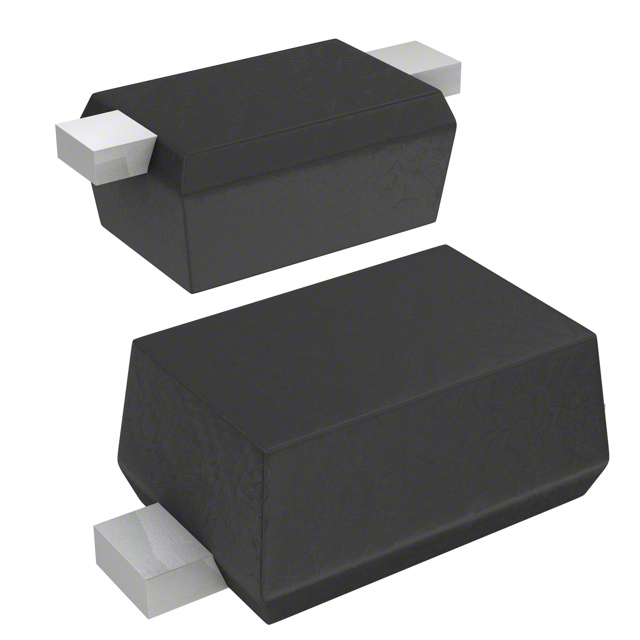
Infineon Technologies BAT2402LSE6327XTSA1
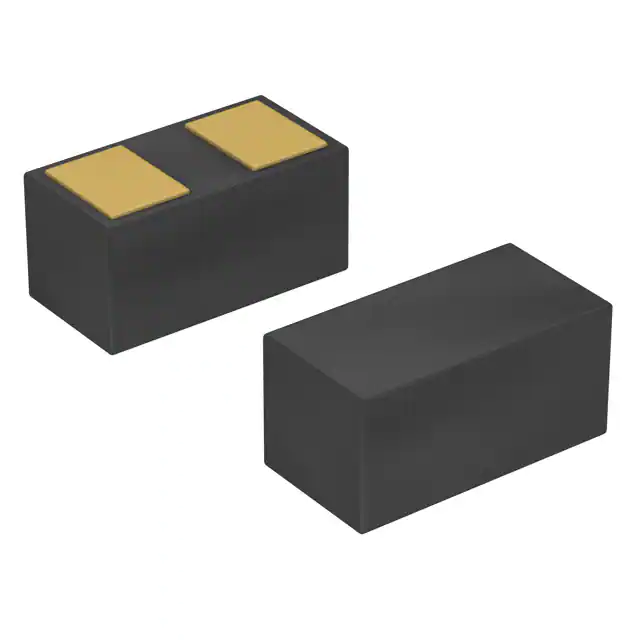
- Part No.:
- BAT2402LSE6327XTSA1
- Manufacturer:
- Infineon Technologies
- Category:
- RF Diodes
- Package:
- 0201 (0603 Metric)
- Datasheet:
-
 BAT2402LSE6327XTSA1.pdf
- Description:
- DIODE SCHOTTKY 4V 100MW TSSLP-2
- Quantity:
- Payment:

- Shipping:

Inventory:18,084
Please send an inquiry. Send us your inquiry, and we will respond immediately.
Product details
Overview
BAT2402LSE6327XTSA1 from Infineon is a silicon RF Schottky diode optimized for mixer and detector functions up to 24 GHz, featuring 0.2 pF junction capacitance at 0 V, 0.2 nH series inductance, and 0.25 V forward voltage at 1 mA - deployed in automotive radar front-ends and 5G mmWave receiver chains.
For engineers reviewing the BAT2402LSE6327XTSA1 datasheet, BAT2402LSE6327XTSA1 pinout, BAT2402LSE6327XTSA1 application, or BAT2402LSE6327XTSA1 equivalent, key selection criteria include RF insertion loss at 24 GHz, reverse breakdown voltage margin, thermal resistance to solder point (675 K/W), and TSSLP-2-1 footprint compatibility with high-density RF PCB layouts.
Technical Context
This N-type low-barrier Schottky diode integrates an on-chip guard ring for over-voltage protection and operates as a zero-bias detector or passive mixer core in unpowered RF signal paths. Its low junction capacitance (0.2 pF) and minimal series inductance (0.2 nH) preserve impedance matching above 18 GHz.
The device is characterized in a defined test fixture per Infineon's RF measurement methodology, with electrical specs validated at 25°C ambient and specified for industrial temperature range (–50°C to +150°C). Forward voltage exhibits <0.05 V drift across that full range at 1 mA.
Key Specifications
| Parameter | Value and Actual Design Meaning |
|---|---|
| Reverse Breakdown Voltage | VBR = 4 V - sets maximum RF input swing before conduction in detector mode |
| Junction Capacitance | C = 0.2 pF @ 0 V, 1 MHz - enables broadband matching up to 24 GHz without tuning stubs |
| Series Inductance | LS = 0.2 nH - minimizes parasitic reactance in series-connected mixer legs |
| Forward Voltage | VF = 0.25 V @ 1 mA - ensures low-threshold detection sensitivity in zero-bias operation |
| Differential Resistance | RF = 8 Ω @ 10 mA - defines conversion loss floor in fundamental mixer configurations |
| Thermal Resistance | RthJS = 675 K/W - limits junction rise to ≤30°C above solder point at 100 mW dissipation |
Pinout & Package
TSSLP-2-1 package: 0.62 mm × 0.32 mm × 0.31 mm, leadless, 0201 footprint, RoHS/halogen-free, ESD-sensitive (Class 1C).
| Pin/Terminal | Circuit Role | Design Meaning |
|---|---|---|
| Anode (top metal) | RF signal input / detector cathode reference | Connected to local oscillator or RF antenna path; low-inductance interface critical for >18 GHz stability |
| Cathode (bottom metal) | DC ground / IF output return | Direct solder attachment to PCB ground plane; serves as thermal and RF reference node |
Key Features
| Feature | Design Value |
|---|---|
| On-chip guard ring | Provides intrinsic over-voltage protection without external TVS, enabling robustness in pulsed radar environments |
| Low barrier height | Enables sub-0.3 V forward conduction - essential for zero-bias detector linearity and noise figure |
| 0201-compatible footprint | Supports automated placement in high-frequency modules where trace length and via count must be minimized |
| Industrial qualification | JEDEC JESD22-A108 qualified for –50°C to +150°C operation - suitable for under-hood radar sensors |
Applications
| Radar Front-End Detector | 5G mmWave Receiver Mixer |
|---|---|
Use Scenario: Automotive 77 GHz radar transceiver detecting object distance/velocity via FMCW modulation. IC Role / Device Role / Timing Role: Zero-bias RF detector converting reflected chirp signals to baseband IF voltage. Use Value: 0.2 pF capacitance and 0.2 nH inductance maintain >20 dB return loss across 76–81 GHz band. |
Use Scenario: Fixed wireless access unit receiving 24–29.5 GHz 5G NR signals in outdoor small cells. IC Role / Device Role / Timing Role: Passive double-balanced mixer core translating RF to 1–3 GHz IF with local oscillator injection. Use Value: 8 Ω differential resistance and 4 V breakdown enable >12 dBm LO drive tolerance and low conversion loss. |
| WiGig 60 GHz Transceiver | Test Equipment Signal Sampling |
Use Scenario: IEEE 802.11ad/ay client device performing beamforming and channel estimation. IC Role / Device Role / Timing Role: RF envelope detector sampling received packet preamble for RSSI and timing recovery. Use Value: 0.25 V forward voltage ensures >60 dB dynamic range at 60 GHz with no DC bias circuitry. |
Use Scenario: Vector network analyzer internal calibration module measuring S-parameter phase accuracy. IC Role / Device Role / Timing Role: Precision RF sampling diode in reflectometer bridge for incident/reflected wave separation. Use Value: Guard ring and 675 K/W RthJS sustain repeatable DC response during 100 ms RF bursts at 24 GHz. |
Equivalent & Alternatives
The following parts are listed as comparable options for similar RF Schottky detector/mixer applications.
| Alternative Part | Technical Difference | Application Difference | Selection Advice |
|---|---|---|---|
| SKY13370-374LF | Higher C = 0.35 pF, lower VBR = 3.5 V, GaAs process | Better high-frequency noise figure but reduced power handling in pulsed radar | Prefer for low-noise 5G FR2 receivers; avoid in automotive radar with >4 V peak RF swing |
| BAR63-02VH6327XTSA1 | Higher VF = 0.35 V @ 1 mA, same TSSLP-2-1, Si process | Lower sensitivity in zero-bias detection but improved reverse leakage stability | Select when ambient temperature exceeds +125°C and leakage <1 μA at 1 V is required |
Compared with SKY13370-374LF and BAR63-02VH6327XTSA1, BAT2402LSE6327XTSA1 delivers the lowest combined C×LS product (0.04 pF·nH) for widest usable bandwidth, while maintaining higher breakdown margin than GaAs alternatives and lower forward voltage than legacy Si Schottkys.
Availability
BAT2402LSE6327XTSA1 is available at Aetrix Electronics and suitable for automotive radar modules, 5G mmWave infrastructure, and WiGig client devices requiring stable component supply with full JEDEC industrial qualification and traceable lot-level data.
Supply support for BAT2402LSE6327XTSA1 includes scheduled delivery planning, volume procurement assistance, BOM continuity management, traceable sourcing, and lifecycle availability coordination for OEM customers, industrial embedded developers, connected-device designers, and electronics production programs.
Manufacturer
Infineon Technologies AG is a German semiconductor manufacturer specializing in power management, automotive ICs, and RF components, with global manufacturing and quality certification to ISO/TS 16949 and IECQ QC 080000.
BAT2402LSE6327XTSA1 belongs to Infineon's RF Schottky diode product line, engineered specifically for high-frequency detector and mixer roles in millimeter-wave systems where low parasitics and thermal robustness are non-negotiable.
FAQ
Is BAT2402LSE6327XTSA1 suitable for zero-bias detector operation?
Yes. With a typical forward voltage of 0.25 V at 1 mA and low junction capacitance (0.2 pF), it operates effectively as a zero-bias detector in RF signal paths up to 24 GHz. Its low barrier height and guard ring ensure stable rectification without external biasing, validated in Infineon's application note AN245 for FMCW radar detectors.
What is the recommended PCB layout for optimal 24 GHz performance?
Use coplanar waveguide routing with 50 Ω characteristic impedance, direct cathode connection to solid ground plane via multiple thermal vias, and minimize pad extensions beyond the 0.62 mm × 0.32 mm TSSLP-2-1 outline. Avoid solder mask over pads and maintain ≥0.3 mm clearance from adjacent traces to suppress coupling.
Does BAT2402LSE6327XTSA1 require special ESD handling?
Yes. It is classified as Class 1C ESD-sensitive (HBM <500 V). Handling requires grounded wrist straps, dissipative mats, and ionized air workstations. The device lacks integrated ESD protection beyond its guard ring, so PCB-level TVS is recommended for systems exposed to >2 kV contact discharge per IEC 61000-4-2.
Can BAT2402LSE6327XTSA1 replace BAT15-02LS in existing designs?
No. BAT15-02LS has higher capacitance (0.3 pF) and forward voltage (0.32 V), resulting in ~3 dB higher conversion loss at 24 GHz. While both use TSSLP-2-1, the BAT2402LSE6327XTSA1's lower C and VF improve sensitivity but may alter bias point in active mixer topologies - redesign validation is required.
BAT2402LSE6327XTSA1 Specifications
- Product attributes
- Attribute value
- Manufacturer:
- Infineon Technologies
- Series:
- -
- Package/Case:
- 0201 (0603 Metric)
- Packaging:
- Tape & Reel (TR)
- Product Status:
- Active
- Diode Type:
- Schottky - Single
- Voltage - Peak Reverse (Max):
- 4V
- Current - Max:
- 110 mA
- Capacitance @ Vr, F:
- 0.23pF @ 0V, 1MHz
- Resistance @ If, F:
- -
- Power Dissipation (Max):
- 100 mW
- Operating Temperature:
- 150°C (TJ)
- Grade:
- -
- Qualification:
- -
- Supplier Device Package:
- PG-TSSLP-2-1
BAT2402LSE6327XTSA1 FAQ
1.How can I place an order for BAT2402LSE6327XTSA1 through Aetrix?
Please submit a Request for Quotation (RFQ) for BAT2402LSE6327XTSA1 on Aetrix. Our sales agent will provide a competitive quotation and guide you through the order confirmation once you accept the terms.
2.Are the price and stock information for BAT2402LSE6327XTSA1 reliable?
The price and inventory of BAT2402LSE6327XTSA1 are updated periodically and may fluctuate due to market conditions. Stock and pricing data are typically refreshed every 24 hours. Quotation validity for BAT2402LSE6327XTSA1 is usually 5 days.
3.What payment methods are accepted for BAT2402LSE6327XTSA1?
We accept Wire Transfer, PayPal, Credit Card, Western Union, MoneyGram, and Escrow for BAT2402LSE6327XTSA1 transactions.
Note: Certain payment methods may incur a processing fee.
4.How is shipping managed for BAT2402LSE6327XTSA1?
BAT2402LSE6327XTSA1 orders can be shipped via leading logistics carriers, including DHL, UPS, FedEx, TNT, or Registered Mail.
Once your BAT2402LSE6327XTSA1 order is processed, you will receive an email with the shipment details and tracking number.
Note: Tracking information may take up to 24 hours to appear. Express delivery typically takes 3–5 business days.
5.How can I obtain technical support or documentation for BAT2402LSE6327XTSA1?
For technical support, including BAT2402LSE6327XTSA1 datasheets, pinout diagrams, or application guidance, please contact our engineering support team. They can provide detailed documentation and assistance for your BAT2402LSE6327XTSA1 requirements.
6.How does Aetrix verify that BAT2402LSE6327XTSA1 is sourced from the original manufacturer or authorized distributors?
All BAT2402LSE6327XTSA1 products on Aetrix are procured from qualified distributors and authorized channels. Our dedicated quality assurance team conducts strict verification, including traceability checks and, if necessary, third-party testing. This ensures that BAT2402LSE6327XTSA1 meets industry standards.
7.What is the process for return or replacement of BAT2402LSE6327XTSA1?
All BAT2402LSE6327XTSA1 units undergo pre-shipment inspection (PSI). If there is an issue with BAT2402LSE6327XTSA1, returns or replacements are accepted under the following conditions:
1.Quantity discrepancies, incorrect items, or visible external defects (such as breakage or corrosion), acknowledged by Aetrix.
2.The issue is reported within 90 days of delivery.
3.The BAT2402LSE6327XTSA1 part is unused and in its original packaging.
Return procedure for BAT2402LSE6327XTSA1:
1.Submit a request within 90 days.
2.Obtain a Return Material Authorization (RMA) from Aetrix.
BAT2402LSE6327XTSA1 Tags
.jpg)
-
BAP70-02,115
NXP USA Inc.
-
SMP1321-040LF
Skyworks Solutions Inc.
-
NSVR351SDSA3T1G
onsemi
-
BAT6302VH6327XTSA1
Infineon Technologies
-
SMP1307-011LF
Skyworks Solutions Inc.
-
SMP1345-040LF
Skyworks Solutions Inc.
-
BAT1503WE6327HTSA1
Infineon Technologies
-
SMS7630-005LF
Skyworks Solutions Inc.
-
SMP1322-040LF
Skyworks Solutions Inc.
-
SMS7621-040LF
Skyworks Solutions Inc.
-
SMS7621-079LF
Skyworks Solutions Inc.
-
SMS7630-040LF
Skyworks Solutions Inc.
Tech Hub

18650 battery guide covering lithium-ion cell basics, 3.6V/3.7V voltage, 4.2V charging, mAh and Wh capacity, protected cells, chargers, BMS, series-parallel packs, holders, welding and sourcing checks.…

Hall effect sensor guide covering working principle, linear and digital sensors, Arduino circuits, current sensing, speed detection, automotive applications, A3144 examples, signal filtering and datash…

Product Change Notification guide for electronic components, covering PCN meaning, PCN vs PDN/EOL, common change types, risk levels, form-fit-function review, engineering validation, BOM control, LTB/L…

A practical guide to blend door actuators, covering HVAC function, symptoms, location, AC and heater issues, reset and calibration, replacement cost, electrical diagnosis, compatibility checks, and rep…

Engineering guide to Raspberry Pi alternatives, covering chip-level differences, Orange Pi, ROCK, Jetson, Banana Pi, NanoPi, Compute Module, Pico, GPIO, camera, HAT compatibility, and replacement risks…
Engineering guide to dynamic load response testing for high-current buck converters, covering load step setup, slew rate, Vcore undershoot, overshoot, recovery time, probe location, output capacitors a…
Engineering guide to output capacitor selection for ASIC Vcore rails, covering bulk capacitors, polymer capacitors, MLCC decoupling, DC bias, ESR, ESL, placement, transient response and substitution ri…
Engineering guide to high-current ASIC Vcore rails, covering 12-phase buck architecture, PMBus control, dynamic load testing, output capacitor networks, smart power stage selection, thermal design and …
Voltage regulator guide covering linear, LDO, 7805, Zener, adjustable, buck, VRM and alternator regulators, with design checks, testing methods, troubleshooting and datasheet-based selection.
Amplifier guide covering voltage, current and power amplification, gain, feedback, amplifier classes, audio and RF applications, op-amp circuits, transimpedance amplifiers, datasheet selection and trou…


