
 My Inquiry
 My Account


onsemi BC237
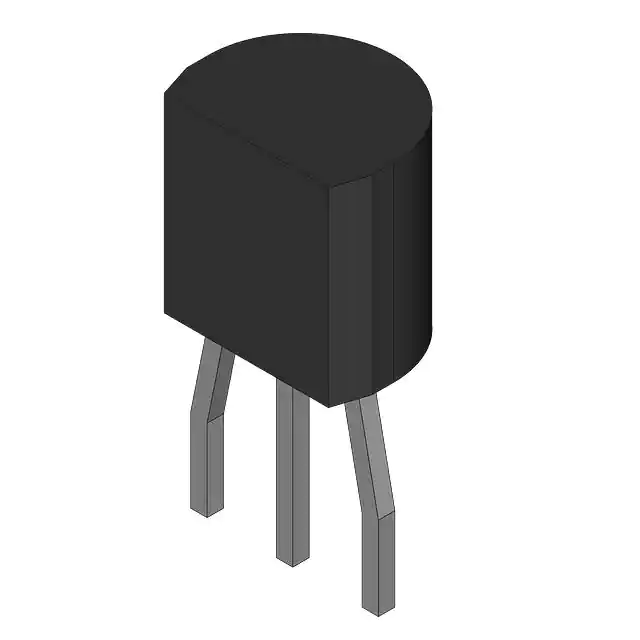
- Part No.:
- BC237
- Manufacturer:
- onsemi
- Category:
- Single Bipolar Transistors
- Package:
- TO-226-3, TO-92-3 Long Body
- Datasheet:
-
 BC237.pdf
- Description:
- TRANS NPN 45V 0.1A TO92
- Quantity:
- Payment:

- Shipping:

Inventory:7,963
Please send an inquiry. Send us your inquiry, and we will respond immediately.
Product details
Overview
BC237 from Fairchild Semiconductor is an NPN epitaxial silicon transistor designed for low-noise amplifier and general-purpose switching applications. It features a 45 V VCEO, 100 mA IC, 500 mW PC, 150 MHz fT, and hFE range of 120–800 (Class A/B/C), commonly used in audio preamplifiers and signal conditioning stages.
For engineers reviewing the BC237 datasheet, pinout, applications, or equivalent options, key selection considerations include its TO-92 package, low VCE(sat) (0.07 V @ 10 mA), noise figure (2 dB @ 1 kHz), hFE classification options, and compatibility with BC238/BC239 in shared design footprints.
Technical Context
The BC237 operates as a discrete bipolar junction transistor with epitaxial base construction enabling high fT and stable hFE across temperature. Its low-noise performance (2 dB NF) and tight hFE binning (A/B/C) support precision analog gain stages where gain consistency and signal integrity are critical.
Designed for DC-coupled and small-signal AC amplification, it supports VCE up to 45 V and IC up to 100 mA with thermal derating above 25°C. Saturation behavior is characterized at two operating points (10 mA/0.5 mA and 100 mA/5 mA), confirming suitability for both linear and switching roles.
Key Specifications
| Parameter | Value and Actual Design Meaning |
|---|---|
| VCEO | 45 V - Maximum collector-emitter voltage before breakdown under open-base condition; defines safe operating voltage headroom in amplifier bias networks. |
| IC | 100 mA - Continuous DC collector current rating; sets upper limit for load-driving capability in switching or active-load configurations. |
| fT | 150 MHz (typ.) - Current-gain bandwidth product at VCE=3 V, IC=0.5 mA; indicates usable small-signal amplification up to mid-VHF range. |
| hFE | 120–800 - DC current gain range across Class A/B/C variants; enables predictable bias point selection and gain stability in discrete amplifier designs. |
| VCE(sat) | 0.07 V (max) @ IC=10 mA, IB=0.5 mA - Low saturation voltage minimizes power loss and improves efficiency in saturated-switch applications. |
| NF | 2 dB @ 1 kHz - Measured noise figure with RG=2 kΩ; qualifies BC237 for low-noise preamp stages in audio and sensor front-ends. |
Pinout & Package
BC237 is housed in a standard TO-92 plastic package with 3 leads: Collector (lead 1), Base (lead 2), Emitter (lead 3). The package is through-hole mountable, with lead spacing of 1.27 mm (0.05"), overall length 4.58 mm, and maximum height 3.86 mm.
| Pin/Terminal | Circuit Role | Design Meaning |
|---|---|---|
| 1 (Collector) | Main current output terminal | Connected to load or next stage; must remain within 45 V VCEO and 500 mW PC limits during operation. |
| 2 (Base) | Current-controlled input node | Receives drive current to modulate collector current; requires external bias network to set operating point per hFE bin. |
| 3 (Emitter) | Reference terminal for current flow | Typically grounded or connected to emitter resistor; establishes DC path for IC and influences linearity/noise performance. |
Key Features
| Feature | Design Value |
|---|---|
| Low-noise operation | 2 dB noise figure at 1 kHz enables use in microphone preamps and sensor signal conditioning without added noise degradation. |
| Multiple hFE classifications | Three factory-binned gain groups (A: 120–220, B: 180–460, C: 380–800) allow precise gain matching in multi-stage or differential pair designs. |
| High fT with low VCE(sat) | 150 MHz fT combined with 0.07 V saturation voltage supports wideband amplification and fast switching in compact circuits. |
| TO-92 mechanical standardization | Industry-standard footprint ensures compatibility with legacy PCB layouts, automated insertion equipment, and hand-soldering workflows. |
Applications
| Audio Preamp Stage | Signal Switching Node |
|---|---|
Use Scenario: Amplifying weak signals from electret microphones or piezoelectric sensors in portable audio devices. IC Role / Device Role / Timing Role: Discrete NPN transconductance amplifier providing 20–40 dB voltage gain with minimal added noise. Use Value: 2 dB noise figure and hFE binning ensure consistent SNR and gain accuracy across production units. | Use Scenario: Enabling/disabling analog signal paths in multiplexer or gain-selection circuits. IC Role / Device Role / Timing Role: Low-saturation switch controlling signal routing via base-driven on/off states. Use Value: 0.07 V VCE(sat) reduces voltage drop and power dissipation during conduction, preserving signal amplitude. |
| DC Bias Reference Generator | Current Mirror Active Load |
Use Scenario: Providing stable bias current for op-amp input stages or LED driver references. IC Role / Device Role / Timing Role: Constant-current source configured in common-emitter with emitter degeneration resistor. Use Value: Tight hFE tolerance (±15% in Class B) and low VBE(on) drift enable accurate, temperature-stable current setting. | Use Scenario: Replacing resistive loads in high-gain amplifier stages to increase output impedance and small-signal gain. IC Role / Device Role / Timing Role: Active load transistor biased in linear region to emulate high-resistance dynamic load. Use Value: High fT and low Cob (3.5 pF) minimize capacitive loading and preserve bandwidth in cascode or folded-cascode topologies. |
Equivalent & Alternatives
The following parts are listed as comparable options for similar NPN transistor applications.
| Alternative Part | Technical Difference | Application Difference | Selection Advice |
|---|---|---|---|
| BC547 | VCEO = 45 V (same), hFE range wider (110–800), fT = 300 MHz (higher), NF = 10 dB (higher) | Higher bandwidth but noisier; less suitable for ultra-low-noise preamps | Select BC547 when bandwidth >200 MHz is required and noise <5 dB is not critical. |
| 2N3904 | VCEO = 40 V (lower), hFE = 100–300 (narrower), fT = 300 MHz, PC = 625 mW | Higher power rating but lower breakdown voltage; widely available but less optimized for low-noise gain | Choose 2N3904 for general-purpose switching where VCEO margin >5 V is acceptable and cost is prioritized. |
Compared with BC547 and 2N3904, BC237 offers superior noise performance (2 dB vs. ≥10 dB) and tighter hFE binning-making it preferred for precision analog gain blocks where signal fidelity and repeatability outweigh raw speed or cost.
Availability
BC237 is available at Aetrix Electronics and suitable for audio preamplifier design, analog signal switching, and precision DC bias generation requiring stable component supply and long-term obsolescence management.
Supply support for BC237 includes scheduled delivery planning, volume procurement assistance, BOM continuity management, traceable sourcing, and lifecycle availability coordination for OEM customers, industrial embedded developers, connected-device designers, and electronics production programs.
Manufacturer
Fairchild Semiconductor was a U.S.-based semiconductor company specializing in discrete power and analog components before its acquisition by ON Semiconductor in 2016.
The BC237 belongs to Fairchild's legacy BC237/238/239 family of general-purpose NPN transistors engineered for low-noise amplification and reliable switching in consumer, industrial, and instrumentation electronics.
FAQ
What is the maximum collector-emitter voltage rating for BC237?
The BC237 has a VCEO rating of 45 V at TA = 25°C. This is the maximum voltage that can be applied between collector and emitter with the base open before breakdown occurs. Derating is required above 25°C ambient, and operation near this limit should include safety margin for transients. The BC237 datasheet specifies this value explicitly for the BC237 variant-not the BC238 or BC239.
Does BC237 have different hFE gain bins, and how are they marked?
Yes, BC237 is factory-binned into three hFE classes: A (120–220), B (180–460), and C (380–800), measured at VCE = 5 V and IC = 2 mA. These variants are marked on the device body using suffix letters (e.g., BC237A, BC237B, BC237C), though the base part number BC237 refers to the full family. Each bin ensures predictable DC biasing in production designs.
What is the noise figure of BC237, and under what conditions is it specified?
The BC237 has a noise figure of 2 dB, measured at VCE = 5 V, IC = 0.2 mA, f = 1 kHz, and RG = 2 kΩ. This specification applies specifically to the BC237 and BC238 variants; BC239 is rated at 4 dB under identical conditions. The low noise figure makes BC237 suitable for first-stage amplification in sensitive analog signal chains.
Is BC237 pin-compatible with BC238 or BC239?
Yes, BC237, BC238, and BC239 share identical TO-92 packaging and pinout: lead 1 = collector, lead 2 = base, lead 3 = emitter. They are mechanically and electrically interchangeable at the board level, though electrical parameters differ-especially VCEO, VCES, and noise figure. Designers may substitute within the same footprint but must verify circuit operating margins.
What is the typical current gain bandwidth product (fT) of BC237?
The BC237 has a typical fT of 150 MHz, measured at VCE = 3 V, IC = 0.5 mA, and f = 100 MHz. This value reflects its small-signal high-frequency capability and supports use in RF amplifier stages up to ~50 MHz with adequate gain margin. The BC237 fT is lower than BC239 (85 MHz) due to differing epitaxial layer optimization.
BC237 Specifications
- Product attributes
- Attribute value
- Manufacturer:
- onsemi
- Series:
- -
- Package/Case:
- TO-226-3, TO-92-3 Long Body
- Packaging:
- Bulk
- Product Status:
- Obsolete
- Transistor Type:
- NPN
- Current - Collector (Ic) (Max):
- 100 mA
- Voltage - Collector Emitter Breakdown (Max):
- 45 V
- Vce Saturation (Max) @ Ib, Ic:
- 600mV @ 5mA, 100mA
- Current - Collector Cutoff (Max):
- 15nA
- DC Current Gain (hFE) (Min) @ Ic, Vce:
- 120 @ 2mA, 5V
- Power - Max:
- 350 mW
- Frequency - Transition:
- 200MHz
- Operating Temperature:
- -55°C ~ 150°C (TJ)
- Grade:
- -
- Qualification:
- -
- Mounting Type:
- Through Hole
- Supplier Device Package:
- TO-92 (TO-226)
BC237 FAQ
1.How can I place an order for BC237 through Aetrix?
Please submit a Request for Quotation (RFQ) for BC237 on Aetrix. Our sales agent will provide a competitive quotation and guide you through the order confirmation once you accept the terms.
2.Are the price and stock information for BC237 reliable?
The price and inventory of BC237 are updated periodically and may fluctuate due to market conditions. Stock and pricing data are typically refreshed every 24 hours. Quotation validity for BC237 is usually 5 days.
3.What payment methods are accepted for BC237?
We accept Wire Transfer, PayPal, Credit Card, Western Union, MoneyGram, and Escrow for BC237 transactions.
Note: Certain payment methods may incur a processing fee.
4.How is shipping managed for BC237?
BC237 orders can be shipped via leading logistics carriers, including DHL, UPS, FedEx, TNT, or Registered Mail.
Once your BC237 order is processed, you will receive an email with the shipment details and tracking number.
Note: Tracking information may take up to 24 hours to appear. Express delivery typically takes 3–5 business days.
5.How can I obtain technical support or documentation for BC237?
For technical support, including BC237 datasheets, pinout diagrams, or application guidance, please contact our engineering support team. They can provide detailed documentation and assistance for your BC237 requirements.
6.How does Aetrix verify that BC237 is sourced from the original manufacturer or authorized distributors?
All BC237 products on Aetrix are procured from qualified distributors and authorized channels. Our dedicated quality assurance team conducts strict verification, including traceability checks and, if necessary, third-party testing. This ensures that BC237 meets industry standards.
7.What is the process for return or replacement of BC237?
All BC237 units undergo pre-shipment inspection (PSI). If there is an issue with BC237, returns or replacements are accepted under the following conditions:
1.Quantity discrepancies, incorrect items, or visible external defects (such as breakage or corrosion), acknowledged by Aetrix.
2.The issue is reported within 90 days of delivery.
3.The BC237 part is unused and in its original packaging.
Return procedure for BC237:
1.Submit a request within 90 days.
2.Obtain a Return Material Authorization (RMA) from Aetrix.
BC237 Tags
-
MMBT3906LT1G
onsemi
-
MMBT3904-7-F
Diodes Incorporated
-
MMBT3904LT1G
onsemi
-
MMBT3906-7-F
Diodes Incorporated
-
MMBT3904-TP
Micro Commercial Co
-
MMBT2222A-7-F
Diodes Incorporated
-
BC846BLT1G
onsemi
-
BC847B,215
Nexperia USA Inc.
-
SMMBT3904LT1G
onsemi
-
MMBT2222A-TP
Micro Commercial Co
-
MMBTA06LT1G
onsemi
-
MMBT2222ALT1G
onsemi
Tech Hub

Counterfeit components can hide behind convincing markings and passing basic function tests. This engineering reference covers source traceability, external inspection, X-ray, XRF, electrical testing, …

A practical engineering and sourcing framework covering lifecycle verification, lifetime-buy calculations, replacement qualification, supplier checks and counterfeit-risk controls.

TTL and CMOS logic families differ in thresholds, loading, output drive, power and timing. This engineering guide compares 74HC and 74HCT, calculates noise margins and checks 3.3 V/5 V compatibility.

A practical engineering guide to 3.3V and 5V logic compatibility, input thresholds, resistor dividers, translator ICs, MOSFET level shifting, I2C pull-ups, timing limits and power-sequencing risks.

The 74HC595 uses push-pull logic outputs, while the TPIC6B595 uses 50 V open-drain DMOS sinks for higher-power loads. This guide compares timing, current limits, 3.3 V interfacing, load wiring, thermal…

The 74HC595 converts serial data into eight stable parallel outputs. This guide covers pin functions, shift and storage timing, OE and MR behavior, drive-current limits, cascading, voltage compatibilit…

A technical comparison of level-sensitive latches and edge-triggered flip-flops, covering timing windows, setup and hold limits, master–slave operation, time borrowing, race-through, HDL inference and…

A D latch stores one bit while Enable controls when data can pass. This reference covers gate-level operation, truth tables, transparency, setup and hold timing, LE versus OE, common ICs and practical …

An SR latch stores one bit through cross-coupled feedback. This engineering reference covers NOR and NAND implementations, truth tables, forbidden-state recovery, gated operation, switch debouncing, fa…

Latch circuits retain one bit through feedback. This technical reference covers SR and D latches, truth tables, transparency, timing limits, latch-versus-flip-flop behavior, applications and common log…


