
 My Inquiry
 My Account


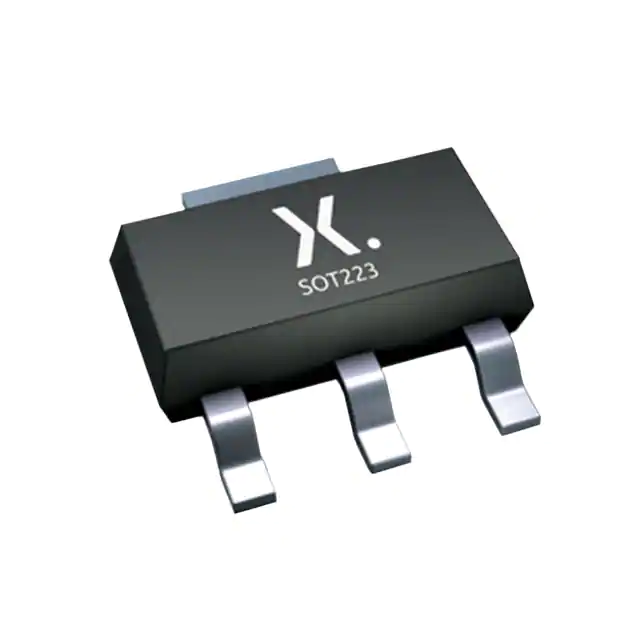
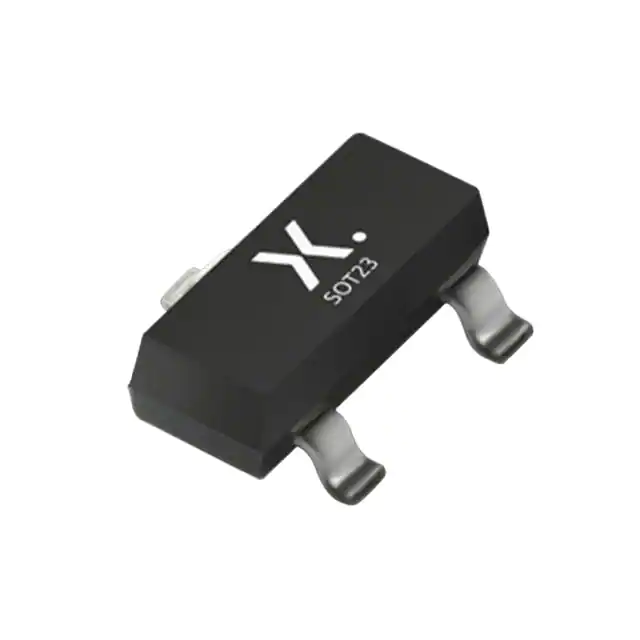
Nexperia USA Inc. BF723/ZLX
- Part No.:
- BF723/ZLX
- Manufacturer:
- Nexperia USA Inc.
- Category:
- Single Bipolar Transistors
- Package:
- TO-261-4, TO-261AA
- Datasheet:
-
 BF723/ZLX.pdf
- Description:
- TRANS PNP 250V 0.1A SOT-223
- Quantity:
- Payment:

- Shipping:

Inventory:9,109
Please send an inquiry. Send us your inquiry, and we will respond immediately.
Product details
Overview
BF723 from Nexperia is a PNP high-voltage bipolar junction transistor in SOT223 (SC-73) package, rated for VCEO = −250 V, IC = −100 mA, and Ptot = 1.2 W at Tamb ≤ 25 °C; used in off-line switch-mode power supply feedback stages and HV bias networks.
For engineers reviewing the BF723 datasheet, BF723 pinout, BF723 application, or BF723 equivalent, key selection criteria include verified high-voltage blocking capability (−250 V), low feedback capacitance (2.5 pF), DC current gain (hFE ≥ 50 @ −25 mA), thermal resistance to solder point (25 K/W), and SOT223 thermal pad layout compatibility.
Technical Context
The BF723 operates as a medium-power PNP switching transistor with an open-base collector-emitter breakdown voltage of −250 V and a transition frequency fT of 60 MHz at −10 V/−10 mA. Its low Cre (2.5 pF) minimizes Miller effect in high-speed HV switching nodes.
Thermal design relies on the exposed collector pad in the SOT223 package: Rth(j–sp) = 25 K/W enables direct heat transfer to PCB copper, while Rth(j–a) = 106 K/W reflects performance on standard single-sided 1 cm² tin-plated copper.
Key Specifications
| Parameter | Value and Actual Design Meaning |
|---|---|
| VCEO | −250 V - supports operation in 230 VAC-derived HV rails without derating |
| IC | −100 mA - suitable for auxiliary bias supplies and low-current HV switching |
| hFE | ≥ 50 @ −20 V/−25 mA - ensures reliable base drive margin in linear and saturated modes |
| VCE(sat) | ≤ −0.6 V @ −30 mA/−5 mA - limits conduction loss in active-regulation circuits |
| Cre | 2.5 pF @ −30 V - reduces capacitive coupling in fast-switching HV feedback paths |
| Rth(j–sp) | 25 K/W - enables efficient heat sinking via PCB copper pad under collector terminal |
| fT | 60 MHz @ −10 V/−10 mA - supports stable operation up to ~10 MHz switching frequencies |
Pinout & Package
SOT223 (SC-73) plastic surface-mount package with 4 leads, 2.3 mm pitch, 6.5 mm × 3.5 mm × 1.65 mm body; collector terminals (pins 2 and 4) are internally connected and serve as thermal and electrical interface to PCB copper pad.
| Pin/Terminal | Circuit Role | Design Meaning |
|---|---|---|
| 1 | Base (B) | Control input; requires current-limited drive due to hFE-dependent base current demand |
| 2 | Collector (C) | High-voltage output node; electrically and thermally tied to pin 4 and exposed copper pad |
| 3 | Emiter (E) | Reference terminal; connects to system ground or negative rail in PNP configuration |
| 4 | Collector (C) | Redundant collector connection; must be soldered to same copper pour as pin 2 for thermal integrity |
Key Features
| Feature | Design Value |
|---|---|
| High-voltage blocking | VCEO = −250 V enables use in 230 VAC primary-side snubbers and flyback auxiliary windings |
| Low feedback capacitance | Cre = 2.5 pF reduces instability risk in optocoupler feedback loops of SMPS controllers |
| Enhanced thermal path | Rth(j–sp) = 25 K/W allows >1 W dissipation with minimal PCB copper area (1 cm²) |
| Robust absolute ratings | IEC 60134-compliant limiting values including Tj = 150 °C and Tstg = −65 to 150 °C |
Applications
| SMPS Auxiliary Bias Supply | Off-Line Voltage Monitor |
|---|---|
Use Scenario: Provides isolated +12 V bias for PWM controller ICs in 230 VAC-input flyback converters. IC Role / Device Role / Timing Role: PNP pass transistor regulating auxiliary winding output; operates in linear mode with feedback from TL431 shunt regulator. Use Value: −250 V VCEO withstands reflected primary transients; low Cre prevents loop oscillation. | Use Scenario: Detects overvoltage on mains-derived DC bus before main converter startup. IC Role / Device Role / Timing Role: High-side sensing switch triggering crowbar or shutdown logic when bus exceeds safe threshold. Use Value: −250 V rating accommodates 350 VDC peak bus; hFE ≥ 50 ensures clean turn-on with microcontroller GPIO drive. |
| LED Driver Pre-Regulator | Industrial HV Signal Level Shifter |
Use Scenario: Pre-regulates 300 VDC intermediate rail to 48 V for constant-current LED driver ICs. IC Role / Device Role / Timing Role: Linear series pass element controlled by error amplifier; dissipates up to 1.1 W continuously. Use Value: 1.2 W Ptot and 25 K/W Rth(j–sp) enable stable operation without heatsink on 1 cm² copper. | Use Scenario: Translates 5 V logic signals to ±200 V analog control lines in industrial test equipment. IC Role / Device Role / Timing Role: High-voltage level-shifting switch interfacing FPGA outputs to HV DAC reference inputs. Use Value: Low Cre preserves signal edge integrity; −250 V rating covers worst-case transient overshoot. |
Equivalent & Alternatives
The following parts are listed as comparable options for similar PNP high-voltage transistor applications.
| Alternative Part | Technical Difference | Application Difference | Selection Advice |
|---|---|---|---|
| BF722 | NPN complement; identical VCEO, IC, package, and thermal specs but opposite polarity | Requires inverted control logic and reversed supply topology (e.g., NPN emitter-follower vs. PNP common-emitter) | Select when circuit architecture mandates NPN high-side switching or complementary pair usage |
| MJD2955T4G | Higher IC (−12 A), lower VCEO (−60 V), TO-220 package; hFE min 20 @ −4 A | Designed for high-current linear regulation; incompatible with SOT223 footprint and HV requirements | Only consider for non-HV, high-current applications where thermal mass and mounting differ significantly |
Compared with BF722 and MJD2955T4G, the BF723 uniquely balances −250 V blocking, SOT223 thermal efficiency, and 2.5 pF feedback capacitance-making it irreplaceable in compact, high-voltage feedback and bias circuits where polarity, size, and parasitic control are jointly constrained.
Availability
BF723 is available at Aetrix Electronics and suitable for SMPS auxiliary bias supplies, off-line voltage monitors, LED driver pre-regulators, and industrial HV signal level shifters requiring stable component supply across production lifecycles.
Supply support for BF723 includes scheduled delivery planning, volume procurement assistance, BOM continuity management, traceable sourcing, and lifecycle availability coordination for OEM customers, industrial embedded developers, connected-device designers, and electronics production programs.
Manufacturer
Nexperia is a global semiconductor expert headquartered in Nijmegen, Netherlands, specializing in high-volume, high-reliability discrete and logic devices for industrial, consumer, and automotive markets.
The BF723 belongs to Nexperia's high-voltage bipolar transistor product line, engineered specifically for robustness in off-line power conversion, HV sensing, and industrial control interfaces where voltage endurance and thermal predictability are critical.
FAQ
Is BF723 automotive-qualified?
No. Per Nexperia's revision history (v.4, 20241008), BF723 is explicitly designated as non-automotive. It lacks AEC-Q101 qualification, automotive-grade screening, and extended temperature validation beyond −65 °C to 150 °C ambient. Automotive designs require parts with "-Q" suffixes such as BF723-Q.
Can BF723 replace BC807 in a 24 V circuit?
No. Although both are PNP SOT223 transistors, BF723 is optimized for −250 V operation with higher VCE(sat) (−0.6 V vs. BC807's −0.3 V) and lower hFE consistency at low currents. In 24 V applications, its over-engineered voltage rating adds unnecessary cost and compromises small-signal linearity and gain stability.
What is the maximum continuous power dissipation at 70 °C ambient?
At Tamb = 70 °C, derating applies linearly from 1.2 W at 25 °C using the 106 K/W Rth(j–a). Maximum Ptot = 1.2 W − ((70 − 25) × 1.2 / 106) ≈ 0.79 W. For sustained operation above 70 °C, thermal design must rely on Rth(j–sp) = 25 K/W and proper PCB copper pad layout.
Does pin 4 require a separate PCB trace or connect to pin 2?
Pin 4 is internally bonded to pin 2 as a second collector terminal and must be soldered to the same large copper pour as pin 2. Separating them violates the thermal design intent and risks exceeding Tj limits; the datasheet specifies both pins serve the same collector node and thermal interface.
BF723/ZLX Specifications
- Product attributes
- Attribute value
- Manufacturer:
- Nexperia USA Inc.
- Series:
- -
- Package/Case:
- TO-261-4, TO-261AA
- Packaging:
- Tape & Reel (TR)
- Product Status:
- Obsolete
- Transistor Type:
- PNP
- Current - Collector (Ic) (Max):
- 100 mA
- Voltage - Collector Emitter Breakdown (Max):
- 250 V
- Vce Saturation (Max) @ Ib, Ic:
- 600mV @ 5mA, 30mA
- Current - Collector Cutoff (Max):
- 10nA (ICBO)
- DC Current Gain (hFE) (Min) @ Ic, Vce:
- 50 @ 25mA, 20V
- Power - Max:
- 1.2 W
- Frequency - Transition:
- 60MHz
- Operating Temperature:
- 150°C (TJ)
- Grade:
- -
- Qualification:
- -
- Mounting Type:
- Surface Mount
- Supplier Device Package:
- SOT-223
BF723/ZLX FAQ
1.How can I place an order for BF723/ZLX through Aetrix?
Please submit a Request for Quotation (RFQ) for BF723/ZLX on Aetrix. Our sales agent will provide a competitive quotation and guide you through the order confirmation once you accept the terms.
2.Are the price and stock information for BF723/ZLX reliable?
The price and inventory of BF723/ZLX are updated periodically and may fluctuate due to market conditions. Stock and pricing data are typically refreshed every 24 hours. Quotation validity for BF723/ZLX is usually 5 days.
3.What payment methods are accepted for BF723/ZLX?
We accept Wire Transfer, PayPal, Credit Card, Western Union, MoneyGram, and Escrow for BF723/ZLX transactions.
Note: Certain payment methods may incur a processing fee.
4.How is shipping managed for BF723/ZLX?
BF723/ZLX orders can be shipped via leading logistics carriers, including DHL, UPS, FedEx, TNT, or Registered Mail.
Once your BF723/ZLX order is processed, you will receive an email with the shipment details and tracking number.
Note: Tracking information may take up to 24 hours to appear. Express delivery typically takes 3–5 business days.
5.How can I obtain technical support or documentation for BF723/ZLX?
For technical support, including BF723/ZLX datasheets, pinout diagrams, or application guidance, please contact our engineering support team. They can provide detailed documentation and assistance for your BF723/ZLX requirements.
6.How does Aetrix verify that BF723/ZLX is sourced from the original manufacturer or authorized distributors?
All BF723/ZLX products on Aetrix are procured from qualified distributors and authorized channels. Our dedicated quality assurance team conducts strict verification, including traceability checks and, if necessary, third-party testing. This ensures that BF723/ZLX meets industry standards.
7.What is the process for return or replacement of BF723/ZLX?
All BF723/ZLX units undergo pre-shipment inspection (PSI). If there is an issue with BF723/ZLX, returns or replacements are accepted under the following conditions:
1.Quantity discrepancies, incorrect items, or visible external defects (such as breakage or corrosion), acknowledged by Aetrix.
2.The issue is reported within 90 days of delivery.
3.The BF723/ZLX part is unused and in its original packaging.
Return procedure for BF723/ZLX:
1.Submit a request within 90 days.
2.Obtain a Return Material Authorization (RMA) from Aetrix.
BF723/ZLX Tags
-
MMBT3906LT1G
onsemi
-
MMBT3904-7-F
Diodes Incorporated
-
MMBT3904LT1G
onsemi
-
MMBT3906-7-F
Diodes Incorporated
-
MMBT3904-TP
Micro Commercial Co
-
MMBT2222A-7-F
Diodes Incorporated
-
BC846BLT1G
onsemi
-
BC847B,215
Nexperia USA Inc.
-
SMMBT3904LT1G
onsemi
-
MMBT2222A-TP
Micro Commercial Co
-
MMBTA06LT1G
onsemi
-
MMBT2222ALT1G
onsemi
Tech Hub

Jumper cables guide covering safe connection order, red and black clamp placement, final ground connection, cable gauge, length, clamp quality, copper vs CCA cables, jump starter comparison and battery…

LDO regulator guide covering low dropout voltage, power dissipation, thermal design, PSRR, output noise, capacitor stability, adjustable LDO circuits, LDO vs buck converter and datasheet selection chec…

Conditional Access Module guide covering CAM meaning, CI/CI+ interface, smart card authorization, DVB security workflow, TV and set-top box compatibility, internal electronics, ESD protection, connecto…

Guide to electronic component obsolescence covering EOL risk, PCN/PDN notices, last-time buy planning, replacement options, form-fit-function validation, counterfeit risk and BOM lifecycle management.

18650 battery guide covering lithium-ion cell basics, 3.6V/3.7V voltage, 4.2V charging, mAh and Wh capacity, protected cells, chargers, BMS, series-parallel packs, holders, welding and sourcing checks.…

Hall effect sensor guide covering working principle, linear and digital sensors, Arduino circuits, current sensing, speed detection, automotive applications, A3144 examples, signal filtering and datash…

Product Change Notification guide for electronic components, covering PCN meaning, PCN vs PDN/EOL, common change types, risk levels, form-fit-function review, engineering validation, BOM control, LTB/L…

A practical guide to blend door actuators, covering HVAC function, symptoms, location, AC and heater issues, reset and calibration, replacement cost, electrical diagnosis, compatibility checks, and rep…

Engineering guide to Raspberry Pi alternatives, covering chip-level differences, Orange Pi, ROCK, Jetson, Banana Pi, NanoPi, Compute Module, Pico, GPIO, camera, HAT compatibility, and replacement risks…
Engineering guide to dynamic load response testing for high-current buck converters, covering load step setup, slew rate, Vcore undershoot, overshoot, recovery time, probe location, output capacitors a…


