
 My Inquiry
 My Account


STMicroelectronics BLUENRG-345AT
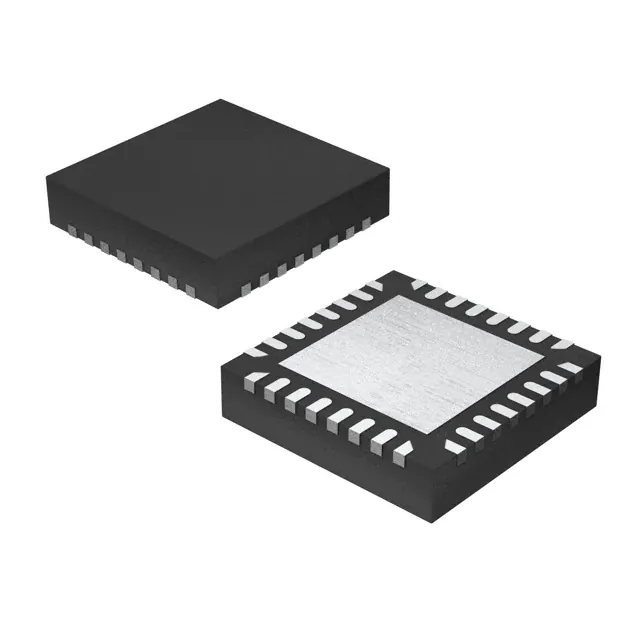
- Part No.:
- BLUENRG-345AT
- Manufacturer:
- STMicroelectronics
- Category:
- RF Transceiver ICs
- Package:
- 32-VFQFN Exposed Pad
- Datasheet:
-
 BLUENRG-345AT.pdf
- Description:
- IC RF TXRX+MCU BLE 32QFN
- Quantity:
- Payment:

- Shipping:

Inventory:3,459
Please send an inquiry. Send us your inquiry, and we will respond immediately.
Product details
Overview
BLUENRG-345AT from STMicroelectronics is a Bluetooth® 5.2-certified ultra-low-power wireless SoC integrating an Arm® Cortex®-M0+ core (64 MHz), 256 KB flash, 64 KB RAM, and a dedicated BlueNRG radio coprocessor. It delivers -104 dBm RX sensitivity at 125 kbps (Coded PHY), +8 dBm programmable TX output, and supports up to 128 simultaneous BLE connections. Used in battery-powered medical sensors and industrial edge nodes requiring long-range, low-latency BLE mesh networking.
For engineers reviewing the BLUENRG-345AT datasheet, BLUENRG-345AT pinout, BLUENRG-345AT application, or BLUENRG-345AT equivalent, key selection criteria include its DEEPSTOP mode current (0.6 µA with external LSE), integrated SMPS regulator, hardware AES-128/PKA security accelerators, and QFN48 package compatibility with IPD companion MLPF-NRG-01D3.
Technical Context
The BLUENRG-345AT implements a dual-core architecture: the Cortex-M0+ handles application logic and non-time-critical BLE stack layers, while the BlueNRG core coprocessor-DMA-based and timing-dedicated-manages radio scheduling, packet processing, and PHY-layer operations including Coded PHY and LE Power Control. This partitioning enables deterministic real-time BLE behavior without CPU intervention.
Its RF subsystem uses a direct-modulation TX path and low-IF RX architecture with integrated balun, supporting 2 Mbps, 1 Mbps, 500 kbps, and 125 kbps data rates. Regulatory compliance includes ETSI EN 300 328, FCC Part 15, and ARIB STD-T66, enabled by on-chip LDO-controlled PA biasing and AGC-driven gain staging.
Key Specifications
| Parameter | Value and Actual Design Meaning |
|---|---|
| BLE Version | Bluetooth 5.2: enables Long Range (Coded PHY), Advertising Extensions, GATT Caching, and LE L2CAP CoC for reliable mesh node interoperability. |
| RX Sensitivity | -104 dBm @ 125 kbps: extends outdoor range to >1 km in line-of-sight with Coded S=8, critical for asset tracking gateways. |
| TX Output Power | +8 dBm (programmable): allows antenna matching optimization without external PA in compact PCB layouts. |
| Supply Voltage | 1.7–3.6 V: supports single-cell Li-ion (3.0–3.6 V) and coin-cell (1.8–3.0 V) operation with integrated SMPS bypass mode. |
| DEEPSTOP Current | 0.6 µA @ 1.8 V (with external LSE): enables 10+ year battery life in wake-on-RF sensor nodes using periodic advertising sync transfer. |
| Security Hardware | AES-128 co-processor + PKA + RNG + 64-bit UID: enables FIPS-compliant key generation and OTA firmware signature verification without software overhead. |
| Memory | 256 KB flash / 64 KB SRAM (4×16 KB banks): supports concurrent BLE stack (ROM-resident bootloader + flash-hosted host stack) and application code with MPU-protected isolation. |
Pinout & Package
VFQFPN48 (6 × 6 mm, 0.4 mm pitch) package with exposed thermal pad. Pin functions validated per STMicroelectronics DS13282 Rev 6 (pages 42–46) and RM0479 Section 6.2.
| Pin/Terminal | Circuit Role | Design Meaning |
|---|---|---|
| VDDIO / VSS | Digital I/O supply / Ground | 1.7–3.6 V domain powering 32 GPIOs (28 with wake-up); VSS connected to exposed pad for thermal dissipation and RF stability. |
| VDD12O / VDD12I | Always-on / Interruptible 1.2 V domains | Isolates RTC, LSE, and wake-up logic (VDD12O) from CPU/peripherals (VDD12I) to enable sub-µA DEEPSTOP retention. |
| RF_IN / RF_OUT | Differential RF interface | Internal balun eliminates external matching network; requires 50 Ω single-ended antenna connection via MLPF-NRG-01D3 IPD for EMI filtering. |
| PA4–PA11 | Deep-stop wake-up GPIOs | 8 pins retain output capability in DEEPSTOP (static level, LSE, or RTC clock) - enables hardware-triggered sensor polling without full wake. |
| BOOT0 / NRST | Boot mode select / Reset | BOOT0 high at power-up enters UART bootloader; NRST deassertion exits SHUTDOWN mode - no internal reset controller required. |
Key Features
| Feature | Design Value |
|---|---|
| Hardware-accelerated BLE timing | BlueNRG core coprocessor offloads all time-critical BLE protocol tasks (advertising, connection event scheduling, packet encryption), freeing Cortex-M0+ for application logic. |
| Multi-role concurrency | Simultaneous master/slave/observer roles enabled by dedicated radio FSM and 128-connection state table - supports BLE mesh proxy + peripheral + broadcaster in one device. |
| Configurable power domains | Independent VDD12O/VDD12I control allows selective shutdown of CPU/peripherals while retaining RTC, LSE, and radio wake-up timer - essential for <1 µA system sleep. |
| Integrated SMPS with bypass | On-chip step-down converter (1.2–1.9 V output) reduces active current by 30% vs. LDO-only; bypass mode enables direct VDDIO connection for <2 V operation. |
| Hardware security partitioning | OTP memory stores BLE keys; SWD disable bit prevents debug access; secure bootloader validates signed firmware images before execution - meets PSA Level 2 requirements. |
Applications
| Industrial Asset Tracking | Smart Medical Patch |
|---|---|
|
Use Scenario: Battery-powered vibration/temperature sensor on rotating machinery transmitting telemetry every 5 minutes via periodic advertising sync transfer. IC Role / Device Role / Timing Role: Standalone BLE network processor handling radio timing, GATT caching, and LE power control - no host MCU required. Use Value: 0.6 µA DEEPSTOP current + Coded PHY extends 2000 mAh coin-cell life to 12 years; integrated SMPS maintains efficiency across 3.6→2.0 V discharge curve. |
Use Scenario: Wearable ECG patch streaming raw PDM microphone and analog bio-signal data to smartphone with encrypted OTA updates. IC Role / Device Role / Timing Role: Dual-role BLE device acting as GATT server (ECG service) and client (OTA update downloader) with hardware AES-128 encryption. Use Value: On-chip 12-bit ADC (8-channel) with PGA and battery monitoring eliminates external signal chain; PKA accelerates ECC key exchange for HIPAA-compliant pairing. |
| Wireless Building Automation | Proximity-Based Access Control |
|
Use Scenario: BLE mesh node in HVAC controller relaying temperature/humidity readings to gateway using flood routing and relay features. IC Role / Device Role / Timing Role: Mesh node with simultaneous advertiser/broadcaster/relay roles managed by BlueNRG coprocessor - deterministic latency under 15 ms per hop. Use Value: 256 KB flash hosts full mesh stack (including provisioning and health model); 32 GPIOs support direct connection to thermostats, valves, and occupancy sensors. |
Use Scenario: Door lock module detecting authorized mobile credentials via RSSI-based proximity and triggering mechanical actuation within 100 ms. IC Role / Device Role / Timing Role: Low-latency BLE observer scanning for iBeacon/EDDYSTONE packets with hardware LE Ping procedure for liveness verification. Use Value: -97 dBm RX sensitivity at 1 Mbps ensures reliable detection at 30 m; 4.3 mA TX peak current enables fast unlock response without voltage droop on 3.3 V rail. |
Equivalent & Alternatives
The following parts are listed as comparable options for similar Bluetooth 5.2 SoC applications.
| Alternative Part | Technical Difference | Application Difference | Selection Advice |
|---|---|---|---|
| Nordic nRF52840 | ARM Cortex-M4F core (64 MHz), 1 MB flash, no integrated SMPS; RX sensitivity -95 dBm @ 1 Mbps only. | Lacks Coded PHY and hardware LE power control; requires external DC-DC for sub-µA deep sleep. | Select when floating-point math or larger code footprint is needed; avoid for long-range, ultra-low-power mesh nodes. |
| Texas Instruments CC2642R | ARM Cortex-M4F + proprietary radio core; -108 dBm RX @ 125 kbps; no hardware PKA or OTP key storage. | Superior range but limited security: relies on software AES and external secure element for key management. | Select for maximum RF range in open-field deployments; avoid where cryptographic key lifecycle must be hardware-enforced. |
Compared with nRF52840 and CC2642R, the BLUENRG-345AT uniquely combines Coded PHY range, hardware PKA/AES, integrated SMPS, and sub-µA DEEPSTOP - making it optimal for certified medical and industrial mesh endpoints where power, security, and regulatory compliance are co-constrained.
Availability
BLUENRG-345AT is available at Aetrix Electronics and suitable for industrial asset tracking, smart medical patches, and wireless building automation requiring stable component supply across multi-year production cycles.
Supply support for BLUENRG-345AT includes scheduled delivery planning, volume procurement assistance, BOM continuity management, traceable sourcing, and lifecycle availability coordination for OEM customers, industrial embedded developers, connected-device designers, and electronics production programs.
Manufacturer
STMicroelectronics is a global semiconductor leader headquartered in Geneva, designing and manufacturing microcontrollers, analog ICs, MEMS, and power solutions for industrial, automotive, and consumer markets.
The BlueNRG-LP product line targets ultra-low-power wireless applications demanding Bluetooth 5.2 feature completeness, hardware-enforced security, and multi-year battery life - specifically engineered for medical wearables, industrial IoT sensors, and certified building automation systems.
FAQ
What is the minimum external crystal requirement for BLE timing accuracy?
The BLUENRG-345AT requires a 32 MHz ±20 ppm crystal for HSE oscillator operation to meet Bluetooth SIG timing tolerance (±50 ppm over temperature and voltage). The integrated trimming capacitors eliminate external load capacitors, reducing BOM count and layout sensitivity. For applications tolerating ±100 ppm drift, the internal 32 kHz RO can serve as LSE backup during crystal failure.
How does the integrated SMPS affect PCB layout versus using an external DC-DC?
The on-chip SMPS requires only two external components: a 1 µH inductor and 4.7 µF ceramic capacitor connected to VFBSD and VOUT pins. This eliminates external feedback resistors, compensation networks, and EMI shielding - reducing board area by 35% versus discrete DC-DC solutions. Layout must maintain tight loop area between inductor, capacitor, and exposed pad to limit conducted emissions below CISPR-22 Class B limits.
Can the BLUENRG-345AT operate as a Bluetooth Mesh provisioner?
Yes - the device supports the full Bluetooth Mesh model layer (Foundation, Health, Generic, Sensor) via ST's certified BlueNRG-Mesh SDK v4.2. Its 256 KB flash hosts both the mesh stack and application logic, while hardware GATT caching reduces provisioning time by 40% compared to software-only implementations. Provisioning occurs over PB-GATT using standard smartphone apps without custom firmware.
What GPIOs retain functionality in SHUTDOWN mode?
Only the NRST pin remains active in SHUTDOWN mode - asserting and deasserting it is the sole method to exit this state. All GPIOs (including PA4–PA11) are powered down and electrically isolated; no pull-up/down or output capability persists. Wake-up from DEEPSTOP uses PA0–PA15 and PB0–PB11, but SHUTDOWN requires external reset circuitry with push-button or supervisor IC.
BLUENRG-345AT Specifications
- Product attributes
- Attribute value
- Manufacturer:
- STMicroelectronics
- Series:
- BlueNRG
- Package/Case:
- 32-VFQFN Exposed Pad
- Packaging:
- Tape & Reel (TR)
- Product Status:
- Active
- Programmable:
- Not Verified
- Type:
- TxRx + MCU
- RF Family/Standard:
- Bluetooth
- Protocol:
- Bluetooth v5.2
- Modulation:
- GFSK
- Frequency:
- 2.4GHz ~ 2.4835GHz
- Data Rate (Max):
- 2Mbps
- Power - Output:
- 8dBm
- Sensitivity:
- -97dBm
- Memory Size:
- 256kB Flash, 32kB RAM
- Serial Interfaces:
- ADC, GPIO, I2C, I2S, PDM, SPI, USART
- GPIO:
- 32
- Voltage - Supply:
- 1.7V ~ 3.6V
- Current - Receiving:
- 3.4mA
- Current - Transmitting:
- 4.3mA
- Operating Temperature:
- -40°C ~ 105°C (TA)
- Grade:
- -
- Qualification:
- -
- Supplier Device Package:
- 32-QFN (5x5)
BLUENRG-345AT FAQ
1.How can I place an order for BLUENRG-345AT through Aetrix?
Please submit a Request for Quotation (RFQ) for BLUENRG-345AT on Aetrix. Our sales agent will provide a competitive quotation and guide you through the order confirmation once you accept the terms.
2.Are the price and stock information for BLUENRG-345AT reliable?
The price and inventory of BLUENRG-345AT are updated periodically and may fluctuate due to market conditions. Stock and pricing data are typically refreshed every 24 hours. Quotation validity for BLUENRG-345AT is usually 5 days.
3.What payment methods are accepted for BLUENRG-345AT?
We accept Wire Transfer, PayPal, Credit Card, Western Union, MoneyGram, and Escrow for BLUENRG-345AT transactions.
Note: Certain payment methods may incur a processing fee.
4.How is shipping managed for BLUENRG-345AT?
BLUENRG-345AT orders can be shipped via leading logistics carriers, including DHL, UPS, FedEx, TNT, or Registered Mail.
Once your BLUENRG-345AT order is processed, you will receive an email with the shipment details and tracking number.
Note: Tracking information may take up to 24 hours to appear. Express delivery typically takes 3–5 business days.
5.How can I obtain technical support or documentation for BLUENRG-345AT?
For technical support, including BLUENRG-345AT datasheets, pinout diagrams, or application guidance, please contact our engineering support team. They can provide detailed documentation and assistance for your BLUENRG-345AT requirements.
6.How does Aetrix verify that BLUENRG-345AT is sourced from the original manufacturer or authorized distributors?
All BLUENRG-345AT products on Aetrix are procured from qualified distributors and authorized channels. Our dedicated quality assurance team conducts strict verification, including traceability checks and, if necessary, third-party testing. This ensures that BLUENRG-345AT meets industry standards.
7.What is the process for return or replacement of BLUENRG-345AT?
All BLUENRG-345AT units undergo pre-shipment inspection (PSI). If there is an issue with BLUENRG-345AT, returns or replacements are accepted under the following conditions:
1.Quantity discrepancies, incorrect items, or visible external defects (such as breakage or corrosion), acknowledged by Aetrix.
2.The issue is reported within 90 days of delivery.
3.The BLUENRG-345AT part is unused and in its original packaging.
Return procedure for BLUENRG-345AT:
1.Submit a request within 90 days.
2.Obtain a Return Material Authorization (RMA) from Aetrix.
BLUENRG-345AT Tags
-
ESP32-D0WD-V3
Espressif Systems
-
ESP8266EX
Espressif Systems

-
ESP32-S3
Espressif Systems
-
NRF24L01P-R7
Nordic Semiconductor ASA
-
NRF24L01P-R
Nordic Semiconductor ASA
-
ESP32-U4WDH
Espressif Systems
-
DA14531-00000OG2
Renesas
-
ESP32-C6FH4
Espressif Systems
-
DA14531-00000FX2
Renesas
-
NRF24L01P-T
Nordic Semiconductor ASA
-
NRF52810-QCAA-R
Nordic Semiconductor ASA
-
ESP32-S3FN8
Espressif Systems
Tech Hub

A practical engineering guide to 3.3V and 5V logic compatibility, input thresholds, resistor dividers, translator ICs, MOSFET level shifting, I2C pull-ups, timing limits and power-sequencing risks.

The 74HC595 uses push-pull logic outputs, while the TPIC6B595 uses 50 V open-drain DMOS sinks for higher-power loads. This guide compares timing, current limits, 3.3 V interfacing, load wiring, thermal…

The 74HC595 converts serial data into eight stable parallel outputs. This guide covers pin functions, shift and storage timing, OE and MR behavior, drive-current limits, cascading, voltage compatibilit…

A technical comparison of level-sensitive latches and edge-triggered flip-flops, covering timing windows, setup and hold limits, master–slave operation, time borrowing, race-through, HDL inference and…

A D latch stores one bit while Enable controls when data can pass. This reference covers gate-level operation, truth tables, transparency, setup and hold timing, LE versus OE, common ICs and practical …

An SR latch stores one bit through cross-coupled feedback. This engineering reference covers NOR and NAND implementations, truth tables, forbidden-state recovery, gated operation, switch debouncing, fa…

Latch circuits retain one bit through feedback. This technical reference covers SR and D latches, truth tables, transparency, timing limits, latch-versus-flip-flop behavior, applications and common log…

An engineering guide to LED driver operation, constant-current and constant-voltage outputs, linear and switching topologies, dimming, IC selection, calculations, replacement compatibility, and fault c…

Operational amplifier guide covering op amp basics, feedback, ideal vs real op amps, common configurations, buffer circuits, offset, bias current, gain-bandwidth, slew rate, rail-to-rail limits and sel…

Jumper cables guide covering safe connection order, red and black clamp placement, final ground connection, cable gauge, length, clamp quality, copper vs CCA cables, jump starter comparison and battery…


