
 My Inquiry
 My Account


STMicroelectronics BLUENRG-M0L
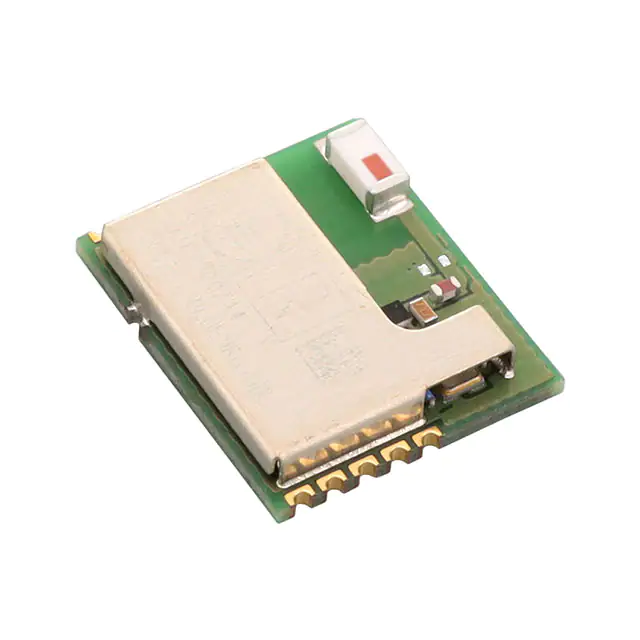
- Part No.:
- BLUENRG-M0L
- Manufacturer:
- STMicroelectronics
- Category:
- RF Transceiver Modules and Modems
- Package:
- 11-SMD Module
- Datasheet:
-
 BLUENRG-M0L.pdf
- Description:
- RF TXRX MOD BLUETOOTH CHIP SMD
- Quantity:
- Payment:

- Shipping:

Inventory:5,280
Please send an inquiry. Send us your inquiry, and we will respond immediately.
Product details
Overview
BLUENRG-M0L from STMicroelectronics is a certified, single-mode Bluetooth® LE v4.2 network processor module integrating the BlueNRG-MS SoC, on-board chip antenna, and full embedded protocol stack (GAP, GATT, SM, L2CAP, LL, RFPHY). It supports simultaneous master/slave roles, operates from 1.7–3.6 V, achieves +6 dBm radiated output power and –85 dBm conducted RX sensitivity, and targets ultra-low-power wearable and medical edge devices powered by coin cells.
For engineers reviewing the BLUENRG-M0L datasheet, BLUENRG-M0L pinout, BLUENRG-M0L application, or BLUENRG-M0L equivalent, this module delivers production-ready wireless connectivity with SPI host interface, AES-128 security co-processor, FCC/ISED/CE/WPC certifications, and field-upgradable firmware - eliminating RF design complexity while meeting stringent peak current constraints of battery-operated systems.
Technical Context
The BLUENRG-M0L implements a complete Bluetooth LE v4.2 protocol stack in ROM and Flash, enabling concurrent GAP roles (central/peripheral/observer/broadcaster), ATT/GATT client/server, SM privacy/authentication, and L2CAP connection-oriented channels. Its radio subsystem uses a 32 MHz crystal oscillator and integrated RF front-end with on-chip PA and LNA.
Host communication occurs exclusively via a 5-wire SPI interface (CLK, CS, MOSI, MISO, IRQ) operating up to 8 MHz, with hardware reset control and external 32 kHz low-power oscillator (RO) for sleep-state timing. Power management leverages dedicated retention RAM (12 kB or 24 kB) and sub-μA standby current (1.7 μA typical).
Key Specifications
| Parameter | Value and Actual Design Meaning |
|---|---|
| Bluetooth Version | Compliant with Bluetooth v4.2 specification, supporting LE Privacy v1.1, directed advertising, connection parameter requests, and 32-bit UUIDs. |
| Output Power | +6 dBm radiated output power - enables reliable 10–15 m line-of-sight range in compact PCB layouts with on-board chip antenna. |
| RX Sensitivity | –85 dBm conducted sensitivity - ensures robust link budget (~91 dB) and stable connections in noisy 2.4 GHz ISM band environments. |
| Supply Voltage | 1.7 V to 3.6 V operation - compatible with standard CR2032 coin cells (3 V), AAA batteries (3 V), or regulated 1.8 V DC rails for optimal BLUENRG-M0L power efficiency. |
| Sleep Current | 2.8 μA (12 kB RAM retention, 32 kHz RO active) - extends battery life to multi-year operation in intermittent-sensing applications like fitness trackers. |
| Operating Temp | –40 °C to +85 °C ambient range - qualified for industrial-grade deployment in wearables, home automation sensors, and assisted-living devices. |
| Regulatory Certs | FCC ID S9NBNRGM0AL, ISED 8976C-BNRGM0AL, CE RED 0051-RED-0097, WPC - eliminates need for end-product RF certification and accelerates time-to-market. |
Pinout & Package
BLUENRG-M0L is housed in an 11-pin, 4-layer surface-mount module (13.5 mm × 11.5 mm × 2.2 mm) with castellated edges and integrated chip antenna. All pins are 3.3 V tolerant; unused pins must remain floating per ST design guidelines.
| Pin/Terminal | Circuit Role | Design Meaning |
|---|---|---|
| Vin (Pin 5) | Power input | Accepts 1.7–3.6 V supply; powers entire module including RF transceiver and digital core; requires local 100 nF decoupling. |
| GND (Pin 6) | Ground reference | Primary analog/digital ground; must be low-impedance and isolated from noisy digital planes near antenna region. |
| SPI_IRQ (Pin 4) | Interrupt output | Active-high signal indicating pending host data; requires external pull-down resistor per ACI protocol timing requirements. |
| SPI_CLK (Pin 7) | Clock input | Master-generated SPI clock up to 8 MHz; synchronous interface for command/response packet exchange with BlueNRG-MS. |
| SPI_MISO (Pin 8) | Data output | Serial data from module to host (e.g., event packets, status responses); driven only when CS is asserted. |
| SPI_MOSI (Pin 9) | Data input | Serial data from host to module (e.g., ACI commands, configuration writes); sampled on rising CLK edge. |
| SPI_CS (Pin 10) | Chip select | Active-low enable for SPI slave mode; internal pull-up ensures safe default high-impedance state during reset. |
| BT_RESET (Pin 11) | Reset input | Active-low asynchronous reset (logic <0.35×Vin); initiates cold boot and firmware reload sequence. |
Key Features
| Feature | Design Value |
|---|---|
| Embedded BLE Stack | Full GAP/GATT/SM/L2CAP/LL/RFPHY stack in ROM/Flash - removes host CPU overhead and eliminates BLE stack licensing or porting effort. |
| Simultaneous Roles | Supports concurrent central + peripheral roles - enables dual-function devices (e.g., sensor hub that also advertises as beacon and connects to smartphone). |
| AES-128 Co-processor | Hardware-accelerated encryption/decryption - offloads security processing from host MCU and ensures deterministic pairing latency under real-time constraints. |
| On-field Firmware Upgrade | SPI-based stack update capability - allows post-deployment BLE spec compliance patches or feature enhancements without hardware revision. |
| Integrated Chip Antenna | Pre-tuned 2.4 GHz antenna embedded in PCB substrate - eliminates external matching network, reduces BOM count, and simplifies layout for space-constrained wearables. |
Applications
| Wearable Fitness Tracker | Smart Home Sensor Node |
|---|---|
|
Use Scenario: Continuous heart rate and motion monitoring in wrist-worn device powered by CR2032 coin cell. IC Role / Device Role / Timing Role: BLE network processor handling all radio operations, protocol state machines, and encrypted GATT attribute exchanges with smartphone app. Use Value: Sub-3 μA sleep current and optimized 1.8 V operation extend battery life beyond 12 months while maintaining BLE v4.2 feature set and regulatory compliance. |
Use Scenario: Battery-powered temperature/humidity sensor deployed in HVAC ducts or wall-mounted thermostats. IC Role / Device Role / Timing Role: Low-power BLE peripheral transmitting sensor readings every 5 minutes using connection parameter request to minimize airtime. Use Value: –85 dBm sensitivity and +6 dBm output ensure reliable 20+ meter indoor range through drywall and metal enclosures without external PA or antenna tuning. |
| Medical Glucose Monitor | Industrial Proximity Tag |
|
Use Scenario: Disposable glucose patch transmitting calibrated readings to caregiver's tablet via encrypted BLE link. IC Role / Device Role / Timing Role: Certified BLE peripheral implementing custom GATT service with SM-based bonding and privacy-respecting address rotation. Use Value: WPC and CE RED certification pre-validated for Class IIa medical devices; AES-128 co-processor meets ISO/IEC 15408 EAL4+ cryptographic assurance requirements. |
Use Scenario: Asset tracking tag mounted on machinery in factory floor with metallic surroundings and RF interference. IC Role / Device Role / Timing Role: BLE broadcaster advertising sensor ID and status at configurable intervals using low-duty-cycle directed advertising. Use Value: FCC/ISED modular approval permits direct integration into industrial equipment without additional RF testing; 91 dB link budget maintains detection despite multipath and shielding. |
Equivalent & Alternatives
The following parts are listed as comparable options for similar Bluetooth LE network processor applications.
| Alternative Part | Technical Difference | Application Difference | Selection Advice |
|---|---|---|---|
| nRF52833 DK | Higher peak TX current (13.5 mA @ 0 dBm), no integrated antenna, requires external matching and RF layout expertise. | Requires full BLE stack porting (SoftDevice), lacks pre-certification - adds 6–12 weeks validation for end-product FCC/CE. | Select when needing higher TX power (>0 dBm), USB DFU, or Nordic ecosystem toolchain support over turnkey certification. |
| DA14531MOD | Lower TX current (7.5 mA @ 0 dBm), smaller footprint (12.5 × 14.5 mm), but only –80 dBm sensitivity limits range in obstructed environments. | Targeted at cost-sensitive consumer remotes; lacks WPC and full BLE v4.2 feature set (e.g., no LE Ping or L2CAP COC). | Select for ultra-low-cost remote controls or simple beacons where range >5 m and advanced security are non-critical. |
Compared with nRF52833 DK and DA14531MOD, BLUENRG-M0L delivers superior link budget (91 dB vs ≤85 dB), pre-certified modularity, and optimized 1.8 V operation for coin-cell longevity - making it the preferred choice for certified, battery-constrained medical and industrial edge nodes.
Availability
BLUENRG-M0L is available at Aetrix Electronics and suitable for wearable fitness trackers, smart home sensor nodes, medical glucose monitors, and industrial proximity tags requiring stable component supply, long-term lifecycle support, and pre-certified RF performance.
Supply support for BLUENRG-M0L includes scheduled delivery planning, volume procurement assistance, BOM continuity management, traceable sourcing, and lifecycle availability coordination for OEM customers, industrial embedded developers, connected-device designers, and electronics production programs.
Manufacturer
STMicroelectronics is a global semiconductor leader headquartered in Geneva, Switzerland, designing and manufacturing microcontrollers, analog ICs, MEMS, and wireless solutions for industrial, automotive, and consumer markets.
BLUENRG-M0L belongs to ST's BlueNRG family of certified Bluetooth LE modules, engineered specifically to reduce RF integration risk and accelerate development of battery-powered, safety- and regulation-critical IoT endpoints.
FAQ
What host interface does BLUENRG-M0L use, and what are its timing requirements?
The BLUENRG-M0L communicates exclusively via a 5-wire SPI interface (CLK, CS, MOSI, MISO, IRQ) operating up to 8 MHz. SPI_CS must be held low for ≥100 ns before first clock edge; IRQ is active-high with 10 kΩ external pull-down; all SPI pins except CS have internal pull-downs. Timing aligns with ST's ACI protocol v4.2, requiring precise packet framing and response window adherence.
How does BLUENRG-M0L differ from BLUENRG-M0A in power architecture and use case?
BLUENRG-M0L uses an internal RC oscillator (RO) for low-power sleep modes and achieves best efficiency at 1.8 V supply, targeting ultra-low-quiescent-current applications like coin-cell wearables. BLUENRG-M0A integrates a DC-DC converter and uses a 32 kHz crystal (XO), delivering lower active current (2.12 mA vs 2.54 mA) but requiring higher minimum voltage (2.0 V) and external inductor.
Can BLUENRG-M0L support Bluetooth mesh networking out of the box?
No - BLUENRG-M0L implements only Bluetooth LE v4.2 point-to-point and broadcast topologies (GAP central/peripheral/observer/broadcaster). Bluetooth mesh requires additional firmware layers (e.g., ST's BlueNRG-2 or BlueNRG-LP with mesh stack), which are not supported on the BlueNRG-MS core embedded in BLUENRG-M0L.
What antenna layout constraints apply when integrating BLUENRG-M0L into a PCB?
The module's integrated chip antenna requires a 6 mm clearance zone around its perimeter - free of ground planes, power planes, traces, or metal - in all directions. No copper or routing is permitted beneath the module. ST mandates this keep-out to preserve radiation pattern integrity and maintain certified RF performance without retesting.
BLUENRG-M0L Specifications
- Product attributes
- Attribute value
- Manufacturer:
- STMicroelectronics
- Series:
- BlueNRG
- Package/Case:
- 11-SMD Module
- Packaging:
- Tape & Reel (TR)
- Product Status:
- Active
- Programmable:
- Not Verified
- RF Family/Standard:
- Bluetooth
- Protocol:
- Bluetooth v4.2
- Modulation:
- -
- Frequency:
- 2.4GHz ~ 2.4835GHz
- Data Rate:
- -
- Power - Output:
- 6dBm
- Sensitivity:
- -85dBm
- Serial Interfaces:
- SPI
- Antenna Type:
- Integrated, Chip
- Utilized IC / Part:
- BlueNRG-MS
- Memory Size:
- -
- Voltage - Supply:
- 1.7V ~ 3.6V
- Current - Receiving:
- 16.36mA
- Current - Transmitting:
- 13.25mA ~ 27.35mA
- Mounting Type:
- Surface Mount
- Operating Temperature:
- -40°C ~ 85°C (TA)
BLUENRG-M0L FAQ
1.How can I place an order for BLUENRG-M0L through Aetrix?
Please submit a Request for Quotation (RFQ) for BLUENRG-M0L on Aetrix. Our sales agent will provide a competitive quotation and guide you through the order confirmation once you accept the terms.
2.Are the price and stock information for BLUENRG-M0L reliable?
The price and inventory of BLUENRG-M0L are updated periodically and may fluctuate due to market conditions. Stock and pricing data are typically refreshed every 24 hours. Quotation validity for BLUENRG-M0L is usually 5 days.
3.What payment methods are accepted for BLUENRG-M0L?
We accept Wire Transfer, PayPal, Credit Card, Western Union, MoneyGram, and Escrow for BLUENRG-M0L transactions.
Note: Certain payment methods may incur a processing fee.
4.How is shipping managed for BLUENRG-M0L?
BLUENRG-M0L orders can be shipped via leading logistics carriers, including DHL, UPS, FedEx, TNT, or Registered Mail.
Once your BLUENRG-M0L order is processed, you will receive an email with the shipment details and tracking number.
Note: Tracking information may take up to 24 hours to appear. Express delivery typically takes 3–5 business days.
5.How can I obtain technical support or documentation for BLUENRG-M0L?
For technical support, including BLUENRG-M0L datasheets, pinout diagrams, or application guidance, please contact our engineering support team. They can provide detailed documentation and assistance for your BLUENRG-M0L requirements.
6.How does Aetrix verify that BLUENRG-M0L is sourced from the original manufacturer or authorized distributors?
All BLUENRG-M0L products on Aetrix are procured from qualified distributors and authorized channels. Our dedicated quality assurance team conducts strict verification, including traceability checks and, if necessary, third-party testing. This ensures that BLUENRG-M0L meets industry standards.
7.What is the process for return or replacement of BLUENRG-M0L?
All BLUENRG-M0L units undergo pre-shipment inspection (PSI). If there is an issue with BLUENRG-M0L, returns or replacements are accepted under the following conditions:
1.Quantity discrepancies, incorrect items, or visible external defects (such as breakage or corrosion), acknowledged by Aetrix.
2.The issue is reported within 90 days of delivery.
3.The BLUENRG-M0L part is unused and in its original packaging.
Return procedure for BLUENRG-M0L:
1.Submit a request within 90 days.
2.Obtain a Return Material Authorization (RMA) from Aetrix.
BLUENRG-M0L Tags

-
ESP32-C3FH4
Espressif Systems
-
ESP32-S2FH4
Espressif Systems
-
ESP32-S2FN4R2
Espressif Systems
-
ESP32-C3-MINI-1-N4
Espressif Systems
-
ESP32-C3-WROOM-02-N4
Espressif Systems
-
ESP32-C3-MINI-1U-N4
Espressif Systems
-
ESP32-C3-MINI-1U-H4
Espressif Systems
-
ESP32-C3-WROOM-02U-N4
Espressif Systems
-
ESP32-H2-MINI-1-N4
Espressif Systems
-
ESP32-H2-MINI-1-H4
Espressif Systems
_viewa.jpg)
-
ESP32-MINI-1-N4
Espressif Systems
-
ESP32-S2-MINI-2-N4R2
Espressif Systems
Tech Hub

A practical engineering and sourcing framework covering lifecycle verification, lifetime-buy calculations, replacement qualification, supplier checks and counterfeit-risk controls.

TTL and CMOS logic families differ in thresholds, loading, output drive, power and timing. This engineering guide compares 74HC and 74HCT, calculates noise margins and checks 3.3 V/5 V compatibility.

A practical engineering guide to 3.3V and 5V logic compatibility, input thresholds, resistor dividers, translator ICs, MOSFET level shifting, I2C pull-ups, timing limits and power-sequencing risks.

The 74HC595 uses push-pull logic outputs, while the TPIC6B595 uses 50 V open-drain DMOS sinks for higher-power loads. This guide compares timing, current limits, 3.3 V interfacing, load wiring, thermal…

The 74HC595 converts serial data into eight stable parallel outputs. This guide covers pin functions, shift and storage timing, OE and MR behavior, drive-current limits, cascading, voltage compatibilit…

A technical comparison of level-sensitive latches and edge-triggered flip-flops, covering timing windows, setup and hold limits, master–slave operation, time borrowing, race-through, HDL inference and…

A D latch stores one bit while Enable controls when data can pass. This reference covers gate-level operation, truth tables, transparency, setup and hold timing, LE versus OE, common ICs and practical …

An SR latch stores one bit through cross-coupled feedback. This engineering reference covers NOR and NAND implementations, truth tables, forbidden-state recovery, gated operation, switch debouncing, fa…

Latch circuits retain one bit through feedback. This technical reference covers SR and D latches, truth tables, transparency, timing limits, latch-versus-flip-flop behavior, applications and common log…

An engineering guide to LED driver operation, constant-current and constant-voltage outputs, linear and switching topologies, dimming, IC selection, calculations, replacement compatibility, and fault c…


